
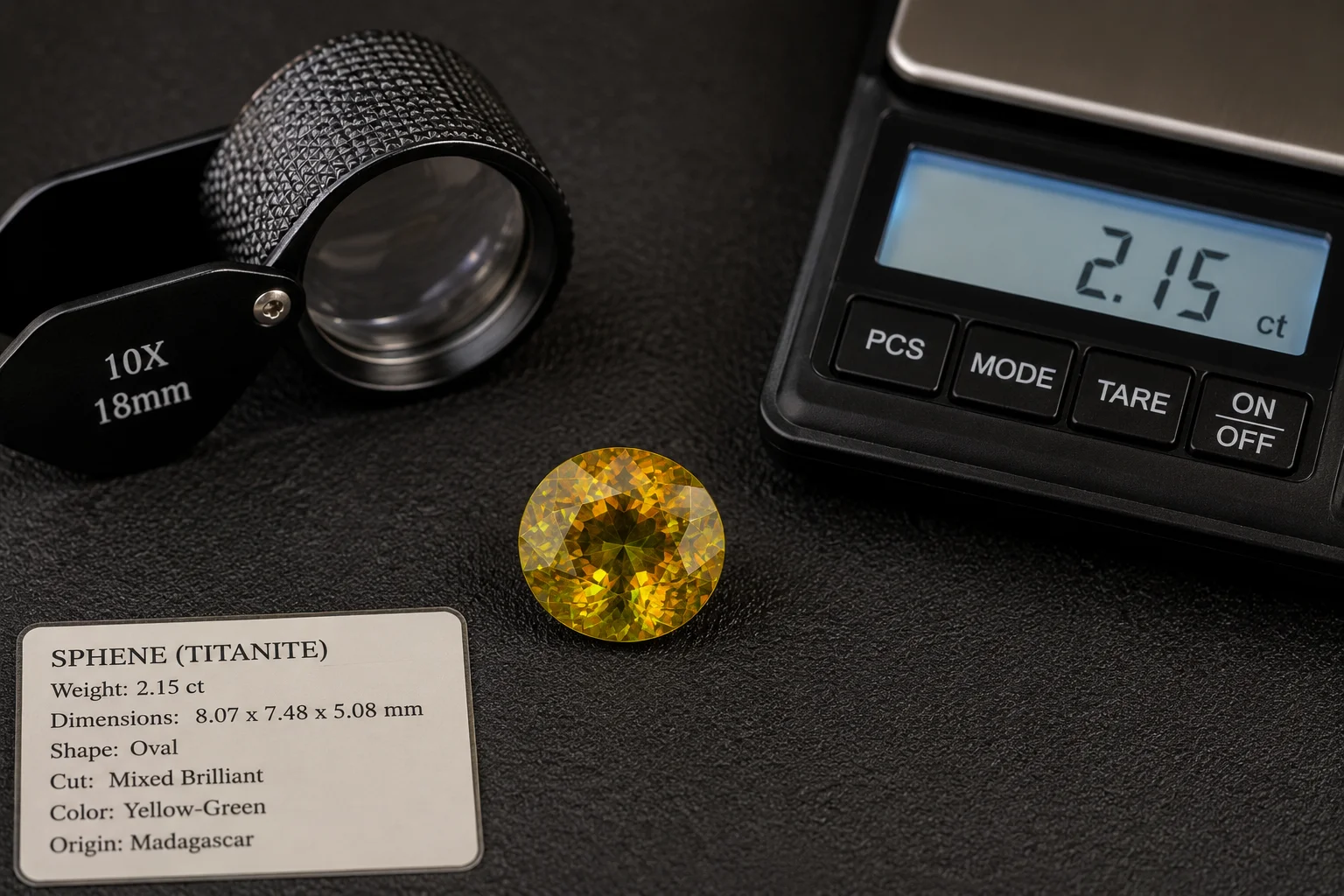

Sphene is arguably the best fire-per-dollar in all of gemology, running roughly $50 to $500 per carat in 2026, with fine chrome sphene reaching higher. Consider what that buys: dispersion of 0.051, exceeding diamond’s 0.044, for a fraction of what demantoid garnet costs at $1,000 to $8,000+ per carat. The reason sphene is cheap isn’t quality. It’s fragility and obscurity.
This guide covers sphene pricing from every angle. You’ll learn the tiers, what moves them, and why this stone is underpriced relative to what it does. At Gems Lore, we want you to buy with confidence.
A quick note first. These are general market ranges for education, not a quote or appraisal. Real prices vary by stone and seller.
Sphene Price at a Glance (2026)
- Commercial (brown/yellow, included): roughly $50 to $150 per carat.
- Good quality (green, well cut): roughly $150 to $350 per carat.
- Fine chrome sphene: roughly $350 to $500+ per carat.
- Exceptional large chrome sphene (5ct+): can exceed these ranges.
Why Sphene Is So Cheap
This deserves a straight answer, because the price genuinely doesn’t match the performance.
It isn’t rarity. Gem-quality sphene is uncommon, meaningfully scarcer than amethyst or garnet.
It isn’t beauty. Sphene out-disperses diamond and has an adamantine luster from a refractive index around 1.885 to 2.050.
It’s two other things.
Fragility. At 5 to 5.5 on the Mohs scale with distinct cleavage, sphene can’t do what jewelry buyers mostly want: sit on a finger and survive a life. That collapses demand from the largest market segment, engagement and daily-wear rings. Our gemstone hardness chart puts the softness in context.
Obscurity. Almost nobody has heard of it. There’s no marketing engine, no century of advertising, no cultural expectation. Demand is limited to people who already know.
Price in gemstones tracks demand far more than it tracks merit. Sphene is the proof.
Where Sphene Sits Among Fire Stones
Comparison makes the value case vivid.
Demantoid garnet. Dispersion 0.057, hardness 6.5 to 7, no cleavage. Roughly $1,000 to $8,000+ per carat. Our sphene vs demantoid garnet guide compares them directly.
Diamond. Dispersion 0.044, hardness 10. Thousands per carat.
Sphene. Dispersion 0.051, hardness 5 to 5.5 with cleavage. Roughly $50 to $500 per carat.
So sphene beats diamond on fire and comes within a whisker of demantoid, at perhaps a tenth of demantoid’s price and a small fraction of diamond’s. You’re paying for the fragility, essentially, and for nobody knowing the stone exists.
What Drives Sphene’s Price
Color. Chrome sphene, vivid green from trace chromium, commands the top of the range. Grass green and yellow-green sit in the middle. Golden and yellow are affordable. Brown and orange are cheapest.
Cut. This matters more in sphene than in almost any gem. A badly cut sphene is just a cheap greenish stone; a well-cut one is spectacular. Cut can double or halve the price of otherwise identical material.
Clarity. Reasonably clean is expected, though some inclusions are tolerated given scarcity in fine quality. Cleavage cracks reduce value meaningfully, since they’re a durability risk rather than a cosmetic one.
Carat. Larger clean stones are scarce, partly because cleavage makes cutting wasteful. The rate rises with size, though not as steeply as demantoid’s.
The Color vs Fire Pricing Paradox
Here’s where sphene pricing gets genuinely interesting for a buyer.
Conventional grading rewards deep, vivid saturation, so chrome green sphene prices highest. But strong body color masks fire, and fire is sphene’s entire reason to exist.
The result: a lighter golden-green sphene may throw dramatically more of the dispersion you actually want, while pricing well below a deeply saturated chrome stone.
For a buyer who wants sparkle rather than a color grade, that’s a genuine opportunity. You get more of what makes sphene special, for less. Our buy sphene guide covers the trade-off in full.
This is the same paradox demantoid presents, but sphene’s low prices make it much easier to act on.
How Size Affects Sphene Pricing
The rate rises with size, as with all gems, because large clean crystals are scarcer.
Sphene has a specific complication: cleavage makes cutting risky and wasteful. Cutters lose material to breakage, so yields from rough are poor. That pushes prices up for larger finished stones more than the raw scarcity alone would.
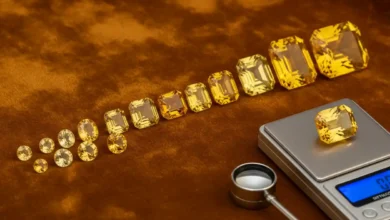
Stones of 1 to 3 carats are readily available and practical. Above 5 carats, fine material becomes noticeably harder to find, and fine chrome sphene at that size is genuinely scarce and priced accordingly.
Strategy: a brilliant, well-cut 1.5-carat sphene that flashes constantly beats a dull 4-carat stone comprehensively and costs less. With sphene, buy performance rather than weight.
Treatments and Price
Sphene is usually untreated, though some is gently heated to improve color.
Because sphene’s prices are modest, treatment doesn’t move value the way it does with demantoid, where “no indications of heating” on a report is worth real money. With sphene, a reputable seller should disclose heating, but the financial stakes are low.
Is Sphene a Good Investment?
Honestly, no, and it’s worth being clear about that.
Sphene is affordable, fragile, and obscure. It has no established collector market comparable to demantoid’s, no depleted historic deposits driving scarcity narratives, and no cultural demand engine. Retail markups mean resale rarely recovers a purchase price, which is true of nearly all colored stones anyway.
Could that change? Possibly. Sphene is genuinely underpriced relative to its optical performance, and obscure gems occasionally get discovered by the market. But betting on that is speculation, not investment.
Buy sphene because it throws more fire than a diamond and costs less than dinner. That’s a complete and excellent reason. This isn’t financial advice, and gemstones shouldn’t be anyone’s investment strategy.
What You’re Actually Paying For in Jewelry
With sphene, the setting often costs more than the stone, which flips the usual calculation entirely.
A 2-carat sphene at $200 per carat is $400. Set that in solid gold with skilled work, and the metal and labor may well exceed the gem. So when comparing sphene pendants, you’re often comparing craftsmanship and gold weight as much as the stone.
The practical implication: don’t skimp on the stone to save money, because you’re not saving much. Buy the best-cut, fieriest sphene you can find. The incremental cost of a genuinely spectacular stone over a mediocre one is small in absolute terms, and it’s the difference between a piece you love and one you don’t.
This is the opposite of demantoid, where the stone dominates the cost.
Where to Buy at a Fair Price
Ask for video in daylight showing the stone in motion. Static spotlight photos are useless for judging fire, which is the only thing you’re really buying.
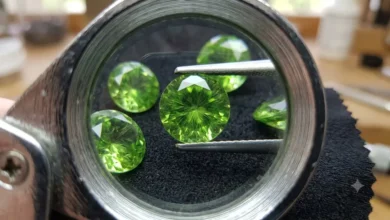
Be suspicious of any “sphene” priced like demantoid, or any “demantoid” priced like sphene. The doubling test settles it: sphene shows dramatic doubling of back facet edges under a loupe, demantoid doesn’t.
Ask about cleavage cracks directly, and ask what piece the seller recommends. Our how to buy gemstones online guide covers safe buying, and our gemstone certification guide explains when reports are worth it.
Frequently Asked Questions
How much is sphene per carat in 2026?
Roughly $50 to $150 per carat for commercial brown or yellow material, $150 to $350 for good green stones, and $350 to $500 or more for fine chrome sphene. Exceptional large chrome sphene exceeds these ranges. Cut quality affects price as much as color does.
Why is sphene so cheap when it has more fire than diamond?
Because price tracks demand, not merit. Sphene is fragile at 5 to 5.5 with cleavage, so it can’t serve the largest jewelry market, daily-wear rings. And almost nobody has heard of it, so there’s no marketing engine or cultural demand. Its optical performance genuinely exceeds its price.
Is sphene cheaper than demantoid garnet?
Dramatically, often by a factor of ten or more. Sphene runs roughly $50 to $500 per carat while demantoid runs $1,000 to $8,000+. Demantoid has slightly more fire at 0.057 versus 0.051, is much tougher, and carries Russian and Fabergé pedigree that sphene entirely lacks.
Is sphene a good investment?
No. It’s affordable, fragile, and obscure, with no established collector market, and retail markups mean resale rarely recovers the purchase price. It’s genuinely underpriced relative to its fire, and that could theoretically change, but betting on it is speculation. Buy sphene because you love it.
Does chrome sphene cost more?
Yes, it’s the most valuable sphene, with vivid green from trace chromium commanding the top of the range and beyond. However, there’s a catch: deep saturation masks fire, so a cheaper golden-green stone often flashes more. If sparkle is your goal, chrome green isn’t automatically the better buy.
Why does the setting cost more than my sphene?
Because sphene is genuinely inexpensive. A 2-carat sphene at $200 per carat is $400, while solid gold and skilled setting work can easily exceed that. This flips the usual gem calculation and means you should buy the best-cut stone you can find, since the upgrade costs little.
Where to Go From Here
Sphene’s pricing is the anomaly of gemology: more fire than a diamond for the price of a nice meal. It’s cheap because it’s fragile and unknown, not because it’s lesser. Buy the fieriest, best-cut stone you can find, since the premium for excellence is small, set it in a pendant, and enjoy the best-kept secret in the gem world.
Learn what to look for in our sphene buying guide, linked above, explore the stone in our sphene meaning guide, or compare the fire champions in our sphene vs demantoid guide.
Weighing up a sphene? Tell us about it in the comments.
This guide is for general educational purposes and is not a quote, appraisal, or financial advice. Market prices vary by stone, quality, and seller.