Tanzanite Healing Properties: 11 Modern Beliefs, Zoisite Science & Safe Care
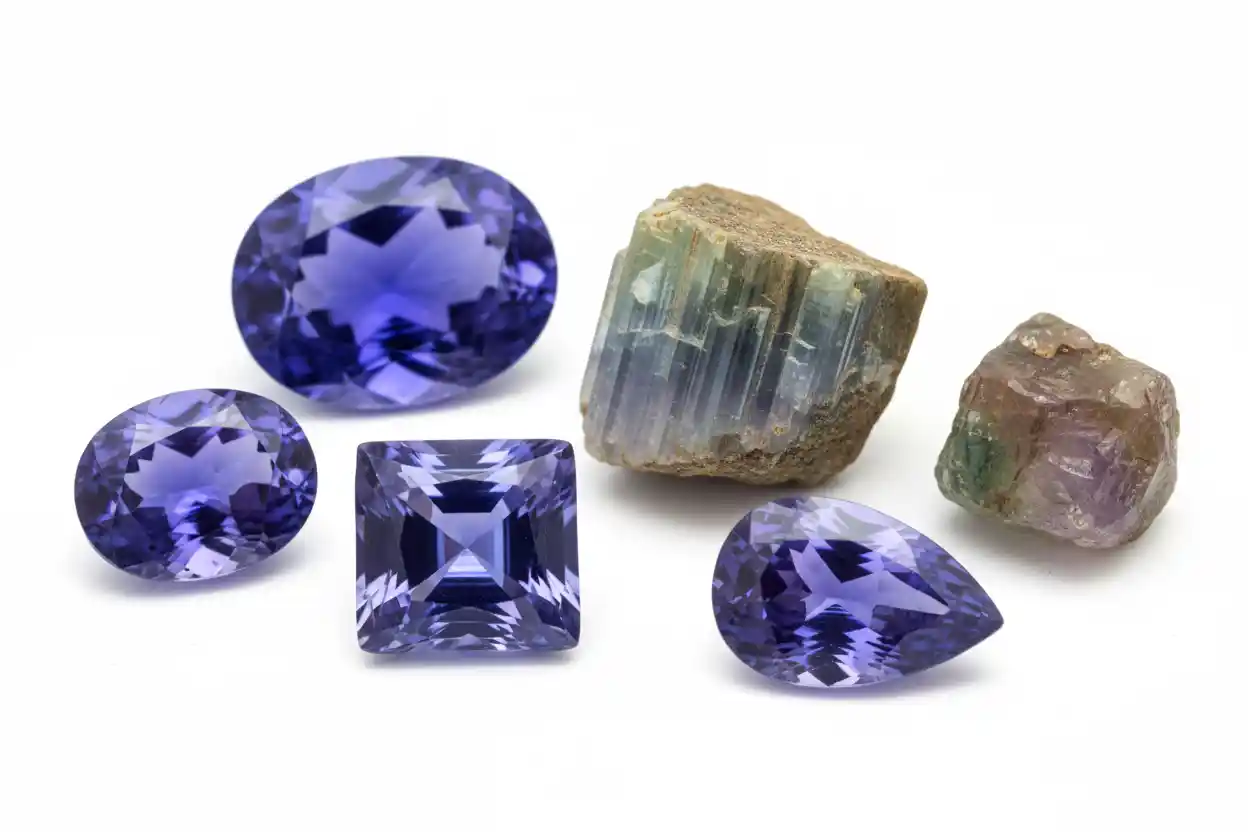
Tanzanite healing properties are commonly associated with self-reflection, communication, confidence, emotional perspective, adaptability, resilience, concentration, creativity, decision-making, meditation, and spiritual awareness. The gem can shift visibly between blue, violet, and purple as its viewing angle and lighting change, making themes involving perspective and transformation easy to understand symbolically. Those optical effects do not establish a therapeutic mechanism. Tanzanite healing properties have not been scientifically demonstrated to treat anxiety, depression, neurological disorders, thyroid disease, headaches, inflammation, pain, sleep disorders, hormonal conditions, or another medical problem. Scientifically, Tanzanite is the blue-to-violet gem variety of zoisite, a calcium aluminum silicate mineral. It is strongly pleochroic, measures Mohs 6 to 7, has perfect cleavage, and is commercially mined from the Merelani region of Tanzania.
11 Tanzanite Healing Properties Beliefs
- Self-reflection and recognition of different perspectives
- Clearer and more deliberate communication
- Confidence during periods of change
- Emotional perspective before reacting
- Adaptability when circumstances shift
- Resilience after unexpected setbacks
- Concentration and sustained attention
- Creativity and flexible thinking
- More deliberate decision-making
- Meditation and present awareness
- Spiritual reflection on change and personal direction
These eleven tanzanite healing properties become more useful when interpreted as reflective practices rather than eleven automatic effects of blue zoisite. Communication can mean preparing what actually needs to be said, adaptability can mean changing an ineffective method, and resilience can mean rebuilding after disruption. The separate Tanzanite benefits page can address practical uses, while this article keeps tanzanite healing properties focused on contemporary beliefs, mineral science, evidence limits, treatment, and safe care.
Tanzanite Is the Blue-Violet Variety of Zoisite
Understanding tanzanite healing properties begins with zoisite. Tanzanite is not a separate mineral species. It is the transparent blue, violet-blue, blue-violet, or violet variety of zoisite, an orthorhombic calcium aluminum silicate belonging to the epidote group.
Its chemical composition is commonly represented as Ca₂Al₃(SiO₄)(Si₂O₇)O(OH), although the same structure is also written in equivalent formula forms.
Tanzanite measures about Mohs 6 to 7. That gives it reasonable scratch resistance for jewelry but makes it substantially softer than Sapphire or Ruby. More importantly, zoisite possesses one perfect cleavage direction and fair-to-poor toughness, so a sharp impact can split an otherwise attractive gem.
Tanzanite healing properties do not become stronger in deeper blue stones, larger gems, unheated specimens, or stones with finer clarity. Those qualities affect appearance, rarity, cutting choices, and value rather than therapeutic effectiveness.
The workbook-verified Tanzanite quality grading topic addresses gem quality separately from tanzanite healing properties.
Vanadium Produces Tanzanite’s Blue and Violet Color
The blue-violet appearance central to tanzanite healing properties comes from trace vanadium incorporated within the zoisite crystal structure.
Vanadium-related absorption interacts with visible light to produce the unusual range of blue, violet, purple, brownish, and occasionally greenish components visible in natural crystals.
Untreated Tanzanite rough is commonly brownish or contains substantial brown, yellow-green, or reddish components. Heating changes the oxidation state and absorption behavior associated with vanadium, reducing unwanted brown or yellow-green colors and revealing the blue and violet hues preferred in the gem trade.
This process does not coat the surface or dye the gem. Proper heat treatment produces a stable internal color change within natural zoisite.
Tanzanite healing properties are therefore not scientifically different between a naturally blue crystal and a routinely heat-treated gemstone.
Tanzanite Is Strongly Pleochroic
Pleochroism is one of the most distinctive physical features influencing tanzanite healing properties symbolism. Tanzanite can show different colors when viewed along different crystallographic directions.
Unheated crystals can display three pronounced directions of color, often including blue, violet, and brownish or yellow-green tones. Heat treatment commonly suppresses much of the brownish or yellow-green component, leaving blue and violet more dominant, although the gem can remain strongly pleochroic.
Cutters must consider these color directions when orienting the rough. One orientation can produce a more blue face-up gemstone but may require sacrificing more rough, while another can retain greater weight and emphasize violet-purple.
The changing color is a genuine optical property. It does not demonstrate that tanzanite healing properties change according to mood or that the gemstone reveals hidden emotional states.
Tanzanite Comes From One Commercial Mining Area
Tanzanite has an unusually restricted geological source. Commercial production comes from the Merelani Hills area of northern Tanzania near Mount Kilimanjaro.
Zoisite occurs elsewhere in the world and can be green, pink, brown, yellow, gray, or colorless, but the blue-violet gem variety marketed as Tanzanite is linked specifically with Tanzania.
This geographic restriction gives the gemstone strong rarity and provenance significance. It does not make tanzanite healing properties stronger than those of another mineral.
The deposit formed through complex metamorphic processes involving calcium-rich rocks, heat, pressure, fluids, and vanadium-bearing geological environments.
Anyone buying the gem can use buy Tanzanite checks based on color, clarity, cut, treatment, durability, origin, and seller disclosure rather than attempting to judge authenticity through tanzanite healing properties.
Tanzanite Has a Modern, Not Ancient, Healing Identity
Tanzanite healing properties should not be described as an ancient standardized tradition. The gemstone entered modern gem commerce only after blue-violet zoisite was identified in Tanzania during the twentieth century.
Tiffany & Co. promoted the name Tanzanite because “blue zoisite” was considered commercially unsuitable. The new trade name referenced Tanzania, the gemstone’s source.
This history means modern claims involving chakras, psychic awakening, ancient Tanzanian healing rites, or centuries-old Tanzanite traditions require particular caution. Zoisite itself was known earlier, but Tanzanite did not possess the ancient gem identity sometimes implied in metaphysical descriptions.
The Tanzanite meaning can legitimately explore modern symbolism involving transformation and perspective without inventing an ancient Tanzanite tradition.
Reflection, Communication, and Confidence
Reflection Through Multiple Perspectives
Self-reflection is one of the most fitting tanzanite healing properties because pleochroism provides a genuine visual metaphor for perspective. The same crystal can look different from different directions without becoming a different mineral.
A practical exercise asks how a situation appears from your own viewpoint, from another person’s perspective, and from an outside observer’s position. None of those perspectives automatically provides the full answer.
Communication With Clear Intent
Communication is another common part of tanzanite healing properties because blue and violet gems are frequently linked with throat-centered symbolism.
Tanzanite cannot make another person understand or agree. Before a difficult conversation, identify the central point, remove unnecessary accusations, and decide what request, fact, or boundary needs to be expressed.
Confidence During Change
Confidence is frequently included among tanzanite healing properties because the gemstone’s discovery and color transformation make change an intuitive modern theme.
A crystal cannot biologically raise self-esteem. Preparation, experience, and clear next actions provide a more dependable foundation for confidence.
Emotional Perspective, Adaptability, and Resilience
Perspective Before Reacting
Tanzanite healing properties are sometimes associated with emotional clarity. Zoisite has not been demonstrated to regulate stress hormones or automatically produce psychological insight.
Separate facts, emotions, assumptions, and possible actions before responding. This is especially useful when an emotionally intense interpretation begins to feel indistinguishable from evidence.
Adaptability When Circumstances Shift
Adaptability fits naturally within tanzanite healing properties because the gemstone itself can look dramatically different depending on viewing direction and treatment history.
A practical interpretation is to separate the goal from the original method. When evidence shows that a method is failing, changing the method may be the most consistent way to preserve the goal.
Resilience After Unexpected Setbacks
Resilience is another familiar part of tanzanite healing properties. The gemstone cannot transfer psychological strength.
After an unexpected setback, identify what was lost, what remains available, what information has changed, and what first step makes rebuilding realistic. Resilience develops through adjustment rather than through gemstone contact.
Concentration, Creativity, and Decision-Making
Concentration Through a Defined Focus
Concentration appears frequently within tanzanite healing properties. No zoisite-specific mechanism has been shown to increase attention span, learning, or memory through ordinary contact.
Place the gemstone near one defined task, reduce unrelated inputs, and work until a planned stopping point. The useful effect comes from the routine rather than from mineral chemistry.
Creativity Through Changing Viewpoints
Creativity fits tanzanite healing properties particularly well because pleochroism provides a natural reminder that one object can be perceived differently from different angles.
When facing a problem, deliberately generate several explanations or approaches before evaluating them. Changing perspective can reveal options that were invisible under the first assumption.
Decision-Making With Evidence
Clear decisions are another part of tanzanite healing properties. The gemstone cannot predict outcomes or reveal the objectively correct choice.
Compare alternatives, likely consequences, reversibility, uncertainty, and missing information. Intuition can remain one input, but it should be tested against available evidence.
Meditation and Tanzanite Healing Properties
Meditation is one of the easiest tanzanite healing properties to translate into a real attentional practice. Tanzanite’s visible blue-violet shifts can provide a stable but changing visual focus.
Slowly tilt the gemstone and observe how blue, violet, and purple components become stronger or weaker. Return attention to the color whenever the mind wanders.
This genuinely practices sustained awareness. Tanzanite healing properties do not need to be explained through claims that vanadium transmits spiritual frequencies, opens psychic channels, or alters brain activity.
The practice comes from deliberate attention.
Spiritual Reflection on Change and Direction
The eleventh of the tanzanite healing properties concerns transformation, spiritual awareness, intuition, and personal direction. These associations are modern rather than ancient.
Someone may use Tanzanite during prayer, journaling, or reflection on a major transition. A useful exercise identifies what has changed, what values should remain stable, and which commitments now need to be reconsidered.
The gemstone’s pleochroism makes it a convincing metaphor for seeing the same situation from more than one direction.
Tanzanite healing properties are most responsible when spiritual reflection supports personal agency instead of claiming that the gemstone supplies supernatural answers.
Tanzanite Chakra Associations
Tanzanite healing properties are commonly associated with the throat, third-eye, and crown chakras in contemporary crystal practice because of the gemstone’s blue-violet coloration.
Blue directions encourage themes involving communication, violet hues encourage meditation and spiritual awareness, and the color shift is often interpreted symbolically as connection between these areas.
Chakras are spiritual frameworks rather than anatomical structures. Tanzanite healing properties have not been demonstrated to affect the thyroid, throat, brain, pineal gland, nervous system, endocrine glands, or another physiological structure through chakra placement.
Tanzanite Heat Treatment Is Normal
Heat treatment deserves careful explanation because most Tanzanite in jewelry has been heated. Heating commonly removes or reduces brownish and yellow-green pleochroic components, leaving the familiar blue-violet appearance.
The process is widely accepted and generally stable. It does not create a coating and does not normally introduce additional durability problems.
Because heating is so common and sometimes difficult to detect conclusively, the trade generally assumes most blue-violet Tanzanite has been heated unless reliable evidence suggests otherwise.
Tanzanite healing properties do not provide any method for detecting treatment, and there is no scientific reason to expect an unheated stone to possess stronger wellness effects.
Tanzanite Care Requires Protection From Impact
Tanzanite healing properties do not change zoisite’s relatively vulnerable physical structure. Mohs hardness 6 to 7 provides moderate scratch resistance, but perfect cleavage and fair-to-poor toughness create a significant risk from hard knocks.
Tanzanite can be used in rings, but protective settings and careful wear are sensible. Pendants and earrings generally receive fewer direct impacts.
Warm water, mild soap, and a soft cloth or brush are the safest cleaning methods.
Ultrasonic and steam cleaners should not be used. Vibration, sudden temperature change, and heat can exploit cleavage or existing fractures.
Very high heat and thermal shock should also be avoided even though normal heat treatment used by professionals produces a stable color.
Acids, Coatings, and Fracture Filling
Tanzanite can be attacked by hydrochloric and hydrofluoric acids, so acid-based household cleaning is inappropriate.
Most Tanzanite receives only heat treatment, but occasional stones may be coated to modify color. Coatings can scratch or wear away and require more cautious cleaning.
Fracture filling is uncommon but possible. Filled fractures can change appearance over time and can be damaged by aggressive cleaning.
Tanzanite healing properties cannot reveal whether a stone is coated, filled, heated, natural, or imitation. Gemological examination and disclosure remain the appropriate tools.
Safe Ritual Cleansing
Tanzanite healing properties do not require saltwater, flame, steam, acids, extreme heat, or prolonged sunlight.
Sound, intentional breathing, prayer, quiet reflection, dry placement, or gentle cleaning with warm soapy water are lower-risk practices.
A perspective-focused ritual can involve writing one difficult problem from three different viewpoints before deciding what action is justified.
Avoid rough handling because cleavage presents a genuine physical vulnerability that no spiritual practice can remove.
Conclusion
Tanzanite healing properties are modern wellness and spiritual beliefs attached to an extraordinary blue-violet variety of zoisite found commercially in one small region of Tanzania. Vanadium contributes to its color, heat treatment commonly reveals stronger blue and violet hues, and pronounced pleochroism allows the same gemstone to look different from different directions. Reflection, communication, confidence, adaptability, resilience, creativity, decision-making, and meditation can become useful personal practices when Tanzanite remains a symbolic focus rather than a medical treatment.
FAQs
What are tanzanite healing properties?
Tanzanite healing properties commonly refer to beliefs involving reflection, communication, confidence, emotional perspective, adaptability, resilience, concentration, creativity, decision-making, meditation, and spiritual awareness.
What is Tanzanite made of?
Tanzanite is the blue-to-violet gem variety of zoisite, a calcium aluminum silicate mineral in the epidote group.
What makes Tanzanite blue?
Trace vanadium within the zoisite structure produces the blue and violet coloration, with heat treatment commonly reducing brownish or yellow-green components.
Is most Tanzanite heat treated?
Yes. Most blue-violet Tanzanite in the jewelry market is assumed to have been heated, and the treatment is widely accepted and stable.
Why does Tanzanite change color when tilted?
Tanzanite is strongly pleochroic, so different crystallographic directions show different blue, violet, purple, or brownish color components.
How hard is Tanzanite?
Tanzanite measures about Mohs 6 to 7, but its perfect cleavage and fair-to-poor toughness make impact protection important.
Are tanzanite healing properties ancient?
No. Tanzanite entered modern gem commerce comparatively recently, so tanzanite healing properties as a standardized system are contemporary rather than an ancient tradition.
Which chakras are associated with Tanzanite?
Modern crystal practice commonly links Tanzanite with the throat, third-eye, and crown chakras. These are spiritual rather than anatomical associations.
Can Tanzanite go in water?
Gentle cleaning with warm soapy water is safe. Ultrasonic and steam cleaners should be avoided.
Are tanzanite healing properties medically proven?
No. Tanzanite healing properties are modern spiritual or personal wellness beliefs rather than scientifically established therapeutic effects.
Tanzanite healing properties are contemporary spiritual or personal beliefs and should not replace qualified medical or mental health care.