9 Watermelon Tourmaline Healing Properties: Modern Beliefs, Color Zoning & Safe Use
Watermelon tourmaline healing properties are commonly associated with emotional balance, compassion, self-acceptance, relationship reflection, patience, joy, and a sense of renewal. The stone’s pink center and green outer zone naturally invite symbolism based on contrast and integration, especially in modern crystal practices that connect pink and green with heart-centered themes. These associations can support meditation or personal ritual, but watermelon tourmaline is not scientifically proven to treat anxiety, depression, trauma, heart disease, hormonal conditions, fertility problems, pain, sleep disorders, or any other medical condition.
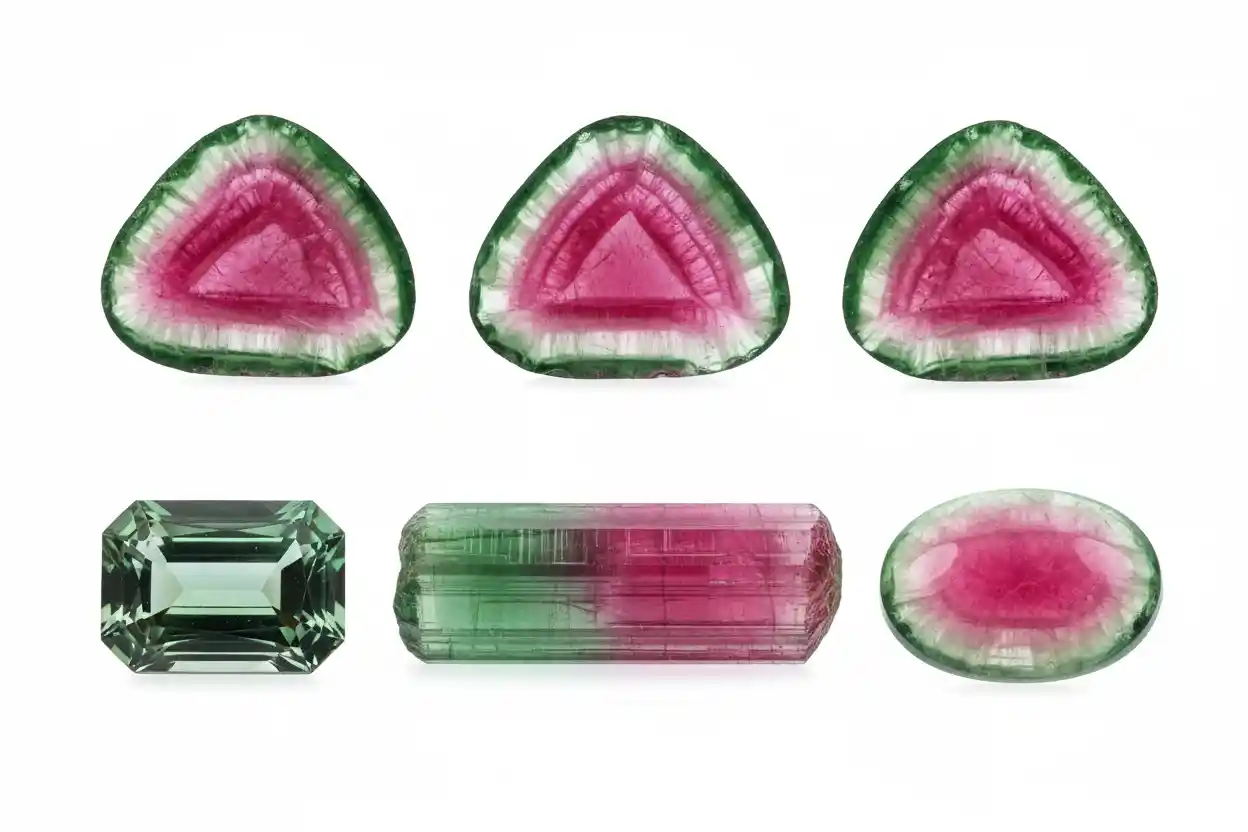
Watermelon tourmaline is not a separate mineral species. It is a color-zoned variety of tourmaline, commonly involving elbaite and sometimes related tourmaline species, with a pink or red interior surrounded by green. The zoning develops during crystal growth as the chemistry of the environment changes. That process produces the visual resemblance to watermelon flesh and rind, but it does not demonstrate therapeutic energy.
A realistic approach to watermelon tourmaline healing properties treats the gemstone as a reminder for reflective behavior. Someone might use it to pause before reacting, examine a difficult relationship pattern, practice self-compassion, or reconnect with a chosen goal. The useful action comes from the person, while the gem provides a meaningful visual cue.
9 Watermelon Tourmaline Healing Properties Used in Modern Crystal Practice
- Emotional balance during complicated or changing situations.
- Self-compassion without avoiding personal responsibility.
- Patience when relationships or goals develop slowly.
- Clearer reflection on boundaries and emotional needs.
- Openness to positive experiences without forced optimism.
- Releasing repetitive habits that no longer feel constructive.
- Creative reflection inspired by natural color contrast.
- Mindful communication in close relationships.
- Spiritual reflection centered on acceptance, growth, and integration.
What Watermelon Tourmaline Really Is: Pink Cores, Green Rims, and Crystal Growth
Understanding the gemstone itself gives watermelon tourmaline healing properties a more accurate foundation. Tourmaline is a chemically complex group of borosilicate minerals that crystallize in the trigonal system. Gem watermelon tourmaline is commonly associated with lithium-rich species such as elbaite, although related tourmalines can also show the characteristic zoning.
In the strict mineralogical sense, watermelon zoning is concentric: a crystal cross-section shows a pink or red center surrounded by green, much like the fruit. Tourmaline can also show longitudinal or other multicolor zoning, and commercial descriptions sometimes use “watermelon” more loosely for pink-and-green combinations. A genuine concentric slice displays the color pattern especially clearly because the cut crosses the crystal rather than following its length.
The colors record changes in chemistry during growth. Elements such as manganese and iron, along with other substitutions and color centers, influence tourmaline color. A crystal can therefore record several stages of growth in visible zones. This is genuine mineral science, but the changing chemistry does not prove that watermelon tourmaline healing properties combine separate physical healing forces from the pink and green portions.
Watermelon Tourmaline Healing Properties for Emotional Balance and Self-Compassion
Emotional Balance Through Reflection Rather Than Suppression
Emotional balance is one of the most familiar watermelon tourmaline healing properties. Modern crystal practice often interprets the pink-and-green contrast as harmony between feeling and growth. A useful version of this practice does not demand constant calm or positivity. It encourages someone to recognize an emotion, understand what triggered it, and choose a response rather than reacting automatically.
A person dealing with frustration might keep the stone near a journal and write down what happened, what assumptions followed, and which part of the situation remains within personal control. The exercise can create useful distance from an immediate reaction. Watermelon tourmaline does not alter neurotransmitters or remove distress from the body.
The symbolism can still feel personally important. Repeating the same reflective routine with one familiar object may strengthen the association between that object and the decision to pause.
Self-Compassion Without Excusing Harmful Patterns
Self-compassion also appears frequently in watermelon tourmaline healing properties. Pink tourmaline is often connected with affection and emotional warmth, while green tourmaline is commonly interpreted through growth and renewal. Together, the colors can symbolize accepting one’s current state while still choosing to improve something.
That idea becomes useful when compassion is paired with accountability. Someone might acknowledge disappointment without turning it into harsh self-criticism, then identify one behavior that could be handled differently next time. The gemstone does not forgive mistakes or resolve conflict. It can simply mark the moment when reflection begins.
Modern watermelon tourmaline meaning often develops from this visible meeting of pink and green, with personal interpretations centered on balance, growth, affection, and integration.
Relationships, Communication, and Healthy Boundaries
Relationship harmony is another recurring theme among watermelon tourmaline healing properties. Spiritual descriptions sometimes suggest that the gemstone attracts love or repairs relationships. There is no evidence that it changes another person’s feelings, creates compatibility, prevents conflict, or guarantees reconciliation.
A more grounded practice uses the stone to prompt questions about communication and boundaries. Before a difficult conversation, someone might decide what needs to be expressed clearly, which assumptions need checking, and what outcome would still respect both people. If a relationship is unsafe or abusive, symbolic harmony should never replace practical safety or professional support.
Healthy relationships require consent, communication, trust, respect, and behavior. Watermelon tourmaline cannot produce those qualities on behalf of either person.
Joy, Creativity, and Openness to Positive Experience
Joy and creativity also appear in watermelon tourmaline healing properties, partly because the gem’s vivid colors are unusual and visually engaging. A person could place a slice near a sketchbook, desk, or creative workspace and use it as a cue to experiment rather than judge an unfinished idea too quickly.
Openness to positive experience should not be confused with forcing happiness. Someone can appreciate a pleasant moment while still dealing with stress, grief, or uncertainty. The gemstone can symbolize permission to notice something good without pretending difficult circumstances no longer exist.
The physical watermelon tourmaline benefits include striking natural zoning, suitability for distinctive slices and jewelry, collectible crystal structure, and the ability to display several stages of growth within one specimen.
Watermelon Tourmaline Healing Properties and Heart Chakra Symbolism
Modern chakra practices strongly associate watermelon tourmaline healing properties with the heart chakra because both pink and green are widely used as heart-centered colors. Practitioners may interpret the pink center as compassion or affection and the green zone as growth, balance, or renewal. Some also use the stone when reflecting on relationships, forgiveness, gratitude, or emotional boundaries.
Chakras are spiritual frameworks rather than anatomical structures. Watermelon tourmaline does not open the physical heart, regulate blood pressure, improve circulation, change cardiac function, control hormones, or treat emotional disorders. Heart-centered symbolism remains a form of personal or spiritual interpretation.
A reflective practice might focus on one relationship that needs clearer communication, one boundary that deserves reinforcement, or one form of kindness that can be expressed without ignoring personal needs. In this context, watermelon tourmaline healing properties work as symbolic prompts rather than medical mechanisms.
Watermelon Tourmaline Is a Modern Name, Not an Ancient Healing Tradition
Watermelon tourmaline has real historical interest, but its specific name is relatively modern. The term became associated with pink-centered, green-rimmed tourmaline from Maine in the early twentieth century. That timing makes claims about ancient cultures using “watermelon tourmaline” under its current identity historically unreliable.
Tourmaline itself has a longer history of use and trade, and colored tourmalines were sometimes confused with other gems before modern gemology could separate them accurately. The specific set of watermelon tourmaline healing properties popular today developed largely through contemporary crystal culture and color symbolism.
This does not prevent someone from assigning personal meaning to the gemstone. It simply keeps modern spiritual interpretation separate from documented history.
Watermelon Tourmaline Quality, Treatments, and Color-Zoning Value
Tourmaline generally ranks about 7 to 7.5 on the Mohs scale and has fair toughness. Watermelon slices are often cut specifically to display the pink center and green rim, while elongated pieces can show different forms of multicolor zoning. Strong color contrast, attractive saturation, visible zoning, size, transparency, fracture condition, and overall appearance influence desirability.
Tourmaline can receive heat treatment or irradiation to alter color, although not every watermelon specimen is treated. Natural fractures and liquid-filled inclusions are also common in some tourmalines, especially pink-to-red stones. High heat can damage included gems or alter color, so unknown treatment and inclusion history should encourage conservative care.
Clean, attractive zoning can command a premium over ordinary commercial tourmaline. Size, pattern, clarity, cutting, and color contrast all influence watermelon tourmaline price far more directly than metaphysical claims. No treatment or natural zoning pattern has been shown to increase or decrease watermelon tourmaline healing properties.
Watermelon Tourmaline Care: Heat, Thermal Shock, Water, and Cleaning
Watermelon tourmaline’s Mohs hardness of about 7 to 7.5 gives it reasonable resistance to scratching, but its toughness is only fair. Slices may contain natural fractures or thin sections that deserve extra protection from impact. Store them away from diamonds, sapphires, rubies, topaz, and other harder stones that could scratch the surface.
Warm water, mild soap, and a soft cloth or brush provide the safest routine cleaning. Avoid steam and ultrasonic cleaners, especially for included or fractured pieces. High heat can change color, and sudden temperature changes can cause fracturing. Irradiation-related color in some tourmalines can also be less stable under strong heat or prolonged bright light.
Finished tourmaline jewelry is generally safe to handle. Cutting, grinding, or drilling still requires appropriate lapidary dust controls, eye protection, and ventilation. Watermelon tourmaline healing properties provide no reason to ingest gem powder or prepare drinking water with chipped or powdered tourmaline.
Safer Symbolic Cleansing for Watermelon Tourmaline
Symbolic cleansing can remain simple and physically gentle. A clean cloth, sound, meditation, spoken intention, or a protected resting place can all serve a ritual purpose without exposing the gemstone to unnecessary stress.
Avoid boiling water, fire, strong chemicals, abrasive powders, or deliberate temperature changes. Long saltwater soaking is unnecessary, especially when a slice contains fractures or inclusions. Physical cleaning removes dirt, while symbolic cleansing expresses personal intention.
Conclusion
Watermelon tourmaline healing properties are modern wellness and spiritual associations centered on emotional balance, compassion, relationships, boundaries, patience, creativity, and personal growth. The gemstone itself is color-zoned tourmaline whose pink center and green rim record genuine changes during crystal growth.
Used responsibly, the gem can support reflection by acting as a visual reminder to pause, communicate deliberately, or reconsider a habit. Its beauty and symbolism do not establish a medical healing effect.
FAQs
What Are the Main Watermelon Tourmaline Healing Properties?
Watermelon tourmaline healing properties commonly include emotional balance, compassion, patience, relationship reflection, boundaries, joy, creativity, release, and spiritual integration.
Is Watermelon Tourmaline a Separate Mineral?
No. It is a color-zoned variety of tourmaline, commonly involving elbaite or closely related tourmaline species, with a pink or red center surrounded by green.
Are Watermelon Tourmaline Healing Properties Scientifically Proven?
No. There is no reliable evidence that watermelon tourmaline treats physical disease, mental health disorders, hormonal conditions, pain, or other medical problems.
Which Chakra Is Associated With Watermelon Tourmaline?
Modern crystal practice most often links it with the heart chakra because of its pink and green colors. Chakras are spiritual frameworks rather than anatomical structures.
Can Watermelon Tourmaline Help Relationships?
The gemstone cannot change another person’s feelings or guarantee harmony. It may be used as a personal reminder for communication, reflection, compassion, and healthy boundaries.
Is All Pink-and-Green Tourmaline Watermelon Tourmaline?
Not necessarily. Strict watermelon zoning usually shows a pink or red core surrounded by a green rim, while tourmaline can also display longitudinal and other multicolor zoning.
Can Watermelon Tourmaline Go in Water?
Brief cleaning with warm soapy water is generally suitable for an intact stone. Long soaking is unnecessary, particularly when fractures or inclusions are present.
Can Watermelon Tourmaline Be Cleaned Ultrasonically?
Warm soapy water is safer. Ultrasonic and steam cleaning are not recommended because fractures, liquid inclusions, or thermal shock can damage some tourmalines.
Is Watermelon Tourmaline an Ancient Healing Stone?
Tourmaline has a long gem history, but the specific term watermelon tourmaline is modern. Claims of an ancient tradition using that exact gemstone identity are not well supported.
Watermelon tourmaline healing properties are personal and spiritual wellness beliefs rather than medical treatment and should not replace qualified physical or mental health care.