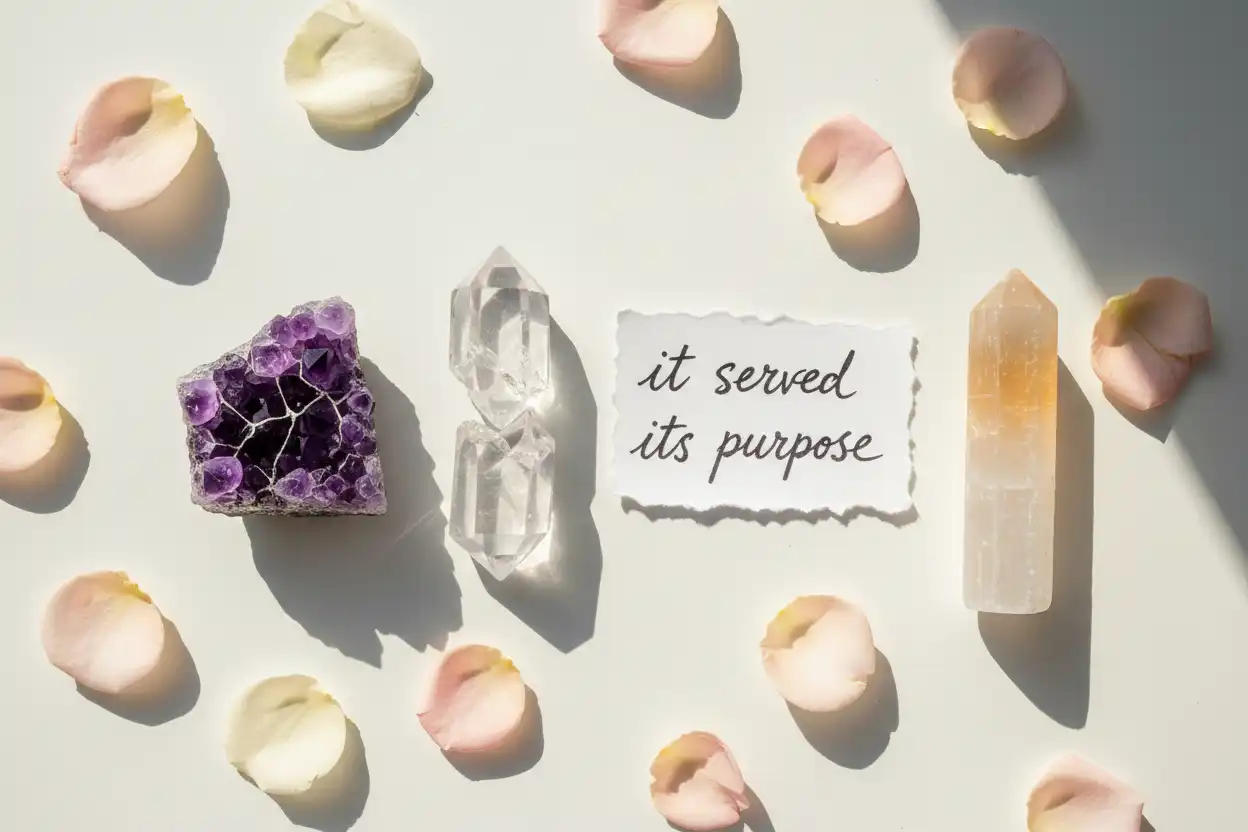
Why Did My Crystal Break? What It Means
A crystal usually breaks because of a physical cause such as impact, internal fractures, cleavage, pressure, heat or improper care.
A broken crystal does not automatically mean:
- Bad luck is coming.
- The stone absorbed too much negativity.
- Someone sent harmful energy.
- Your intention failed.
- The crystal sacrificed itself.
- You must immediately discard it.
Some people give a break personal or spiritual meaning, but the first step should be to examine the physical reason and handle the fragments safely.
The Most Common Reasons Crystals Break
Impact
A stone may chip or fracture after:
- Falling onto a hard floor.
- Striking a countertop.
- Hitting another gemstone.
- Being crushed in a bag.
- Knocking against furniture.
- Being dropped during cleaning.
Even hard gemstones can break.
Hardness measures resistance to scratching, not resistance to impact.
Cleavage
Cleavage is a mineral’s tendency to split along particular structural planes.
Minerals with prominent cleavage include:
- Topaz.
- Fluorite.
- Calcite.
- Kyanite.
- Feldspar.
- Spodumene.
- Diamond.
- Some pyroxenes.
A stone can be scratch-resistant yet split after one well-directed blow.
The process is explained in Gemstone Cleavage Explained.
Internal Fractures
Many crystals contain:
- Veils.
- Healed cracks.
- Fluid inclusions.
- Mineral inclusions.
- Growth boundaries.
- Surface-reaching fractures.
A stone may look stable until pressure reaches one of these weak areas.
Drilling, setting, temperature changes or ordinary wear can extend an existing fracture.
Thermal Shock
Rapid temperature change can create stress inside a stone.
Examples include:
- Moving a cold crystal into hot water.
- Using steam on a cool gemstone.
- Leaving a stone in a hot car.
- Placing a heated stone on a cold surface.
- Using hot water on an included crystal.
Opal, included quartz, glass and fracture-filled stones can be especially vulnerable.
Water Damage
Water does not break every crystal, but it can weaken or dissolve certain materials.
Examples include:
- Halite dissolving.
- Gypsum becoming damaged.
- Pyrite oxidizing.
- Porous opal absorbing liquid.
- Glued layers separating.
- Dye bleeding.
- Matrix softening.
- Metal settings corroding.
Check Which Crystals Can and Cannot Go in Water before soaking a stone.
Sunlight and Heat
Strong sunlight can heat a crystal unevenly and affect certain colors, coatings or adhesives.
Light-sensitive materials may fade or change rather than break immediately.
Examples include:
- Amethyst.
- Fluorite.
- Kunzite.
- Vivianite.
- Some treated topaz.
- Dyed stones.
Use the guide to Crystals That Fade in Sunlight before displaying stones near windows.
Pressure
Crystals can break when:
- Wrapped too tightly with wire.
- Held in an undersized setting.
- Crushed beneath larger stones.
- Stored under heavy objects.
- Clenched inside a hand.
- Placed beneath a pillow or mattress.
- Packed tightly for travel.
Long thin crystals are particularly vulnerable to side pressure.
Drilling and Lapidary Work
Drilling creates local stress and heat.
Breakage is more likely when:
- The stone contains fractures.
- The drill is too fast.
- Cooling is insufficient.
- Pressure is uneven.
- The hole is too close to an edge.
- Different minerals occur in one rock.
- The material has cleavage.
Unknown minerals should not be drilled because dust may also present a health hazard.
Natural Weakness and Weathering
Some specimens are naturally unstable.
They may:
- Flake.
- Powder.
- Oxidize.
- Shed crystals.
- Split along layers.
- Separate from matrix.
- Dehydrate.
- Absorb humidity.
Examples include delicate zeolites, mica, pyrite, halite, selenite and thin wulfenite crystals.
Why Hard Crystals Still Break
Hardness and toughness are different.
Hardness
Hardness measures resistance to scratching.
Toughness
Toughness describes resistance to breaking, chipping or cracking.
A diamond is extremely hard but can cleave.
Jade may be less hard than diamond but exceptionally tough because of its interlocking structure.
The distinction is explained in Gemstone Toughness vs. Hardness.
Use the Gemstone Hardness Chart to compare scratch resistance without assuming hardness makes a stone indestructible.
Why Crystal Jewelry Breaks
Jewelry introduces additional stress.
A crystal bracelet may break because of:
- Stretched elastic.
- Abraded thread.
- A sharp bead hole.
- Heavy beads.
- Chemical exposure.
- Repeated impact.
- A damaged clasp.
- Beads rubbing together.
A ring stone may break because of:
- An exposed setting.
- A loose prong.
- Impact against a hard surface.
- Pressure during resizing.
- Cleaning equipment.
- Existing fractures.
- Cleavage.
A pendant may break because of:
- A weak drill hole.
- A heavy stone.
- A thin bail.
- A sharp chain connection.
- Dropping the necklace.
Inspect jewelry components rather than assuming the gemstone alone caused the failure.
What to Do Immediately After a Crystal Breaks
Step 1: Stop Handling It Barehanded
Sharp fragments can cut skin.
Some broken minerals may also release:
- Dust.
- Fibers.
- Metal-bearing residue.
- Radioactive particles.
- Toxic compounds.
Do not touch an unidentified powdering specimen unnecessarily.
Step 2: Keep Children and Pets Away
Small fragments create:
- Swallowing hazards.
- Choking hazards.
- Sharp-edge risks.
- Possible toxic exposure.
Close the room or block the area until cleanup is complete.
Step 3: Identify the Material
Determine whether the crystal is:
- Ordinary quartz.
- Glass.
- Lead-bearing.
- Arsenic-bearing.
- Mercury-bearing.
- Radioactive.
- Fibrous.
- Water-soluble.
- Glued or assembled.
Consult Toxic Crystals: A Safety List before sweeping or washing unknown mineral fragments.
Step 4: Photograph the Break
Photographs can help:
- A jeweler evaluate repair.
- A seller assess a return.
- A mineral expert identify the material.
- You remember how the break occurred.
- Document insurance or shipping damage.
Photograph the fragments before moving them when it is safe to do so.
Step 5: Collect Fragments Safely
For ordinary non-toxic stones:
- Wear suitable gloves if edges are sharp.
- Pick up large pieces carefully.
- Use damp disposable material for fine ordinary dust.
- Place fragments in a rigid container.
- Label the container.
Do not use compressed air.
Do not use an ordinary vacuum for suspected toxic, radioactive or asbestos-form dust without professional advice.
Step 6: Inspect the Area
Check:
- Carpet.
- Bedding.
- Clothing.
- Bags.
- Furniture gaps.
- Jewelry boxes.
- Shoes.
Small chips can travel farther than expected.
Does a Broken Crystal Still Work?
Physically, each fragment remains the same basic material unless chemical alteration has occurred.
A broken piece of quartz is still quartz.
Whether the crystal retains its spiritual meaning is personal.
You may decide that:
- Each piece retains the original intention.
- The break marks the completion of a goal.
- One fragment should be kept and another gifted.
- The stone should be reassigned.
- The object no longer feels meaningful.
No universal rule applies.
Spiritual Meanings of a Broken Crystal
Some traditions interpret breakage as a symbol of:
- Completion.
- Release.
- Transition.
- A need for rest.
- A changed intention.
- Protection.
- Emotional pressure.
- A reminder to pay attention.
These interpretations are personal and not scientifically verifiable.
Use them as prompts for reflection rather than predictions.
Ask:
- Was the crystal stored safely?
- Has my intention changed?
- Does the object remind me of something I have completed?
- Am I ignoring a practical maintenance issue?
- Do I want to repair, reuse or release it?
Does a Broken Crystal Mean Bad Luck?
No evidence connects a broken crystal with future bad luck.
A break is more likely to indicate:
- Impact.
- Cleavage.
- Existing damage.
- Weak jewelry components.
- Unsuitable cleaning.
- Poor storage.
- Temperature stress.
Fear-based interpretations can make an ordinary accident feel threatening.
Focus first on cleanup, safety and the physical cause.
Did the Crystal Absorb Too Much Negative Energy?
There is no scientific evidence that emotional energy accumulates inside a mineral until it breaks.
A stone carried during a stressful period may still become symbolically connected with that experience.
You can acknowledge the association without treating the break as proof of supernatural overload.
Can You Repair a Broken Crystal?
Repair depends on:
- Material.
- Value.
- Break shape.
- Treatments.
- Porosity.
- Intended use.
- Whether the piece is hazardous.
Professional Jewelry Repair
Use a jeweler or lapidary for:
- Valuable gemstones.
- Rings.
- Prong damage.
- Recutting.
- Re-polishing.
- Restringing.
- Replacing drill holes.
- Resetting fragments.
A professional can determine whether repair would create additional stress.
Decorative Repair
A clean break in a safe decorative stone may sometimes be repaired with an appropriate clear jewelry adhesive.
Do not repair a stone at home when it is:
- Toxic.
- Radioactive.
- Fibrous.
- Powdering.
- Valuable.
- Porous.
- Heat-sensitive.
- Intended for food or water contact.
- Likely to be professionally restored later.
Household glue can stain stone and interfere with future repair.
Can You Keep Both Pieces?
Yes.
You may:
- Store them together.
- Place them in separate displays.
- Turn one into a pendant.
- Gift one piece.
- Use them in a grid.
- Keep the larger fragment.
- Save both for later repair.
Smooth or professionally finish sharp edges before carrying a fragment.
Can You Use a Broken Crystal in a Grid?
A safe, stable fragment can be used in a display or grid.
Do not use pieces that are:
- Sharp.
- Dusty.
- Fibrous.
- Toxic.
- Radioactive.
- Flaking.
- Small enough to be swallowed.
- Unstable on the surface.
Can You Put a Broken Crystal in Water?
Do not assume so.
Fresh fractures can expose:
- New mineral surfaces.
- Inclusions.
- Metal-bearing areas.
- Fillers.
- Dye.
- Glue.
- Porous matrix.
A stone that previously tolerated brief cleaning may behave differently after breaking.
Should You Cleanse a Broken Crystal?
Symbolic cleansing is optional.
Use non-contact methods when you choose to perform a ritual:
- Sound.
- Reflection.
- Gentle moonlight where appropriate.
- Resting it on a clean cloth.
- Writing about the change.
Do not use water, salt or sunlight without checking the material.
When Should You Stop Using the Crystal?
Retire the piece from handling when it:
- Has sharp unstable edges.
- Continues to shed fragments.
- Produces powder.
- Oxidizes.
- Has exposed fibers.
- Contains hazardous elements.
- Cannot be repaired safely.
- Creates emotional distress.
- Damages clothing or skin.
A crystal does not need to remain in active use forever.
What to Do With a Crystal You Cannot Keep
Possible options include:
- Professional repair.
- Safe storage.
- Donation with disclosure.
- Resale as damaged material.
- Repurposing.
- Return to the seller.
- Appropriate waste handling.
Use How to Dispose of or Return Crystals Respectfully rather than burying or releasing fragments outdoors.
How to Prevent Future Breakage
- Store stones separately.
- Use padded boxes.
- Keep soft stones away from hard gems.
- Protect crystal points.
- Avoid rapid temperature changes.
- Check jewelry settings.
- Remove rings during manual work.
- Do not sleep with loose sharp stones.
- Avoid water when material compatibility is uncertain.
- Keep light-sensitive pieces away from windows.
- Transport specimens in rigid containers.
- Preserve matrix support for clusters.
Frequently Asked Questions
Why did my crystal break for no reason?
A hidden fracture, cleavage plane, gradual pressure or temperature change may have caused the break even when no immediate impact was noticed.
Does a broken crystal mean it protected me?
Some people use that interpretation symbolically, but it cannot be proven. Examine physical causes first.
Can I glue a broken crystal?
Possibly, when the material is safe and the item is decorative. Valuable jewelry and hazardous minerals require professional advice.
Can I still wear a chipped crystal?
Only if the stone is stable, smooth and securely set. Sharp or expanding chips should be assessed by a jeweler.
Should I throw away a broken crystal?
Not automatically. It may be repairable, reusable or suitable for safe storage.
Can a crystal break from sunlight?
Heat buildup, thermal stress, fading and treatment damage may occur. Direct impact and internal fractures are more common causes of sudden breakage.
Why did my crystal bracelet suddenly snap?
Elastic and thread weaken through stretching, abrasion, moisture and chemical exposure. Inspect the cord and bead holes.
Is a cracked crystal dangerous?
It may have sharp edges or release residue. Hazard depends on the mineral and condition.
Can I give part of a broken crystal to someone?
Yes, provided it is safe, stable and accurately described.
Does breaking erase a programmed intention?
There is no scientifically stored program to erase. You may keep, revise or close the intention according to your own practice.
Browse the our collection at Crystals 101.