Gemstones That Start With X: A–Z Guide
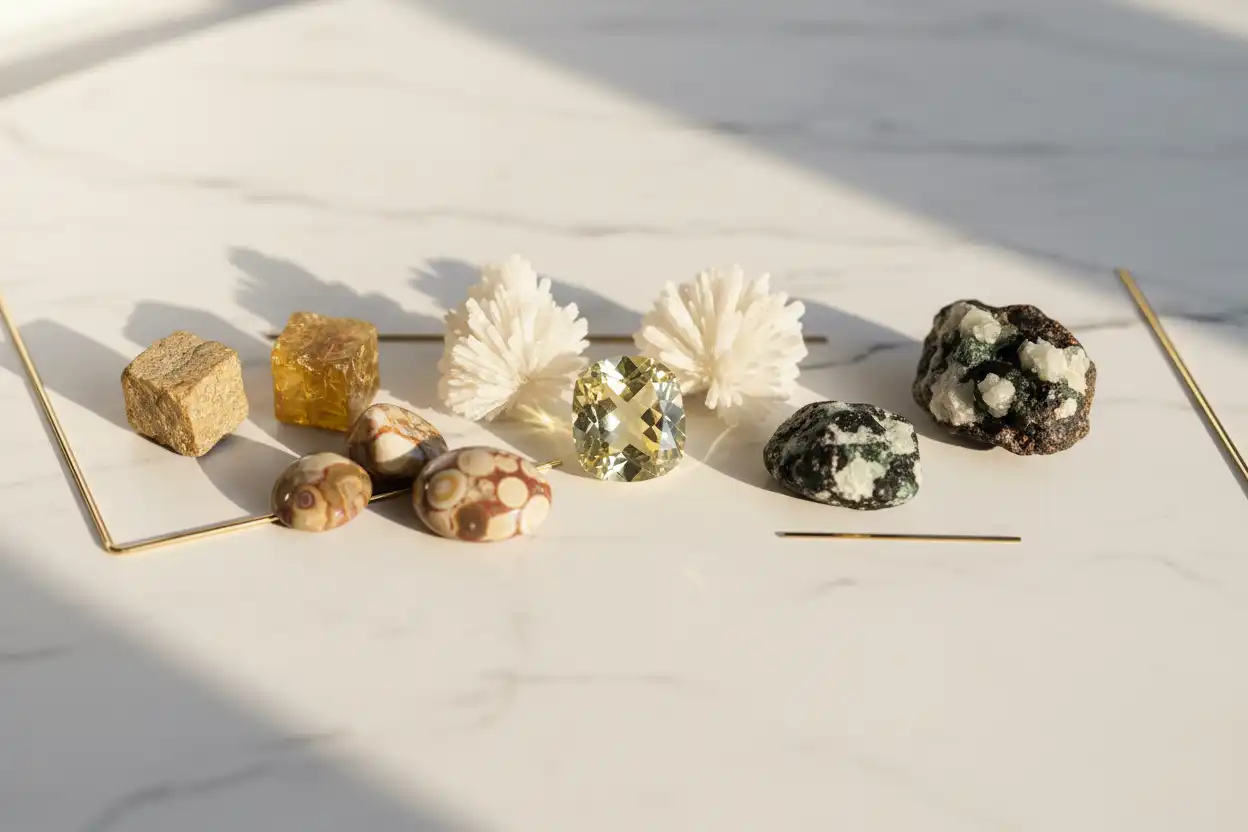
Gemstones and mineral materials that start with X include xanthoconite, xenotime, xonotlite and xylopal.
X is one of the shortest letters in the gemstone alphabet. Its entries include rare collector minerals, fibrous calcium silicate and fossil wood replaced by opaline silica.
Only xylopal is commonly used as a mainstream lapidary material. The other X entries are primarily mineral specimens or specialist collector gems.
Traditional meanings are symbolic associations rather than scientifically proven medical effects.
Continue from Gemstones That Start With W. For a broader mineral-focused overview, explore Crystals That Start With X.
X Gemstones at a Glance
| Gemstone or material | Typical appearance | Material type | Common use |
|---|---|---|---|
| Xanthoconite | Yellow, orange or reddish crystals | Silver arsenic sulfide mineral | Collector specimens |
| Xenotime | Brown, yellow, reddish or gray crystals | Rare-earth phosphate mineral | Collector gems and specimens |
| Xonotlite | White, gray or pale fibrous material | Calcium silicate mineral | Mineral specimens and rare polished pieces |
| Xylopal | Preserved wood grain in opalized material | Fossil and opaline gem material | Cabochons, carvings and pendants |
Xanthoconite
Xanthoconite is a rare silver arsenic sulfide mineral.
It commonly appears as:
- Yellow crystals.
- Orange grains.
- Reddish-orange crystals.
- Small translucent coatings.
- Crystals associated with silver-bearing deposits.
Xanthoconite is traditionally associated with:
- Awareness.
- Careful observation.
- Recognizing consequences.
- Respecting limits.
- Thoughtful decision-making.
Most crystals are small, making xanthoconite a specialist collector mineral rather than a conventional jewelry stone.
Because it contains arsenic, xanthoconite should not be:
- Cut.
- Ground.
- Heated.
- Licked.
- Soaked.
- Used in drinking-water preparations.
Store it in a sealed, labeled container away from children, pets and food.
Xenotime
The name xenotime commonly refers to xenotime-(Y), an yttrium phosphate mineral.
Its colors may include:
- Yellowish brown.
- Reddish brown.
- Wine yellow.
- Pale green.
- Gray.
- Gray-white.
- Nearly black.
Xenotime is traditionally associated with:
- Independence.
- Precision.
- Patience.
- Analytical thinking.
- Recognizing small but important details.
Transparent crystals can occasionally be fashioned into collector gems, but most xenotime remains in mineral collections.
Some specimens may contain uranium or thorium as trace components. The amount varies by composition and locality and cannot be determined from appearance alone.
Avoid continuous carrying, bedroom storage or alteration of unknown xenotime specimens until their composition and radiation level have been assessed.
Xonotlite
Xonotlite is a calcium silicate mineral that commonly occurs in fibrous, needle-like or radiating formations.
Its colors include:
- White.
- Colorless.
- Pale gray.
- Pale pink.
- Cream.
- Slightly greenish material.
Xonotlite is traditionally associated with:
- Structure.
- Patience.
- Practical organization.
- Stability.
- Building progress gradually.
Most material is collected as natural mineral specimens rather than used in jewelry.
Fine fibrous formations can be fragile. Avoid:
- Crushing.
- Bending.
- Dry brushing.
- Sanding.
- Grinding.
- Creating airborne dust.
Compact material may occasionally be polished, but its exact texture and stability should be confirmed before lapidary work.
Xylopal
Xylopal is an older gem and lapidary term for opalized wood.
It forms when opaline silica replaces or fills wood while preserving features such as:
- Grain.
- Growth rings.
- Bark texture.
- Cellular structure.
- Branch or trunk shape.
Xylopal may appear:
- White.
- Cream.
- Yellow.
- Brown.
- Red.
- Gray.
- Black.
- Multicolored.
Some pieces contain precious opal and display play-of-color. Others are valued primarily for their preserved wood patterns.
Xylopal is traditionally associated with:
- Transformation.
- Continuity.
- Patience.
- Respect for history.
- Recognizing gradual change.
It belongs among the fossil and organic-origin materials described in Types of Gemstones.
Solid xylopal can be cut into cabochons, pendants, beads and carvings. Pieces with open fractures, fragile opal seams or porous matrix require more careful handling.
Mineral, Fossil and Collector Differences
The four X entries belong to different material categories:
- Xanthoconite is a silver-arsenic sulfide mineral.
- Xenotime is a rare-earth phosphate mineral.
- Xonotlite is a calcium silicate mineral.
- Xylopal is fossil wood replaced or filled by opaline silica.
This distinction affects jewelry use, safe handling and cleaning.
Xylopal is the most practical lapidary material. The other three are primarily collected for mineralogical rarity.
Which X Materials Are Suitable for Jewelry?
Best Jewelry Option
Xylopal is the most suitable X material for:
- Pendants.
- Cabochons.
- Earrings.
- Inlay.
- Beads.
- Decorative carvings.
A protective bezel can help support pieces containing thin opal seams or natural cracks.
Specialist Collector Jewelry
Transparent xenotime may occasionally be faceted, but potential trace radioactivity, brittleness and rarity make it a specialist material.
Unsuitable for Ordinary Jewelry
Xanthoconite should not be worn because of its arsenic content.
Fibrous xonotlite is generally too fragile or uncertain for exposed jewelry.
Identification Notes
Rare X minerals can be difficult to identify from color or shape alone.
Consider:
- Crystal habit.
- Luster.
- Density.
- Cleavage.
- Locality.
- Associated minerals.
- Laboratory spectroscopy or chemical analysis.
Do not perform destructive scratch, acid or flame tests on rare minerals.
The observations in How to Identify Crystals can help narrow possibilities without damaging a specimen.
Safety and Care
- Keep xanthoconite sealed and prevent dust.
- Do not chemically test arsenic-bearing specimens at home.
- Consider professional radiation screening for substantial xenotime specimens.
- Avoid crushing or brushing fibrous xonotlite.
- Protect xylopal from hard impacts and rapid temperature changes.
- Keep opalized wood away from prolonged soaking when stability is uncertain.
- Store hazardous minerals separately from wearable gemstones.
- Label rare specimens with their name and locality.
The toxic crystals safety list explains why mineral composition matters more than a stone’s commercial or spiritual name.
Frequently Asked Questions
What is the most popular gemstone that starts with X?
Xylopal is the most accessible jewelry and lapidary material. Xenotime is better known among rare-mineral collectors.
Is xanthoconite suitable for jewelry?
No. It contains arsenic and is generally too rare, small and hazardous for ordinary wear.
Is xenotime radioactive?
Some specimens contain uranium or thorium. The level varies and cannot be determined reliably from appearance.
Is xonotlite a real mineral?
Yes. Xonotlite is a recognized calcium silicate mineral that often forms fibrous or needle-like aggregates.
Is xylopal the same as petrified wood?
Xylopal is a type of petrified or mineralized wood in which opal is an important replacement or filling material.
Can xylopal display rainbow colors?
Some opalized wood contains precious opal and displays play-of-color. Other pieces show only body color and preserved wood structure.
Which X gemstone is best for a pendant?
Xylopal is the most practical choice, particularly when supported by a protective bezel.
Are X gemstones suitable for beginners?
Xylopal can be manageable. Xanthoconite, xenotime and fibrous xonotlite require more advanced identification and safety precautions.
Continue the Gemstone Alphabet
Continue with Gemstones That Start With Y, or browse all alphabetical directories through the Crystals 101 collection.