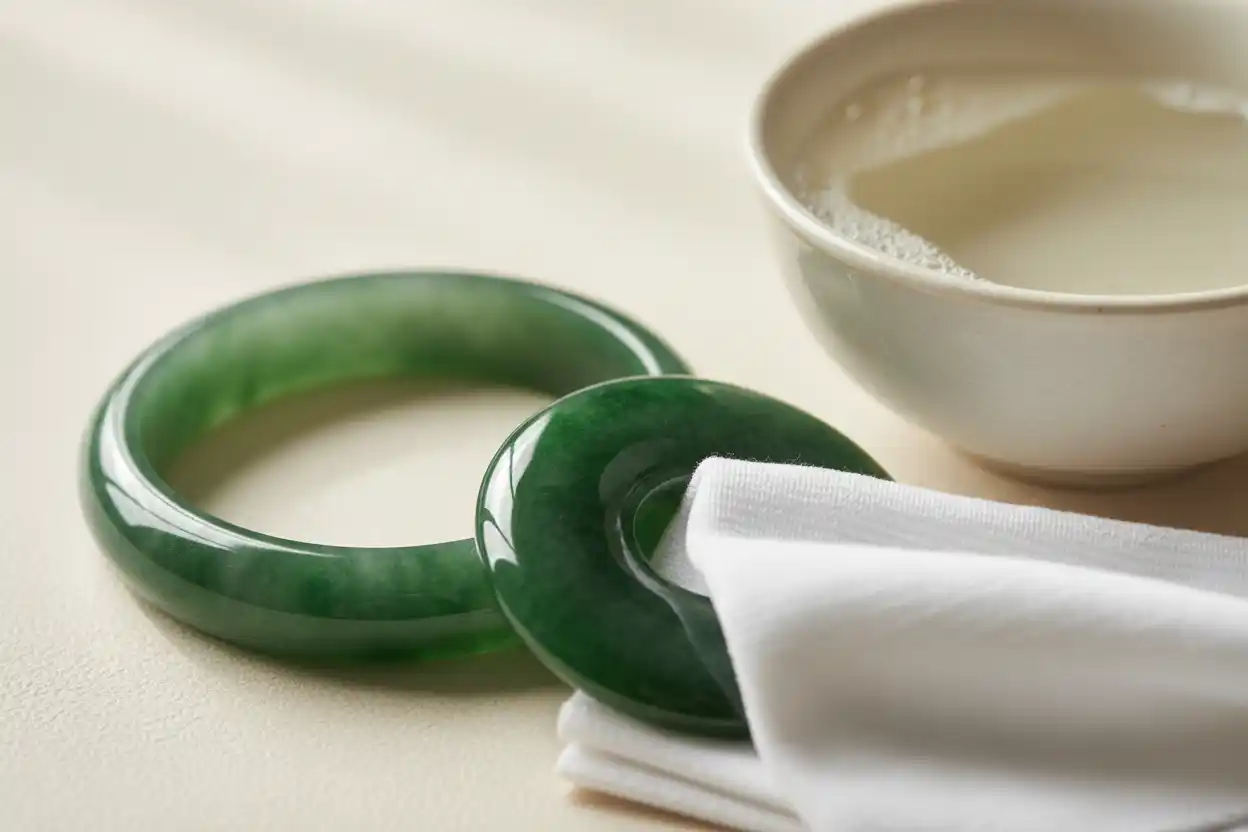
How to Clean Jade Jewelry Safely
Jade jewelry is safest when cleaned with warm water, a small amount of mild soap, and a soft cloth or brush. Untreated jadeite and nephrite can generally tolerate ultrasonic and steam cleaning, but those machines should be avoided unless treatment status and jewelry construction are known.
Dyed, bleached, polymer-impregnated, coated, waxed, glued, or repaired jade requires gentler manual care. Because treated jade is common in the market, warm soapy water is the appropriate default for home cleaning.
Jade Refers to More Than One Material
The term jade traditionally covers two different gem materials: jadeite and nephrite. They have different mineral compositions and hardness ranges, but both are known for exceptional toughness.
Their cultural, gemological, and symbolic background belongs to the broader Jade meaning guide. The individual materials are covered in the Jadeite guide and Nephrite guide.
Jadeite normally rates about 6.5 to 7 on the Mohs scale, while nephrite rates approximately 6 to 6.5. Both can be scratched by quartz-rich dust and harder gemstones.
| Jade characteristic | Cleaning implication |
|---|---|
| Principal materials | Jadeite and nephrite |
| Jadeite hardness | Approximately 6.5 to 7 |
| Nephrite hardness | Approximately 6 to 6.5 |
| Toughness | Exceptional |
| Safest universal method | Warm soapy water and a soft cloth or brush |
| Ultrasonic cleaning | Safe for untreated jade; avoid when treatment is unknown |
| Steam cleaning | Safe for untreated jade; avoid treated or assembled pieces |
| Main risks | Scratching, dye loss, polymer damage, coatings, acids, heat, glue, and metal wear |
The gemstone hardness chart explains why jade can resist breakage exceptionally well while remaining vulnerable to scratches.
That distinction is developed further in Gemstone Toughness vs Hardness.
Jadeite and Nephrite Behave Differently
Jadeite is a pyroxene mineral that can appear green, lavender, white, yellow, orange, red, gray, black, and other colors.
Nephrite is an exceptionally tough interlocking aggregate of amphibole minerals. It is commonly green, white, gray, brown, yellowish, or black.
The detailed distinctions belong to Jadeite vs Nephrite and Jade vs Jadeite.
For routine home cleaning, both materials can receive the same mild soap method. However, treatment status often matters more than whether the stone is jadeite or nephrite.
Understand Type A, Type B, and Type C Jade
A commonly used trade classification separates jadeite according to treatment.
Type A jadeite is natural or has received only traditional wax polishing. Type B jadeite has been bleached with acid and impregnated with polymer resin. Type C jadeite has been dyed.
A piece may also receive both polymer impregnation and dyeing. Coatings, heat, surface wax, filling, glue, assembled construction, and imitation materials create additional care variables.
The complete treatment-identification workflow belongs to How to Spot Treated or Synthetic Jade and the wider Gemstone Treatments Explained guide.
Warm soapy water is the safest choice when the type is unknown. Ultrasound, steam, solvents, acids, and aggressive detergents may alter resin, dye, coating, wax, or glue.
Inspect the Jewelry Before Cleaning
Check the jade under bright light. Look for cracks, fresh chips, loose prongs, movement in the setting, worn drill holes, cloudy adhesive, peeling coating, or color concentrated inside fractures.
A natural color boundary or mineral inclusion is not necessarily damage. However, a crack extending through a bangle or bead should receive professional attention.
Inspect metal fittings, knots, elastic, string, silk, and glue. These materials may be less durable than the jade.
Antique jade carvings may contain old wax, pigment, grime in recesses, repairs, and historically significant surfaces that should not be aggressively cleaned.
Prepare a Safe Cleaning Solution
Fill a shallow bowl with warm water and add a few drops of mild liquid dish soap.
Use a soft cloth for polished bangles, cabochons, and beads. A soft-bristled brush can clean around settings and inside carving recesses.
Prepare a second bowl of clean water for rinsing. Avoid cleaning over an open drain.
The soap should contain no bleach, abrasive particles, strong acids, aggressive alkaline ingredients, citrus solvents, or heavy moisturizers.
Clean Jade Gently
Place a sound piece briefly in the mild solution or dampen the cloth with the soapy water.
Wipe polished surfaces using light movements. Brush around prongs, bezels, drill holes, carving details, hinges, and clasp components without forcing bristles into cracks.
A short cleaning period is sufficient. Extended soaking is unnecessary and may affect polymer, dye, wax, glue, stringing material, antique repairs, or metal components.
Rinse with clean warm water or wipe the soap away with a second damp cloth.
Blot the piece with a lint-free cloth and allow hidden moisture to evaporate at room temperature.
Can Jade Go in an Ultrasonic Cleaner?
Untreated jadeite and nephrite can generally tolerate ultrasonic cleaning. Nevertheless, machine cleaning should not be used when treatment status is unknown.
| Jade condition | Ultrasonic recommendation |
|---|---|
| Confirmed untreated jadeite or nephrite | Generally safe |
| Type A jadeite with stable wax polish | Often safe, but manual cleaning remains gentler |
| Type B polymer-impregnated jadeite | Avoid |
| Dyed or Type C jadeite | Avoid |
| Coated, glued, or assembled jade | Avoid |
| Cracked bangle or damaged carving | Avoid |
| Antique jade | Avoid unless professionally assessed |
| Unknown treatment | Use warm soapy water |
Vibration can loosen settings, affect repairs, expose cracks, or disturb a treated surface.
The broader equipment comparison belongs to Which Gemstones Can Go in an Ultrasonic Cleaner?.
Can Jade Be Steam Cleaned?
Untreated jade can generally tolerate steam. Treated jade should not be exposed to concentrated heat and pressure.
Steam may affect polymer impregnation, dye, wax, glue, coating, old repairs, enamel, or accompanying stones.
Heat from a jeweler’s torch can also harm jade. Therefore, treatment disclosure should be communicated before repair, resizing, soldering, or professional cleaning.
For routine home care, warm soapy water remains the lowest-risk choice.
Acids and Harsh Chemicals
Jade can be affected by warm acids. Avoid vinegar, lemon juice, descaling products, acidic bathroom cleaners, and chemical testing solutions.
Bleach, chlorine, acetone, paint thinner, drain cleaner, oven cleaner, and concentrated alkalis are also inappropriate.
These products may alter dye, polymer, coating, wax, glue, solder, plating, and metal finishes even when the underlying jade remains intact.
Do not use a chemical reaction as a jade-authentication test.
Cleaning a Jade Bangle or Bracelet
A Jade bracelet or solid bangle can be wiped with a soft cloth and washed briefly with mild soap.
Inspect the complete circumference for hairline cracks. A jade bangle may be exceptionally tough, but an existing fracture can spread if the piece is dropped or twisted.
Dry the inside completely before wearing it again. Moisture and soap trapped against the skin may cause irritation.
Avoid striking the bangle against sinks, countertops, door frames, or metal jewelry.
Cleaning Jade Rings
A Jade ring may use a cabochon, carved stone, saddle design, bezel, prongs, or glue.
Clean around the mounting with a soft brush, but do not push against the jade or insert a tool beneath it.
Remove the ring before household cleaning, gardening, heavy exercise, and handling strong chemicals.
A saddle ring carved primarily from jade should be stored away from harder rings that can scratch it.
Cleaning Jade Earrings
Jade earrings may include beads, cabochons, carved drops, metal caps, glue, posts, hooks, or thread.
Wipe the jade component separately from the metal fitting. Keep alcohol-based disinfectant on compatible posts and away from dyed, coated, polymer-treated, or glued areas.
Dry drill holes and metal caps thoroughly before storage.
Cleaning a Jade Necklace
A Jade necklace may contain individually knotted beads, wire, silk, elastic, metal spacers, or carved pendants.
Lay a bead strand flat and wipe each bead rather than soaking the necklace. Wet thread can stretch, stain, or weaken.
Do not pull beads against one another because trapped grit may scratch their polished surfaces.
When the string becomes frayed or permanently soiled, professional restringing is safer than repeated washing.
Cleaning Carved and Antique Jade
Carved jade can collect dust, skin oil, polish residue, and grime in recessed areas. Use a soft damp brush without scraping the details.
Do not use metal picks, powered brushes, abrasive paste, or household polishing compounds.
An antique carving may have surface patina, historic wax, pigment, residue, or repair material that contributes to its character and documentation. Specialist conservation is preferable to intensive home cleaning.
Real Jade, Imitations, and Misleading Names
Serpentine, quartz, aventurine, calcite, glass, plastic, dyed stone, and other materials are frequently sold under names containing the word jade.
Cleaning behavior should not be used to identify the piece. The complete authenticity workflow belongs to Real vs. Fake Jade.
Visual confusion with another common green material is addressed in Aventurine vs Jade.
The tracker’s Types of Jade owns the broader discussion of jadeite, nephrite, colors, textures, trade terms, and misleading names.
Color and Surface Finish
Jade occurs in more colors than green. Lavender, white, black, yellow, gray, orange, and mottled materials may all be genuine depending on species and composition.
Color symbolism belongs to the separate Jade color meaning guide.
A dull surface may come from residue, fine scratches, worn wax, acid bleaching, polymer deterioration, coating damage, or an originally matte polish.
Do not apply cooking oil, baby oil, mineral oil, furniture polish, or household wax. These substances can attract dirt and complicate future examination.
Buying and Documentation
The Jade buying guide covers material identity, color, translucency, texture, treatment, carving quality, construction, and seller disclosure.
Market factors belong to the Jade price guide. Treatment can have a major effect on both value and long-term care.
A reputable laboratory report can identify jadeite or nephrite and may disclose detectable polymer impregnation, dye, or other treatment. The gemstone certification guide explains how laboratory services differ.
Retain the report, invoice, repair history, and treatment disclosure with the jewelry.
Storage and Preventive Care
Store jade separately in a padded box or soft pouch. Diamond, sapphire, ruby, topaz, quartz, and other harder stones can scratch it.
Jade can scratch softer materials, so mixed jewelry should not be stored loose.
Avoid prolonged contact with perfume, cosmetics, sanitizer, chlorine, and household chemicals. Wipe the piece after wear to remove fresh residue.
Frequently Asked Questions
1. What is the safest way to clean jade jewelry?
Use warm water, mild liquid soap, and a soft cloth or brush, then rinse and dry the piece thoroughly.
2. Can jade get wet?
Brief washing is normally safe. Avoid prolonged soaking when the jade is dyed, polymer impregnated, coated, glued, strung, repaired, or of unknown treatment.
3. Can jade go in an ultrasonic cleaner?
Untreated jade can generally tolerate ultrasound. Treated, cracked, glued, antique, or unidentified jade should be cleaned manually.
4. Can jade be steam cleaned?
Untreated jade can generally tolerate steam, but treated jade should not be exposed to concentrated heat and pressure.
5. What is Type B jade?
Type B jadeite has been bleached with acid and impregnated with polymer resin.
6. What is Type C jade?
Type C jadeite has been dyed. Some pieces may also have received polymer impregnation.
7. Can vinegar clean jade?
No. Jade can be affected by warm acids, and vinegar may also damage treatments, glue, and metal components.
8. Can toothpaste polish jade?
No. Toothpaste is abrasive and may scratch jade, wear carvings, or damage metal settings.
9. Should jade be oiled after cleaning?
No household oil is necessary. Oil can attract dirt, change appearance, and complicate treatment assessment.
10. Why does color appear concentrated in jade cracks?
Concentrated color may suggest dye, although laboratory examination is needed for reliable treatment identification.
11. How often should jade jewelry be cleaned?
Wipe it after wear and wash it when oils or residue remain. Frequent aggressive cleaning provides no benefit.
12. When should jade go to a specialist?
Professional care is appropriate for cracks, antique carvings, valuable bangles, peeling coatings, suspected polymer treatment, loose settings, or uncertain identification.
Conclusion
Jade combines moderate scratch resistance with exceptional toughness, but its treatment history determines how aggressively it can be cleaned. Warm soapy water works across jadeite, nephrite, and most jewelry constructions without assuming that the material is untreated. Before using steam or ultrasound, the essential next question is whether the jade has been dyed, bleached, polymer impregnated, coated, or repaired.