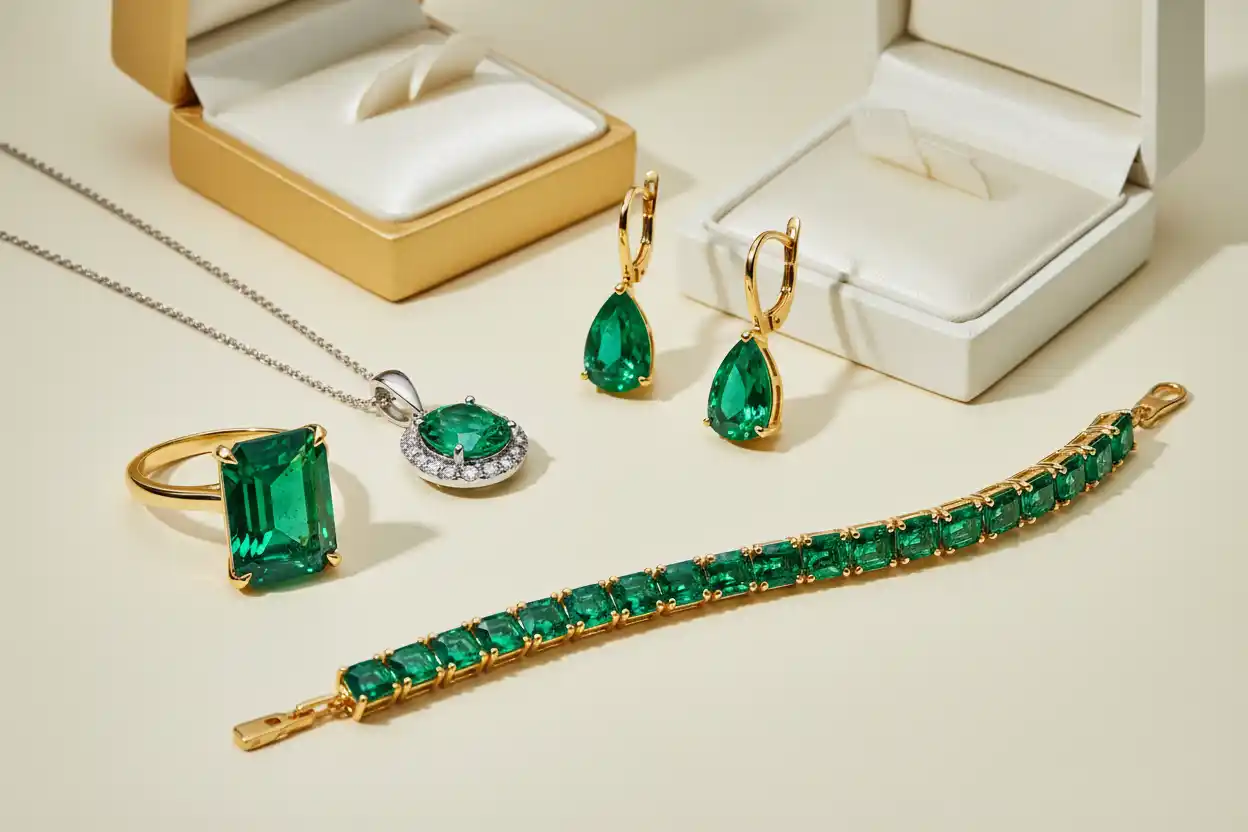
May Birthstone Jewelry: 15 Sacred Symbols of Emerald Abundance
May birthstone jewelry centers on emerald, the green to bluish-green variety of beryl and one of the world’s historically important colored gemstones. Emerald’s intense green has been admired for thousands of years, and its long association with spring makes symbolism involving renewal, fertility of the land, growth and abundance easy to understand. GIA recognizes emerald as the May birthstone and associates it with the twentieth and thirty-fifth wedding anniversaries.
Fine emerald is judged primarily by color. The most desirable stones generally show vivid bluish green to pure green with a medium to medium-dark tone that remains bright rather than blackish. Chromium, vanadium and iron influence emerald color, while transparency and the distribution of inclusions also affect beauty and value. Unlike aquamarine, eye-visible inclusions are expected in many natural emeralds, and completely eye-clean stones are unusually rare.
The word abundance in emerald symbolism should remain cultural and personal rather than financial or supernatural. A May birthstone ring can represent growth, prosperity, renewal or gratitude because green naturally evokes spring and flourishing life. There is no established evidence that emerald attracts money, increases fertility, cures disease or creates measurable healing energy. Its symbolic power comes from human history, color, rarity and personal meaning.
15 Sacred Symbols of May Birthstone Jewelry
- Emerald green can symbolize renewal.
- Spring associations can represent new beginnings.
- Rich green can symbolize abundance and flourishing life.
- Historic royal use can represent dignity.
- Emerald can symbolize enduring love and loyalty.
- Its rarity can represent something deeply valued.
- Natural inclusions can symbolize individuality.
- Beryl durability can represent resilience with care.
- Green can symbolize hope and restoration.
- Ancient traditions connect emerald with wisdom.
- May birthstone identity can express personal belonging.
- Anniversary use can symbolize long-term partnership.
- Heirloom emeralds can represent continuity.
- Jewelry can serve as a reminder of personal growth.
- Sacred abundance remains symbolic rather than a guaranteed material outcome.
Emerald Has Represented Green for Thousands of Years
Few gemstones are as strongly identified with a single color as emerald. GIA describes emerald as the historical standard for green among colored gemstones, with the finest stones showing vivid bluish green to pure green.
That color explains much of May birthstone jewelry’s symbolism.
May falls during spring in the Northern Hemisphere, when vegetation is actively returning and landscapes become visibly greener. Emerald therefore became an intuitive symbol of rebirth, renewal and abundance. GIA specifically notes that emerald has long evoked spring and renewal, reinforcing this established cultural association.
A May birthstone pendant can therefore symbolize growth after a difficult year, while an emerald ring may mark the beginning of a marriage, business, family chapter or personal goal.
The gemstone does not cause growth or prosperity. It represents those ideas because humans connect green with flourishing life.
Emerald’s Royal History Gives It Symbolism of Dignity and Prestige
Emerald has fascinated rulers for centuries. GIA records Cleopatra’s famous interest in emeralds and notes the gemstone’s importance among Egyptian, Inca and later European elites.
This history created lasting associations with status, power and refinement.
Modern May birthstone jewelry does not need to be expensive or royal in scale to borrow some of that visual character. Even a small vivid emerald can appear highly distinctive because the green color carries immediate recognition.
The symbolism described through emerald meaning often includes wisdom, love, renewal and prosperity. Those meanings are historically interesting, but they should not be interpreted as physical powers generated by the crystal.
Color Is the Most Important Emerald Quality Factor
When evaluating emerald, color should normally receive the greatest attention. GIA identifies bluish green to pure green with vivid saturation and a tone that is not too dark as the most desirable range.
A stone can have attractive clarity yet remain less desirable if the color is weak, yellowish or excessively dark.
This makes side-by-side comparison particularly useful when buying May birthstone jewelry. Several emeralds placed together reveal differences in saturation and brightness that photographs can hide.
Lighting matters too. A stone that looks lively under intense showroom illumination may appear much darker indoors.
When you buy emerald, compare the actual face-up color before becoming distracted by carat weight or origin claims.
Visible Inclusions Are Normal in Natural Emerald
Emerald clarity expectations differ dramatically from diamond, aquamarine or many other transparent gemstones.
Natural emerald commonly contains fractures and inclusions visible without magnification. GIA notes that eye-clean natural stones are rare and therefore especially valuable. The internal appearance is often described in the trade as jardin, the French word for garden.
This means a May birthstone jewel should not be rejected simply because the center stone is included.
The more important question is whether those inclusions reduce transparency, disturb the color or create a durability concern.
A fine emerald can remain extremely valuable while displaying obvious internal features.
These inclusions also lend themselves naturally to symbolism involving individuality. No two stones contain exactly the same internal landscape, making every natural emerald visually distinct.
Emerald Is Hard but Requires More Care Than Ruby or Sapphire
Emerald ranks 7.5 to 8 on the Mohs scale, so its surface has good scratch resistance. Its practical durability is limited more by fractures and fair-to-good toughness than by hardness alone.
GIA specifically notes that emerald requires more careful wear than ruby or sapphire, even though properly cared-for stones can survive for generations.
| Property | Emerald |
|---|---|
| Mineral species | Beryl |
| Typical color | Green to bluish green |
| Main color influences | Chromium, vanadium and iron |
| Mohs hardness | 7.5–8 |
| Toughness | Fair to good |
| Common inclusions | Crystals, fractures and fluid features |
| Common enhancement | Fracture filling with oils or resins |
| Safe routine cleaning | Warm soapy water with gentle cleaning |
| Daily ring wear | Possible with sensible protection |
A lower-profile or protected setting can be helpful for an emerald ring worn regularly.
The gemstone should be removed before strenuous work, and sudden blows against hard surfaces should be avoided.
Fracture Filling Is Extremely Common in Emerald
Many natural emeralds contain surface-reaching fractures. Oils, resins or other fillers are therefore commonly introduced to reduce the visual appearance of those fractures and improve apparent clarity.
GIA reports that the great majority of fashioned natural emeralds contain some form of fracture filling and classifies enhancement as minor, moderate or significant on its emerald reports rather than assigning an overall clarity grade.
This treatment is widely accepted when properly disclosed.
The amount of enhancement still matters because a heavily filled emerald occupies a different quality and value position from an otherwise comparable stone with only minor filling.
For expensive May birthstone jewelry, treatment disclosure should be clear rather than hidden behind vague phrases such as “enhanced.”
Emerald Should Not Be Cleaned Like Diamond
The combination of natural fractures and clarity enhancement makes aggressive cleaning risky.
GIA recommends warm soapy water and gentle cleaning as the safest method. Steam can cause oil or unhardened resin to leave fractures, while ultrasonic vibrations can worsen existing weaknesses.
Heat is another concern because it can extend fractures or damage filling substances.
This is especially important when a May birthstone ring is taken to a jeweler for repair. The professional working on the piece should know that the center stone is emerald and may contain fracture filler before applying heat near the setting.
Proper care can preserve emerald jewelry for generations, but treatment history matters.
Emerald Abundance Symbolism Comes From Green, Not Guaranteed Wealth
Modern spiritual writing often describes emerald as a stone of abundance, prosperity and financial success.
The association is easy to understand because green vegetation symbolizes fertile land and plentiful growth in many cultures.
Yet an emerald does not increase income, attract money or guarantee business success.
A May birthstone ring may still represent abundance in a more meaningful sense. The wearer might use it to symbolize gratitude, family growth, creative opportunity or appreciation for what has already been built.
The symbolism in emerald benefits is most responsible when abundance is framed this way rather than as a financial promise.
Emerald Has Long Been Connected With Love and Partnership
Emerald symbolism is not limited to money or growth.
Historical traditions also connected the gemstone with love, loyalty and insight into relationships, while modern jewelry culture frequently uses emerald for anniversaries and engagement rings.
GIA identifies emerald with the twentieth and thirty-fifth wedding anniversaries, reinforcing its place in long-term relationship jewelry.
Green can also suggest renewal within a relationship rather than simply its beginning.
An emerald anniversary ring may therefore represent the ability of a partnership to continue developing after many years.
Geographic Origin Can Matter, but It Does Not Replace Quality
Colombia has a particularly prestigious emerald history, while important production also comes from Zambia, Brazil, Ethiopia, Afghanistan and other regions.
GIA notes that every mining region produces a range of quality and that origin becomes most commercially meaningful when an exceptional gemstone also has independent laboratory provenance.
This means a dull or heavily treated stone does not become superior simply because a seller describes it as Colombian.
Likewise, a vivid transparent Zambian or Ethiopian emerald can be exceptional on its own merits.
The factors behind emerald price should begin with actual color, transparency, treatment and cutting before origin premiums are considered.
Emerald Cutting Must Balance Beauty With Fragility
The classic rectangular emerald cut did not receive its name by accident.
Emerald crystals often contain significant fractures, so cutters must orient and shape the gemstone carefully. GIA explains that the clipped corners of an emerald cut can help reduce vulnerability while the step facets emphasize color and transparency.
Other shapes can also be beautiful, including ovals, cushions, pears and rounds.
A well-cut emerald should look lively across the face rather than showing a large transparent window through the center or excessive darkness along the edges.
Because color dominates emerald value, cutting should support the visible green rather than simply retain maximum weight.
Natural and Laboratory-Grown Emerald Need Clear Disclosure
Laboratory-grown emerald has essentially the same basic mineral identity as natural emerald but forms through an artificial growth process rather than geological formation.
GIA can distinguish natural from laboratory-grown emerald and report detectable treatments. Its colored-stone reports can also provide a geographic-origin opinion for natural stones when possible and requested.
This matters in May birthstone jewelry because laboratory-grown emerald may offer vivid color and attractive clarity at a very different price from a comparable natural stone.
Neither should be confused with green glass or another emerald imitation.
The buyer should simply know what is being purchased.
Emerald Healing Lore Is Historical, Not Medical Evidence
Emerald has attracted health-related beliefs for centuries. GIA records legends claiming that the gemstone could increase intelligence or cure illnesses such as cholera and malaria. These are historical examples of gemstone lore, not medically validated treatments.
Modern claims around emerald healing properties may involve heart health, fertility, eyesight, emotional healing or chakra balance.
There is no established clinical evidence that wearing emerald produces these effects.
A person may still enjoy the gemstone during meditation or personal ritual. The spiritual experience can be meaningful without becoming a substitute for medical care.
May Birthstone Jewelry Can Become an Exceptional Heirloom
Emerald’s long history, recognizable color and rarity make it particularly suited to meaningful family jewelry.
A pendant passed between generations can carry memories that exceed the gemstone’s market value. A ring purchased for a May birthday may later become an anniversary piece or family heirloom.
Because emerald requires more care than ruby or sapphire, preservation also becomes part of the story. Periodic inspection of prongs, gentle cleaning and informed jewelry repair can keep a fine stone wearable for decades.
This combination of beauty, vulnerability and longevity gives emerald a more nuanced symbolism of resilience. It can last for generations, but only when treated thoughtfully.
Conclusion
May birthstone jewelry centers on emerald, a green to bluish-green beryl treasured for thousands of years and closely associated with spring, renewal and abundance. Fine emerald is valued primarily for vivid green color, strong transparency and attractive cutting, while natural inclusions are common and widely accepted. Its Mohs hardness of 7.5 to 8 provides good scratch resistance, but fractures and common clarity enhancement mean it requires gentler care than ruby or sapphire. Historical associations with love, wisdom, prosperity and healing can make emerald deeply symbolic, but abundance and spiritual power should remain personal interpretations rather than financial or medical promises. A carefully chosen emerald can combine May identity, fine-jewelry beauty and genuine heirloom potential.
FAQs About May Birthstone Jewelry
What is the May birthstone?
Emerald is the recognized May birthstone. It is the green to bluish-green variety of beryl and is also associated with the twentieth and thirty-fifth wedding anniversaries.
What emerald color is most valuable?
The most desirable emeralds generally show vivid bluish green to pure green with a tone that remains bright rather than overly dark.
Are inclusions normal in emerald?
Yes. Eye-visible inclusions are common in natural emerald, and completely eye-clean stones are especially rare and valuable.
Is emerald durable enough for a ring?
Yes, when worn with sensible care. Emerald ranks 7.5 to 8 on the Mohs scale, but its fair-to-good toughness and frequent fractures mean it needs more protection from impacts than ruby or sapphire.
Are emeralds usually treated?
Many emeralds are fracture filled with oils, resins or related substances to reduce the visibility of surface-reaching fractures. The amount of enhancement can materially influence value.
How should May birthstone jewelry be cleaned?
Warm soapy water with gentle cleaning is the safest method. Steam and ultrasonic cleaners are generally not recommended because they can affect fractures or filling substances.
Does emerald attract abundance or money?
There is no scientific evidence that emerald attracts wealth or changes financial outcomes. Abundance is a symbolic interpretation connected with green color, spring and cultural traditions.
Does emerald have healing powers?
There is no established medical evidence that emerald treats disease, improves fertility, heals the heart or produces therapeutic energy. Historical healing claims belong to folklore rather than clinical science.
Disclaimer:
Sacred, abundance, healing, fertility, prosperity and energetic meanings associated with emerald reflect historical traditions, cultural symbolism and personal spiritual practice rather than established medical, psychological or financial effects. May birthstone jewelry does not replace professional healthcare or financial decision-making, and perceived emerald energy cannot establish gemstone authenticity, treatment, origin or quality.