Best Gemstones for Sensitive Skin: Styles & Buying Guide
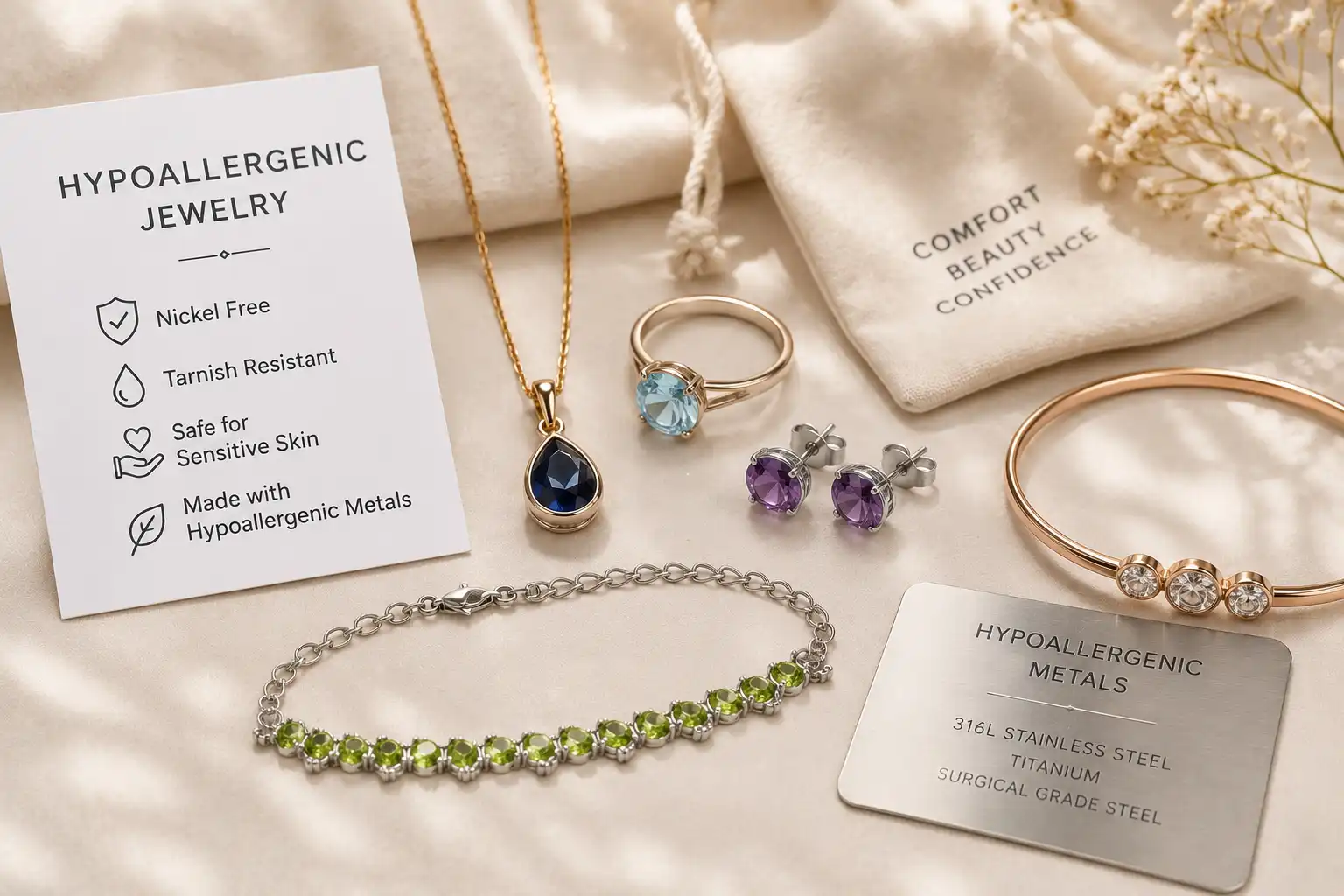
The best gemstones for sensitive skin are usually smooth, stable, nonporous or minimally porous materials that can be cleaned easily and worn in jewelry made from a well-specified metal, yet the gemstone itself is rarely the first component to investigate when a ring, necklace, bracelet or pair of earrings causes itching or irritation. Nickel, cobalt and other alloy components are established causes of allergic contact dermatitis, while trapped soap, sweat, friction, rough surfaces, plating wear, adhesives and gemstone treatments can create additional problems that may look similar from the wearer’s perspective.
That distinction changes how the best gemstones for sensitive skin should be chosen. A polished sapphire mounted on a nickel-containing post can still cause trouble for a nickel-sensitive wearer, while an inexpensive quartz set in accurately specified titanium may be much easier to tolerate because the material actually touching the skin is different.
Diamond, sapphire, ruby, spinel, moissanite and untreated solid quartz are among the easiest gemstone materials to incorporate into sensitive-skin jewelry because they can take smooth polished surfaces and generally have straightforward routine care when structurally sound. However, no gemstone, metal or finished piece should be described as universally allergy-proof, because individual sensitivities differ and reactions can come from several components within the same item.
Best Gemstones for Sensitive Skin at a Glance
| Gemstone | Why it can work well | Main caution |
|---|---|---|
| Diamond | Hard, smooth, nonporous polished surface | Fracture filling, coatings and setting metal still matter |
| Sapphire | Hard, durable and easily polished | Filled, dyed or composite material needs different care |
| Ruby | Same durable corundum structure as sapphire | Glass-filled ruby requires much more caution |
| Spinel | Hard, smooth and durable with no easy cleavage | Confirm natural/lab-grown status and treatment |
| Moissanite | Very hard, smooth and commercially lab-grown | The setting remains the main skin-contact issue |
| Quartz | Smooth polish, broad availability and easy cleaning | Dye, coatings, fracture filling and glue may be present |
| Jadeite / nephrite | Smooth polished surfaces and exceptional toughness | Polymer impregnation, dye and wax treatment matter |
| Garnet | Generally accepts a durable smooth polish | Treatment, fractures and jewelry construction vary |
| Aquamarine | Hard polished beryl suitable for many styles | Fractures and setting metal remain relevant |
| Onyx / chalcedony | Smooth opaque surface and easy-to-wear shapes | Black onyx is commonly dyed |
| Turquoise | Comfortable in cabochons and lightweight jewelry | Porosity, stabilization, dye and surface contamination |
| Pearl | Smooth organic surface and excellent earring use | Cosmetics, acids, glue and posts require attention |
| Opal | Smooth cabochons can work in low-contact jewelry | Porosity, treatments and doublet/triplet adhesives |
| Emerald | Smooth faceted or cabochon surface | Surface-reaching fissures commonly contain oil or resin |
The best gemstones for sensitive skin should therefore be evaluated together with the complete piece rather than ranked as though the stone alone determines whether jewelry will be comfortable.
Sensitive Skin Is Not One Jewelry Problem
The phrase sensitive skin can describe several different experiences, and identifying that difference is more useful than immediately replacing one gemstone with another.
Allergic contact dermatitis occurs when the immune system reacts to an allergen that touches the skin, with nickel and cobalt among the most important jewelry-related examples. A reaction may develop after repeated exposure even when the same type of jewelry appeared comfortable previously.
Irritant contact dermatitis is different because an allergy is not required. Soap trapped beneath a ring, sweat under a watch or bracelet, repeated rubbing, rough unfinished metal, cleaning chemicals or an overly tight piece can irritate the skin mechanically or chemically.
Piercing irritation introduces still more variables because the jewelry passes through tissue rather than resting only against intact skin, which makes material specification, surface finish, dimensions and appropriate piercing jewelry particularly important.
For that reason, changing to one of the best gemstones for sensitive skin may accomplish little if the actual problem is a nickel-containing post, worn plating or moisture trapped beneath the ring.
The Metal Usually Matters More Than the Gemstone
For most jewelry reactions, the first question should be:
What material is actually touching the skin?
A gemstone may occupy the visual center of a ring while the finger contacts only gold alloy, platinum, titanium or another metal beneath it. An earring can display a perfectly stable sapphire at the front while its post and butterfly back are made from an entirely different alloy.
Nickel is especially important because it is a common cause of allergic contact dermatitis associated with jewelry.
Cobalt can also cause metal allergy, while reactions to gold, palladium and other metals are possible in susceptible individuals.
This means that the best gemstones for sensitive skin work best when paired with accurately specified jewelry metal rather than vague labels such as “premium alloy,” “medical metal” or “hypoallergenic.”
Best Metals to Pair With Sensitive-Skin Gemstones
Implant-Grade Titanium
Titanium is one of the strongest starting points when the jewelry enters a piercing or when a wearer already knows that common jewelry alloys create problems, particularly when the product identifies an appropriate implant-compatible material standard rather than using the word titanium alone.
Titanium is lightweight, corrosion resistant and suitable for a wide range of earrings, posts, rings and body jewelry, while anodizing can create color through controlled surface oxidation rather than adding conventional paint.
The smoothness of the finished piece still matters.
A poorly polished post, rough thread or sharp edge can cause mechanical irritation even when the base metal itself is well tolerated.
Niobium
Niobium is another metal frequently used in body jewelry and can be a useful option for people trying to reduce exposure to conventional nickel-containing alloys.
It can be anodized into several colors and provides a different weight and appearance from titanium.
As with any jewelry material, accurate composition and workmanship matter more than a generic sensitive-skin claim.
Platinum
Platinum is a strong fine-jewelry option because high-purity platinum jewelry can minimize the amount of alloying metal present compared with lower-purity gold products, while its naturally white appearance does not depend on rhodium plating to remain fundamentally white.
However, platinum jewelry is still normally an alloy rather than chemically pure metal.
Different products may contain ruthenium, cobalt, iridium or other components, and rare reactions remain possible.
For the best gemstones for sensitive skin in premium engagement rings or earrings, platinum can nevertheless provide an excellent starting point when the precise alloy is known.
Nickel-Free High-Karat Yellow Gold
High-karat yellow gold can work well when the complete alloy is confirmed to be free from a metal the wearer already reacts to.
Karat alone is not enough.
An 18-karat gold item contains 75% gold and 25% other alloy components, while lower-karat pieces contain an even larger proportion of non-gold metal.
Ask what those metals are.
A stamp establishes gold purity, not a complete allergy profile.
Implant-Grade Stainless Steel
Certain implant-standard stainless steels are widely used in professional body jewelry, although steel can contain nickel within its alloy structure.
Many people tolerate suitable implant-grade steel because nickel release can remain low, yet someone with a strong confirmed nickel allergy may still prefer titanium or another option recommended for their individual circumstances.
The phrase “surgical steel” by itself is too vague to establish composition.
Why White Gold Needs Extra Attention
White gold deserves special scrutiny when selecting the best gemstones for sensitive skin because many traditional white-gold alloys use nickel to whiten and strengthen gold.
Rhodium plating is commonly applied over the surface to produce a bright reflective white appearance.
That coating can initially separate the skin from the underlying alloy, but plating is not permanent.
Ring shanks, earring posts, edges and high-friction areas gradually wear, after which the alloy underneath can contact the skin directly.
Palladium-based white-gold alloys are available and may reduce nickel exposure, although no alloy should be assumed appropriate for every wearer.
If nickel sensitivity is already known, ask the jeweler specifically whether the white gold is nickel based or palladium based.
Rose Gold and Copper
Rose gold receives its pink color largely through copper-rich alloying.
Many people wear rose gold without difficulty, yet copper, other alloy components and surface residues can cause problems for some wearers.
Green discoloration from copper compounds is not automatically an allergy, but persistent itching, scaling, swelling or inflammation is a reason to stop wearing the piece and determine what is happening.
For the best gemstones for sensitive skin, the romantic appearance of rose gold should therefore be separated from the practical question of whether a particular wearer tolerates its alloy.
Plated Jewelry Can Become a Problem Later
Gold-plated, silver-plated or rhodium-plated jewelry can initially feel comfortable because the surface coating separates the skin from the underlying base metal.
The difficulty is wear.
Friction gradually removes plating from:
- Ring interiors
- Bracelet edges
- Necklace clasps
- Earring posts
- Butterfly backs
- Chain links
- High points around settings
Once the layer becomes thin or disappears, a nickel-containing or copper-rich base metal can become exposed.
Someone seeking the best gemstones for sensitive skin should therefore give more attention to the metal underneath a coating than to how attractive the coating looks when new.
1. Sapphire: One of the Best Gemstones for Sensitive Skin
Sapphire is one of the best gemstones for sensitive skin from a physical-material standpoint because corundum ranks Mohs 9, accepts an exceptionally smooth polish and withstands routine jewelry wear well when the stone is structurally sound.
It is also available in blue, pink, yellow, green, teal, purple, white, black and other colors, allowing sensitive-skin jewelry to be designed without restricting the wearer to one aesthetic.
The broader sapphire color guide explains how these different colors remain corundum while trace chemistry and treatments create very different appearances.
For skin compatibility, the practical advantage is the polished surface rather than sapphire’s symbolic meaning.
A smooth faceted or cabochon sapphire does not normally present the same porosity and residue-retention concerns as more absorbent ornamental materials.
Treatment Changes the Care Question
Conventionally heated sapphire remains highly durable for ordinary jewelry wear.
Filled, dyed, coated or composite sapphire should be treated differently because the added material may be less resistant to heat, solvents, wear or cleaning products than corundum itself.
The best gemstones for sensitive skin are easiest to manage when treatment is disclosed, because care can then be matched to the actual object.
2. Ruby: Durable, Smooth and Easy to Incorporate
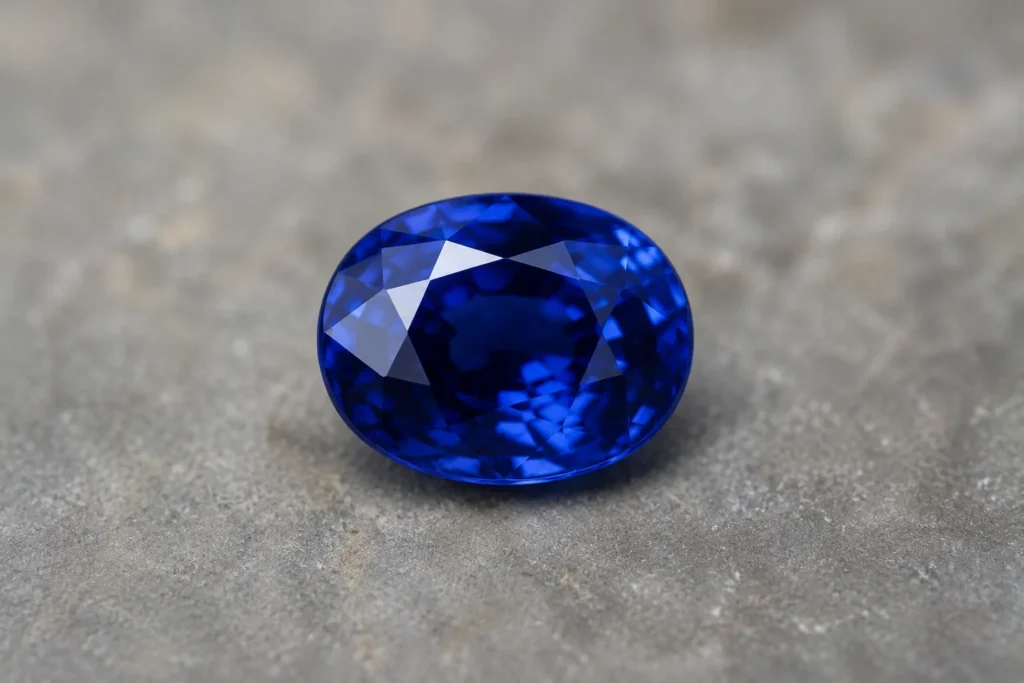
Ruby is red corundum and shares sapphire’s Mohs hardness of 9, excellent practical jewelry durability and capacity for a highly polished surface.
That combination makes ruby one of the best gemstones for sensitive skin when the wearer wants strong red color.
The ruby guide explains the mineral’s corundum structure and the distinction between ordinary heat treatment and more extensive treatments such as glass filling.
That treatment distinction matters greatly here.
A sound untreated or conventionally heated ruby can usually be cleaned conservatively without complicated surface concerns, whereas a glass-filled ruby contains substantial foreign material within fractures and may have stricter chemical and heat limitations.
The ring, pendant or earring should therefore be evaluated as a complete construction.
Ruby itself may be durable while its filler, solder, post or clasp becomes the part that determines practical skin compatibility.
3. Spinel: A Strong Choice in Many Colors
Spinel is one of the best gemstones for sensitive skin when a smooth durable natural or laboratory-grown gem is desired without choosing corundum.
It ranks Mohs 8, has no prominent easy cleavage and accepts a strong polish, making it well suited to rings, earrings, pendants and bracelets.
Natural spinel occurs in red, pink, purple, violet, blue, gray, black and other colors.
The spinel guide explains why it is a separate magnesium-aluminum oxide mineral rather than a sapphire or ruby substitute.
For sensitive-skin jewelry, simple polished spinel in an accurately specified metal is comparatively straightforward.
However, natural versus laboratory-grown origin and any unusual treatment should still be disclosed correctly, particularly when value is significant.
4. Moissanite: Strong for Earrings and Rings
Moissanite is commercially available mainly as laboratory-grown silicon carbide and combines high hardness, good practical toughness and a smooth nonporous polished surface.
Those properties make it one of the best gemstones for sensitive skin when the buyer wants a bright colorless or near-colorless stone.
The moissanite guide explains why moissanite is its own gem material rather than laboratory-grown diamond.
For skin compatibility, the distinction matters less than the construction.
A moissanite earring mounted on a nickel-containing post can still irritate a nickel-sensitive ear.
A moissanite ring can still trap soap underneath a wide band.
A moissanite pendant can still contain an unknown alloy in the chain or clasp.
The stone itself can be an easy-care choice, but the complete jewelry object determines actual contact.
5. Diamond: A Smooth Surface but Not a Complete Solution
Diamond is extremely hard and can be polished to a smooth surface that works very well in sensitive-skin jewelry.
It is particularly practical in earrings, where small stones may sit close to the skin but the post and back usually create more meaningful prolonged contact than the gemstone.
Fracture-filled or coated diamonds deserve separate consideration because foreign materials have been added to alter the appearance.
The same principle applies to jewelry adhesives occasionally used in certain decorative constructions.
Diamond can therefore be counted among the best gemstones for sensitive skin, but paying more for diamond does not make a nickel-containing mounting less problematic.
6. Quartz: Accessible and Generally Straightforward When Untreated
Quartz varieties such as amethyst, citrine, smoky quartz and rock crystal can be useful best gemstones for sensitive skin because they accept a smooth polish, rank Mohs 7 and are widely available in simple untreated jewelry.
Quartz is also abundant enough that buyers can often avoid complicated treatments without paying a large rarity premium.
However, commercial quartz can be:
dyed, coated, fracture filled, irradiated, heated, glued into composite objects or treated with metallic surface films.
Those modifications do not automatically make a piece unsuitable, yet they complicate the claim that “natural crystal” tells you everything relevant about the jewelry.
When sensitive skin is the priority, a straightforward solid polished gemstone in a known metal is often preferable to a heavily coated or assembled fashion piece.
7. Jadeite and Nephrite
Jadeite and nephrite can work well among the best gemstones for sensitive skin because both can take smooth polished surfaces and possess exceptional toughness, particularly in cabochons, bangles and carved jewelry.
The main concern is not ordinary jade mineralogy but treatment and construction.
Jadeite may be bleached and polymer impregnated, dyed or assembled, while wax can be used on polished surfaces.
Those treatments affect value and may influence how the piece should be cleaned.
A large jade bangle also contacts a considerable amount of skin, so soap, lotion and perspiration can collect between the bangle and wrist even when the stone itself causes no allergic reaction.
Smoothness and cleaning habits remain important.
8. Garnet
Many garnets are practical best gemstones for sensitive skin because they accept strong polished surfaces and generally require uncomplicated physical care when untreated and structurally sound.
The group includes red almandine and pyrope, raspberry rhodolite, orange spessartine, green tsavorite and several other varieties.
The important point is that garnet itself should not be confused with the metal holding it.
A smooth garnet pendant on a nickel-containing chain can still cause a neck reaction.
Likewise, a garnet bracelet can include unknown spacer beads or clasps that matter far more to skin contact than the gemstone beads themselves.
Gemstones That Require More Treatment Awareness
Some gemstones can still be worn comfortably by people with sensitive skin, but their porosity, filling, adhesives or surface treatments deserve greater attention.
Turquoise
Turquoise can be naturally porous and may receive wax, oil, stabilization with polymer, dye or reconstruction.
Those treatments can improve durability and appearance, but they also mean that the finished object is not simply untreated turquoise touching the skin.
Perfume, lotion, sweat and cleaning products may also interact with porous or treated surfaces.
For someone looking for the best gemstones for sensitive skin, a well-documented stabilized turquoise piece may actually be easier to maintain than extremely porous untreated material, provided the wearer tolerates the complete construction.
Pearl
Pearls provide smooth surfaces and are particularly popular in earrings, yet they require consideration of several non-gem components.
Pearl studs are commonly drilled and attached to posts with adhesive.
The post and earring back may be a different metal from the decorative front.
Nacre is also vulnerable to acids, perfume, hairspray and abrasive cleaning.
Put pearl jewelry on after cosmetics and fragrance, and keep the posts, backs and adhesive area clean and dry.
Opal
Solid opal, hydrophane opal, doublets and triplets should not be treated as one construction.
Doublets and triplets contain adhesive between layers.
Some opals can absorb liquids more readily than others.
The durability differences among these materials are explained within the wider gemstone toughness and hardness guide.
Opal can still be used in sensitive-skin jewelry, particularly earrings and pendants, but the complete construction deserves more care than a straightforward sapphire or spinel.
Emerald
Emerald itself is beryl, but natural material commonly contains surface-reaching fissures that may be filled with oil, resin or another clarity-enhancing substance.
Those fillers can influence cleaning and repair.
A smooth emerald pendant in platinum may be perfectly comfortable for a wearer who tolerates the alloy, while the same stone in an unsuitable metal may not be.
The phrase best gemstones for sensitive skin therefore refers to ease of use within a complete jewelry design rather than a medical property of the emerald.
Earrings Need the Most Careful Material Specification
Earrings and body jewelry deserve special attention because part of the jewelry passes through a piercing channel.
The visible gemstone may be only a small part of the contact surface.
For stud earrings, examine:
- Post material
- Earring back
- Solder
- Plating
- Threading
- Surface finish
- Gemstone adhesive
- Overall weight
A decorative sapphire attached to an unknown plated-metal post does not become suitable simply because sapphire is one of the best gemstones for sensitive skin.
When jewelry is intended for a new or healing piercing, use appropriate professionally specified piercing jewelry rather than choosing primarily by gemstone appearance.
Large or heavy stones can create mechanical irritation even when every material is otherwise well tolerated.
Rings Can Trap Soap and Moisture
A rash beneath a ring does not always prove metal allergy.
Wide bands and enclosed settings can trap water, liquid soap, hand sanitizer residue and sweat against the skin, especially when the ring fits tightly.
The resulting irritation may appear exactly where the ring sits.
When selecting the best gemstones for sensitive skin in rings, look beyond the center stone and evaluate the interior of the band.
A smooth interior is easier to clean than rough unfinished casting or deeply textured metal.
Very wide bands may require slightly different sizing and can trap more moisture than narrow bands.
Remove the ring when practical during washing, rinse residue from the jewelry and allow both skin and ring to dry thoroughly before replacing it.
Necklaces Can React at the Clasp Rather Than the Gemstone
A necklace may contain a carefully chosen gemstone pendant and still use a completely different metal in the chain, jump rings or clasp.
That is why reactions around the neck can be confusing.
The pendant may receive the blame even though the clasp or chain is the actual source of metal exposure.
When comparing the best gemstones for sensitive skin in necklaces, confirm the material of:
the chain, clasp, jump rings, extender and pendant bail.
Do not assume they match merely because they share the same surface color.
Bracelets and Beads
Gemstone bracelets create more direct gemstone-to-skin contact than most faceted rings, which makes treatment, surface finish and cleanliness particularly important.
Smooth sapphire, spinel, quartz, jade and garnet beads can be straightforward when accurately identified and properly polished.
Porous turquoise, dyed stone, waxed material and resin-stabilized beads require more treatment awareness.
Spacer beads can also be the hidden problem.
A bracelet marketed as natural gemstone jewelry may contain numerous inexpensive alloy spacers touching the wrist between every stone.
If skin sensitivity is a known issue, simpler construction with fewer unknown components is usually preferable.
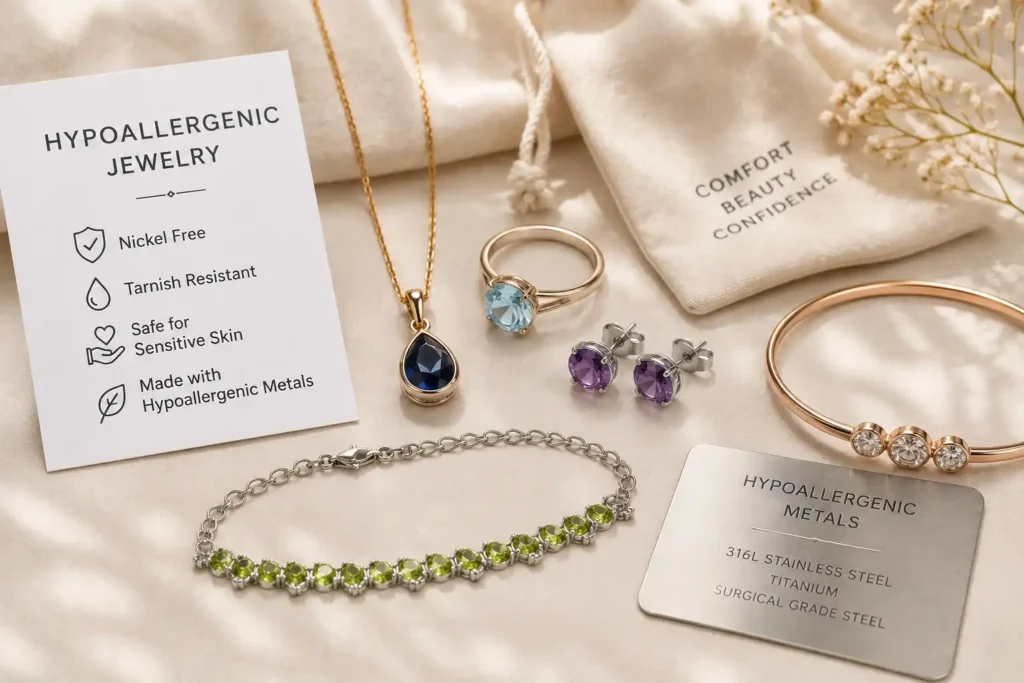
“Hypoallergenic” Does Not Mean Guaranteed Reaction-Free
Hypoallergenic is widely used in jewelry marketing, but it should not be interpreted as proof that no wearer can react to the item.
Individual allergies differ.
The word also does not tell you the exact composition of the alloy, whether plating covers another metal or whether solder and findings match the main jewelry material.
A more useful description is specific.
“Implant-grade titanium post with sapphire front” tells the buyer far more than “hypoallergenic sapphire earring.”
“Platinum ring with untreated spinel” is more useful than “skin-friendly luxury ring.”
When looking for the best gemstones for sensitive skin, precise material disclosure is more valuable than broad reassurance.
Natural Does Not Automatically Mean Better for Sensitive Skin
The word natural describes origin, not whether something will irritate skin.
A natural gemstone can be dyed, waxed, stabilized, fracture filled or mounted using adhesive.
A laboratory-grown sapphire can have an exceptionally smooth surface and be mounted in implant-grade titanium.
A natural turquoise can be porous enough to absorb skin products, while stabilized material may be less absorbent.
The relevant questions are therefore:
What is the gemstone?
How was it treated?
What touches the skin?
What metal is used?
Is glue present?
Is the surface smooth?
Can the piece be cleaned properly?
Those questions identify the best gemstones for sensitive skin more reliably than the natural-versus-laboratory-grown distinction alone.
Smooth Surfaces Matter
Mechanical irritation can occur even without allergy.
Rough druzy surfaces, sharp crystal points, unfinished drill holes and poorly polished edges can repeatedly rub the skin.
That problem is particularly relevant in bracelets, necklaces and oversized rings where gemstones contact the body directly.
A well-finished cabochon or bead is usually easier on skin than a rough crystal cluster.
For sensitive-skin jewelry, polish quality should therefore be inspected physically rather than inferred from the gemstone name.
Run a finger carefully around non-sharp accessible edges before wearing the piece for long periods, and avoid jewelry with obvious burrs or chipped surfaces.
Avoid Jewelry That Is Difficult to Keep Clean
Residue can accumulate in:
- Deep openwork
- Hollow ring interiors
- Tight pavé
- Rough bead holes
- Porous stones
- Butterfly earring backs
- Under-gallery spaces
- Complex clasps
- Deep engraved interiors
The best gemstones for sensitive skin become easier to wear when the entire piece can be cleaned and dried without leaving soap and moisture trapped against the body.
A simple bezel-set sapphire may therefore be easier to maintain than a highly complex ring containing the same stone.
Good design is part of skin comfort.
Choosing Sensitive-Skin Engagement Rings
For an engagement ring, sapphire, ruby, diamond, spinel and moissanite offer especially useful combinations of durability, smooth polish and low-maintenance gemstone surfaces.
The metal still deserves equal attention.
Platinum or an accurately specified nickel-free gold alloy can be a stronger starting point for someone already avoiding nickel, while a conventional nickel white-gold ring may become problematic when rhodium plating wears.
Low-profile designs can also reduce friction and movement.
The gemstone should be securely set so that the ring does not rotate constantly around the finger and rub the same skin repeatedly.
When the wearer already has a diagnosed metal allergy, choose the metal around that information rather than selecting by appearance alone.
Choosing Sensitive-Skin Earrings
Earrings are one of the most common places where jewelry sensitivity becomes noticeable because the post remains inside the piercing.
For the best gemstones for sensitive skin in stud earrings, focus first on the post and back, then choose the decorative gemstone.
Sapphire, ruby, spinel, moissanite and diamond are particularly easy to maintain.
Pearl can also work beautifully, provided the post and adhesive are appropriate and the nacre is protected from cosmetics.
Keep posts and backs clean, but do not overtighten butterfly backs against the earlobe.
Pressure, trapped moisture and poor airflow can create irritation independently of metal allergy.
Choosing Sensitive-Skin Bracelets
Bracelets combine movement, sweat and repeated skin contact, so simplicity becomes useful.
Polished jade, quartz, garnet, sapphire or spinel can provide smooth direct-contact surfaces.
However, check elastic, wire, clasps and spacer beads before assuming the bracelet contains only gemstones.
A piece with fifty polished gemstone beads and twenty unknown base-metal spacers creates far more metal contact than its product title may suggest.
For the best gemstones for sensitive skin, fewer unknown components usually make troubleshooting easier if irritation develops.
Choosing Sensitive-Skin Necklaces
Necklaces allow broad gemstone freedom because the stones themselves usually create less friction than rings or bracelets.
Sapphire, spinel, quartz, garnet, jade, turquoise, pearl, opal and many other materials can work.
The chain and clasp deserve most of the metal-allergy attention.
For heavier pendants, also check whether the chain creates pressure or rubbing at the back of the neck.
Comfort depends on weight distribution as well as composition.
How to Buy the Best Gemstones for Sensitive Skin Online
Online listings should provide material information rather than vague comfort claims.
Before purchasing, ask for:
Exact gemstone identity: “Natural blue sapphire” is better than “blue crystal.”
Treatment disclosure: Determine whether the gem is dyed, coated, filled, stabilized or assembled.
Metal composition: Ask what the post, clasp, shank and findings are actually made from.
Plating information: Determine whether the visible surface is solid metal or coating over a base alloy.
Adhesive disclosure: Especially useful for pearl studs, assembled stones and glued cabochons.
Dimensions and weight: Heavy earrings or large pendants can irritate mechanically.
Return terms: Sensitive skin cannot always be predicted from a product description.
If a seller cannot identify the metal or treatment, treat that uncertainty as part of the buying decision.
Cleaning Sensitive-Skin Jewelry
Good cleaning protects both the jewelry and the skin.
For many sound sapphires, rubies, spinels, moissanites, diamonds, garnets and untreated quartz pieces, a conservative routine using lukewarm water, mild soap and a soft brush or cloth is usually sufficient when the complete setting also tolerates water.
Rinse soap away thoroughly.
Dry the piece completely, particularly beneath ring bands, around earring backs and inside clasps.
Do not assume stronger cleaning is better.
Emerald fillers, turquoise treatments, pearl nacre, opal constructions, adhesives, coatings and plated metals can all require different methods.
The safest routine follows the most sensitive component in the piece.
When Jewelry Already Causes Irritation
If a piece repeatedly causes itching, redness or inflammation, stop wearing it rather than repeatedly testing it against already irritated skin.
Clean the jewelry appropriately and check whether plating has worn, the interior has become rough or residue is trapped in the design.
If the reaction returns consistently with the same item, identifying the responsible metal or other substance becomes more useful than simply changing the gemstone.
A dermatologist can evaluate persistent or recurrent contact reactions and may use patch testing when allergic contact dermatitis is suspected.
A jewelry guide can help you choose materials, but it cannot diagnose why a particular rash occurred.
Best Gemstones for Sensitive Skin by Priority
If you want maximum gemstone durability, sapphire, ruby, diamond and moissanite are excellent starting choices.
If you want broad color with strong durability, sapphire and spinel are particularly useful.
If you want an accessible untreated gem with simple cleaning, quartz or many garnets can work well.
If you want opaque jewelry with a smooth surface, jadeite, nephrite and chalcedony can be practical when treatment is understood.
If you want turquoise, pearl, opal or emerald, choose them because you like their appearance while paying closer attention to treatments, adhesives and care.
If you have a known metal allergy, select the setting metal before worrying about the gemstone.
That priority order makes the best gemstones for sensitive skin a much more useful buying category.
Frequently Asked Questions
What are the best gemstones for sensitive skin?
The best gemstones for sensitive skin commonly include sapphire, ruby, diamond, spinel, moissanite, quartz, garnet and jade because they can be polished smoothly and incorporated into relatively easy-care jewelry. However, the metal, treatment, adhesive and design usually matter more to skin reactions than the gemstone species alone.
Can gemstones cause skin allergies?
Jewelry reactions are more commonly associated with metals such as nickel and cobalt than with polished gemstones themselves, although dyes, polymers, coatings, adhesives, residues and rough surfaces can contribute to irritation in some pieces.
What is the biggest jewelry concern for nickel-sensitive skin?
The biggest concern is nickel-containing material that actually contacts the skin, including posts, backs, ring shanks, clasps and base metal beneath worn plating. Choosing a different gemstone will not remove nickel from the setting.
Is sapphire good for sensitive skin?
Sapphire is one of the best gemstones for sensitive skin from a material-care standpoint because corundum is hard, smooth and durable. The setting metal and any unusual treatment still determine whether the complete piece suits the wearer.
Is ruby good for sensitive skin?
Ruby can work very well because it is durable polished corundum, although glass-filled or composite ruby requires more treatment-aware care than conventional natural ruby.
Is moissanite good for sensitive skin?
Moissanite is a durable, smooth laboratory-grown gemstone that works well in rings and earrings, but a moissanite stone mounted on an unsuitable alloy can still cause a metal-related reaction.
Is diamond hypoallergenic?
Diamond itself is not usually the main concern in jewelry contact reactions, but describing an entire diamond piece as allergy-proof would be misleading because its metal, filler, coating, adhesive or accumulated residue may still create problems.
Is quartz good for sensitive skin?
Untreated solid quartz can be a straightforward choice because it accepts a smooth polish and is easy to clean, although dyed, coated, filled and glued quartz products require additional consideration.
Is jade good for sensitive skin?
Smooth jadeite and nephrite can be practical, but buyers should ask about polymer impregnation, dye, wax and other treatments. Large bangles can also trap soap or moisture even when the jade itself is well tolerated.
Is turquoise good for sensitive skin?
Turquoise can be worn successfully, but its natural porosity and common stabilization, dyeing or reconstruction make treatment disclosure particularly important. Cosmetics and cleaning products should also be kept away from sensitive turquoise surfaces.
Are pearls safe for sensitive ears?
Pearl earrings can be an excellent option when the post and back are made from suitable metal. The pearl itself is only one component, and adhesive used to attach a drilled pearl to a post can also matter.
Is platinum good for sensitive skin?
Platinum is often a strong fine-jewelry choice because high-purity platinum alloys minimize some common alloying concerns and do not require rhodium plating for their basic white appearance, although individual reactions and alloy differences remain possible.
Is titanium good for sensitive skin?
Properly specified implant-grade titanium is widely used in piercing jewelry and is often well tolerated. Surface finish, exact grade and construction still matter.
Is white gold good for nickel-sensitive skin?
It depends on the alloy. Conventional white gold can contain nickel beneath rhodium plating, while palladium-based nickel-free alloys are also available. Ask for the exact alloy rather than relying on the color.
Is rose gold safe for sensitive skin?
Many people tolerate rose gold, while others may react to copper or another alloying component. Its pink color does not establish whether it will suit an individual wearer.
Is sterling silver suitable for sensitive skin?
Some people tolerate sterling silver very well, while others react to alloy components, contamination, tarnish or plated construction. It should not be assumed universally suitable solely because it contains mostly silver.
Does hypoallergenic jewelry guarantee no reaction?
No. Hypoallergenic is not a guarantee that every wearer will tolerate the piece, and it does not necessarily disclose every alloy component, coating, solder or adhesive.
Why does my ring cause irritation even though it is high-quality jewelry?
Possible causes include metal allergy, trapped soap, moisture, friction, an overly tight fit, surface roughness, cleaning chemicals or another component in the ring. Price and gemstone quality do not rule out these problems.
Can jewelry cause a reaction after years of comfortable wear?
Yes. Allergic sensitization can develop over time, while plating can also wear away and expose an underlying alloy that previously did not touch the skin directly.
What are the best gemstones for sensitive skin in earrings?
Sapphire, ruby, spinel, moissanite and diamond are durable easy-care decorative choices, although the post and back usually matter more than the gemstone for pierced-ear sensitivity.
What are the best gemstones for sensitive skin in rings?
Sapphire, ruby, spinel, diamond and moissanite combine smooth surfaces with strong jewelry durability. Pair them with an accurately specified metal and a ring design that does not trap excessive moisture.
Should natural gemstones be preferred for sensitive skin?
Not automatically. Natural origin does not guarantee absence of dye, filler, stabilization or adhesive, while a laboratory-grown gemstone can be chemically stable and smoothly polished. Material disclosure matters more than the natural label alone.
What should I do if jewelry repeatedly causes a rash?
Stop wearing the suspected item and avoid repeatedly exposing already irritated skin. If the problem persists or returns consistently, a dermatologist can assess the reaction and may use patch testing to identify a contact allergen.
What matters most when choosing the best gemstones for sensitive skin?
Start with the complete jewelry construction rather than the gemstone alone. Choose a smooth, well-finished gemstone you like, verify treatments, identify every metal touching the skin, avoid poorly specified plating and adhesives when possible, and select a design that can be cleaned and dried easily.