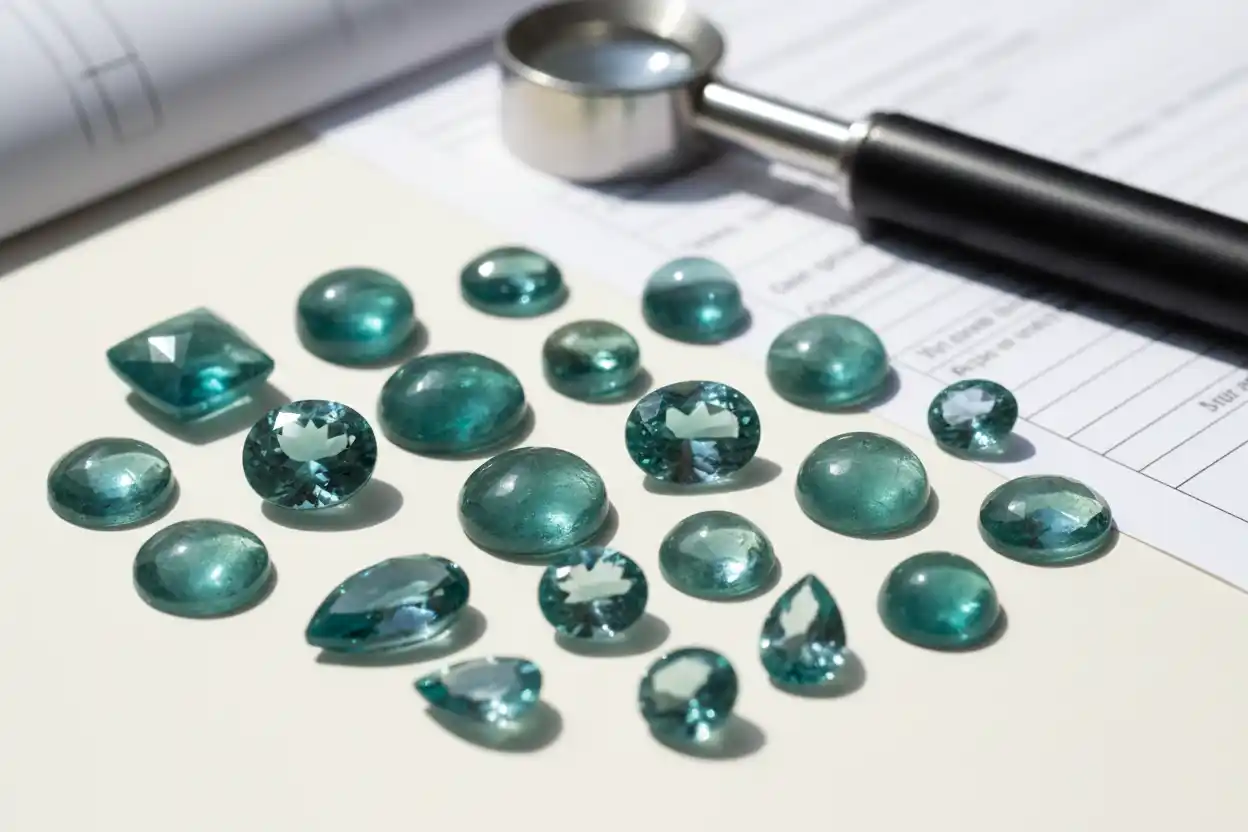
Buy Grandidierite: What to Inspect, Authenticity, Origin & Price
To buy grandidierite responsibly, begin with independent material identification because gem-quality grandidierite is genuinely rare and can command prices that make misidentification costly. Grandidierite is an orthorhombic magnesium-iron aluminous borosilicate first described from southern Madagascar and named for French naturalist Alfred Grandidier. GIA describes the mineral as typically bluish green to greenish blue and strongly pleochroic, with different crystal directions capable of showing pale yellow or nearly colorless, greenish-blue, and deeper blue-green appearances.
Its rarity is not merely marketing language. In GIA’s detailed study of the Tranomaro deposit in southern Madagascar, most recovered material was translucent or opaque, transparent crystals were uncommon, and only a small fraction produced eye-clean faceting material. During the period covered by that study, the deposit yielded about 800 kilograms of rough specimen material but only about 60 grams of eye-clean crystals, with fewer than ten faceted stones above one carat among the early production examined. Those figures describe that specific deposit and historical study period rather than all current global supply, but they demonstrate why fine transparent grandidierite occupies a specialized collector market.
Buy Grandidierite At a Glance
| Buying Factor | What to Examine | Why It Matters |
|---|---|---|
| Identity | Confirmed natural grandidierite | Rarity and unusual color make laboratory confirmation valuable |
| Color | Bluish green to greenish blue hue, tone, saturation | Attractive color is central to desirability |
| Pleochroism | Directional color differences | Strong pleochroism is characteristic and affects cutting |
| Transparency | Transparent versus translucent material | Transparent facetable grandidierite is much scarcer |
| Clarity | Eye-visible inclusions, fractures, clouds | Clean transparent stones occupy a rare market segment |
| Cut | Orientation, brightness, symmetry, face-up color, polish | Poor orientation can hide the best pleochroic color |
| Carat Weight | Weight together with dimensions | Fine material above one carat has historically been scarce |
| Cleavage | Cleavage planes and structural fractures | Cutting and jewelry wear require sensible protection |
| Origin | Madagascar or other locality claims | Famous provenance should be separated from laboratory-supported identity |
| Treatment | Seller disclosure and laboratory findings | Avoid assuming untreated status without evidence |
| Condition | Chips, facet wear, cleavage-related damage | Rare stones lose value quickly when damaged |
| Documentation | Independent identification report | Particularly important for expensive material |
| Seller Terms | Return and independent inspection rights | Valuable when buying a rare gem online |
Grandidierite Is a Distinct Mineral, Not a Variety of Beryl or Tourmaline
Grandidierite is its own mineral species with the formula approximately (Mg,Fe)Al₃(BO₃)(SiO₄)O₂. GIA describes it as the magnesium-rich end member of a solid-solution relationship with iron-rich ominelite and records an orthorhombic crystal structure.
Its greenish-blue appearance can create superficial resemblance to aquamarine, indicolite tourmaline, apatite, or other blue-green gems, but those materials differ chemically and physically.
This makes identity more important than a photograph. Buyers accustomed to Gems Lore’s buy aquamarine guide should not assume that an aquamarine-like color indicates beryl. Grandidierite requires its own gemological separation.
Genuine Gem-Quality Grandidierite Is Exceptionally Rare
GIA describes grandidierite as extremely rare and notes that facetable gem material was historically almost absent from the jewelry market before new Madagascar production emerged.
The Tranomaro deposit changed availability but did not turn grandidierite into an abundant gem. GIA’s deposit study found that most crystals were translucent, only a small amount was eye-clean, and only a few dozen transparent crystals had been faceted during the documented early production period.
This is precisely the kind of gem where the Gems Lore rarest gemstones in the world framework matters: genuine geological scarcity can support value, but individual quality still determines whether a particular stone deserves a premium.
Transparency Is One of the Most Important Buying Factors
Grandidierite crystals can be opaque, translucent, or transparent. GIA’s Tranomaro research found that transparent material represented only a small part of the production examined, while the majority of crystals were translucent and thicker pieces could become opaque.
That scarcity gives transparent facetable stones special market importance. A bright transparent gem with attractive color and limited visible inclusions belongs to a different category from a translucent cabochon or opaque mineral specimen.
This does not make translucent grandidierite undesirable. Translucent material can display excellent color and can be attractive in cabochons, beads, carvings, or collector specimens. The categories simply should not be priced as though they offer identical rarity.
Color Should Be Evaluated Together With Pleochroism
GIA describes grandidierite as bluish green to greenish blue and records strong directional color behavior. Material from the Tranomaro deposit showed deep greenish blue in one polarized direction and pale yellow to nearly colorless in another, while faceted gems could appear colorless, light blue, and deep greenish blue depending on direction.
This pleochroism makes cutting orientation critical. A crystal can contain attractive blue-green color but produce a less appealing face-up result if the cutter places the weaker directional color toward the viewer.
A strong purchase therefore looks beyond saturation. Examine whether the finished stone presents an attractive color face-up and whether movement produces pleasing directional shifts rather than washed-out areas.
Pleochroism Is Not the Same as Color Change
Grandidierite’s directional colors result from pleochroism: different crystallographic directions absorb light differently. This is not the same phenomenon as a color-change gem shifting appearance because the spectral composition of the illumination changes.
The distinction matters because a seller may describe a strongly pleochroic grandidierite as color changing. That wording can create confusion with gems such as alexandrite or diaspore.
A more accurate description explains that grandidierite can show different colors with orientation and viewing direction.
Cut Orientation Can Have a Major Effect on Value
A grandidierite cutter has to balance several competing goals: display the best blue-green directional color, retain rare transparent material, avoid fractures or cleavage problems, maintain useful face-up size, and create good symmetry and polish.
Because transparent rough is scarce, weight retention can be understandable. Nevertheless, a heavy stone with poor orientation may look less attractive than a smaller gem cut to present the strongest blue-green direction.
Video is useful when buying online because it can reveal pleochroic behavior, extinction, brightness, and windowing more effectively than one still photograph.
Cut Quality Should Be Judged by the Finished Stone, Not by Weight Retention Alone
Rare rough encourages cutters to preserve as much weight as possible, but the buyer ultimately wears or collects the polished gem.
Inspect:
Face-up brightness.
Color orientation.
Symmetry.
Polish.
Windowing.
Extinction.
Girdle condition.
Face-up dimensions.
Obvious fracture placement.
A large central window can make a rare stone look weak despite impressive carat weight. Excessive depth can also hide weight beneath the girdle without improving visible size.
Fine Stones Above One Carat Deserve More Verification
GIA’s Tranomaro study reported that fewer than ten of the early faceted stones from the deposit exceeded one carat. This is historical deposit-specific evidence rather than a rule that every modern stone over one carat is exceptionally rare, but it provides meaningful context for why clean larger grandidierite deserves careful scrutiny.
A seller offering a several-carat transparent, eye-clean, vivid blue-green stone at a substantial price should be able to provide convincing independent identification.
The more unusual the size and clarity combination becomes, the less sensible it is to rely on a handwritten seller certificate.
Clarity Should Be Evaluated Against the Rarity of Transparent Material
GIA documented some eye-clean transparent grandidierite from Tranomaro, but such material represented only a very small portion of the rough examined.
This means clean transparent stones can command collector interest, yet visible inclusions should not automatically eliminate a natural grandidierite from consideration. The question is how much those features interfere with transparency, color, brilliance, or durability.
A rare stone with a minor natural inclusion may still be more desirable than an unusually clean but poorly cut or weakly colored example.
Fractures and Cleavage Deserve Special Attention
GIA’s Tranomaro research recorded cleavage on {100} and noted fractures in the studied crystals. Cleavage creates preferred structural directions along which a crystalline material can separate more readily.
For a buyer, that means a transparent grandidierite should be inspected carefully for surface-reaching fractures, chipped corners, damaged girdles, and stress near setting points.
This does not mean grandidierite cannot be worn in jewelry. It means setting design and handling should reflect the actual stone rather than treating rarity as a substitute for durability awareness.
Protective Jewelry Design Makes Sense
A rare transparent grandidierite in a ring deserves protection from sharp blows. Bezel-like or otherwise protective settings can reduce direct edge exposure, while earrings and pendants usually experience fewer impacts.
A jeweler working on an expensive grandidierite should understand its cleavage and fracture characteristics before tightening prongs or performing repairs.
For especially rare collector-grade gems, the safest ownership choice may be occasional wear rather than constant daily exposure.
Madagascar Is the Classic Source
Grandidierite was first described from southern Madagascar, and the new Tranomaro deposit documented by GIA lies close to the original Andrahomana region.
Madagascar therefore carries strong historical and scientific importance for the mineral. Gem-quality material has also been reported from Sri Lanka, while the mineral itself has been identified at additional localities around the world, most of which have not produced important faceting material.
A Madagascar claim can add provenance, but the individual gem still needs good color, transparency, cut, condition, and trustworthy identity.
Geographic Origin Should Not Be Assumed From Color
Bluish-green color and pleochroism are characteristic of grandidierite but do not prove a specific country or mine.
A seller may have strong supplier provenance, mining records, or direct sourcing history. Those can be valuable, but they are different from an independent laboratory geographic-origin conclusion.
GIA’s current standard Colored Stone Identification & Origin Report is available only for a specific list of gemstones, and grandidierite is not among them.
A GIA identification report should therefore not be described as a Madagascar-origin report for grandidierite.
GIA Can Still Identify Grandidierite
GIA’s Colored Stone Identification Report is available for polished loose or mounted colored stones and identifies the material, natural or synthetic status where applicable, detectable treatments, weight, measurements, shape, cutting style, color, and a photograph.
GIA’s Bangkok laboratory was already issuing identification reports for faceted grandidierite when new Madagascar material entered the market.
For a meaningful grandidierite purchase, such identification can be particularly valuable because rarity amplifies the financial consequences of misidentification.
Do Not Assume Treatment Status From Rarity Alone
The authoritative GIA studies of the Madagascar material focus primarily on mineral identity, geological occurrence, chemistry, inclusions, and gem potential rather than describing a routine enhancement market for grandidierite.
That absence should not be converted into the claim that every grandidierite is untreated under all circumstances.
Ask the seller what is known, and use an independent laboratory report when treatment status forms part of the premium. GIA’s Colored Stone Identification Report specifically includes detectable treatments.
Avoid “AAA Grandidierite” as a Substitute for Evidence
GIA does not issue overall quality grades for colored stones because no broadly accepted universal system covers the enormous variation among colored gems.
AAA, AAAA, museum grade, collector grade, top gem, and investment grade are therefore seller-defined when applied to grandidierite.
A meaningful comparison instead describes:
Color.
Transparency.
Pleochroism.
Clarity.
Carat weight.
Dimensions.
Cut.
Condition.
Identity documentation.
Provenance.
A rare name does not eliminate the need for detailed quality information.
Be Cautious With Extremely Low Prices
Because fine transparent grandidierite is genuinely scarce, an unusually low price for a large, eye-clean, vivid blue-green stone should prompt additional verification.
That does not prove fraud. A seller may have older inventory, lower overhead, a less desirable cut, weaker color, or imperfect clarity.
The appropriate response is to investigate identity and quality rather than assume either that the price is impossible or that the listing is an extraordinary bargain.
Be Equally Cautious With Extremely High Prices
Rarity can tempt sellers to attach exceptional prices to mediocre material. A translucent stone, heavily windowed gem, damaged piece, or weakly colored specimen does not automatically become top quality simply because the mineral name is rare.
The Gems Lore most expensive gemstones framework is useful here: record or prestige pricing generally requires a combination of rarity, quality, size, provenance, and buyer demand.
Pay for the individual grandidierite, not merely for access to the word grandidierite.
Compare Transparent Faceted Material Separately From Translucent Material
Transparent faceted grandidierite is a highly specialized category. Translucent stones can be attractive but have different optical behavior and availability.
GIA’s deposit study found large quantities of specimen rough compared with a very small fraction of eye-clean facetable crystal.
A seller should therefore not use pricing from a fine transparent faceted stone to justify a similar per-carat price for ordinary translucent material merely because both are genuine grandidierite.
Mineral Specimens Follow a Different Value System
An intact grandidierite crystal on matrix can command collector interest even when it would make poor faceting rough. Mineral specimens can be valued for crystal form, size, termination, locality, associated minerals, aesthetics, rarity, and collection history.
A faceted gem is valued more heavily for color, transparency, cutting, clarity, dimensions, and wearability.
The two markets overlap but should not be benchmarked mechanically against one another.
Condition Is Especially Important Because Replacement Is Difficult
Damage matters in every gemstone, but it can be especially painful in grandidierite because a close replacement of the same size, color, transparency, and cut may be difficult to find.
Inspect pre-owned stones for:
Chipped girdles.
Abraded facet junctions.
Fractures.
Scratches.
Damaged points.
Evidence of repolishing.
Loose prongs.
Stress around the setting.
A small defect can have greater market impact when the stone occupies a scarce collector category.
A Laboratory Report Is Not an Appraisal
A GIA identification report establishes gemological facts about the submitted material. It does not assign a fair market price, retail replacement value, auction estimate, or guaranteed resale figure.
An appraisal uses identification information alongside current comparable market evidence and a specified value definition.
Buyers should reject marketing that presents a laboratory identity report as proof that the seller’s asking price is automatically justified.
Retail Price and Resale Value Can Differ Substantially
A specialist dealer’s grandidierite price may include difficult sourcing, laboratory identification, travel, inventory risk, cutting loss, photography, insurance, return rights, and the cost of holding an item until the right collector appears.
A dealer purchasing the stone back from a consumer needs margin for verification, resale risk, and potentially a long holding period.
Rare does not necessarily mean liquid. A gemstone can be genuinely scarce yet have a relatively narrow buyer pool.
Common Red Flags When You Buy Grandidierite
Be cautious when:
A seller cannot provide independent identification for an expensive stone.
“Madagascar origin” is said to be proven by color alone.
AAA or museum grade is presented as a standardized laboratory grade.
A several-carat eye-clean stone carries no meaningful documentation.
Pleochroism is incorrectly marketed as alexandrite-style color change.
A translucent stone is priced using benchmarks for fine transparent faceted material.
Chips or cleavage-related fractures are concealed by photography.
Extremely deep cutting is hidden behind a high carat number.
A laboratory identification report is described as a geographic-origin report.
The seller guarantees future appreciation.
The rarity of the species is used to excuse poor color, transparency, or cutting.
Evidence should become stronger as the stone becomes larger, cleaner, rarer, and more expensive.
How to Compare Grandidierite Listings Fairly
Compare:
Confirmed grandidierite identity.
Transparent versus translucent material.
Hue, tone, and saturation.
Pleochroic face-up orientation.
Carat weight.
Millimeter dimensions.
Eye-visible inclusions.
Fractures and cleavage-related features.
Cut proportions.
Windowing and extinction.
Polish.
Treatment disclosure.
Madagascar or other provenance evidence.
Condition.
Laboratory identification.
Seller return and inspection rights.
Only after these variables align does numerical price comparison become meaningful.
Conclusion
To buy grandidierite confidently, place identity and transparency ahead of rarity marketing. Grandidierite is a genuinely rare orthorhombic magnesium-iron aluminous borosilicate known for bluish-green to greenish-blue color and strong pleochroism. GIA’s Tranomaro research demonstrates just how little eye-clean facetable material occurred relative to total specimen rough during the documented early production period.
That rarity deserves respect but not blind acceptance of any asking price. Fine grandidierite should combine attractive blue-green color, effective pleochroic orientation, transparency, appropriate clarity, good cutting, useful dimensions, sound condition, and strong identification documentation.
Madagascar provenance adds important geological and historical context, but GIA’s current standard geographic-origin service does not include grandidierite. Buyers should therefore distinguish laboratory-confirmed identity from seller-supplied locality provenance and avoid allowing AAA labels or extreme rarity claims to replace observable quality.
Frequently Asked Questions
What is grandidierite?
Grandidierite is a rare orthorhombic magnesium-iron aluminous borosilicate. GIA describes it as typically bluish green to greenish blue and strongly pleochroic.
Is grandidierite really rare?
Yes. GIA describes gem-quality grandidierite as extremely rare. In its Tranomaro deposit study, only a tiny fraction of the recovered material was eye-clean faceting quality.
What color is fine grandidierite?
Grandidierite is typically bluish green to greenish blue. Strong pleochroism can create different directional colors ranging from pale yellow or nearly colorless through light blue to deep greenish blue.
Is grandidierite color changing?
Its famous directional variation is pleochroism rather than conventional light-source-dependent color change. Different crystallographic directions can show different colors.
Where is grandidierite found?
The mineral was first described in southern Madagascar, which remains its classic source, and it has been reported in several other countries. Gem-quality facetable material has been particularly associated with Madagascar, with additional gem material reported from Sri Lanka.
Are grandidierites over one carat rare?
Fine transparent material above one carat has historically been scarce. In the early production examined in GIA’s Tranomaro study, fewer than ten faceted stones exceeded one carat. That figure describes the documented deposit period rather than a permanent global supply rule.
Does GIA identify grandidierite?
Yes. GIA’s Colored Stone Identification Report can identify polished colored-stone material and state detectable treatments. GIA also reported issuing identification reports for faceted grandidierite when Madagascar material entered the market.
Can GIA confirm Madagascar origin for grandidierite?
Grandidierite is not currently among the gemstone types eligible for GIA’s standard Colored Stone Identification & Origin Report. Madagascar provenance should therefore be evaluated according to the documentation actually supplied.
Does AAA grandidierite have an official meaning?
No. GIA does not issue overall quality grades for colored stones because no broadly accepted universal colored-stone grading system exists. AAA and similar labels are seller-defined.
Is transparent grandidierite more valuable than translucent material?
Transparent facetable material is much scarcer and generally occupies a different market category from translucent material. GIA’s Tranomaro research found only a very small quantity of eye-clean transparent crystal compared with total specimen rough.
Is grandidierite durable enough for jewelry?
It can be fashioned for jewelry, but GIA documents cleavage and fractures in natural crystals. Protective setting and sensible wear are appropriate, particularly for expensive transparent stones.
Is grandidierite a guaranteed investment?
No. Grandidierite is genuinely rare, but future resale depends on quality, size, condition, documentation, provenance, buyer demand, and market liquidity. Rarity alone cannot guarantee appreciation.