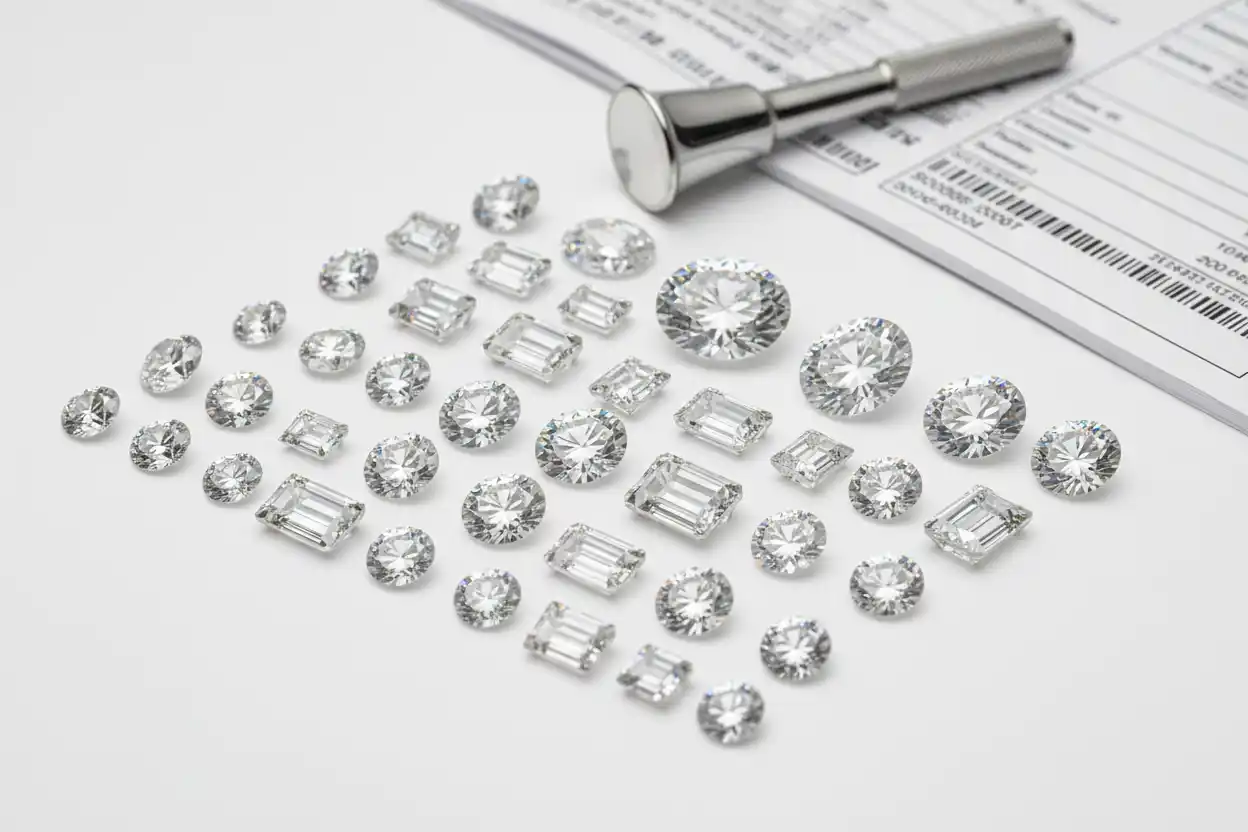
Buy Lab Diamond: How to Compare Quality, Value Factors & Seller Claims
If you want to buy a lab diamond intelligently, focus first on cut and visible appearance, then compare color, clarity, carat weight, grading documentation, growth and treatment disclosure, dimensions, retailer policies, and price. A laboratory-grown diamond is not cubic zirconia or moissanite. It has essentially the same chemical composition and optical and physical properties as a mined diamond, but it forms through a controlled growth process rather than geological formation underground. The important buying question is therefore not whether a lab diamond is “real enough,” but whether the individual stone is well cut, accurately identified, sensibly priced, and properly represented.
The market has changed quickly. High color and clarity grades are now widely available, larger stones have become increasingly accessible, and retail prices have fallen substantially over time. That gives buyers considerable choice, but it also makes old assumptions about rarity, price retention, and premium grades less useful. The lab diamond price can differ substantially among stones that appear nearly identical on paper, so a grading report should be the start of comparison rather than the final decision.
Confirm That You Are Actually Buying a Laboratory-Grown Diamond
A trustworthy listing should clearly identify the stone as laboratory-grown or laboratory-created rather than presenting it simply as a diamond and leaving the buyer to discover its origin later. In the United States, FTC guidance states that sellers should clearly disclose that a laboratory-created diamond is not a mined diamond. This distinction matters because laboratory-grown diamonds and mined diamonds can look extremely similar and share essentially the same core gemological properties.
Standard visual inspection alone is not always enough to determine origin reliably. Laboratory-grown diamonds are produced primarily through high-pressure, high-temperature (HPHT) or chemical vapor deposition (CVD) processes, and advanced gemological testing can distinguish their growth characteristics. A recognized laboratory report therefore carries real value for a significant purchase.
Check the report number through the issuing laboratory’s own verification system when possible, and compare the report details with the stone being sold. A laser inscription on the girdle can provide another identification check, although it should be examined carefully rather than treated as the only proof of identity.
Understand Which Grading Report You Are Comparing
One of the most important changes for current buyers is that grading terminology is no longer identical across major laboratories. Since October 2025, GIA has used an overall Premium or Standard quality assessment for qualifying colorless to near-colorless laboratory-grown diamonds rather than applying its traditional natural-diamond color and clarity nomenclature in the same way. GIA’s current assessment considers clarity, color, and cut together.
IGI continues to issue laboratory-grown diamond reports that include familiar 4Cs assessments, such as letter color grades and clarity grades. This means a buyer should not assume that reports from different laboratories use exactly the same presentation or terminology. The lab diamond quality grading should always be interpreted according to the laboratory that issued the report.
Older GIA laboratory-grown reports can also look different from current GIA assessments. When comparing listings, check the laboratory name, report date, exact report format, growth information where stated, and treatment comments instead of comparing one grade label in isolation.
Put Cut Quality Ahead of Extremely High Color and Clarity
For most buyers, cut has more visible impact than paying for the very highest color or clarity category. A beautifully proportioned diamond can return light effectively and appear bright, lively, and balanced, while a poorly proportioned diamond may look dull even when its color and clarity grades are impressive.
Round brilliant diamonds are especially useful for controlled comparison because their proportions and light behavior have been extensively studied. With fancy shapes such as oval, pear, cushion, radiant, emerald, marquise, and elongated forms, the grading report alone may not fully explain how attractive the diamond looks. Video, face-up photographs, dimensions, length-to-width ratio, bow-tie appearance where relevant, windowing, symmetry, and overall light performance become particularly important.
The diamond quality grading factors can help organize a comparison, but lab-grown supply changes the buying priorities. High color and clarity options are sufficiently common that paying a large premium for D color and flawless clarity may produce little visible improvement over a slightly lower grade that already looks colorless and clean to the unaided eye.
Do Not Overpay for Clarity You Cannot See
Laboratory-grown diamonds are frequently offered in VS, VVS, and higher clarity categories. The commercial availability of clean stones means buyers can usually be selective without moving automatically to the highest possible grade. An eye-clean VS1 or VS2 stone may look indistinguishable in ordinary wear from a VVS or internally flawless diamond, depending on the location, size, and character of its inclusions.
Clarity becomes more important when inclusions are dark, centrally located, reflected repeatedly through the facets, or large enough to affect transparency and beauty. Emerald and Asscher cuts can also reveal internal features more readily because of their broad step facets. For many brilliant-cut shapes, however, choosing a sensible eye-clean clarity grade can leave more of the budget available for cut quality, preferred size, or setting quality.
Seller language such as “investment clarity,” “ultra premium,” or “collector grade” should not substitute for the laboratory report and actual imagery. A high technical grade may be genuine, but that does not automatically mean the price premium produces a meaningful visual advantage.
Compare Color in the Context of the Setting
Laboratory-grown diamonds in high color ranges are abundant enough that many shoppers naturally gravitate toward D, E, or F. Those grades can be attractive, but they are not essential for every piece of jewelry. Near-colorless grades can appear very white to many viewers, particularly once the diamond is mounted.
Setting color changes the comparison. A diamond in platinum or white gold may make slight warmth easier to notice than the same stone in yellow or rose gold. Shape also influences perceived color because some fancy shapes retain or reveal body color differently from round brilliants.
The practical approach is to compare adjacent grades rather than assume that the highest available letter must be the best purchase. If two diamonds look equally attractive to you, paying substantially more for an invisible color difference may not improve the finished piece. This becomes increasingly important in a market where very high laboratory-grown grades are frequently used as marketing features.
Check Dimensions, Not Just Carat Weight
Carat is weight, not a direct measurement of visible diameter or face-up size. Two diamonds with the same carat weight can have noticeably different dimensions because of differences in depth, shape, girdle thickness, and overall proportions. A heavy diamond cut too deeply can hide weight below the setting without giving you a larger visible appearance.
Compare millimeter measurements whenever you compare stones of similar weight. A well-cut diamond should balance spread with optical performance rather than maximizing one at the expense of the other. An unusually shallow diamond may face up large but suffer from weak light return, while excessive depth can make the stone look smaller than expected.
This is also why simple lab diamond price per carat comparisons can be misleading. A lower price per carat is not automatically a better deal if the stone is poorly proportioned, visually weak, or carries weight where the viewer cannot appreciate it.
Know What HPHT, CVD, and Post-Growth Treatment Mean
HPHT and CVD describe the two principal ways gem-quality laboratory-grown diamonds are produced. Neither growth method automatically creates a better diamond. Excellent and less attractive stones can result from either process, so buyers should not assume that CVD is inherently superior to HPHT or the reverse.
Post-growth treatment is a separate issue. GIA research has found that many CVD diamonds submitted to its laboratories have undergone HPHT treatment after growth to improve color. Laboratory reports may disclose the growth method and evidence of post-growth treatment, depending on the report type and issuing laboratory.
Treatment disclosure should be viewed as information rather than an automatic reason to reject the diamond. The larger issue is transparency. If a seller makes strong claims about being “untreated,” “as-grown,” or somehow more valuable because of the production process, the documentation should support those claims. Growth technology should not distract from cut, appearance, report verification, and price.
Use Current Prices Instead of Old Lab-Diamond Expectations
Laboratory-grown diamond pricing has changed dramatically, and buyers should be cautious with old articles, outdated appraisal figures, and historical retail comparisons. In late September 2026, a large online pricing index tracking hundreds of thousands of laboratory-grown diamonds showed round-diamond averages of roughly $513 at 1 carat, $1,052 at 2 carats, and $1,745 at 3 carats. These are market-level retail benchmarks across varied grades, not quotes for a specific diamond.
The same current data showed differences among shapes, and individual stones can sit substantially above or below the averages depending on cut, color, clarity, proportions, laboratory report, retailer margin, and other factors. The diamond price of mined stones follows a very different market structure, so an old percentage-based rule comparing mined and laboratory-grown diamonds is not reliable enough for a purchase.
Lab-grown wholesale prices continued to decline year over year during 2026, although recent industry reporting has also noted signs that the rate of decline may be slowing. Current comparison shopping is therefore more useful than assuming last year’s price is still competitive.
Treat Resale and Trade-In Claims Conservatively
A low purchase price can make laboratory-grown diamonds appealing for buyers who want size and visual quality for their budget, but resale expectations should remain separate from retail beauty. Laboratory-grown prices have experienced substantial long-term declines as production expanded and technology improved. That creates a difficult environment for secondhand sellers because a new comparable diamond may cost less in the future than it did when the original owner purchased theirs.
Do not assume a retail appraisal represents an amount you could receive in cash. Insurance replacement figures, store selling prices, trade-in allowances, dealer purchase offers, and private resale values are different numbers. Current industry reporting continues to describe substantial price pressure in the laboratory-grown sector, especially for larger stones.
A seller offering a lifetime upgrade or trade-in policy may still provide useful value, but read the conditions carefully. Some programs require spending a multiple of the original price, returning the original report, purchasing only from the same retailer, or choosing another qualifying product.
Evaluate Seller Claims About Sustainability Carefully
Laboratory-grown diamonds are often marketed using environmental or ethical language, but the simple fact that a diamond was grown in a facility does not by itself prove every sustainability claim made about it. Energy source, production efficiency, geographic location, transport, cutting, jewelry manufacturing, and other operations can affect a company’s environmental footprint.
Claims such as “carbon neutral,” “zero impact,” “100% sustainable,” or similar absolute statements deserve supporting evidence. A buyer interested in this issue can ask whether the producer is identified, where the diamond was grown, what energy source was used, whether claims are independently verified, and exactly what part of the supply chain the claim covers.
The lab diamond benefits can include practical consumer advantages such as access to larger sizes or higher stated grades at lower current prices, but those benefits should be separated from unsupported environmental promises. A lower purchase price is measurable. A sweeping sustainability claim requires evidence.
Check the Retailer as Carefully as the Diamond
A strong grading report cannot compensate for poor seller policies. Before paying, read the return window, return shipping terms, resizing rules, warranty coverage, inspection procedures, upgrade conditions, and any restocking charges. For an online purchase, confirm that the buyer may inspect the actual diamond and return it rather than receiving only store credit.
High-resolution video is especially valuable. Look for haziness, distracting inclusions, a strong bow tie in elongated shapes, weak contrast patterns, transparency problems, or proportions that do not match the visual appearance you want. Verify that the carat weight, measurements, report number, color and clarity information, and inscription all correspond to the same stone.
The buy diamond decision process shares many visual quality checks with laboratory-grown purchasing, but origin disclosure, current pricing, report terminology, production method, post-growth treatment, and resale expectations deserve additional attention in the lab-grown market.
Keep Symbolism Separate From Commercial Quality
Some buyers are interested in the lab diamond meaning or personal symbolism associated with diamonds. Those interpretations can be meaningful in a cultural or personal context, but they do not create a recognized grading premium.
Commercial value comes from characteristics that can be evaluated and compared, including cut, color, clarity, carat weight, proportions, documentation, condition, seller policies, and current market pricing. A story attached to a stone may increase its personal importance to the owner, but it should not replace ordinary buyer due diligence.
FAQs
Is a lab-grown diamond a real diamond?
A laboratory-grown diamond has essentially the same chemical composition and optical and physical properties as a mined diamond. It is different from simulants such as cubic zirconia and moissanite. Its origin should still be clearly disclosed as laboratory-grown rather than mined.
Is CVD better than HPHT?
Not automatically. Both processes can produce high-quality gem diamonds. Judge the individual stone by its cut, appearance, report, proportions, disclosure, and price rather than choosing solely by growth method.
Should I buy a GIA or IGI lab diamond?
Both laboratories provide identification services for laboratory-grown diamonds, but their current report formats and grading language differ. GIA now uses Premium and Standard overall quality assessments for qualifying D-to-Z laboratory-grown diamonds, while IGI continues to provide familiar 4Cs information. Read the actual report rather than comparing labels as though they are identical.
What clarity is good for a lab diamond?
An eye-clean VS-grade diamond often provides a strong balance for many buyers, although the best choice depends on shape, inclusion placement, size, and personal preference. Paying for VVS or flawless clarity is optional when the difference is not visible without magnification.
Do I need D color?
No. D color represents the top of the traditional color scale, but slightly lower grades can still look colorless or near-colorless in normal jewelry. Setting metal, diamond shape, size, and personal color sensitivity all matter.
Are larger lab diamonds rare?
Large laboratory-grown diamonds have become increasingly available as production technology has improved. Size still affects price, but a large carat weight should not automatically be treated as proof of exceptional rarity.
Can lab diamonds receive treatments?
Yes. Post-growth treatment can be used to alter characteristics such as color. Recognized laboratory reports may identify the growth process and post-growth treatment, depending on the report and service used.
Do lab diamonds hold their value?
They should not be purchased on the assumption that they will retain the original retail price. Long-term price declines and expanding supply have weakened secondhand value, while trade-in and upgrade programs depend on the retailer’s individual terms.
Should I trust an appraisal that is much higher than the sale price?
Treat it cautiously. An appraisal may represent an estimated replacement figure rather than a realistic cash resale amount. A large gap between an appraisal and actual selling price does not automatically mean the buyer is receiving an extraordinary bargain.
What should I verify before paying for a lab diamond online?
Verify the laboratory report, report number, measurements, carat weight, visible appearance, origin disclosure, growth or treatment information where available, return policy, warranty terms, and total finished-jewelry price. Compare several genuinely similar stones before deciding.
Conclusion
Buying a lab diamond is easiest when you ignore exaggerated grade labels and compare what actually affects the finished piece. Prioritize cut and visible beauty, choose color and clarity levels that make sense rather than simply chasing the highest grades, verify the laboratory report, understand the growth and treatment disclosures, compare dimensions as well as carat weight, and use current prices rather than outdated assumptions. Lab-grown diamonds can offer substantial size and quality for the purchase price, but rapidly changing prices and uncertain resale make careful comparison especially important.