10 Real Diaspore Benefits: Gentle Traditions, Verified Facts & Important Cautions
Diaspore benefits begin with one of the most fascinating optical combinations found in a lesser-known gemstone: pronounced pleochroism, color change in fine gem-quality material, attractive brilliance, and a mineral identity that differs from the better-known green and color-changing stones with which it is sometimes compared. Diaspore is an aluminum oxyhydroxide with the composition AlO(OH), crystallizes in the orthorhombic system, and generally has a Mohs hardness around 6.5 to 7. Its hardness is useful for jewelry, but perfect cleavage means it requires more careful handling than hardness alone might suggest.
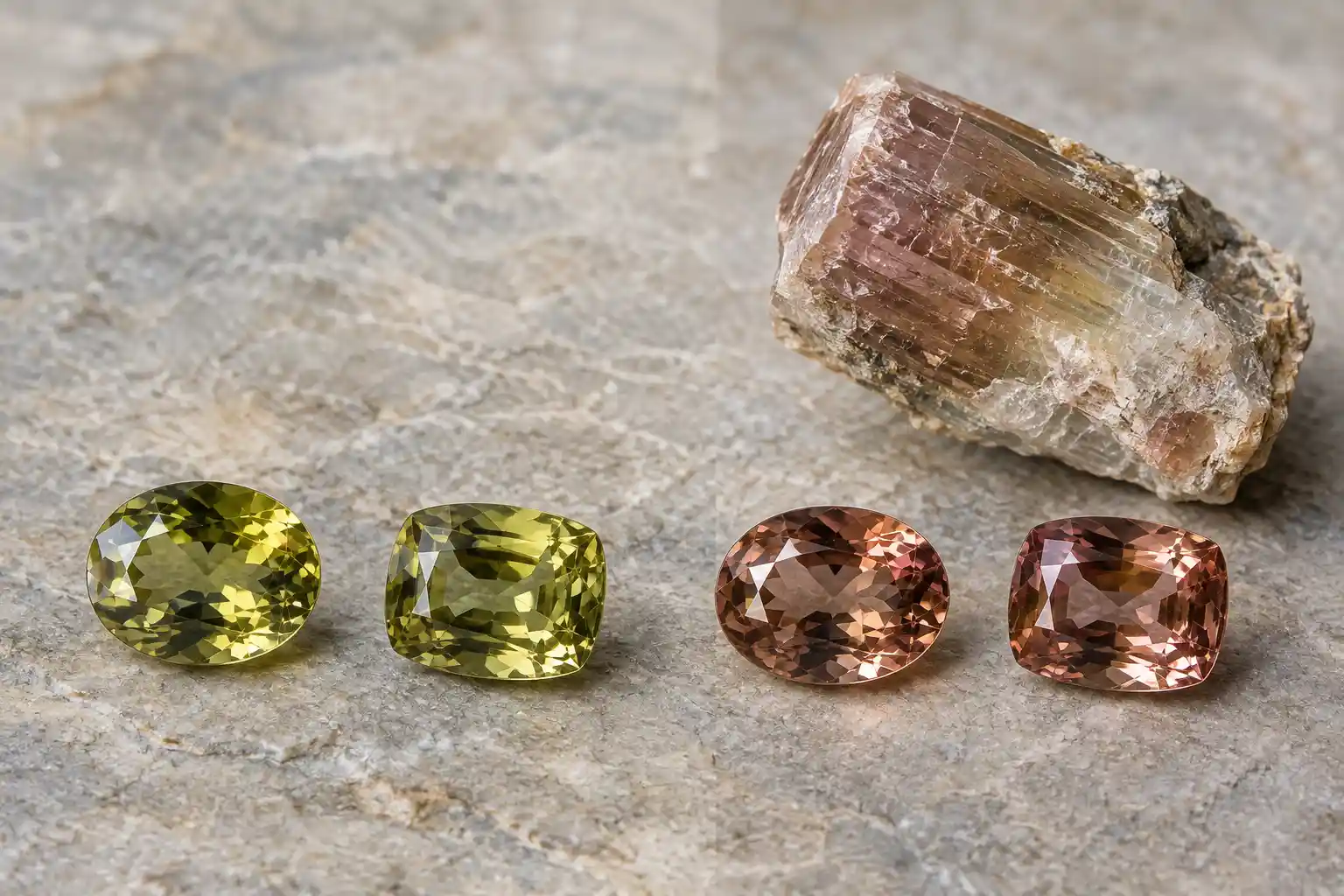
Gem-quality diaspore can appear yellowish green, olive, champagne, brownish yellow, pinkish, or warmer reddish-brown depending on crystal orientation and illumination. Strong pleochroism allows different colors to be observed along different crystallographic directions, while some material also displays a distinct change between daylight-equivalent and warmer incandescent illumination. Turkish gem-quality diaspore became particularly important in the jewelry market, where some stones have been sold under trade names such as Zultanite and Csarite.
These optical and mineralogical characteristics create real diaspore benefits for collectors, jewelry buyers, gemology students, cutters, and anyone interested in color-change phenomena. Modern spiritual interpretations sometimes connect the stone with adaptability, perspective, confidence, or personal transformation, but those themes are symbolic rather than medical. Diaspore does not treat anxiety, hormonal disorders, pain, circulation problems, or other health conditions through ordinary wearing or handling.
10 Diaspore Benefits at a Glance
- Strong pleochroism allows one crystal to display noticeably different colors according to viewing direction.
- Fine gem-quality material can show an attractive color change under different lighting conditions.
- Transparent stones can produce lively faceted gems with distinctive visual character.
- Mohs hardness around 6.5 to 7 provides useful scratch resistance for carefully protected jewelry.
- Orthorhombic crystal structure makes diaspore valuable for mineralogical and gemological study.
- Turkish gem material provides an important modern collecting and jewelry tradition.
- Inclusions and occasional optical phenomena such as chatoyancy add specialized collector interest.
- Perfect cleavage teaches an important lesson about the difference between hardness and overall durability.
- Identification helps buyers distinguish diaspore from alexandrite, color-change garnet, and other visually similar gems.
- Modern symbolism can represent adaptability, changing perspective, or deliberate growth when kept separate from health claims.
Strong Pleochroism Is One of the Most Fascinating Diaspore Benefits
Pleochroism is among the most important diaspore benefits because the gemstone can display different colors when viewed along different crystallographic directions. In suitable material, an observer may see combinations of yellowish green, brownish yellow, pinkish, violetish brown, or related tones depending on orientation. This is not the same phenomenon as color change caused by switching light sources. Pleochroism occurs because light traveling through different crystal directions is absorbed differently, allowing several body colors to become visible from one stone.
Cutting orientation therefore matters enormously. A faceter who positions the rough poorly may emphasize an unattractive brown or weak yellow direction, while careful orientation can preserve more desirable greenish or warm tones. The finished gem’s appearance is consequently the result of both natural crystal properties and skilled planning.
These diaspore benefits make the stone especially useful for gemological education because pleochroism can be observed directly rather than treated as an abstract optical concept. It also explains why photographs of the same gemstone can look surprisingly different when the stone is rotated even before the lighting itself changes.
Color Change Gives Fine Diaspore a Distinctive Jewelry Identity
Some gem-quality diaspore displays a recognizable shift in apparent color between daylight-type illumination and warmer incandescent light. A stone that appears yellowish green, olive green, or greenish under one source may look warmer, pinkish, brownish pink, or champagne-like under another. The strength and attractiveness of the change vary from stone to stone, and not every diaspore shows an equally dramatic effect.
This phenomenon creates some of the most commercially important diaspore benefits because color-changing gemstones offer a different experience from stones that maintain nearly the same body color under most lighting. The owner may see one appearance near a window and another under warm indoor lighting, which gives the gemstone a dynamic quality without requiring movement, surface coating, or artificial color layers.
Color change should still be evaluated realistically. Marketing photographs may exaggerate the contrast by using carefully chosen light sources, camera settings, or editing. A person assessing diaspore quality should consider the actual colors under more than one realistic lighting condition, the strength of the transition, brilliance, transparency, cut, size, and overall attractiveness rather than relying on one dramatic promotional image.
Transparent Diaspore Can Produce Bright and Elegant Faceted Gems
Fine transparent diaspore can be faceted into attractive jewelry stones because it combines useful refractive properties with strong pleochroism and color variation. Ovals, cushions, pears, emerald-style cuts, and elongated shapes can all be effective, although the final design depends heavily on rough shape and cleavage orientation.
The best cutting balances several competing goals. A cutter wants to preserve desirable color, avoid emphasizing a weaker orientation, maintain enough pavilion depth for brightness, work around inclusions and fractures, and prevent damage along cleavage directions. Weight retention matters because high-quality rough can be valuable, yet preserving every possible carat is not useful if the resulting stone appears dull or poorly proportioned.
These lapidary challenges add depth to diaspore benefits. The finished gemstone is not simply a transparent piece of rough polished into any convenient shape. Orientation can determine color, light performance, durability, and eventual value.
Someone examining diaspore price will therefore find that size is only one variable. Color change, pleochroism, clarity, cut quality, transparency, provenance, and the overall visual balance of the stone can matter just as much.
Diaspore Hardness Is Useful, but Perfect Cleavage Requires Caution
A Mohs hardness around 6.5 to 7 gives diaspore reasonable resistance to ordinary scratching, which can make it suitable for pendants, earrings, brooches, and carefully worn rings. Yet one of the most important diaspore benefits is educational rather than simply practical: the stone demonstrates why hardness and toughness are not the same thing.
Diaspore has perfect cleavage in one direction. A strong blow delivered unfavorably can therefore split or chip the gemstone even though the surface resists scratching reasonably well. This is similar to the way some other jewelry stones combine useful hardness with structural vulnerability.
Protected settings are especially helpful for rings because hands encounter more impacts than earrings or pendants. Bezels, protective halos, or designs that do not leave vulnerable edges highly exposed can reduce risk. Jewelry should also be removed before heavy manual work, and loose stones should not be dropped into containers where they can strike harder gems.
These practical limits do not make diaspore unsuitable for jewelry. They simply mean responsible ownership requires more than reading one hardness number.
Mineralogical Study Adds Scientific Depth to Diaspore Benefits
Diaspore is an aluminum oxyhydroxide rather than a variety of quartz, corundum, garnet, or feldspar. Its formula is AlO(OH), and it crystallizes in the orthorhombic system. It is closely related chemically to boehmite, another aluminum oxyhydroxide with a different crystal structure, making the pair useful for understanding how similar chemistry can produce different mineral forms.
The mineral was named in the early nineteenth century from a Greek-derived term associated with scattering, referring to its tendency to break apart under strong heating in early mineral testing. This historical naming reflects the methods mineralogists used before modern spectroscopy, X-ray diffraction, and other analytical tools became available.
These mineralogical diaspore benefits make the stone interesting even without gem quality. Diaspore is an important mineral in some bauxite and metamorphosed aluminum-rich deposits, so the transparent faceting variety represents only a small part of its geological story.
For collectors, understanding the species beyond its jewelry identity makes gem-quality material more interesting rather than less. A color-changing faceted stone is one unusually attractive expression of a mineral that also occurs in less transparent geological forms.
Turkish Diaspore Adds Modern Collecting and Provenance Interest
Gem-quality transparent diaspore is particularly associated with deposits in southwestern Turkey, especially material from the Muğla region. This source became internationally important because it produced crystals capable of being faceted into attractive color-changing gemstones in sizes suitable for jewelry.
Commercial names such as Zultanite and Csarite became associated with Turkish color-change diaspore, but buyers should understand the distinction between mineral name and trade name. Diaspore is the mineral species, while commercial branding may depend on particular suppliers, periods, or marketing systems.
Provenance therefore creates another layer among diaspore benefits. A collector may care about whether a stone genuinely comes from Turkey, whether the source claim is documented, and how its color behavior compares with material reported from other localities.
Someone preparing to buy diaspore should prioritize mineral identity, realistic color-change photographs, treatment disclosure, origin documentation where relevant, dimensions, cutting, and seller accuracy rather than assuming that a trade name alone guarantees quality or provenance.
Inclusions and Rare Optical Effects Can Increase Collector Interest
Gem-quality diaspore is usually valued for transparency, yet inclusions can sometimes add scientific or collector interest rather than simply functioning as defects. Internal needles, tubes, thin films, fissures, and other features can preserve information about growth and later geological processes.
Rare stones may even show chatoyancy when aligned inclusions or reflective structures produce a concentrated band of light across a properly cut cabochon. This cat’s-eye effect is not representative of ordinary faceted diaspore, but its occurrence demonstrates how internal features can create additional optical phenomena.
The important principle is that inclusions must be judged in context. A fracture that threatens durability is different from an inclusion scene that contributes to a rare optical effect. Likewise, a highly included faceted stone may lose transparency even if those inclusions are interesting under magnification.
These collector-focused diaspore benefits encourage a more nuanced approach than simply assuming that every internal feature lowers quality.
Diaspore Is an Excellent Stone for Learning Gem Identification
Color-changing gems can be confused with one another when buyers rely primarily on marketing photographs. Alexandrite, color-change garnet, sapphire, spinel, glass, synthetic products, and diaspore can all display changing or mixed colors under different conditions.
Diaspore has its own combination of optical properties, refractive indices, birefringence, pleochroism, specific gravity, crystal system, and inclusions that allows trained gemologists to identify it reliably. Strong trichroism can be particularly useful, while professional spectroscopy and other instruments provide additional confirmation.
The existence of trade names creates another reason for careful identification. A brand or commercial label should not substitute for confirmation of the underlying gemstone species.
These identification-focused diaspore benefits extend beyond one gem. Learning how to separate two stones that both appear greenish in daylight and warmer indoors reinforces a larger gemological principle: visual resemblance is only the beginning of identification.
Modern Symbolism Can Represent Adaptability and Changing Perspective
Diaspore’s shifting appearance naturally invites modern symbolism involving adaptability, perspective, personal change, and flexibility. The same gemstone can present noticeably different colors as the viewing direction or illumination changes, yet it remains the same crystal.
That makes adaptability a more natural theme than many generic gemstone meanings. Someone may associate diaspore with changing methods while preserving important goals or with reconsidering a situation when new information appears.
The symbolism does not mean diaspore alters personality, decision-making, or emotional regulation through a scientifically demonstrated mineral effect. An owner can still use the gemstone as a personal reminder that circumstances and viewpoints influence perception.
A stone purchased during a major transition may gradually acquire even stronger personal meaning through memory. In that situation, the symbolism comes from lived experience rather than a universal crystal rule.
Important Care Limits Protect the Stone’s Optical Beauty
Diaspore should be cleaned gently because perfect cleavage and internal fractures can make aggressive methods unnecessary risks. Lukewarm water, mild soap, and a soft cloth or brush are appropriate for many stable stones, while steam cleaning, strong thermal shock, hard impacts, and rough mechanical treatment are best avoided.
Ultrasonic cleaning deserves caution, particularly for stones containing fractures or significant inclusions. A jeweler familiar with the gemstone can advise on valuable pieces where internal condition is uncertain.
Storage should also prevent contact with harder stones such as sapphire and diamond. Diaspore can scratch, and cleavage means forceful contact is a greater concern than hardness alone suggests.
The important cautions extend to health claims as well. Aluminum within the crystal structure does not make diaspore medicinal, and color change does not demonstrate an effect on human energy, mood, or organs. The verified diaspore benefits already include optical fascination, collecting, mineralogy, jewelry, cutting skill, and gem identification.
Conclusion
Diaspore benefits include strong pleochroism, color change, faceting potential, useful hardness, mineralogical importance, Turkish provenance, specialized inclusions, gemological education, collecting interest, and meaningful personal symbolism. Few lesser-known gemstones combine changing appearance and structural complexity so effectively.
Its limitations are equally important. Perfect cleavage requires sensible jewelry design, dramatic color-change photographs should be evaluated carefully, and trade names should not replace accurate mineral identification. Modern themes of adaptability or perspective can add personal significance when they remain symbolic rather than medical.
FAQs
What are the main diaspore benefits?
The most verifiable diaspore benefits include color change, strong pleochroism, jewelry use, mineral collecting, faceting interest, geological education, gemstone identification, and personal symbolism.
What is diaspore made of?
Diaspore is an aluminum oxyhydroxide mineral with the chemical composition AlO(OH).
How hard is diaspore?
Diaspore generally has a Mohs hardness around 6.5 to 7, giving it reasonable scratch resistance for jewelry.
Is diaspore durable?
Its hardness is useful, but perfect cleavage makes it vulnerable to strong impact. Protected settings and careful handling are important.
Does all diaspore change color?
No. Color-change strength varies, and not every specimen shows the same dramatic shift between different lighting sources.
What colors can gem diaspore show?
Gem-quality material can display yellowish green, olive, champagne, brownish yellow, pinkish, warm brown, and related tones depending on lighting and crystal orientation.
Is Zultanite the same as diaspore?
Zultanite has been used commercially for certain color-change diaspore, especially Turkish gem material. Diaspore is the mineral species name.
Where does gem-quality diaspore come from?
Turkey is the best-known commercial source of color-change gem diaspore, although gem-quality material has also been reported from other localities.
Why does diaspore show different colors when rotated?
Strong pleochroism causes light to be absorbed differently along different crystallographic directions, making several colors visible as the stone is viewed from different orientations.
Does diaspore have healing benefits?
There is no established clinical evidence that diaspore treats physical or mental-health conditions through ordinary wearing or handling.
Diaspore benefits described as healing, emotional, transformative, chakra, protective, or energetic effects remain spiritual and personal beliefs and should not replace qualified medical or mental-health care.