11 Real Moissanite Benefits: Meaningful Traditions, Verified Facts, Important Cautions
Moissanite benefits are unusually practical because this gemstone combines very high hardness, excellent toughness, intense fire, strong brilliance, and reliable laboratory production. Moissanite is silicon carbide, SiC, a substance fundamentally different from diamond even though near-colorless synthetic moissanite is frequently chosen for jewelry that uses a diamond-like visual style. Natural moissanite exists, but it is extraordinarily rare, so virtually all moissanite used in modern jewelry is laboratory-created.
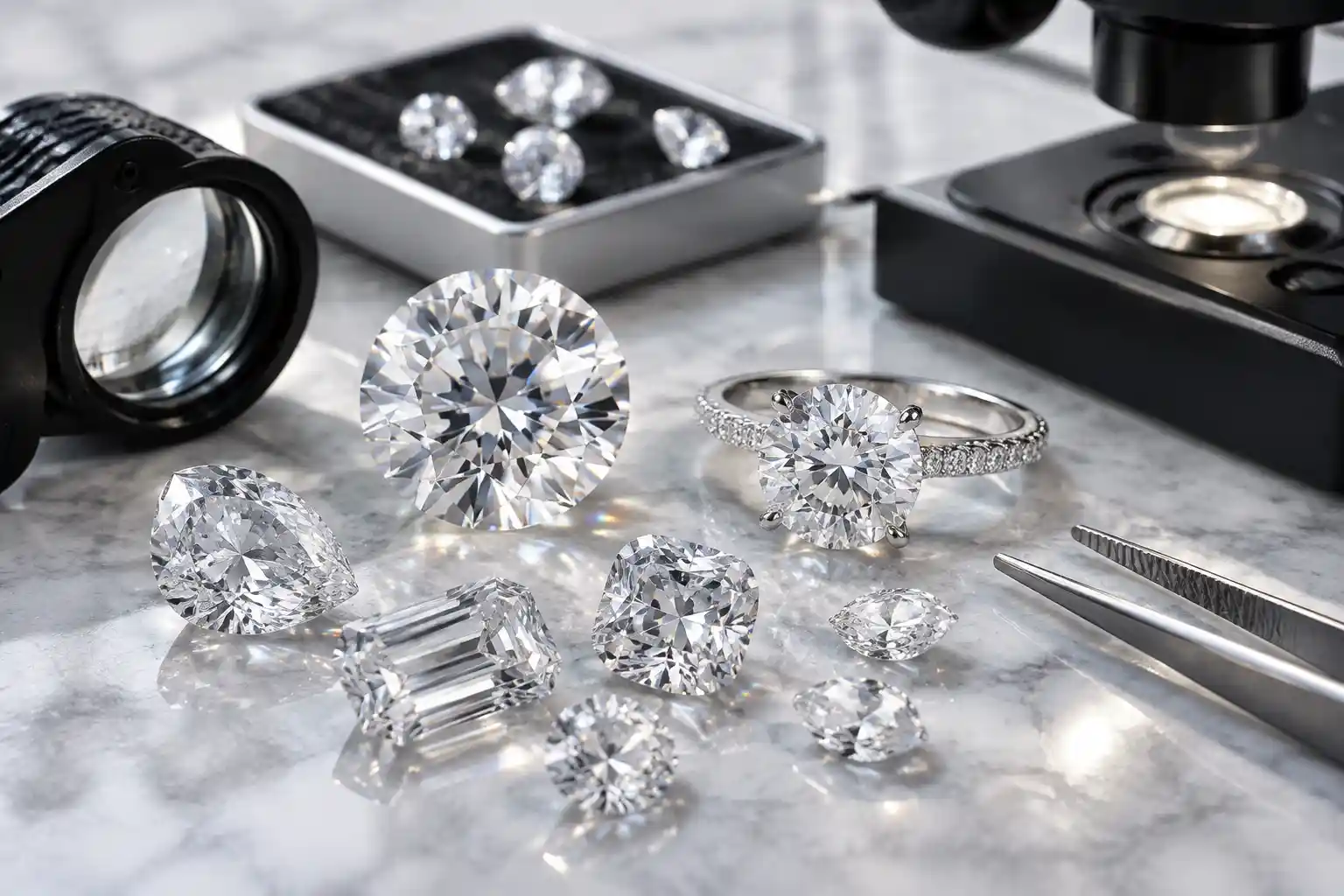
Optically, moissanite is distinctive rather than simply being a cheaper copy of diamond. It has a high refractive index and exceptionally strong dispersion, causing white light to break into conspicuous spectral flashes. This produces the colorful fire for which moissanite is famous. The effect can be more noticeable than diamond fire, especially in larger stones and lighting that creates strong point-source reflections.
Durability is another major reason people consider moissanite for engagement rings and other frequently worn jewelry. Its hardness is approximately 9.25 on the Mohs scale, below diamond but above most common gemstones, and its toughness is excellent. These real physical advantages support daily wear, while modern symbolism involving commitment, innovation, individuality, and resilience can add personal significance without pretending that moissanite has an ancient jewelry tradition it could not historically possess.
11 Moissanite Benefits at a Glance
- High refractive index produces strong brilliance in well-cut stones.
- Exceptional dispersion creates intense rainbow-colored fire.
- Mohs hardness of about 9.25 provides excellent resistance to ordinary scratching.
- Excellent toughness makes moissanite suitable for frequently worn jewelry.
- Laboratory production provides consistent access to larger jewelry-quality stones.
- Colorless and near-colorless options work with many jewelry styles and metal colors.
- Moissanite is chemically distinct from diamond, giving it a legitimate gemstone identity of its own.
- Engagement-ring use combines durability, visual impact, and flexible design possibilities.
- Its price commonly allows buyers to consider larger dimensions or more elaborate settings than an equivalent natural diamond budget might permit.
- Gemological characteristics such as double refraction and strong dispersion allow trained observers to separate moissanite from diamond.
- Modern symbolism can connect moissanite with innovation, lasting commitment, individuality, and intentional choice.
Strong Brilliance Is One of the Most Visible Moissanite Benefits
Brilliance describes the white light returned to an observer from a faceted gemstone, and moissanite performs impressively because silicon carbide has a high refractive index. When cutting proportions are appropriate, substantial light can return through the crown rather than escaping unnoticed through the pavilion.
Synthetic moissanite has refractive indices around 2.65 to 2.69, depending on optical direction. These values are higher than diamond’s refractive index, although gemstone appearance cannot be predicted from one optical number alone. Facet arrangement, cutting proportions, polish, stone shape, lighting, and viewing position all influence what a finished gem looks like.
Well-cut moissanite can therefore appear exceptionally bright in rings, earrings, pendants, and other jewelry. Round brilliant cuts are especially common because they emphasize sparkle, while ovals, cushions, pears, emerald cuts, radiant cuts, marquises, and other shapes can produce different balances between brilliance, fire, and visible facet pattern.
The visual character should be evaluated as moissanite rather than judged solely by how closely it resembles diamond. Some buyers enjoy its energetic sparkle precisely because it does not reproduce diamond optics perfectly.
Exceptional Fire Makes Moissanite Visually Distinctive
Among the most recognizable moissanite benefits is strong dispersion, often called fire. Dispersion describes the separation of white light into spectral colors as it passes through and reflects within a faceted gemstone.
Moissanite has dispersion around 0.104, substantially higher than diamond. This can create noticeable red, orange, yellow, green, blue, and violet flashes under suitable lighting. The effect is particularly obvious in spot lighting, direct sunlight, restaurants, jewelry stores, and other environments containing bright directional light sources.
Some buyers consider this intense fire one of the stone’s greatest attractions. Others prefer the more restrained balance of white brilliance and fire associated with diamond. Neither preference is inherently more correct because they describe different optical appearances.
Larger moissanite can make spectral flashes especially obvious. Buyers should therefore look at a stone in several lighting environments before making a decision. Product photographs under controlled jewelry lighting do not always show how the gem will appear outdoors, under office lights, or in ordinary home illumination.
High Hardness Supports Frequent Jewelry Wear
Durability is one of the most practical moissanite benefits. With a Mohs hardness around 9.25, synthetic moissanite is harder than corundum gemstones such as sapphire and ruby and substantially harder than quartz, feldspar, opal, or many popular ornamental stones.
Hardness mainly describes resistance to scratching rather than complete resistance to damage. Moissanite can still chip if a sufficiently strong impact strikes a vulnerable facet edge, girdle area, or point. A pear, marquise, or princess-shaped stone may therefore benefit from prongs or settings that protect exposed corners and tips.
Excellent toughness adds another advantage. Moissanite tolerates ordinary jewelry wear well and has become especially popular in rings that may be worn for many years.
This combination matters because an engagement stone needs to remain visually attractive despite regular contact with clothing, furniture, dust, and everyday surfaces. No gemstone should be treated as indestructible, but moissanite offers a strong durability profile for routine jewelry.
Laboratory Growth Makes Jewelry-Quality Moissanite Accessible
Natural moissanite is exceptionally rare. French chemist Henri Moissan identified natural silicon carbide associated with the Canyon Diablo meteorite, and the mineral was later named moissanite in his honor. Additional natural occurrences have since been documented, but natural crystals are generally tiny and are not the source of the faceted moissanite used in mainstream jewelry.
Jewelry-quality moissanite is produced synthetically as silicon carbide crystals. Controlled crystal growth makes it possible to create pieces large and clean enough for faceting, something natural occurrence cannot supply on the scale required by the jewelry market.
This is a genuine technological achievement. Growing high-quality silicon carbide crystals requires specialized manufacturing rather than merely melting ordinary glass into a gemstone shape. The finished crystal is synthetic moissanite, not diamond and not cubic zirconia.
Laboratory origin also makes larger jewelry sizes available without depending on the geological rarity that affects natural gems. That accessibility is among the most commercially significant moissanite benefits.
Moissanite Has Its Own Gemological Identity
Moissanite is sometimes called a fake diamond, but that description obscures the real mineralogy. Synthetic moissanite is silicon carbide, while diamond is carbon. The two differ in chemistry, crystal structure, optical behavior, density, dispersion, and other gemological properties.
When moissanite is deliberately used to imitate diamond appearance, gemologists may classify it as a diamond simulant. A simulant resembles another gem visually but does not share its fundamental composition. That is very different from a laboratory-grown diamond, which is crystalline carbon with essentially the same core chemical and physical identity as natural diamond but a manufactured growth origin.
This distinction is useful when deciding to buy moissanite. A responsible seller should clearly identify the gemstone as moissanite rather than relying on ambiguous wording that could encourage a buyer to think it is diamond.
Correct identification does not reduce the gemstone’s appeal. It allows buyers to choose it deliberately for the characteristics it genuinely possesses.
Moissanite Benefits Engagement Rings Especially Well
Durability, brilliance, and availability make moissanite particularly suitable for engagement jewelry. A center stone can be worn regularly without the extreme scratch sensitivity of softer gems, while the strong optical performance produces a visually prominent ring even in relatively simple settings.
Design flexibility is considerable. Colorless or near-colorless moissanite can work with platinum, white gold, yellow gold, and rose gold. Solitaire designs emphasize the center stone, while halos, three-stone settings, side stones, bezels, and vintage-inspired settings can create very different appearances.
Cut shape changes personality as well. Rounds typically emphasize brilliance and fire, elongated ovals and pears can create a larger-looking face-up outline, cushions produce a softer profile, while step cuts can place greater emphasis on broad flashes and facet structure.
A moissanite engagement ring can therefore represent more than an attempt to mimic a diamond ring. Buyers can build the design around moissanite’s own appearance, durability, and personal symbolism.
Pricing Can Offer Greater Size and Design Flexibility
Price is another practical reason many buyers consider moissanite. Laboratory-created moissanite generally costs much less than a natural diamond of comparable visible dimensions and high quality. This difference may allow someone to select a larger stone, higher-quality setting, more elaborate design, or simply spend less overall.
Price still varies. Brand, cut quality, color, clarity, stone size, shape, jewelry craftsmanship, certification or documentation, warranty terms, and retailer markup can all influence the final amount.
Unlike diamond, moissanite should not automatically be evaluated by copying diamond price expectations. Its supply chain, manufacturing economics, market positioning, and resale behavior are different.
Understanding moissanite price helps buyers separate genuine value factors from marketing premiums. A higher price may be justified by exceptional cutting, documented quality, reliable customer support, or superior jewelry construction, but a large premium should not be assumed to guarantee proportional resale value.
Colorless and Near-Colorless Options Suit Many Designs
Modern synthetic moissanite can be produced in attractive colorless to near-colorless ranges. Earlier commercial stones were often more likely to show warm, greenish, or grayish undertones under certain lighting, while improvements in production have expanded the availability of visually whiter gems.
Color should still be judged in person or through realistic video whenever possible. A stone that appears icy white under bright store lights may reveal more warmth in daylight or against very white metal.
Some buyers actively prefer a slightly warm appearance, especially in yellow or rose gold. Others want the whitest-looking possible center stone for platinum or white gold. Neither choice is universal because setting color and personal taste influence perception.
Colored moissanite also exists, including yellow, green, blue, and darker varieties, although some colors can result from treatments or coatings. Disclosure matters because treatment method may affect care expectations and long-term color stability.
Moissanite Can Be Distinguished From Diamond Gemologically
Another useful moissanite benefit is that it possesses identifiable gemological properties rather than being an ambiguous glass imitation. Trained gemologists can separate synthetic moissanite from diamond using its optical and physical characteristics.
Moissanite is doubly refractive in commonly used jewelry polytypes, while diamond is singly refractive. Under magnification, doubling of facet junctions can therefore be visible through some viewing directions. Stronger dispersion also produces a different balance of spectral fire.
Thermal conductivity deserves special attention. Moissanite can respond similarly to diamond on some traditional thermal probes, which means an inexpensive tester that only measures thermal behavior may identify it incorrectly. Modern combination testers and professional gemological examination can make the distinction more reliably.
This is especially important when buying secondhand jewelry or verifying an unidentified stone. A positive reading from a basic diamond tester should not be treated as definitive proof of diamond identity.
Moissanite Offers Modern Symbolism Rather Than Ancient Tradition
One of the less tangible moissanite benefits is symbolic flexibility. Because natural moissanite was identified scientifically only in the modern era and jewelry-quality synthetic moissanite arrived much later, the gemstone does not possess the long ancient jewelry tradition associated with sapphire, ruby, emerald, garnet, or lapis lazuli.
That absence can itself be meaningful. Moissanite may symbolize innovation, technology, individuality, conscious choice, or creating new traditions instead of inheriting old ones.
Its durability makes commitment another intuitive modern theme. A couple may select it for an engagement ring because the gem is designed to withstand frequent wear while representing a long-term promise. The symbolism comes from the relationship and choice, not from a supernatural property.
Its discovery in meteorite material also adds an interesting scientific story. However, commercial jewelry moissanite is laboratory-created and should not be described as extraterrestrial gemstone material simply because natural moissanite was first identified in a meteorite.
Important Moissanite Cautions Before Buying
Moissanite benefits are substantial, but several buying cautions matter. The first is disclosure. Sellers should identify moissanite clearly rather than marketing it in a way that could be mistaken for natural or laboratory-grown diamond.
The second is optical preference. Moissanite’s intense fire is attractive to many people but can look more colorful than expected in large stones. Buyers who want a restrained diamond-like appearance should compare both gems under several lighting conditions instead of purchasing from still photographs alone.
Cutting also matters. Poor proportions can reduce brightness or create an unattractive facet pattern despite the gemstone’s high refractive index. Large stones may show more obvious facet doubling or spectral flashes depending on shape and cut.
Finally, moissanite should not be purchased with guaranteed investment or resale expectations. A beautiful, durable piece can offer excellent personal value without being a financial asset.
Conclusion
Moissanite benefits include high brilliance, exceptional fire, Mohs hardness around 9.25, excellent toughness, laboratory availability, flexible jewelry design, and distinctive gemological identity. These qualities make synthetic moissanite especially practical for engagement rings and other jewelry intended for frequent wear.
Its strengths are clearest when buyers appreciate moissanite as silicon carbide rather than as a substitute that must imitate diamond perfectly. Strong dispersion, double refraction, technological origins, and modern symbolism give it a character of its own. Accurate disclosure and realistic value expectations remain essential parts of a confident purchase.
FAQs
What are the main moissanite benefits?
The most important moissanite benefits include excellent hardness and toughness, strong brilliance, exceptionally colorful fire, good suitability for daily-wear jewelry, access to larger laboratory-grown stones, and generally lower pricing than comparable natural diamond jewelry. It also has a legitimate silicon carbide identity of its own rather than being glass or cubic zirconia.
Is moissanite a real gemstone?
Yes. Moissanite is silicon carbide, SiC, and natural moissanite is a recognized mineral, although it is extraordinarily rare. The moissanite used in modern jewelry is laboratory-created because natural crystals are not available in suitable quantity and size for the mainstream gem trade. Synthetic origin should be disclosed, but it does not make the stone glass or an imitation substance unrelated to moissanite.
How hard is moissanite?
Moissanite has a Mohs hardness of approximately 9.25, making it one of the hardest gemstones commonly used in jewelry. Only a few substances, most notably diamond, rank higher in ordinary gem use. Hardness provides excellent scratch resistance, although a stone can still chip if struck strongly at a vulnerable edge or point.
Does moissanite sparkle more than diamond?
Moissanite has exceptionally strong dispersion and can produce more obvious rainbow-colored fire than diamond. Its overall visual appearance is different rather than simply stronger in every category. Some buyers love the intense spectral flashes, while others prefer diamond’s characteristic balance of white brilliance and fire. Cut and lighting significantly affect both gems.
Is moissanite good for an engagement ring?
Yes. Its high hardness, excellent toughness, optical brightness, and availability in many shapes make moissanite well suited to engagement rings. It can withstand frequent wear when mounted properly and cared for sensibly. The best choice still depends on personal preference for its strong fire, color appearance, setting style, and budget.
Is moissanite the same as a lab-grown diamond?
No. Laboratory-grown diamond is crystalline carbon and shares the fundamental gemological identity of natural diamond, although it was grown artificially. Synthetic moissanite is silicon carbide. The two can look similar when colorless and faceted, but their chemistry, crystal structure, optical properties, dispersion, and refractive behavior are different.
Can a diamond tester mistake moissanite for diamond?
Some thermal conductivity testers can react to moissanite similarly to diamond because their thermal properties overlap enough to cause confusion. This is why a simple positive reading is not always conclusive. Modern combination instruments and professional gemological tests use additional properties to distinguish the two.
Is moissanite cheaper than diamond?
Laboratory-created moissanite generally costs substantially less than a natural diamond of similar visible size and high quality. Actual prices depend on brand, cutting, size, shape, color, clarity, retailer, and jewelry construction. Lower purchase price should not be interpreted as guaranteed resale performance or investment potential.
Does moissanite have an ancient gemstone tradition?
No. Natural moissanite was scientifically identified in the modern era, and jewelry-quality synthetic moissanite became commercially available much later. It therefore does not have the ancient jewelry history of sapphire, emerald, ruby, or other long-known gemstones. Most symbolism associated with moissanite is modern.
Is jewelry moissanite really from a meteorite?
No. Natural moissanite was famously identified in material associated with the Canyon Diablo meteorite, which gives the mineral an unusual discovery history. Commercial jewelry moissanite, however, is laboratory-grown silicon carbide. A modern engagement stone should not be described as meteorite material unless there is independent evidence for an entirely different product.
Does moissanite have healing benefits?
There is no established scientific evidence that wearing moissanite treats disease, anxiety, depression, pain, hormonal conditions, circulation problems, sleep disorders, or other health concerns. Its demonstrated benefits concern optics, durability, jewelry use, laboratory growth, and personal symbolism rather than medical treatment.
Moissanite benefits involving spiritual energy, emotional healing, or wellness symbolism are personal or belief-based interpretations and should not replace qualified physical or mental-health care.