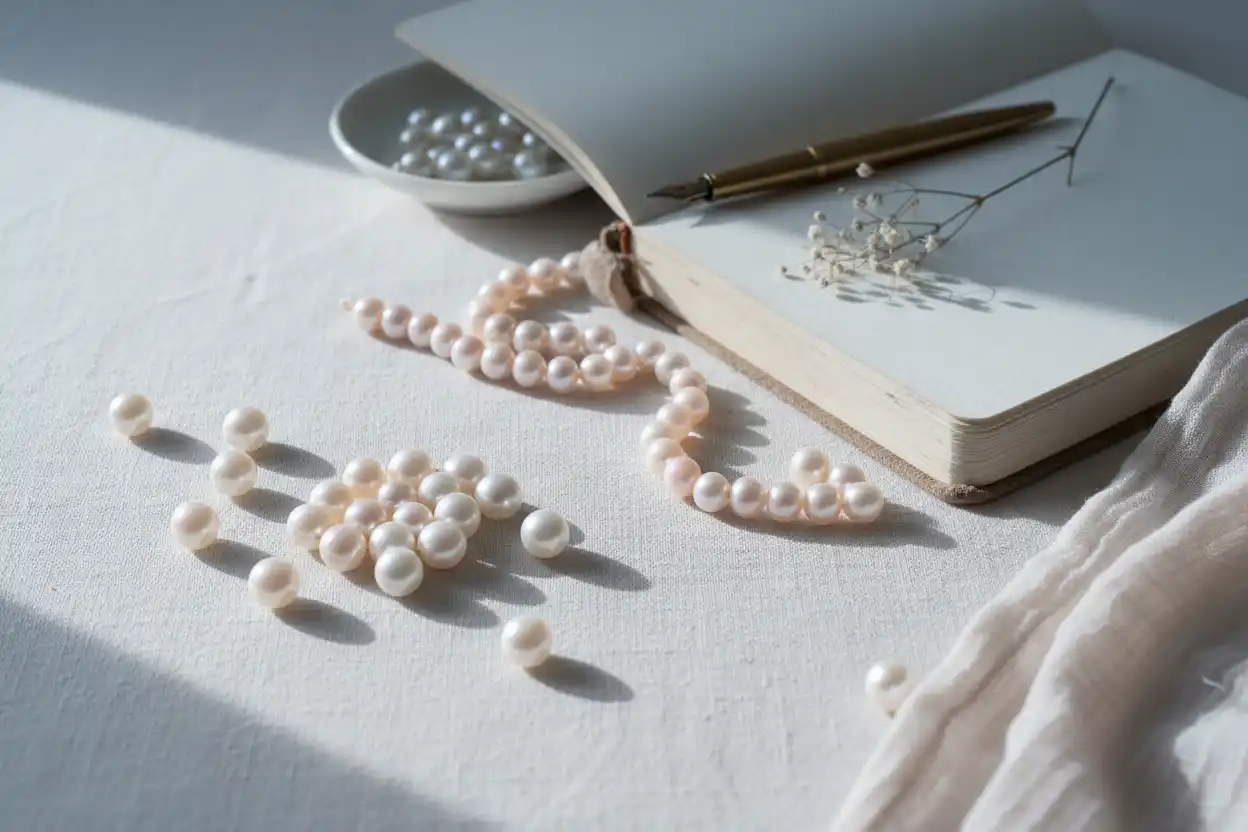
Pearl Healing Properties, Meaning and Uses
Pearls have been associated with purity, composure, wisdom, prosperity and emotional maturity in many jewelry traditions. Contemporary crystal-healing communities often extend those symbolic associations into practices centered on calm reflection, self-respect, patience and balanced communication.
These ideas belong to cultural, spiritual and personal-belief frameworks. Pearls have no scientifically established ability to diagnose, treat or cure physical or mental-health conditions. A pearl may still function as a meaningful object, meditation focus, family heirloom or reminder of an intention without being treated as medical equipment.
This page focuses narrowly on healing beliefs and intentional use. The pearl meaning guide owns the broader history, material identity, symbolism and formation of pearls.
Pearl Healing Properties at a Glance
| Area of belief | Common contemporary association | Grounded way to use the symbolism |
|---|---|---|
| Emotional life | Calm, patience and composure | Pause before reacting or speaking |
| Self-perception | Dignity and self-respect | Use as a reminder of personal boundaries |
| Relationships | Sincerity and considerate communication | Reflect before difficult conversations |
| Personal growth | Wisdom developed through experience | Journal about lessons from past events |
| Spiritual practice | Inner stillness and receptivity | Hold or wear pearls during quiet reflection |
| Creativity | Gentle, intuitive expression | Use as a cue for unhurried creative work |
| Transitions | Maturity and gradual transformation | Mark a milestone or new responsibility |
| Prosperity symbolism | Abundance, refinement and good fortune | Connect the pearl with practical financial intentions |
The table describes belief-based associations rather than clinical effects. The useful part of an intention practice comes from the wearer’s reflection, habits and decisions, not from a demonstrated energy emitted by the pearl.
Why Pearls Became Symbols of Healing and Transformation
Pearls form within living mollusks through a biological process that deposits material around a nucleus or irritant within a pearl sac. That gradual formation has made the pearl a natural metaphor for development through time.
The comparison is poetic rather than medically literal. Contemporary practitioners may view the layered pearl as a symbol of integrating difficult experience, building emotional resilience or turning disruption into maturity.
Pearls have also carried associations with wealth, rank, marriage, purity and good fortune across different societies. Those meanings were never universal or fixed. A pearl worn by a ruler, bride, merchant, religious figure or family elder could communicate very different things.
Modern healing interpretations often combine these historical associations with newer ideas about emotional balance, chakras, meditation and personal intention.
Emotional Healing Beliefs
Pearl is frequently described as a calming or emotionally balancing material. In practice, people may wear a pearl necklace or handle a loose pearl as a cue to slow their breathing, reconsider an impulsive response or speak more deliberately.
The object itself has not been shown to alter brain chemistry or treat anxiety. However, a personally meaningful object can support a ritual or habit. Someone might touch a pendant before an important conversation and use that moment to remember a commitment to patience.
Pearl symbolism is often linked with gentleness, but gentleness does not require passivity. A more useful interpretation combines calm communication with clear boundaries and self-respect.
Readers interested in broader belief-based roundups can compare the planned guides to crystals for emotional healing and crystals for anxiety and stress relief. Neither should replace qualified support for persistent distress.
Pearl and Emotional Maturity
Because pearls develop gradually, they are often used as symbols of wisdom gained over time. A pearl may mark graduation, marriage, parenthood, career advancement, recovery from a difficult period or another transition associated with greater responsibility.
A reflective practice can focus on questions such as what has changed, which lessons should be retained and which patterns should be released. The value lies in honest reflection rather than attributing supernatural certainty to the jewelry.
Inherited pearls may carry an additional layer of meaning. Their emotional effect comes from memory, family connection and personal interpretation. They do not contain a measurable transfer of another person’s personality or health.
Pearl for Calm and Composure
Pearls are sometimes worn during negotiations, public speaking, interviews or family conversations because their restrained appearance is associated with composure.
A practical intention might be: “I will listen fully before answering.” The wearer can connect that sentence to the act of fastening a pearl earring or touching a pendant.
This technique resembles using any visible reminder to reinforce a chosen behavior. The pearl’s symbolic history may make the reminder feel more meaningful, but the behavioral change still depends on the wearer.
For nighttime use, consider both symbolism and physical safety. The guide to wearing crystals to sleep explains why necklaces, earrings and strung jewelry are usually better removed before bed.
Pearl and Self-Respect
Some contemporary interpretations connect pearl with dignity, self-worth and recognizing one’s own value. This association can support journaling about boundaries, standards and reciprocal relationships.
Pearl symbolism should not be used to encourage superiority or social status. Historically, pearls often communicated rank and wealth, but modern personal practice can reinterpret them as reminders of inherent worth rather than external prestige.
Wearing inherited, affordable cultured or imitation pearls can carry just as much personal meaning as wearing rare natural pearls. Symbolic usefulness does not depend on market price.
Pearl and Relationship Beliefs
Pearls appear in wedding jewelry, heirlooms and milestone gifts, leading to associations with commitment, fidelity, sincerity and enduring affection.
Some folklore warns that pearls represent tears or bring sadness to marriage. Other traditions regard them as fortunate and protective. These contradictory beliefs show why cultural symbolism should not be treated as a universal prediction.
A person may instead use pearls as a reminder to communicate honestly, repair misunderstandings and respect mutual boundaries. The planned guide to crystals for love and romance covers the wider symbolic category without assigning guaranteed relationship outcomes to any material.
Pearl and Wisdom
Wisdom is one of the pearl’s most persistent symbolic themes. The association may come from rarity, antiquity, royal use, the slow formation process and literary phrases that compare pearls with valuable insight.
A pearl meditation on wisdom can remain concrete. Rather than asking the object for an answer, the wearer can review available evidence, consider consequences and seek advice from knowledgeable people.
The pearl then functions as a cue for thoughtful judgment. It does not provide hidden information, predict another person’s motives or guarantee the correct decision.
Pearl and Prosperity
Pearls have historically represented wealth and elevated status because natural pearls were scarce and difficult to obtain. Cultured-pearl production later made pearl jewelry accessible to a wider market, but prosperity symbolism remains common.
In intention-based practice, pearl may be associated with stable abundance, long-term planning and valuing quality over impulse. A practical exercise might involve reviewing a budget, setting a savings target or pausing before a discretionary purchase while wearing the pearl.
The dedicated pearl price guide owns market value and cost. Expensive jewelry should not be mistaken for proof of spiritual advancement or financial success.
Spiritual Associations
Pearls are often connected with stillness, receptivity, intuition and the sea. These associations arise from their organic origin, smooth appearance and historical mythology rather than laboratory evidence of spiritual energy.
A pearl can be incorporated into prayer, contemplation or meditation when that practice fits the user’s beliefs. It may be held, worn or placed nearby as a symbol of quiet attention.
Different religious and cultural traditions have their own teachings concerning pearls. Those traditions should be approached in context rather than blended into a single claim that every culture understands pearls identically.
Pearl and the Chakras
Modern crystal-healing sources assign pearls to several chakras, most commonly the crown, heart or sacral chakra. These assignments vary because pearl colors, spiritual systems and practitioner traditions differ.
White pearls are often associated with the crown chakra because of their pale color and symbolism of clarity. The crown chakra guide owns the broader belief system and its traditional framework.
Pink, peach or cream pearls may be associated with emotional openness and the heart chakra. The heart chakra guide discusses that symbolic center without presenting it as an anatomical organ.
Some practitioners connect pearls with the sacral chakra because of water symbolism, creativity and reproductive associations. The sacral chakra guide covers that tradition more fully.
Chakras are spiritual concepts, not structures recognized in anatomy. A pearl should not be used to diagnose a “blocked” chakra or explain medical symptoms.
Pearl Colors and Healing Symbolism
White pearls are commonly linked with simplicity, clarity, fresh beginnings and restraint. Cream pearls may suggest warmth, stability and traditional elegance.
Pink and peach pearls are often associated with affection, kindness and emotional openness. Golden pearls may symbolize confidence, prosperity and mature personal authority.
Silver and gray pearls can suggest neutrality, reflection and composure. Dark Tahitian pearls are often interpreted as symbols of independence, mystery, protection or transformation.
These associations are flexible. The color that produces the strongest personal response may be more useful than following a rigid chart.
The types of pearl guide explains which colors occur in Akoya, freshwater, Tahitian and South Sea cultured pearls and which appearances may involve treatment.
How to Use Pearl in an Intention Practice
A simple practice starts with one clearly worded intention. “Pearl will heal me” is vague and gives the object unrealistic responsibility. “I will pause before responding when I feel defensive” identifies a behavior the wearer can control.
The pearl can be worn during the relevant situation or placed beside a journal. Afterward, the user can review what happened and whether the intended behavior changed.
Repeating the practice may strengthen the mental association between the object and the action. That process is closer to habit formation and symbolic reinforcement than supernatural healing.
Wearing Pearl Jewelry for Intention
Pearl earrings can represent attentive listening because they are worn beside the ears. This is symbolic wordplay, not a traditional rule, but it can produce a useful reminder during conversations. The pearl earrings guide covers style and construction.
A necklace places the pearl near the chest and may be chosen for heart-centered symbolism. The pearl necklace guide focuses on strand lengths, clasps, matching and buying concerns.
Bracelets are more visible to the wearer but experience greater friction and impact. Whatever the format, jewelry should be selected for physical safety and comfort rather than spiritual claims alone.
Pearl Meditation
To meditate with a pearl, sit comfortably and place the pearl where it can be held without strain. Notice its temperature, weight, surface and reflected light.
Choose a grounded theme such as patience, careful speech or accepting gradual progress. Return attention to breathing whenever the mind wanders.
The pearl does not need to be placed on the body or exposed to water. A short, consistent practice is generally more practical than an elaborate ritual that risks damaging the jewelry.
Journaling with Pearl
Pearl symbolism works well with prompts about growth through experience. A person might write about a difficult period that produced useful knowledge, a boundary that needs strengthening or a relationship that requires clearer communication.
Another approach is to identify what “composure” means in behavior. It could involve lowering one’s voice, asking for time before deciding or separating facts from assumptions.
The pearl remains a visual anchor. The insight comes from reflection, not from messages transmitted by the object.
Cleansing and Charging Beliefs
Some practitioners symbolically cleanse pearls before intention work. Because pearls are organic gems with sensitive surfaces, physical care must take priority over ritual methods.
Avoid salt, prolonged soaking, smoke residue, harsh herbs, essential oils, sunlight exposure and methods that place the pearl in contact with abrasive crystals. A soft cloth, quiet intention, sound at a comfortable distance or placement near—not on—a separate symbolic object can be gentler options.
The dedicated how to cleanse and charge pearl guide owns the full belief-based procedure. The general how to cleanse crystals guide provides broader context but should not override pearl-specific material safety.
The guide to crystals that should not be combined also explains that many combination warnings concern conflicting intentions or physical hardness rather than proven energetic harm.
Physical Care Is Different from Spiritual Cleansing
Spiritual cleansing is a symbolic practice. Physical cleaning removes skin oils, cosmetics and dirt. Mixing the two can damage pearls when a ritual recommends water, salt, acids or prolonged sunlight.
The physical-care procedure belongs in how to clean pearl jewelry safely. Pearls should be handled gently, wiped after wear and kept away from ultrasonic or steam cleaning.
A ritual should never require damaging the object to make it spiritually useful.
Choosing a Pearl for Healing Practice
Symbolic practice does not require the rarest or most expensive pearl. A cultured freshwater pearl, inherited necklace, single loose pearl or well-disclosed imitation may all carry personal meaning.
Buyers who also care about gemological quality can use the pearl buying guide. The distinction between natural, cultured and imitation material should be understood, but spiritual value remains personal rather than market-certified.
Pearls may also be dyed, irradiated or coated. The treated pearl guide explains these modifications, while the upcoming real versus fake pearl guide addresses identification boundaries.
Treatment does not make a pearl spiritually harmful. It simply changes what the product is and how it should be represented and cared for.
Pearl and Mother of Pearl
Pearl and mother of pearl are related materials produced by mollusks, but they are not interchangeable jewelry forms. A pearl is a separate rounded or irregular formation, while mother of pearl is nacreous shell material cut into components.
The mother-of-pearl meaning guide owns its separate symbolism and physical characteristics. Someone may prefer a flat mother-of-pearl pendant for visual or practical reasons, but its traditional associations should not be assumed to match every pearl belief.
Pearl as a June Birthstone
Pearl is one of June’s recognized birthstones, alongside moonstone and alexandrite. Birthstone use can add a personal calendar association to healing or intention practices.
The June birthstone guide explains the month-level tradition. The June birthstone jewelry guide focuses on wearable gifts and design choices.
A birth month does not determine which symbolic practice will work for a person. Someone born in another month can still choose pearl for its history, appearance or personal meaning.
Frequently Asked Questions
1. What are the main healing properties associated with pearl?
Contemporary practitioners commonly associate pearl with calm, emotional balance, wisdom, dignity, patience and sincere communication. These are symbolic beliefs rather than scientifically demonstrated therapeutic effects.
2. Can pearl reduce anxiety?
Pearl has not been shown to treat anxiety. It can be used as a personal reminder to breathe, pause or follow a coping strategy, but persistent anxiety deserves support from a qualified professional.
3. Which chakra is pearl associated with?
White pearl is often linked with the crown chakra, while pink or cream pearls may be associated with the heart. Some traditions connect pearl with the sacral chakra through water and creativity symbolism.
4. Does pearl attract love?
Pearl is associated with sincerity, commitment and mature affection in some traditions. It cannot make a particular person fall in love or guarantee a relationship outcome.
5. Is pearl considered protective?
Some cultural and contemporary beliefs treat pearl as a symbol of protection, especially emotional composure or safe passage. There is no scientific evidence that it creates a protective field.
6. Can I meditate with pearl?
Yes. A pearl can serve as a visual or tactile focus during meditation. Choose a grounded intention and avoid placing delicate jewelry where it may be scratched or dropped.
7. Should pearl be worn on the left or right side?
There is no universally accepted side. Choose the side based on comfort, jewelry design and the personal meaning assigned to the practice.
8. Can pearl help with sleep?
Pearl is sometimes associated with calm, but it has not been proven to improve sleep. Remove necklaces and dangling earrings before bed to avoid tangling, pressure or damage.
9. Does a treated pearl have different spiritual properties?
There is no scientific evidence that treatment changes spiritual energy. Treatment affects identity, appearance, care and market representation rather than creating a measurable metaphysical difference.
10. Can pearl be placed in water for healing rituals?
Prolonged soaking is not advisable. Water and cleaning products can affect stringing, adhesives and pearl surfaces, so use a non-contact symbolic method instead.
11. Do imitation pearls work for intention setting?
They can. Intention practices depend on personal meaning and behavior rather than gemological rarity, provided the wearer understands that the material is manufactured.
12. How often should pearl be cleansed spiritually?
There is no required schedule. Some people perform a brief symbolic reset after stressful events or before a new intention, while others do not use cleansing rituals at all.
Pearl symbolism is most useful when it directs attention toward a practical choice: listening more carefully, setting a boundary, slowing an impulsive response or recognizing lessons gained over time. The pearl can hold personal meaning, but the wearer remains responsible for the actions that turn an intention into change.
For alphabetical navigation, pearl appears in Gemstones That Start With P and Crystals That Start With P.
Pearl healing practices are spiritual or cultural traditions, not medical treatment. Pearls do not diagnose, prevent or cure illness. Seek qualified medical or mental-health care for symptoms, and keep pearl rituals physically safe for both the person and the jewelry.