Best Diamond Alternatives: Top Picks, Value & Buying Tips
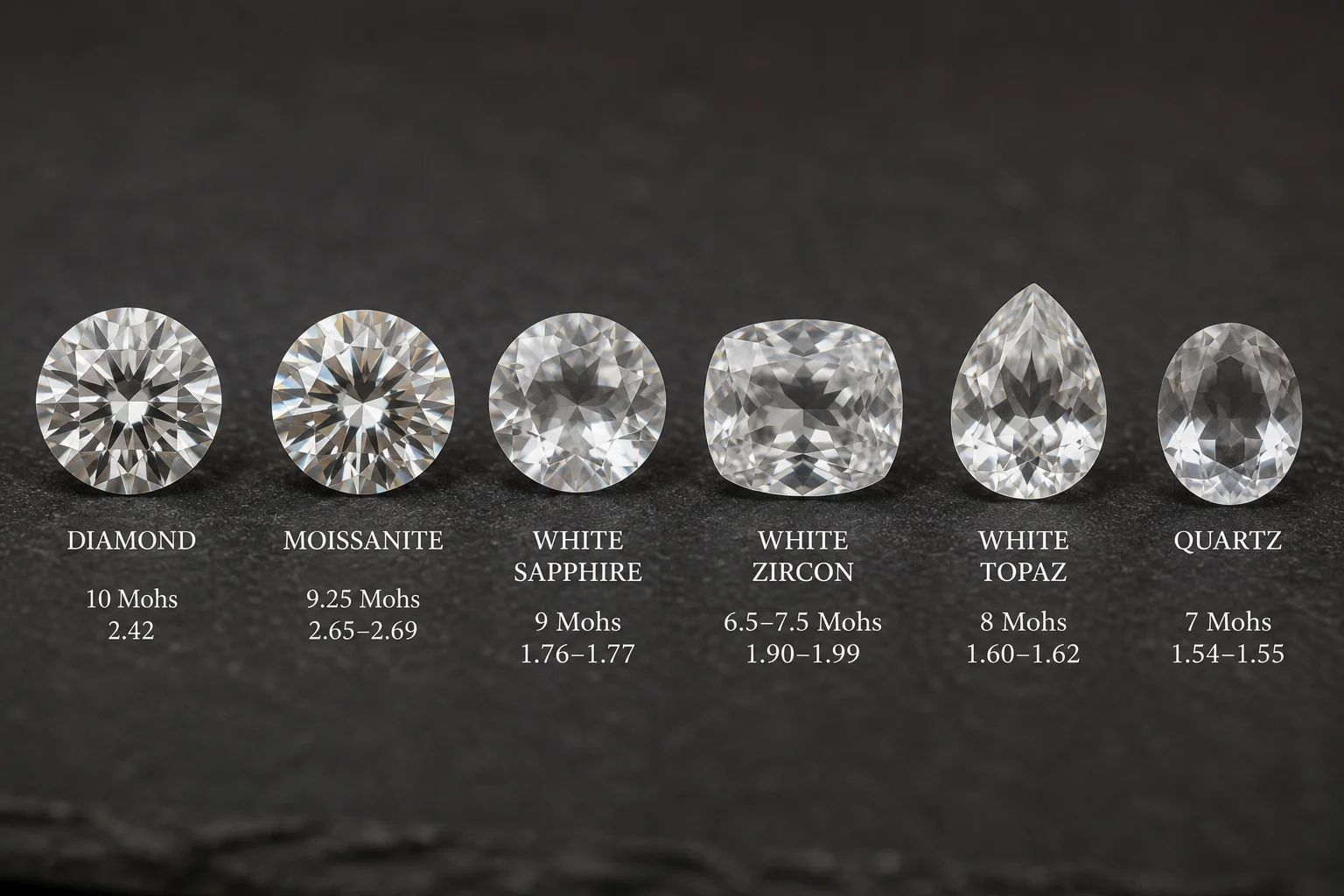
The best diamond alternatives are not interchangeable substitutes. Moissanite comes closest when you want exceptional brilliance, strong durability and a colorless center stone without diamond identity; white sapphire offers a durable natural-gem option with quieter sparkle; cubic zirconia delivers maximum apparent size for minimal stone cost; white topaz provides an inexpensive naturally occurring colorless gem; and zircon offers unusually lively fire but requires more careful wear.
Laboratory-grown diamond also belongs in the buying conversation, although technically it is not a diamond simulant at all. A lab-grown diamond is genuine crystalline diamond produced in a manufacturing environment, so it is the strongest option for someone who wants diamond’s material properties and optical character but does not specifically require mined origin.
Choosing among the best diamond alternatives therefore starts with a more useful question than “Which looks most like a diamond?” Consider how often the jewelry will be worn, whether natural origin matters, whether you like white brilliance or rainbow fire, how much maintenance you accept, and whether material identity or simply the overall look matters most.
Best Diamond Alternatives at a Glance
| Option | Mohs hardness | Optical character | Typical visual impression | Best suited to | Main compromise |
|---|---|---|---|---|---|
| Moissanite | About 9.25 | Very high brilliance and exceptionally strong fire | Bright, crisp and rainbow-rich | Everyday rings and buyers prioritizing durability/value | More spectral fire and double refraction than diamond |
| Lab-grown diamond | 10 | Diamond brilliance, fire and scintillation | Essentially diamond optical character | Buyers who want actual diamond without mined origin | Different market/resale dynamics from natural diamond |
| White sapphire | 9 | Lower RI and dispersion than diamond | Softer, silvery, restrained sparkle | Natural-gem everyday rings | Less brilliance and fire |
| Cubic zirconia | About 8–8.5 | High brilliance and strong dispersion | Bright and fiery when new | Fashion, travel and ultra-budget jewelry | Surface wear develops faster |
| White topaz | 8 | Moderate brilliance, low dispersion | Clean but subdued | Low-cost natural-gem jewelry | Cleavage and noticeably softer sparkle |
| Colorless zircon | 6–7.5 | High luster, strong dispersion and double refraction | Lively, fiery and distinctive | Occasional jewelry and natural-gem collectors | Lower abrasion resistance and brittleness |
| Colorless spinel | 8 | Moderate brilliance and low-to-moderate fire | Crisp but understated | Durable natural-gem designs | Fine colorless natural material is less common |
| Rock crystal quartz | 7 | Modest refractive power | Clear and glassy | Large inexpensive fashion designs | Much less diamond-like brilliance |
No single material wins every category. The best diamond alternatives become easier to rank once durability, optics, origin and budget are considered separately.
1. Moissanite: Best Overall Non-Diamond Alternative
For most buyers seeking a permanent colorless center stone without diamond identity, moissanite is one of the best diamond alternatives.
Modern jewelry moissanite is laboratory-grown silicon carbide. Natural moissanite exists, but it is extraordinarily rare and does not supply the commercial jewelry market. The material has refractive indices substantially higher than diamond and dispersion around 0.104, more than twice diamond’s approximately 0.044 dispersion.
That difference creates its signature appearance.
Moissanite can be extremely brilliant, but it also produces stronger red, green, blue and yellow flashes than diamond. In larger brilliant cuts and concentrated lighting, the rainbow effect can become obvious. Some buyers consider that extra fire an advantage; others prefer the more balanced mixture of white brightness and spectral fire associated with diamond.
Durability is a major reason moissanite ranks so highly among the best diamond alternatives. At approximately Mohs 9.25 with excellent practical toughness, it can handle frequent ring wear far better than topaz, zircon, quartz or cubic zirconia.
The complete moissanite properties guide explains its silicon-carbide structure and optical behavior in more detail.
Who Should Choose Moissanite?
Choose moissanite when you want a highly durable engagement-ring center, substantial visual size for the budget and conspicuous brilliance.
It is particularly strong for someone who does not need the stone to be diamond but still wants a high-performing white gemstone suitable for frequent wear.
Do not choose it purely because a seller says it is “indistinguishable from diamond.” The materials are gemologically distinct, and larger moissanites can reveal noticeably stronger rainbow fire and facet doubling.
The best purchase is made because you actually like moissanite.
2. Lab-Grown Diamond: Best If You Still Want Diamond
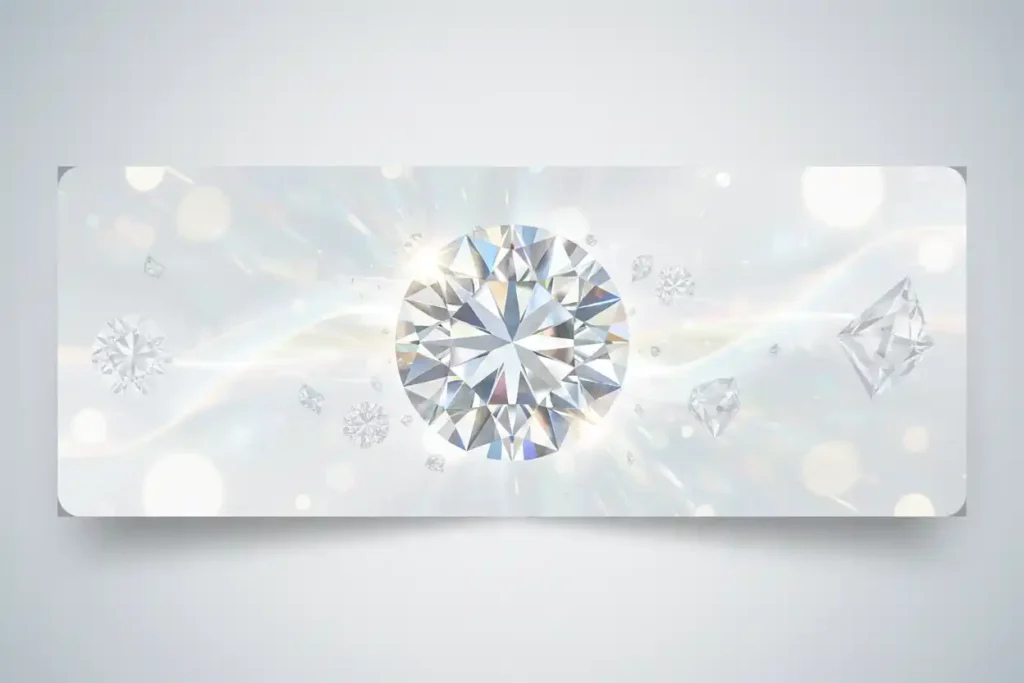
Laboratory-grown diamond deserves a special place among the best diamond alternatives because it is an alternative to mined diamond, not an alternative material to diamond itself.
A lab-grown diamond consists of crystalline carbon in the diamond structure. It has diamond’s approximate refractive index of 2.42, Mohs hardness 10, characteristic dispersion, high thermal conductivity and general optical behavior.
The difference is origin.
Natural diamond crystallizes through geological processes deep within Earth. Lab-grown diamond is produced through HPHT or CVD technology.
This makes lab-grown diamond particularly compelling when the buyer’s real goal is not “a different gemstone that resembles diamond,” but rather “diamond without the mined-diamond price structure or origin.”
The lab diamond guide explains why laboratory-grown diamond should not be grouped scientifically with moissanite, cubic zirconia or other simulants.
The Main Trade-Off Is Market Position, Not Performance
For jewelry performance, lab-grown diamond behaves like diamond because it is diamond.
The more important buying differences involve origin disclosure, grading documentation, post-growth treatment and secondary-market expectations.
Lab-grown diamond prices operate differently from natural diamond because manufacturing capacity can respond to demand in a way geological rarity cannot. Buyers should therefore purchase for appearance and wear rather than assuming historical retail pricing or guaranteed appreciation.
If actual diamond identity is important, lab-grown diamond is difficult for the other best diamond alternatives to beat.
3. White Sapphire: Best Natural Alternative for Everyday Wear
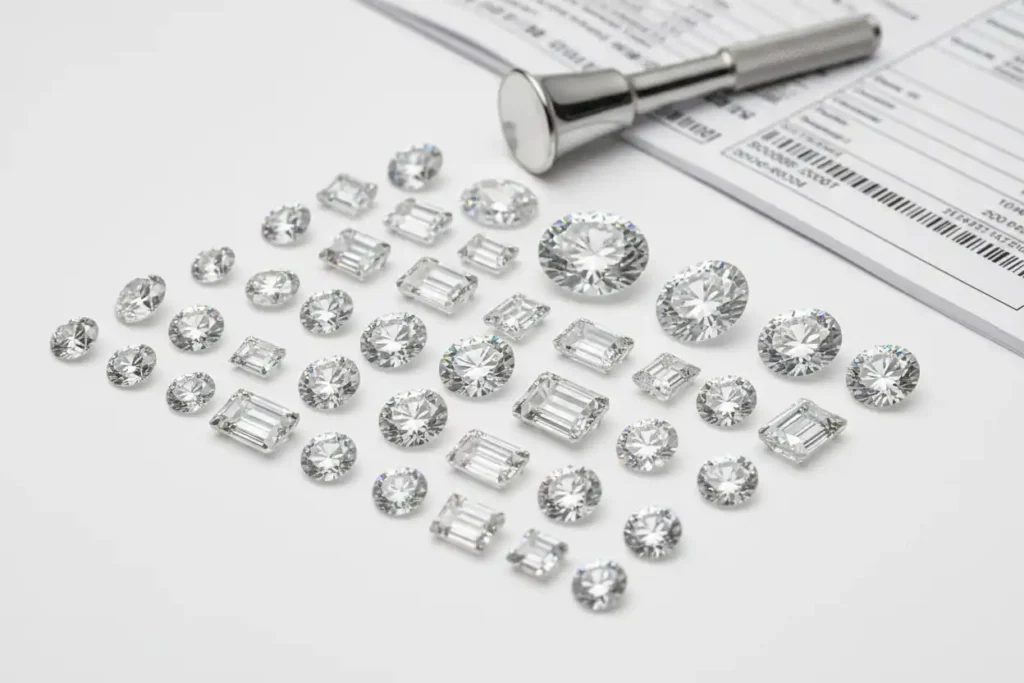
White sapphire is one of the best diamond alternatives for buyers who specifically want a naturally occurring gemstone and prioritize durability over maximum sparkle.
Sapphire is corundum, Al₂O₃, with Mohs hardness 9, excellent toughness and no true cleavage. Those physical properties make it a strong choice for rings and other jewelry exposed to frequent wear.
Its optical character is considerably more subdued than diamond.
White sapphire has refractive indices around 1.762–1.770 and relatively low dispersion. As a result, it tends to produce softer white reflections and far less rainbow fire than diamond or moissanite.
This is not necessarily a flaw.
Some buyers prefer the calmer, more silvery appearance, particularly in vintage-inspired settings or designs where the stone should not dominate the jewelry.
The white sapphire guide covers natural and laboratory-grown corundum, treatment and identification separately.
White Sapphire vs Diamond Appearance
Side by side, diamond generally looks brighter, more contrast-rich and more scintillating.
White sapphire often looks softer and slightly glassier.
The distinction becomes more obvious as the stones become larger, although excellent cutting can substantially improve sapphire’s brightness. Surface dirt also affects white sapphire quickly, so regular cleaning is important if the stone is intended to look crisp.
The detailed white sapphire vs diamond comparison covers their RI, density, birefringence and diagnostic differences without relying on visual guesses.
Among natural best diamond alternatives for an everyday ring, white sapphire provides one of the strongest combinations of affordability and physical durability.
4. Cubic Zirconia: Best Ultra-Budget Alternative
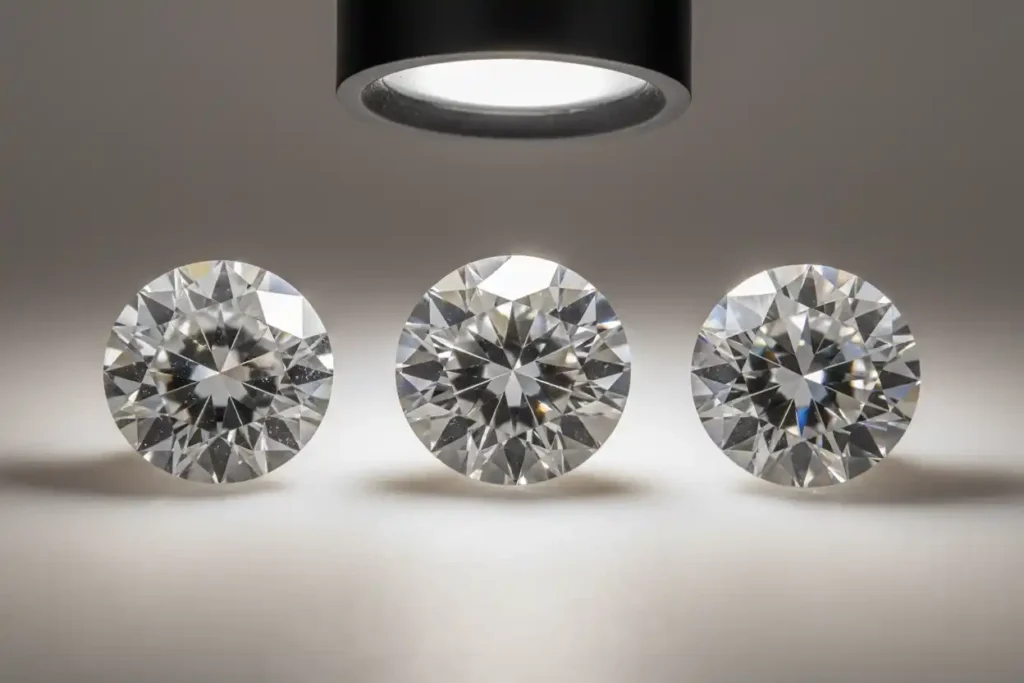
Cubic zirconia remains one of the best diamond alternatives when initial purchase cost is the overriding consideration.
Jewelry CZ is manufactured stabilized zirconium dioxide rather than a laboratory-grown natural gemstone. Its refractive index of roughly 2.15–2.18 is high, and its dispersion is stronger than diamond’s, allowing a well-cut stone to look exceptionally bright and fiery when new.
It is also readily manufactured in large, clean pieces.
That means buyers can obtain a visually substantial colorless center stone without paying for geological rarity or difficult crystal growth.
The compromise is long-term surface condition.
Cubic zirconia ranks around Mohs 8–8.5, which is respectable but well below moissanite, sapphire and diamond for sustained abrasion resistance. Over extended daily wear, facet junctions can become rounded and fine scratches can reduce the crispness of the original polish.
Where CZ Makes the Most Sense
Cubic zirconia is particularly useful for travel rings, fashion jewelry, temporary proposal rings, theatrical pieces and testing a preferred center-stone size before committing to a more expensive material.
For example, someone uncertain whether an 8 mm or 9 mm center feels comfortable can wear an inexpensive CZ version before ordering permanent jewelry.
CZ’s affordability also makes replacement straightforward.
The dedicated cubic zirconia price guide explains why the loose material itself is inexpensive even when a finished gold or platinum CZ ring can cost substantially more because of its setting and craftsmanship.
CZ is one of the best diamond alternatives when low cost and visual impact matter more than decades of facet-edge preservation.
5. White Topaz: Best Affordable Natural Colorless Gem
White topaz appeals to buyers who want a genuinely natural colorless gemstone at a low material cost.
Topaz has a Mohs hardness of 8 and can occur naturally as large, clean, transparent crystals. Consequently, large white topaz stones can be cut without the steep scarcity premium associated with equally large high-quality diamonds.
The visual experience is much quieter.
Topaz has refractive indices around 1.619–1.627 and low dispersion, so it produces significantly less brilliance and spectral fire than diamond, moissanite or cubic zirconia.
It also has perfect basal cleavage.
That structural weakness means a sufficiently hard blow in an unfavorable direction can split the stone despite its respectable Mohs hardness.
The white topaz vs diamond comparison explains why their densities are surprisingly similar while their optical performance and long-term abrasion resistance are very different.
When White Topaz Works Best
White topaz makes sense in pendants, earrings and lower-impact rings where natural origin and large visual size matter more than maximum sparkle.
For a heavily worn engagement ring, moissanite or white sapphire is generally the stronger practical choice.
Among the best diamond alternatives, topaz should be selected for what it genuinely offers—a large, transparent natural stone at an accessible price—not because it reproduces diamond perfectly.
6. Colorless Zircon: Best Natural Alternative for Fire
Natural zircon deserves more attention in discussions of the best diamond alternatives because colorless zircon can be remarkably brilliant and fiery.
Zircon is zirconium silicate, ZrSiO₄. It is completely different from cubic zirconia despite the similarity in their names.
High-type zircon has strong refractive properties and pronounced dispersion, while double refraction can cause the rear facet junctions to appear doubled through the stone. This can create a lively visual texture that separates zircon from diamond even while producing substantial sparkle.
The complete zircon guide explains how structural condition affects RI, density and optical behavior.
The Durability Trade-Off
Zircon generally ranks about 6–7.5 on the Mohs scale depending on structural condition and can be brittle.
Facet edges may therefore abrade more readily than those of sapphire, moissanite or diamond.
That does not make zircon unsuitable for jewelry, but it changes the best format.
Earrings and pendants are comparatively forgiving. A carefully worn ring is possible, particularly with protective metal around the girdle, but zircon is not the strongest choice for someone who expects to wear a ring through constant physical activity.
Colorless zircon is one of the best diamond alternatives for someone who values a naturally occurring gem with genuine fire and historical mineral identity while accepting more careful maintenance.
7. Colorless Spinel: An Understated Natural Choice
Colorless spinel is less frequently encountered than white sapphire or topaz, yet it can serve as an interesting natural diamond alternative.
Spinel has Mohs hardness around 8 and good toughness, making it reasonably capable in jewelry. Its refractive index is substantially lower than diamond’s, so it does not produce the same combination of brilliance and fire.
The result is a cleaner, quieter appearance.
Natural colorless spinel is also not as abundant in the jewelry market as many shoppers assume. Much commercially available synthetic spinel can be manufactured colorless, while natural near-colorless material may carry subtle gray or other tones.
Therefore, the listing should distinguish natural and laboratory-grown origin clearly.
Among the best diamond alternatives, colorless spinel suits someone who wants an unusual natural gemstone with respectable durability but does not need the classic diamond optical effect.
8. Rock Crystal Quartz: Best for Large Casual Designs
Colorless quartz, traditionally called rock crystal, can produce very large transparent stones at modest cost.
At Mohs 7, quartz is considerably softer than diamond, sapphire or moissanite and has a refractive index around 1.54–1.55. Its brilliance is therefore noticeably lower.
A well-cut rock crystal can still be beautiful.
Large emerald cuts, portrait cuts, domes and sculptural forms can take advantage of transparency without pretending the stone has diamond-level optics.
Rock crystal is strongest in pendants, earrings, cocktail pieces and artistic jewelry where visual scale matters.
It ranks lower among the best diamond alternatives for a constantly worn engagement ring because several more durable choices are readily available.
Which Diamond Alternative Looks Most Like Diamond?
If actual diamond is allowed, lab-grown diamond is the straightforward answer because it is diamond.
Among non-diamond materials, moissanite usually provides the strongest combination of brilliance, hardness and everyday practicality. However, it does not reproduce diamond perfectly.
Its higher dispersion can produce substantially more rainbow fire.
White sapphire creates a more subdued appearance, while cubic zirconia can look convincingly diamond-like when new but behaves differently over extended wear.
No reputable seller should promise that one material is universally impossible to distinguish from diamond.
A gemologist can separate these stones through measurable optical and physical properties.
The Gems Lore guide to real vs fake diamond explains why photographs, fog tests and destructive scratching are weaker evidence than proper gemological testing.
Best Diamond Alternatives for Engagement Rings
Engagement rings create tougher requirements than earrings or occasional pendants because the center stone may be exposed to decades of abrasion and impact.
For frequent ring wear, the strongest options are:
Lab-grown diamond when diamond identity and diamond optics matter.
Moissanite when you want a durable non-diamond material with intense brilliance.
White sapphire when natural gemstone origin and understated sparkle matter more than maximum fire.
Cubic zirconia can work when affordability is the priority, but a buyer should expect more long-term surface wear.
White topaz and zircon require more deliberate protection.
The best diamond alternatives for engagement rings should therefore be ranked by expected lifestyle rather than purchase price alone.
A stone worn occasionally can tolerate compromises that become frustrating in a ring worn every day.
Best Diamond Alternatives for Earrings and Pendants
Lower-impact jewelry creates far more flexibility.
White topaz and zircon become much stronger candidates because they are less likely to strike hard surfaces in earrings or pendants than they are in rings.
Cubic zirconia also performs well in earrings because small stones receive little abrasion and can provide substantial brilliance at minimal cost.
Moissanite remains highly practical, especially for studs where long-term polish retention matters.
White sapphire offers a particularly restrained look for someone who dislikes strong rainbow flashes.
This is why the best diamond alternatives should not be ranked independently of jewelry format.
How Brilliance and Fire Really Differ
“Sparkle” combines several different visual effects.
Brightness describes white light returned to the viewer.
Fire describes spectral colors created when white light is separated by dispersion.
Scintillation describes flashes and changing contrast as the stone, viewer or light source moves.
Diamond performs strongly across all three when well cut.
Moissanite has especially strong dispersion and can therefore display more rainbow fire.
Cubic zirconia also has stronger dispersion than diamond but differs in hardness, density and long-term surface performance.
White sapphire and white topaz have considerably less dispersion and produce quieter visual effects.
Zircon combines strong fire with pronounced double refraction.
When choosing the best diamond alternatives, ask yourself which type of sparkle you actually prefer rather than treating “more sparkle” as a universal advantage.
Hardness Is Not the Same as Durability
One of the most important buying mistakes is ranking the best diamond alternatives entirely by Mohs hardness.
Hardness measures resistance to scratching.
It does not measure every form of breakage.
Topaz demonstrates the distinction clearly. Mohs 8 sounds highly durable, yet topaz has perfect basal cleavage and can split from a sufficiently hard blow.
Diamond itself is Mohs 10 but has perfect octahedral cleavage.
Sapphire combines hardness 9 with excellent toughness and no true cleavage, which helps explain its strong everyday-ring performance.
Moissanite also combines high hardness with practical toughness.
Therefore, a jewelry decision should consider:
hardness + toughness + cleavage/parting + inclusions + setting protection + expected wear
The highest hardness number does not automatically answer every durability question.
Natural vs Laboratory-Grown Matters Differently for Each Option
The best diamond alternatives include both natural and manufactured materials, so terminology matters.
Natural diamond and laboratory-grown diamond share diamond’s fundamental material identity but differ in origin.
Natural moissanite exists, but commercial jewelry moissanite is overwhelmingly laboratory grown.
White sapphire can be natural or laboratory grown.
White topaz and zircon are commonly natural gemstones.
Commercial cubic zirconia is manufactured.
Colorless spinel can be natural or synthetic.
None of these origins is inherently deceptive when correctly disclosed.
The problem begins when a seller uses language that blurs identity—for example, describing CZ as laboratory-grown diamond, calling moissanite synthetic diamond or failing to state that a sapphire is laboratory produced.
Material name and origin should be separate, explicit facts.
Do Not Compare Alternatives by Carat Weight Alone
Carat measures weight.
Different gemstones have different densities, so one carat does not occupy the same physical volume in every material.
Cubic zirconia is substantially denser than diamond. A CZ cut to the same millimeter dimensions as a diamond therefore weighs considerably more.
Moissanite is less dense than diamond, so the opposite relationship applies.
White sapphire is denser than diamond.
White topaz has a density remarkably close to diamond.
This is why many alternative-stone sellers use terms such as “diamond equivalent weight.”
That terminology can be useful when explained clearly, but actual millimeter dimensions remain the better way to compare visible size.
For the best diamond alternatives, always ask for length × width × depth measurements rather than relying only on an equivalent-carat label.
Setting Choice Matters More for Softer Alternatives
A secure setting can substantially improve the practical life of a gemstone.
Moissanite, lab-grown diamond and white sapphire tolerate exposed prong settings relatively well when the individual stone is structurally sound.
White topaz benefits from designs that protect vulnerable edges and points.
Zircon deserves similar care because abrasion and chipping are greater concerns.
Cubic zirconia is easy to replace, but repeated rubbing against metal or harder stones can eventually degrade its polish.
A bezel can protect the girdle effectively, although the pressure required during setting must be appropriate for the material.
Pear, marquise and other pointed shapes deserve V-prongs or another form of tip protection regardless of which alternative is selected.
The best diamond alternatives still depend on good jewelry engineering.
Price Should Be Compared With the Entire Ring
A lower-cost stone does not automatically produce inexpensive jewelry.
A precision-cut moissanite mounted in platinum with hand engraving and pavé side stones can cost considerably more than a simple lab-grown diamond ring in lightweight gold.
Likewise, the loose cubic zirconia in an expensive designer piece may account for only a tiny portion of the finished price.
When comparing the best diamond alternatives, separate:
center-stone cost
precious-metal value
accent stones
setting labor
design complexity
brand premium
warranty and service
This prevents a buyer from assuming that every price difference comes from the center gemstone.
Current stone-specific market considerations for moissanite belong in the moissanite price guide rather than being reduced to one static number here.
Resale Value Should Not Drive the Decision
The best diamond alternatives should generally be bought for appearance, wearability and personal value rather than guaranteed appreciation.
Moissanite has a limited secondary market compared with natural diamond.
Cubic zirconia has little meaningful loose-stone resale value because new material is inexpensive.
White topaz is abundant.
White sapphire and zircon have natural-gem markets, but ordinary commercial stones should not be treated as investment assets.
Lab-grown diamond has its own changing secondary-market dynamics and should not be assumed to retain the same percentage of original retail cost as an equivalent natural diamond.
Even natural diamond retail price and resale value can differ substantially.
A salesperson promising guaranteed appreciation for any mass-market colorless center stone deserves skepticism.
How to Choose the Best Diamond Alternative for You
A practical decision can be made by prioritizing one requirement at a time.
If you want actual diamond optical and material properties without mined origin, choose lab-grown diamond.
If you want the strongest all-round non-diamond combination of brilliance and durability, choose moissanite.
If you want a natural colorless gemstone suitable for frequent wear, choose white sapphire.
If you want maximum visual size for minimum stone cost, choose cubic zirconia.
If you want an affordable natural colorless stone and accept quieter sparkle, choose white topaz.
If you want a natural stone with pronounced fire and distinctive double refraction, choose zircon.
If you want an uncommon, understated natural colorless gemstone, consider spinel.
If you want large transparent material for casual or artistic jewelry, rock crystal quartz can work beautifully.
The best diamond alternatives are therefore not a ranking from good to bad. They are different solutions to different jewelry priorities.
Buying Checklist
Before purchasing any of the best diamond alternatives, confirm the exact material name and whether it is natural or laboratory grown.
Compare the stone by millimeter dimensions rather than equivalent carat terminology alone.
Inspect videos in ordinary lighting as well as concentrated jewelry-store lighting, because intense spotlights exaggerate both brilliance and rainbow fire.
Check for windows, dark extinction, asymmetry, chips, scratches and poorly polished facet junctions.
For rings, examine setting height, prong thickness and edge protection rather than evaluating the stone in isolation.
Ask about treatments or coatings.
For an expensive lab-grown diamond, sapphire or unusual natural gemstone, independent documentation can be worthwhile. For inexpensive CZ, the cost of a laboratory report may exceed the value of the loose stone itself.
Finally, choose the material because its real characteristics suit you—not because its identity has been disguised.
Frequently Asked Questions
What are the best diamond alternatives overall?
The best diamond alternatives for most buyers are moissanite, lab-grown diamond, white sapphire, cubic zirconia, white topaz and colorless zircon. Moissanite is the strongest all-round non-diamond choice, while lab-grown diamond is best when actual diamond identity is still desired.
What is the closest non-diamond alternative to diamond?
Moissanite is generally the strongest practical non-diamond alternative because it combines high refractive power, excellent durability and strong brilliance. However, its much stronger rainbow dispersion and double refraction give it a distinct visual character.
Is a lab-grown diamond a diamond alternative?
It is an alternative to a mined diamond, but it is not a diamond simulant. Laboratory-grown diamond consists of crystalline carbon in the diamond structure and has essentially the same fundamental optical and physical properties as natural diamond.
What is the best natural diamond alternative?
White sapphire is one of the best natural diamond alternatives for frequent ring wear because corundum combines Mohs hardness 9, excellent toughness and no true cleavage. Colorless zircon offers more fire but requires more care, while white topaz is less expensive but has cleavage.
What is the cheapest diamond alternative?
Cubic zirconia is generally the least expensive widely available colorless diamond simulant. Large, clean stones can be produced economically, although long-term abrasion resistance is lower than moissanite, sapphire or diamond.
Which diamond alternative sparkles the most?
Moissanite produces exceptionally strong brilliance and considerably more spectral fire than diamond. Some buyers love the colorful flashes, while others prefer diamond’s more balanced appearance.
Which diamond alternative is best for an engagement ring?
Moissanite, lab-grown diamond and white sapphire are the strongest candidates for frequent engagement-ring wear. The best choice depends on whether you prioritize diamond identity, rainbow fire, natural-gem origin or budget.
Is white sapphire better than moissanite?
Neither is universally better. White sapphire provides natural corundum identity and restrained sparkle, while moissanite produces substantially stronger brilliance and fire and has slightly greater scratch resistance. Personal optical preference often decides the comparison.
Does cubic zirconia become cloudy?
CZ does not necessarily become internally cloudy, but surface scratches, facet abrasion, oils and residue can reduce brilliance and create a duller appearance over time. Cleaning restores dirt-related dullness, while polishing wear requires replacement or repolishing.
Is white topaz a good diamond alternative?
White topaz is a good option when natural origin, large size and low cost matter. It is less convincing when the priority is diamond-like brilliance or demanding everyday-ring durability.
Is zircon the same as cubic zirconia?
No. Zircon is a naturally occurring zirconium-silicate mineral, while cubic zirconia is manufactured stabilized zirconium dioxide. Their chemistry, crystal structure, optical character and durability are different.
Which of the best diamond alternatives lasts the longest?
Lab-grown diamond has diamond’s Mohs hardness of 10 and is the strongest for long-term surface abrasion resistance. Among non-diamond options, moissanite and sapphire are particularly durable choices for frequent jewelry wear.
Which alternative gives the biggest stone for the money?
Cubic zirconia generally provides the greatest apparent size for the lowest loose-stone cost. White topaz and quartz can also provide very large natural stones inexpensively, while moissanite offers a stronger balance between large visual size and everyday durability.
Do diamond alternatives need grading reports?
Not every stone does. A report makes more sense as value and identification difficulty increase. Significant laboratory-grown diamonds and high-value natural sapphires may justify independent documentation, whereas routine CZ usually does not.
Can a jeweler tell diamond alternatives apart from diamond?
Yes. Refractive properties, optical character, density, thermal and electrical behavior, spectroscopy and microscopy allow trained professionals to distinguish diamond from moissanite, sapphire, CZ, topaz and zircon without destructive testing.
Should I buy a diamond alternative based on resale value?
Usually not. Most diamond alternatives are best purchased for beauty, durability, design and budget rather than expected appreciation. Secondary-market value can differ substantially from original retail price.
What is the best choice if I dislike rainbow fire?
White sapphire is one of the best diamond alternatives for restrained sparkle. It has considerably lower dispersion than diamond and especially moissanite, giving it a calmer white-to-silvery appearance.
What should I check before buying the best diamond alternatives online?
Confirm the exact material and origin, request millimeter measurements, inspect ordinary-light videos, review cut quality and treatment disclosure, evaluate the setting, and understand the return policy. Avoid listings that blur terms such as lab-grown diamond, moissanite, cubic zirconia and zircon.