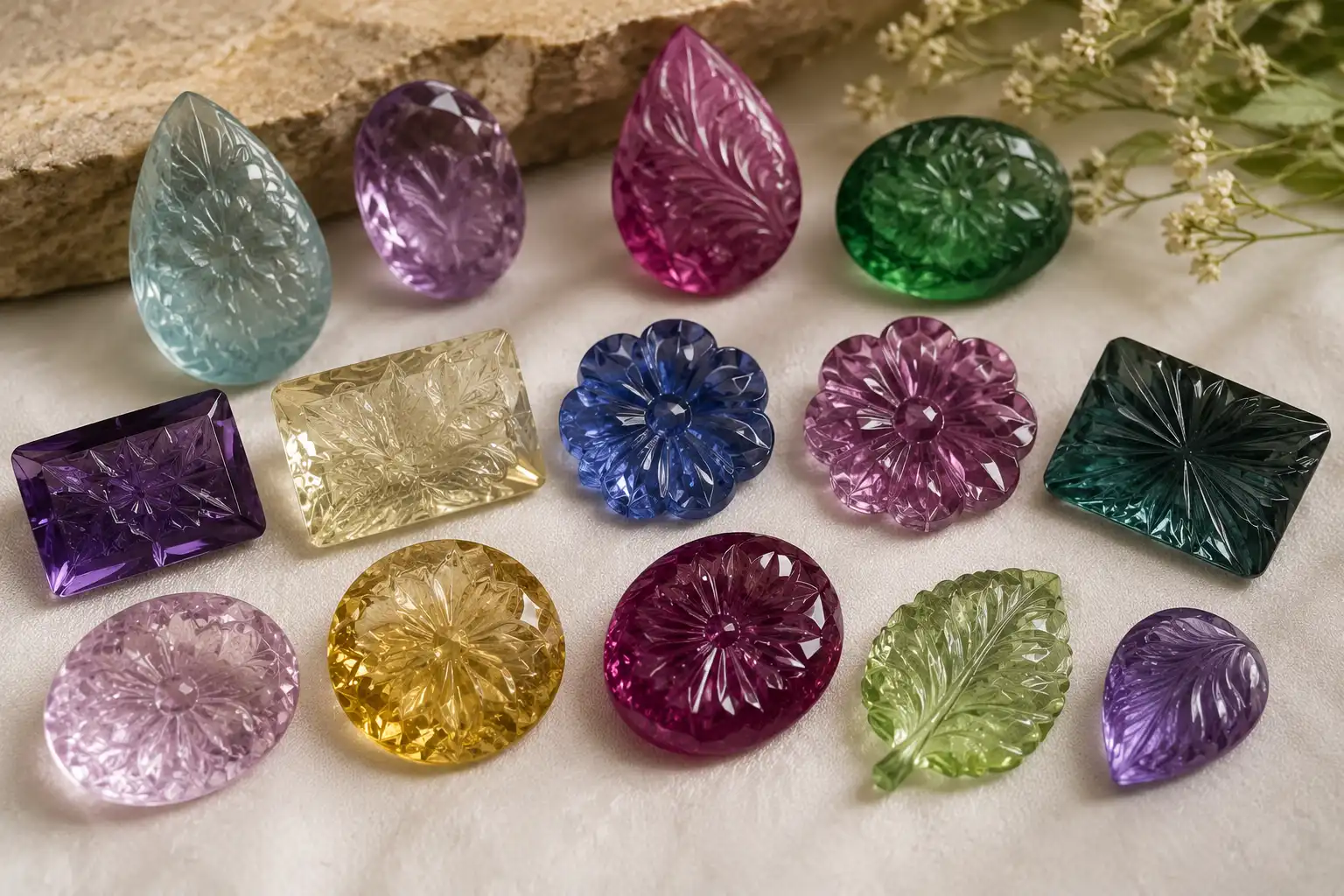
Best Gemstones for Carving: Design Ideas, Buying Tips & Care
The best gemstones for carving combine more than attractive color. A good carving stone needs a structure that can survive grinding, drilling and polishing while still holding the level of detail the design requires. Toughness, hardness, cleavage, grain size, porosity, fractures, treatment and pattern orientation can all matter more than whether the rough looks beautiful before the first cut.
Jade is one of the best gemstones for carving when fine detail, thin sections and long-term durability matter because its interlocking structure gives it exceptional toughness. Agate and sardonyx are harder and capable of crisp polish, making them excellent for seals, cameos and precise relief work. Serpentine is easier to shape and can be more forgiving for practice or large decorative forms, while lapis lazuli, malachite, obsidian, turquoise and patterned jasper offer distinctive colors or patterns but introduce their own structural and safety considerations.
The important lesson is that carving performance cannot be ranked by Mohs hardness alone. A moderately hard but exceptionally tough material may hold delicate openwork better than a harder brittle crystal with strong cleavage.
Best Gemstones for Carving at a Glance
| Material | Approx. Mohs hardness | Carving character | Particularly good for | Main limitation |
|---|---|---|---|---|
| Nephrite jade | 6–6.5 | Extremely tough, fine interlocking texture | Detailed carving, piercing, bangles, thin sections | Slow cutting and demanding polishing |
| Jadeite jade | 6.5–7 | Exceptionally tough, compact granular texture | Fine carvings, pendants, hololith forms | Expensive fine rough; treatment matters |
| Agate | 6.5–7 | Fine-grained and predictable | Relief, seals, small sculptures, hard-wearing carvings | Requires substantial abrasive work |
| Sardonyx / onyx | 6.5–7 | Layered chalcedony | Cameos, intaglios, seals | Design must follow band thickness |
| Jasper | About 6.5–7 when silica-rich | Dense and pattern-rich | Freeforms, animals, broad relief | Some trade jaspers contain softer mixed areas |
| Serpentine | Highly variable, commonly softer than jade | Relatively easy to shape | Learning, figurines, larger decorative carving | Variable composition and durability |
| Lapis lazuli | Roughly 5–6, variable | Mixed-mineral rock | Relief, seals, figures, beads | Components polish and abrade differently |
| Obsidian | About 5–5.5 | Glassy, takes a high polish | Sculptural forms, masks, figures, polished objects | Brittle; broken edges can be extremely sharp |
| Turquoise | Roughly 5–6 | Relatively soft, often porous | Small carvings, inlay, pendants | Treatment and porosity vary widely |
| Malachite | 3.5–4 | Soft with dramatic banding | Decorative carvings, boxes, inlay | Brittle, easy to scratch, copper-bearing dust |
| Fluorite | 4 | Soft, colorful, transparent to translucent | Display carvings | Perfect cleavage and brittleness |
| Calcite / alabaster-type material | Around 3 for calcite | Easy to shape | Large decorative forms and practice work | Scratches easily; acid-sensitive |
The best gemstones for carving therefore change according to the intended object. A miniature openwork pendant requires a different material from a large display animal or a layered cameo.
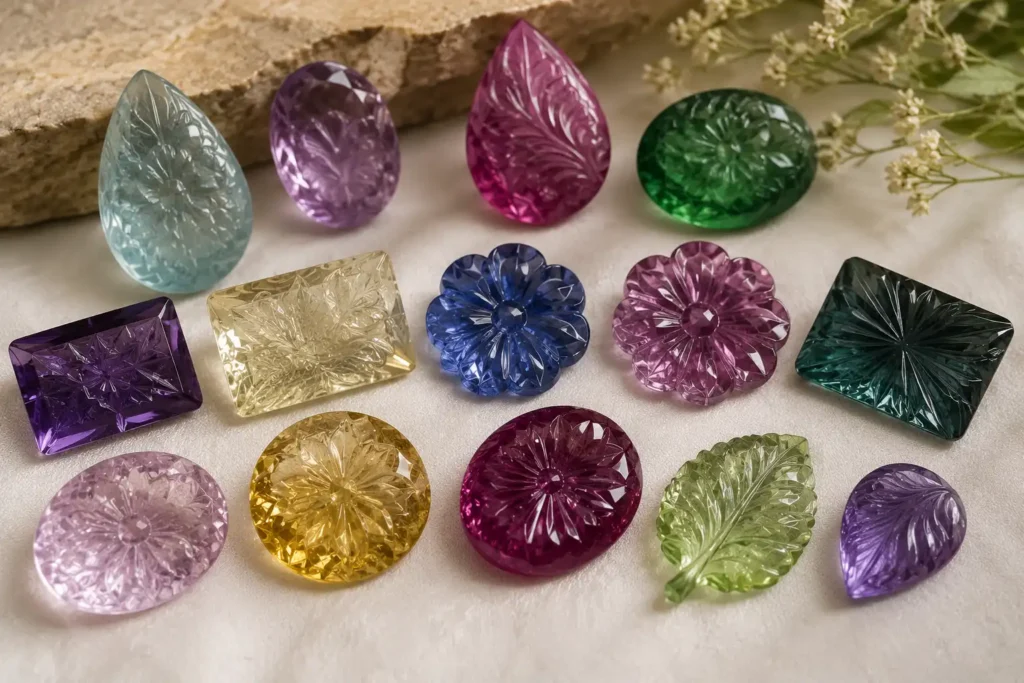
What Makes a Gemstone Good for Carving?
The best gemstones for carving usually combine several favorable properties rather than excelling at only one.
Toughness Determines Whether Fine Details Survive
Toughness describes resistance to cracking, chipping and breaking.
It is especially important when a design contains narrow bridges, thin leaves, fingers, animal legs, pierced openings or projecting edges. A stone may withstand surface abrasion yet still snap across one vulnerable internal plane.
Jade demonstrates this perfectly. Its hardness is moderate compared with sapphire or topaz, but its interlocking structure produces extraordinary resistance to fracture.
The difference between surface wear and breakage is explored in gemstone toughness vs hardness. For the best gemstones for carving, toughness often matters more than simply choosing the highest Mohs number.
Hardness Controls Cutting Speed and Surface Wear
Harder materials usually take longer to grind and shape, but they can retain a polished surface well after the carving is finished.
Agate and jasper require more work than malachite or serpentine, yet their quartz-rich structure can hold crisp polished edges and resist ordinary abrasion.
Very soft material is easier to shape quickly but can lose fine detail through scratches and repeated handling.
The ideal hardness therefore depends on whether the carving is a display object, pendant, ring element, bead or frequently handled sculpture.
Cleavage Can Destroy an Otherwise Promising Design
Cleavage is a mineral’s tendency to split along specific crystallographic planes.
A material can be quite hard and still perform poorly in thin carving if pressure is concentrated along a strong cleavage direction. Fluorite, calcite, moonstone and topaz are useful examples.
The detailed gemstone cleavage guide explains why cleavage should be considered before orienting thin sections, holes, corners or unsupported projections.
For the best gemstones for carving, predictable fracture behavior is frequently more valuable than impressive hardness.
Grain Size Controls Detail
Fine-grained materials generally support finer carved lines than coarse rocks.
Nephrite’s microscopic interwoven fibers, fine jadeite texture and microcrystalline chalcedony can all support controlled carving because the material remains cohesive at relatively small scales.
Coarse rocks may break across grain boundaries.
Mixed-mineral stones can also undercut during polishing when one component abrades more quickly than another.
Pattern Can Become Part of the Design
A strong carver does not treat rough as a blank block.
Bands, color zoning, translucency, mineral inclusions and rind can determine the finished composition. A green patch in jade may become foliage. A white sardonyx layer can become a raised portrait against a darker base. Concentric malachite bands can be positioned to form an eye, wing or flowing surface.
Many of the best gemstones for carving become more impressive when the natural material helps define the subject.
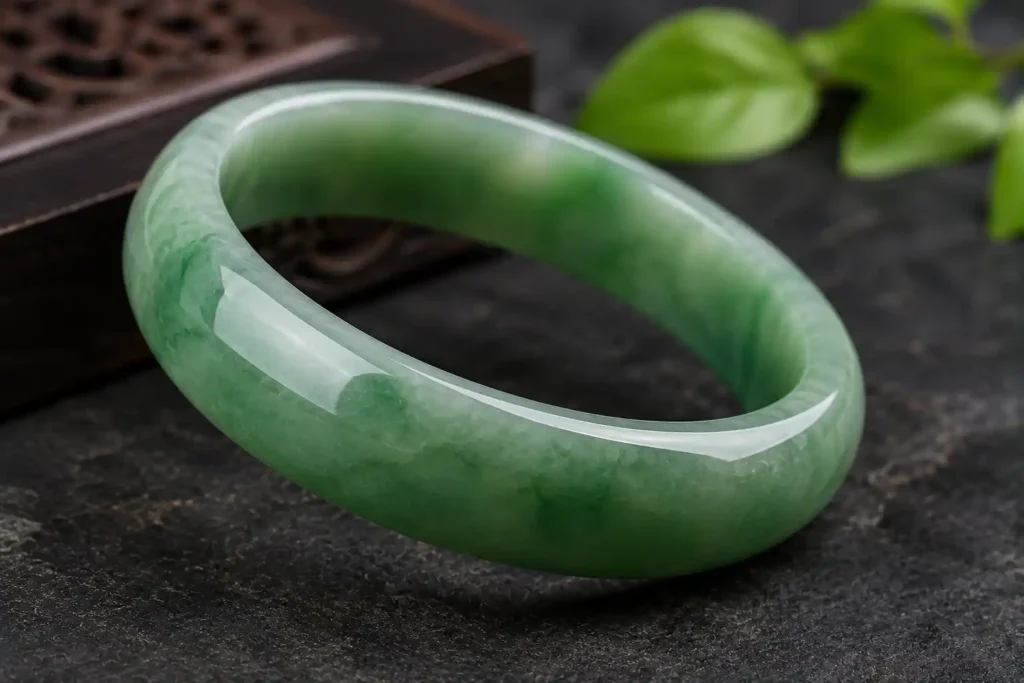
Jade: Best Overall for Tough, Detailed Carving
Jade remains one of the best gemstones for carving when the design requires toughness and structural integrity.
The gemological name principally covers jadeite and nephrite, two different materials whose densely interlocking structures make them exceptionally resistant to breakage.
Nephrite consists of a tightly felted network of fine amphibole fibers. Jadeite jade is built from compact interlocking pyroxene grains. Both structures resist crack propagation extremely well, even though neither material has extreme Mohs hardness.
The full jade guide explains why jadeite and nephrite share the jade name while remaining mineralogically distinct.
Why Jade Works So Well
The practical advantage becomes obvious in complex carving.
A brittle single crystal may break where the design narrows to a thin bridge. Jade can tolerate much finer sections because stress must travel through an interlocking aggregate rather than easily following one continuous cleavage plane.
That makes jade suitable for:
- Pierced pendants
- Thin plaques
- Bangles
- Figures
- Animals
- Vessels
- Relief carving
- Interlocking and chain-style forms
- Hololith rings and ornamental objects
Jade is not easy to carve merely because it is excellent for carving. Its toughness makes cutting slow and polishing technically demanding.
Fine rough can also be valuable enough that orientation mistakes become expensive.
Use Color Zoning Deliberately
High-quality jade carving often uses natural variations instead of removing them.
A vivid green area can become a leaf or accent, pale material can form the background, and orange or brown skin can be retained as part of the composition.
When buying carved jade, examine whether the design intelligently uses the rough or merely removes large quantities of material to create complexity.
Treatment also matters. Bleached, polymer-impregnated, dyed or repaired jadeite can respond differently to heat and later restoration.
Agate: Best for Crisp, Fine-Grained Carving
Agate ranks among the best gemstones for carving when crisp detail and a durable polish matter.
It is a chalcedony material made from extremely fine silica structures, commonly displaying bands, fortifications, eyes, plumes or other patterns. Its approximate Mohs hardness of 6.5–7 means it requires patience during cutting, but the fine texture rewards careful work.
The agate guide explains its silica-rich structure, natural patterning and common treatment.
Agate performs particularly well for:
- Seals
- Small reliefs
- Animals
- Geometric carvings
- Beads
- Engraved pendants
- Cameo-style work when useful layers occur
Because agate is relatively hard, beginner carvers using small rotary equipment may find the material slow compared with serpentine or calcite.
The benefit appears at the finishing stage: well-prepared agate can take an excellent polish and retain relatively sharp detail.
Sardonyx and Onyx: Best for Cameos and Intaglios
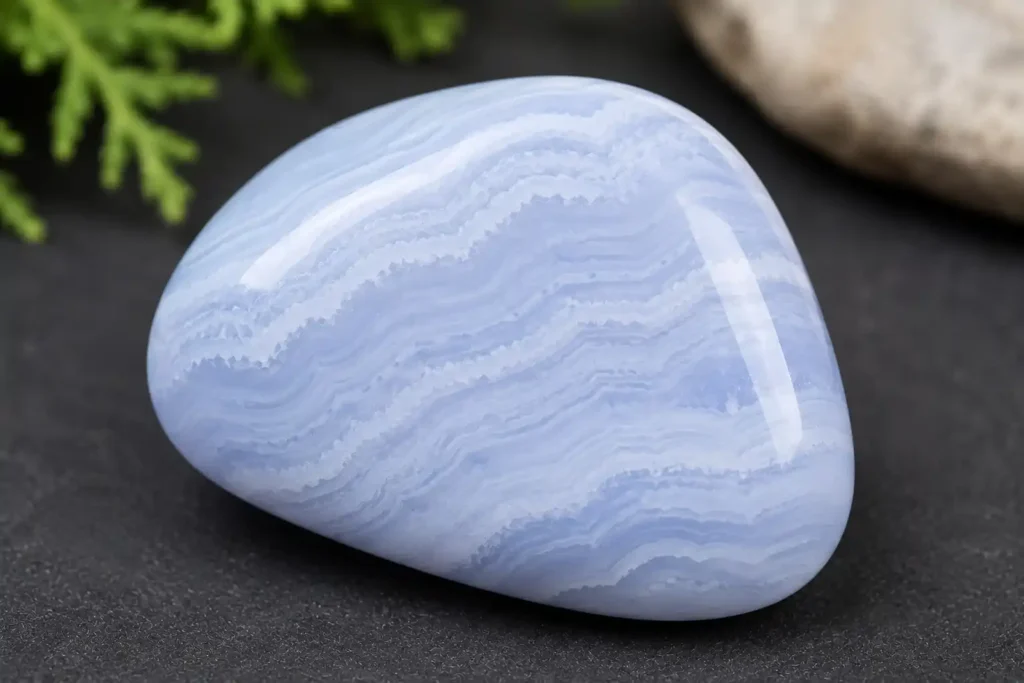
Layered chalcedony deserves its own place among the best gemstones for carving because the bands can become part of the image rather than simply decorating the background.
Sardonyx combines contrasting sard-colored and lighter chalcedony layers. Onyx is traditionally defined through relatively straight parallel bands.
These structures are ideal for cameos and intaglios.
A cameo removes one color layer selectively so the raised image contrasts against another layer beneath it. An intaglio cuts the design below the surface and historically worked particularly well for seals.
The classification of these layered materials is discussed within types of chalcedony.
The quality of the rough depends heavily on band geometry. Before carving, determine whether the contrasting layer is thick enough to contain the entire design.
One cut that penetrates too deeply can permanently change a face, letter or decorative edge from one color into another.
Jasper: Best for Pattern-Led Sculptural Work
Dense silica-rich jasper is one of the best gemstones for carving when the pattern should drive the design.
Many jaspers display landscapes, breccias, spots, veins, orbs and color boundaries that can become trees, mountains, feathers, animal markings or abstract surfaces.
A particularly visual example is Picture Jasper, where natural geological patterns may resemble deserts, horizons or landscape scenes.
Carvers should examine the complete slab or block before establishing the outline.
A standardized symmetrical figure may waste the strongest feature. A freeform animal or relief can often preserve more of the natural composition.
However, “jasper” is applied broadly in commerce. Some stones sold with jasper trade names are rhyolites, silicified sediments, mixed rocks or other ornamental materials.
The best gemstones for carving should be selected from the actual material in front of you, not merely from a commercial name.
Serpentine: Best for Beginners and Large Decorative Carvings
Serpentine is one of the most useful materials for learning because many massive varieties cut more easily than jade or chalcedony.
The name refers to a mineral group rather than one uniform substance, so hardness, texture and associated minerals can vary considerably.
That variability is both an advantage and a warning.
Soft, compact serpentine can allow a beginner to learn:
- Basic relief
- Rounded forms
- Tool control
- Symmetry
- Surface transitions
- Sanding sequences
- Polishing
- How to correct an accidental cut
Large decorative animals, figures, bowls and ornamental objects can also be practical because material is usually more accessible than fine jade.
Serpentine’s green color has caused widespread confusion with jade, and some commercial names include the word “jade” even though the material is not jadeite or nephrite.
When buying rough, ask for the actual mineral identification instead of relying on a jade-like trade name.
Lapis Lazuli: Best for Rich Blue Carvings
Lapis lazuli has an exceptionally long history as a carving and ornamental material because few natural rocks offer the same saturated blue.
However, it is not a single mineral.
The lapis lazuli guide explains that lapis is a metamorphic rock made principally from blue lazurite together with variable calcite, pyrite and other minerals.
That mixed composition affects carving.
Calcite-rich areas are softer and can wear below adjacent blue material during sanding. Pyrite grains react differently again, sometimes leaving tiny pits or metallic interruptions.
A lapis carver therefore has to manage the entire rock rather than one uniform hardness.
The material works particularly well for:
- Seals
- Plaques
- Beads
- Small figures
- Relief carving
- Pendants
- Inlay
- Decorative boxes and objects
Fine material with intense blue color can be expensive enough that pattern and yield deserve careful planning before cutting.
Malachite: Best for Dramatic Natural Banding
Few carving stones create a stronger visual effect than malachite.
Its alternating green bands, concentric eyes and flowing patterns can turn a relatively simple shape into an elaborate-looking object.
Malachite is a copper carbonate hydroxide with a Mohs hardness around 3.5–4. That makes it easy to abrade compared with agate or jade, but it is also brittle and can scratch readily.
The stone’s pattern should determine the orientation.
Cutting across concentric bands may create eyes.
Cutting along another direction can create stripes, waves or nested curves.
A detailed understanding of the mineral itself is available in the malachite guide.
For the best gemstones for carving, malachite is strongest when visual pattern matters more than thin structural detail.
Broad, flowing forms are safer than delicate unsupported projections.
Obsidian: Best for Glassy Sculptural Forms
Obsidian is natural volcanic glass rather than a crystalline mineral.
Its amorphous structure produces conchoidal fracture and allows a very smooth glass-like polish, which makes it attractive for masks, figurines, decorative objects and high-contrast sculptural forms.
Black material is particularly dramatic, and the physical characteristics of black obsidian illustrate the larger family’s approximately Mohs 5–5.5 hardness and brittle glass-like fracture.
Obsidian belongs among the best gemstones for carving only when its sharp-fracture behavior is respected.
A broken edge can become extraordinarily sharp.
Thin projecting details may chip without warning, while hidden internal stress can cause breakage during grinding or drilling.
Sheen and rainbow varieties add another challenge: optical effects are directional. Cut the rough at the wrong orientation and a vivid reflective layer can disappear from the finished face.
Turquoise: Best for Small Carvings and Inlay
Turquoise offers blue to greenish-blue color in a material soft enough for detailed small-scale work.
It is especially effective in:
- Inlay
- Small animals
- Beads
- Flat pendants
- Low-relief designs
- Decorative accents
The difficulty is consistency.
Natural turquoise can vary substantially in hardness, porosity, fractures and matrix. Some rough is dense enough for excellent polishing, while softer material may crumble or absorb compounds during working.
Stabilization with polymer can make otherwise weak turquoise practical for carving and jewelry. That is not necessarily a negative treatment, but it must be disclosed accurately because natural untreated and stabilized material occupy different commercial categories.
When selecting the best gemstones for carving, turquoise rough should be bought from a seller who can explain whether it is natural, stabilized, dyed, reconstructed or backed.
Fluorite: Beautiful but Better for Display Carvings
Fluorite’s vivid purple, green, blue, yellow and multicolored zoning makes it tempting carving material.
Its physical properties impose strict limits.
Fluorite has Mohs hardness 4 and perfect cleavage in multiple directions. It can therefore split along smooth structural planes while carving or from later impact.
This makes fluorite poorly suited to thin openwork or heavily handled jewelry carvings.
It performs better in:
- Rounded display objects
- Eggs
- Spheres
- Broad figures
- Decorative bowls
- Thick sculptural pieces
A successful fluorite carving preserves enough material around vulnerable areas to reduce leverage.
The best gemstones for carving do not always have to be durable enough for jewelry. A display sculpture can use a softer or more cleavage-sensitive material because it is not repeatedly struck against other objects.
Calcite and Alabaster-Type Materials: Best for Easy Shaping
Soft carbonate-rich materials are useful when the main goal is learning form rather than producing a hard-wearing gemstone object.
Calcite ranks only Mohs 3 and can be shaped comparatively quickly. Massive decorative calcite and alabaster-type materials have therefore been used for ornamental objects, bowls and sculptures.
The trade-off is obvious.
Fine details can scratch and wear easily, and calcite reacts with acids. Vinegar, acidic household cleaners and many mineral-cleaning products can damage the polished surface.
These materials are good choices for large indoor carvings and practice pieces but poor choices for objects expected to withstand jewelry-level wear.
Why Moonstone, Labradorite and Opal Are Better as Cabochons
Not every attractive lapidary stone belongs near the top of a best gemstones for carving list.
Moonstone and labradorite are good examples.
Their appeal depends heavily on orienting internal optical structures so adularescence or labradorescence appears from the face. A smooth dome often displays that effect better than a deeply modeled carving.
Cleavage also makes thin projections risky.
Opal presents another problem. Fine precious material may contain a thin color bar that can be destroyed by one excessive cut. Some opal is also vulnerable to cracking, crazing, porosity or treatment-related instability.
These materials can certainly be carved by specialists, but when expensive rough is involved, a carefully oriented cabochon often preserves more beauty and more material.
Match the Stone to the Design
The best gemstones for carving become much easier to choose when you begin with the design rather than the stone name.
Detailed Openwork
Choose jade, particularly nephrite or sound jadeite.
The material’s exceptional toughness supports narrow sections and piercing better than most single-crystal gemstones.
Cameos and Layered Portraits
Choose sardonyx or suitable onyx.
The design can use naturally contrasting layers to separate the figure from the background.
Patterned Animals and Freeforms
Choose jasper, agate or malachite according to the required durability and detail.
Let the pattern determine where the head, body, wings or decorative elements appear.
Beginner Practice
Choose compact serpentine or another relatively soft, structurally sound carving stone.
Learning tool control on expensive jade or rare gem rough creates unnecessary financial pressure.
Glossy Black Sculpture
Choose sound obsidian when a reflective dark surface is central to the design.
Avoid thin exposed edges.
Blue Decorative Work
Choose lapis lazuli when saturated opaque blue matters, but account for calcite, pyrite and mixed hardness.
Large Indoor Display Pieces
Softer serpentine, calcite-rich ornamental material or fluorite may be practical when the finished object will not encounter repeated impact.
How to Choose Rough for Carving
Buying rough is where many carving projects succeed or fail.
The best gemstones for carving should be evaluated before any cutting begins.
Examine Every Surface
Look for open fractures, healed cracks, soft veins, pits and changes in grain.
A fracture visible on one side may extend much farther through the block than it appears from the surface.
Wet the Surface When Appropriate
A damp surface can reveal approximate color and pattern more clearly on many stones, helping you see what the final polish may expose.
This should not be treated as a universal test for moisture-sensitive or treated material.
Plan Around the Strongest Area
Do not place a thin neck, leg or suspension loop through an obvious fracture.
Put thick structural areas around weaknesses whenever the design allows it.
Look for Useful Pattern Orientation
If a stone has bands, eyes, color zones or optical effects, mark their direction before sawing.
The best gemstones for carving frequently lose much of their visual value when pattern orientation is ignored.
Check for Treatments
Resin, glue and filler can behave differently under grinding.
Dye may concentrate around fractures and disappear when the surface is removed.
A polished “window” on rough can also make one attractive section look more representative of the interior than it actually is.
Buying Finished Gemstone Carvings
When purchasing finished work rather than rough, evaluate the carving itself as carefully as the material.
Good workmanship should show controlled transitions rather than random grinding marks.
Check:
- Symmetry where the design requires symmetry
- Smooth drilled holes
- Clean recessed areas
- No obvious chips on thin edges
- Deliberate use of pattern and color
- Consistent polish
- Stable bases on standing pieces
- Strong attachment points on pendants
- No visible glue lines unless disclosed
- No repairs hidden beneath metal caps or fittings
- No dangerously thin structural bridges
Complexity is not automatically quality.
A simple carving with excellent proportion and intelligent use of rough can be superior to an extremely intricate design filled with fragile, poorly finished details.
How Much Rough Should a Carving Need?
Carving removes more material than many buyers expect.
The starting block must contain enough volume to allow for saw cuts, grinding, removal of fractures, shaping and final finishing.
A design with deep relief or undercut areas requires substantially more rough than the final dimensions suggest.
This matters most with expensive jade, fine lapis or rare patterned materials.
Before buying high-value rough, estimate where the final object will fit inside the block rather than buying by total weight alone.
The cheapest large block can become the most expensive option if most of it must be removed because of fractures.
Treatments Matter More After Carving
Treatment disclosure remains important after the stone has been shaped.
Resin-stabilized turquoise may carve successfully and become a durable decorative piece, but future heat can affect the polymer.
Dyed chalcedony can produce attractive carving material, yet color concentrated near the surface may change as the material is ground deeper.
Polymer-treated jadeite requires different commercial interpretation from untreated jadeite.
Reconstituted or bonded material may contain natural stone particles without being one continuous natural piece.
The best gemstones for carving should therefore be described by material and treatment, not by appearance alone.
Caring for Gemstone Carvings
Carved objects often contain more vulnerable edges than simple cabochons.
Dust them gently rather than rubbing every recessed section aggressively.
Use warm water and mild soap only when the specific material and treatment tolerate it.
Avoid soaking mixed or porous materials unless you know their stability.
Acids should be kept away from carbonate-rich carvings such as calcite and malachite.
Obsidian should be protected from hard impact.
Lapis can contain acid-sensitive calcite.
Treated turquoise and repaired carvings may contain polymers or adhesives that require conservative cleaning.
Store carvings so projecting sections cannot touch neighboring stones.
A padded individual compartment is particularly valuable for pierced jade, delicate fluorite and detailed obsidian work.
Lapidary Safety Matters as Much as Material Choice
Selecting the best gemstones for carving also means knowing what happens when the material becomes dust or fragments.
Cutting, drilling and grinding quartz-rich agate and jasper can create respirable crystalline-silica dust. Wet methods and effective dust capture are therefore fundamental controls rather than optional cleanup techniques.
Malachite contains copper and should not be dry-ground in a way that releases uncontrolled dust.
Obsidian can generate extremely sharp glass fragments.
Unknown serpentine rough deserves particular caution because serpentinite environments can contain fibrous minerals that should not be casually disturbed without identification.
Use appropriate eye protection, machine guards, wet cutting where suitable, effective local exhaust and respiratory protection matched to the actual hazard.
Do not dry-sweep settled stone dust back into the air.
Finished polished gemstones and the dust generated while manufacturing them are different exposure situations.
Frequently Asked Questions
What are the best gemstones for carving overall?
The best gemstones for carving include nephrite, jadeite, agate, sardonyx, jasper, serpentine, lapis lazuli, obsidian, turquoise and malachite. The best material depends on whether you prioritize fine detail, easy cutting, pattern, durability or color.
What is the best gemstone for detailed carving?
Nephrite jade is one of the strongest choices because its densely interlocking fibrous structure provides exceptional toughness. It can support pierced and relatively thin forms that would be much riskier in brittle cleavage-sensitive crystals.
What are the best gemstones for carving for beginners?
Compact serpentine is often easier for beginners because it can be softer and faster to shape than jade or quartz-rich agate. The rough should still be structurally sound and obtained from a supplier who accurately identifies the material.
Is jade difficult to carve?
Yes. Jade is exceptionally tough rather than unusually soft, so cutting and polishing can be slow. Its toughness is precisely what allows advanced carvers to create thin, intricate designs without the material breaking as readily as many other stones.
Is agate good for carving?
Yes. Agate’s fine-grained silica structure, Mohs hardness around 6.5–7 and ability to take a strong polish make it one of the best gemstones for carving seals, relief work and detailed small objects. It cuts more slowly than softer stones.
What stone is best for cameos?
Sardonyx and layered onyx are classic choices because contrasting chalcedony layers can be deliberately exposed to create a raised figure against a different-colored background.
Is jasper good for carving?
Dense silica-rich jasper can be excellent for carvings and freeforms. Patterned varieties are particularly useful when natural spots, bands or scenic areas become part of the composition.
Is malachite easy to carve?
Malachite is relatively soft, so it can be ground more easily than jade or agate, but it is also brittle and can undercut. Its copper-bearing dust requires proper lapidary controls, and thin unsupported details are vulnerable.
Is obsidian good for carving?
Yes, particularly for smooth sculptural forms and high-polish black objects. Obsidian is brittle volcanic glass, however, and broken edges can become extremely sharp.
Why is fluorite difficult to carve?
Fluorite is soft but has prominent cleavage in multiple directions. That means it can split even though grinding the surface itself is relatively easy. Thick decorative forms are safer than fine openwork.
Is the hardest gemstone always best for carving?
No. Hardness describes scratch resistance, not resistance to breaking. Toughness, cleavage, grain and existing fractures can be more important. Jade is a classic example because its moderate hardness is paired with extraordinary toughness.
Can turquoise be carved?
Yes. Turquoise can work well for small carvings and inlay, but natural material varies in porosity and stability. Stabilization, dye, reconstruction and other treatments should be disclosed.
Why do some carved lapis pieces polish unevenly?
Lapis lazuli is a rock made from several minerals. Lazurite, calcite, pyrite and other components can respond differently to abrasives, allowing softer areas to undercut beside harder regions.
What are the best gemstones for carving jewelry pendants?
Jade, agate, sardonyx and sound jasper are strong choices because they combine useful toughness or fine texture with good polish. More delicate materials can also work when the design avoids thin unsupported sections.
What should I inspect before buying carving rough?
Look for fractures, soft veins, grain changes, color zoning, treatments, filler, glue and pattern orientation. Make sure the intended design can fit within structurally sound material rather than judging the block only by its outer color.
Should gemstone carving be done wet?
Wet methods are important for many stone-cutting operations because they suppress airborne dust and cool the work. The exact setup still depends on the material, machinery and electrical safety requirements, so appropriate engineering controls and protective equipment should be used together.
Which carving stones are easiest to damage after finishing?
Fluorite, calcite, malachite and other relatively soft or cleavage-sensitive materials require greater protection from scratching and impact. Obsidian also deserves care because its brittle glass structure can chip into sharp edges.
Are treated gemstones bad for carving?
Not automatically. Stabilization can make porous turquoise or weak ornamental material substantially more workable. The important issues are disclosure, treatment stability, appropriate pricing and knowing whether heat, chemicals or repair methods could damage the treatment later.
How should I choose among the best gemstones for carving?
Start with the design. Choose jade for thin detailed work, agate or sardonyx for crisp hard carving, serpentine for easier shaping, jasper for pattern-led forms, lapis for saturated blue, malachite for dramatic banding and obsidian for a glassy sculptural finish. The best material is the one whose physical structure supports the design rather than forcing the design onto unsuitable rough.