Buy Moonstone: Buyer Priorities, Provenance, Treatments & Returns
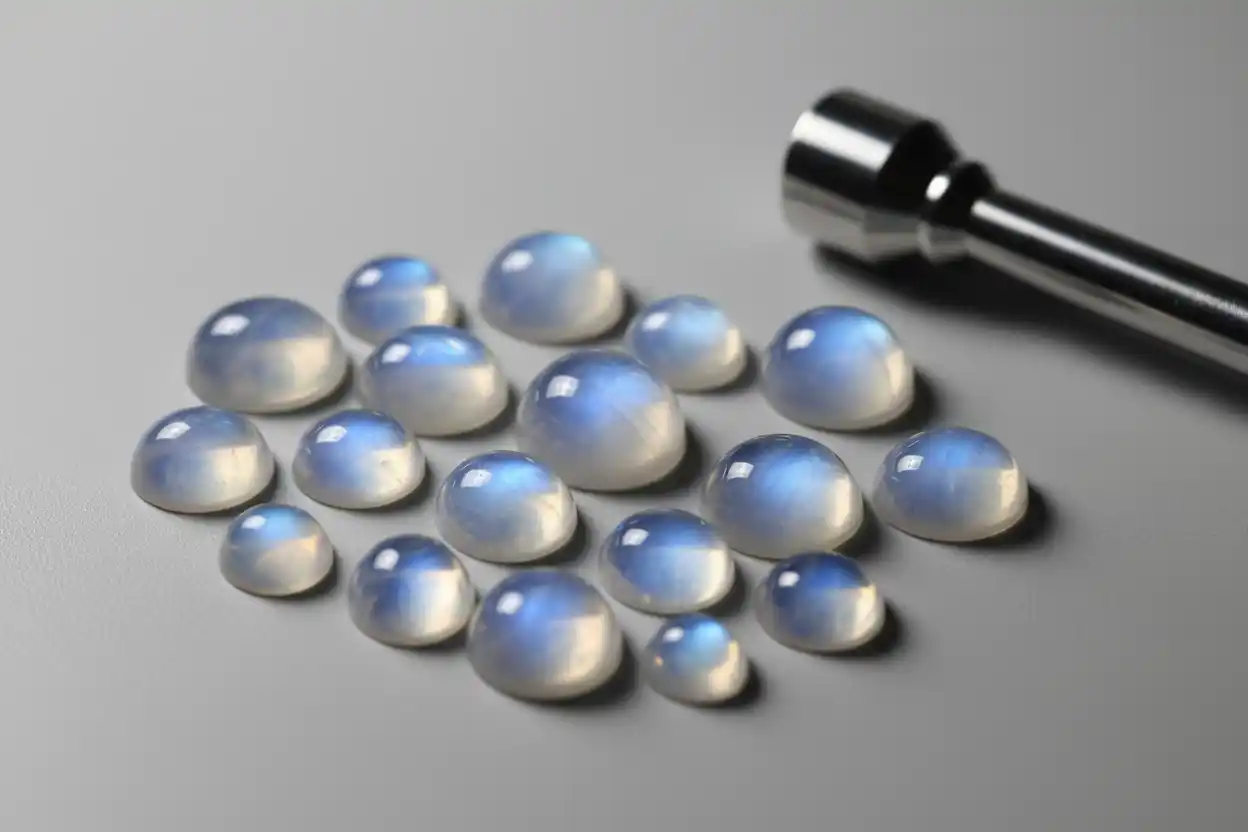
If you want to buy moonstone, judge the adularescence first. The strongest traditional examples show a mobile blue sheen that appears centered over a nearly colorless, semitransparent to transparent body and remains visible through a useful range of viewing angles. A stone with weak white haze, distracting yellow or brown body color, obvious cracks, or a flash that appears only from one precise direction normally deserves a lower price.
Moonstone can also be green, peach, brown, gray, white, or nearly black, so not every attractive piece needs to match the classic blue-sheen ideal. Current untreated Indian moonstone listings commonly work out to roughly $2.50 to $9 per carat in the examples reviewed, while current seller guidance places ordinary moonstone around $1.30 to $15 per carat. Fine blue-sheen stones can sit above ordinary commercial stock because large examples with strong clarity and a vivid mobile effect are much less common. The moonstone price therefore depends heavily on appearance rather than weight alone.
Start With the Adularescence
Moonstone is a feldspar gem famous for adularescence, the soft floating light that seems to move beneath its surface. GIA explains that this effect forms when light scatters between microscopic layers of orthoclase and albite.
The best sheen should move as the stone is tilted rather than remaining as a static pale patch. Traditional high-value moonstone usually shows blue adularescence over a nearly colorless body. Silver and white effects are also common, while other body colors can produce attractive variations.
Orientation matters. A well-cut cabochon positions the optical effect where it appears prominently on the top of the stone. If the sheen disappears unless the cabochon is held at one awkward angle, its commercial appeal generally falls.
Blue Sheen Usually Commands the Strongest Premium
GIA identifies colorless moonstone with vivid blue sheen as the most highly prized traditional appearance. The ideal stone is almost transparent, relatively free from visible inclusions, and capable of showing a mobile electric-blue glow.
This does not make ordinary white or peach moonstone poor choices. Many affordable stones are attractive precisely because they have soft white adularescence, warm color, or a creamy translucent appearance.
The moonstone quality grading should therefore separate personal color preference from trade rarity. A buyer can prefer peach or gray moonstone while still understanding why a clean blue-sheen stone receives a stronger market premium.
Current Moonstone Price Examples
Current untreated Indian retail listings provide useful benchmarks for ordinary white and colored moonstone.
| Current loose moonstone example | Weight | Asking price | Approx. price per carat |
|---|---|---|---|
| Warm white round | 2.98 ct | $8.17 | $2.74 |
| Warm white round pair | 4.24 ct total | $11.61 | $2.74 |
| Translucent white oval | 2.59 ct | $22.70 | $8.76 |
| White oval pair | 5.12 ct total | $16.90 | $3.30 |
| Transparent warm white pair | 5.79 ct total | $15.85 | $2.74 |
| Warm white round pair | 6.42 ct total | $17.59 | $2.74 |
| Light brown carved pair | 10.66 ct total | $56.28 | $5.28 |
The moonstone price per carat can rise quickly once strong blue adularescence, high transparency, clean appearance, fine orientation, and larger size occur together. Ordinary weight alone does not create that premium.
Clarity Should Support the Glow
Fine traditional moonstone is often semitransparent to nearly transparent. Heavy cloudiness can weaken the impression of depth and make the optical effect look less crisp.
GIA describes characteristic inclusions known as centipedes, which are tiny tension cracks arranged in a distinctive pattern. Natural internal features are not automatically a problem, but obvious fractures or heavy inclusions can interrupt the adularescence and reduce durability.
Inspect the stone from the side as well as face-up. A polished dome can hide internal cracks in front-facing photographs, particularly when the seller uses soft diffused lighting.
For higher-priced stones, video under several light directions is especially useful.
Cut Determines Where the Sheen Appears
Cabochons are the classic choice because a smooth rounded dome displays adularescence effectively. The dome should not be excessively flat, since a very shallow profile may fail to show the moving light well.
A cutter must orient the feldspar structure carefully. Two moonstones with similar rough quality can produce very different finished results if one is positioned correctly and the other is not.
Faceted moonstone is also available, especially when the stone is transparent enough to combine brilliance with its soft glow. Rose cuts have become popular as well.
Choose the style that best presents the individual gem rather than assuming faceting automatically makes a stone more valuable.
Rainbow Moonstone Is a Different Feldspar
The trade name rainbow moonstone causes frequent confusion. GIA states that rainbow moonstone is transparent labradorite, not traditional orthoclase moonstone.
Its multicolor blue, green, yellow, and rainbow flashes can be beautiful, but those effects should not be compared directly with the soft blue adularescence expected from classic moonstone. The rainbow moonstone meaning relates to a separate trade variety with a different feldspar identity.
A seller should make this distinction clear. A listing that uses rainbow moonstone and traditional moonstone interchangeably without explanation can make quality and pricing comparisons difficult.
Peach, Gray, Green, and Dark Moonstones Have Their Own Appeal
Moonstone occurs in several body colors. Peach has become especially popular in contemporary jewelry, while gray, green, brown, and darker stones offer different visual effects.
The peach moonstone meaning can help distinguish that named variety from classic colorless blue-sheen moonstone. Dark examples are also sold under names such as black moonstone, although sellers may use these trade descriptions with varying precision.
The black moonstone meaning belongs to that separate color category. When comparing prices, keep color varieties within comparable groups rather than assuming one universal moonstone rate.
India and Sri Lanka Are Major Sources
GIA identifies India and Sri Lanka as two of the most important moonstone sources. Other producing areas include Madagascar, Myanmar, Tanzania, Brazil, and parts of the United States.
Sri Lanka has a particularly strong historic association with fine moonstone, including the well-known Meetiyagoda deposit. Indian production includes abundant white, colored, carved, and cabochon stones at accessible prices.
Origin can add interest, but appearance remains essential. A weak stone does not become high quality simply because it carries a desirable locality name.
If origin is being used to justify a large premium, ask how the seller established it.
Treatment Disclosure Still Matters
Many current retail moonstones are sold as untreated, but treatments and enhancements do exist. GIA documents blue or black coatings applied to the base of moonstone cabochons, and older gemological reports describe dichroic backing used to create stronger color effects.
A backed coating can make the apparent sheen depend partly on an added layer rather than the feldspar alone. That should be disclosed when it affects appearance or care.
Examine the back of loose cabochons whenever possible. Unusual dark backing, metallic-looking layers, peeling edges, or color concentrated only near the base deserve questions.
Do not damage the stone with scratch, chemical, or heating tests. Professional inspection is safer when treatment status matters financially.
Imitations Can Be Sophisticated
Moonstone’s soft glow can be copied. GIA has documented a coated synthetic spinel fashioned to imitate moonstone and assembled stones designed to resemble rainbow moonstone.
One documented rainbow imitation combined quartz, gypsum, iridescent coating, cement, and a clear outer coating. Face-up, the pieces produced a convincing milky body and multicolor effect.
This is why appearance alone should not carry the full burden of authentication for expensive stones. Refractive index, magnification, structural features, and other gemological tests can separate difficult imitations.
A reputable seller, clear return policy, and accurate invoice reduce buying risk for normal retail purchases.
Check Durability Before Choosing a Setting
Moonstone has a Mohs hardness around 6 to 6.5 and poor toughness because feldspar has strong cleavage. It can scratch, chip, or split if struck hard.
Pendants and earrings are relatively forgiving. Rings and bracelets receive more impact, so protective designs are preferable, particularly for high-domed cabochons with exposed edges.
GIA advises against ultrasonic and steam cleaning. Warm soapy water and a soft brush are safer, and strong heat should be avoided because it can cause cracking.
A beautiful gem with existing edge damage may be a poor choice for frequent ring wear.
Returns Matter When Buying Online
Photographs can exaggerate adularescence because sellers naturally choose the angle where the sheen looks strongest. A moonstone that appears electric blue in one still image may show only a faint effect during ordinary movement.
A practical return window allows you to inspect the gem in daylight, soft indoor light, and directional light. Tilt it slowly and watch whether the glow remains centered and mobile.
Compare the received stone with the stated dimensions, weight, color, clarity, origin, and treatment status. If the listing promised a blue-sheen untreated moonstone but the effect is weak or the paperwork changes the description, return protection becomes important.
Keep Symbolism Separate From Purchase Quality
The moonstone benefits described in cultural or personal traditions may include associations with reflection, change, intuition, or emotional balance. These ideas do not establish commercial grade.
Likewise, moonstone healing properties belong to belief-based wellness traditions rather than proven medical treatment. Buying quality should remain tied to identity, adularescence, clarity, cut, condition, treatment disclosure, provenance, size, and current market comparison.
FAQs
How much does natural moonstone cost?
Current ordinary untreated white and colored examples reviewed here range from about $2.74 to $8.76 per carat. Current seller guidance places general moonstone around $1.30 to $15 per carat, with exceptional stones able to move higher.
What moonstone color is most valuable?
Traditional colorless moonstone with vivid mobile blue adularescence generally receives the strongest premium.
Is rainbow moonstone real moonstone?
Rainbow moonstone is a trade name for transparent labradorite, a related feldspar, rather than traditional orthoclase moonstone.
Is moonstone usually untreated?
Many current retail stones are listed as untreated, but coatings and backed enhancements have been documented and should be disclosed.
Does origin matter for moonstone?
Origin can add interest, particularly for fine Sri Lankan stones, but visible quality remains more important than locality alone.
What should blue sheen look like?
A strong blue sheen should move across the gem as it is tilted and ideally remain visible through a useful range of angles.
Are inclusions normal in moonstone?
Yes. Natural moonstone can contain internal features, including characteristic centipede-like tension cracks. Heavy inclusions can reduce clarity and durability.
Is moonstone safe for everyday rings?
It can be worn in rings with care, but its cleavage and moderate hardness make protective settings preferable.
What does AAA moonstone mean?
AAA is generally a seller-defined grade rather than a universal gemological standard. Compare the actual stone instead.
Why is a return policy important?
Adularescence is highly dependent on lighting and viewing angle, so an in-person inspection can reveal differences that photographs do not show.
Conclusion
To buy moonstone well, prioritize a strong mobile sheen, attractive body color, good clarity, correct orientation, smooth cutting, sound condition, and clear disclosure. Traditional blue-sheen moonstone deserves special attention because the finest examples combine rarity with a very specific optical appearance. Compare actual stones under several lighting conditions, verify what variety is being sold, and use return protection when buying online.