Buy Rubellite: Smart Buying Tips & Red Flags
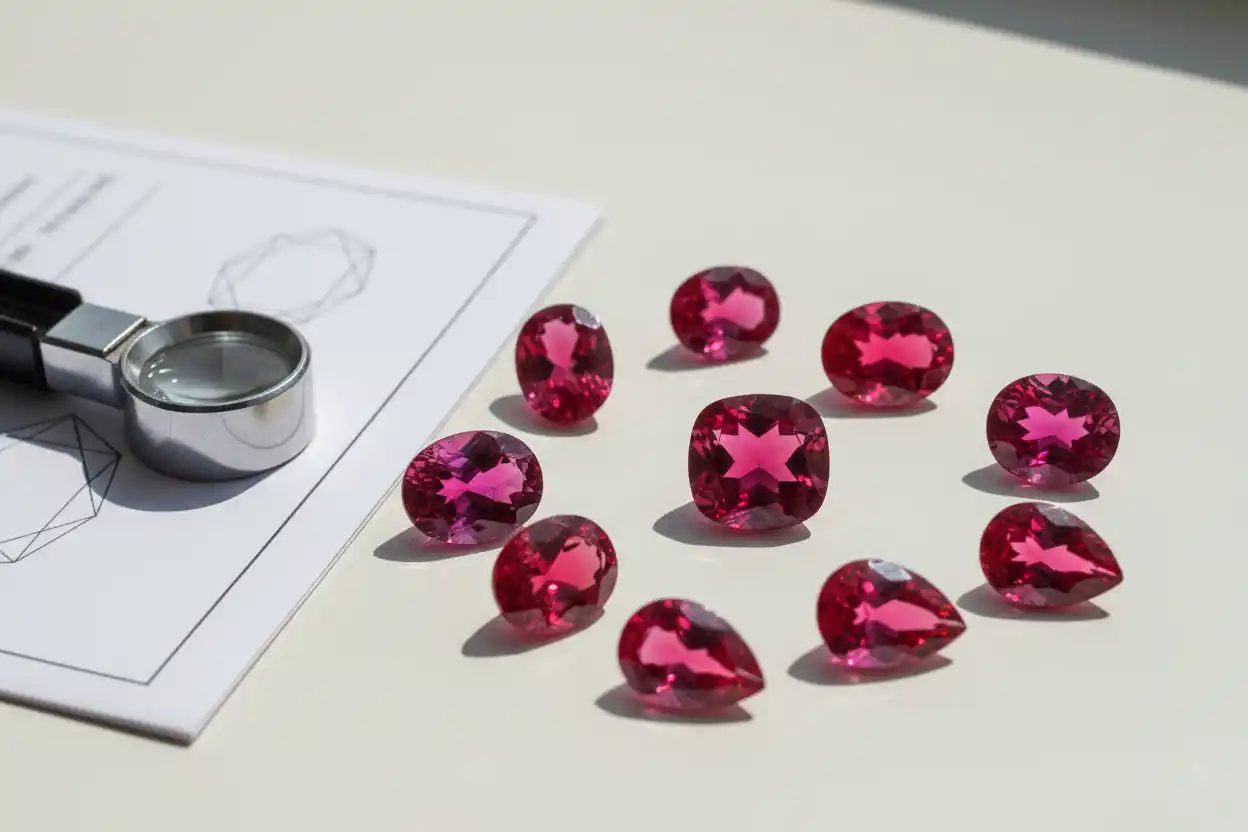
When you buy rubellite, the first question should not be how many carats you can get for your budget. Start by deciding whether the gemstone genuinely deserves the rubellite name, because rubellite is a color-based tourmaline trade term rather than a separate mineral species with one universally enforced color boundary. Fine stones earn their appeal through rich red, raspberry, pinkish-red, or purplish-red color that remains attractive outside intense display lighting, while weaker pink, brownish, overly dark, or poorly saturated material can be marketed under the same desirable name.
That distinction makes the buy rubellite decision more nuanced than simply confirming that a stone is tourmaline. A natural tourmaline can be genuine yet still be ordinary pink tourmaline rather than a compelling rubellite, and a strongly colored rubellite can be valuable even when it contains more inclusions than buyers would tolerate in some blue or green tourmalines. Color quality therefore comes first after identity, but transparency, inclusion type, cut orientation, windowing, extinction, dimensions, treatments, condition, and written disclosure all influence whether the asking price makes sense.
The best way to buy rubellite is to evaluate the exact stone rather than the sales vocabulary surrounding it. Ignore proprietary grades initially, compare the gem under neutral and ordinary indoor lighting, study its transparency and structural condition, examine how its cut handles tourmaline’s directional color, and then investigate treatment and provenance claims according to the size of the premium being charged.
What Should You Judge First When You Buy Rubellite?
A practical buy rubellite hierarchy begins with identity and color classification, followed by tone and saturation, transparency, inclusion quality, cut performance, face-up dimensions, treatment disclosure, condition, documentation, and return terms. Carat weight belongs later because a large included or overly dark stone can remain substantially less desirable than a smaller, brighter, cleaner gem.
Rubellite belongs to the chemically complex tourmaline group and is commonly associated with elbaite in fine gem material. Its broader mineral identity, physical properties, formation, sources, and historical symbolism are covered separately in rubellite meaning. For purchasing, however, the most important concept is that rubellite is defined commercially through color rather than through a unique species designation.
The wider types of tourmaline classification also matters because pink tourmaline, rubellite, indicolite, verdelite, watermelon tourmaline, and other names do not all represent equivalent mineralogical categories. Some are color terms, some are zoning descriptions, and others are trade varieties.
Rubellite Buying Hierarchy
| Priority | What to evaluate | Stronger choice | Main concern |
|---|---|---|---|
| 1 | Identity | Natural tourmaline represented accurately | Glass or another red gem represented as tourmaline |
| 2 | Rubellite color | Vivid red, raspberry, pink-red, or purplish red | Ordinary pale pink material carrying a rubellite premium |
| 3 | Tone and saturation | Rich color that remains lively | Excessively dark, brown, gray, or black-looking areas |
| 4 | Transparency | Good transparency for the quality tier | Milky or heavily clouded material sold as fine faceting quality |
| 5 | Inclusions | Acceptable inclusions without serious structural weakness | Open fractures, major whitish fissures, unstable cavities |
| 6 | Cut | Bright, balanced face-up appearance | Windowing, extinction, poor orientation, hidden weight |
| 7 | Dimensions | Useful visible spread for carat weight | Deep pavilion retaining unnecessary mass |
| 8 | Treatment | Specific disclosure where known | Vague answers about irradiation, heat, filling, or coating |
| 9 | Condition | Crisp polish and sound edges | Chips, abrasion, damaged girdle, exposed fissures |
| 10 | Documentation | Appropriate to price and uncertainty | Seller card presented as independent proof |
This order keeps the buy rubellite decision tied to material quality rather than to labels such as premium, royal, vivid, collector, AAA, or top grade.
Rubellite Versus Pink Tourmaline Is the First Commercial Boundary
One of the most important questions when you buy rubellite is where ordinary pink tourmaline ends and rubellite begins. There is no single universally enforced saturation threshold that every dealer and laboratory applies in exactly the same way.
Rubellite is broadly used for tourmaline in pink, red, pinkish-red, purplish-red, orangy-red, and sometimes brownish-red ranges, although stricter commercial usage tends to reserve the name for stronger red, raspberry, or saturated pink-red stones. Consequently, two sellers can describe similar material differently without either description automatically proving fraud.
That flexibility does not mean the name is meaningless. A stone carrying a substantial rubellite premium should normally possess enough saturation, red character, and overall liveliness to distinguish it from ordinary pastel pink material.
The broader characteristics of lighter pink material are discussed in pink tourmaline. When you buy rubellite, compare the actual stones rather than assuming the more prestigious name guarantees higher quality.
Color Should Usually Receive the Largest Share of Your Budget
Color is generally the dominant visible factor when you buy rubellite. Fine examples can show vivid red, raspberry, cranberry, magenta-red, pinkish-red, or purplish-red color with enough brightness to remain attractive under realistic lighting.
The strongest stone is not necessarily the purest imaginable red. A beautiful purplish-red rubellite can be exceptionally desirable when the saturation is strong and the gem remains lively. Likewise, an attractive raspberry tone can outperform a technically redder stone that is too dark to return useful light.
Brown and gray modifiers deserve more scrutiny because they can make the stone appear muddy or dull. A slight warm component may remain attractive, but obvious brown should normally reduce a premium based on supposedly fine red color.
When you buy rubellite online, ask yourself whether you would still want the gemstone if the retailer removed every color adjective from the listing. The actual face-up appearance should justify the purchase.
Do Not Automatically Choose the Darkest Rubellite
Darkness is frequently confused with saturation, yet the two are not identical. Saturation describes color intensity, while tone describes how light or dark the gemstone appears.
A strongly saturated medium or medium-dark rubellite can look rich while still returning substantial light. An overly dark stone may appear almost black through broad areas, especially when its cut and pleochroism reinforce the darker viewing direction.
When you buy rubellite, examine the gem under ordinary room lighting as well as brighter illumination. If the appealing red is visible only beneath intense direct light or when the stone is strongly backlit, its everyday appearance may disappoint you.
A lighter stone that remains consistently vivid can be the stronger buy rubellite choice.
Color Should Survive Different Lighting Environments
Pink and red tourmalines can shift somewhat in apparent tone and hue as illumination changes, and cameras can exaggerate these differences further. Warm lighting may emphasize red, while cooler illumination can emphasize purple or pink.
Before you buy rubellite remotely, request a continuous video moving the exact gemstone between neutral-looking and ordinary indoor illumination where practical. You are not looking for absolute color constancy; colored gemstones naturally respond to different light sources. You are checking whether the stone remains recognizably attractive rather than becoming muddy, brown, gray, or nearly black.
This is particularly important when a seller claims that the distinguishing feature of the gemstone is its strong rubellite color. The claim should survive more than one carefully chosen photograph.
Neutral Backgrounds Reveal More Than Dramatic Displays
A black background can make red tourmaline look more saturated, while warm surfaces can strengthen red reflections and exposure adjustments can brighten dark material. Image processing can also shift magenta, purple, and red significantly.
When you buy rubellite online, request at least one actual-stone photograph against white or neutral gray. Pay attention to surrounding objects as color references. If white paper looks pink, silver metal looks unusually warm, or skin tones appear heavily altered, the gemstone’s displayed color may also be shifted.
A rotating video is useful because a single ideal frame can conceal both color weakness and cutting problems.
Good photography should make a buy rubellite decision easier, not create a color that disappears when the package arrives.
Pleochroism Makes Cutting Orientation Important
Tourmaline can display different color strength or hue when viewed along different crystallographic directions. This pleochroism is especially important when cutting red and pink material because one direction may appear brighter while another becomes deeper or darker.
A skilled cutter must decide how to orient the rough so the finished stone presents the most attractive combination of saturation and brightness. That decision can also influence the final shape because tourmaline crystals frequently grow as elongated prisms.
When you buy rubellite, watch how evenly color is distributed across the face. An attractive stone should not have one brilliant area while another appears consistently dead or excessively dark merely because the orientation was chosen to retain weight.
Cut orientation is one reason two rubellites of apparently similar rough color can perform very differently after faceting.
Do Not Confuse Pleochroism With Poor Color Zoning
Pleochroism and color zoning are different. Pleochroism arises because the crystal interacts with light differently according to direction, while zoning represents actual changes in color within different parts of the crystal.
Rubellite can contain natural zoning, especially because tourmaline chemistry may change as a crystal grows. A small amount of zoning can be unobtrusive or even attractive, but a premium faceted stone should generally present a coherent face-up color.
When you buy rubellite, look for obvious pale bands, dark sections, uneven saturation, or abrupt color changes that distract from the intended appearance. If zoning is part of a deliberate artistic cut, judge it as part of the design rather than automatically treating it as a defect.
Clarity Standards for Rubellite Are Different From Many Green Tourmalines
Red and pink tourmalines frequently contain more visible inclusions than many green and blue tourmalines. Growth tubes, fluid inclusions, healed fissures, thread-like cavities, crystals, and reflective fractures can occur during and after crystal growth.
As a result, you do not need to insist on absolute flawlessness when you buy rubellite. Fine color can justify some visible inclusion, particularly in larger stones where clean strongly saturated material becomes more difficult to obtain.
However, accepting inclusions does not mean ignoring them. The correct question is whether an inclusion merely affects appearance or creates structural weakness.
A transparent rubellite with a few discreet internal features can be substantially more desirable than a superficially cleaner stone whose color is weak.
White or Reflective Inclusions Can Be Especially Distracting
Some inclusions become visually prominent because they reflect light strongly and appear white against the red body color. A large reflective fissure beneath the table can dominate the gemstone even when its actual physical volume is relatively small.
When you buy rubellite, inspect inclusions at normal viewing distance before looking at magnified images. If a feature immediately attracts your eye without magnification, it will probably remain noticeable in jewelry.
Then examine enlarged images to determine whether the inclusion reaches the surface or approaches a vulnerable corner, girdle section, or prong position.
Fine color can compensate for moderate inclusions. It should not automatically compensate for severe structural damage.
Surface-Reaching Fractures Need a Separate Decision
Tourmaline often contains fractures and fluid-related inclusions, making surface-reaching fissures especially important when you buy rubellite. An enclosed healed fracture may pose little practical concern, while a large open fissure can influence durability, polish, cleaning, setting, and possible treatment.
Inspect the girdle and pavilion closely. A fracture extending to a thin girdle or exposed corner deserves more attention than an isolated inclusion deep within the stone.
Also ask whether any surface-reaching fissures have been filled with oil, resin, or another substance. Filling can improve apparent clarity while introducing additional care and value considerations.
A strongly included rubellite can still be a legitimate purchase, but the price and disclosure should match its condition.
Cat’s-Eye Rubellite Requires a Different Evaluation
Tourmaline can contain aligned tubes or inclusions capable of producing chatoyancy when cut as a cabochon. A red or pink cat’s-eye tourmaline therefore should not be judged according to the clarity standards used for transparent faceted rubellite.
If you buy rubellite displaying a cat’s-eye effect, evaluate the eye itself. A stronger phenomenon shows a distinct, reasonably narrow band that moves across the surface as the light or stone changes position.
Body color, translucency, orientation, dome shape, and condition also matter. The inclusions producing the eye are functional rather than simply defects.
Do not pay a phenomenal-gem premium for a vague stationary reflection visible only in one heavily staged photograph.
Cut Quality Can Create or Destroy Rubellite’s Brightness
Rubellite’s rich color means cutting needs to preserve brightness while controlling darkness. A well-cut gemstone returns enough light to keep the red or pink-red color lively, whereas a weak cut can create either a washed-out central window or broad areas of extinction.
When you buy rubellite, inspect the gem face-up first. Look for an active pattern of light and dark facets rather than a large transparent center or a permanently black zone.
Then look from the side to understand depth. Tourmaline rough can encourage elongated and deep cuts, and some commercial stones retain weight at the expense of visible size.
The best buy rubellite candidate usually balances color, light return, and physical spread rather than maximizing any single measurement.
Windowing Should Reduce What You Are Willing to Pay
A window is a pale or transparent region where light passes through the pavilion instead of returning effectively toward the viewer. In a colored gemstone, this makes the center look weaker than the surrounding material.
When you buy rubellite, a broad window is especially undesirable when the seller is charging for rich saturated color. If much of the center looks washed out, the cut is failing to display the material efficiently.
Small leakage at some viewing angles is normal. A large face-up window that remains obvious is different.
Recutting can sometimes improve a window, but it removes weight, changes dimensions, and may not be economically sensible. Value the stone according to the cut you are actually purchasing.
Extinction Can Make Fine Rough Look Almost Black
Extinction occurs when sections of the gemstone return very little light and appear black or nearly black. Some contrast is necessary for brilliance, but widespread extinction can overwhelm the body color.
This problem often becomes more obvious when you buy rubellite with a deep cut or naturally dark tone. A seller may describe the result as exceptionally saturated even when the apparent depth is partly caused by poor light return.
Rotate the stone slowly. Dark areas should change as the facets interact with the light rather than remaining as one large dead mass.
A vivid red gemstone should still look red.
Bow Ties Matter in Elongated Shapes
Oval, pear, marquise, and some elongated cushion cuts can show bow-tie-shaped dark regions through the center. A modest bow tie can provide contrast, while a severe one may divide the gemstone into bright ends and an unattractive dark middle.
When you buy rubellite in an elongated outline, evaluate the bow tie through continuous video rather than a single photograph. Determine how wide it is, how dark it becomes, and whether it breaks up as the gem moves.
Do not reject every trace of central contrast. Reject a cut whose dark area dominates the face and suppresses the color you are paying for.
Compare Millimeter Dimensions With Carat Weight
Carat weight measures mass rather than visible size. Two stones of the same weight can have noticeably different face-up dimensions because one has a deeper pavilion or thicker proportions.
When you buy rubellite, obtain length, width, and depth in addition to carat weight. A five-carat stone should not automatically be preferred over a four-carat alternative if both appear almost identical in visible size and the heavier gemstone carries most of its extra mass underneath.
This comparison becomes more important as per-carat prices increase with quality and size.
Paying for useful visual presence is usually more satisfying than paying for hidden weight.
Large Rubellite Deserves a Premium Only When Quality Survives
Tourmaline crystals can become substantial, but large fine rubellite is much more difficult to obtain than large heavily included or dark material. Therefore, size premiums should be applied selectively.
When you buy rubellite above ordinary jewelry sizes, require the color to remain strong, transparency to remain useful, and cutting to remain efficient. A large opaque or heavily fissured stone may be attractive as a cabochon, carving, or collector specimen while occupying a completely different value tier from a transparent faceted gem.
Do not extrapolate the price of fine transparent rubellite to commercial included material merely because both are sold by the carat.
The factors behind these differences are examined in the dedicated rubellite price guide.
Heat Treatment Needs Accurate Interpretation
Tourmaline can be heat treated to modify color, although the response depends on the starting material. Heating may lighten or alter some colors, and strongly included stones can be unsuitable for significant heating because fluid inclusions and fractures increase thermal risk.
When you buy rubellite, do not assume that a simple visual inspection can always establish whether heat has occurred. Some treatment effects can be difficult or impossible to detect conclusively after processing.
The practical buying issue is therefore disclosure. Ask what the seller knows about treatment history, how that information was obtained, and whether a laboratory has evaluated the stone when the distinction materially influences the price.
Do not accept an unsupported untreated premium merely because no obvious treatment signs are visible.
Irradiation Is Particularly Relevant to Pink and Red Tourmaline
Irradiation can intensify pink and red colors in suitable tourmaline. This makes treatment disclosure especially relevant when you buy rubellite with unusually vivid coloration.
The difficult part for consumers is that irradiation may not produce a simple visible marker that can be identified from a photograph. A bright red stone cannot be declared irradiated merely because its color is strong, but strong natural-looking color cannot prove the opposite either.
Color produced through irradiation can also require more caution around intense heat and prolonged bright-light exposure because some irradiation-related color changes can fade.
The correct response is not fear of every treated gemstone. It is accurate representation and pricing.
Heat and Irradiation Should Not Be Treated as the Same Process
Heating and irradiation alter tourmaline color through different mechanisms and can affect color stability differently. A listing that says only “enhanced” tells you less than a specific treatment disclosure.
When you buy rubellite at a modest commercial price, uncertainty about an otherwise acceptable treatment may have a relatively small financial effect. When you are paying a large premium for untreated color, however, the uncertainty becomes much more important.
Ask whether the seller is claiming untreated status, merely stating that no treatment is known, or relying on an independent report.
Those statements are not equivalent.
Fracture Filling Can Change Both Appearance and Care
Heavily fractured tourmaline may be clarity enhanced by introducing oil, resin, or another substance into surface-reaching fissures. The process can make fractures less reflective and improve apparent transparency.
When you buy rubellite, filling deserves greater attention than a minor inclusion because it changes the material you are evaluating. The degree of filling, stability of the substance, visibility of the fractures, and effect on care can all influence value.
Large filled fractures may react poorly to heat, solvents, ultrasonic cleaning, or repair procedures.
Ask specifically about filling when the gemstone contains many open fissures rather than assuming a general “natural gemstone” statement answers the question.
Coatings and Assemblies Should Be Considered When Something Looks Unusual
Surface coatings can alter gemstone color, and assembled products can combine different materials to produce a more convincing face-up appearance. These are not the routine explanation for every rubellite, but they belong on the screening list when a stone’s surface or construction appears unusual.
Check girdle areas, scratches, facet junctions, worn edges, and exposed pavilion sections for abrupt color differences. In mounted jewelry, inspect the side and back to determine whether the apparent center stone is a single transparent material.
Visual observations can identify suspicious features but should not be overinterpreted.
If you buy rubellite at a price where treatment or construction would materially change value, independent examination is a better solution than destructive experimentation.
Natural Rubellite, Laboratory-Grown Material, and Imitations
A buyer should separate three different questions: whether a gemstone is tourmaline, whether it formed naturally, and whether it has been treated.
Laboratory-grown tourmaline exists in technical contexts, but the ordinary consumer market is more likely to present rubellite-colored imitations or other gemstones than a vast supply of direct synthetic rubellite. Red and pink glass, synthetic spinel, synthetic corundum, cubic zirconia, and other materials can mimic the broad appearance in photographs.
Natural pink and red tourmaline can also be very clean, so exceptional clarity alone is not proof of laboratory growth or imitation.
The identification boundaries and safe screening methods are discussed in real vs fake tourmaline. When you buy rubellite, do not use color alone to determine material identity.
Do Not Use Scratch, Flame, or Acid Tests
Destructive home tests are particularly poor choices for a valuable faceted gemstone. Scratching can damage polished surfaces and still fail to distinguish among materials with overlapping hardness.
Heat is even less appropriate for rubellite because tourmaline can be vulnerable to sudden temperature changes, liquid inclusions can increase fracture risk, and heat may alter color.
Acids, hot needles, aggressive solvents, and impact tests create similar problems.
If you buy rubellite and authentication matters financially, nondestructive measurements and laboratory examination are more useful than risking the gemstone to obtain weak evidence.
Origin Claims Should Rank Below Color and Quality
Fine red and pink tourmaline has been produced from several regions, including Brazil, Mozambique, Nigeria, Madagascar, Afghanistan, Pakistan, and other pegmatite-producing areas.
Locality can add collecting interest, particularly for crystal specimens with credible mine information, but a country name does not automatically make a faceted rubellite superior.
When you buy rubellite, judge the gemstone first. A bright, transparent, well-cut stone without a prestigious locality claim can be a much stronger purchase than a dark or heavily damaged gem carrying a famous origin story.
Origin should explain provenance, not substitute for visible quality.
Visual Appearance Cannot Prove Geographic Origin
Similar rubellite colors and inclusion features can occur in material from different deposits. A seller should therefore be cautious about claiming that a particular shade of raspberry or purple-red proves Mozambique, Brazil, Nigeria, or another source.
Advanced laboratories may examine inclusions, spectroscopy, and chemical composition when geographic determination is relevant, but not every gemstone produces a conclusive origin opinion.
When you buy rubellite at an ordinary price, precise geographic testing may offer little practical benefit. When origin materially increases the asking price, stronger evidence becomes more reasonable.
The level of proof should rise with the premium.
Seller-Created Grades Are Not Universal Rubellite Standards
AAA, AAAA, premium, royal, vivid, collector quality, and similar designations are not universal rubellite grades that allow direct comparison among every seller.
One retailer may reserve AAA for eye-clean vivid material, while another may apply the same label to included commercial stones. Both can use internal categories, but buyers need to understand the criteria before treating those letters as useful information.
When you buy rubellite, ask what the grade actually measures. Color? Transparency? Inclusion visibility? Cut? Treatment? Origin? All of them?
If the seller cannot translate the label into observable characteristics, ignore it and judge the gemstone yourself.
When Is a Laboratory Report Worthwhile?
Most small commercial rubellite jewelry does not require an expensive individual report. Testing costs need to be proportionate to the value and uncertainty of the transaction.
A laboratory report becomes more useful when you buy rubellite of substantial value, unusual clean size, uncertain identity, questionable treatment, exceptional claimed natural color, important provenance, or a condition where a visually similar red gemstone could materially alter the purchase.
A colored-stone identification report can document measurements, weight, shape, cutting style, color, natural or laboratory-grown origin where the service permits, and detectable treatments within the laboratory’s capabilities.
Do not assume the laboratory is assigning a universal retail quality grade unless the service explicitly does so.
Report Versus Appraisal
A gemological report and an appraisal answer different questions.
A report focuses on material identity and relevant characteristics. An appraisal estimates monetary value for a stated purpose. A high insurance replacement figure is therefore not proof that a stone is untreated rubellite or that a geographic-origin claim is correct.
Likewise, a respected identification report does not automatically establish whether the retailer’s asking price is competitive.
When you buy rubellite at a significant price, separate evidence about what the gemstone is from an opinion about what it is worth.
Match the Report to the Exact Stone
A genuine laboratory report is useful only if it belongs to the exact gemstone you are receiving.
Compare the report number, carat weight, dimensions, shape, cutting style, color description, identifying photograph where supplied, and any unique comments. Small measurement differences may result from technique, but major inconsistencies require explanation.
If a seller shows a report for a different stone from the same parcel, the document does not prove the identity or treatment of your gemstone.
When you buy rubellite based partly on documentation, report-to-stone matching should happen before payment or immediately during the permitted inspection period.
Actual-Stone Photos Should Be Required for Significant Purchases
Rubellite varies too much in color, clarity, cut, and zoning for a stock photograph to represent a valuable individual stone adequately.
When you buy rubellite online, request photographs of the exact gemstone from the face, side, and pavilion where practical. The face-up view shows color and windowing, the side view reveals depth, and the pavilion can expose chips, poorly polished areas, or structural features hidden from the top.
A continuous rotating video is even more informative because it shows how extinction, pleochroism, inclusions, and color behave as the viewing angle changes.
The more important the purchase, the less acceptable representative imagery becomes.
Ask for Both Close-Ups and Normal Viewing Distance
Macro photography can make tiny inclusions look enormous, while normal product photography can hide fractures completely. You need both scales.
When you buy rubellite, first determine whether inclusions are visible at normal jewelry distance. Then use magnified photographs to study their type and location.
This prevents two opposite mistakes: rejecting a beautiful stone because microscopic features look frightening in enlargement, or purchasing a structurally problematic stone because distant photographs hide every fissure.
Clarity evaluation should remain proportional to how the gemstone actually looks and wears.
Return Terms Are Part of the Stone-Inspection Method
A remote buy rubellite purchase should include enough time to inspect the gem in your own environment. Color is especially difficult to reproduce through a display because screen settings, camera processing, and lighting all influence red and magenta hues.
Read the return conditions before ordering. Determine whether tags must remain attached, whether setting a loose stone voids returns, whether resizing makes a finished ring final sale, and who pays insured return shipping.
Also check whether a restocking charge applies and whether a gemstone that differs materially from its description is treated differently from a discretionary return.
Strong claims combined with almost nonexistent return rights deserve caution.
Put Important Claims in Writing
If you buy rubellite partly because of an important representation, preserve that statement on the invoice or sales record.
Useful wording can identify the gemstone as natural tourmaline or rubellite, state known treatments or relevant disclosure, record weight and dimensions, and reference an independent report where applicable.
If the seller charges extra for untreated status, a specific locality, or another unusual characteristic, that claim should not exist only in a disappearing message or verbal conversation.
Written documentation does not prove the claim scientifically, but it defines what you were actually promised.
Condition Matters More in Previously Worn Rubellite
Tourmaline ranks around 7 to 7.5 on the Mohs scale and provides useful scratch resistance, but its toughness is considered fair rather than exceptional. It can chip, fracture, or suffer facet abrasion under sufficiently hard wear.
When you buy rubellite secondhand, examine facet junctions, girdle edges, corners, points, and areas beneath prongs. Surface abrasions can make the gemstone look hazier, while chips can indicate previous impact or expose existing fractures.
Also inspect whether the gem moves within its setting. A loose stone can deteriorate quickly as repeated movement damages both the girdle and metalwork.
Condition should influence the price rather than being dismissed simply because the gemstone remains wearable.
Rings Need More Structural Scrutiny Than Earrings
Rubellite can be used successfully in rings, earrings, pendants, necklaces, and bracelets, but these formats do not expose the gemstone to equal risk.
Earrings and pendants generally encounter less impact, making them good choices for large or included stones. Rings and bracelets routinely contact desks, doors, counters, tools, and other hard surfaces.
If you buy rubellite for a ring, give additional weight to structural soundness. Avoid major surface-reaching fractures near prongs and be cautious with thin exposed corners.
A protective setting can reduce risk without hiding the gemstone’s color.
Setting Choice Should Match the Cut
Rounded ovals and cushions can be easier to protect than sharp pears, marquises, or unusually pointed designer cuts. However, a well-designed setting can make many shapes practical.
When you buy rubellite jewelry, inspect whether prongs properly protect corners, whether the gemstone sits excessively high, and whether the girdle is exposed in areas likely to receive impact.
A bezel or partial bezel can offer strong edge protection, though it may change the visible outline and light environment. Prongs can preserve more open viewing but must be secure and correctly positioned.
The right setting depends on the individual stone rather than on one universal rule.
Care Should Influence Which Rubellite You Buy
Tourmaline is generally stable enough for normal jewelry use, but high heat and sudden temperature changes should be avoided. Internal liquid inclusions and fractures can increase vulnerability to thermal shock.
Warm water, mild soap, and gentle manual cleaning are the conservative approach for most structurally sound pieces. Steam and ultrasonic cleaning are not the preferred general methods for tourmaline, particularly when inclusions, fractures, fillings, or treatment history create uncertainty.
Detailed physical maintenance appears in how to clean tourmaline jewelry.
When you buy rubellite mounted with other gemstones, adhesives, enamel, or delicate materials, the safest cleaning method should accommodate every component rather than the tourmaline alone.
Resale Expectations Should Remain Realistic
Fine rubellite can attract collectors and colored-stone enthusiasts, particularly when it combines vivid color, useful transparency, rare size, excellent cutting, and respected documentation. That does not make every rubellite an easily resold asset.
Retail pricing incorporates seller margin, jewelry manufacturing, metal, branding, overhead, matching, and other costs that a secondhand buyer may not repay. Commercial included stones can have especially limited resale liquidity.
When you buy rubellite, avoid assuming that rarity language guarantees appreciation or an easy future sale. Fine gemstones can hold specialist interest while still requiring time, commissions, or dealer discounts to sell.
Buy for quality and use first unless you already understand the specialized secondary market.
Where Should Your Budget Go?
For most buyers, the first premium should go toward color. A slightly smaller gemstone with vivid raspberry-red color that remains lively under ordinary lighting will often outperform a larger stone that becomes brown or nearly black.
The second premium should go toward transparency and cut. Moderate inclusions can be acceptable, but a heavily clouded stone with poor light return occupies a different quality level from a transparent gem with a few discreet internal features.
After that, consider size. Large clean rubellite with fine color can legitimately become more expensive because maintaining all three characteristics together is more difficult.
Treatment status, origin, custom cutting, provenance, and extensive documentation should receive additional budget only when those characteristics matter to you and the evidence supports the premium.
A Practical Buy Rubellite Decision Matrix
| Factor | Strong candidate | Reasonable compromise | Serious concern |
|---|---|---|---|
| Rubellite classification | Saturated red, raspberry, pink-red, or purple-red | Strong pink bordering rubellite usage | Pale ordinary pink carrying a large rubellite premium |
| Color | Rich and lively in normal light | Slight brown or purple modifier but still attractive | Muddy, gray, strongly brown, or nearly black |
| Transparency | Good transparency | Moderate inclusions with strong color | Heavy milkiness sold as fine faceted quality |
| Inclusions | Discreet internal features | Visible but stable inclusions | Major surface-reaching fissures or cavities |
| Cut | Balanced brightness and color | Minor asymmetry | Large window, severe extinction, poor orientation |
| Dimensions | Appropriate spread for weight | Slightly deep but attractive | Significant hidden weight |
| Treatment | Clear disclosure | Some uncertainty at an appropriate price | Premium untreated claim without adequate support |
| Filling | None or clearly disclosed | Minor filling reflected in price | Significant undisclosed clarity enhancement |
| Origin | Evidence if it adds value | Origin unspecified | Specific country inferred only from color |
| Photography | Exact stone, neutral light, multiple views | Good actual-stone images | Stock photos for an expensive gem |
| Documentation | Report where justified | No report for modest straightforward stone | Unrelated report or appraisal used as identification |
| Returns | Meaningful inspection opportunity | Reasonable clear restrictions | Effectively no remedy despite strong claims |
This matrix is not a universal grading scale. It is a way to make the buy rubellite decision explicit so that one impressive feature does not distract you from several significant weaknesses.
Stone-Specific Red Flags When You Buy Rubellite
The most important rubellite red flag is a weak pink tourmaline receiving a large premium simply because the seller applies the rubellite name. Since the terminology boundary is not perfectly standardized, you should judge whether the stone actually has the saturation and red character that make the designation commercially meaningful.
A second warning is an exceptionally dark stone photographed only under intense transmitted or direct lighting. If you cannot see its attractive color without unusual illumination, it may perform poorly in normal jewelry wear.
Another concern is an included stone whose fissures reach the surface while the seller avoids direct questions about filling. Red and pink tourmalines commonly contain inclusions, but common inclusion does not eliminate the need to disclose significant clarity enhancement.
Be wary of vivid color accompanied by absolute untreated claims that depend only on visual inspection. Heat and irradiation can affect tourmaline color, and not every treatment can be proven or excluded casually.
Also question proprietary AAAA grades with no definition, precise origin claims made from color alone, large carat weights without millimeter dimensions, stock photographs for supposedly unique gems, laboratory reports that do not match the offered stone, and return terms that prevent meaningful independent inspection.
A Better Way to Buy Rubellite
Start your buy rubellite comparison by selecting several stones with roughly similar dimensions and budget. Temporarily ignore the seller’s grades and compare color under the same neutral-looking conditions. Remove candidates that become overwhelmingly brown, dark, gray, or lifeless outside intense illumination.
Next, compare transparency and inclusions. Accept some internal character when the color is exceptional, but distinguish enclosed inclusions from surface-reaching fissures and obvious structural weaknesses.
Then examine cutting. Look for a lively center, balanced contrast, manageable extinction, no dominant window, sensible symmetry, and dimensions that make sense for the weight. Watch elongated shapes for severe bow ties and deep stones for unnecessary hidden mass.
After the visible quality is established, investigate treatment disclosure, filling, provenance, documentation, and condition according to the price. A modest commercial stone may not justify extensive testing, while a large fine rubellite sold at a substantial premium deserves much stronger evidence.
Finally, examine the setting, written description, exact-stone photographs, and return terms. The wider Buying & Value collection applies evidence-based purchasing principles across gemstones, but rubellite requires its own hierarchy because color terminology, inclusions, pleochroism, irradiation, and cutting orientation materially change how the stone should be judged.
Frequently Asked Questions
What should I prioritize first when I buy rubellite?
Confirm that the gemstone is tourmaline and that its color reasonably justifies the rubellite description, then prioritize color, transparency, inclusion quality, cut, dimensions, and treatment disclosure. Size should generally come after these fundamentals.
What color is best when I buy rubellite?
Fine rubellite commonly shows vivid red, raspberry, pinkish-red, cranberry, magenta-red, or purplish-red color with enough brightness to remain lively in ordinary lighting. Strong brown, gray, or excessive darkness generally reduces desirability.
Is rubellite the same as pink tourmaline?
They overlap, but the terms are not always used identically. Pink tourmaline covers a broad range from pale blush to saturated pink, while rubellite is commonly associated with stronger red, pink-red, or purplish-red material. The exact commercial boundary is not universally standardized.
Should rubellite be completely eye-clean?
Not necessarily. Pink and red tourmalines commonly contain more inclusions than many green or blue varieties, and fine color can justify moderate visible inclusions. Surface-reaching fractures, large white fissures, and structurally risky inclusions deserve more concern.
Are inclusions proof that rubellite is natural?
No. Inclusions can support identification when interpreted correctly, but no single inclusion proves every aspect of identity. Natural stones can also be very clean, while imitations or manufactured materials may contain inclusions of their own.
Can rubellite be irradiated?
Yes. Irradiation can intensify pink or red color in suitable tourmaline. The treatment may be difficult to establish visually, which is why disclosure and appropriate documentation become important when treatment status materially affects price.
Can rubellite be heat treated?
Tourmaline can be heat treated to modify color, although the result depends on the material and included stones may be vulnerable to heating. Some treatment effects can be difficult to detect conclusively after processing.
Can rubellite be fracture filled?
Yes, fractured tourmaline can receive clarity enhancement through filling of surface-reaching fissures. Significant filling should be disclosed because it can affect value, durability, cleaning, and repair.
Does untreated rubellite deserve a premium?
Possibly in a high-value transaction when untreated status is meaningful, credible, and supported appropriately, but color and overall quality should remain central. An unattractive untreated stone is not automatically better than a beautiful disclosed treated stone.
Why does some rubellite look black indoors?
The gemstone may have excessive tone, strong extinction, unfavorable cutting orientation, deep proportions, or a combination of these characteristics. Request ordinary-light video before purchasing an especially dark-looking stone.
What is windowing in rubellite?
Windowing is a pale or transparent face-up area caused when light escapes through the pavilion instead of returning effectively toward the viewer. A large window weakens both brilliance and apparent color.
What is extinction in rubellite?
Extinction appears as very dark or black-looking areas where little light returns to the viewer. Some contrast is normal, but broad persistent extinction can make a rich-colored gemstone look lifeless.
Should I buy rubellite based on carat weight?
No. Compare carat weight with millimeter dimensions, color, clarity, and cutting. A deeply cut stone can weigh substantially more while appearing no larger from the top.
Is Brazilian rubellite always better?
No. Brazil has produced important red and pink tourmaline, but every source produces multiple quality levels. Judge the actual gemstone before paying a locality premium.
Is Mozambique rubellite valuable?
Fine Mozambique rubellite can be highly desirable when it shows rich color, good transparency, useful size, and competent cutting. The country name by itself does not establish value.
Can a seller determine rubellite origin from color?
Not reliably. Similar colors can occur in multiple deposits. Geographic origin can require laboratory investigation, and even professional testing may not always yield a conclusive result.
Do I need a laboratory report when I buy rubellite?
Not necessarily for an inexpensive commercial stone. A report becomes more useful for large fine material, uncertain identity, significant treatment concerns, exceptional natural-color claims, important provenance, or purchases where the financial premium justifies independent examination.
Is an appraisal proof that a rubellite is genuine?
No. An appraisal estimates monetary value for a stated purpose. Gemological identification, natural or laboratory-grown origin, and detectable treatment require appropriate examination rather than a high replacement-value figure alone.
What photographs should I request before I buy rubellite online?
Request images of the exact stone face-up and from the side, plus a pavilion view where practical and continuous rotating video under neutral and ordinary lighting. These views help reveal color, inclusions, windowing, extinction, depth, and condition.
Is rubellite suitable for an everyday ring?
It can be used in rings with appropriate care, but tourmaline has fair rather than exceptional toughness. A structurally sound stone, sensible setting, protected corners, and avoidance of hard impacts are particularly important for frequent wear.
How should rubellite jewelry be cleaned?
Use warm water, mild soap, and gentle manual cleaning for most sound pieces. Avoid high heat, sudden thermal change, and aggressive cleaning equipment, particularly when the gemstone is heavily included, fractured, filled, or otherwise treated.
Does rubellite hold its value?
Exceptional stones can attract collectors, but resale is not guaranteed and ordinary commercial material may sell substantially below retail. Color quality, transparency, size, cutting, condition, documentation, and market demand all influence secondary value.
What is the biggest red flag when I buy rubellite?
One of the strongest warnings is a large premium based almost entirely on the rubellite name while the actual gemstone is pale, brownish, excessively dark, poorly cut, heavily damaged, or weakly documented. The color and quality should justify the terminology.
Final Buy Rubellite Checklist
Before you buy rubellite, establish that the gemstone is correctly represented as tourmaline and that its color makes the rubellite description commercially reasonable. Do not pay a large premium merely because a seller has upgraded ordinary pink tourmaline through terminology.
Evaluate the color under neutral and ordinary lighting. Look for attractive red, raspberry, pink-red, or purplish-red saturation that remains visible without extreme backlighting, then determine whether brown, gray, excessive darkness, or uneven zoning materially affects the face-up appearance.
Inspect transparency and inclusions next. Moderate internal features can be completely acceptable in rubellite, particularly when the color is outstanding, but open fissures and surface-reaching fractures need closer scrutiny. Ask about filling when significant fractures are present.
Study the cut in motion rather than relying on one photograph. Look for balanced brightness, limited windowing, manageable extinction, intelligent handling of pleochroism, and sensible face-up dimensions for the stated weight. Deep hidden mass should not receive the same premium as visibly useful size.
Ask directly about irradiation, heating, filling, coating, and other known modifications when relevant. Understand that treatment detection can have limitations, so avoid absolute conclusions based only on appearance. Strong untreated or provenance claims deserve stronger evidence as their contribution to price increases.
For a significant purchase, verify that any laboratory report matches the exact gemstone, distinguish the report from an appraisal, obtain actual-stone photographs and video, place important representations in writing, and use return terms that allow meaningful non-destructive inspection.
The strongest way to buy rubellite is ultimately to pay for what makes the material distinctive: saturated red-to-pink-red color, enough transparency to remain lively, acceptable inclusions, efficient cutting, sound condition, and clear disclosure. Size, famous origin, proprietary grades, and elaborate sales language should come later, after the gemstone itself has earned the premium.