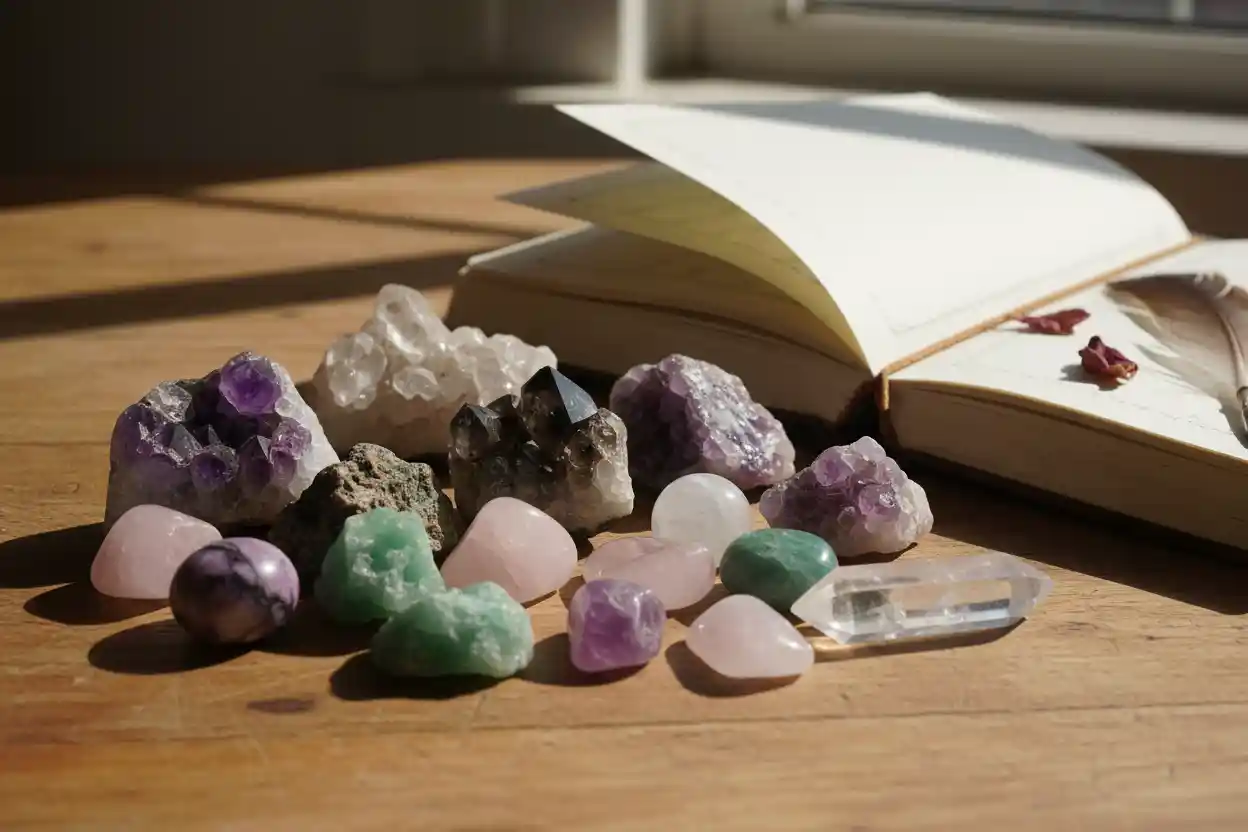
Crystals for Depression Support: 12 Essential Choices, Gentle Symbolism & Safe Limits
Crystals for depression support should only be treated as optional symbolic objects within a larger care plan. They do not treat depression, correct brain chemistry, replace psychotherapy or prescribed medication, or prevent suicidal thoughts. Depression is a real health condition that can affect mood, interest, sleep, appetite, concentration, energy, self-worth, relationships, and everyday functioning. Effective support may involve professional assessment, psychological treatment, medication for some people, social connection, structured routines, and attention to physical health.
Rose quartz, amethyst, smoky quartz, lepidolite, black tourmaline, clear quartz, sunstone, citrine, rhodonite, howlite, moonstone, and green aventurine are commonly chosen in crystal traditions because their symbolism can be connected with self-compassion, reflection, grounding, patience, boundaries, clarity, hope, and gradual change. Their safest role is simple: use a stone as a reminder to complete a real supportive action, such as taking prescribed treatment correctly, attending an appointment, eating a meal, going outside, contacting someone trustworthy, or completing one manageable task.
Rose Quartz and Rhodonite for Self-Compassion Without Minimizing Depression
Rose quartz is pink quartz traditionally associated with compassion, affection, gentleness, and self-respect. These themes can be meaningful when depression produces harsh self-criticism or a sense that ordinary struggles are personal failures.
The traditions around rose quartz healing properties can be translated into a practical reminder to use fairer language about yourself. Depression can make unfinished tasks, reduced motivation, or social withdrawal feel like evidence of worthlessness. A rose quartz stone beside a journal can symbolize challenging that conclusion.
Self-compassion does not mean pretending everything is fine. It can mean acknowledging that symptoms are making normal activities difficult while still identifying one manageable next step.
Rhodonite adds symbolism around accountability, emotional balance, relationships, and boundaries. Traditional rhodonite healing properties can support the idea that compassion and structure can exist together.
A person can treat themselves kindly while still attending treatment, responding to an important message, or asking someone for help. Compassion is not the same as abandoning every responsibility. It can make responsibilities easier to approach without constant self-attack.
Amethyst and Howlite for Slowing Overwhelming Thought Loops
Amethyst is purple quartz traditionally associated with reflection, restraint, and thoughtful decisions. Its symbolism can be useful when depression is accompanied by repetitive negative thinking.
The themes within amethyst healing properties can support a pause between having a painful thought and accepting it as unquestionably true.
A thought such as “nothing will ever improve” may feel convincing during a depressive episode. An amethyst stone can serve as a cue to write the thought down and ask whether it describes the present feeling or establishes the future as fact.
Howlite is generally white or pale gray with darker veining and is traditionally associated with patience and slowing down. The symbolism around howlite healing properties can support reducing the scale of a difficult day.
Instead of trying to fix everything, choose one action that is small enough to complete. Shower. Eat something. Open the curtains. Reply to one important message. Attend the scheduled appointment.
These actions do not cure depression, but reducing tasks into manageable steps can make daily functioning less overwhelming.
Smoky Quartz and Black Tourmaline for Grounding and Protective Boundaries
Smoky quartz ranges from light gray-brown to nearly black and is traditionally associated with grounding, practical thinking, and returning attention to the present.
Traditional smoky quartz healing properties can fit days when thinking about the entire future feels impossible. A smoky quartz stone can represent narrowing attention to the next hour rather than demanding certainty about the next year.
That might mean taking medication as prescribed, drinking water, eating, opening a window, going outside briefly, or completing one necessary task.
Black tourmaline is traditionally associated with boundaries and protection symbolism. The themes surrounding black tourmaline healing properties can be reframed around protecting limited energy rather than imagining the stone creates a shield.
Depression can make social demands and work pressures harder to manage. A black tourmaline stone can symbolize reducing unnecessary commitments, limiting interactions that repeatedly become harmful, or asking for practical support.
Healthy boundaries should support treatment and connection rather than become an excuse for complete isolation.
Lepidolite and Moonstone for Patience During Gradual Recovery
Lepidolite is a lithium-bearing mica commonly found in lilac, lavender, and gray-violet colors. Traditional symbolism often connects it with transition, patience, and adapting gradually.
The traditions around lepidolite healing properties can be meaningful because improvement from depression may not feel immediate or perfectly linear.
Some days may be easier, followed by a difficult day. That fluctuation does not automatically mean treatment has stopped working or all progress has disappeared.
Lepidolite contains lithium within its mineral structure, but touching or carrying it does not provide therapeutic lithium treatment. It should never replace prescription medication or be used as a reason to change medication without medical guidance.
Moonstone also carries symbolism around cycles, transitions, and gradual change. Traditional moonstone healing properties can represent tracking patterns without judging each day in isolation.
A person may find it useful to record sleep, mood, activity, medication adherence, major stressors, and appointments. Patterns across time can sometimes provide more useful information than one difficult afternoon.
Moonstone has feldspar cleavage and deserves protection from sharp impacts.
Sunstone and Citrine for Hopeful Action Without Forced Positivity
Sunstone is a feldspar gem traditionally associated with confidence, optimism, independence, and recognizing progress. Citrine is yellow to orange quartz commonly linked with optimism, motivation, and constructive opportunities.
Traditional sunstone healing properties and citrine healing properties can support hope only when hope remains realistic.
Depression support should never require someone to pretend to feel cheerful. Forced positivity can make a person feel more isolated if their actual experience is painful.
A sunstone or citrine routine can instead focus on one observable sign of possibility. You attended the appointment. You answered the call. You ate a meal. You completed part of a task. You asked someone to stay in contact.
These actions may look small from the outside, but they can matter significantly when depression reduces energy and motivation.
Hope does not require certainty that tomorrow will be easy. It can simply mean continuing to leave room for tomorrow to be different.
Clear Quartz for Organizing Treatment Questions and Daily Priorities
Clear quartz is traditionally associated with clarity, focus, and intention. These themes can be used safely when depression makes decisions and concentration feel difficult.
Traditional clear quartz healing properties can support a practical organization routine. Keep a written list of medications, appointments, symptoms, questions, and important contact information instead of relying entirely on memory when concentration is poor.
A clear quartz stone beside that list can represent checking the plan rather than trying to remember everything internally.
For daily tasks, choose a small number of priorities. Depression can make a long list feel impossible, and failure to complete it may reinforce self-criticism.
Completing one necessary task is more useful than creating an unrealistic schedule that becomes another source of guilt.
Green Aventurine for Small Opportunities to Reconnect With Daily Life
Green aventurine is a quartz variety traditionally associated with opportunity, growth, optimism, and openness to new experiences.
The symbolism around green aventurine healing properties can support small opportunities for engagement without pretending that social activity alone treats depression.
A person might use the stone as a reminder to accept one manageable invitation, sit outside for a short period, return to a familiar hobby, or contact someone they trust.
Depression often reduces interest in activities that previously felt rewarding. Reconnection may therefore need to begin before motivation fully returns.
The important point is scale. A small, achievable action is often easier to repeat than a dramatic attempt to transform an entire routine overnight.
Depression Requires More Than Motivation or Positive Thinking
Depression should not be explained as laziness, weakness, poor attitude, blocked energy, or failure to think positively. Symptoms can affect motivation, concentration, sleep, appetite, movement, relationships, and the ability to experience pleasure.
Telling someone simply to cheer up or be grateful can increase shame when those instructions do not change the condition.
The traditions around crystals for positivity are safer when positivity means noticing one realistic possibility rather than denying distress.
Likewise, the symbolism around crystals should never be used to tell someone that treatment is unnecessary because the condition can be solved spiritually.
Evidence-based professional care and personal spiritual or symbolic practices can coexist when the latter does not interfere with the former.
Treatment Can Include Therapy, Medication, or Both
Depression treatment varies according to symptoms, severity, personal history, physical health, preferences, and other factors. Psychological therapies can help people understand thinking patterns, behavior, relationships, coping strategies, and recurring triggers.
Medication is appropriate for some people and should be prescribed and monitored by qualified health professionals. Starting, stopping, or changing psychiatric medication without appropriate guidance can create avoidable problems.
A crystal can serve as a treatment-adherence reminder if that symbolism feels meaningful. A stone beside a medication organizer can mean follow the agreed plan. One beside a calendar can mean attend the appointment.
The crystal is not the active treatment.
The traditions around crystals for emotional healing can remain part of personal reflection while clinical treatment addresses depression directly.
Social Connection Can Help Without Becoming Pressure to Perform
Depression often encourages withdrawal, while social interaction may simultaneously feel exhausting. Support does not have to mean attending large gatherings or explaining everything to many people.
One reliable person can be enough to reduce isolation. A short call, meal with someone trusted, quiet visit, or simple message can maintain connection without requiring high social energy.
A rose quartz or green aventurine stone can symbolize contacting one person before isolation becomes complete.
Friends and family should avoid trying to debate someone out of depression. Listening, helping with practical tasks, encouraging treatment, and staying in contact can be more useful than demanding a rapid emotional change.
Professional support remains important when symptoms are persistent, severe, or worsening.
Suicidal Thoughts Require Immediate Human Help, Not Crystal Practices
Depression can sometimes involve thoughts of death, self-harm, or suicide. These thoughts should be taken seriously.
If someone is in immediate danger, has a plan to harm themselves, or may act soon, contact local emergency services or an appropriate crisis service immediately and involve another trusted person where possible. Do not leave a person at imminent risk alone when it is safe to remain with them until help arrives.
Crystals cannot prevent suicide, remove suicidal thoughts, or substitute for emergency assessment.
A stone may hold personal significance during recovery, but urgent safety needs require direct human support and appropriate professional care.
Avoid Crystal Remedies That Introduce Additional Risk
Do not ingest crystal powders, prepare homemade crystal drinks, or use stones as replacements for prescribed treatment. Some minerals may contain elements that are unsafe to consume, and treatments, coatings, adhesives, or contaminants may not be obvious.
Lepidolite deserves particular clarity because of its lithium content. Its chemistry does not make it a natural substitute for medical lithium treatment.
External symbolic use through jewelry, desk stones, palm stones, or protected display is enough.
The most useful crystal routine should lead toward something that supports wellbeing in a real way, such as contacting someone, attending care, eating, resting, going outside, or completing a manageable task.
Conclusion
Crystals for depression support can provide symbolism, structure, and reminders, but they do not treat depression. Rose quartz, amethyst, smoky quartz, lepidolite, black tourmaline, clear quartz, sunstone, citrine, rhodonite, howlite, moonstone, and green aventurine can represent compassion, reflection, grounding, patience, boundaries, clarity, hope, and gradual reconnection with daily life. Their role should remain secondary to evidence-based treatment, supportive relationships, practical routines, and immediate professional help whenever safety is at risk.
FAQs
Can crystals treat depression?
No. There is no established evidence that crystals treat depression. They can only serve as optional symbolic objects within a supportive routine.
Which crystals are traditionally associated with depression support?
Rose quartz, amethyst, smoky quartz, lepidolite, sunstone, citrine, rhodonite, and several other stones are commonly associated with supportive emotional themes.
Can amethyst reduce depression symptoms?
Amethyst is traditionally associated with reflection and calm, but it is not an established treatment for depression.
Does lepidolite work like lithium medication?
No. Carrying lepidolite does not provide a therapeutic lithium dose and should never replace prescribed lithium or another medication.
Can citrine or sunstone make someone happier?
They can symbolize hope and constructive action, but they do not directly treat low mood or create happiness.
Should someone stop antidepressants if crystals seem helpful?
No. Medication changes should be discussed with the prescribing health professional rather than based on crystal experiences.
Can crystals help someone remember self-care routines?
Yes, they can function as ordinary visual cues for actions such as eating, attending appointments, taking prescribed medication correctly, or contacting support.
Is isolation helpful when depression makes social contact tiring?
Rest can be useful, but prolonged isolation can remove important support. Small, manageable contact with trusted people may be easier than large social demands.
What should someone do if depression includes suicidal thoughts?
Seek immediate human help. If there is imminent danger or a plan to self-harm, contact local emergency or crisis services and involve a trusted person as quickly as possible.
Are crystal drinks safe for depression support?
They are unnecessary and can create avoidable risks. External symbolic use is safer.
Crystal meanings are traditional or personal practices and do not replace professional mental health assessment, treatment, or emergency care.