12 Best Crystals for Gratitude: Positive Meanings & Powerful Everyday Uses
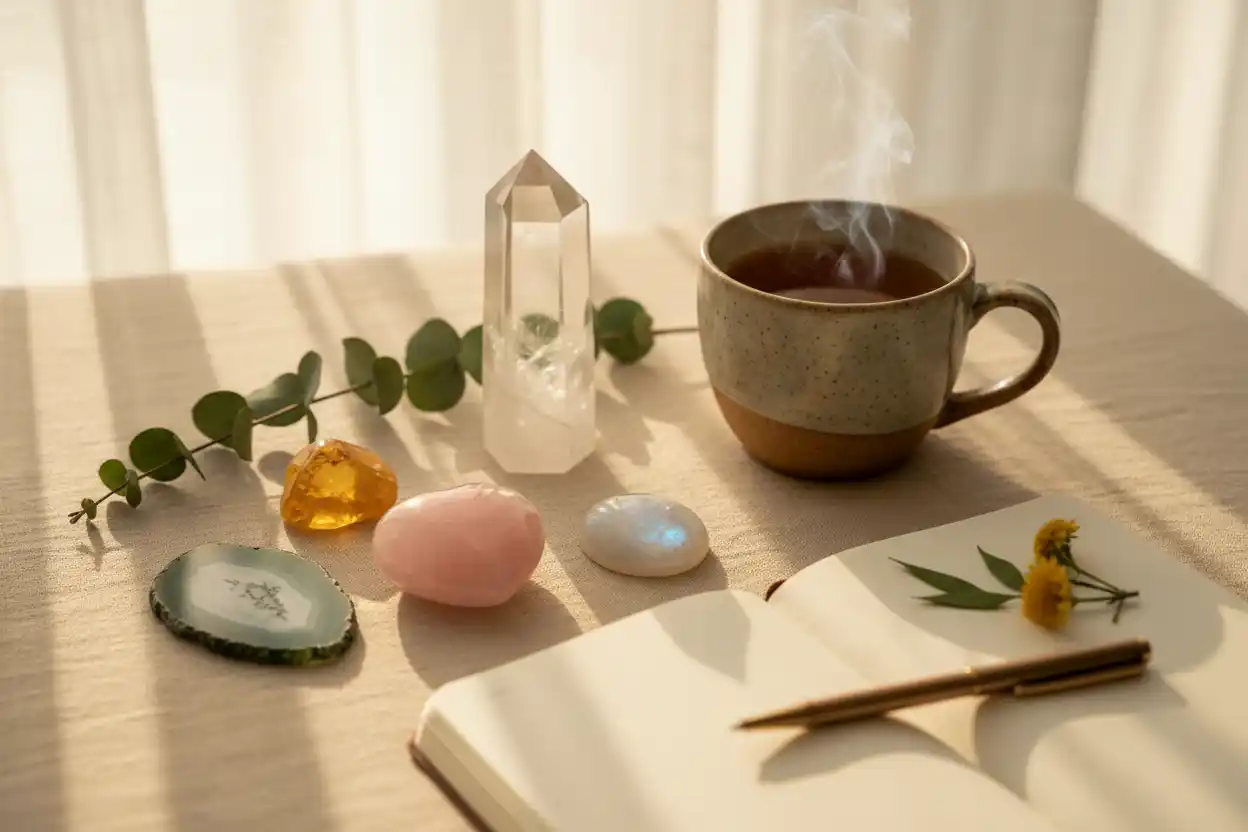
Crystals for gratitude can serve as visual reminders to notice what is already valuable, express appreciation, recognize progress, and avoid allowing familiar good things to become invisible through repetition. They do not create happiness or remove difficult circumstances. Their most useful role is behavioral: connect a stone with a concrete gratitude practice such as writing down a specific experience, thanking someone directly, noticing an ordinary comfort, or acknowledging progress that would otherwise be dismissed.
Rose quartz, citrine, green aventurine, amethyst, clear quartz, carnelian, moonstone, rhodonite, amazonite, sunstone, garnet, and moss agate offer twelve different themes for gratitude. Some suit relationships, while others fit progress, opportunities, resilience, change, or everyday experiences. Gratitude is most meaningful when it remains specific and realistic rather than becoming pressure to feel positive about everything.
Rose Quartz and Rhodonite for Gratitude in Relationships
Rose quartz is pale to medium pink quartz and is traditionally associated with affection, compassion, kindness, and emotional warmth. Those themes make it a natural choice for gratitude practices centered on people.
The symbolism around rose quartz healing properties becomes practical when the stone reminds you to express appreciation instead of merely feeling it privately. A rose quartz stone beside a phone or journal might represent sending a message to someone who helped, acknowledging a thoughtful gesture, or naming a quality you value in a friend or family member.
Specific gratitude usually carries more meaning than a general statement. Telling someone that you appreciated the way they listened during a difficult week is more personal than simply saying they are a good person.
Rhodonite adds a more complex relationship theme. Its pink color commonly appears with black manganese-oxide markings, and traditional symbolism often connects it with emotional balance, accountability, forgiveness, and maintaining healthy boundaries.
The themes within rhodonite healing properties can support gratitude without requiring a relationship to be perfect. You can appreciate someone’s loyalty while still addressing a disagreement. You can be grateful for what a relationship taught you while deciding that stronger boundaries are necessary.
That distinction keeps gratitude from becoming an excuse to ignore problems.
Citrine and Sunstone for Appreciating Progress Without Denying Difficulty
Citrine is yellow to orange quartz with Mohs hardness 7 and is traditionally associated with optimism, confidence, motivation, generosity, and prosperity symbolism. Its bright color fits gratitude practices that focus on progress.
The traditions surrounding citrine healing properties can be translated into reviewing what actually improved rather than focusing only on the distance still left to travel.
A citrine stone beside a planner might represent recording one completed task, one useful lesson, or one opportunity that appeared because of previous effort. This can be valuable during long projects where progress becomes difficult to notice from day to day.
Sunstone provides a related theme of confidence, enjoyment, independence, and recognizing personal growth. The symbolism around sunstone healing properties can support gratitude for your own effort rather than directing appreciation only outward.
People sometimes dismiss their achievements because the result was not perfect. A sunstone ritual can be as simple as naming what you handled better than before, what skill improved, or which difficult task you completed despite hesitation.
Gratitude for progress does not mean stopping improvement. It means recognizing evidence of movement before setting the next goal.
Green Aventurine and Moss Agate for Opportunities and Ordinary Growth
Green aventurine is a green quartz variety commonly associated with opportunity, optimism, growth, and good-fortune symbolism. Gratitude offers a useful way to interpret those ideas without treating the stone as a generator of luck.
The traditions around green aventurine healing properties can represent noticing opportunities that were supported by preparation, relationships, or previous decisions.
An invitation, helpful introduction, chance to learn, or unexpected opening may deserve appreciation even if the final outcome remains uncertain. Gratitude can focus on having the opportunity rather than assuming success is guaranteed.
Moss agate provides a quieter form of growth symbolism. Its translucent chalcedony body can contain green dendritic inclusions that resemble moss, branches, or small landscapes.
The themes connected with moss agate healing properties commonly emphasize patience, nature, gradual development, and steady progress. A moss agate stone can symbolize appreciation for slow changes that do not attract much attention.
This might include a habit becoming easier, a friendship becoming more comfortable, a plant growing new leaves, or a skill becoming slightly more reliable.
Not every meaningful improvement arrives dramatically.
Amethyst and Clear Quartz for Reflective Gratitude and Better Attention
Amethyst is purple quartz traditionally associated with reflection, thoughtful choices, and perspective. It fits gratitude practices that involve looking back on a day or week with enough distance to notice experiences that initially seemed ordinary.
The symbolism within amethyst healing properties can support an evening question such as, “What happened today that I would miss if it disappeared tomorrow?”
That might be a routine conversation, reliable electricity, a quiet meal, the ability to move through a familiar space, or help from someone whose contribution has become easy to overlook.
Clear quartz is traditionally connected with focus and clarity. The ideas associated with clear quartz healing properties can make a gratitude routine more precise.
Instead of writing the same three broad statements every day, choose one detail and describe why it mattered. Precision keeps the practice from becoming mechanical.
Clear quartz and amethyst both have Mohs hardness 7 and are practical for desk use, palm stones, and many jewelry styles.
Carnelian and Amazonite for Appreciating Expression and Connection
Carnelian is orange to reddish chalcedony and is traditionally associated with creativity, confidence, motivation, and action. Its symbolism can support gratitude for experiences that come from participating rather than remaining on the sidelines.
The themes around carnelian healing properties can represent appreciating the chance to make something, try a new activity, attend an event, speak up, or begin a project even when the result is imperfect.
Gratitude does not have to focus only on outcomes. You can value the opportunity to participate, learn, or practice.
Amazonite is a blue-green feldspar commonly associated with balanced communication and honest expression. The traditions surrounding amazonite healing properties can fit gratitude for conversations that create understanding.
A useful practice is to identify one interaction where somebody explained something clearly, listened carefully, offered advice, or made room for your perspective.
That can lead naturally to direct appreciation. Gratitude becomes stronger when the person who contributed to the experience actually hears about it.
Moonstone and Garnet for Gratitude During Change and Long-Term Commitment
Moonstone is a feldspar gem known for its moving sheen, called adularescence. Traditional symbolism commonly connects it with cycles, transition, adaptability, and gradual change.
The ideas around moonstone healing properties can support gratitude during periods when life is changing rather than comfortable.
A transition may involve leaving something familiar while still appreciating what it provided. Someone moving to a new city can feel excited and sad at the same time. Gratitude does not require choosing only one emotion.
Garnet adds a theme of persistence, loyalty, and long-term commitment. The traditions associated with garnet healing properties fit appreciation for people, routines, and efforts that remain reliable over time.
A garnet stone can symbolize noticing consistency that is easy to take for granted: a friend who keeps showing up, a habit maintained for months, or a relationship strengthened through repeated small actions.
These forms of gratitude often become visible only when attention shifts from dramatic events to patterns.
Gratitude Works Better When It Is Specific Rather Than Forced
A gratitude routine can become empty if every entry is vague. Writing “family, health, work” repeatedly may eventually stop requiring attention.
Specificity makes the practice more meaningful. Instead of writing that you are grateful for a friend, describe the exact conversation or action you valued. Instead of writing that you appreciate your home, identify the quiet room, reliable shelter, familiar view, or practical comfort that mattered that day.
The traditions around crystals for positivity become more useful when positivity is not treated as denying disappointment, anger, or grief.
A person can be grateful for support while still struggling. Gratitude and difficulty can exist at the same time.
This prevents the practice from becoming pressure to reinterpret every painful experience as something positive.
Turn a Gratitude Crystal Into a Daily Action Cue
Choose one stone and assign it one simple function. Rose quartz can mean thank someone. Citrine can mean notice progress. Moss agate can mean appreciate something ordinary. Clear quartz can mean make the observation specific.
Place the stone where the action naturally occurs. A desk stone works well beside a journal. A bracelet can serve as a reminder during the day. A bedside stone can mark an evening reflection routine.
The traditions around crystals for friendship fit particularly well because gratitude often strengthens relationships when appreciation is communicated rather than kept private.
The practice does not need to take long. One honest, specific observation can be more useful than filling a page with repetitive statements.
Gratitude Should Not Become Pressure to Accept Harm
Gratitude is sometimes misused as a reason to tolerate poor treatment. Being thankful for someone’s past support does not require accepting current disrespect, manipulation, or unsafe behavior.
You can appreciate what a relationship once provided and still decide that it needs distance. You can value a job opportunity while acknowledging that working conditions need to change.
A gratitude practice should expand awareness, not remove judgment.
Rhodonite and amazonite can be particularly useful symbolic reminders here because their traditional themes include boundaries and clear communication alongside warmth.
Appreciation is healthiest when it remains voluntary and realistic.
Conclusion
Crystals for gratitude can turn appreciation into a visible daily practice. Rose quartz, citrine, green aventurine, amethyst, clear quartz, carnelian, moonstone, rhodonite, amazonite, sunstone, garnet, and moss agate can symbolize relationships, progress, opportunity, reflection, communication, resilience, and ordinary growth. Their practical value comes from helping you notice something specific and, when appropriate, express that appreciation through real words or actions.
FAQs
Which crystals are traditionally associated with gratitude?
Rose quartz, citrine, green aventurine, amethyst, moss agate, and several other stones are commonly connected with appreciation, optimism, relationships, and reflection.
Which crystal can symbolize gratitude for relationships?
Rose quartz is commonly associated with affection and compassion, while rhodonite can represent appreciation alongside healthy boundaries.
Which crystal is linked with appreciating progress?
Citrine and sunstone are frequently associated with optimism, confidence, and recognizing constructive progress.
Can crystals make me feel grateful?
No. A crystal cannot directly create gratitude, but it can act as a reminder to notice and express appreciation.
How can I use a crystal in a gratitude journal?
Place one stone beside the journal and connect it with one prompt, such as naming a specific person, experience, opportunity, or small improvement you appreciated.
Is gratitude the same as positive thinking?
No. Gratitude can coexist with sadness, disappointment, frustration, or uncertainty. It does not require pretending that difficult circumstances are pleasant.
Can gratitude improve a friendship?
Expressing sincere, specific appreciation can support relationships, but the crystal itself does not change the friendship.
Which crystal suits gratitude during life changes?
Moonstone is commonly associated with cycles and transitions, making it a fitting symbol for appreciating what an earlier stage of life provided while moving forward.
Do expensive crystals create a stronger gratitude practice?
No. Price, rarity, and size do not determine symbolic usefulness. A simple stone can serve the same reminder function.
Can gratitude practices replace mental health care?
No. Gratitude can be part of a reflective routine, but persistent emotional or mental health concerns may require appropriate professional support.
Crystal meanings and gratitude associations are traditional or personal practices, not established medical or psychological treatments.