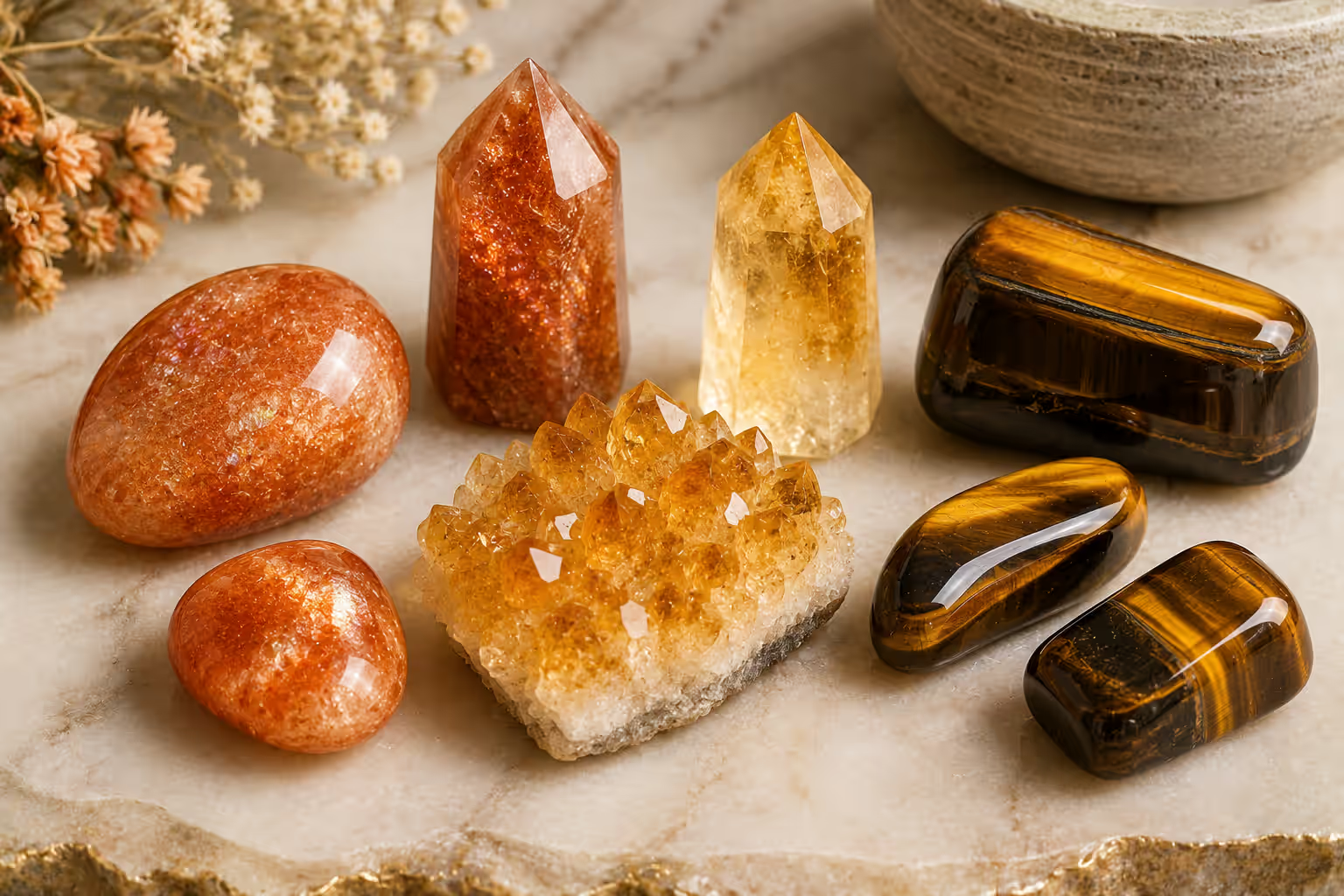
Crystals for Leo: Stone Choices, Astrological Traditions & Practical Use
Crystals for Leo are commonly chosen through birthstone traditions, Western astrology, color symbolism, modern crystal practice, and personal preference. Leo is the fifth sign of the Western zodiac and is usually associated with dates around July 23 through August 22. Traditional astrology classifies Leo as a fixed fire sign, represents it with the Lion, and assigns the Sun as its ruler. These associations explain why warm, bright, expressive gemstones appear so often in Leo crystal lists. Ruby, peridot, spinel, sardonyx, sunstone, carnelian, tiger’s eye, and citrine are among the most common choices. Astrology and crystal correspondence remain symbolic traditions rather than scientific personality systems, so no gemstone should be presented as capable of changing confidence, health, relationships, luck, leadership ability, or destiny merely because the wearer is a Leo.
Birthstone tradition gives Leo a more concrete starting point than most modern zodiac lists. July-born Leo individuals have ruby as their recognized birthstone, while August birthdays can be represented by peridot, spinel, or sardonyx. GIA recognizes ruby for July and all three of those gemstones for August. These materials differ dramatically in mineral identity, color, durability, rarity, and price. Modern astrology adds stones such as sunstone and carnelian because their warm colors and symbolic themes fit Leo’s solar and fire imagery. The Gems Lore guide to crystals for fire signs places Leo within a wider Aries-Leo-Sagittarius framework while keeping those symbolic traditions separate from measurable gemological properties.
Leo Crystals at a Glance
| Stone | Common Leo connection | Practical reason to consider it |
|---|---|---|
| Ruby | July birthstone; courage, commitment, dignity, and vitality symbolism | Very durable corundum suited to frequent jewelry wear |
| Peridot | August birthstone; optimism, renewal, and light symbolism | Distinctive yellow-green olivine with strong birthstone relevance |
| Spinel | August birthstone; resilience, confidence, and individuality symbolism | Mohs 8 durability and a broad range of attractive colors |
| Sardonyx | Traditional August birthstone; courage, structure, and communication themes | Durable chalcedony used historically for carving and signet jewelry |
| Sunstone | Solar imagery, warmth, confidence, and personal-expression symbolism | Feldspar with attractive warm colors and reflective optical effects |
| Carnelian | Creativity, initiative, visible expression, and purposeful action | Tough chalcedony suited to beads, cabochons, carvings, and jewelry |
| Tiger’s eye | Confidence, judgment, observation, and measured leadership | Durable quartz-rich material with distinctive chatoyancy |
| Citrine | Optimism, creativity, expression, and constructive confidence | Quartz durability with warm yellow-to-orange color |
This group combines established birthstone traditions with contemporary zodiac symbolism, and the distinction matters. Ruby remains July’s birthstone whether the owner follows astrology or not. Peridot, spinel, and sardonyx belong to August birthstone tradition independently of Leo. Sunstone, carnelian, tiger’s eye, and citrine enter mainly through modern symbolic practice. Their physical properties do not change according to the wearer’s birth date. A carnelian remains chalcedony, while sunstone remains feldspar and ruby remains corundum. Leo symbolism can provide a meaningful theme, but gemstone identity, treatment, durability, care, price, and appearance should guide the purchase before astrological marketing enters the decision.
Ruby Is the Most Direct July Leo Birthstone
Ruby provides the clearest traditional gemstone connection for Leo birthdays that fall in July. GIA identifies ruby as July’s birthstone and as the red variety of corundum. Chromium produces its characteristic red color, while the mineral’s Mohs hardness of 9 makes ruby one of the most scratch-resistant natural gemstones used regularly in jewelry. That combination of intense color and durability supports ruby’s long history in rings, pendants, bracelets, ceremonial objects, and important jewelry. Its practical qualities give July-born Leo buyers a strong option even without astrology. Someone who wants a daily-wear birthstone ring will usually find ruby more forgiving than softer stones such as peridot or feldspar.
Ruby symbolism also overlaps naturally with traditional Leo imagery. Across different cultures, red gemstones have accumulated associations with courage, strength, devotion, passion, authority, and vitality. GIA documents historical beliefs that linked ruby with power, youthful energy, protection, wisdom, and success in love, while modern gemology separates those traditions from physical gemstone properties. A grounded Leo interpretation can use ruby as a reminder to act with confidence while staying committed to a worthwhile responsibility. The stone cannot create charisma or leadership biologically. Readers who want the full distinction between corundum, treatments, durability, and symbolic traditions can explore ruby meaning.
Ruby Quality Matters More Than a Leo Label
A gemstone marketed as a Leo ruby still needs to be evaluated as a ruby. Color usually carries the greatest influence on appearance and desirability, while clarity, size, cut, treatment, and origin can also matter. Heat treatment is widely used in the ruby market, while other treatments can include diffusion, dye, and glass filling. GIA advises buyers to ask whether a ruby has been treated because different treatments can affect value and care requirements. A Leo-themed description does not establish whether a stone is natural, laboratory-grown, heated, filled, or imitation. Significant purchases deserve documentation appropriate to the price and claims being made.
Ruby also demonstrates why durability involves more than one number. Its Mohs hardness offers excellent resistance to scratching, yet fractures or certain treatments can increase vulnerability. Glass-filled stones require gentler cleaning than untreated or conventionally heat-treated ruby. Zodiac symbolism cannot protect a stone from impact, thermal shock, chemical exposure, or poor setting design. A secure mounting and accurate disclosure provide far more practical protection than a seller’s claim that the gemstone carries strong Leo energy.
Peridot Gives August Leo a Traditional Green Birthstone
Peridot offers one of the strongest birthstone connections for Leos born in August. GIA identifies peridot as the yellowish-green to greenish-yellow gem variety of olivine and recognizes it as an August birthstone. Unlike many gemstones whose color comes mainly from small concentrations of a separate trace element, iron belongs within peridot’s mineral chemistry and contributes directly to its characteristic green appearance. Its color can range from distinctly yellow-green to richer grass-green tones. Large attractive gems exist, although quality still depends on color, clarity, cutting, and condition.
Peridot has also accumulated symbolism involving light, optimism, renewal, generosity, and leaving resentment behind. Its historical association with sunlight makes it particularly easy to connect with Leo’s solar symbolism. GIA notes that ancient Egyptian sources referred to peridot as the “gem of the sun,” while the gem has been valued for centuries for its bright green appearance. That historical language can enrich a Leo birthstone story without proving a supernatural solar connection. A wearer may use peridot as a reminder to approach a challenge constructively or to begin again after a setback. The gemstone itself does not create optimism.
Peridot Needs More Care Than Ruby or Spinel
Peridot generally measures about 6.5 to 7 on the Mohs scale, making it less resistant to scratches than ruby or spinel. GIA also advises against steam and ultrasonic cleaning because peridot can be vulnerable to thermal shock. Warm water, mild soap, and gentle brushing provide a safer routine. These limitations do not prevent peridot from being worn as jewelry, but they make setting choice important. Earrings and pendants usually face less impact than rings, while a protected ring setting can reduce contact with hard surfaces.
This practical distinction matters because zodiac guides often place all recommended crystals on equal footing. They are not physically equal. A ruby can tolerate conditions that would be unwise for peridot, while pearl or turquoise would require still different care. Someone choosing a Leo stone for daily wear should therefore consider lifestyle before symbolism. A green peridot may carry a direct August birthstone connection, but a more durable spinel could make better sense for an exposed ring worn every day.
Spinel Gives August Leo Exceptional Color Variety
Spinel provides another recognized August birthstone option and offers one of the broadest color ranges within the Leo group. GIA documents spinel in intense red, pink, orange, purple, violet, blue, and bluish-green colors. Red spinel was historically confused with ruby, and several famous stones once called rubies were eventually identified as spinel. This history gives spinel unusual relevance for anyone interested in gemstone identification rather than only symbolism. A red Leo birthstone does not have to be ruby, and accurate mineral identification can completely change the stone’s history, rarity, and market category.
Spinel also performs well in jewelry. GIA gives it a Mohs hardness of 8 and describes it as a generally durable choice for rings and other jewelry. That places it between peridot and ruby in scratch resistance. Modern symbolism often associates spinel with resilience, renewal, confidence, and maintaining energy through difficult periods. These themes can fit Leo without reinforcing a stereotype that every Leo must be dramatic or highly extroverted. Gems Lore’s spinel meaning guide examines identification, synthetic material, treatments, colors, and symbolism in greater detail.
Spinel Is Particularly Useful for Leo Jewelry Buyers
A Leo buyer who wants vivid color and strong durability should not overlook spinel simply because ruby has greater public recognition. Fine red, pink, orange, violet, and blue spinels can display lively color without requiring the same identity as corundum. The stone’s long history of confusion with ruby also makes laboratory identification important for significant purchases. GIA notes that many historic “rubies” were actually spinels, which demonstrates how appearance alone can mislead even experienced owners. Modern testing can separate these materials reliably.
Treatment assumptions deserve care as well. Spinel has historically been associated with relatively limited treatment, but buyers should not assume every stone is untreated. Gems Lore’s spinel meaning guide discusses natural and laboratory-grown material, heat treatment, filling, and diffusion concerns. Leo symbolism can remain part of the personal story, yet documentation should control any premium based on natural rarity or unusual color.
Sardonyx Is the Historic August Option Many Leo Lists Overlook
Sardonyx is one of the three recognized August birthstones and has an especially long history as a carving and signet material. It combines layers of sard and onyx, both forms of chalcedony, producing contrasting bands that can range from brownish red and orange to white or black. GIA describes sardonyx as the oldest of the modern August birthstone choices and notes its long use for seals, cameos, intaglios, and carved jewelry. These historical uses make sardonyx particularly appropriate for someone who values tradition, craftsmanship, or symbolic continuity more than transparent faceted brilliance.
Modern interpretations frequently connect sardonyx with courage, stability, communication, partnership, and disciplined expression. GIA records historical associations with courage and protective symbolism while clearly presenting them as beliefs rather than gemological effects. For Leo, sardonyx can represent confidence that has structure behind it. A person might use a signet ring or polished piece as a reminder to speak clearly and keep commitments. The stone does not generate authority, but its historical use in seals makes that symbolism easy to understand.
Sardonyx Also Requires Treatment Awareness
Sardonyx generally ranks around 6.5 to 7 on the Mohs scale, giving it reasonable durability for many types of jewelry. GIA notes that chalcedony materials such as sardonyx may be dyed to strengthen or alter color, so treatment disclosure matters when natural appearance influences value. High heat can also affect dyed material. Warm soapy water remains a sensible cleaning choice, while aggressive heat and chemicals offer no advantage for ordinary care.
This is another area where Leo marketing can distract buyers from practical questions. A richly colored sardonyx may look visually appropriate for a fire sign, but color alone does not reveal treatment. Buyers should examine workmanship, banding, polish, condition, and disclosure before attaching importance to zodiac symbolism. The stone’s long decorative history already gives it plenty of character without unsupported claims about energy strength.
Sunstone Is the Most Obvious Modern Solar Match for Leo
Sunstone appears frequently in modern lists of crystals for Leo because both its name and appearance connect naturally with solar imagery. The term sunstone applies to feldspar materials that may show warm body color, reflective inclusions, or aventurescence. Gems Lore’s sunstone meaning guide explains that different sunstones can belong to different feldspar compositions. Some show golden or reddish sparkle from reflective inclusions, while premium Oregon material can display copper-related color and schiller. This genuine optical behavior gives the gemstone a radiant appearance that makes the Leo association visually intuitive.
Modern symbolism commonly links sunstone with confidence, warmth, independence, creativity, joy, and personal expression. Within Leo symbolism, it can represent being visible without depending entirely on praise. The Gems Lore guide to crystals for fire signs uses sunstone specifically for Leo’s themes of authentic confidence and expression. The stone does not create charisma or self-esteem, but it can become a physical reminder to express an idea because it matters rather than because attention is guaranteed.
Sunstone Should Be Chosen with Feldspar Durability in Mind
Sunstone’s warm sparkle can make it look more robust than it really is. Feldspar commonly ranks around 6 to 7 on the Mohs scale, depending on the specific material, and important cleavage directions can increase the risk of chipping after a sharp blow. Gems Lore’s verified sunstone guides emphasize protection from strong impact and recommend gentle cleaning with mild soap and lukewarm water. Pendants and earrings can therefore be more forgiving than highly exposed rings for active wearers.
A Leo-themed sunstone also deserves accurate identification. The commercial name covers multiple feldspar materials, and Oregon Sunstone represents a distinct copper-bearing market category. A seller should not charge a premium simply because an ordinary aventurescent feldspar is described as a powerful solar crystal. Evaluate color, optical effect, clarity, cut, origin claims, and treatment disclosure before considering the astrological story.
Carnelian Fits Leo Creativity and Visible Expression
Carnelian is one of the most common modern crystals for Leo because its orange, red-orange, and reddish-brown colors match the visual language of fire and warmth. Mineralogically, carnelian is a variety of chalcedony made from extremely fine quartz-rich silica. Gems Lore’s carnelian meaning guide places its hardness around 6.5 to 7 and identifies iron-bearing compounds as the main source of its color. The material has been used extensively for beads, seals, carvings, cabochons, and jewelry, making it practical as well as symbolically appropriate.
Modern carnelian symbolism centers on purposeful action, creativity, confidence, courage, expression, and beginning before conditions feel perfect. Those themes can suit a Leo who wants a stone connected with creative work or public expression. A grounded practice might associate carnelian with completing a first draft, rehearsing a presentation, or showing finished work to an audience. The stone does not biologically create creativity. Its value lies in turning the object into a reminder to perform the behavior that creative progress actually requires.
Carnelian Can Represent Confidence Without Constant Performance
Leo stereotypes often focus heavily on visibility, attention, or performance. That can make crystal advice overly simplistic. Carnelian does not need to represent being louder or more dominant. It can instead symbolize authentic participation. Someone might use the stone before presenting work, asking a question, introducing themselves, or expressing an opinion that matters. A quieter Leo can use the same symbolism without trying to become an extrovert.
The verified Gems Lore carnelian meaning guide makes an important distinction between confidence and guaranteed success. Preparation, experience, communication, and realistic self-assessment produce usable confidence. Carnelian can mark the point where preparation becomes action. It cannot guarantee approval, applause, promotion, romantic attention, or creative success. This interpretation protects the useful symbolic theme without turning it into magical certainty.
Tiger’s Eye Adds Judgment to Leo Confidence
Tiger’s eye gives Leo symbolism a useful balancing quality because modern traditions connect it with courage, observation, discernment, focus, and practical judgment. Physically, tiger’s eye is a quartz-rich material whose aligned fibrous structures produce chatoyancy, the moving band of reflected light that resembles an eye. The Gems Lore guide to tiger’s eye meaning explains how this genuine optical effect inspired modern symbolism involving watchfulness and reconsidering assumptions.
For Leo, tiger’s eye can represent confidence that still checks evidence. Leadership becomes more useful when someone can distinguish conviction from certainty and attention from approval. A polished tiger’s eye might serve as a cue before a consequential decision: examine the risks, listen to criticism, and then act once enough evidence supports the choice. The stone cannot reveal hidden motives or guarantee good judgment. Its moving band simply provides a memorable visual metaphor for changing perspective.
Citrine Brings Warm Color Without Repeating Ruby
Citrine is another popular modern Leo crystal because its yellow, gold, and orange tones complement solar and fire symbolism. It belongs to the quartz family and generally ranks 7 on the Mohs scale, giving it practical durability for many jewelry formats. Its warm color has encouraged symbolism involving optimism, confidence, creativity, visibility, and constructive forward movement. These themes overlap with Leo imagery while providing a very different appearance from ruby or carnelian.
Citrine is particularly useful when the symbolic goal involves expressing possibility rather than intensity. A person may choose it to represent presenting an idea with enthusiasm while remaining realistic about evidence and limits. Treatment awareness still matters because much commercial citrine is produced by heating amethyst or related quartz material. The symbolic value does not become stronger or weaker according to treatment in any scientifically measurable way. Buy the stone for accurate identity, appearance, price, and disclosed treatment first.
Leo Is a Fixed Fire Sign, but the Classification Is Symbolic
Traditional Western astrology classifies Leo as fixed fire and places it under the rulership of the Sun. Within that system, fire commonly symbolizes expression, action, vitality, confidence, and creative momentum. The fixed quality is interpreted through consistency, persistence, and maintaining direction. These ideas explain why ruby, sunstone, carnelian, citrine, and tiger’s eye appear repeatedly in Leo crystal lists. Their colors and symbolic traditions fit the astrological language naturally.
The classification does not establish personality scientifically. A Leo is not guaranteed to be confident, creative, theatrical, loyal, proud, stubborn, generous, attention-seeking, or dominant. Human behavior reflects far more than a birth date. Zodiac symbolism works best as an optional reflective framework rather than a diagnosis. Crystals should therefore be chosen for the actual person instead of an assumed Leo stereotype.
July and August Give Leo Four Traditional Birthstone Options
Leo crosses two calendar months and therefore has four straightforward birthstone choices. Ruby represents July, while August has peridot, spinel, and sardonyx. GIA recognizes all four within modern birthstone tradition. This diversity makes a separate zodiac stone unnecessary for anyone who prefers traditional birthstone jewelry. A July Leo can choose ruby, while an August Leo can decide among green peridot, multicolored spinel, or banded sardonyx.
The choices also cover several price and style categories. Ruby can range from commercial material to exceptionally valuable fine gems. Peridot offers bright green color and is often more accessible. Spinel provides a broad palette and strong durability. Sardonyx works especially well for signets, carvings, and patterned jewelry. No one option is more authentically Leo. Birthstone tradition provides the connection, while personal preference determines which material makes sense.
Red Is Not the Only Leo Crystal Color
Leo lists often become dominated by red, orange, and gold because of the sign’s fire and solar symbolism. Those colors work well visually, but they should not become rules. Peridot gives August Leo a legitimate bright green birthstone, while spinel can appear pink, violet, blue, or other colors. Sardonyx introduces layered brown, white, orange, and black. Even ruby varies through different red tones rather than one universal shade. GIA documents the broad color range of spinel and the characteristic green of peridot.
This variety matters for buyers who dislike traditional “Leo colors.” A person does not need to wear orange or red because of a birth sign. Choose a gemstone that works with clothing, skin tone, personal style, jewelry metal, and daily use. Zodiac color symbolism should add enjoyment rather than create restrictions.
How to Choose the Best Crystal for Leo
Begin with the physical purpose of the stone. A ring worn every day needs greater resistance to scratching and impact than a pendant displayed occasionally. Ruby offers outstanding hardness at 9, while spinel performs strongly at 8. Peridot sits lower at roughly 6.5 to 7, and sardonyx is also around 6.5 to 7. Sunstone has cleavage concerns typical of feldspar, while quartz-rich carnelian and tiger’s eye generally tolerate ordinary handling well.
After durability narrows the options, consider meaning. Ruby can represent commitment, sunstone may symbolize authentic confidence, carnelian can stand for creative action, and tiger’s eye can represent judgment. Peridot may symbolize renewal, while spinel can mark resilience. Choose one theme that corresponds to a real goal. A specific symbolic role makes the stone easier to use than a vague promise to “increase Leo energy.”
Leo Crystal Jewelry Should Match the Wearer’s Lifestyle
Someone who works with tools, machinery, sports equipment, or frequent hand contact should think carefully before choosing a softer gemstone ring. Ruby and spinel generally offer stronger scratch resistance than peridot or sunstone. Pendants and earrings reduce much of the contact that hand-worn stones face. Sardonyx and carnelian also work well in signet designs, cabochons, and beads because their fine-grained structures accept a smooth polish.
Care requirements also affect practicality. GIA advises warm soapy water for peridot and warns against steam or ultrasonic cleaning because of thermal shock risk. Spinel generally handles jewelry wear well, while ruby care depends partly on treatments. A meaningful Leo stone should fit the wearer’s routine rather than demand constant anxiety about damage.
Leo Crystals for Confidence
Sunstone, carnelian, ruby, and tiger’s eye can each represent a different form of confidence. Sunstone may symbolize being visible without requiring constant approval. Carnelian can represent starting or presenting creative work. Ruby may symbolize commitment to a valued responsibility. Tiger’s eye can stand for confidence balanced by observation and judgment. This creates a richer framework than treating all four stones as interchangeable “confidence crystals.”
Confidence should also remain grounded in preparation. A person giving a presentation can rehearse, check facts, anticipate questions, and then use a stone as a final reminder to participate fully. The mineral does not produce competence. It can simply mark the transition from preparation to action. That approach fits Leo symbolism without claiming that anyone born under the sign naturally possesses or lacks confidence.
Leo Crystals for Creativity
Carnelian, sunstone, and citrine are frequent modern choices for creative symbolism because their warm colors evoke activity, expression, and visibility. Carnelian can represent beginning before perfection arrives. Sunstone can symbolize expressing something authentically rather than producing only what attracts praise. Citrine can represent optimism during experimentation. These roles work particularly well for writers, designers, musicians, performers, and anyone developing a project that must eventually leave the planning stage.
Creativity still depends on making things. A stone cannot provide an original idea on demand or guarantee artistic success. Use the object as a cue to perform a specific creative behavior. Draft the page, record the demo, sketch the composition, practice the scene, or build the prototype. Symbolism becomes useful when it leads toward a visible action instead of remaining an abstract promise.
Leo Crystals for Leadership
Ruby and tiger’s eye make a strong symbolic pairing for leadership because they represent different sides of the role. Ruby can stand for commitment, courage, and responsibility. Tiger’s eye can represent observation, risk awareness, and the willingness to reconsider an assumption. A leader who has only confidence may become inflexible, while judgment without willingness to act can create paralysis. The pairing therefore works best as a reminder of balance.
Leadership also involves listening. Leo stereotypes sometimes overemphasize command, visibility, or dominance. A healthier symbolic practice asks whether people have enough information, whether criticism contains something useful, and whether a decision serves the goal rather than the leader’s image. Crystals cannot create these skills. They can only represent the standards someone chooses to practice.
Leo Crystals for Recognition and Approval-Seeking
Sunstone has an especially useful role when Leo symbolism involves visibility. Modern traditions connect it with personal radiance and authentic confidence, but the most grounded interpretation separates expression from dependence on approval. Someone might use sunstone as a reminder to ask whether a decision reflects genuine values or merely seeks praise. That question can be useful for anyone, regardless of zodiac sign.
Recognition is not inherently unhealthy. Creative work, leadership, professional achievement, and public communication naturally involve being seen. Problems arise when approval becomes the only measure of worth. A symbolic Leo practice can therefore focus on producing work that meets meaningful standards before considering applause. The stone marks the intention; feedback, craft, and behavior determine the outcome.
Leo Crystals for Staying Grounded
Tiger’s eye and sardonyx can provide a more structured counterbalance to the warm, expressive stones often recommended for Leo. Tiger’s eye emphasizes observation and practical judgment, while sardonyx carries traditions involving stability, courage, and disciplined communication. These themes can be useful when excitement or strong conviction makes it harder to review evidence carefully.
A grounded Leo practice might use tiger’s eye before major decisions and sardonyx during long commitments. Ask what facts support the decision, what risks remain, and what would cause a reasonable person to reconsider. This does not imply that Leo people are uniquely impulsive or proud. The practice simply uses zodiac symbolism to make a universal decision-making skill more memorable.
Leo Crystals for Relationships
Ruby, sardonyx, and peridot can create a relationship-focused symbolic set without making promises about another person’s behavior. Ruby can represent commitment and direct affection. Sardonyx may symbolize communication and partnership. Peridot can stand for renewal or letting go of accumulated resentment. These interpretations become useful when connected with actions such as listening, apologizing, stating a need clearly, or maintaining a reasonable boundary.
No gemstone can force loyalty, attraction, reconciliation, or emotional availability. Relationships depend on the decisions of everyone involved. A ruby ring can symbolize a commitment, but people must maintain that commitment through behavior. Peridot can represent a fresh start, but it cannot erase harm or make forgiveness mandatory. Symbolism remains healthiest when it supports consent, reciprocity, honesty, and practical communication.
A Small Leo Crystal Set Is Usually Enough
A useful Leo crystal collection does not need every warm-colored stone on the market. Three materials can cover several distinct themes. Sunstone might represent authentic confidence, tiger’s eye can symbolize judgment, and ruby may stand for commitment. Another combination could use carnelian for creative action, peridot for renewal, and sardonyx for structure. August-born Leos may prefer peridot and spinel, while July-born individuals might build the entire practice around ruby.
The Gems Lore guide to crystals for fire signs follows a similar principle by distinguishing energizing stones from balancing ones. More crystals do not create scientifically stronger effects. A smaller collection usually makes each symbolic role clearer, reduces unnecessary spending, and simplifies physical care.
Do Not Pay a Premium for Unsupported “Leo Energy” Claims
Terms such as “Leo activated,” “Sun charged,” “zodiac programmed,” or “high-frequency Leo crystal” are not gemological grades. They do not establish natural origin, treatment, quality, rarity, durability, or measurable energy. A commercial piece of quartz remains quartz regardless of the language printed on its packaging. The same applies to ordinary feldspar, chalcedony, or spinel.
Evaluate what the stone physically is. Check identity, color, cut, polish, fractures, treatment, setting quality, and price. Valuable ruby or spinel may justify laboratory documentation. Peridot should be examined for clarity and damage. Sunstone claims involving Oregon origin or exceptional copper-related color deserve evidence appropriate to the premium. Symbolism can remain personal after those practical questions are answered.
Natural, Treated, and Laboratory-Grown Stones Can All Carry Symbolism
A gemstone’s physical origin and its personal meaning answer different questions. A laboratory-grown ruby may share the essential crystal structure and composition of natural ruby while forming through a manufactured process. Natural ruby remains geologically scarce in a way laboratory production does not reproduce. Treatments create another distinction because they alter appearance or clarity without necessarily changing the mineral species. GIA emphasizes treatment disclosure when ruby value or care depends on the process used.
A person can still use a treated or laboratory-grown stone as a Leo symbol if they understand what they bought. The ethical requirement is accurate representation. Natural rarity should not be claimed for manufactured material, and treatment should not be hidden when it affects value. Symbolic meaning does not excuse inaccurate gem descriptions.
Crystals for Leo Should Not Become Health Claims
No reliable scientific evidence shows that ruby, peridot, spinel, sardonyx, sunstone, carnelian, tiger’s eye, or citrine can treat disease because of a Leo association. Historical sources sometimes attributed medicinal or protective effects to gemstones, and GIA documents many of these beliefs when discussing birthstone lore. Those traditions belong to history and belief rather than modern clinical evidence.
A gemstone can still support a harmless reflective routine. Carnelian might mark the start of a creative session, while tiger’s eye could remind someone to assess risk before acting. Persistent physical or psychological symptoms require appropriate professional assessment instead of a gemstone substitute. Zodiac symbolism becomes more credible when it respects that boundary.
Practical Ways to Use Leo Crystals
A Leo crystal practice works best when each object is tied to an observable action. Place carnelian beside creative materials and begin one defined task when you notice it. Use tiger’s eye near a decision notebook and write down the main evidence before committing. Wear sunstone during a presentation as a reminder to focus on the work rather than audience approval. Keep peridot near a journal and connect it with one constructive change after a setback.
These routines require no assumption that minerals emit personality-changing energy. People regularly use objects, jewelry, photographs, colors, and symbols as reminders. The measurable effect comes from attention and behavior. A stone becomes meaningful because the person gives it a role and then repeatedly acts on that role.
Caring for a Mixed Leo Crystal Collection
A mixed Leo collection may contain materials with very different physical tolerances. Ruby and spinel are relatively hard, while peridot and feldspar-based sunstone scratch more easily. Sardonyx, carnelian, tiger’s eye, and citrine fall within quartz-related hardness ranges but still benefit from separate storage when finished surfaces could rub against harder gems. Peridot deserves additional protection from thermal shock, while some sardonyx may be dyed.
Use separate soft pouches or compartments when possible. Avoid throwing different stones loose into one container. Identify treatments before applying heat, ultrasonic cleaning, chemical solutions, or prolonged exposure to harsh conditions. Physical care preserves a gemstone far more effectively than any cleansing ritual associated with zodiac practice.
Conclusion
Crystals for Leo can begin with established birthstone traditions rather than relying entirely on modern zodiac correspondence. Ruby gives July-born Leos a durable and historically important gemstone, while August-born Leo individuals can choose peridot, spinel, or sardonyx. Modern crystal practice adds sunstone, carnelian, tiger’s eye, citrine, and other stones whose colors or symbolic themes connect with warmth, creativity, confidence, expression, judgment, and renewal. These traditions can be personally meaningful without becoming scientific claims about personality or fate.
The strongest choice starts with the actual gemstone. Consider mineral identity, treatment, durability, care, color, price, jewelry design, and personal taste. Then decide whether the symbolism supports a useful intention. Ruby can represent commitment, sunstone may symbolize authentic confidence, carnelian can mark creative action, tiger’s eye can represent judgment, and peridot may stand for renewal. One carefully chosen stone with a clear purpose usually provides more meaning than a large Leo collection purchased only because every piece matches a zodiac list.
Frequently Asked Questions
What is the best crystal for Leo?
There is no universally correct best crystal for every Leo. Ruby has the strongest traditional connection for July-born Leos because it is July’s recognized birthstone. August-born Leos can choose peridot, spinel, or sardonyx. GIA recognizes all four month-based birthstone associations. Modern zodiac practice also favors sunstone, carnelian, tiger’s eye, and citrine. The best choice depends on birthday month, color preference, durability, jewelry use, budget, and which symbolic theme feels personally useful. No Leo needs one specific mineral because of personality stereotypes.
Is ruby a Leo birthstone?
Ruby is the July birthstone, so it has a direct traditional connection with Leo birthdays that fall during July. GIA identifies ruby as red corundum and gives corundum excellent practical durability, with a Mohs hardness of 9. Historical symbolism involving courage, power, passion, commitment, and vitality also fits many modern Leo interpretations. Those symbolic associations are cultural rather than scientifically demonstrated effects. A July Leo can choose ruby because of birthstone tradition, beauty, durability, symbolism, or a combination of those reasons.
What are the birthstones for an August Leo?
Peridot, spinel, and sardonyx are the recognized August birthstones. GIA lists all three for the month. Peridot is the yellow-green to green gem variety of olivine. Spinel occurs in numerous colors and provides excellent jewelry durability at Mohs 8. Sardonyx combines contrasting layers of sard and onyx within the chalcedony family. These options give August Leos very different appearances and price ranges. A buyer can choose based on personal style rather than assuming one stone is astrologically superior to the others.
Is sunstone the main crystal for Leo?
Sunstone is one of the strongest modern symbolic matches for Leo because Leo is traditionally ruled by the Sun and sunstone carries obvious solar imagery. The connection is astrological and symbolic rather than a birthstone rule. Sunstone belongs to the feldspar family and can display warm colors, aventurescence, or reflective schiller depending on the material. The Gems Lore guide to sunstone meaning connects the stone with confidence, warmth, independence, and expression while distinguishing those meanings from physical gem properties. Ruby, peridot, spinel, and sardonyx have stronger calendar-based birthstone connections for Leo.
Is peridot a good crystal for Leo?
Yes, particularly for Leos born in August because peridot is one of the recognized August birthstones. GIA identifies it as gem-quality olivine and notes its historic association with sunlight. Modern symbolism commonly connects peridot with optimism, renewal, generosity, and releasing resentment. These themes can fit Leo symbolism without implying a scientifically measurable astrological effect. Peridot is softer than ruby or spinel, so rings and other high-contact jewelry need more care.
Is spinel a Leo birthstone?
Spinel is an August birthstone and therefore has a direct traditional connection with many Leo birthdays. GIA recognizes spinel alongside peridot and sardonyx for August. It occurs in red, pink, orange, purple, violet, blue, and other colors and ranks 8 on the Mohs hardness scale. Its history is especially interesting because several famous stones long described as rubies were eventually identified as spinels. Modern symbolism involving resilience, confidence, and renewal can add a Leo theme, but its birthstone status does not depend on astrology.
What is sardonyx, and why is it connected with Leo?
Sardonyx is a banded chalcedony material that combines sard-colored layers with onyx. It is one of the traditional August birthstones, which gives it a direct connection with August-born Leos. GIA documents its long history in seals, cameos, intaglios, and signet jewelry. Historical and modern symbolism includes courage, communication, structure, and partnership. Sardonyx does not create these qualities, but its signet and carving history makes it a meaningful option for someone who prefers tradition over a transparent faceted gemstone.
Is carnelian good for Leo?
Carnelian is one of the most popular modern Leo crystals because its orange-to-red color and symbolic themes fit fire-sign imagery. It is a chalcedony material within the quartz family and generally offers good practical durability. The verified Gems Lore guide to carnelian meaning connects the stone with purposeful action, creativity, confidence, courage, and expression while keeping those associations separate from medical claims. A Leo might use carnelian as a reminder to start creative work or present an idea. The stone itself does not create confidence or guarantee recognition.
Is tiger’s eye a good Leo crystal?
Tiger’s eye works well as a balancing Leo stone because modern symbolism emphasizes confidence together with observation and practical judgment. Its moving optical band is a real chatoyant effect produced by aligned structures in quartz-rich material. The Gems Lore guide to tiger’s eye meaning uses that appearance as a metaphor for reconsidering assumptions and examining risk. A Leo might choose tiger’s eye before an important decision or leadership situation. It cannot predict outcomes or reveal another person’s intentions, but it can symbolize confidence that remains open to evidence.
What color crystal is associated with Leo?
Red, orange, yellow, and gold appear frequently in modern Leo crystal lists because astrology classifies Leo as a fire sign ruled by the Sun. Ruby, carnelian, sunstone, and citrine fit that warm palette naturally. However, Leo has no mandatory gemstone color. August birthstone peridot is green, while spinel can be blue, violet, pink, orange, or red. Personal style should matter more than forcing every Leo stone into a warm-color scheme.
What Leo crystal is best for confidence?
Sunstone, carnelian, ruby, and tiger’s eye can all symbolize confidence in different ways. Sunstone can represent authentic visibility, while carnelian may symbolize taking action after preparation. Ruby can stand for commitment and courage. Tiger’s eye can represent confidence balanced by judgment. None has been scientifically shown to increase self-esteem or charisma. A practical approach connects the stone with a specific action, such as rehearsing before a presentation, sharing finished creative work, or making a decision after reviewing the evidence.
What Leo crystal is best for creativity?
Carnelian and sunstone are two strong symbolic options. The Gems Lore carnelian meaning guide connects carnelian with creativity, purposeful action, and beginning before perfection, while sunstone meaning emphasizes warmth, independence, and personal expression. Citrine can also symbolize optimism during experimentation. None of these stones produces creativity biologically. Their practical use comes from assigning the gemstone to a repeatable creative behavior such as drafting, practicing, sketching, recording, or prototyping.
What Leo crystal is best for leadership?
Ruby and tiger’s eye make a useful symbolic combination for leadership. Ruby can represent responsibility, commitment, and courage, while tiger’s eye may symbolize observation, judgment, and risk assessment. A leader needs both willingness to act and willingness to reconsider a decision when evidence changes. Crystals cannot create leadership skills. Communication, competence, empathy, accountability, and experience develop those abilities. The stones can serve as reminders of the standards the wearer wants to practice.
Can Leo wear several crystals together?
Yes. There is no gemological rule preventing a Leo from wearing several stones together when the jewelry is safely constructed and the materials receive appropriate care. A balanced combination might use sunstone for confidence, tiger’s eye for judgment, and ruby for commitment. Another could pair carnelian with peridot to symbolize action and renewal. The Gems Lore guide to crystals for fire signs recommends balancing energizing stones with more reflective choices rather than simply increasing intensity. More crystals do not create scientifically stronger effects.
Which Leo birthstone is best for everyday jewelry?
Ruby and spinel provide the strongest overall scratch resistance among the main Leo birthstones. Ruby ranks 9 on the Mohs scale, while spinel ranks 8. Peridot sits around 6.5 to 7 and requires more care, particularly around impact and thermal shock. Sardonyx is also around 6.5 to 7 and works especially well in cabochons, carvings, and signet-style designs. The final choice should consider treatment, setting, daily activities, and whether the jewelry will face frequent hand contact.
Are crystals for Leo scientifically proven to affect personality?
No reliable scientific evidence shows that ruby, peridot, spinel, sardonyx, sunstone, carnelian, tiger’s eye, citrine, or another gemstone changes personality because someone is a Leo. Gemology can test composition, crystal structure, optical effects, hardness, treatments, and origin. Astrology and crystal correspondence belong to symbolic and cultural systems. A gemstone can still carry meaningful personal symbolism. Someone may use ruby to represent commitment or tiger’s eye to represent judgment, but the behavior comes from the person rather than from a zodiac-specific force produced by the mineral.