Sunstone Price: 9 Essential Value Factors, Smart Buying & Costly Mistakes
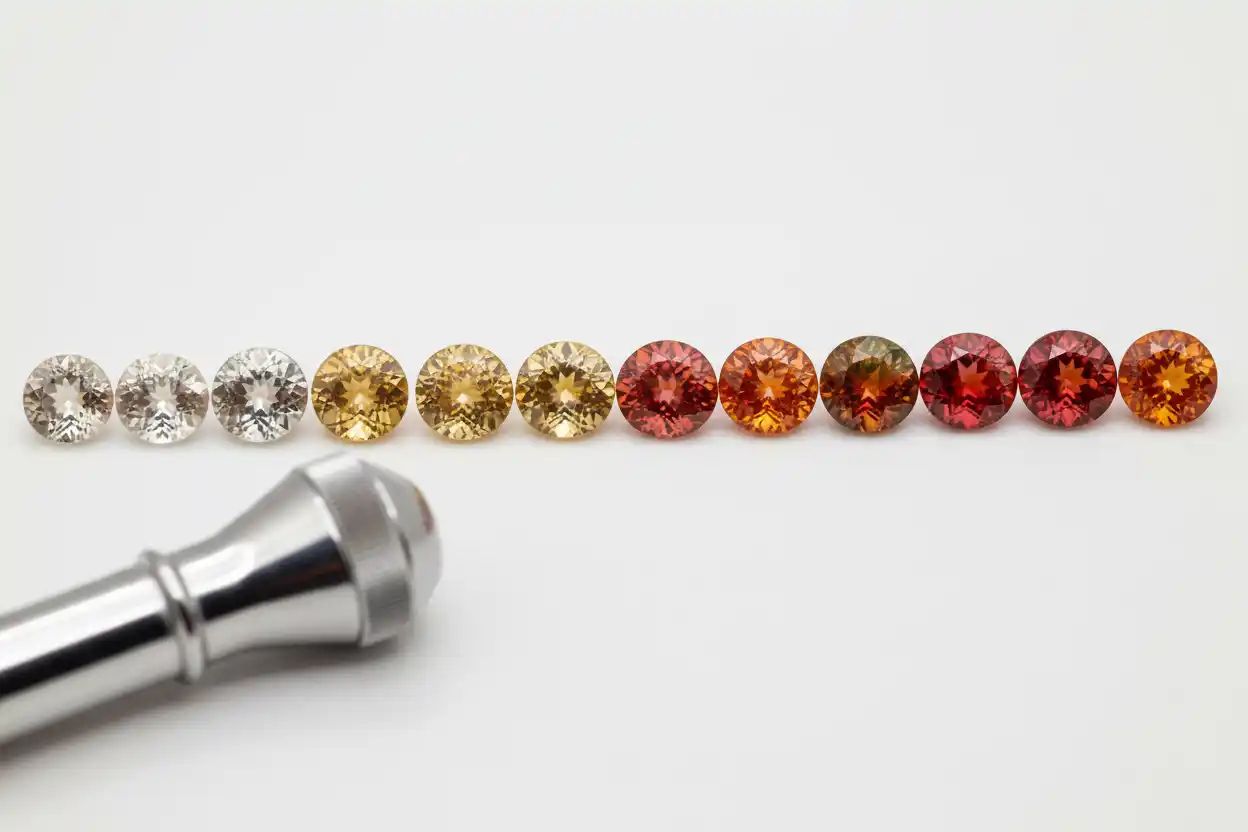
Sunstone price can range from roughly $5 to $15 per carat for many ordinary translucent Indian stones to several hundred dollars per carat for fine Oregon sunstone. Current specialist listings show champagne and peach Oregon gems around $100 per carat, stronger bicolor, red, raspberry, and green stones around roughly $150 to $400 per carat, and exceptional teal or sharply defined multicolor gems reaching approximately $600 to $750 per carat. Rare top examples can sit even higher.
That enormous spread exists because the sunstone name covers stones with very different origins, colors, transparency, inclusions, cutting, and rarity. A translucent orange feldspar from India should not be priced against a transparent red-green Oregon collector stone. The most reliable way to judge value is to identify the exact category first and then compare stones with similar color, clarity, schiller, size, cut, and provenance.
Current Sunstone Price Per Carat: Retail Examples From Common to Fine Oregon Gems
Current loose-stone inventories illustrate the market clearly. A 2.32 ct translucent reddish-orange Indian sunstone is offered around $14.19, approximately $6 per carat. Ordinary orange stones from the same market commonly remain in the single digits or low teens per carat.
Oregon sunstone quickly moves higher. A 1.25 ct champagne stone is currently offered around $125, or $100 per carat. A 1.85 ct bicolor stone at $277 works out to about $150 per carat, while a 2.33 ct raspberry stone priced at $466 is about $200 per carat. A 3.36 ct red-schiller gem at $1,008 and a 3.48 ct green stone at $1,044 each sit around $300 per carat.
At the premium end of current specialist listings, a 1.29 ct red Oregon sunstone offered for $516 reaches $400 per carat. A 3.20 ct teal stone offered at $2,240 is about $700 per carat, while a 3.10 ct tricolor gem listed at $2,325 reaches approximately $750 per carat.
The sunstone price per carat therefore needs a quality label attached to every number.
| Current loose sunstone example | Retail asking price | Approx. price per carat | Market position |
|---|---|---|---|
| 2.32 ct translucent reddish-orange, India | $14.19 | $6/ct | Common commercial sunstone |
| 1.25 ct champagne Oregon sunstone | $125 | $100/ct | Entry premium Oregon color |
| 1.85 ct Oregon bicolor | $277 | $150/ct | Attractive bicolor tier |
| 2.33 ct Oregon raspberry | $466 | $200/ct | Strong specialty color |
| 3.36 ct Oregon red schiller | $1,008 | $300/ct | Fine red with copper effect |
| 3.48 ct Oregon green | $1,044 | $300/ct | Scarce green collector tier |
| 1.29 ct Oregon red | $516 | $400/ct | Strong saturated red |
| 3.20 ct Oregon teal | $2,240 | $700/ct | Rare high-end color |
| 3.10 ct Oregon tricolor | $2,325 | $750/ct | Exceptional multicolor collector tier |
These figures are retail asking prices from current listings, not a fixed industry schedule. Exact prices overlap because cutting, color distribution, clarity, schiller, size, and seller positioning differ from stone to stone.
Common Indian Sunstone Price: Why Orange and Reddish Stones Stay Affordable
Most inexpensive sunstone seen in bead shops and general gem inventories is far less costly than fine Oregon sunstone. Indian sunstone commonly appears orange, reddish orange, peach, or brownish and may show glitter caused by reflective inclusions. Translucent stones are widely available in calibrated cabochons and simple faceted shapes.
Current loose-gem listings frequently place these stones around roughly $5 to $15 per carat, with some transparent or better-cut examples moving somewhat higher. Large size does not necessarily create a major premium because supply is relatively abundant and transparency can remain limited.
These stones can still be attractive jewelry choices. Their lower price reflects supply, color rarity, transparency, and market demand rather than suggesting that they are somehow defective. A warm orange cabochon with lively aventurescence may offer excellent decorative value even though it occupies a completely different market from rare Oregon green or red.
Price comparison fails when the two categories are mixed. An online search for sunstone may show a $15 Indian cabochon next to a $1,000 Oregon collector gem, and both prices can be reasonable for what they represent.
Oregon Sunstone Price: Why Copper-Bearing Feldspar Commands a Premium
Oregon sunstone earns higher prices because it combines limited geographic supply with an unusual range of naturally occurring colors and optical effects created by copper. Pale champagne and yellow stones are more available, while fine red, green, teal, bicolor, and tricolor stones are progressively harder to replace.
Not every Oregon stone is expensive. Pale or lightly colored gems can remain reasonably accessible, especially in smaller sizes. Price rises as color becomes stronger, rarer, and more evenly displayed face up.
Fine Oregon sunstone also benefits from an untreated market identity. Natural copper-related color is a central part of its appeal, especially after artificial copper diffusion became known in feldspar from other sources. Credible Oregon provenance therefore carries real economic weight when the gem is strongly colored.
The gemstone certification question becomes most important at the upper end, where red, green, teal, or unusual multicolor appearance can add hundreds of dollars per carat.
Red Oregon Sunstone Price: Saturation and Transparency Drive the Premium
Red is one of the strongest Oregon sunstone color categories. Pale peach-red stones may trade around moderate prices, while intensely saturated transparent red can command several hundred dollars per carat. Current specialist listings include fine red stones around $200 to $400 per carat, with stronger or larger collector gems capable of moving higher.
The premium depends on how the red is distributed. A stone with a small red patch occupying only part of a pale face should not automatically receive the same rate as a gem whose face-up appearance is dominantly vivid red. Tone matters as well. Dark brown-red stones can lose brightness, while bright red or raspberry colors tend to attract more attention.
Schiller changes the evaluation. Copper platelets can create beautiful red or copper flashes, but dense schiller may reduce transparency. Some buyers favor clean transparent red, while others prefer dramatic copper sparkle. Both can be valuable when the effect is visually strong and the cutting makes good use of it.
Green and Teal Oregon Sunstone Price: Rarity Can Outweigh Red
Fine green Oregon sunstone is rarer than common champagne or orange colors, and high-quality teal or blue-green stones can occupy the upper end of the market. Current specialist listings show green examples around $300 per carat and rare teal stones near $700 per carat.
Color purity is critical. A strongly gray, brown, or yellow-green stone may trade well below a clean vivid green even when both are marketed under the same color name. Transparency and face-up brightness amplify the premium.
Teal and green also interact with pleochroism and color zoning, so the stone may shift noticeably when rotated. Skilled cutting can orient the most desirable direction toward the viewer. This makes cut quality especially important because the same rough crystal can produce very different finished value depending on orientation.
The sunstone quality grading framework is therefore essential when evaluating rare green color. Hue alone does not establish a high price.
Bicolor and Tricolor Sunstone Price: Color Pattern Matters as Much as Rarity
Bicolor and tricolor Oregon sunstones can command substantial premiums because they combine scarce colors within one crystal. Red-green, teal-orange, green-pink, and watermelon-style patterns can be particularly attractive when the zones are distinct and the cut presents them intentionally.
Current offerings show bicolor stones around roughly $150 to $400 per carat across several quality levels, while exceptional tricolor gems can approach $750 per carat in specialist inventories. These numbers vary widely because the quality of the pattern matters enormously.
A gem with two weak colors separated awkwardly across the face may not be as desirable as a single-color vivid red. By contrast, a transparent red-green stone with strong contrast and balanced zoning can earn a much stronger premium.
Specialty cutting can add further value when the cutter positions the color boundary through the center, creates symmetry around a red core, or uses a fantasy cut that emphasizes copper inclusions. At that point, the asking price reflects both gem rarity and lapidary skill.
Sunstone Schiller Value: When Copper Sparkle Adds or Reduces Price
Aventurescence can increase value when the reflective copper pattern is attractive, well oriented, and visually balanced. Fine schiller may appear as bright copper flashes, a glowing reflective sheet, or scattered metallic sparkles that become obvious as the stone moves.
The effect does not have one fixed price premium. A champagne sunstone with strong schiller may be worth more than a similar stone without it, while an exceptional transparent red or green gem may command a higher price even with little obvious sparkle.
Heavy schiller can also reduce transparency. If copper inclusions become so dense that the stone appears cloudy or opaque, the gem moves toward a phenomenal or cabochon market rather than a transparent faceted-stone market. That may still be highly collectible, but comparisons must stay within the same visual category.
Orientation is crucial. A strong copper flash visible only from the side contributes less to face-up value than schiller that appears naturally from the main viewing position.
Sunstone Clarity, Cut, and Carat Weight Price Differences
Clarity affects price differently depending on the stone. Transparent red, green, and multicolor Oregon sunstones generally benefit from high clarity, while visible copper inclusions are expected in stones valued for schiller. Fractures, clouds, and poor polish should not be confused with desirable aventurescence.
Cut affects both brilliance and the display of color. Oregon rough often contains localized color zones, so a skilled cutter may sacrifice weight to center the strongest color. This can make a smaller finished gem more valuable per carat than a heavier stone that preserved pale areas.
Carat weight creates a stronger premium when rare color and transparency survive into larger sizes. Large pale champagne sunstone can remain moderately priced, while a large vivid green or red-green stone becomes much harder to replace.
Dimensions should therefore accompany every weight comparison. A deep stone carrying hidden weight may cost more in total without looking larger face up.
Sunstone Origin, Treatment, and Documentation Price Effects
Origin is unusually important in this market because Oregon is associated with verified natural copper-bearing gem feldspar. The combination of geographic scarcity, copper-related color, and untreated reputation supports a meaningful premium.
Copper diffusion has been used to alter pale feldspar from other sources, so a strongly colored red or green stone with uncertain provenance should not receive an Oregon price automatically. Clear mine or dealer history is valuable, and independent laboratory work can be justified when the price becomes significant.
Treatment disclosure also affects confidence. Natural Oregon sunstone is generally sold without color enhancement, while feldspar from other sources may have a different treatment history. A buyer paying several hundred dollars per carat should know exactly which claim supports the price.
The labradorite price offers a useful contrast because Oregon sunstone may belong to the labradorite portion of the feldspar family, yet ordinary labradorite and rare copper-bearing Oregon stones do not share the same price structure.
Sunstone Durability, Condition, and Jewelry Price
Sunstone has moderate hardness but also cleavage, so condition matters when evaluating previously mounted or frequently worn gems. Chipped girdles, bruised corners, worn facets, and surface scratches should reduce value compared with a crisp stone of similar color and size.
The crystal hardness chart helps explain why an expensive Oregon sunstone deserves more protective wear than sapphire or spinel. A pendant or earrings may preserve condition more easily than a frequently worn ring.
Finished jewelry also cannot be compared directly with loose-gem prices. Gold, platinum, accent diamonds, design, craftsmanship, and retail margin may account for a substantial part of the total cost. Dividing an entire ring price by the center sunstone’s carat weight does not produce a useful loose-stone value.
Sunstone Retail Price vs Resale Value
Fine Oregon sunstone has a collector audience, but a retail asking price should not be treated as a guaranteed resale figure. Retailers provide selection, cutting, photography, provenance, inventory, customer service, and return privileges. A private seller may receive less when reselling the same stone.
Rare color can improve desirability. Strong red, fine green, teal, vivid bicolor, and exceptional tricolor stones are generally easier to distinguish from ordinary stock than pale champagne gems. Precision cutting and credible provenance can also make a stone more appealing to collectors.
The do gemstones hold value question should still be approached realistically. Buy fine sunstone for its beauty, rarity, optical character, and collectibility rather than assuming that a high retail price guarantees appreciation.
How to Decide Whether a Sunstone Price Is Fair
Identify the category first. Determine whether the stone is common Indian sunstone, pale Oregon sunstone, schiller Oregon sunstone, fine red, green, teal, bicolor, tricolor, or another clearly defined type. Then compare stones with similar transparency, color intensity, cut quality, size, treatment disclosure, and provenance.
The buy sunstone process should begin with visual quality rather than the lowest price. A $10 orange sunstone can be excellent value if you want an attractive common gem. A $1,000 Oregon stone can also be reasonable if it combines a rare color pattern, strong transparency, precision cutting, and credible origin.
When one stone costs several times more than another, identify the reason. Rare color, balanced zoning, exceptional size, fine cutting, or clear provenance may justify the difference. A vague label such as investment grade does not.
Conclusion
Sunstone price ranges from only a few dollars per carat for common translucent orange stones to hundreds of dollars per carat for fine Oregon red, green, teal, bicolor, and tricolor gems. Current specialist offerings show the highest premiums when rare color, transparency, effective cutting, attractive copper effects, size, and credible Oregon provenance occur together. Compare stones within the correct category and judge value by visible quality rather than the sunstone name alone.
FAQs
How much does sunstone cost per carat?
Common translucent Indian sunstone often appears around $5 to $15 per carat. Oregon sunstone can range from roughly $100 per carat for attractive champagne stones to several hundred dollars per carat for fine red, green, teal, and multicolor gems.
Why is Oregon sunstone expensive?
Fine Oregon sunstone combines limited supply with naturally occurring copper-related colors and optical effects. Strong red, green, teal, bicolor, and tricolor stones are much scarcer than ordinary orange sunstone.
How much is red Oregon sunstone worth?
Current specialist listings place many attractive red examples around roughly $200 to $400 per carat, although exceptional stones can exceed that range depending on saturation, transparency, size, and cutting.
Is green Oregon sunstone more valuable than red?
Fine green and teal can be rarer than red and may command equal or higher prices. Individual color strength, transparency, size, and cut remain decisive.
How much does bicolor Oregon sunstone cost?
Current retail examples range widely, with many bicolor stones around roughly $150 to $400 per carat and exceptional multicolor gems moving considerably higher.
Does schiller make sunstone more valuable?
Attractive, well-oriented schiller can add value, particularly when it complements the body color. Excessively dense inclusions may reduce transparency, so more sparkle does not automatically mean a higher price.
Is ordinary orange sunstone expensive?
Usually not. Common translucent orange and reddish-orange sunstone can often be purchased for only a few dollars to the low teens per carat.
Does sunstone price increase with size?
Size adds the strongest premium when rare color, clarity, and cutting remain excellent. Large pale or included stones may remain relatively affordable compared with much smaller vivid Oregon gems.
Is untreated Oregon sunstone worth more?
Its naturally occurring color and untreated reputation contribute to collector appeal. The strongest premiums still depend on visible color, clarity, cut, size, and credible provenance.