Alexandrite Ring: Styles, Quality & Buying Tips
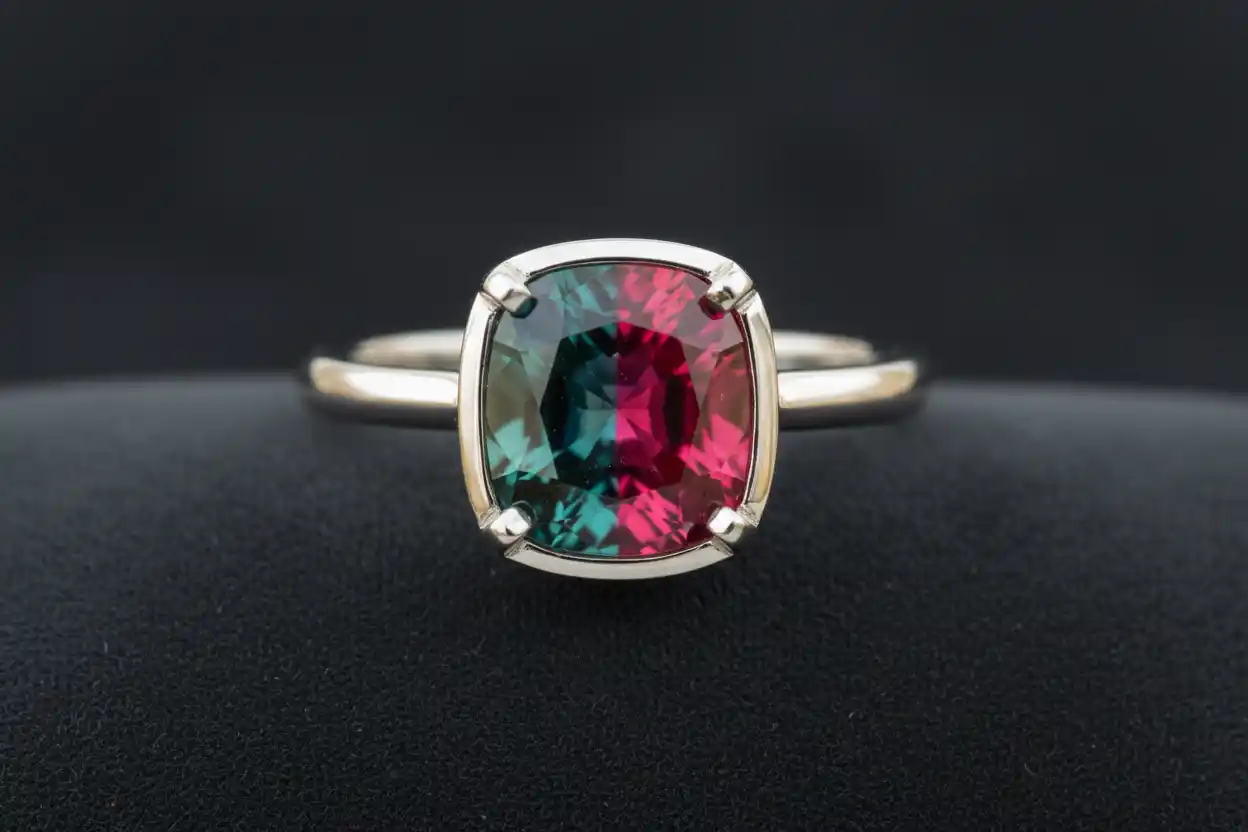
An alexandrite ring combines one of the most distinctive optical phenomena in colored gemstones with the jewelry form that exposes a stone to some of the greatest everyday wear, which means a good purchase depends on far more than choosing the largest color-changing gem within your budget. Fine alexandrite can appear green or bluish green under daylight-type illumination and shift toward red, purplish red or raspberry under warmer light, while the constant movement of the hand allows those colors and transitional shades to appear throughout an ordinary day.
Alexandrite is also unusually well suited to ring use because it belongs to the chrysoberyl family, reaches approximately 8.5 on the Mohs scale, has excellent toughness and lacks cleavage, giving it a combination of scratch resistance and impact tolerance that many rarer colored gemstones cannot match. Those properties make an alexandrite ring practical for frequent wear, including engagement and anniversary jewelry, although a sufficiently hard impact can still chip a stone and a poorly constructed setting can fail long before the alexandrite itself does.
Natural material adds another layer to the buying decision because fine alexandrite becomes exceptionally scarce when strong color change, attractive colors, transparency, good cutting and useful size occur together. Laboratory-grown alexandrite can provide a larger and cleaner stone with similarly dramatic color-changing behavior for much less, so natural origin should be treated as a rarity and value characteristic rather than as a requirement for making beautiful jewelry.
The strongest alexandrite ring therefore balances color change, gemstone identity, setting protection, face-up beauty, fit, craftsmanship and realistic budget rather than maximizing one characteristic at the expense of everything else.
Alexandrite Ring at a Glance
| Factor | What to Look For |
|---|---|
| Gemstone | Color-change variety of chrysoberyl |
| Mohs hardness | About 8.5 |
| Toughness | Excellent |
| Cleavage | None |
| Defining feature | Noticeable color change under different light spectra |
| Desirable daylight appearance | Green, bluish green or attractive teal-green |
| Desirable warm-light appearance | Red, purplish red or raspberry |
| Practical ring settings | Bezel, low prong, halo, solitaire and three-stone |
| Daily-wear priority | Low-to-moderate profile with protected edges |
| Main construction concern | Prongs, gallery, shank and setting height |
| Main authenticity concern | Synthetic alexandrite or simulants sold as fine natural material |
| Natural vs. lab-grown | Must be disclosed clearly |
| Engagement-ring suitability | Very good physically |
| Main sizing issue | Wide bands and stone-set shanks can complicate resizing |
| Routine care | Lukewarm water, mild soap and gentle cleaning |
Is Alexandrite Good for a Ring?
Alexandrite is one of the stronger choices among rare colored gemstones for ring use because the mineral combines a high Mohs hardness with excellent toughness and no cleavage, which reduces several of the durability problems associated with softer or strongly cleaving gems. Its position around 8.5 on the Mohs scale means ordinary household abrasion is less likely to scratch it than stones such as quartz, feldspar, opal or peridot, although diamond, sapphire and other harder materials can still damage its surface under the right conditions.
Hardness should not be confused with indestructibility, because a ring receives concentrated impacts that earrings and pendants seldom experience, while the setting itself introduces mechanical weak points that have nothing to do with the gemstone’s mineral hardness. A bent prong, worn gallery wire or cracked solder joint can release a perfectly intact alexandrite, so the durability of an alexandrite ring must always be assessed as the durability of the complete piece.
The distinction between scratching and breaking is especially useful when comparing potential ring stones, and the broader gemstone toughness vs. hardness guide explains why a high Mohs number alone does not describe every type of damage a gem may experience.
For practical purposes, alexandrite is durable enough for frequent wear when the ring is sensibly designed, professionally set and periodically inspected.
Why Ring Design Matters More Than It First Appears
An alexandrite ring concentrates the gemstone on a part of the body that regularly touches desks, handles, bags, furniture, gym equipment and countless other hard surfaces, so setting architecture should respond to the way hands are actually used rather than merely to how the ring looks in a product photograph. A tall exposed center stone may create an impressive profile from the side, but the extra height also increases leverage when the setting catches on clothing or receives a sideways impact.
A lower design can reduce those risks while remaining visually elegant, particularly when a bezel, partial bezel, halo or sturdy basket protects vulnerable portions of the gemstone. The goal is not to hide an alexandrite beneath unnecessary metal, but to place enough structure around it that normal daily movement does not turn every minor collision into a repair concern.
This is what differentiates a genuinely useful alexandrite ring guide from a generic list of jewelry styles: the setting must respond to the stone’s rarity, the ring’s impact exposure and the way the wearer uses their hands.
Color Change Should Lead the Buying Decision
The defining characteristic of an alexandrite ring is not carat weight, geographic origin or even clarity, but the quality of the gemstone’s color change across distinctly different light sources. Fine material is traditionally prized when an attractive green or bluish-green daylight appearance becomes an attractive red or purplish-red warm-light appearance, although genuine natural stones can show less textbook transitions involving olive, yellow-green, brownish red, violet or raspberry tones.
The best evaluation considers three related questions at the same time: how attractive the first color is, how attractive the second color is, and how clearly the gemstone transitions between them. A stone that changes dramatically from dull olive to muddy brown can be genuine alexandrite while remaining far less desirable than a slightly smaller gem that shifts between lively blue-green and saturated raspberry-purple.
For that reason, an alexandrite ring should be viewed under more than one type of illumination before purchase whenever possible, while online buyers should request images or continuous video of the actual stone rather than relying solely on dramatically processed split-screen photographs.
The alexandrite buying guide explores the gemstone-level evaluation in greater depth, while ring selection adds the separate questions of setting, fit and long-term wear.
Modern Lighting Makes Color Evaluation More Complicated
The familiar description “green by day and red by night” is useful shorthand, but alexandrite does not respond to the clock; it responds to the wavelengths available in the light falling on the gemstone. Modern LED lamps vary substantially in spectral output, so the same alexandrite ring can appear greenish under one indoor LED, purple under another and noticeably redder beneath a warmer incandescent-style source.
This variability is normal and should be expected rather than interpreted immediately as evidence that the stone is defective or fake. It also means that a buyer who expects one perfectly binary green-to-red switch in every room may be disappointed even by genuine fine material, because transitional colors are part of the real viewing experience.
A good seller should therefore demonstrate the stone honestly under more than one lighting environment instead of relying on a single dramatic pair of photographs.
Alexandrite Solitaire Ring
A solitaire alexandrite ring places one gemstone at the center of the design, which makes it one of the most efficient ways to allocate a limited budget toward natural material because more of the purchase price can go toward the actual quality of the alexandrite rather than toward several matching stones or elaborate accent work. This approach can be particularly sensible when a smaller gem has exceptional color change, since the clean design gives the stone enough visual separation to remain the obvious focal point.
Prong solitaires expose more of the outline and can create a lighter visual appearance, while bezel solitaires offer additional protection and a smoother profile. A well-built basket beneath the stone should support the setting without trapping so much debris that ordinary cleaning becomes unnecessarily difficult.
When choosing a solitaire, look at the alexandrite first and the setting second, because a highly polished ring cannot compensate for a center gemstone whose colors remain dark or unattractive in normal light.
Bezel-Set Alexandrite Ring
A bezel surrounds most or all of the gemstone’s perimeter with metal, making it one of the strongest setting choices for an alexandrite ring intended for frequent wear because exposed edges are reduced and the overall profile can be kept relatively smooth. This design is particularly practical for people who work with their hands, wear gloves frequently or simply dislike prongs catching on clothing.
The trade-off is that excessive metal can visually reduce the apparent size of an already small natural alexandrite, especially when a heavy rim overlaps too much of the crown. Good bezel workmanship therefore requires precision: enough metal must remain to hold the stone securely, but the setting should not make the gemstone look buried.
A partial bezel can provide a useful compromise by protecting the most exposed portions while leaving other sides more open.
Prong-Set Alexandrite Ring
A prong-set alexandrite ring leaves more of the stone visible and can make a modest center gem appear more open, bright and prominent, but the reliability of the design depends on prong placement, metal thickness and maintenance rather than on simply choosing four prongs or six. A beautifully made four-prong setting can be safer than a poorly executed six-prong setting whose tips are thin, uneven or inadequately seated.
Look closely at each contact point and check whether every prong sits securely against the gemstone without an obvious gap. The tips should be smooth enough not to snag fabric, while the underlying basket should hold the stone in a stable position rather than relying entirely on delicate upper prongs.
Because a ring receives repeated contact, prong condition should be checked periodically even when the gemstone itself looks perfect.
Four Prongs vs. Six Prongs
Four prongs expose more of the gemstone’s perimeter, which can make a small alexandrite ring appear slightly larger and allow more of the outline to remain visible. Six prongs add additional points of contact, which can provide useful redundancy around a round or oval center stone when the design is proportionate.
Neither option is automatically superior.
A six-prong setting made from extremely thin metal may provide less real security than four substantial, well-positioned prongs, while poorly proportioned extra metal can obscure a small gem without adding meaningful strength. The quality of the craftsmanship matters more than the numerical count.
Low-Profile Alexandrite Ring
A low-profile alexandrite ring keeps the gemstone closer to the finger, reducing the amount of leverage created when the ring strikes or catches an object while also making the piece easier to wear beneath gloves and through ordinary daily activities. This architecture is particularly useful for engagement rings intended for frequent wear because practicality matters every day, not only when the ring is viewed from the side.
The setting should still allow sufficient access for cleaning beneath the center stone, since skin oil, soap and lotion can accumulate around the pavilion and reduce visible brightness. A very low enclosed design may be protective but frustrating to maintain if residue cannot be removed without professional cleaning.
The best low setting balances impact protection with adequate access.
High-Set Alexandrite Ring
A high-set alexandrite ring places the center gemstone above the finger, creating a more prominent silhouette and potentially allowing a straight wedding band to sit closely beside the engagement ring. That architectural advantage can make high settings attractive in bridal jewelry, but increased height also increases the likelihood of snagging and creates more leverage when the ring receives a sideways force.
If a valuable natural alexandrite is set high, the supporting structure should be correspondingly substantial, with a well-designed gallery and prongs that do not depend on extremely thin metal for visual delicacy. A ring that looks elegant in a static photograph but constantly catches on sleeves is poorly matched to frequent wear.
Choose setting height according to actual lifestyle rather than appearance alone.
Alexandrite Halo Ring
A halo alexandrite ring surrounds the center stone with smaller accent gems, usually diamonds, creating a larger overall visual footprint without requiring the buyer to move into the sharply higher price categories associated with large fine natural alexandrite. This can be one of the most effective designs for a sub-carat natural center stone because the rare gem remains the focal point while the surrounding accents supply additional brightness and scale.
The halo should complement rather than disguise the center.
If brilliant diamonds make the alexandrite appear unusually dark, muddy or lifeless, the setting may be emphasizing a weakness rather than improving the design. Examine the center gemstone by itself before deciding whether the complete alexandrite ring looks impressive.
A good halo enlarges presence.
It does not manufacture gemstone quality.
Three-Stone Alexandrite Ring
A three-stone alexandrite ring can use three alexandrites or combine one alexandrite with two neutral or contrasting side stones, and these two approaches produce very different buying challenges because matched natural alexandrites are difficult to assemble. Three gemstones need to coordinate not only in dimensions and cutting but also in daylight color, warm-light color, tone, saturation and strength of change.
Exact duplication is not necessary, and slight natural variation can give the ring character, but one stone should not remain olive while the other two become vivid raspberry unless the difference is deliberately part of the design. Using diamonds as side stones avoids much of this matching difficulty while keeping the budget concentrated on one higher-quality natural center.
For buyers who specifically want three natural alexandrites, compare all three stones together under the same light sources before committing to the ring.
Alexandrite Engagement Ring
An alexandrite ring is physically capable of serving as an engagement ring because chrysoberyl’s hardness, excellent toughness and absence of cleavage give it stronger daily-wear characteristics than many colored gemstones traditionally considered for bridal jewelry. Its rarity and color change also provide a distinctive alternative for someone who values unusual gemology more than conventional diamond appearance.
Budget requires realistic expectations, however, because fine natural alexandrite becomes expensive quickly as size increases. A buyer wanting a visibly substantial center stone may need to choose between a smaller natural gem with geological rarity and a larger laboratory-grown alexandrite with stronger visual presence at a much lower price.
Neither option is inherently wrong.
The important requirement is that origin is disclosed clearly and priced accordingly.
Natural Alexandrite vs. Lab-Grown for an Engagement Ring
Natural alexandrite formed geologically and derives much of its market value from rarity, while laboratory-grown alexandrite is synthetic chrysoberyl created under controlled conditions and can reproduce the same fundamental mineral identity and color-changing phenomenon without natural scarcity. In practical ring use, both materials can provide the hardness and toughness associated with chrysoberyl when the stones are structurally sound.
A lab-grown alexandrite ring can therefore make excellent daily jewelry for someone who prioritizes color change, size and durability over geological origin. A natural alexandrite ring makes more sense for a buyer who specifically values rarity, collecting significance or the idea of a naturally formed gemstone.
The decision should be explicit rather than implied.
Alexandrite Wedding Bands and Eternity Rings
Alexandrite can also be used in wedding bands, anniversary rings and stackable designs, particularly when smaller stones are set across the upper portion of the band. A partial-set or half-eternity alexandrite ring keeps most gemstones away from the underside of the finger, where repeated contact with hard surfaces creates more wear and where future resizing is usually easier.
A full eternity ring looks continuous but introduces several long-term compromises because stones and settings extend around the entire circumference, exposing some gemstones to direct contact with desks, tools and surrounding objects. Resizing can also become difficult or impossible without substantial reconstruction, particularly when the ring contains a carefully matched suite of natural alexandrites.
If future size changes are a realistic possibility, a partial-set design often provides greater flexibility.
Ring Size Matters More With Wide Bands
A narrow alexandrite ring and a wide band carrying the same numerical size can feel noticeably different because wider rings cover more skin and require more internal space for equivalent comfort. This becomes important with substantial halo designs, stacked bridal sets and wide anniversary rings, where ordering the wearer’s normal size without accounting for band width can create an unexpectedly tight fit.
Finger size also changes during the day with temperature, activity and fluid retention, so a ring should be tested under realistic conditions rather than judged after one quick fitting. The goal is enough security that the alexandrite ring does not slide off easily, while avoiding a fit so tight that normal daily swelling becomes uncomfortable.
Professional sizing is particularly worthwhile before ordering an expensive custom setting.
Ring Spin and Top-Heavy Designs
A large or high-set alexandrite ring can rotate around the finger when the center assembly is substantially heavier than the shank, particularly if the ring is slightly loose or the wearer’s knuckle is much wider than the base of the finger. Constant spinning is more than an aesthetic annoyance because the gemstone may repeatedly strike surrounding surfaces as the setting moves toward the palm.
Possible solutions include improving fit, slightly widening the shank, adjusting weight distribution or using internal sizing features where appropriate. The correct solution depends on hand shape and ring construction, so permanent modifications should be discussed with a competent jeweler rather than attempted through generic sizing accessories alone.
A ring that stays correctly oriented is usually both more comfortable and better protected.
Can an Alexandrite Ring Be Resized?
Many simple alexandrite ring designs can be resized, although the safe adjustment range depends on metal, shank construction, gemstone placement and the amount of change required. A plain solitaire with an unadorned lower shank is generally easier to modify than a full eternity band, heavily engraved ring or design with stones extending far down the shoulders.
Large size changes may distort the head, affect side-stone alignment or alter tension within the setting, which is why resizing should not be treated as a routine afterthought for expensive jewelry. If you expect future adjustment, choose a design that preserves sufficient plain metal at the bottom of the shank.
Resizability is part of long-term value.
Best Shapes for an Alexandrite Ring
Natural alexandrite rough is valuable enough that cutters often prioritize orientation and weight retention rather than forcing every crystal into a standardized outline, so ovals, cushions, rounds, pears and mixed cuts all occur while individual proportions can vary more than buyers accustomed to commercial diamonds might expect. The best shape is therefore the one that presents attractive color change, useful face-up dimensions and sufficient protection in the intended ring design.
Shape should support the stone.
It should not outrank color quality.
Oval Alexandrite Ring
Oval cuts are especially common because they can provide useful face-up spread while preserving valuable rough efficiently, and their elongated outline works naturally in solitaires, halos and three-stone settings. Examine the center carefully for excessive darkness or a pronounced bow-tie effect, while also checking whether the outline looks balanced rather than distorted by aggressive weight retention.
A well-cut oval can make a modest natural alexandrite appear visually larger than its carat weight suggests.
Round Alexandrite Ring
A round alexandrite ring offers symmetry and fits easily into conventional solitaire, bezel and halo settings, but cutting a round can require more removal of irregular rough than an oval or cushion, which may make fine natural rounds less common in certain sizes. Because natural alexandrite is expensive, cutters may accept small proportion compromises that would be less understandable in abundant material.
Judge brightness and color change before demanding theoretical perfection.
The finished visual result matters most.
Cushion Alexandrite Ring
Cushion cuts combine softened corners with square or rectangular outlines, making them particularly attractive for halo and vintage-inspired alexandrite ring designs. Natural stones can have individualized proportions because the cutter is balancing shape, weight retention and color orientation within rare rough.
Check whether the center remains bright and whether the corners receive adequate setting protection.
A cushion should look intentionally proportioned rather than simply deep.
Pear-Shaped Alexandrite Ring
Pear cuts create a distinctive elongated profile and can make an alexandrite ring feel more individual than conventional round or oval designs, although the pointed tip requires deliberate protection because narrow points are more vulnerable to chipping from direct impact. A V-prong, bezel section or other properly engineered protection should shield the tip without overwhelming the stone.
The pear should also sit straight within the setting.
A visibly tilted gemstone can indicate poor craftsmanship or a mounting that does not fit the stone properly.
Step-Cut Alexandrite Ring
Step cuts emphasize broad flashes and geometric structure rather than the rapid scintillation associated with brilliant-style faceting, which can suit transparent alexandrite with attractive body color while making inclusions, windowing and cutting asymmetry easier to notice. Because color change remains the defining feature, a step-cut stone should still look appealing under both cooler and warmer illumination rather than relying on the elegance of the outline alone.
Large windows are particularly distracting in rare colored stones because they can weaken apparent saturation.
Metal Choice for an Alexandrite Ring
White gold, platinum, yellow gold and rose gold can all work with alexandrite because the gemstone’s changing appearance responds differently to each visual environment, while the best choice depends on design, budget, skin sensitivity and desired contrast. White metals provide a relatively neutral frame around both cool and warm sides of the color change, whereas yellow and rose gold introduce warmer surrounding tones that can create stronger contrast with green daylight colors.
Metal choice should also be structural.
Very delicate architecture may not be appropriate simply because a particular alloy can technically be made thin.
The setting needs enough material to survive years of ring wear.
White Gold
White gold creates a bright neutral-looking background and pairs easily with diamond accents, which can make green and raspberry alexandrite colors appear clean and distinct. Because white gold alloys and surface finishes vary, maintenance requirements can differ, particularly when rhodium plating is used to create a brighter white appearance.
The metal should be chosen for its complete wearing characteristics rather than color alone.
Yellow Gold
Yellow gold can provide warm visual contrast against the green side of an alexandrite ring while blending more naturally with red and purple appearances under warmer illumination. This changing relationship between stone and metal can make the ring look noticeably different throughout the day, which some buyers find especially appealing.
The gemstone should still be evaluated independently because attractive metal cannot compensate for weak color change.
Rose Gold
Rose gold can complement raspberry and purplish-red alexandrite colors particularly well, creating a softer overall palette under warm light while producing stronger contrast when the gemstone appears green. Because this interaction depends heavily on the specific alexandrite, viewing the actual stone against the intended metal is preferable when commissioning an expensive custom piece.
There is no universally correct metal for alexandrite.
Platinum
Platinum can be an excellent choice for a high-value natural alexandrite ring because it provides a naturally white setting and can support substantial, durable construction, although the metal’s density increases overall weight and usually raises cost. A well-designed platinum setting can be particularly appropriate for a rare center gem where long-term security matters more than minimizing the amount of metal used.
Craftsmanship still determines performance.
Metal reputation alone does not guarantee a secure setting.
Alexandrite With Diamond Side Stones
Diamonds are common companions because their relatively neutral color keeps the alexandrite’s changing appearance visually dominant while adding brightness around a small natural center stone. A three-stone alexandrite ring with diamond sides also avoids the difficulty and expense of assembling multiple natural alexandrites with matching color-change behavior.
The stones should be positioned so that diamond edges do not repeatedly rub against the alexandrite during wear, particularly in articulated or unusually open designs. Diamond’s greater hardness means direct contact can damage chrysoberyl over time.
Proper spacing is part of good setting design.
Natural Alexandrite Ring
A natural alexandrite ring contains color-change chrysoberyl that formed through geological processes, and its market position depends heavily on scarcity because transparent stones with strong attractive color change become progressively harder to find as individual size increases. Natural origin does not guarantee fine quality, however, since genuine alexandrite can still be pale, included, dark or dominated by olive and brown tones.
For a significant natural purchase, examine the actual stone rather than buying the word “natural.”
Natural describes origin.
It does not grade beauty.
Laboratory-Grown Alexandrite Ring
A laboratory-grown alexandrite ring can offer excellent practical value when the buyer prioritizes visual impact, durability and strong color change while placing less importance on geological rarity. True synthetic alexandrite is laboratory-grown chrysoberyl rather than glass or an unrelated imitation, so it can share alexandrite’s core mineral properties while costing substantially less than an equivalent-looking natural gemstone.
Laboratory growth should be stated clearly in the listing, invoice and any accompanying description.
A synthetic gemstone becomes problematic only when its origin is hidden or misrepresented.
Synthetic Alexandrite vs. Simulants
The phrase “synthetic alexandrite” refers to laboratory-grown chrysoberyl, whereas a simulant is a different material that imitates alexandrite’s appearance without sharing the same mineral identity. Color-change synthetic sapphire is especially important because it can create dramatic changes and has historically appeared in jewelry described casually as alexandrite.
The distinction can be difficult to establish from photographs, which is why the real vs. fake alexandrite guide focuses on the diagnostic problem separately.
A strong color change proves that a stone changes color.
It does not prove that it is natural alexandrite.
Vintage Alexandrite Rings Need Careful Authentication
An old alexandrite ring can be genuine antique jewelry while containing a laboratory-grown or imitation gemstone, because historical trade terminology was not always as precise as modern gemological disclosure and color-change synthetic corundum has existed for many decades. A genuine period mounting, gold hallmark or family history may support the age of the ring without establishing what the center stone actually is.
This distinction is especially important when a seller uses the ring’s age as evidence of natural alexandrite.
Age is not a mineral test.
For a valuable antique purchase, independent examination is sensible before paying a significant natural-alexandrite premium.
Treatments and Disclosure
Natural alexandrite is commonly encountered without routine enhancement, but occasional fracture filling, coating or other intervention can occur and may affect value, care and appropriate disclosure. Laboratory growth should not be described as a treatment because a synthetic stone originated in a laboratory rather than forming naturally before later modification.
The treated alexandrite guide explains those categories more fully.
For an alexandrite ring, treatment information matters because a filled fracture may require more conservative cleaning and may respond differently to heat during jewelry repair.
Always tell a jeweler what is known about the gemstone before resizing or performing work near the setting.
Should an Alexandrite Ring Have a Laboratory Report?
Independent gemological documentation becomes increasingly valuable as the price of a natural alexandrite ring rises because natural alexandrite, laboratory-grown chrysoberyl and convincing color-change simulants can be difficult for buyers to separate confidently without specialized testing. A reputable laboratory can provide evidence concerning material identity, natural versus laboratory-grown origin and detectable treatment, while some services may also offer geographic-origin opinions when sufficient evidence exists.
A report does not tell you whether a ring is fairly priced or whether the setting is well constructed, so it should be used as evidence of gemstone characteristics rather than as an automatic endorsement of the complete purchase. The broader gemstone certification resource explains why laboratory reports, appraisals and seller certificates answer different questions.
For expensive natural alexandrite, strong claims should be supported by strong evidence.
Alexandrite Ring Price
The price of an alexandrite ring can range from accessible laboratory-grown jewelry to exceptionally expensive pieces containing fine natural stones, with the center gemstone often accounting for a large portion of the value when natural material is involved. Color change, individual stone size, clarity, cutting, treatment, natural origin and documented geographic origin can all influence the gem component, while metal, diamonds, craftsmanship and brand contribute additional cost.
Current valuation belongs in the dedicated alexandrite price guide rather than being reduced to one static number inside a ring article.
For the ring buyer, the most useful principle is to compare complete quality rather than total carat weight.
A smaller natural stone with beautiful color change can justify a higher price than a larger gem whose main advantage is size.
Ring Price vs. Gemstone Price
A $3,000 alexandrite ring does not necessarily contain a $3,000 alexandrite because the finished piece also includes metal, side stones, labor, setting, design and retail margin. Conversely, an exceptionally valuable natural alexandrite can be mounted in a relatively simple solitaire where most of the financial value genuinely sits in the center stone.
When comparing finished rings, separate those components mentally whenever possible.
Ask whether you are paying primarily for the gemstone, the mounting, the designer name or a combination of all three.
That makes price comparisons much more meaningful.
Alexandrite Ring vs. Other Alexandrite Jewelry
An alexandrite ring emphasizes daily visibility and movement because the hands constantly pass through different lighting conditions, but this format also receives greater impact than most other alexandrite jewelry. Matched alexandrite earrings reduce impact exposure while requiring two coordinated stones, whereas an alexandrite necklace can concentrate the budget into one relatively protected center gem.
An alexandrite bracelet introduces flexible links, clasp wear and repeated wrist contact, creating mechanical concerns that differ again.
The best jewelry form depends on how and where the piece will actually be worn.
Alexandrite as a June Birthstone Ring
Alexandrite is one of June’s recognized birthstones, alongside pearl and moonstone, which makes an alexandrite ring a distinctive choice for birthdays, anniversaries and milestone gifts while offering substantially stronger scratch resistance than those softer June alternatives. Natural alexandrite can make the gift materially rare, while laboratory-grown material can provide a larger visible color-change effect within a more accessible budget.
The broader June birthstone jewelry guide compares the practical differences among the available June stones.
Birthstone meaning can add personal significance, but the ring should still be purchased according to ordinary standards of gemstone identity and construction.
Wearing an Alexandrite Ring Every Day
An alexandrite ring can tolerate frequent wear, but everyday jewelry benefits from habits that reduce unnecessary impact regardless of how durable the gemstone is. Remove the ring before weight training, contact sports, heavy cleaning, construction work, gardening with tools or any activity where hard objects may strike the setting directly.
This is less about protecting alexandrite from ordinary life and more about avoiding preventable high-force situations.
Typing, walking, office work and normal social wear are fundamentally different from gripping a metal bar while a gemstone ring is trapped between the hand and equipment.
Daily wear should be realistic rather than careless.
Hand Sanitizer, Lotion and Soap
Routine hand products are more likely to make an alexandrite ring look dull than to damage sound untreated alexandrite directly, because lotion, soap, sunscreen and cosmetic residue can collect beneath the stone and around prongs where they interfere with light return. Alcohol-based sanitizer can also leave residue and may interact differently with adhesives, fillers, coatings or delicate companion materials in a complex piece.
For an untreated alexandrite in a simple metal setting, occasional incidental contact is unlikely to be catastrophic, but repeatedly coating valuable jewelry in products serves no useful purpose.
Apply skin products when practical, allow them to dry, then put the ring back on.
Can You Wash Your Hands With an Alexandrite Ring?
A sound alexandrite ring can tolerate ordinary clean water and mild soap, but repeated hand washing while wearing the ring can gradually trap residue beneath the gemstone and around setting details. The more complex the mounting, the easier it is for soap, lotion and skin oils to accumulate where a quick rinse cannot remove them completely.
Occasional water exposure is not the main concern.
Long-term cleanliness and setting inspection are.
Can You Shower With an Alexandrite Ring?
Although alexandrite itself can tolerate ordinary water, removing valuable jewelry before showering reduces unnecessary exposure to shampoos, conditioners, soaps and repeated contact with hard bathroom surfaces. Residue can accumulate in galleries and beneath the gemstone, gradually reducing brightness until the ring looks less lively than it actually is.
Removing the ring is usually easier than repeatedly cleaning product buildup.
Can You Swim With an Alexandrite Ring?
Swimming with a valuable alexandrite ring is best avoided because pools introduce chlorine exposure and an elevated loss risk, while cold water can temporarily reduce finger circumference enough to make a normally secure ring unexpectedly loose. Saltwater creates similar loss concerns and can leave residue around the setting.
The gemstone may survive the swim.
That does not mean wearing it is sensible.
How to Clean an Alexandrite Ring
For a structurally sound untreated alexandrite ring, lukewarm water, mild soap and a soft brush are generally suitable for routine cleaning, with particular attention given to the underside of the center gemstone where residue tends to collect. Rinse carefully and dry the ring with a soft lint-free cloth while checking whether any prong feels lifted or the stone appears to move.
More detailed ring and setting precautions are covered in the alexandrite jewelry cleaning guide.
Cleaning should restore light performance without subjecting the ring to unnecessary chemicals or mechanical stress.
Can an Alexandrite Ring Go in an Ultrasonic Cleaner?
Sound untreated alexandrite can generally tolerate ultrasonic cleaning, but the complete ring may include characteristics that make mechanical cleaning inappropriate, including fracture filling, loose stones, antique repairs, delicate companion gems or weakened setting components. Because an ultrasonic machine cannot distinguish a durable center gemstone from a vulnerable solder joint or unstable side stone, the entire piece has to be assessed before mechanical cleaning.
Hand cleaning is the safer default when treatment or construction is uncertain.
How to Store an Alexandrite Ring
Store an alexandrite ring separately from harder gemstones such as diamond that can scratch chrysoberyl, while also remembering that alexandrite itself can scratch softer materials placed against it. A fabric-lined compartment or individual pouch prevents unnecessary contact and also reduces the chance of prongs becoming entangled with chains.
If the ring has a high center setting, avoid placing heavy jewelry directly on top of it.
Significant laboratory reports, receipts and provenance documents should be stored separately from the jewelry so that losing the ring does not also destroy the documentation needed for insurance or identification.
When Should the Setting Be Inspected?
A frequently worn alexandrite ring deserves periodic visual inspection because prong wear and metal fatigue develop gradually rather than appearing only when a stone is already loose. Look for prongs that have become thinner, flattened, lifted or asymmetrical, and pay attention to any new clicking or movement from the center gemstone.
The lower shank also deserves attention because repeated contact can thin the metal over years of wear.
If the ring catches fabric more often than before or feels different when pressed gently, stop wearing it until a jeweler evaluates the setting.
Replacing a worn prong is usually easier than replacing a lost matched natural alexandrite.
Buying an Alexandrite Ring Online
Buying an alexandrite ring online requires stronger documentation because the buyer cannot control the lighting, inspect the setting closely or assess fit before the piece arrives. Ask for photographs and video of the exact gemstone under different light sources, confirm whether the center is natural or laboratory-grown, and request precise dimensions rather than relying on carat weight alone.
The listing should also identify metal purity, ring size, treatment disclosure, center-stone measurements, accent-stone information and the return policy. For an expensive natural alexandrite ring, verify what independent laboratory documentation actually covers rather than accepting a generic authenticity card created by the seller.
Clear disclosure is more useful than impressive adjectives.
Red Flags When Buying an Alexandrite Ring
An unusually low price does not automatically prove that an alexandrite ring is fake because small or weakly changing natural stones can genuinely be affordable, but a listing deserves much closer examination when it combines several exceptional claims with a surprisingly low price. A large, flawless, untreated, natural Russian alexandrite showing vivid emerald-green to ruby-red color change should not ordinarily occupy the same price category as mass-market commercial gemstone jewelry.
Also investigate vague terms such as “created alexandrite,” “alexandrite sapphire,” “Russian-style alexandrite” and “color-change gemstone,” because these phrases may avoid stating the actual material or origin directly.
The seller should be able to tell you what the stone is.
Alexandrite Ring Buying Checklist
Before choosing an alexandrite ring, begin with gemstone identity and establish whether the center stone is natural alexandrite, laboratory-grown chrysoberyl or another color-changing material, because every later comparison depends on knowing which market category you are evaluating. Examine the color under genuinely different lighting conditions, judge both colors separately, and make sure the transition remains attractive rather than impressive only in carefully staged images.
Then examine the ring as an engineered object.
Check whether the stone sits excessively high, whether vulnerable edges or pointed tips are protected, whether prongs contact the gemstone correctly, whether the gallery provides real support and whether the shank has enough substance for the intended frequency of wear. Confirm the ring size and consider whether band width changes the fit, while also thinking about future resizing before choosing a full eternity or heavily stone-set design.
Finally, compare price with genuinely similar pieces, using independent documentation when natural origin or geographic provenance materially affects value.
The best alexandrite ring should make sense from every angle, not merely from the top.
Frequently Asked Questions
Is alexandrite good for an engagement ring?
Yes. An alexandrite ring is a strong engagement-ring option because chrysoberyl has Mohs hardness around 8.5, excellent toughness and no cleavage, although the setting should still protect the gemstone from hard impacts.
Can you wear an alexandrite ring every day?
Yes, a well-made alexandrite ring can be worn frequently because the gemstone is durable, but heavy manual work, weight training and activities involving direct impact should be done without valuable rings.
Is alexandrite harder than sapphire?
No. Sapphire is Mohs 9, while alexandrite is approximately 8.5, although both have excellent practical jewelry durability.
Does alexandrite have cleavage?
Alexandrite has no cleavage, which helps make it a strong ring gemstone because it lacks the predictable splitting planes found in some other minerals.
What is the best setting for an alexandrite ring?
A bezel or well-made low-profile prong setting is particularly practical for frequent wear, although the best design depends on gemstone shape, lifestyle and whether maximum exposure or additional protection is the priority.
Is a bezel bad for alexandrite color change?
No. Alexandrite does not require a completely open perimeter or open back to change color, because the phenomenon comes from the gemstone’s interaction with the spectrum of the available light.
Are four prongs or six prongs better?
Either can work well when properly constructed. Prong thickness, placement and workmanship matter more than the number alone.
Should an alexandrite ring sit high?
A high setting can create visual prominence and allow some wedding bands to sit flush, but it also increases snagging and impact exposure. A lower profile is generally more practical for frequent wear.
What color should an alexandrite ring be?
Fine material is traditionally valued for attractive green or bluish-green color under daylight-type illumination that shifts toward red or purplish red under warmer light, although genuine natural stones can show other combinations.
Does real alexandrite always turn red?
No. Genuine alexandrite may become purplish red, raspberry, violet-red, brownish red or another warm hue depending on the stone and light source.
Why does my alexandrite ring look purple indoors?
Modern indoor lighting can contain spectral mixtures that make alexandrite appear purple or violet rather than pure red. Its appearance depends on the actual light source rather than simply whether you are indoors.
Is a natural alexandrite ring expensive?
Fine natural alexandrite can be extremely expensive, particularly as stone size increases while strong color change and transparency are retained. Commercial natural material with weaker color can be far more affordable.
Is a lab-grown alexandrite ring durable?
Yes. Genuine laboratory-grown alexandrite is synthetic chrysoberyl and can share the excellent hardness and toughness associated with natural alexandrite.
Is lab-grown alexandrite fake?
Laboratory-grown alexandrite is synthetic rather than natural, but true synthetic alexandrite is chrysoberyl rather than an unrelated imitation. Its manufactured origin must be disclosed clearly.
Can synthetic sapphire look like alexandrite?
Yes. Color-change synthetic sapphire can imitate alexandrite convincingly, which is why color change by itself does not prove that a ring contains natural alexandrite.
Are antique alexandrite rings always natural?
No. Some older jewelry contains synthetic color-change corundum or other substitutes that may have been described historically as alexandrite.
Should a natural alexandrite ring have a laboratory report?
For a significant purchase, independent gemological documentation is highly useful because natural, laboratory-grown and imitation materials can occupy very different value categories.
Does a certificate prove a ring is worth the asking price?
No. A laboratory report can establish gemstone characteristics, while fair market price also depends on quality, size, cutting, setting, craftsmanship and current market conditions.
Can an alexandrite ring be resized?
Many can, particularly simple designs with plain lower shanks. Full eternity rings and heavily stone-set bands can be considerably more difficult to resize.
Why does a wide alexandrite ring feel tighter?
Wide bands cover more surface area around the finger and generally require more internal room for equivalent comfort than narrow rings of the same nominal size.
How can I stop my alexandrite ring from spinning?
Correct sizing and better weight distribution can reduce spinning, while some rings benefit from internal sizing features. A jeweler should evaluate valuable pieces before permanent alteration.
What is the best shape for an alexandrite ring?
Ovals, rounds and cushions are versatile, while pears and step cuts can also work beautifully when the setting protects vulnerable areas and the cut displays the color change effectively.
Is a smaller fine alexandrite better than a larger weak one?
For many buyers, yes. A smaller stone with attractive colors and strong color change can provide a more convincing alexandrite experience than a larger gem dominated by dull olive or brown tones.
Can I wash my hands while wearing an alexandrite ring?
Yes, sound alexandrite can tolerate ordinary water and mild soap, although repeated washing can leave residue beneath the stone and around settings.
Can I shower while wearing an alexandrite ring?
The gemstone itself is durable, but removing valuable jewelry reduces soap buildup and unnecessary contact with hard bathroom surfaces.
Can I swim with an alexandrite ring?
It is better to remove it because cold water can loosen the fit, while chlorine or saltwater creates unnecessary exposure and the consequences of losing a ring in water can be severe.
Can an alexandrite ring go in an ultrasonic cleaner?
Sound untreated alexandrite may tolerate ultrasonic cleaning, but fracture filling, loose settings, antique construction or delicate companion stones can make hand cleaning preferable.
How should I clean an alexandrite ring?
Use lukewarm water, mild soap and a soft brush for sound untreated jewelry, then rinse thoroughly and dry with a lint-free cloth while checking the setting for movement or wear.
Is alexandrite a June birthstone?
Yes. Alexandrite is one of June’s recognized birthstones and offers significantly greater ring durability than pearl or moonstone.
Are alexandrite rings suitable for anniversaries?
Yes. Their rarity, color change and symbolism of adaptation make them distinctive anniversary jewelry, particularly when the design and material origin suit the recipient’s preferences.
What most affects alexandrite ring value?
Natural or laboratory-grown origin, color-change quality, stone size, clarity, cutting, treatment, documentation, setting metal, accent stones and craftsmanship all influence value.
What Makes a Good Alexandrite Ring?
A good alexandrite ring begins with a stone whose changing appearance remains attractive outside a carefully controlled sales photograph, because the defining experience of alexandrite comes from seeing the gemstone respond to genuinely different lighting conditions while remaining lively enough to enjoy in the environments where the ring will actually be worn. Natural origin can add extraordinary rarity, but a natural stone should still be judged on its color, brightness, cutting and overall visual quality rather than receiving automatic preference simply because it formed in the ground.
The ring must then protect that gemstone without preventing it from being appreciated, which means setting height, prong or bezel construction, gallery support, band width and the distribution of weight should all be considered together. A low-profile alexandrite ring may be more practical for everyday wear, while a higher engagement-style setting can work when its structural support is strong and the wearer accepts additional snagging and impact exposure.
Fit deserves similar attention because a ring that constantly spins, pinches or slides creates both discomfort and unnecessary risk, while future resizing should be considered before committing to a full eternity design or a band covered with gemstones around the entire circumference. Metal and accent stones should complement the alexandrite rather than distract from weak color change, and laboratory documentation should support valuable natural-origin claims when the financial stakes justify independent testing.
Most importantly, the best alexandrite ring does not need to be the largest.
A smaller natural stone that changes beautifully between attractive colors, sits securely in a well-engineered setting and remains comfortable enough to wear regularly can provide far greater long-term satisfaction than a larger gemstone purchased primarily because its carat weight looked impressive on a listing.
The useful buying question is therefore not simply:
“How big is this alexandrite ring?”
It is:
“Does the alexandrite show the color change I want, is its origin described honestly, and has the ring been built well enough for the way I intend to wear it?”
When those three questions are answered convincingly, an alexandrite ring becomes more than a rare center stone in a decorative mounting; it becomes a piece of jewelry in which gemstone quality, engineering and everyday practicality support one another.