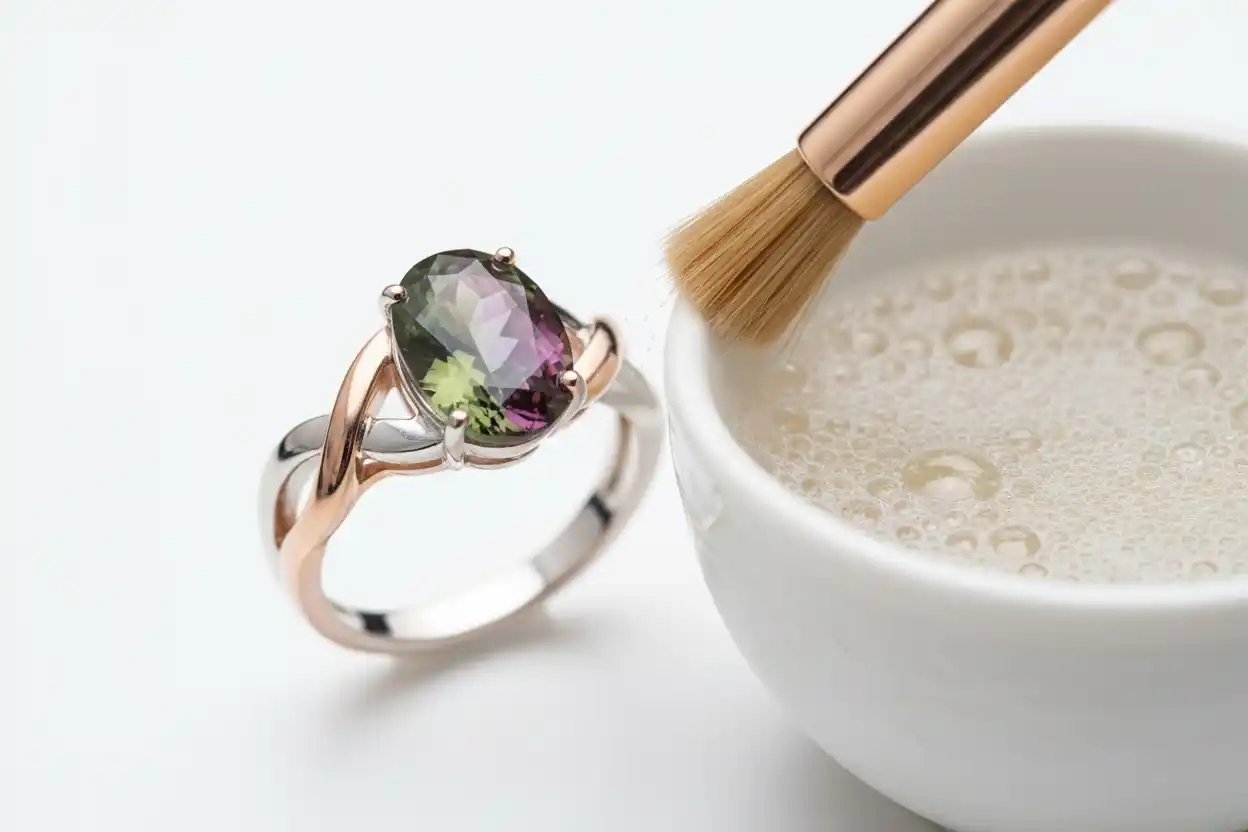
How to Clean Alexandrite Jewelry Safely
Alexandrite is durable enough for regular jewelry wear, but the safest cleaning method remains simple: warm water, a small amount of mild soap, a soft brush, and careful drying. This approach removes skin oils and residue without exposing a valuable stone or its setting to unnecessary heat, vibration, or harsh chemicals.
Although alexandrite itself resists ordinary wear better than many colored gems, treatment history and mounting condition still matter. A secure untreated stone can tolerate more than an alexandrite with filled fractures, damaged prongs, antique components, or delicate accent stones.
Why Alexandrite Usually Handles Routine Cleaning Well
Alexandrite is the color-change variety of chrysoberyl. Its distinctive appearance is covered in the broader Alexandrite meaning and properties guide, while its role alongside pearl and moonstone appears in the June birthstone guide.
From a care perspective, alexandrite combines high hardness with excellent toughness. It ranks 8.5 on the Mohs scale, has no cleavage, and generally withstands normal light, heat, and household conditions. However, hardness only measures resistance to scratching. The distinction between scratching and breakage is explained in the gemstone hardness chart and the guide to gemstone toughness versus hardness.
| Property | Cleaning implication |
|---|---|
| Mineral species | Chrysoberyl |
| Mohs hardness | 8.5; resistant to ordinary scratches |
| Toughness | Excellent |
| Cleavage | None |
| Safest routine method | Warm water, mild soap, and a soft brush |
| Main exception | Fracture-filled stones or insecure settings |
| Professional equipment | Often suitable, but treatment and mounting must be checked first |
Alexandrite lacks the pronounced cleavage seen in some otherwise hard stones. Even so, the gemstone cleavage guide explains why a stone should never be judged by a hardness number alone. A sharp blow can still loosen a setting or damage inclusions and existing fractures.
What You Need for Safe Home Cleaning
A small bowl is safer than an open sink because it prevents the jewelry from disappearing down a drain. Prepare a second bowl of clean lukewarm water for rinsing, along with mild liquid dish soap, a very soft toothbrush or jewelry brush, and a clean lint-free cloth.
Avoid soaps containing abrasive particles, moisturizers, bleach, strong fragrances, or degreasing additives. The cleaning solution should be weak enough that the water remains almost clear rather than foamy.
Inspect the Jewelry Before It Gets Wet
Examine the piece under bright light. Check whether the center stone moves when touched gently, whether any prongs appear raised, and whether small accent stones remain secure. Also look for visible surface-reaching fractures, chips, or a cloudy material within fissures.
Do not clean a loose or damaged piece at home. Water and brushing can dislodge a stone that is already insecure, while ultrasonic vibration can turn a small structural problem into a lost gem.
Treatment history deserves similar attention. The dedicated guide to treated or synthetic alexandrite explains the disclosure and identification issues in detail. For cleaning purposes, the critical question is whether fractures have been filled.
Wash the Alexandrite Gently
Place the jewelry in lukewarm soapy water or hold it securely over the bowl. Use the soft brush to loosen skin oils, lotion, soap film, and compacted debris. Pay particular attention to the underside of a faceted stone, where oils interfere with light return and make alexandrite appear dull.
Brush around the prongs, gallery, and openings behind the gem without forcing bristles beneath metal components. Alexandrite’s hardness does not protect thin prongs, solder joints, pavé settings, or softer accent stones.
A brief wash is normally sufficient. Long soaking adds little cleaning benefit and may be unsuitable for an antique piece, a glued component, a filled stone, or jewelry strung with organic material.
Rinse and Dry Without Thermal Shock
Rinse the piece in the second bowl of clean lukewarm water. Avoid switching directly from hot water to cold water, even though alexandrite is generally stable. Sudden temperature changes can affect solder joints, inclusions, and other stones in the same piece.
Blot the jewelry with a lint-free cloth and allow moisture beneath the setting to air-dry. Do not use a hair dryer, radiator, direct sunlight, or another heat source to speed the process.
After drying, inspect the stone again. A properly cleaned alexandrite should look clearer because residue has been removed from the pavilion and setting. Persistent cloudiness may come from scratches, internal inclusions, damaged polish, filler, or residue trapped where a brush cannot reach.
Can Alexandrite Go in an Ultrasonic Cleaner?
Ultrasonic cleaning is usually acceptable for untreated alexandrite in a secure modern setting. Nevertheless, “usually safe” is not the same as universally safe. Vibration can aggravate fractures, loosen worn prongs, dislodge pavé stones, or affect filler inside a treated gem.
| Alexandrite or jewelry condition | Ultrasonic recommendation |
|---|---|
| Untreated stone in a secure modern setting | Usually acceptable |
| Laboratory-grown alexandrite in a secure setting | Usually acceptable, subject to the mounting |
| Known fracture-filled stone | Avoid |
| Visible fractures or chips | Avoid |
| Antique or repaired jewelry | Avoid unless approved by a jeweler |
| Loose prongs or multiple delicate stones | Avoid |
| Treatment history unknown | Use warm soapy water instead |
When documentation is available, read it before choosing a cleaning process. The guides to gemstone certification and reading a gem laboratory report explain where natural or laboratory-grown origin and detectable treatments may appear.
Is Steam Cleaning Safe for Alexandrite?
Steam is usually tolerated by untreated alexandrite, but it is rarely necessary for home care. High-pressure steam can expose a weak setting, and heat can affect fillers, adhesives, soldered repairs, or other gems mounted beside the alexandrite.
Warm soapy water delivers effective routine cleaning with far less uncertainty. Reserve steam cleaning for a professional who has inspected both the stone and the entire piece.
Natural, Laboratory-Grown, and Imitation Alexandrite
Laboratory-grown alexandrite has the crystal structure and basic durability expected of chrysoberyl, so its routine cleaning requirements are generally similar to those of natural alexandrite. The setting, inclusions, fractures, and any post-growth treatment still need consideration. The broader distinction is covered in lab-grown versus natural gemstones.
Some jewelry marketed with an alexandrite-related name may instead contain color-change sapphire, glass, synthetic spinel, or another simulant. Those materials can require different handling. Consult the dedicated real versus fake alexandrite guide rather than using a cleaning response as an identification test.
Cleaning should never involve destructive experiments, scratching, hot needles, chemical spot tests, or deliberate thermal shock.
Cleaning Different Types of Alexandrite Jewelry
An alexandrite ring usually collects the most residue because soap, lotion, and skin oils gather beneath the center stone. Focus the soft brush on the pavilion and gallery while supporting the ring by its shank rather than pressing on the gem.
For alexandrite earrings, clean the posts, backs, hinges, and areas behind the stones. Residue around the fittings can dull the jewelry and may irritate the skin even when the gem itself looks clean.
An alexandrite necklace or pendant generally needs less frequent deep cleaning, although cosmetics and perfume can leave a film. Clean the pendant separately when possible and wipe the chain according to its metal and finish.
With an alexandrite bracelet, inspect every clasp, link, hinge, and stone setting. Repeated flexing can loosen components that would not be vulnerable in a stationary pendant.
Products and Methods to Avoid
Do not use toothpaste, baking soda, scouring powder, stiff brushes, or abrasive cloths. Alexandrite may resist scratching, but the metal, polish, plating, and adjacent stones might not.
Household bleach, chlorine, concentrated acids, and strong solvents are unnecessary. They can attack metal alloys, solder, plating, adhesives, or fillers even when the alexandrite remains chemically stable.
Metal-cleaning dips also require caution. A solution designed for unmounted gold or silver may not be appropriate for a gemstone-set piece. Clean according to the most vulnerable component rather than the strongest one.
The general treatment categories that influence cleaning are explained in Gemstone Treatments Explained.
How Often Should Alexandrite Jewelry Be Cleaned?
A frequently worn ring may benefit from gentle cleaning every few weeks, while earrings or pendants may need attention only when oils begin reducing their brightness. Wiping the jewelry with a clean lint-free cloth after wear reduces the need for repeated washing.
Frequency should respond to visible residue rather than a rigid schedule. Excessive brushing and handling provide no advantage once the jewelry is clean.
Storage and Everyday Protection
Store alexandrite jewelry in its own fabric-lined compartment or soft pouch. Although alexandrite can scratch many softer gems, harder materials such as diamond and corundum can damage its polish during contact.
Remove the jewelry before exercise, heavy manual work, gardening, swimming, or using household chemicals. Put alexandrite on after cosmetics, perfume, sunscreen, and hair products have dried.
Because natural alexandrite can carry substantial value, condition deserves attention alongside rarity and color change. The Alexandrite buying guide covers selection, while the Alexandrite price guide addresses the factors that affect market value.
When Professional Cleaning Is the Better Choice
Take the piece to a qualified jeweler when the stone moves, a prong catches on fabric, the setting has been repaired, the gem has a visible fracture, or the treatment history is unknown. Professional inspection is also appropriate before cleaning an antique or unusually valuable alexandrite.
A jeweler can tighten the setting, assess wear, remove compacted residue, and select an appropriate method for every material in the piece. When purchasing another alexandrite, the seller-verification principles in How to Buy Gemstones Online Without Getting Scammed can help establish documentation before future care decisions become necessary.
Frequently Asked Questions
1. Can I clean alexandrite with warm soapy water?
Yes. Lukewarm water, a small amount of mild soap, and a soft brush form the safest routine method for natural or laboratory-grown alexandrite jewelry.
2. Can alexandrite go in an ultrasonic cleaner?
Untreated alexandrite in a secure modern setting is usually suitable for ultrasonic cleaning. Avoid the machine when fractures, filling, loose prongs, antique construction, or unknown treatments are involved.
3. Can alexandrite be steam cleaned?
Untreated alexandrite usually tolerates steam, but professional use is preferable. Steam may affect fillers, repairs, adhesives, accent stones, or an insecure mounting.
4. Can alexandrite get wet?
Brief contact with clean water does not normally damage alexandrite. The condition of the mounting, filler, adhesive, or stringing material may impose stricter limits.
5. Is regular dish soap safe for alexandrite?
A few drops of mild liquid dish soap are suitable. Avoid formulas containing bleach, abrasive particles, heavy moisturizers, or aggressive degreasers.
6. Can I use bottled jewelry cleaner?
Use it only when the label explicitly permits colored gemstone jewelry and every material in the piece is compatible. Warm soapy water is the lower-risk option when the formulation is uncertain.
7. Is laboratory-grown alexandrite cleaned differently?
The gem itself usually follows the same routine because laboratory-grown alexandrite is chrysoberyl. The setting, fractures, coatings, fillers, and accompanying stones still determine the safest method.
8. How often should I clean an alexandrite ring?
Clean it when lotion or skin oils begin dulling the stone, often every few weeks for regular wear. A cloth wipe after use reduces residue buildup.
9. Will hand sanitizer damage alexandrite?
Occasional contact is unlikely to harm untreated alexandrite, but repeated exposure can affect metal finishes, filler, adhesives, or surface residues. Remove the ring before applying sanitizer when practical.
10. Can toothpaste or baking soda clean alexandrite?
No. Both can act as abrasives and may scratch the metal, damage plating, or dull softer accent stones.
11. Why does my alexandrite still look cloudy after cleaning?
The cause may be compacted debris beneath the setting, surface abrasion, inclusions, a damaged polish, fracture filling, or moisture trapped in a hard-to-reach area. A jeweler can distinguish these possibilities.
12. When should an alexandrite be professionally cleaned?
Professional care is appropriate for loose settings, antique jewelry, visible fractures, unknown treatments, complex pavé work, or persistent cloudiness after gentle home cleaning.
Conclusion
Alexandrite’s hardness, toughness, and lack of cleavage make it one of the more manageable colored gemstones to maintain. However, gentle warm soapy water remains preferable to using the strongest method the gem might theoretically survive. The decisive next question is whether the individual stone has filled fractures or sits in a vulnerable setting, because that detail—not alexandrite’s hardness alone—determines whether professional equipment is appropriate.