Buy Serendibite: Buyer Priorities, Value Factors & Seller Claims
To buy serendibite responsibly, make species identification the first requirement because the mineral’s rarity creates much of its collector value and visual appearance alone is not sufficient to establish identity. Mindat recognizes serendibite as a valid triclinic borosilicate mineral with pale yellow, blue-green, and grayish-blue colors, Mohs hardness around 6.5–7, measured density around 3.42–3.52, vitreous luster, and no observed cleavage. Its type locality is Gangapitiya near Ambakotte in Sri Lanka, and the mineral takes its name from Serendib, the old Arabic name for the island.
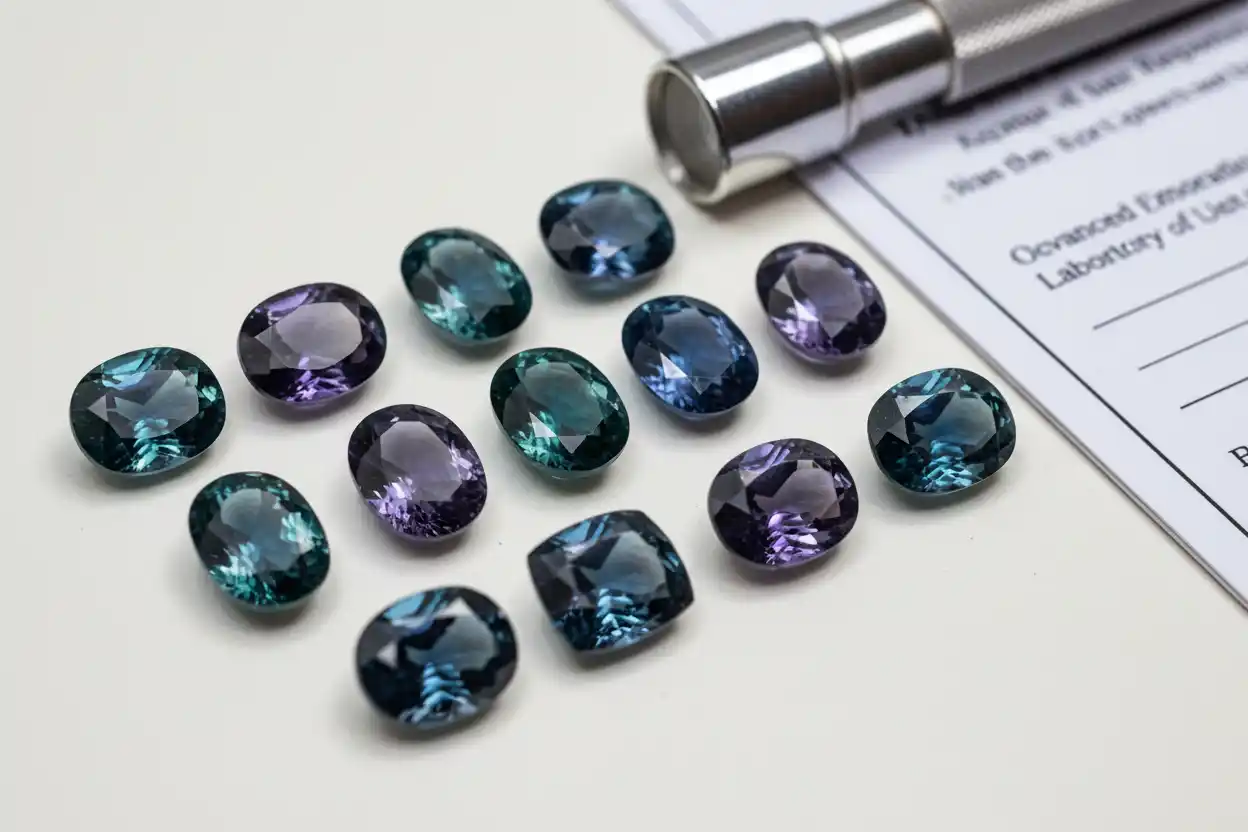
Gem-quality serendibite is exceptionally limited compared with the mineral species as a whole. Gemdat describes transparent material as typically blue-green to green-blue, sometimes deep blue or yellow, with strong pleochroism between yellowish green, bluish green, and violet-blue, and specifically notes that cut stones are rare and usually small. That scarcity creates an unusual buying market in which a tiny transparent stone with independent identification can be more significant to a collector than a much larger opaque or nearly black specimen. Consequently, a seller’s use of the phrases rarest gemstone, Mogok serendibite, museum grade, or investment stone means little unless the actual transparency, color, weight, provenance, condition, and species identity support the claim.
Buy Serendibite At a Glance
| Buying Factor | What to Inspect | Why It Matters |
|---|---|---|
| Species Identity | Independent confirmation of serendibite | Rarity premium depends first on correct identification |
| Transparency | Transparent, translucent, near-opaque, or opaque | Transparent facetable material is especially scarce |
| Color | Blue-green, green-blue, grayish blue, deep blue | Attractive visible color raises collector appeal |
| Tone | Enough light return to show actual color | Very dark material may appear nearly black |
| Pleochroism | Directional yellow-green, blue-green, violet-blue behavior | Characteristic optical property can affect cut appearance |
| Clarity | Crystals, fractures, twinning, clouds | Fine transparency is rare, but structural damage still matters |
| Cut | Brilliance, windowing, symmetry, weight retention | Tiny rare rough is often cut to save weight |
| Carat Weight | Size considered with transparency and color | Large opaque pieces are not equivalent to small transparent gems |
| Sri Lanka Provenance | Credible type-locality or Ratnapura history | Historically important but should be documented |
| Myanmar Provenance | Credible Mogok locality evidence | Mogok is an important modern occurrence |
| Treatment | Ask for written disclosure | Untreated claims do not prove identity |
| Condition | Chips, scratches, girdle damage | Rare gems are difficult to replace |
| Laboratory Report | Experienced colored-stone/mineral lab | Particularly important for a species this uncommon |
| Return Policy | Time for independent verification | Protects against misidentification |
| Seller Claims | Demand evidence for rarity, origin, and value statements | Marketing superlatives are not gemological proof |
Serendibite Is a Distinct Mineral Species
Serendibite is not sapphire, sapphirine, grandidierite, zoisite, spinel, tourmaline, or glass even though portions of its blue-green to dark color range can overlap visually with several of those materials. Mindat places serendibite in the sapphirine supergroup and identifies its complex calcium-magnesium-aluminum-boron-silicate chemistry and triclinic crystal system.
This species-level distinction is economically essential because a collector paying a premium is purchasing mineralogical rarity, not merely an attractive blue-green color. The same logic applies in the Gems Lore buy painite guide and buy grandidierite guide: rarity labels become meaningful only after the material has been identified correctly.
Misidentification Is a More Important Risk Than Treatment Hype
Mindat explicitly notes that serendibite may be confused with sapphirine. Gemdat’s listed refractive and density ranges likewise show why professional testing is useful rather than visual guesswork. For a stone this uncommon, a dealer’s familiarity with ordinary commercial gemstones is not enough to justify an expensive serendibite attribution.
A seller who emphasizes that a stone is untreated while providing no independent confirmation that it is serendibite has prioritized the wrong issue. Untreated status cannot turn another mineral into serendibite. Identity should therefore be established before origin, treatment, color grade, rarity, or investment language is considered.
Transparent Facetable Material Is the Most Selective Category
Gemdat states that cut serendibites are rare and generally small. This makes transparency one of the most important commercial distinctions because much mineral serendibite is not suitable for conventional transparent faceting.
A genuinely transparent stone that shows blue-green or green-blue color under ordinary lighting can therefore occupy a much stronger collector tier than a larger opaque specimen fashioned only because the mineral name is rare. A buyer should ask for video in transmitted and reflected light so the actual degree of transparency is obvious rather than accepting photographs that use intense backlighting to make a nearly opaque stone appear gemmy.
Opaque Serendibite Can Still Be Collectible
Opacity does not make a mineral specimen worthless. A well-formed natural crystal from Mogok, a historically important Sri Lankan specimen, or a strongly documented locality piece can attract collectors even when it does not transmit enough light for conventional gem use.
The valuation framework simply changes. Natural crystal form, terminations, twinning, luster, locality, associated minerals, damage, and provenance become more important than brilliance or eye-clean clarity.
A faceted opaque stone should therefore be compared with other opaque collector material rather than with transparent faceted gems merely because both are sold by the carat.
Color Should Be Visible Without Extreme Backlighting
Serendibite is often described in blue-green, green-blue, grayish-blue, and deep blue tones. Mindat lists pale yellow, blue-green, and grayish blue, while Gemdat emphasizes blue-green to green-blue transparent gem material. Some Mogok specimens can appear extremely dark or nearly black in normal lighting, revealing blue-green only through thin edges or strong illumination.
A buyer should distinguish genuinely attractive face-up color from technically blue-green material that looks black throughout normal wear. Both can be authentic serendibite, but they serve different collector preferences and should not automatically receive the same quality premium.
Pleochroism Can Make a Tiny Stone Visually Complex
Gemdat describes serendibite as strongly pleochroic, with yellowish-green, bluish-green, and violet-blue directional colors. This can make a well-cut stone surprisingly dynamic despite modest dimensions, but it also creates orientation challenges because the cutter must decide which direction offers the most attractive combination of color and brightness.
The best faceted serendibite therefore should not be judged from one stationary photograph. Video can reveal whether the gem transitions through interesting blue-green directions or simply remains dark throughout movement.
Clarity Expectations Must Reflect Genuine Rarity
The combination of small available size and limited transparent rough means collectors may accept more inclusions than they would in abundant gems such as quartz or garnet. A minor internal crystal or healed fracture can be entirely reasonable when the stone is genuinely transparent serendibite.
This tolerance has limits. Large open fissures, edge-reaching fractures, severe clouding, or chips that threaten structural integrity still reduce value. Rarity should not be used to pretend damage does not matter.
Carat Weight Must Be Interpreted With Transparency
The statement that one serendibite weighs three carats tells very little without knowing whether it is transparent, translucent, or opaque. Gemdat’s observation that cut transparent stones are rare and generally small is crucial here. A multi-carat opaque Mogok specimen can be interesting and legitimate while belonging to a very different market from a sub-carat transparent blue-green gem.
Buyers should therefore resist spectacular per-carat claims that fail to state clarity category. The same species can occupy radically different price levels depending on how much light it transmits.
Sri Lanka Is the Type Locality and Historical Naming Source
Mindat identifies Gangapitiya in the Ambakotte area of Sri Lanka as serendibite’s type locality. The mineral’s name derives from Serendib, an old Arabic name for Sri Lanka, creating strong historical significance for genuine Sri Lankan material.
Sri Lankan gem provenance can therefore interest collectors, but the evidence must be proportionate to the premium. A seller should not transform an anonymous stone into type-locality material merely through a verbal story. Documentation from a reliable collection, dealer history, or laboratory-supported provenance is much stronger.
Myanmar Is an Important Modern Serendibite Occurrence
Mindat records serendibite at several sites in the Mogok region, including Lin-yaung-chi, Ohngaing, and Shwe-pyi-aye. Mogok material can occur as dark crystals with varying degrees of gemminess, and the locality has become important to modern collectors.
The phrase Burmese serendibite should nevertheless describe origin, not quality. A nearly opaque stone from Mogok may be mineralogically important while remaining visually less valuable than a smaller transparent blue-green gem from another source.
Provenance Should Be Specific Rather Than Decorative
For a highly collectible mineral, the strongest provenance includes a specific locality, acquisition history, old collection label, recognized dealer trail, or institutional documentation. “Myanmar,” “Mogok,” or “Sri Lanka” on a newly printed seller card is useful information but is weaker than a traceable chain of ownership.
This distinction matters because mineral collectors can pay for locality significance independently of gemstone appearance. A natural crystal from an important occurrence may therefore command a premium even when it is unsuitable for faceting.
Treatment Is Not the Main Documented Market Story
The authoritative mineral and gem references used here focus primarily on serendibite’s identity, chemistry, physical properties, localities, rarity, and gemological separation rather than describing a standardized commercial enhancement industry comparable with sapphire heating, emerald filling, or topaz irradiation. That absence should be treated as context, not as proof that every serendibite is necessarily untreated.
The practical buying rule is straightforward: ask the seller to disclose any known treatment, but do not allow an untreated claim to substitute for species identification. For this gem, proving what the stone is generally matters more than advertising that nothing has been done to it.
Synthetic or Imitation Claims Need Precise Language
A material can imitate serendibite visually without being synthetic serendibite. Glass, dark spinel, tourmaline, sapphirine, or other blue-green materials can be sold under a rare name if the seller is careless or deceptive. A true synthetic gemstone, by contrast, would need essentially the same material identity produced artificially.
Because buyers encounter far more common simulants than documented commercial synthetic-serendibite markets, laboratory identification should focus first on species identity rather than on dramatic assumptions about sophisticated synthesis.
Mohs Hardness Is Useful but Does Not Make It Indestructible
Mindat places serendibite around Mohs 6.5–7 and records no observed cleavage, while Gemdat gives uneven fracture. This gives the gemstone reasonable scratch resistance for occasional jewelry, but a rare collector gem should still be protected from hard impacts, abrasion from sapphire or diamond, and careless setting work.
A pendant, earring, or protected ring is generally a more conservative use than an exposed everyday ring. The economic reason is obvious: replacing an unusual documented serendibite may be far harder than replacing a mainstream gemstone of equal dimensions.
Condition Matters More When Replacement Is Difficult
A chipped corner, scratched table, broken natural termination, or damaged girdle can reduce value substantially because repairing the stone may remove meaningful weight. In a small transparent gem, losing even a fraction of a carat can alter rarity and proportions materially.
Collectors of natural crystals should also distinguish incomplete natural growth from later physical damage. A naturally irregular crystal can remain significant, while a fresh broken termination usually weakens specimen aesthetics.
Laboratory Identification Should Come From an Appropriate Lab
Gemdat’s listed serendibite refractive indices, specific gravity, strong pleochroism, and triclinic optical behavior provide measurable identification characteristics, but rare-species work can require more than routine handheld testing. An experienced laboratory may use spectroscopy, chemical analysis, microscopy, and other methods when separation from similar materials remains uncertain.
A generic retailer certificate that simply repeats the seller’s description offers far less reassurance than independent analytical identification.
A Return Period Is Part of the Value Proposition
Rare-gem buyers should insist on enough time to verify identity independently before the sale becomes irreversible. A seller confident in the material should generally be able to provide clear measurements, weight, transparency description, locality claim, treatment statement, photographs, video, and a reasonable inspection policy.
“No returns because this is extremely rare” is not a quality signal. It transfers identification risk almost entirely to the buyer.
Serendibite Versus Painite
Serendibite and painite frequently appear together in rare-gem discussions, but they are different minerals with different color ranges, chemistry, localities, and supply. Gems Lore’s buy painite guide and painite price guide explain why painite’s reddish-brown-to-orange-red market cannot be used as a serendibite pricing template.
Rarity lists are useful for curiosity but weak for valuation because one rare mineral can have much stronger transparency, demand, and available sizes than another.
Serendibite Versus Grandidierite
Transparent grandidierite can overlap visually with blue-green serendibite. Gems Lore’s buy grandidierite guide and grandidierite price guide should be treated as separate because the minerals differ in optical properties, chemistry, availability, and market recognition.
An attractive green-blue color cannot establish identity between these rare materials.
Serendibite Versus Scapolite
Serendibite and scapolite can both occur in gem-producing metamorphic environments, but scapolite has a much broader gem-size range and different durability profile. Gems Lore’s buy scapolite guide and scapolite price guide illustrate why large scapolite does not carry the same small-size rarity structure as transparent serendibite.
This comparison reinforces why species identification matters more than generic rare-gem labels.
Seller Grades Have Little Meaning Without Evidence
There is no universal AAA, AAAA, 5A, museum grade, or investment-grade standard for serendibite. Such terms can function as private sales language but should never replace actual disclosure of transparency, color, dimensions, cut, weight, inclusions, condition, locality, and laboratory identity.
A tiny transparent independently identified stone with no superlative grade can be more important than a larger opaque specimen marketed as “AAAA rarest gemstone.”
Common Red Flags When You Buy Serendibite
Major warning signs include no independent species identification, a seller relying almost entirely on “one of the rarest gems in the world,” large opaque material priced as though it were transparent faceting quality, intense backlighting used to disguise near-black face-up appearance, an origin claim unsupported by documentation, an untreated claim used as proof of authenticity, AAAA presented as an official standard, a generic appraisal offered instead of analytical identification, guaranteed future appreciation, or refusal to allow independent inspection.
How to Compare Serendibite Listings Fairly
Compare specimens first by confirmed identity and then separate transparent faceted gems, translucent stones, opaque fashioned material, and natural mineral specimens. Within the correct category, align color, tone, pleochroism, transparency, inclusions, cut, dimensions, weight, condition, locality, provenance, treatment disclosure, laboratory issuer, and transaction protections. A 0.5 ct transparent Sri Lankan blue-green gem, 3 ct nearly opaque Mogok stone, natural crystal specimen, sapphirine, and dark tourmaline should never be valued as equivalent merely because a seller uses the serendibite name.
Conclusion
To buy serendibite safely, treat identification as the foundation of the transaction. Serendibite is a valid rare triclinic borosilicate with blue-green, grayish-blue, pale yellow, and related colors, Mohs hardness around 6.5–7, and a type locality in Sri Lanka. Gemdat further notes strong pleochroism and that transparent cut stones are rare and usually small.
Those facts explain why transparency and documentation matter more than sensational rarity claims. A small transparent stone may represent a far more selective gemstone category than a larger opaque piece, while a natural Mogok crystal can derive value from locality and morphology rather than brilliance. Myanmar’s Mogok region contains several recognized serendibite occurrences, adding another legitimate provenance dimension when documentation is strong.
The strongest purchase therefore combines independent identification, clear transparency disclosure, attractive visible color, competent cutting or natural crystal aesthetics, sound condition, believable locality information, and a return policy that permits verification. Rarity should be proven through the stone’s actual gemological category, not merely repeated as marketing.
Frequently Asked Questions
What is serendibite?
Serendibite is a rare triclinic borosilicate mineral containing calcium, magnesium, aluminum, boron, silicon, and oxygen. Mindat recognizes it as a valid mineral species.
What color is serendibite?
Mindat lists pale yellow, blue-green, and grayish blue, while Gemdat describes transparent gem material as blue-green, green-blue, deep blue, and occasionally yellow.
Is serendibite really rare?
Gem-quality transparent material is highly uncommon. Gemdat states that cut stones are rare and usually small.
Where was serendibite discovered?
Its type locality is Gangapitiya near Ambakotte in Sri Lanka, and its name comes from Serendib, an old Arabic name for Sri Lanka.
Does serendibite occur in Myanmar?
Yes. Mindat records serendibite from Mogok Township and specific Mogok Valley localities including Ohngaing, Lin-yaung-chi, and Shwe-pyi-aye.
Is black serendibite valuable?
Very dark or opaque material can be collectible, especially with good crystal form or provenance, but it should not automatically receive the same premium as transparent gem-quality serendibite.
Is transparent serendibite usually small?
Yes. Gemdat specifically notes that cut stones are rare and generally small.
Is serendibite strongly pleochroic?
Yes. Gemdat describes strong yellowish-green, bluish-green, and violet-blue pleochroism.
How hard is serendibite?
Mindat lists Mohs hardness around 6.5–7.
Does serendibite have cleavage?
Mindat reports no observed cleavage, while Gemdat describes an uneven fracture.
Is serendibite commonly treated?
The major mineral and gem references consulted here do not describe a standardized routine commercial treatment market comparable with sapphire or emerald. That should not be interpreted as proof that treatment is impossible, so written disclosure remains appropriate.
Do I need a laboratory report?
For a significant serendibite purchase, yes. The species is rare enough that independent analytical identification is proportionate to the risk of misidentification.
Does AAA serendibite have an official meaning?
No universal AAA or AAAA grading system exists for serendibite. Compare identity, transparency, color, cut, size, provenance, and condition instead.
Is serendibite a guaranteed investment?
No. Extreme rarity does not guarantee appreciation, liquidity, or recovery of the original retail purchase price.