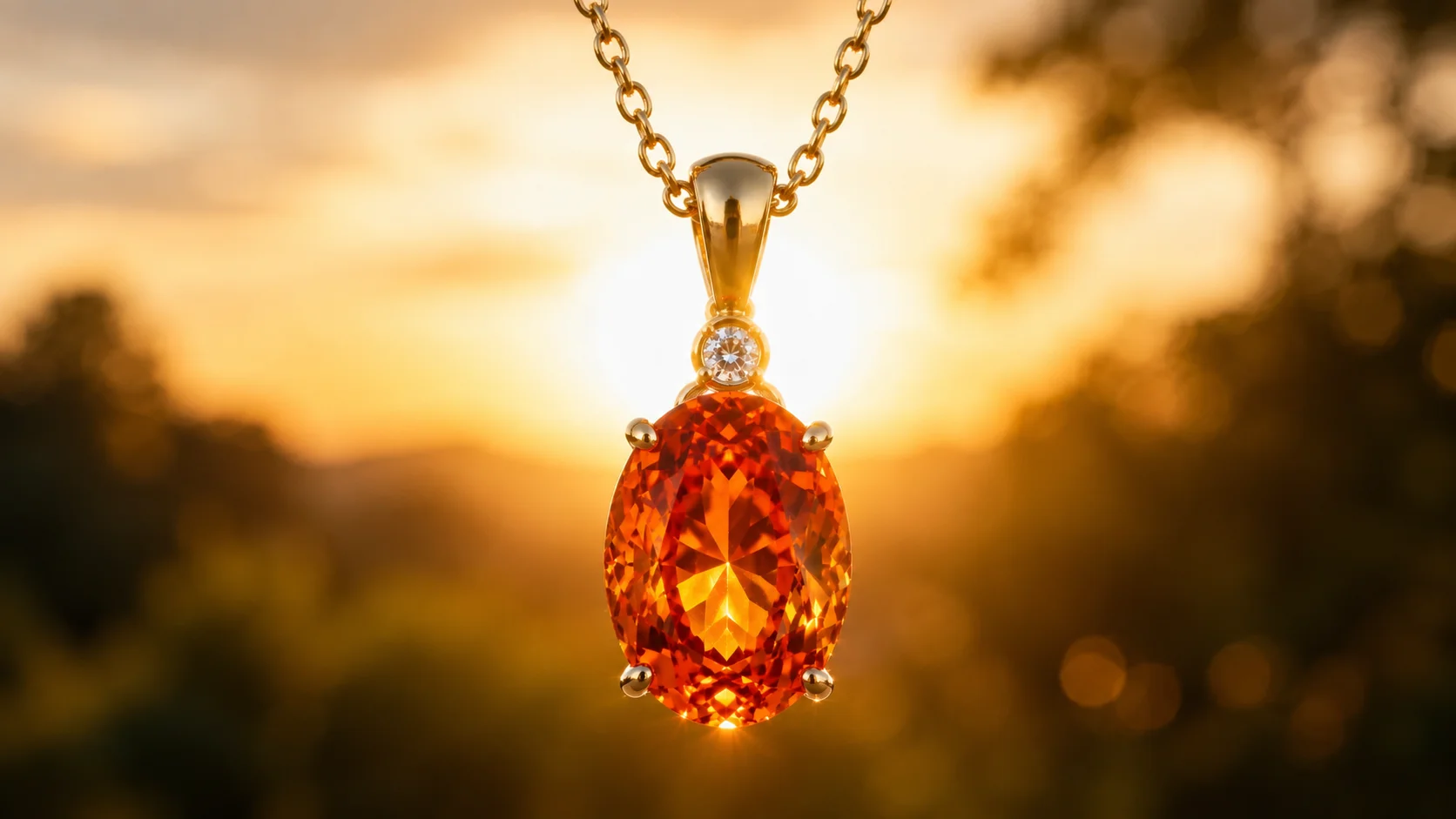
Spessartite Garnet Necklaces and Pendants Guide
A Spessartite Garnet necklace places vivid orange color at the neckline, where the gem can catch light without facing the repeated impacts experienced by hand jewelry. Designs range from a small bezel-set pendant to a graduated necklace assembled from many carefully matched stones.
Choosing the right piece involves the entire construction. Color and cutting determine the Garnet’s beauty, but chain strength, pendant balance, bail size, clasp security and necklace length determine whether the jewelry remains comfortable and wearable.
Spessartite Garnet Necklaces at a Glance
| Feature | What to Consider |
|---|---|
| Gem species | Spessartine, commonly called Spessartite Garnet |
| Primary color range | Yellow-orange, vivid orange and reddish orange |
| Most versatile design | Solitaire pendant on an adjustable chain |
| Strongest color statement | Graduated line or multi-stone necklace |
| Safest setting | Bezel or low-profile prong setting |
| Popular cuts | Oval, round, cushion, pear and emerald-style cuts |
| Common chain lengths | Approximately 16–24 inches |
| Hardness | Approximately 7–7.5 |
| Main durability concern | Chipping, chain failure and impact against hard surfaces |
| Common treatment | Usually untreated; rare fracture filling requires disclosure |
| Safe cleaning | Lukewarm water, mild soap and a soft brush |
| Gift connection | Garnet is January’s birthstone |
Necklace, Pendant or Both?
A pendant is an ornamental element suspended from a separate chain. A gemstone necklace may instead integrate stones directly into a chain, line, collar or strand.
This distinction matters when evaluating price and construction. A fine pendant may be moved to another compatible chain, while an integrated necklace depends on the condition of every link, setting and joint.
A removable pendant offers flexibility and simpler repair. An integrated multi-stone necklace creates greater visual impact but requires more closely matched gems and more complex workmanship.
The dedicated Spessartite Garnet meaning guide covers the mineral itself. This guide focuses on necklace formats, sizing, settings and gift selection.
Solitaire Pendants
A solitaire pendant places one Spessartite Garnet at the center of attention. Oval, round and cushion cuts provide balanced outlines, while pears create a natural downward point.
A simple four-prong setting exposes more of the gem and can maximize light return. The prongs should remain substantial enough to protect the stone without covering excessive color.
A bezel surrounds the girdle with metal, creating a cleaner outline and greater edge protection. This format suits everyday pendants and people who frequently layer necklaces.
Large solitaires need a bail and chain proportionate to their weight. A fine chain may look delicate but can become the weakest part of an expensive pendant.
Halo Pendants
A halo of Diamonds, white Sapphires or other colorless accents can make a Spessartite center appear larger and brighter.
The strongest halos create contrast without making the orange Garnet look secondary. Tiny accents should be evenly matched and securely set.
Cleaning is more demanding because lotion, perfume and skin oils collect beneath the center stone and between the halo settings.
A double halo can provide substantial visual scale, although the pendant may rotate or tilt if its balance and bail placement are poor.
Bezel Pendants
Bezel settings suit Spessartite because they protect much of the girdle and reduce snagging. A full bezel creates a smooth modern frame, while a partial bezel leaves more of the stone visible.
Yellow gold intensifies warmth and can blend visually with the orange gem. White metal produces a sharper border that defines the stone’s outline.
The bezel must fit the gem precisely. Excessive pressure during setting can damage a heavily included stone, while a loose bezel may allow movement.
Closed-back designs should include enough access for cleaning and inspection. A completely sealed cavity can trap residue and make assessment difficult.
Drop and Lariat Necklaces
A drop necklace suspends one or more gems below a central junction. Pear-shaped Spessartite works naturally in this vertical format.
Lariats create a longer, adjustable line and may use orange Garnets at one or both ends. The mechanism should remain secure and should not allow the stones to strike each other repeatedly.
Long drops suit open necklines and formal clothing but may contact desks, counters or seat belts. Shorter pendants remain easier for routine wear.
Every joint should move freely without open gaps. A decorative design is only as safe as its smallest connecting ring.
Station Necklaces
Station necklaces space individual Spessartite Garnets along a chain. The format provides repeated orange color without the weight or cost of a continuous line necklace.
Bezel stations remain smooth and resist snagging. Prong-set stations can appear lighter but may flip more readily if their balance is poor.
Check the reverse side. Stones should not expose sharp culets or rough metal against the skin.
An adjustable station necklace can accommodate several necklines, although the extension links and clasp must be strong enough for the total gem weight.
Graduated and Line Necklaces
A graduated necklace arranges gems from smaller stones near the back to larger stones at the center. A line necklace may use stones of similar size throughout.
These designs require substantial matching. The gems must coordinate in color, tone, saturation, cut and visible dimensions.
Minor variation may disappear across a long necklace, but one dark brown, pale or heavily windowed stone can interrupt the sequence.
Articulation matters as much as matching. Each setting should follow the neckline smoothly rather than twisting outward or forming rigid angles.
Fine matched suites can be difficult to replace. Buyers of an important necklace may ask whether spare stones exist for future repair.
Beaded Spessartite Necklaces
Transparent gem-quality Spessartite is more commonly faceted than drilled into beads. Consequently, many orange Garnet bead necklaces use included, translucent or mixed-composition material.
That does not make them inferior when accurately described. Rich orange beads can create an attractive casual necklace at a lower price than a matched faceted line.
Inspect drill holes for fractures, rough edges and concentrated dye. Natural Garnet beads may vary slightly, but the strand should still appear intentional.
The stringing material should suit the weight of the beads. Knots between valuable beads reduce impact and limit loss if the strand breaks.
Choosing Color
Vivid orange to orangy red is the most recognized premium color range. However, the best necklace color depends on the design and wearer.
Yellow-orange gems can look especially bright in yellow gold. Pure orange creates the classic mandarin appearance, while reddish orange provides greater warmth and depth.
Very dark stones may appear brown or nearly black when resting against clothing. Evaluate the necklace over both light and dark fabrics.
A gem photographed against white under strong illumination may perform differently when worn over skin, silk, wool or a dark neckline.
The Spessartite Garnet buying guide covers color comparison in greater detail, while the orange gemstones guide places Spessartite beside other warm-colored choices.
Cut and Face-Up Appearance
A pendant should return light across most of its face. Dark extinction, a transparent central window or excessive depth can reduce beauty even when the rough had strong color.
Ovals and cushions offer excellent color concentration. Rounds provide symmetry, while pears suit vertical drops.
Emerald-style cuts can show attractive orange color in broad flashes, but they reveal inclusions and cutting asymmetry more readily.
A well-cut stone should sit straight in its setting. A tilted gem may indicate an uneven girdle, poor mounting or an attempt to conceal damage.
Clarity
Small inclusions may be acceptable when they do not reduce brilliance or threaten durability. Spessartite is known for included material, and eye-clean stones can be less common in fine colors.
A pendant provides more tolerance for minor inclusions than a ring because it is viewed from a greater distance and receives less impact.
Surface-reaching fractures near prongs, the bail or a thin point deserve greater caution. These areas can fail during setting, repair or accidental impact.
For a multi-stone necklace, consistent apparent clarity is preferable to one flawless gem surrounded by obviously cloudy stones.
Pendant Size and Proportion
A small pendant provides a refined flash of orange and layers easily with other jewelry. Larger stones become statement pieces but need stronger chains and bails.
Consider visible dimensions rather than carat weight alone. Spessartite’s relatively high density means the gem may look smaller than another stone of equal weight.
The pendant should also suit the chain. A heavy center on an extremely fine chain may flip, sag or strain the clasp.
For a halo design, measure the complete pendant outline rather than only the center stone. The accents and metal may double its apparent size.
Necklace Length
A 16-inch necklace generally sits near the base of the neck on many wearers, although body proportions vary. An 18-inch length is a versatile choice for many pendants.
Lengths around 20–24 inches place the gem lower on the chest and work with higher necklines or layered combinations.
Adjustable chains provide flexibility and reduce gift-sizing risk. The extension section should remain comfortable and should not allow a heavy pendant to pull the clasp forward.
Measure a necklace the recipient already wears rather than relying entirely on category names such as choker, princess or matinee.
Choosing the Chain
Cable chains provide a simple, durable foundation. Wheat and box chains offer greater visual substance and may suit heavier pendants.
Rope chains add texture but can compete with an intricate setting. Snake chains create a smooth line yet may kink if stored improperly.
The chain must pass through the bail, but the bail should not be so large that the pendant looks disconnected. A hidden bail creates a seamless appearance, while a visible decorative bail can become part of the design.
Ask whether the chain is included in the stated price. Some fine pendants are sold without one.
Bail Design
The bail carries the full weight of the pendant. It should be soldered securely and thick enough to resist wear.
A fixed bail keeps the pendant orientation controlled but offers limited chain compatibility. A hinged bail allows movement and may help the pendant sit flat.
Enhancer bails open so the pendant can attach to pearls or thicker chains. Their hinges and locking mechanisms require careful inspection.
A poorly positioned bail can cause a pear or oval pendant to lean. View the piece while suspended rather than judging it only on a display pad.
Metal Choices
Yellow gold creates a warm, harmonious frame and remains a classic partner for orange Spessartite.
Rose gold works well with reddish orange stones, although some combinations lack contrast. White gold and platinum emphasize the orange through a cooler border.
Sterling silver offers affordability and strong contrast, but its maintenance and structural thickness should match the gem’s value.
The chain and pendant do not always need identical metal colors, but their clasps, bails and dimensions must remain compatible.
Necklines and Styling
A small solitaire sits comfortably with open collars, crew necks and layered chains. A longer pendant works over high necklines and simple fabrics.
Statement line necklaces need visual space. They generally perform best without a competing scarf, heavily embellished neckline or several other large necklaces.
Orange Spessartite pairs naturally with navy, charcoal, cream, olive, brown, black and many shades of blue. Personal preference remains more important than seasonal color rules.
When layering, place enough distance between chains to prevent the Garnet setting from striking harder gemstones or catching on adjacent links.
Comparing Spessartite Jewelry Formats
A necklace offers greater stone visibility than a bracelet while avoiding ring-sizing concerns. It also provides more room for larger center stones than many everyday earrings.
Spessartite Garnet earrings suit recipients who prefer symmetrical color near the face. A Spessartite Garnet bracelet remains visible to the wearer but experiences greater surface contact.
A Spessartite Garnet ring gives the gem maximum prominence, yet it requires a more protective setting and accurate sizing.
The general Garnet necklace guide compares Spessartite with other Garnet colors. For cooler purple-red jewelry, review Rhodolite Garnet necklaces. Green Demantoid Garnet necklaces occupy a rarer and visually distinct category.
Natural Origin and Treatments
Most Spessartite is sold without routine heat treatment. Rare fracture filling can improve apparent clarity but requires disclosure and more cautious care.
Orange glass, synthetic Spinel, cubic zirconia and other stones may imitate the color. Such materials are legitimate when described accurately.
Ask whether the Garnet is natural, whether it has received any detectable enhancement and whether the necklace contains other treated or laboratory-created stones.
The guide to real versus fake Garnet explains common substitutes and why visual inspection alone may be insufficient.
Quality and Matching
Color usually has the greatest influence on Spessartite’s appearance. Clarity, cutting and construction determine whether that color looks lively.
A solitaire can be judged as one gem. A multi-stone necklace requires consistency across the entire suite.
The Garnet quality and grading guide explains why no single standardized letter scale applies to every Garnet variety.
For an expensive piece, request gemstone dimensions, total weight, individual stone count, metal fineness and treatment disclosure in writing.
Price and Budget
A pendant with one modest stone can be considerably more affordable than a full line necklace containing many matched gems.
Large vivid Spessartite rises in price when color, clarity and cutting remain strong. Multi-stone necklaces also include the cost of matching and complex setting labor.
A halo can create greater apparent size without requiring one exceptionally large orange Garnet. Station necklaces spread the budget across several smaller gems.
The Spessartite Garnet price guide covers the market factors behind individual gems and finished pieces. Compare the complete construction rather than calculating value from total carat weight alone.
When a Laboratory Report Helps
A small commercial pendant may not justify an individual laboratory report. Clear seller disclosure and a reliable return policy can be sufficient.
Testing becomes more useful when the center stone is large, unusually vivid or expensive, or when the seller makes exceptional origin or treatment claims.
A report can identify the gemstone and detectable treatment. An appraisal documents the complete necklace and estimates replacement value but serves a different purpose.
For a major multi-stone necklace, ask whether every Garnet was tested or whether the report covers only selected representative stones.
January Birthstone Gifts
Garnet is January’s birthstone, making Spessartite a vivid alternative to the familiar dark red option.
The January birthstone guide explains the calendar tradition. The January birthstone jewelry guide compares necklace gifts with rings, earrings and bracelets.
An adjustable pendant is an especially practical gift because exact ring or wrist measurements are unnecessary.
Confirm the recipient’s usual metal, chain length and preference for minimal or statement jewelry before purchasing.
Durability
Spessartite has sufficient hardness for regular necklace wear and lacks cleavage. However, it remains brittle and can chip if a pendant strikes a counter, sink or other hard surface.
Long pendants face more impact because they swing farther from the body. Remove them before exercise, manual work and sleeping.
The guide to whether Garnet is durable enough for everyday wear explains how setting style and activity level influence risk.
Inspect the chain, clasp and bail as carefully as the gemstone. Most necklace loss occurs through a failed component rather than spontaneous stone damage.
Cleaning and Care
Clean the necklace with lukewarm water, mild soap and a soft brush. Support the piece throughout cleaning instead of allowing the pendant to swing against a hard sink.
Brush beneath open settings, around the bail and between links. Rinse briefly and dry completely before storage.
Steam cleaning is not recommended. Avoid ultrasonic equipment when stones contain fractures, have been filled or sit beside sensitive accent materials.
Perfume, hairspray and cosmetics should be applied before the necklace is worn. These products can build up behind the stone and dull its appearance.
The guide to cleaning Spessartite Garnet jewelry provides a complete treatment-aware method. The guide to whether Garnet is safe in water and sunlight separates safe brief cleaning from unnecessary soaking.
Storage
Fasten the clasp before storage so the chain is less likely to knot. Lay the necklace flat in a lined compartment or hang it from a suitable jewelry organizer.
Do not allow the pendant to strike harder gemstones. Diamonds, Sapphires and many other materials can scratch Garnet or damage metal.
Keep long chains separated to prevent tangling. A travel case should immobilize the pendant rather than letting it swing inside the box.
Spessartite appears in the crystals beginning with S and gemstones beginning with S directories.
Final Perspective
A Spessartite Garnet necklace should be chosen as a complete engineered object rather than as an orange gemstone attached to any available chain. The gem’s color and cutting create the visual appeal, while the bail, setting, links and clasp preserve it.
A balanced solitaire on a strong adjustable chain will suit many wearers better than a larger but unstable pendant. For a multi-stone necklace, consistent color, smooth articulation and documented construction matter as much as total carat weight.
Frequently Asked Questions
1. Is Spessartite Garnet suitable for necklaces?
Yes. Necklaces expose the gem to fewer impacts than rings and bracelets, making them one of the safest formats for regular wear.
2. What is the difference between a Spessartite pendant and necklace?
A pendant is a removable or suspended ornament on a chain. A gemstone necklace may integrate multiple stones directly into its structure.
3. Which pendant style is safest?
A low-profile bezel-set pendant offers strong edge protection and resists snagging. Sound prong settings can also be secure when inspected regularly.
4. What chain length is most versatile?
An adjustable chain around the common 16–20-inch range works with many necklines, although the recipient’s proportions and existing jewelry provide a better guide.
5. What color should a fine Spessartite Garnet show?
Vivid orange to orangy red is especially valued. The gem should remain bright rather than turning excessively dark or brown in normal lighting.
6. Is a large Spessartite pendant heavy?
It can be. Garnet has relatively high density, so the chain, bail and clasp must be strong enough for the complete pendant weight.
7. Are Spessartite Garnet necklaces normally treated?
Most are sold without routine heat treatment. Rare fracture filling should be disclosed because it changes value and cleaning requirements.
8. Does a Spessartite necklace need a laboratory report?
Small commercial pendants usually do not. Testing is more useful for large, high-value stones or exceptional origin and treatment claims.
9. Which metal suits orange Spessartite?
Yellow gold enhances warmth, while white gold and platinum create stronger contrast. Rose gold complements reddish orange material when the gem remains visually distinct.
10. Can Spessartite necklaces be layered?
Yes. Leave enough space between chains to prevent tangling and contact with harder gemstones or rough metal edges.
11. How should a Spessartite Garnet necklace be cleaned?
Use lukewarm water, mild soap and a soft brush. Avoid steam and do not use an ultrasonic cleaner on fractured, filled or structurally uncertain stones.
12. Is a Spessartite necklace a good January gift?
Yes. Spessartite belongs to the Garnet group, January’s modern birthstone, and provides an unusual orange alternative to traditional red Garnet.