Best Gemstones for Anniversary Gifts: Value & Buying Guide
The best gemstones for anniversary gifts are not necessarily the most expensive stones or even the gems listed beside a particular anniversary number. A sapphire can be an outstanding fifth-anniversary ring because it combines color, Mohs hardness 9, excellent toughness and no cleavage, while an opal associated with the fourteenth anniversary is usually better suited to a protected pendant or earrings than an exposed ring worn through daily activity.
There is also no single universally authoritative anniversary-gemstone list. Different jewelry traditions and reference lists assign some anniversaries differently, while several milestone anniversaries are traditionally associated with materials such as gold or silver rather than gemstones. The most useful approach is therefore to treat anniversary associations as inspiration and then choose jewelry that suits the recipient’s taste, lifestyle, budget and willingness to care for the stone.
That makes the best gemstones for anniversary gifts a practical buying decision as much as a symbolic one. The traditional association creates the story; durability, gemstone quality, treatment disclosure and jewelry design determine whether the gift will actually work.
Best Gemstones for Anniversary Gifts at a Glance
| Anniversary | Common modern association | Practical jewelry fit | Buying consideration |
|---|---|---|---|
| 1st | Gold | Ring, necklace, bracelet, earrings | Choose metal color the recipient already wears |
| 2nd | Garnet | Rings, earrings, necklaces, bracelets | Garnet includes many colors and species |
| 3rd | Pearl | Earrings, necklace, pendant | Soft surface requires gentle wear and cleaning |
| 4th | Blue topaz | Earrings, pendant, protected ring | Commercial blue color is generally treatment-produced |
| 5th | Sapphire | Excellent for almost any jewelry | Strong everyday durability; ask about treatment |
| 6th | Amethyst | Earrings, pendant, occasional ring | Affordable even in larger sizes |
| 7th | Onyx | Rings, cufflinks, pendants, beads | Verify whether color is natural or treated |
| 8th | Tourmaline | Rings, earrings, pendants | Durability and price vary with variety and inclusions |
| 9th | Lapis lazuli | Pendants, earrings, beads, inlay | Softer aggregate material; avoid harsh cleaning |
| 10th | Diamond | Excellent for everyday jewelry | Natural and laboratory-grown options differ in origin and market |
| 11th | Turquoise | Pendants, earrings, protected rings | Porosity, stabilization and dye disclosure matter |
| 12th | Jade | Bangles, pendants, rings, carvings | Distinguish jadeite from nephrite and ask about treatment |
| 13th | Citrine | Rings, earrings, pendants | Much commercial material is heat-treated quartz |
| 14th | Opal | Pendants, earrings, protected rings | Crazing, porosity, construction and origin affect care |
| 15th | Ruby | Excellent for frequent wear | Heat is common; filled material needs different care |
| 16th | Peridot | Pendants, earrings, protected rings | Softer and more impact-sensitive than corundum |
| 17th | Watch tradition | Watch or gemstone-accented jewelry | Personal style matters more than forcing a gem |
| 18th | Cat’s-eye chrysoberyl | Rings, pendants | Evaluate strength and centering of the eye |
| 19th | Aquamarine | Rings, earrings, necklaces | Color, cut and treatment affect value |
| 20th | Emerald | Pendants, earrings, carefully worn rings | Fissures and clarity enhancement are common |
| 21st | Iolite | Earrings, pendants, occasional rings | Strong pleochroism makes cut orientation important |
| 22nd | Spinel | Excellent for regular jewelry | Natural/lab-grown identity and color matter |
| 23rd | Imperial topaz | Pendants, earrings, protected rings | Trade definition and treatment disclosure matter |
| 24th | Tanzanite | Earrings, pendants, careful rings | Cleavage and moderate hardness require protection |
| 25th | Silver | Silver jewelry or silver with a chosen gem | Metal quality and construction drive the purchase |
| 30th | Pearl | Earrings, strands, pendants | Match pearls for luster, surface and size |
| 35th | Emerald | Earrings, necklaces, careful rings | Treatment and fracture condition matter |
| 40th | Ruby | Excellent for rings and heirloom jewelry | Fine untreated material can carry a large premium |
| 45th | Sapphire | Excellent for everyday jewelry | Available in many colors beyond blue |
| 50th | Gold | Gold jewelry or gold-toned gemstone design | Focus on workmanship and metal purity |
| 55th | Alexandrite | Rings, pendants, collector jewelry | Genuine fine color change is scarce |
| 60th | Diamond | Rings, earrings, necklaces | Compare cut, documentation, origin and budget |
This chart is best viewed as a flexible framework rather than a compulsory rule. The best gemstones for anniversary gifts should ultimately fit the person receiving them.
Anniversary Gemstone Lists Are Not Universal Rules
One of the most important things to understand before shopping for the best gemstones for anniversary gifts is that anniversary lists vary.
There is no single mineralogical or historical authority that determines one mandatory gemstone for every anniversary. Jewelry traditions evolved from different gift customs, commercial lists and cultural practices, which is why one reference may assign a slightly different stone or material from another.
That variation is useful rather than problematic.
If a spouse dislikes blue, there is no reason to buy a blue sapphire simply because sapphire appears beside the fifth anniversary. Sapphire itself occurs in pink, yellow, green, teal, violet, colorless and other colors, so the traditional material can often be retained while the color is personalized.
Likewise, if the assigned gemstone is too fragile for the recipient’s preferred jewelry format, keeping the stone while changing the jewelry type is usually smarter than forcing it into an impractical setting.
The best gemstones for anniversary gifts respect the tradition without allowing a chart to override the person.
2nd Anniversary: Garnet Offers Exceptional Variety
Garnet is one of the strongest early-anniversary choices because the name represents an entire mineral group rather than one predictable dark-red gemstone.
Red almandine and pyrope provide classic anniversary jewelry, but rhodolite can add raspberry and purple-red tones, spessartine offers orange, tsavorite provides vivid green, and demantoid can combine green color with notable dispersion.
That makes garnet unusually easy to personalize.
The Gems Lore overview of types of garnet explains why species and trade varieties can differ substantially in color, rarity and price.
Many garnets also provide good jewelry durability and generally lack the cleavage concerns seen in topaz or tanzanite. A well-made garnet ring, pendant or pair of earrings can therefore become an anniversary piece that is practical enough to wear regularly.
For buyers balancing budget against appearance, garnet also ranks among the strongest best gemstones for anniversary gifts because attractive commercial red material can remain accessible while rarer varieties allow substantial upgrades.
3rd and 30th Anniversaries: Pearls Need a Different Buying Mindset
Pearls are unlike crystalline gemstones.
They are organic gem materials produced by mollusks, and their value is determined through factors such as luster, surface quality, shape, color, size, nacre quality and matching rather than faceting proportions or refractive brilliance.
For anniversary jewelry, pearls are especially effective in earrings and necklaces because those positions limit abrasion.
Rings require more caution.
Pearl surfaces are considerably softer than sapphire, ruby, spinel or diamond and can be damaged by cosmetics, chemicals and repeated rubbing. Perfume, hairspray and skin-care products should generally be applied before putting on pearl jewelry.
When comparing pearl anniversary gifts, look closely at luster first. Strong reflections with crisp edges usually create a more attractive appearance than a larger pearl with dull, chalky luster.
Matched earrings should also coordinate in size, shape, bodycolor and overtone.
For someone who wears elegant, understated jewelry, pearls can rank among the best gemstones for anniversary gifts even though their care requirements are higher than those of conventional faceted stones.
4th Anniversary: Blue Topaz Gives Maximum Color for the Budget
Blue topaz offers bright color, high transparency and substantial size without requiring the budget associated with fine sapphire.
The important buying fact is treatment.
Natural strongly blue topaz is rare, and commercial blue topaz is ordinarily produced by treating suitable colorless material through irradiation followed by appropriate processing. That treatment is accepted in the market when disclosed.
Topaz ranks Mohs 8, which sounds highly durable, yet it has perfect basal cleavage. A concentrated impact in an unfortunate direction can split a stone even when its polished surface has resisted scratching.
This makes setting choice important.
Earrings and pendants are low-risk options, while a ring benefits from a protected mounting and sensible wear habits.
Among the best gemstones for anniversary gifts on a moderate budget, blue topaz is particularly strong when the recipient enjoys large blue stones but does not require rarity to be part of the gift.
5th and 45th Anniversaries: Sapphire Is One of the Strongest Choices
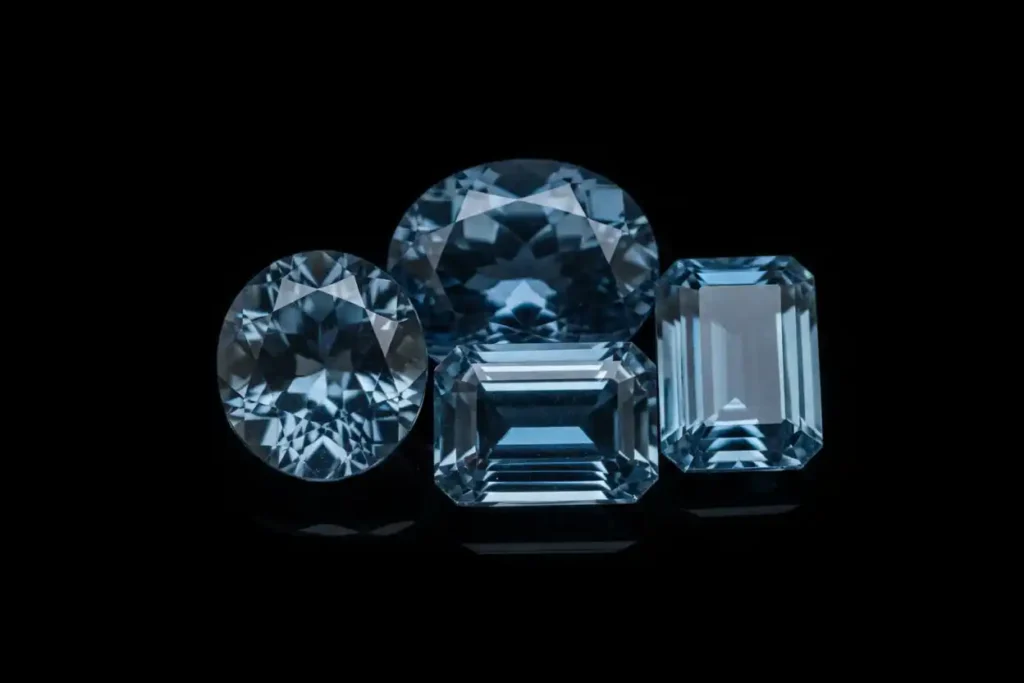
Sapphire deserves its reputation as one of the best gemstones for anniversary gifts because it combines beauty with exceptional jewelry performance.
Corundum ranks Mohs 9, has excellent toughness and has no true cleavage. Those properties make sapphire especially well suited to rings, including jewelry worn frequently.
Blue remains the classic color, but limiting sapphire to blue unnecessarily narrows the options.
Pink sapphire can work beautifully in rose or white metal. Yellow sapphire pairs naturally with yellow gold. Teal and green sapphire create contemporary alternatives, while colorless sapphire provides a quieter neutral stone.
Heat treatment is common and accepted, but treatment should still be disclosed. Fine sapphires showing no evidence of heating can receive substantial market premiums, while diffusion-treated, filled or otherwise enhanced material belongs to different commercial tiers.
A strong sapphire anniversary gift should be purchased for color first, then durability, cut and disclosure—not simply because a particular country name appears on the invoice.
6th and 13th Anniversaries: Amethyst and Citrine Offer Accessible Size
Amethyst and citrine are both quartz varieties, making them useful choices when visual impact matters more than rarity.
Amethyst provides violet to purple color, while citrine ranges through yellow, golden and orange-brown tones.
Quartz ranks Mohs 7, which is reasonable for jewelry but less abrasion-resistant than sapphire, ruby, spinel or diamond. Earrings and pendants are particularly practical, though properly set rings can also be worn with care.
Much commercial citrine is created by heat-treating amethyst or related quartz material. That stable treatment is widespread, but it should not be concealed behind claims implying that every golden stone developed that color naturally.
Because attractive quartz is available in comparatively large sizes, these materials can produce impressive gifts without forcing the buyer toward tiny stones.
The broader Gems Lore guide to affordable gemstones places amethyst and citrine among materials where good color and visible size can often be achieved without entering premium-gem pricing.
For value-conscious buyers, they remain some of the best gemstones for anniversary gifts.
7th and 9th Anniversaries: Onyx and Lapis Favor Design Over Brilliance
Onyx and lapis lazuli appeal to people who prefer strong color, clean shapes and sculptural jewelry rather than transparent faceted sparkle.
Black onyx works naturally in signet rings, cufflinks, pendants and geometric designs. Because black chalcedony in commerce can be color-enhanced, sellers should describe treatment accurately rather than implying that every uniform black stone is untreated.
Lapis lazuli is a rock rather than one mineral species. Its blue appearance is primarily associated with lazurite, while calcite, pyrite and other minerals can contribute to the final pattern.
The lapis lazuli profile explains why a rich blue field with thoughtfully distributed pyrite can have a very different appeal from pale, heavily calcitic material.
Lapis is softer and more chemically sensitive than sapphire or spinel, so pendants, earrings and cufflinks usually make more practical anniversary choices than exposed daily rings.
Among the best gemstones for anniversary gifts, onyx and lapis are especially effective when design and color are more important than brilliance.
10th and 60th Anniversaries: Diamond Still Requires Buying Discipline
Diamond is closely associated with major anniversary milestones because of its exceptional hardness, brilliance and established role in fine jewelry.
However, “diamond” no longer describes one simple purchasing path.
A buyer can choose natural diamond or laboratory-grown diamond. Both are crystalline diamond and share the fundamental physical and optical characteristics of the material, but their origins and markets are different.
Cut deserves particular attention because a well-cut diamond can look far more lively than a heavier stone with weak proportions.
Color and clarity should also be judged in context rather than automatically buying the highest grades available. A grade difference that cannot be appreciated in the finished jewelry may not represent the best use of the budget.
For buyers open to another material entirely, Gems Lore’s best diamond alternatives comparison explains how moissanite, white sapphire, zircon, topaz and other choices differ from diamond.
The best gemstones for anniversary gifts are not improved simply by paying for a higher grading label than the recipient can see or values.
11th Anniversary: Turquoise Is Beautiful but Treatment-Sensitive
Turquoise brings opaque blue-to-green color and a long history of ornamental use, but it requires more buying attention than many transparent gems.
Natural turquoise can be porous. Stabilization with polymers is therefore common in commercial jewelry because it can improve strength and resistance to discoloration.
Dyed, reconstructed and imitation products also occur.
Treatment is not automatically undesirable, particularly when it makes otherwise fragile material practical for jewelry, but the description and price should reflect what the buyer is receiving.
The turquoise guide provides the mineralogical context behind its copper-aluminum phosphate chemistry and care limitations.
Turquoise should generally be kept away from perfumes, oils, harsh cleaners and prolonged chemical exposure.
A protected pendant or earrings can preserve the color more easily than a heavily worn ring.
For someone who loves opaque blue jewelry, turquoise remains one of the most distinctive best gemstones for anniversary gifts.
12th Anniversary: Jade Requires Precise Identification
“Jade” refers principally to jadeite and nephrite, two different gem materials with famously tough interlocking structures.
That toughness makes jade excellent for bangles, rings, pendants, beads and carvings.
The market, however, requires careful terminology.
Fine jadeite can be extremely valuable, particularly when it combines attractive green color, translucency and fine texture. Nephrite occupies a different material and market category but can also support important and valuable jewelry.
Treatment is a major buying issue in jadeite.
Bleaching, polymer impregnation and dyeing can transform appearance and commercial value, so important pieces benefit from reliable disclosure and independent testing.
This is one of the situations where gemstone certification and laboratory reports can materially improve a buying decision.
For high-value jade, do not rely on flashlight tests, sound tests or vague claims that a piece “feels cold.”
14th Anniversary: Opal Is Better When the Jewelry Matches the Stone
Opal can be one of the most visually memorable best gemstones for anniversary gifts because precious material can display moving spectral colors unlike almost any conventional crystalline gemstone.
It is also one of the easiest stones to put into the wrong jewelry format.
Opal generally ranks approximately 5–6.5 on the Mohs scale and can be vulnerable to scratching, impact, crazing and temperature changes. Hydrophane opal can also absorb liquids, while doublets, triplets, fillers and other constructions introduce additional care concerns.
The Gems Lore opal guide distinguishes precious and common opal, hydrophane behavior, assembled stones and major durability issues.
For an anniversary present, earrings and pendants are particularly sensible because they give play-of-color room to be seen while limiting impact.
A ring can work, especially in a protective setting, but it is better for someone who understands that opal requires more care than sapphire.
15th and 40th Anniversaries: Ruby Combines Symbolism With Real Durability
Ruby is red corundum, which gives it the same Mohs hardness 9 and excellent toughness that make sapphire such a strong jewelry material.
That is one reason ruby ranks among the best gemstones for anniversary gifts for significant milestones: the symbolism of deep red is matched by physical durability suitable for jewelry that may be worn repeatedly.
Color dominates ruby value.
Fine material generally combines vivid red to slightly purplish-red color with enough brightness to avoid appearing overly dark. Clarity matters, but completely inclusion-free natural ruby is not the normal expectation.
Heat treatment is common.
Glass-filled ruby is a substantially different commercial product from conventional heat-treated material and can require much more cautious care, so disclosure matters.
For a high-value ruby, an independent laboratory report can help establish natural origin, detectable treatment and sometimes geographic origin.
16th Anniversary: Peridot Offers a Distinctive Green
Peridot has one of the most recognizable greens in jewelry because its color is intrinsic to the iron-bearing olivine structure rather than created through routine color treatment.
Typical stones range from yellowish green to greener tones.
At Mohs 6.5–7, peridot is suitable for jewelry but requires more protection than sapphire, ruby or spinel. Earrings and pendants are particularly easy choices, while rings should avoid excessively exposed edges and high settings.
Color is usually the principal value factor.
A lively green with limited brown typically has greater appeal than dull yellow-brown material, while good transparency and cutting allow the color to remain bright.
Peridot can be an especially effective anniversary gift for someone who wants a natural green gemstone without emerald’s fissure and treatment considerations.
18th Anniversary: Cat’s-Eye Chrysoberyl Is a Specialist Choice
Cat’s-eye chrysoberyl is one of the more unusual stones on anniversary lists.
The important optical phenomenon is chatoyancy: a concentrated band of reflected light that crosses the cabochon and moves as the stone or light source moves.
Chrysoberyl ranks about Mohs 8.5, making it highly suitable for jewelry.
The strength of the cat’s-eye effect matters more than simple carat weight. A fine stone should show a sharp, centered eye that moves cleanly across the dome rather than a vague diffuse band.
Bodycolor also influences desirability, with attractive honey, golden, greenish and brownish-yellow stones occupying different market levels.
Because strong cat’s-eye chrysoberyl is less familiar than sapphire or garnet, important purchases benefit from gemological confirmation.
19th Anniversary: Aquamarine Is Elegant and Wearable
Aquamarine combines excellent transparency, blue-to-greenish-blue color and beryl’s Mohs hardness of approximately 7.5–8.
It can also occur in relatively large crystals, making significant center stones attainable without the extreme size premium associated with ruby or alexandrite.
The best gemstone is not always the darkest one.
Fine aquamarine should retain brightness and attractive blue or slightly greenish-blue color rather than becoming gray or excessively pale. Cutting matters because poorly proportioned stones can display broad transparent windows through the center.
Heat treatment is commonly used to reduce greenish components and leave a bluer appearance.
That treatment is generally stable, but it should still form part of an accurate product description.
Aquamarine is one of the best gemstones for anniversary gifts when the recipient prefers understated blue rather than sapphire’s stronger saturation.
20th and 35th Anniversaries: Emerald Requires an Informed Buyer
Emerald brings a color and historical prestige few gemstones can reproduce, but durability must be evaluated differently from sapphire or ruby.
Emerald is beryl with a Mohs hardness around 7.5–8. Many natural emeralds contain numerous fissures, however, and those structural features can make an individual stone more vulnerable to impact than its hardness number suggests.
Clarity enhancement with oil or resin is common in the emerald market.
The amount and type of filler can influence value and care, so significant purchases should include meaningful disclosure rather than a vague statement that treatment is “normal.”
A pendant or earrings can reduce impact exposure.
Rings remain possible and extremely popular, but the setting should protect vulnerable corners and edges, particularly with emerald-cut stones.
For expensive material, independent laboratory documentation becomes more useful as origin and treatment claims begin to influence price substantially.
21st Anniversary: Iolite Rewards Good Cutting
Iolite is an appealing blue-to-violet gem with strong pleochroism.
Depending on viewing direction, a crystal can show blue-violet, pale yellowish or nearly colorless appearances. That makes cutting orientation critical.
A poorly oriented stone can look washed out even when the original rough contained attractive blue color.
Iolite ranks around Mohs 7–7.5 but has cleavage, so it is better suited to earrings, pendants and thoughtfully protected rings than to jewelry expected to survive constant impact.
It can offer an appealing alternative for someone who likes the general blue-violet palette associated with tanzanite but wants a different mineral and frequently a more accessible purchase.
22nd Anniversary: Spinel Is One of the Most Practical Choices
Spinel is one of the strongest best gemstones for anniversary gifts from a purely practical jewelry perspective.
It ranks Mohs 8, has good toughness and can be worn successfully in rings, earrings, necklaces and bracelets.
Natural spinel also offers remarkable color diversity: red, pink, orange, purple, violet, blue, gray and black are all available.
Unlike ruby and sapphire, routine treatment is relatively uncommon in much of the spinel market, though laboratory-grown spinel has existed for a long time and should always be disclosed accurately.
For someone who wants a less predictable anniversary gem but still expects real jewelry durability, spinel offers an unusually strong combination.
23rd Anniversary: Imperial Topaz Needs a Clear Seller Description
“Imperial topaz” is an important trade term, but its exact color boundary is not standardized universally.
The name is usually associated with valuable warm topaz colors that may include yellowish orange, orange, pinkish orange, reddish orange or related tones depending on the seller and market convention.
Because topaz has perfect basal cleavage, its Mohs hardness of 8 should not encourage careless wear.
Pendants and earrings are especially suitable. Rings need intelligent setting protection and should be removed for strenuous activity.
Color, natural-versus-treated status, clarity, cut and credible origin information can all affect value.
A seller asking a premium for the word “Imperial” should be able to explain exactly what the term means for that particular stone.
24th Anniversary: Tanzanite Prioritizes Color Over Ruggedness
Tanzanite’s blue-violet to violet-blue color creates a striking anniversary gift, but it is less forgiving than sapphire.
The gem is a variety of zoisite, generally around Mohs 6–7, with cleavage that makes hard impact a concern.
Heating is routinely associated with the blue-violet tanzanite market because it removes or reduces unwanted brownish components in much rough material.
For jewelry, earrings and pendants are especially sensible.
A tanzanite ring can work for careful wear, but it should not be treated like a sapphire ring simply because both can look blue.
The best gemstones for anniversary gifts should match durability to how the recipient actually wears jewelry.
25th and 50th Anniversaries: When the Traditional Gift Is Metal
Silver and gold anniversaries demonstrate why a gemstone list should never be treated as compulsory.
For a silver anniversary, the gift can simply be well-made silver jewelry. A gemstone can be added when it makes the piece more personal, but there is no need to force one into the design.
The same applies to gold.
A gold anniversary could be marked by a substantial gold bracelet, necklace, signet ring, earrings or heirloom-style piece without a center stone.
If a gemstone is desired, choose one based on the recipient’s favorite color, birthstone, an earlier anniversary stone or an existing jewelry collection.
The best gemstones for anniversary gifts sometimes become better gifts when the “gemstone” requirement is ignored entirely.
55th Anniversary: Alexandrite Is Spectacular but Difficult to Buy Well
Alexandrite is the color-changing variety of chrysoberyl and one of the more challenging anniversary stones to source at high quality.
The most desirable material shows a strong and attractive change between different lighting environments, traditionally shifting between greenish or bluish tones and red-to-purplish tones.
Weak change, unattractive colors or excessive darkness reduce the impact.
Alexandrite ranks about Mohs 8.5 and has excellent practical jewelry durability.
The primary challenge is scarcity and price.
Fine natural material becomes expensive quickly as size and quality increase, while laboratory-grown alexandrite and other color-changing materials can imitate the general visual effect.
For a significant purchase, independent identification is strongly justified.
Best Gemstones for Anniversary Gifts for Everyday Rings
When the recipient wears rings continuously, durability should influence the shortlist more than tradition.
The strongest choices include diamond, sapphire, ruby, spinel, chrysoberyl and alexandrite.
Many garnets also work well in rings, while aquamarine can be practical with sensible protection.
The broader Gems Lore comparison of gemstones for everyday wear considers hardness, toughness, cleavage and stability together rather than treating the Mohs number as the entire durability story.
More delicate anniversary gems should be moved to lower-impact jewelry when appropriate.
Opal, pearl, turquoise, lapis lazuli and tanzanite can all make excellent gifts. They simply do not need to be exposed on the hand to honor the anniversary.
Best Gemstones for Anniversary Gifts for Earrings and Pendants
Earrings and pendants dramatically expand the usable gemstone range because they experience less impact and abrasion than rings.
This is where pearl, opal, turquoise, lapis lazuli, tanzanite and even delicate antique stones become especially attractive choices.
A pendant also allows larger stones to be worn comfortably without the sizing problem associated with rings.
Earrings are particularly useful when the gift is a surprise. There is no ring-size uncertainty, and a matched pair can create strong visual impact even with modest individual stone sizes.
If you know that the recipient rarely wears rings, a technically “perfect” anniversary ring is still the wrong gift.
Choose the Person Before the Gemstone
The best gemstones for anniversary gifts should look as though they were chosen for one particular person.
Study the jewelry they already wear.
Do they prefer yellow gold, white metal or rose-colored metal?
Are their pieces small and minimal or large and expressive?
Do they wear studs, drops, hoops, pendants, bracelets, rings or almost no jewelry?
What colors appear repeatedly?
A spouse who wears understated white-metal jewelry may appreciate pale aquamarine, sapphire or diamond more than a large orange stone, regardless of the anniversary list.
Someone who loves bold color may prefer tourmaline, garnet, ruby, opal or spinel.
The anniversary association creates meaning only when the jewelry still feels personally relevant.
When to Ignore the Anniversary Stone
Sometimes the best gemstones for anniversary gifts have nothing to do with the anniversary number.
A birthstone can be more personal because it connects directly with the recipient. The Gems Lore birthstones by month resource separates the familiar calendar system from other gemstone traditions.
A zodiac stone offers another symbolic approach, although zodiac birthstones belong to astrological traditions rather than scientifically established gemstone effects.
Other alternatives include a gemstone from a meaningful country or region, a color associated with the wedding, a stone matching an existing heirloom or simply the gem the recipient has always wanted.
Nobody needs permission from an anniversary chart to choose jewelry their partner will actually wear.
Match Value to Quality, Not Rarity Claims
Value is not the same as rarity.
A rare stone can still have poor color, weak cutting or serious fractures. A common gem can be exceptionally beautiful.
When comparing the best gemstones for anniversary gifts, judge stone-specific quality.
For transparent faceted stones, examine color, clarity, cut, face-up dimensions and condition.
For pearls, focus on luster, surface, shape and matching.
For opal, evaluate play-of-color, bodycolor, pattern, brightness, construction and stability.
For jade, texture, translucency, color and treatment become central.
For cat’s-eye chrysoberyl, the quality of the eye matters.
For alexandrite, strength and attractiveness of color change are critical.
One generic “AAA” label cannot meaningfully grade all these materials.
Treatments Should Be Part of the Buying Decision
Treatment is normal in many gemstone markets, but normal does not mean irrelevant.
Blue topaz is routinely treatment-produced.
Heat treatment is common in ruby and sapphire.
Emerald often receives clarity enhancement.
Much commercial citrine originates from heat-treated quartz.
Tanzanite is commonly heated.
Jadeite may be bleached, polymer-impregnated or dyed.
Turquoise may be stabilized or dyed.
Opal may be smoked, dyed, impregnated or assembled as a doublet or triplet.
The question is not simply, “Is treatment bad?”
A better question is, “What was done, is it stable, does it affect care, and is the price appropriate for the treated material?”
The best gemstones for anniversary gifts come with descriptions that are specific enough for the buyer to answer those questions.
Natural vs Laboratory-Grown Anniversary Gems
Anniversary tradition does not require a gemstone to be mined from the earth.
Laboratory-grown diamond, sapphire, ruby and other materials can be meaningful anniversary gifts when their origin is disclosed correctly.
A laboratory-grown diamond is diamond.
A laboratory-grown ruby is corundum with the essential chemical and physical properties of ruby.
The difference is growth environment rather than whether the material is “real” at the species level.
For some buyers, natural geological origin is part of the emotional appeal. Others prefer the size, color or pricing available through laboratory-grown gems.
Neither preference should be hidden behind ambiguous seller terminology.
When a Laboratory Report Is Worth Paying For
Not every anniversary stone needs an independent report.
A modest amethyst pendant or common garnet earrings can cost less than extensive laboratory services, making additional testing economically unnecessary when the seller is reliable and the material is straightforward.
Documentation becomes more valuable when:
- The gemstone is expensive.
- Natural versus laboratory-grown origin affects price.
- Treatment materially affects value.
- Geographic origin carries a premium.
- The stone is unusually large or rare.
- The seller makes exceptional claims.
- Identification cannot be confirmed confidently from ordinary gemological testing.
Ruby, sapphire, emerald, alexandrite, important jadeite and high-value diamond purchases are common examples where independent documentation can materially reduce uncertainty.
A report identifies or characterizes the submitted stone according to the laboratory’s service. It does not automatically prove that the asking price is fair.
Buying Anniversary Gemstones Online
Online buying can provide much broader selection, but photography introduces its own risks.
Gemstone color can change dramatically with lighting, camera white balance, editing and screen settings.
Ask for exact dimensions as well as carat weight.
Request video under ordinary neutral lighting when color or optical effects matter.
For opal, alexandrite and cat’s-eye chrysoberyl, one still photograph is particularly inadequate because movement or lighting change is part of the appeal.
Check treatment disclosure, natural-versus-laboratory-grown status, return terms and whether an independent inspection period is allowed.
The Gems Lore guide to buying gemstones online expands on seller transparency, documentation and practical transaction checks.
A beautiful listing is not the same as a well-documented gemstone.
Best Gemstones for Anniversary Gifts by Budget
Budget does not have to determine whether the gift feels substantial.
Accessible Choices
Amethyst, citrine, common red garnet, blue topaz and many cultured pearls can provide excellent visual impact at modest prices.
These are among the best gemstones for anniversary gifts when the buyer wants substantial size without chasing scarcity.
Mid-Range Choices
Peridot, iolite, aquamarine, many tourmalines, selected spinels, better pearls and higher-quality garnets can occupy a broad middle market.
Quality differences become increasingly important here.
Premium Choices
Fine ruby, sapphire, emerald, alexandrite, cat’s-eye chrysoberyl, important jadeite and diamond can move rapidly into high-value territory.
Origin, treatment, size and documentation may produce enormous price differences within the same gem type.
The strongest anniversary gift is not automatically found in the premium tier.
An exceptional garnet in a thoughtfully made piece can be a better purchase than a weak ruby chosen only because ruby sounds more valuable.
Consider the Entire Piece, Not Just the Stone
Finished jewelry value includes much more than gemstone price.
Metal weight, gold purity, platinum content, setting complexity, side stones, hand engraving, brand, craftsmanship, clasp quality and repairability can all contribute substantially to the final cost.
For pearl strands, the clasp and stringing quality matter.
For bracelets, link construction and clasp security deserve attention.
For rings, prong thickness and setting height affect daily reliability.
For pendants, inspect the bail and chain attachment.
A fine gemstone placed in fragile jewelry is still a poor anniversary purchase.
The best gemstones for anniversary gifts should be supported by construction worthy of the stone.
A Practical Anniversary Gift Strategy
When several stones appeal to you, use a simple decision order.
First, check the anniversary association for inspiration.
Second, decide which jewelry format the recipient actually wears.
Third, remove gemstones poorly suited to that format.
Fourth, identify the recipient’s preferred color and metal.
Fifth, establish a total jewelry budget rather than only a stone budget.
Sixth, compare treatment, natural-versus-laboratory-grown status and documentation.
Finally, choose the piece that looks and feels most appropriate.
This method prevents the traditional list from controlling decisions it was never designed to make.
The best gemstones for anniversary gifts work because the tradition and the person fit together.
Frequently Asked Questions
What are the best gemstones for anniversary gifts?
The best gemstones for anniversary gifts depend on the anniversary, recipient and jewelry format. Sapphire, ruby, spinel, diamond, chrysoberyl and many garnets are particularly strong for frequently worn jewelry, while pearl, opal, turquoise, lapis lazuli and tanzanite are excellent when placed in lower-impact designs.
Is there one official anniversary gemstone list?
No. Major gemological references acknowledge that anniversary gemstone lists vary. Treat the associations as gift traditions and inspiration rather than mandatory rules.
What is the best gemstone for a fifth anniversary?
Sapphire is a widely used fifth-anniversary choice and also one of the strongest options practically. Corundum has Mohs hardness 9, excellent toughness and no cleavage, making sapphire suitable for rings and other jewelry worn frequently.
What is the gemstone for a tenth anniversary?
Diamond is widely associated with the tenth anniversary. Buyers can choose natural or laboratory-grown diamond depending on whether geological origin matters to them.
Which anniversary gemstone is best for a daily ring?
Sapphire, ruby, diamond, spinel and chrysoberyl are among the strongest choices. They combine high scratch resistance with good-to-excellent practical durability, although individual inclusions and treatments still matter.
Which anniversary gemstones should be worn more carefully?
Pearl, opal, turquoise, lapis lazuli and tanzanite require more caution than sapphire or diamond. They often perform better in earrings, necklaces or protected jewelry than in exposed rings worn continuously.
Are anniversary gemstones supposed to be natural?
No rule requires natural origin. Laboratory-grown diamond, sapphire or ruby can be legitimate anniversary gifts when their origin is disclosed clearly. Whether natural origin matters is a personal buying preference.
Are treated gemstones acceptable for anniversary gifts?
Yes. Many accepted gemstone treatments are common and stable. What matters is accurate disclosure, appropriate pricing and understanding whether the treatment changes care requirements.
Which best gemstones for anniversary gifts are affordable?
Garnet, amethyst, citrine, blue topaz and many cultured pearls can provide excellent color and visible size at relatively accessible prices. Individual quality and jewelry construction still affect final cost.
Which anniversary gemstone has the widest color range?
Sapphire and garnet are exceptionally flexible choices. Sapphire occurs in many colors other than red, while the garnet group includes red, orange, yellow, green, pink, purple, brown, black and rare color-changing material.
Is pearl suitable for an anniversary ring?
It can be used in a ring, but pearls are relatively soft and exposed hand wear increases abrasion and chemical exposure. Earrings or necklaces are generally easier long-term choices.
Is opal good for an anniversary gift?
Yes, particularly if the recipient loves play-of-color. Opal is more delicate than many transparent faceted gems, so earrings, pendants and protected occasional-wear rings are generally more practical.
Should I buy the gemstone assigned to the anniversary even if my spouse dislikes it?
No. Anniversary gemstone lists are traditions rather than rules. A favorite gemstone, birthstone, meaningful color or heirloom-style piece can produce a more personal gift.
How important is gemstone certification for an anniversary gift?
It depends on the stone and value. Independent documentation is particularly useful when natural versus laboratory-grown origin, treatment, geographic origin or rare identity materially affects price.
Should I choose a larger affordable gemstone or a smaller rare gemstone?
Choose according to the recipient’s taste. A large, beautifully cut garnet, aquamarine or amethyst can create more visual impact than a tiny premium gem. Rarity does not automatically make a piece more attractive.
What are the best gemstones for anniversary gifts for someone who does not wear rings?
Pearls, opal, aquamarine, turquoise, tanzanite, garnet, sapphire and many other stones work beautifully in necklaces and earrings. Lower-impact formats also make delicate gemstones much easier to own.
Are birthstones and anniversary gemstones the same thing?
No. Birthstones correspond to a birth month, while anniversary stones correspond to the number of years being celebrated. They are separate traditions, although the same gemstone can appear in both systems.
What if the anniversary tradition specifies silver or gold instead of a gemstone?
Use the metal if it fits the recipient. Silver or gold jewelry can stand on its own, or a gemstone can be added based on color, birthstone, personal history or another meaningful connection.
What should I check before buying an anniversary gemstone online?
Confirm the gemstone identity, natural or laboratory-grown origin, treatments, dimensions, condition and return terms. For expensive material, confirm whether an independent laboratory report accompanies the stone and whether any origin claim is supported.
What matters most when choosing the best gemstones for anniversary gifts?
Start with the person rather than the chart. The strongest choice combines a meaningful anniversary connection with the recipient’s preferred color, jewelry style, lifestyle, budget and realistic care requirements. That produces a gift worth wearing instead of one chosen merely because a list assigned it to a particular anniversary.