Identification
-

How to Spot Treated or Synthetic Moissanite
Nearly every Moissanite sold for jewelry is already laboratory grown. Commercial gem Moissanite is synthetic silicon carbide, while naturally occurring…
Read More » -
How to Spot Treated or Synthetic Malachite
Malachite is a green copper carbonate hydroxide mineral that commonly forms in banded, botryoidal, stalactitic, fibrous, massive, and crystalline material…
Read More » -
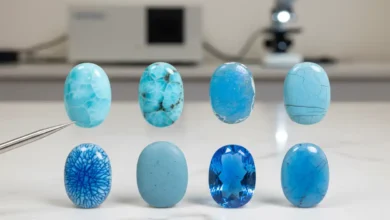
How to Spot Treated or Synthetic Larimar
Larimar is the trade name for blue to greenish-blue pectolite from the Dominican Republic. Its color is associated with trace…
Read More » -
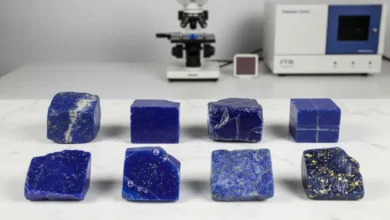
How to Spot Treated or Synthetic Lapis Lazuli
Lapis Lazuli is a blue metamorphic rock composed of several minerals rather than one crystal species with a fixed chemical…
Read More » -
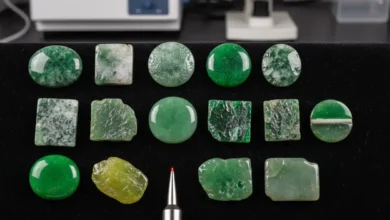
How to Spot Treated or Synthetic Jade
Jade is not one mineral. The name properly covers two tough ornamental materials: Jadeite Jade and Nephrite Jade. Jadeite is…
Read More » -
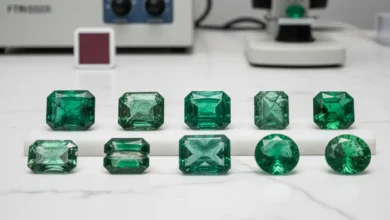
How to Spot Treated or Synthetic Emerald
Emerald is the green to bluish-green variety of beryl. Most natural Emeralds contain surface-reaching fractures, and clarity enhancement with oil,…
Read More » -
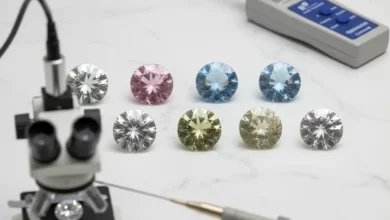
How to Spot Treated or Synthetic Diamond
A Diamond can be naturally mined, laboratory grown, color treated, clarity enhanced, coated, assembled, or imitated by a completely different…
Read More » -
How to Spot Treated or Synthetic Clear Quartz
Clear Quartz, also called rock crystal, is transparent or nearly colorless crystalline quartz. Its simple appearance can conceal a surprisingly…
Read More » -
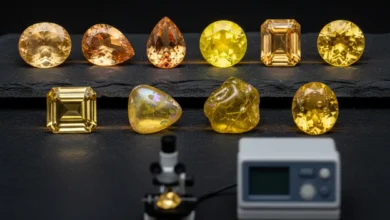
How to Spot Treated or Synthetic Citrine
Citrine is transparent yellow-to-orange quartz. Natural-color material exists, but it is comparatively uncommon. Most Citrine in the commercial market comes…
Read More » -
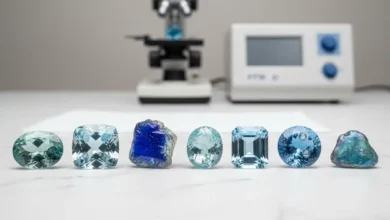
How to Spot Treated or Synthetic Aquamarine
Aquamarine is the greenish-blue to blue variety of beryl. Most commercial stones are naturally formed crystals whose color has either…
Read More »