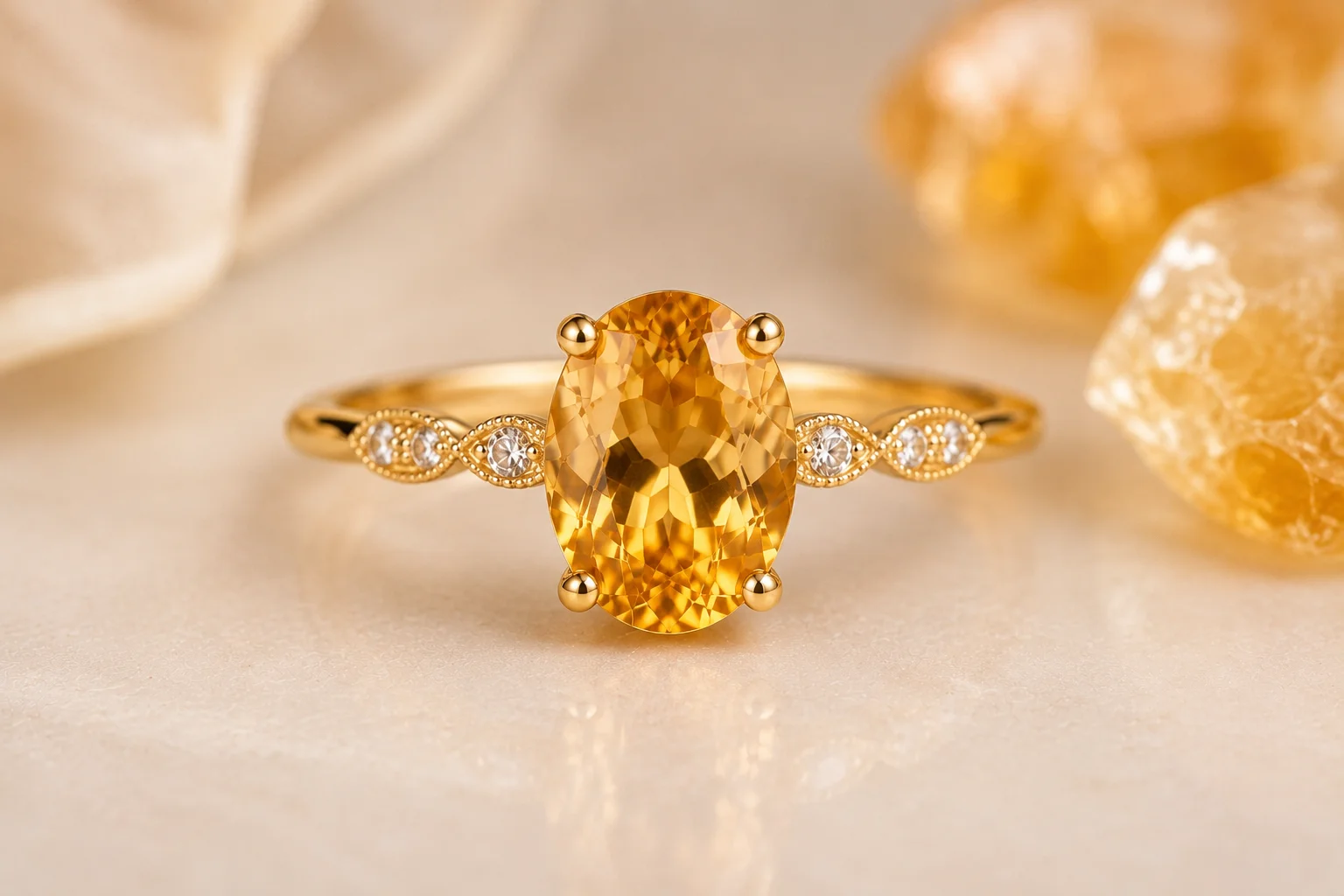
Citrine Ring: Styles, Quality & Buying Tips
A citrine ring combines the warm yellow-to-orange color of quartz with a jewelry form that receives far more knocks, pressure, and surface contact than a pendant or pair of earrings. That makes a good citrine ring purchase less about choosing the brightest photograph and more about balancing stone quality, treatment disclosure, setting protection, metal construction, sizing, comfort, and realistic everyday durability. Citrine is hard enough for regular jewelry use, but a ring puts the gem directly in the path of desks, door handles, bags, gym equipment, and accidental impacts, so the design matters as much as the stone.
Citrine is the yellow to orange variety of quartz, with a Mohs hardness of about 7. Quartz has no true cleavage, which is helpful in jewelry, but it can still chip or fracture when struck, particularly at exposed facet points, thin girdles, or corners. A well-made citrine ring therefore protects vulnerable areas without hiding the stone, holds it securely, fits the wearer correctly, and gives the seller enough information to judge whether the asking price reflects gemstone quality, metal value, workmanship, and disclosure rather than marketing language alone.
What Makes a Good Citrine Ring?
A good citrine ring starts with a stone that looks attractive in normal lighting, not only under intense retail illumination. Look for pleasing color, adequate transparency, a cut that returns light instead of showing a large transparent window through the center, and a finish without distracting chips or abrasion. Eye-clean citrine is widely available, so obvious fractures, dull polishing, or significant surface damage should generally be reflected in the price rather than presented as unavoidable characteristics of the gem.
The second part is construction. A citrine ring should place the stone securely enough for the intended wear, use metal that is honestly described, and avoid flimsy prongs or thin structural elements that can bend easily. If you are still comparing loose stones or seller claims before choosing a ring, the buy citrine guide explains practical questions about quality, disclosure, and purchase red flags.
Citrine Ring Durability: Hardness Is Only Part of the Story
The Mohs hardness of about 7 means citrine resists many everyday scratches better than softer gemstones, but hardness does not mean a citrine ring is immune to damage. Hardness measures resistance to scratching, while toughness describes resistance to breaking, chipping, or fracturing. Quartz has no cleavage, yet a sharp impact can still damage an exposed edge or fracture a stone, especially if an existing inclusion or surface-reaching fissure creates a weak point.
This distinction matters because a citrine ring is exposed to repeated hand-level contact. Someone who works at a keyboard may tap the ring against a desk edge; someone who handles tools, weights, luggage, or heavy equipment exposes it to stronger impacts. For frequent wear, choose a lower-profile setting, avoid unnecessarily exposed corners, and remove the ring for activities where a hard blow or crushing pressure is realistic.
Best Settings for a Citrine Ring
Setting style has a direct effect on how protected a citrine ring is. A bezel surrounds much or all of the gemstone perimeter with metal, offering strong edge protection and reducing the number of exposed areas that can catch on clothing. The tradeoff is that a full bezel changes the visual character of the ring and may make the stone appear slightly more enclosed, which some buyers love and others prefer to avoid.
Prong settings allow more of the gem to remain visible and can create a lighter, more traditional look, but prongs need enough thickness and contact to hold the stone securely. Four-prong designs expose more of the girdle than six-prong designs, while decorative claw prongs can look refined but should still be substantial enough for the stone size. Inspect whether each prong sits firmly against the gem and whether any prong looks lifted, thin, worn, or uneven.
A halo can add visual size and protect some of the center stone’s perimeter, although the small surrounding stones introduce more settings that need periodic inspection. Flush and gypsy-style settings are uncommon for large faceted citrine but can provide a low profile when the design and stone depth allow it. Whatever style you choose, the best citrine ring setting is one that matches how often and where the ring will actually be worn.
High-Profile vs Low-Profile Citrine Rings
A high-profile citrine ring can look dramatic because the stone sits prominently above the finger, but that height increases the chance of catching, knocking, or levering the setting against another object. Large oval, emerald-cut, pear, and cushion stones are especially noticeable when mounted high, so buyers should check the gallery, basket, shoulders, and prong structure rather than judging only the top view.
A lower-profile citrine ring usually feels more practical for frequent wear because the center of gravity sits closer to the finger. It may slide under sleeves more easily and encounter fewer accidental impacts. The ideal profile still depends on the stone depth and finger shape, so comfort should be evaluated from side and underside views as well as from the face-up photograph.
Citrine Ring Stone Shapes and Their Practical Differences
Round and oval cuts are popular because they have no sharp corners and can work in many setting styles. Cushion cuts also combine a broad face-up look with softened corners, while emerald and radiant cuts create a more geometric appearance. Pear and marquise shapes can be elegant, but their pointed ends deserve extra protection because a direct blow to a point can be more damaging than contact with a rounded outline.
The shape should also suit the proportions of the hand and the intended setting. An elongated citrine ring can visually lengthen the finger, whereas a broad cushion or round center stone may create more width across the hand. Shape is largely personal, but from a durability perspective, exposed points and very thin girdle areas should receive careful setting protection.
How Color Affects Citrine Ring Quality
Citrine ranges from light yellow through golden, orange, and brownish-orange tones. Attractive color should look reasonably even when viewed face-up, without distracting pale zones or areas that become overly dark. A deeper tone is not automatically better; a lively medium-toned stone can look more attractive in a citrine ring than a darker stone that loses brightness once mounted.
Very dark orange-brown material is sometimes marketed with premium-sounding trade language, but buyers should judge the actual appearance rather than a label. Lighting can also change how a citrine ring photographs, so compare images taken in more than one lighting condition when possible. If a seller provides only highly saturated studio photographs, ask for a neutral-light image or video before relying on color as a reason for a higher price.
Natural Color, Heat Treatment, and Seller Disclosure
Much of the citrine sold commercially is quartz whose color has been altered by heating amethyst or smoky quartz. Heat treatment is common, and treated material can be attractive and durable for ordinary jewelry use. The key issue for a citrine ring buyer is disclosure: a seller should not imply exceptional natural rarity while withholding treatment information or using vague phrases that make the material sound rarer than it is.
Natural-color citrine is less common in the market, but natural origin alone does not make every stone superior. Cut, color, transparency, condition, and overall beauty still matter. The treated citrine guide explains the treatment question in more detail, while real vs fake citrine covers misleading labels, lookalikes, and practical identification limits.
Choosing Metal for a Citrine Ring
Yellow gold naturally complements golden and orange citrine, while white gold, platinum, and silver can create stronger color contrast. Rose gold adds warmth and can make orange or brownish tones feel richer. The best metal is not determined only by appearance, however; metal purity, thickness, setting construction, maintenance needs, skin sensitivity, and budget all influence whether a citrine ring will remain comfortable and secure.
Sterling silver can be an accessible choice but may tarnish and is generally softer than many gold alloys or platinum. Gold alloy durability varies with karat and formulation, so a higher gold purity does not automatically mean a more durable ring. Platinum is dense and durable but changes the cost and feel of the piece. When evaluating a citrine ring, ask exactly what metal and purity are being sold rather than accepting terms such as “gold tone,” “gold finish,” or “silver color” as substitutes for composition.
Plating, Vermeil, and Base-Metal Rings
Plated jewelry can be attractive at a lower purchase cost, but plating is a surface layer and can wear through at high-contact areas such as the underside of a ring shank. Vermeil and other plated constructions should be described clearly so buyers understand what lies beneath the surface. A low-cost citrine ring can still be a sensible fashion purchase, but its price should reflect the underlying materials and expected maintenance.
If the wearer has known metal sensitivities, ask what metal is present beneath plating and whether the seller can provide meaningful composition information. The gemstone itself is only one part of wearing comfort; skin contact is primarily with the shank, prongs, gallery, and any exposed base metal.
Citrine Ring Sizing and Fit
Correct sizing matters because a loose citrine ring can rotate, strike surrounding objects more often, and feel top-heavy, while a ring that is too tight can become uncomfortable and difficult to remove. Large center stones increase the tendency to spin, especially when the shank is narrow or the ring is noticeably heavier on top. A wider shank, sizing beads, or a better-balanced setting can sometimes improve stability without making the ring excessively tight.
Finger size can also vary with temperature, activity, and normal swelling, so evaluate comfort across typical conditions rather than relying on a single quick fitting. If a citrine ring has stones set around much of the band, an unusual shank, or delicate pavé work, ask about future resizing before purchase because some constructions are more difficult to alter safely.
Prongs, Bezel Edges, and Setting Security
Before buying a citrine ring, inspect the stone from several angles. The center stone should sit evenly, prongs should make proper contact, and the stone should not rattle when the ring is gently moved. A bezel should have a clean, continuous edge where intended, without obvious gaps that suggest poor seating or workmanship.
Pay particular attention to thin prong tips and exposed corners. A prong can catch on fabric before it becomes visibly bent, and repeated snagging can gradually reduce security. If the ring will be worn often, periodic professional inspection is reasonable, especially after a noticeable impact or whenever the stone begins to move.
How to Judge Cut Quality in a Citrine Ring
Citrine often occurs in sizes large enough for cutters to prioritize weight retention, which can produce stones that are overly deep or poorly proportioned. A large transparent area through the middle, often called a window, can make a citrine ring look washed out because light passes through instead of returning to the viewer. Excessive darkness can create the opposite problem, with parts of the stone appearing nearly black under normal viewing conditions.
Good cutting balances brightness, color, symmetry, polish, and usable face-up size. Compare dimensions as well as carat weight because two stones with the same weight may look very different once mounted. A deep stone can carry weight below the setting while providing less visible spread across the finger.
Citrine Ring Price: What Are You Actually Paying For?
The price of a citrine ring can reflect several components: the citrine itself, metal type and weight, setting labor, side stones, craftsmanship, brand positioning, and retailer margin. Because quartz is comparatively available in larger sizes, a high carat weight does not automatically justify a large premium. A smaller stone with excellent color and cutting can be more appealing than a heavier stone with weak proportions or obvious damage.
For a deeper look at stone-specific valuation, see the citrine price guide. When comparing finished rings, keep the gemstone and the mounting mentally separate: substantial precious metal or intricate workmanship may account for more of the total cost than the citrine itself.
Citrine Ring Styles That Make Sense for Different Wear Patterns
A solitaire citrine ring keeps attention on one center stone and makes it relatively easy to inspect setting quality. A halo design adds surrounding stones and visual presence but also creates more prongs or bead-set areas to maintain. Three-stone designs distribute attention across multiple gems and require good matching for color, proportions, and height, while cluster rings can create a larger visual footprint from several smaller stones.
The useful question is not which style is universally best, but whether the construction suits the wearer’s habits. Someone seeking an occasional statement ring may accept a large elevated stone, while someone who wants frequent wear may prefer a lower profile, protected perimeter, moderate stone size, and sturdy shank. The Jewelry & DIY collection can help compare form-specific considerations across other citrine jewelry pieces without treating every jewelry type as interchangeable.
Citrine Ring vs Other Citrine Jewelry
A ring experiences more direct impact than most necklaces and earrings because hands constantly interact with surrounding surfaces. A citrine necklace is more influenced by chain length, bail strength, pendant balance, and clasp construction, while citrine earrings require attention to pair matching, weight, posts or hooks, backs, and left-right balance. A citrine bracelet shares some impact exposure with rings but adds repeated desk contact, drill-hole quality, stringing material, and wrist fit.
This difference is why a citrine ring should not be chosen using a generic gemstone-jewelry checklist. Setting height, shank strength, prong security, stone exposure, sizing, and hand activity deserve more weight than they would for jewelry worn away from the hands.
Citrine Ring Care and Cleaning
The safest routine for most citrine rings is gentle cleaning with lukewarm water, mild soap, and a soft brush, followed by thorough rinsing and drying with a soft cloth. Clean beneath the stone when the setting allows because lotion, soap residue, and skin oils can collect behind the gem and reduce brightness. Avoid harsh chemicals, abrasive cleaners, and unnecessary thermal shock.
Ultrasonic or steam cleaning may not be appropriate for every citrine ring, particularly when the stone has fractures, the mounting contains other sensitive gems, or the setting is already compromised. A cautious manual method is easier to control. For a fuller maintenance routine, use how to clean citrine jewelry rather than relying on aggressive cleaning shortcuts.
Everyday Wear: When to Remove a Citrine Ring
Remove a citrine ring before activities that create realistic impact, crushing, abrasion, or chemical exposure, including weight training, heavy cleaning, gardening, mechanical work, and tasks where the ring may catch on equipment. Removing jewelry is also sensible before applying thick lotions or products that can build up around the setting.
Storage matters when the ring is off the hand. Keep it separated from harder gemstones and from pieces that can strike or scrape it, ideally in a fabric-lined compartment or individual pouch. Citrine is reasonably durable, but careful storage reduces abrasion to both the gemstone and the metal finish.
How to Buy a Citrine Ring Online
Online buying works best when the seller provides enough information to evaluate the entire citrine ring rather than only a flattering face-up image. Look for clear stone dimensions, approximate carat weight when relevant, metal type and purity, treatment disclosure, ring size, setting construction, return terms, and photographs or video from multiple angles. Side views are particularly valuable because they reveal profile height, basket construction, prong length, and how much of the stone is exposed.
Ask questions when descriptions are vague. If a seller claims that a citrine ring is unusually rare, natural, untreated, investment-grade, or from a specific locality, ask what evidence supports the claim. Marketing language should not replace disclosure. Buyers choosing among yellow gemstones may also find the measurable differences in citrine vs yellow sapphire and citrine vs yellow topaz useful before committing to a ring.
Common Citrine Ring Buying Mistakes
One common mistake is paying for size while ignoring cut. Large citrine is available, so weight alone is not a reliable quality signal. Another is assuming that darker color always means better quality, when excessively dark or brownish material may be less lively than a balanced golden stone. Buyers also sometimes overlook the mounting, even though thin prongs, a weak shank, or an uncomfortable high profile can create more practical problems than a minor difference in gemstone color.
Treatment confusion is another frequent issue. A citrine ring made with heated quartz can be perfectly attractive, but the seller should describe the material honestly. Finally, do not assume every yellow stone sold under a citrine name has been properly identified. If identification matters, compare the seller’s disclosure with the physical characteristics and use specialist testing when the value or claim justifies it.
A Practical Citrine Ring Buying Checklist
Before purchasing, confirm the following points:
- The stone is identified clearly as citrine/quartz.
- Treatment information is disclosed rather than implied.
- Color looks attractive in neutral lighting.
- The stone is transparent enough for the intended style and free from distracting damage.
- The cut does not show excessive windowing, darkness, or poor symmetry.
- Vulnerable points and edges receive appropriate setting protection.
- Prongs or bezel edges appear secure and evenly finished.
- The ring profile suits the intended frequency of wear.
- Metal type and purity are stated clearly.
- Plating or vermeil is disclosed where applicable.
- Ring size, shank width, and resizing limitations are understood.
- Stone dimensions are provided in addition to any carat weight claim.
- Return and repair policies are clear.
- The asking price makes sense for the gemstone, metal, construction, and workmanship together.
Is a Citrine Ring Good for Everyday Wear?
A citrine ring can work for regular wear when it is well made and worn with reasonable care. Quartz’s hardness of about 7 provides useful scratch resistance, and the absence of cleavage removes one common structural weakness found in some other gemstones. However, the ring can still chip or fracture from a hard impact, and exposed settings increase that risk.
For frequent wear, prioritize a protective or low-profile design, secure setting work, comfortable sizing, and a stone without obvious structural damage. Occasional inspection and sensible removal during high-risk activities will do more for longevity than assuming hardness alone makes the ring indestructible.
Final Thoughts
The best citrine ring is not simply the largest or darkest stone within budget. It is a balanced piece in which color, cut, treatment disclosure, setting protection, metal quality, comfort, sizing, and price all make sense for the way the ring will actually be worn. Citrine is durable enough to be practical jewelry, but ring-specific exposure means construction deserves serious attention.
Choose a citrine ring by inspecting the whole object: gemstone, setting, shank, profile, metal, fit, and seller disclosure. When those elements are evaluated together, it becomes much easier to distinguish a genuinely well-made ring from one that relies on oversized stones, vague rarity claims, or generic style language.
FAQs
Is citrine durable enough for a ring?
Yes. Citrine has a Mohs hardness of about 7 and no cleavage, making it suitable for rings when the setting provides reasonable protection. It can still chip or fracture from hard impacts, so a citrine ring should be removed for activities that create significant impact or crushing risk.
What setting is best for a citrine ring?
A bezel offers strong edge protection, while a sturdy prong setting can provide a more open look. The best choice depends on stone shape, profile height, frequency of wear, and how much protection vulnerable edges or points need.
Is heat-treated citrine okay in a ring?
Yes. Heat-treated citrine is common and can be attractive and durable in normal jewelry use. The important issue is honest disclosure so the buyer understands what is being purchased and does not pay a rarity premium based on misleading claims.
Does a darker citrine ring cost more?
Not automatically. Color value depends on hue, tone, saturation, evenness, transparency, and overall appearance. A bright golden stone can be more attractive than a much darker stone that appears brown or loses brilliance in the setting.
Can I wear a citrine ring regularly?
A well-constructed citrine ring can be worn regularly, but it should be removed for heavy work, gym activities, gardening, harsh cleaning, or any task likely to cause strong impacts. Low-profile and protective settings are generally more practical for frequent wear.
How should a citrine ring fit?
It should feel secure without excessive tightness and should not rotate constantly on the finger. Large top-heavy stones may benefit from a wider shank, better balance, or sizing adjustments that reduce spinning.
How do I clean a citrine ring?
Use lukewarm water, mild soap, and a soft brush, then rinse and dry carefully. Avoid abrasive cleaners, harsh chemicals, and unnecessary heat. If the setting is loose or the stone is fractured, have it inspected before using any mechanical cleaning method.
What should I ask a seller before buying?
Ask about stone identity, treatment, dimensions, metal type and purity, plating, ring size, setting construction, return terms, and any evidence supporting unusual rarity or origin claims. A good citrine ring listing should provide enough detail to evaluate both the gemstone and the mounting.
Are large citrine rings rare?
Not necessarily. Quartz can occur in large crystals, so a high carat weight alone does not establish rarity. Cut quality, color, transparency, condition, treatment disclosure, craftsmanship, and provenance are more meaningful when judging the quality and value of a large ring.
How can I tell whether a citrine ring is good quality?
Look for attractive and reasonably even color, good transparency, a well-proportioned cut, secure setting work, a durable shank, honest treatment disclosure, and clear metal specifications. The ring should also be comfortable, appropriately sized, and free from obvious chips, looseness, or poor finishing.