Libyan Desert Glass: Meaning, Properties & Uses
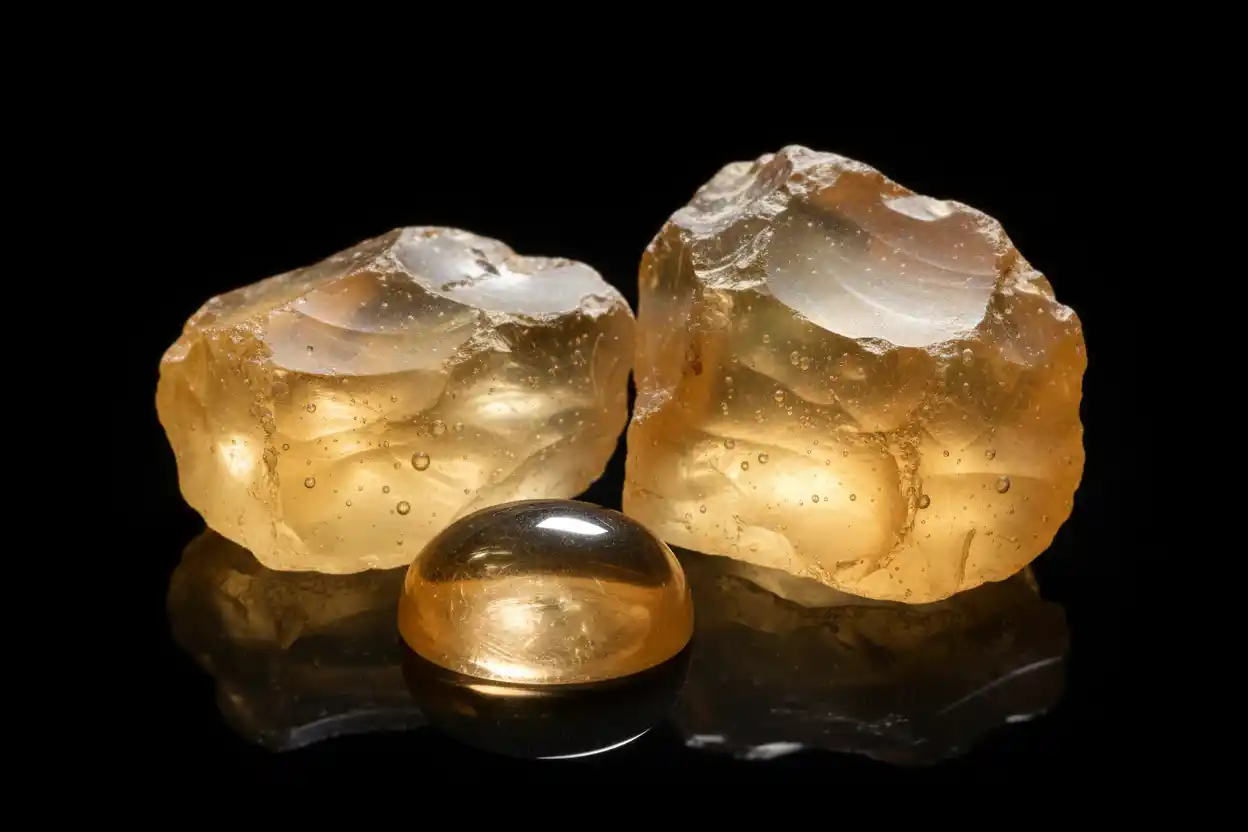
Libyan Desert Glass is a rare, naturally formed silica glass found across a restricted part of the Great Sand Sea in western Egypt near the Libyan border. It formed approximately 29 million years ago when an extraterrestrial impact generated enough heat and pressure to melt silica-rich surface material before the liquid cooled rapidly into yellow, greenish-yellow and nearly colorless glass.
Libyan Desert Glass at a Glance
| Property | Libyan Desert Glass Characteristics |
|---|---|
| Material type | Natural impact glass or impactite |
| Composition | Predominantly silica glass, commonly close to 98% SiO₂, with minor iron, aluminum, titanium and other elements |
| Colors | Pale yellow, golden yellow, honey, greenish yellow, pale green and nearly colorless |
| Crystal system | None; amorphous glass |
| Natural form | Irregular wind-shaped fragments, frosted pieces and rounded or deeply sculpted surfaces |
| Luster | Vitreous on fresh surfaces; dull or frosted on weathered exteriors |
| Transparency | Transparent to translucent |
| Mohs hardness | Approximately 5.5–6.5 |
| Cleavage | None |
| Tenacity | Brittle with conchoidal fracture |
| Common uses | Geological specimens, pendants, cabochons, beads, carvings and historical artifacts |
| Main care concern | Brittle edges, surface pitting, glass imitations and unsupported provenance claims |
What Is Libyan Desert Glass?
Libyan Desert Glass is an amorphous natural glass rather than a crystalline mineral. Most of its mass consists of silica, but the atoms lack the regular repeating arrangement found in quartz.
The material belongs to the broad impact-glass family because extreme heat melted silica-rich terrestrial material during a meteorite impact. The melt then cooled too quickly to crystallize fully.
Natural glass can form through several mechanisms. Volcanic glass such as obsidian develops from rapidly cooled lava, while impact glass forms when an extraterrestrial collision melts terrestrial rocks or sediment.
Libyan Desert Glass therefore differs from both an ordinary mineral crystal and a fragment of meteorite metal. Most of the glass originated from Earth material transformed by the impact rather than from the impacting object itself.
The commercial names Libyan Gold Tektite, Libyan Tektite, Great Sand Sea Glass and Egyptian Desert Glass also appear in the market. “Libyan Desert Glass” remains the clearest established name, even though most documented specimens occur within western Egypt.
Where Is Libyan Desert Glass Found?
The glass occurs in a remote section of the Great Sand Sea, mainly across the southwestern Egyptian desert near the Libyan border.
Fragments lie among dunes and gravel corridors across a strewn field covering thousands of square kilometers. Wind action has exposed, transported and sculpted the glass over long periods.
The restricted locality forms an important part of its identity. Yellow glass from another desert cannot be classified as Libyan Desert Glass solely through color and texture.
Collection history also matters because access, export rules and regional conditions have changed. Older specimens may carry handwritten labels, expedition records or collection documentation that strengthens provenance.
A dealer stating only “Sahara” provides less useful information than one identifying the Great Sand Sea and explaining when the specimen entered the market.
How Did Libyan Desert Glass Form?
Researchers debated the origin for decades because no universally accepted source crater was initially identified.
One hypothesis proposed that a powerful atmospheric airburst produced enough radiant heat to melt the desert surface without forming a conventional crater. Another linked the material to a direct hypervelocity impact.
Evidence from shocked minerals now strongly supports impact-related melting.
High-pressure mineral transformations recorded within zircon grains require conditions associated with a meteorite striking the ground. Such pressure cannot be explained by heat from an atmospheric explosion alone.
During the event, extreme temperature melted quartz-rich sandstone, sediment or sand. Temperatures exceeded those of ordinary surface fires and volcanic lava because nearly pure silica requires intense heat to melt.
The liquid cooled rapidly into glass. Later fracturing, burial, wind erosion and movement among dunes created the irregular forms seen today.
The precise crater or impact geometry remains less certain than the impact origin itself. Accordingly, a careful description can state that Libyan Desert Glass is impact glass without claiming that one proposed crater has been conclusively established.
Why Is the Glass Yellow?
Pure silica glass would be colorless.
Small amounts of iron and other trace elements produce pale yellow, honey and greenish tones. Oxidation state, element concentration, melt conditions and microscopic inclusions influence the final color.
Some pieces appear nearly colorless in thin edges but golden when viewed through greater thickness. Others show brown streaks, white cloudy areas or darker inclusions.
The most desirable commercial material commonly displays an even golden or greenish-yellow color with good translucency.
Very dark brown areas may contain mineral-rich melt components or unmelted target-rock inclusions. Pale white regions may reflect bubbles, devitrification or microscopic silica phases.
Color alone does not prove authenticity because manufactured glass can be produced in almost any yellow shade.
The yellow gemstones and yellow crystals pages provide broader color context without replacing impact-glass identification.
Libyan Desert Glass and Tektites
A tektite is natural glass produced when an impact ejects molten terrestrial material through the atmosphere before it falls back to Earth.
Libyan Desert Glass is frequently called a tektite, especially in retail markets. However, some researchers and collectors prefer the broader term impact glass because its exact transport and deposition history may differ from classic tektites.
Classic tektites commonly show splash forms, aerodynamic shapes and chemical relationships to a known impact crater. Libyan Desert Glass often occurs as larger irregular fragments with extensive wind sculpting.
The difference is partly technical rather than commercial. Both terms connect the glass to a high-energy extraterrestrial impact, but “impact glass” avoids claiming that every fragment followed a classic airborne tektite trajectory.
Libyan Desert Glass vs Moldavite
Moldavite is a green tektite associated with the Ries impact event in Central Europe.
Moldavite typically has a deeper bottle-green-to-olive color and a lower silica content than Libyan Desert Glass. Its natural surfaces often show sharp etched grooves, pits and sculptural forms.
Libyan Desert Glass is usually pale yellow, honey or greenish yellow and contains exceptionally high silica.
Both materials are amorphous, brittle and capable of conchoidal fracture. Neither should be identified through color alone because green bottle glass and yellow decorative glass can imitate them.
Moldavite has a larger established jewelry and metaphysical market, while Libyan Desert Glass remains strongly connected with impact geology, desert provenance and historical artifacts.
Libyan Desert Glass vs Obsidian
Obsidian forms when volcanic lava cools rapidly.
Libyan Desert Glass formed when an impact melted terrestrial silica-rich material.
Obsidian commonly appears black, brown, gray or banded, although transparent and pale varieties exist. Its composition generally includes more aluminum, sodium, potassium, iron and other elements than the nearly pure silica found in much Libyan Desert Glass.
Both materials lack a crystal system and break conchoidally. Standard hardness testing may overlap, so composition, inclusions and provenance provide stronger evidence.
The types of obsidian guide covers volcanic-glass varieties without treating impact glass as an obsidian type.
Historical Use
Humans encountered Libyan Desert Glass long before its scientific description.
Prehistoric communities shaped pieces into tools and cutting implements. Its glassy fracture allowed sharp edges to form when struck, much like flint and obsidian.
The most famous ancient use appears in a scarab set within a pectoral associated with the tomb of Tutankhamun. Analysis identified the carved yellow material as Libyan Desert Glass.
This artifact demonstrates that the glass traveled far from its desert source and held ornamental or symbolic importance in ancient Egypt.
However, one royal object does not establish a universal ancient metaphysical meaning. The material may have been valued for its color, rarity, workability, geographic source or combination of these factors.
Modern sellers sometimes describe it as the “Stone of Tutankhamun” or “Pharaoh’s Glass.” These expressions refer to the famous artifact rather than an official gemological variety.
Natural Surface Features
Many specimens have frosted, pitted or deeply sculpted exteriors.
Windblown sand abrades exposed surfaces and creates matte textures, softened ridges and irregular cavities. Chemical weathering and movement through desert sediment can deepen the sculptural form.
A fresh broken surface appears smoother, glassier and more reflective than the weathered exterior.
Internal bubbles may be elongated, rounded or irregular. White streaks and inclusions can represent cristobalite, zircon-related phases, unmelted mineral fragments or zones of partial crystallization.
Natural specimens are rarely perfectly symmetrical. Uniform smooth pebbles with identical pits may indicate tumbling, carving or manufactured imitation.
How to Identify Genuine Libyan Desert Glass
Identification begins with glass properties rather than spiritual claims.
A genuine piece should be amorphous, show conchoidal fracture and lack the crystal boundaries expected in quartz. The refractive index and specific gravity differ from many common bottle glasses, although ranges can overlap.
Under magnification, analysts may find silica-rich inclusions, gas bubbles, flow structures and high-temperature mineral features.
Chemical testing should show a silica-dominant composition consistent with known material. Trace-element patterns can also help separate authentic glass from manufactured substitutes.
Natural wind erosion produces complex surface textures that continue around irregular forms. Artificial acid etching or sandblasting can imitate roughness, but repeated patterns and fresh tool marks provide warning signs.
The broader procedures in how to identify crystals and how to spot fake crystals provide initial checks, but laboratory analysis is appropriate for high-value pieces.
Common Imitations and Misleading Claims
Yellow bottle glass, furnace slag, art glass and resin can all imitate Libyan Desert Glass.
Manufactured glass may contain abundant round bubbles, uniform color and fresh surfaces without genuine desert abrasion. Slag can include metallic globules, strong color zoning or industrial residue.
Resin feels warmer and softer than natural silica glass. Mold seams, surface scratches and low density provide additional clues.
Some genuine pieces receive artificial frosting, polishing or carving. Such modification does not change the material’s origin, but it should be disclosed because untouched surfaces carry different collector value.
A certificate supplied only by the seller does not guarantee authenticity. Meaningful documentation should identify the testing method or laboratory rather than offering a decorative authenticity card.
Claims that the material is a meteorite fragment are also inaccurate. It is terrestrial impact glass, even though an extraterrestrial object triggered its formation.
Jewelry Suitability
Libyan Desert Glass can be carved, drilled or polished into jewelry, but it remains brittle.
Its hardness offers moderate resistance to scratching, yet thin edges and natural pits can chip after impact. The gemstone hardness chart should therefore be considered alongside the distinction in gemstone toughness versus hardness.
Pendants and earrings provide safer uses than exposed rings. A wire-wrapped natural fragment should be secured without placing concentrated pressure across a thin point.
Cabochons can fit protective bezels, although heavily weathered surfaces may be retained rather than polished because the natural texture forms part of the specimen’s appeal.
A drilled hole can intersect a hidden bubble or strain fracture. Beads and pendants should be inspected for cracks spreading outward from the opening.
Treatments and Alterations
Most collector specimens are sold in natural form.
Commercial pieces may nevertheless be polished, tumbled, carved, drilled, coated or stabilized with resin.
Oil can temporarily strengthen translucency and hide dry surface scratches. Clear resin may fill pits or support fragile sections.
Some pieces are heated or coated to improve color, although these are not standard enhancements expected in properly documented natural specimens.
The categories in gemstone treatments explained help separate ordinary cutting from filling, coating and reconstruction.
A polished piece can remain genuine, but untouched natural sculpture generally carries greater geological and collector interest.
Libyan Desert Glass Price and Value
The market varies widely because small fragments, large sculptural specimens and finished jewelry are sold through different channels.
| Libyan Desert Glass Product | Broad Current Asking Range |
|---|---|
| Small 1–5 gram fragment | Approximately $5–$30 |
| Commercial 5–15 gram specimen | Approximately $20–$75 |
| Attractive translucent 15–40 gram piece | Approximately $50–$200 |
| Large sculptural or strongly translucent specimen | Approximately $150–$750+ |
| Exceptional large collector specimen | Several hundred to more than $1,000 |
| Small pendant or cabochon | Approximately $30–$150 |
| Gold or designer jewelry | Determined mainly by metal, workmanship and provenance |
Weight does not determine value alone. Color, translucency, natural sculpture, size, surface condition and credible provenance matter strongly.
A pale piece with beautiful wind erosion may be more desirable than a heavier dull fragment. Rare greenish material and specimens with scientifically interesting inclusions can also receive premiums.
Low online prices deserve scrutiny when the seller offers large quantities of uniform glass without locality or testing information.
Buying Libyan Desert Glass
Buy the exact photographed specimen whenever possible.
Request its weight, dimensions, collection history and any known treatments. Images should show the front, reverse, edges and fresh or weathered surfaces under neutral light.
A seller should identify the source as the Great Sand Sea region rather than merely using the word Libya.
For expensive material, independent compositional or spectroscopic analysis adds greater confidence than a seller-issued certificate.
Avoid purchasing solely because of claims that the glass contains alien material, guarantees wealth or came directly from Tutankhamun’s tomb.
The meteorite guide can help distinguish true extraterrestrial specimens from terrestrial rocks and glasses created by impacts.
Cleaning and Storage
Clean the glass briefly with lukewarm water, mild soap and a soft brush.
Avoid aggressive scrubbing across naturally frosted surfaces. Dirt may collect inside pits, but hard tools can scratch weathered areas or damage fragile projections.
Ultrasonic cleaning offers little benefit. Vibration can expand internal strain fractures, making hand cleaning safer under the principles explained in gemstones and ultrasonic cleaners.
Store specimens separately from harder gems. Sapphire, topaz and diamond can scratch the surface, while two glass fragments can chip each other if they collide.
Large sculptural pieces should rest on padded stable supports rather than on narrow edges.
Libyan Desert Glass Meaning and Symbolism
Modern symbolism commonly connects Libyan Desert Glass with transformation, resilience and sudden changes that produce an unexpected result.
Its scientific history provides a material-specific theme: an extreme impact briefly melted terrestrial silica, creating natural glass that survived nearly 29 million years of desert exposure.
The golden color may inspire associations with confidence, creativity and personal direction. Its extraterrestrial connection also encourages themes of scale, perspective and recognizing that events outside human control can leave lasting records.
These meanings remain contemporary cultural or spiritual interpretations. Scientific evidence does not show that Libyan Desert Glass attracts money, changes consciousness or transmits extraterrestrial energy.
Frequently Asked Questions About Libyan Desert Glass
Is Libyan Desert Glass a mineral?
No. It is amorphous natural impact glass rather than a crystalline mineral.
Is Libyan Desert Glass a meteorite?
No. It consists mainly of terrestrial silica melted by an extraterrestrial impact event.
How old is Libyan Desert Glass?
It formed approximately 29 million years ago.
Where is it found?
It occurs in the Great Sand Sea of western Egypt near the Libyan border.
Is it a tektite?
It is often marketed as a tektite, although impact glass is the broader and less disputed classification.
What causes its yellow color?
Small amounts of iron and other trace elements within the silica glass create yellow, honey and greenish tones.
Was Libyan Desert Glass used in Tutankhamun’s jewelry?
Yes. A carved scarab in a famous pectoral from the tomb was made from the material.
How can I distinguish it from yellow bottle glass?
Authentic material combines the correct composition, density, inclusions, fracture and natural desert-weathered surface. Laboratory testing provides the strongest confirmation.
Can Libyan Desert Glass be worn in a ring?
It can, but pendants and earrings are safer because natural glass is brittle and vulnerable to edge chipping.
Is Libyan Desert Glass normally treated?
Natural specimens are often untreated, although polishing, drilling, oiling, resin filling and artificial frosting are possible.
Can it go in an ultrasonic cleaner?
Hand cleaning is safer because vibration may expand hidden strain fractures.
What makes Libyan Desert Glass valuable?
Size, translucency, golden or greenish color, natural surface sculpture, condition, inclusions and documented provenance determine value.
Libyan Desert Glass belongs in both Crystals That Start With L and Gemstones That Start With L, although its correct identity remains natural impact glass.
Safety disclaimer: Cutting or grinding Libyan Desert Glass can release respirable silica-rich dust and sharp fragments. Use wet methods, effective extraction, eye protection and suitable respiratory protection. Do not inhale polishing residue or use powdered material in drinking water.