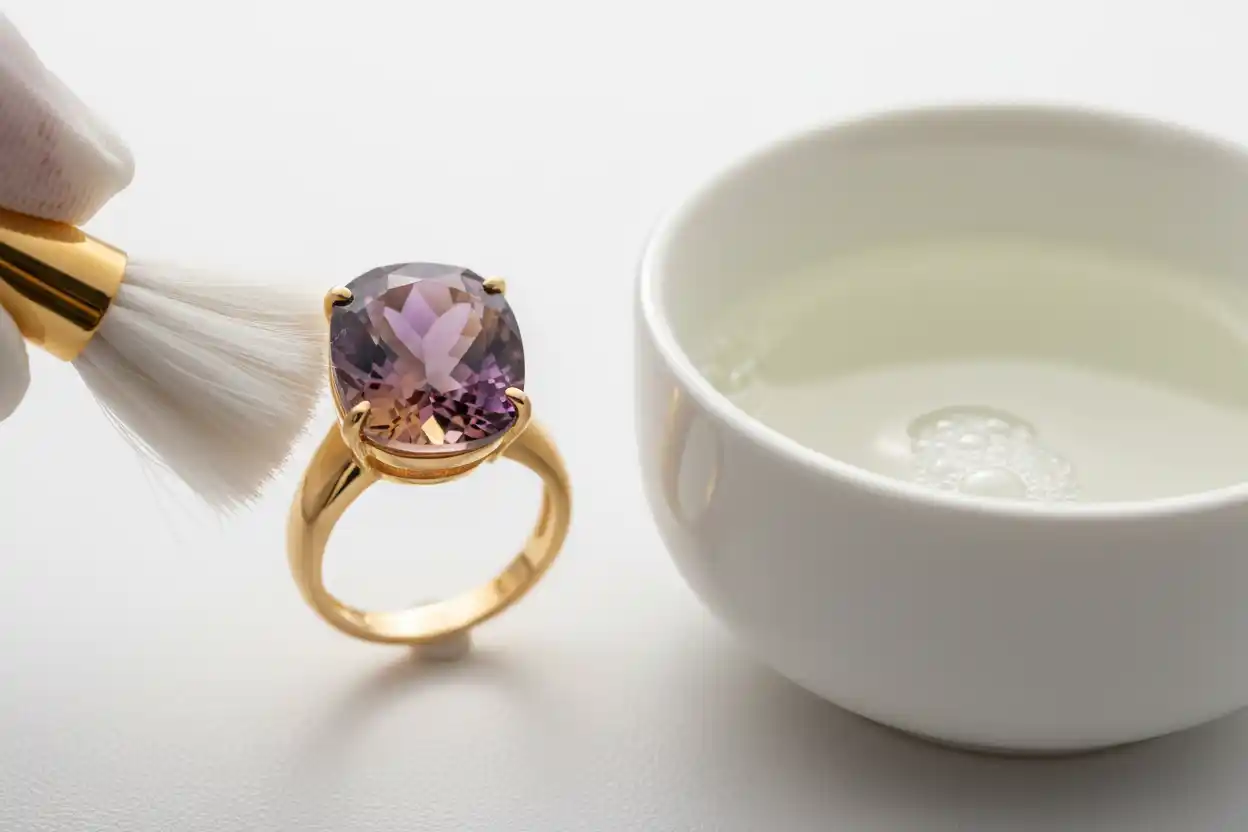
How to Clean Ametrine Jewelry Safely
Ametrine jewelry is best cleaned with lukewarm water, a small amount of mild soap, and a soft brush. Although ametrine is durable enough for rings and other frequently worn pieces, concentrated heat, sudden temperature changes, abrasive cleaners, and unsuitable mechanical equipment can still damage the stone or its setting.
The safest method also preserves the sharp boundary between ametrine’s purple and yellow zones. Those colors come from amethyst and citrine regions within a single quartz crystal, as explained in the broader Ametrine meaning guide. Physical cleaning should remove oils and debris without attempting to alter, intensify, or “restore” either color.
Why Ametrine Needs Quartz-Specific Care
Ametrine consists of naturally joined purple amethyst and yellow-to-orange citrine. Readers interested in those component varieties can compare the separate guides to Amethyst and Citrine.
Like other crystalline quartz, ametrine ranks 7 on the Mohs scale and has good toughness. However, a hardness rating measures resistance to scratching rather than immunity from chipping, thermal shock, or setting damage. The distinction is covered in the gemstone hardness chart and the guide to gemstone toughness versus hardness.
| Property | Care implication |
|---|---|
| Mineral species | Quartz |
| Color zones | Purple amethyst and yellow or orange citrine |
| Mohs hardness | 7 |
| Toughness | Good |
| Safest routine cleaning | Lukewarm water, mild soap, and a soft brush |
| Ultrasonic cleaning | Usually safe only for untreated, unfilled stones in secure settings |
| Steam cleaning | Not recommended |
| Main risks | Abrasion, abrupt temperature change, excessive heat, filling, dye, and loose settings |
Ametrine has no pronounced cleavage, but that does not make it unbreakable. The gemstone cleavage guide explains why inclusions, surface-reaching fractures, sharp blows, and mounting stress can matter even in a gem that does not split along a strong cleavage plane.
Gather the Right Cleaning Supplies
Prepare a shallow bowl of lukewarm water rather than cleaning over an open sink. Add only a few drops of mild liquid dish soap. You will also need a very soft toothbrush or jewelry brush, a second bowl of clean lukewarm water, and a lint-free cloth.
The water should feel comfortably warm rather than hot. Avoid soaps containing bleach, abrasive particles, strong alkaline ingredients, heavy moisturizers, or aggressive degreasers.
A soft brush is useful because skin oils often accumulate beneath the stone. However, brush quality matters. Discard any toothbrush with stiff, bent, split, or hardened bristles.
Inspect the Jewelry Before Washing It
Check the ametrine under bright light before it enters the water. Look for raised or bent prongs, movement in the center stone, chipped facet junctions, visible cracks, missing accent stones, and worn metal around the setting.
Do not continue with home cleaning when the stone moves or the mounting appears damaged. Water will not repair a weak setting, and brushing can dislodge a stone that is already loose.
Treatment history also affects the method. Ametrine is not commonly enhanced, but fracture filling and dyeing are possible. The tracker’s broader Gemstone Treatments Explained guide covers how fillers, dyes, coatings, and other alterations can change care requirements.
Related quartz treatments are addressed in the dedicated guides to treated Amethyst and treated Citrine. When the seller cannot confirm whether a stone has filled fractures, choose warm soapy water and avoid machines.
Clean the Ametrine Gently
Place the jewelry in the lukewarm solution or hold it securely over the bowl. Let the water soften lotion, soap film, and skin oils for a short period, then use the soft brush to clean around the stone.
Focus on the pavilion, gallery, and openings behind the ametrine. Residue beneath a transparent gemstone can reduce brightness and make its color zoning look muddy.
Brush lightly around prongs and bezel edges. Do not force bristles beneath the metal, scrape the girdle, or press into a visible fracture. Ametrine’s hardness may protect the quartz surface from many scratches, but it does not protect thin prongs, plating, solder joints, or softer accent stones.
Long soaking is unnecessary. A brief wash removes normal grime without exposing adhesives, repaired areas, stringing materials, or filled fractures to extended moisture.
Rinse at a Similar Temperature
Transfer the piece to a second bowl of clean lukewarm water. Keeping the rinse close to the wash temperature avoids an abrupt change that could stress the quartz or the mounting.
Do not rinse over an uncovered drain. Even a secure-looking gem can become loose after years of wear, and a small earring or pendant may slip from wet fingers.
Blot the jewelry with a lint-free cloth rather than rubbing aggressively. Allow moisture beneath the setting to evaporate naturally at room temperature.
Avoid hair dryers, radiators, hot windowsills, and direct concentrated sunlight. Added heat does not improve the result and may affect color, filler, solder, or other components.
Can Ametrine Go in an Ultrasonic Cleaner?
Ultrasonic cleaning is usually acceptable for untreated ametrine that has no significant fractures and sits in a secure modern setting. However, it is not automatically appropriate for every ametrine jewel.
| Condition | Ultrasonic recommendation |
|---|---|
| Sound, untreated ametrine in a secure setting | Usually acceptable |
| Laboratory-grown quartz in a secure setting | Usually acceptable |
| Dyed ametrine | Avoid |
| Fracture-filled ametrine | Avoid |
| Visible cracks or chips | Avoid |
| Antique, glued, repaired, or delicate setting | Avoid |
| Treatment history unknown | Use warm soapy water instead |
| Loose pavé or accent stones | Avoid |
Ultrasonic vibration can loosen worn prongs, enlarge a surface-reaching fracture, disturb filler, or dislodge small accent stones. The planned guide to gemstones in ultrasonic cleaners owns the broader equipment comparison.
Even when the stone itself can tolerate the machine, the entire piece must be evaluated. An ametrine surrounded by pearls, opal, emerald, enamel, or glued components should be cleaned according to the most vulnerable material.
Why Steam Cleaning Is Not Recommended
Steam introduces concentrated heat and rapid temperature change. Quartz can fracture when exposed to abrupt thermal shifts, while heat may affect fillers, adhesives, soldered repairs, and accompanying stones.
Warm soapy water removes the residue responsible for most dullness without creating that risk. Consequently, steam offers little practical advantage for routine ametrine maintenance.
A professional jeweler may select another method after inspecting the piece, but home steam cleaning should not be justified solely by ametrine’s Mohs hardness.
Heat and Light Exposure
Some ametrine colors may fade after prolonged exposure to intense light. Ordinary indoor wear is not the same as leaving the jewelry for months on a sunny windowsill, beneath a powerful display lamp, or inside a hot vehicle.
Heat can also change quartz color. Because the purple and yellow regions are central to ametrine’s appearance, any heat-related alteration may reduce its visual balance rather than improve it.
Store the piece away from concentrated sunlight and high-temperature locations. The larger topic is addressed in Which Crystals Can and Can’t Go in the Sun.
Chemicals and Cleaning Products to Avoid
Do not use toothpaste, baking soda, scouring powder, polishing paste, or a stiff brush. These products may scratch the metal, remove plating, soften facet edges through repeated abrasion, or damage accompanying gems.
Household bleach, drain cleaner, oven cleaner, and concentrated alkaline products are unsuitable. Hydrofluoric-acid and ammonium-fluoride products can attack quartz directly.
Vinegar and other acids are also unnecessary. Even when brief exposure does not visibly affect the ametrine, the liquid may react with the setting, solder, filler, plating, or another material in the jewelry.
Commercial jewelry cleaner should be used only when its label explicitly permits quartz gemstones and every component in the piece is compatible.
Cleaning Different Ametrine Jewelry Designs
An ametrine ring usually collects the most lotion, sanitizer residue, and soap because its underside sits close to the skin. Brush through the openings behind the stone and inspect the prongs after drying.
A pendant often needs less frequent washing, but perfume, sunscreen, and skin oils can coat its back. Wipe it after wear and prevent the chain from scratching the ametrine during storage.
With earrings, clean the posts, backs, hinges, and areas behind the stones. Residue around these components can dull the jewel and create hygiene problems unrelated to the gemstone.
Bracelets experience repeated impacts and flexing. Before cleaning one, inspect each setting, link, hinge, and clasp rather than concentrating only on the ametrine.
Natural, Laboratory-Grown, and Imitation Material
Laboratory-grown ametrine is quartz, so the base material usually follows the same cleaning routine. Nevertheless, the mounting, fillers, coatings, fractures, and accompanying gems still control the safest method.
Color-zoned synthetic quartz, assembled stones, glass, and dyed material may resemble ametrine. Cleaning should not be used as an authenticity test. Scratching, heating, chemical spot tests, and thermal shock can permanently damage a genuine stone.
For an important jewel, documentation may clarify identity and detectable treatment. The guides to gemstone certification and reading a gem laboratory report explain how to interpret that information.
How Often Should Ametrine Be Cleaned?
Clean the jewelry when oils and residue visibly reduce its brightness. A frequently worn ring may need gentle cleaning every few weeks, while a pendant may need it only occasionally.
Wiping the piece with a clean lint-free cloth after wear delays buildup. More frequent washing does not improve a stone that is already clean.
Persistent cloudiness may come from internal inclusions, surface abrasion, damaged polish, filler, or residue trapped in a setting that the brush cannot reach. A jeweler can distinguish those causes.
Safe Storage and Everyday Wear
Store ametrine in a separate soft pouch or padded compartment. Quartz can scratch softer gems, while diamond, sapphire, ruby, and other harder materials can scratch ametrine.
Remove it before exercise, gardening, heavy housework, swimming, or handling cleaning products. Put the jewelry on after perfume, lotion, sunscreen, and hair products have dried.
The Ametrine buying guide covers color balance, cut, clarity, and seller disclosure, while the Ametrine price guide addresses the factors that influence market value.
For online purchases, retain invoices and treatment disclosures. The guide to buying gemstones online safely explains why those records matter when selecting future care methods.
Physical Cleaning Versus Cleansing and Charging
Physical cleaning removes oil, dust, cosmetics, and soap residue. Traditional cleansing practices serve a different personal or spiritual purpose and should not replace material-safe washing.
Those traditions belong to the separate guide on how to cleanse and charge Ametrine. Moonlight, sound, intention, or similar practices do not remove grease, check prongs, or repair a damaged setting.
Frequently Asked Questions
1. Can I clean ametrine with warm soapy water?
Yes. Lukewarm water, a small amount of mild soap, and a soft brush form the safest routine cleaning method.
2. Can ametrine get wet?
Brief contact with clean water does not normally harm untreated ametrine. Avoid prolonged soaking when fractures, filler, glue, stringing material, or delicate components are present.
3. Can ametrine go in an ultrasonic cleaner?
Sound, untreated ametrine in a secure setting is usually suitable. Avoid ultrasound when the stone is dyed, fracture filled, visibly cracked, loosely mounted, or of unknown treatment.
4. Can ametrine be steam cleaned?
Steam cleaning is not recommended because concentrated heat and abrupt temperature change can fracture quartz or affect treatments and settings.
5. Can sunlight fade ametrine?
Prolonged exposure to intense light may fade some ametrine colors. Normal wear is less concerning than continuous display in direct sun or beneath a hot lamp.
6. Is dish soap safe for ametrine?
A few drops of mild liquid dish soap are suitable. Avoid formulas containing bleach, abrasive particles, aggressive degreasers, or strong alkaline ingredients.
7. Can vinegar clean ametrine?
Vinegar is unnecessary and may affect the setting, filler, solder, plating, or accompanying stones. Mild soap is safer.
8. Can I clean ametrine with alcohol or sanitizer?
Occasional contact may not damage untreated quartz, but alcohol can affect filler, adhesives, coatings, or metal finishes. It should not be the routine cleaner.
9. Can toothpaste polish a dull ametrine?
No. Toothpaste is abrasive and can scratch the metal, damage plating, and produce uneven wear.
10. Why does my ametrine remain cloudy after washing?
The cause may be internal inclusions, scratches, worn polish, fracture filling, or debris trapped beneath the setting. Further scrubbing may not help.
11. Is laboratory-grown ametrine cleaned differently?
The quartz itself generally follows the same routine. Treatment, fractures, the mounting, and accompanying materials still need individual assessment.
12. When should ametrine be professionally cleaned?
Seek professional care for loose prongs, visible fractures, antique construction, unknown treatments, complex pavé settings, or cloudiness that remains after gentle washing.
Conclusion
Ametrine does not require a powerful cleaner to display its purple and golden zoning clearly. Lukewarm soapy water, light brushing, careful rinsing, and room-temperature drying remove the residue responsible for most dullness. When that method is not enough, the useful next question is whether the stone has surface wear, filled fractures, or debris trapped inside the mounting—not which harsher chemical to apply.