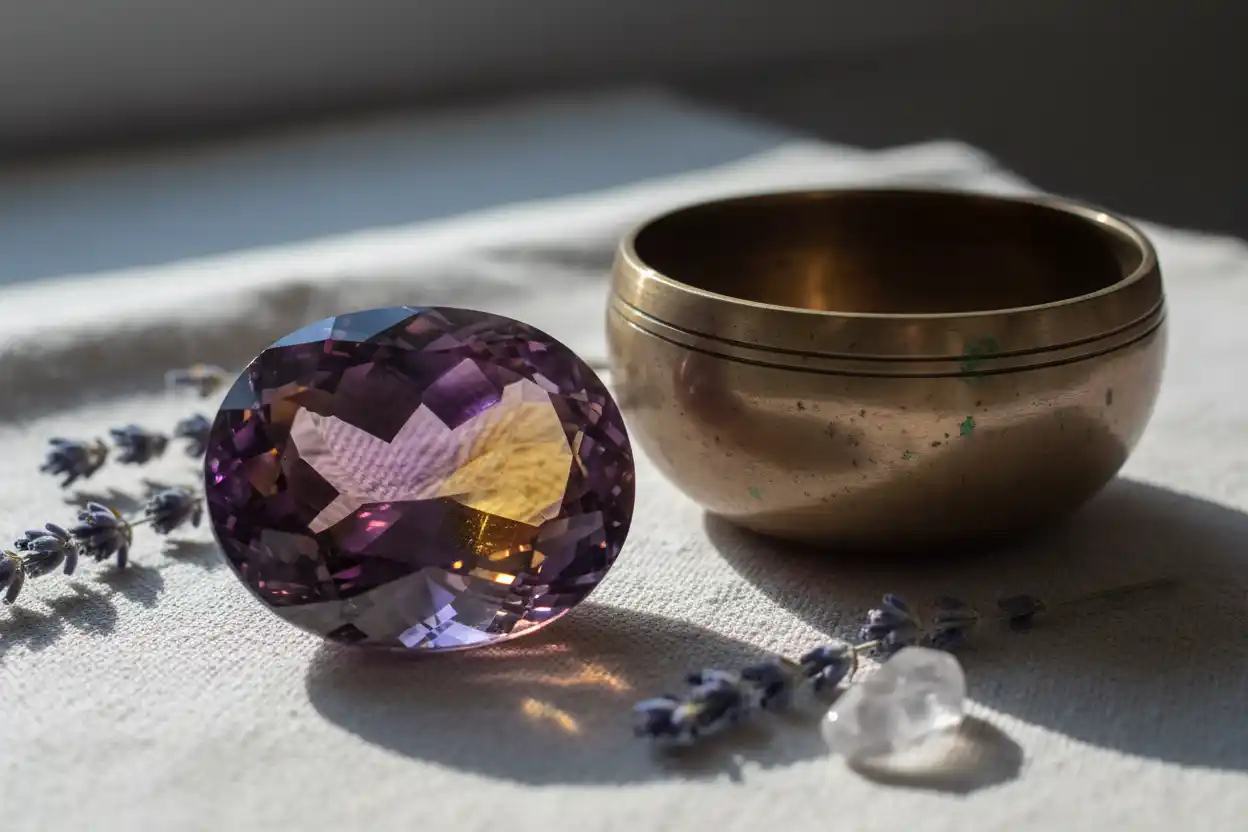
How to Cleanse and Charge Ametrine
The safest ways to cleanse and charge Ametrine are sound, intention, visualization, breath, indirect moonlight, and a brief lukewarm-water rinse when the stone is untreated, unfilled, and physically sound.
Avoid prolonged direct sunlight, steam, high heat, abrupt temperature changes, salt burial, and rough contact with other crystals. Ametrine is durable quartz, but its purple and yellow-orange color zones can still be affected by intense light or heat, while fractures, coatings, glue, and settings may impose stricter limits.
What Cleansing and Charging Mean
In contemporary crystal practice, cleansing generally refers to symbolically releasing unwanted associations or preparing an object for a new use.
Charging usually means dedicating the stone to an intention, meditation practice, personal reminder, or transition.
These are spiritual and personal rituals rather than gemological requirements. Cleansing does not change Ametrine’s chemical composition, color centers, hardness, or measurable physical energy.
The mineral’s geology, bicolor zoning, source, and symbolism belong to the broader Ametrine guide. Its place within the larger mineral family appears in the Quartz guide.
Why Ametrine Requires Quartz-Safe Methods
Ametrine contains purple Amethyst and yellow-to-orange Citrine color zones within one quartz crystal.
Its contrasting areas formed because iron-related color centers developed differently in separate portions of the crystal. The boundary may appear sharp, gradual, diagonal, or irregular depending on the rough and its cutting orientation.
| Property | Ritual implication |
|---|---|
| Mineral species | Quartz |
| Typical colors | Purple with yellow or orange zones |
| Mohs hardness | 7 |
| Toughness | Good |
| Cleavage | None |
| Safest ritual methods | Sound, intention, visualization, breath, and indirect moonlight |
| Water exposure | Brief contact only for sound, untreated material |
| Sunlight | Avoid prolonged intense exposure |
| Heat | Avoid |
| Main risks | Fading, thermal shock, filling, dye, coatings, glue, and impact |
The gemstone hardness chart explains why Ametrine resists many ordinary scratches.
However, hardness does not prevent fractures, chipped facet edges, or damage to a setting. Those distinctions appear in Gemstone Toughness vs Hardness and Gemstone Cleavage Explained.
Inspect the Ametrine First
Examine the stone under bright, indirect light before choosing a ritual.
Look for open fractures, chipped corners, peeling coatings, color concentrated inside fissures, cloudy glue, loose prongs, damaged drill holes, unstable matrix, or frayed stringing.
Transparent Ametrine may contain internal veils, color boundaries, and natural inclusions that are not dirt. Do not scrape or press against them.
A loose faceted stone can usually tolerate more controlled handling than an Ametrine mounted with glue, enamel, delicate pavé, or unknown companion gems.
When treatment or construction is uncertain, choose a non-contact method.
Physically Clean Dirt Separately
Symbolic cleansing does not remove skin oil, cosmetics, soap film, or dust.
The dedicated physical-care workflow belongs to How to Clean Ametrine Jewelry Safely.
A sound gemstone can be washed briefly with warm water, mild liquid soap, and a soft brush. Dyed, coated, fracture-filled, glued, or damaged material needs more conservative care.
Related physical-care boundaries appear in How to Clean Amethyst Jewelry Safely and How to Clean Citrine Jewelry Safely.
Allow the stone and setting to dry completely before beginning a ritual.
Method 1: Cleanse Ametrine with Sound
Sound is one of the lowest-risk methods because it requires no water, salt, smoke, or direct light.
Place the Ametrine on a folded cloth or padded tray. Ring a singing bowl, chime, bell, or tuning fork nearby.
You may also hum, chant, clap gently, or play calm music.
Do not place a faceted stone inside a hard metal bowl while striking it. Direct vibration and contact can chip corners or scratch the setting.
Several gentle sound cycles are enough. The ritual’s meaning does not increase with volume.
Method 2: Use Indirect Moonlight
Place Ametrine indoors near a window where the night sky is visible.
Keep it on a soft cloth, lined dish, or open jewelry box. An hour, an evening, or overnight indoor placement may be used according to personal preference.
Outdoor placement is unnecessary. It introduces dew, rain, temperature changes, animals, theft, and accidental impact.
Indirect moonlight also avoids the prolonged intense exposure addressed in Which Crystals Can and Can’t Go in the Sun.
The moon phase does not change the gemstone’s physical properties. Selecting a particular phase is a symbolic choice.
Method 3: Use Breath and Intention
Hold the Ametrine loosely above a padded surface or leave it resting in front of you.
Take several slow breaths and choose one intention. The stone might serve as a reminder to balance competing priorities, complete a project, pause before making a decision, or connect two parts of a personal routine.
Exhale gently toward the stone once or twice, avoiding condensation.
State the intention silently or aloud.
This method fits Ametrine particularly well because its two color zones can symbolize contrast or integration without requiring claims about measurable energy.
Method 4: Use Visualization
Place the gemstone on a soft surface.
Imagine the purple and yellow-orange areas becoming visually clear and connected with your chosen purpose.
Some people visualize the two colors remaining distinct. Others imagine them blending at the boundary.
Either approach is symbolic. The actual color zoning remains unchanged.
Visualization is suitable for faceted stones, clusters, jewelry, fracture-filled gems, and valuable pieces because it requires no physical contact.
Method 5: Use a Brief Water Ritual
A sound, untreated, unfilled Ametrine can receive a brief rinse in clean lukewarm water.
Hold it over a bowl rather than an open drain. Keep the water close to room temperature and dry the stone immediately with a soft cloth.
Do not soak it overnight.
Avoid water rituals when the piece contains glue, fracture filling, dye, coating, elastic, porous companion materials, antique construction, or an unstable setting.
The wider distinction between mineral water tolerance and complete jewelry construction belongs to Which Crystals Can and Can’t Go in Water.
Method 6: Use Clear Quartz Nearby
Some practitioners use Clear Quartz as a symbolic companion for charging other quartz varieties.
The material profile belongs to the Clear Quartz guide.
Place the stones beside each other on a lined tray rather than stacking them directly. Ametrine and Clear Quartz share Mohs hardness 7, so their polished edges can abrade one another when hard grit is trapped between them.
A soft cloth barrier preserves facets and prevents points from pressing against the Ametrine.
Direct contact is not required for the ritual.
Method 7: Use a Written Intention
Write one concise statement on paper and place it beneath or beside the padded Ametrine.
The statement can describe a behavior rather than an abstract outcome. For example, it might remind you to finish one task before beginning another or to create space for both analysis and creativity.
Leave the arrangement in place for several minutes, an evening, or until you next wear the gemstone.
Paper is physically safe provided the stone cannot roll onto a hard surface.
Method 8: Use a Mindful Cloth Wipe
A careful cloth wipe can combine routine maintenance with symbolic preparation.
Place the Ametrine on a padded surface. Use a clean microfiber or soft cotton cloth and wipe lightly.
Move around the setting and facets without pressing on corners or open fissures.
As you work, focus on the intention associated with the jewel.
This method removes fresh fingerprints while avoiding repeated water exposure.
How Amethyst and Citrine Methods Apply
Ametrine shares important care boundaries with both of its color components.
The Amethyst-specific ritual workflow appears in How to Cleanse and Charge Amethyst.
The Citrine-specific workflow belongs to How to Cleanse and Charge Citrine.
Both support sound, intention, protected moonlight, and cautious water use. Neither supports steam, uncontrolled heat, or prolonged intense sunlight.
The mineral backgrounds appear in the Amethyst guide and Citrine guide.
Avoid Prolonged Direct Sunlight
Some Ametrine colors can fade after prolonged exposure to intense light.
A sunny windowsill may also become much hotter than the surrounding room, creating unnecessary thermal stress.
Brief normal daylight during wear is different from deliberately leaving the stone in direct sun for hours.
Do not attempt to intensify the Citrine zone or alter the Amethyst zone with sunlight. Color changes caused by exposure are not a controlled charging process.
Indirect moonlight, sound, intention, or visualization provides a safer alternative.
Avoid Steam, Flame, and High Heat
Steam and direct heat can alter quartz color and create thermal stress.
Keep Ametrine away from candles, incense flames, heated ritual bowls, stovetops, fireplaces, saunas, radiators, and repair torches.
Abrupt movement from a hot environment into cold water can also cause fracturing.
Equipment safety for finished jewelry is covered in Which Gemstones Can Go in an Ultrasonic Cleaner?.
Even where ultrasound might be technically tolerated by a sound quartz crystal, symbolic cleansing does not require machinery.
Avoid Direct Salt Contact
Dry salt can lodge around prongs, inside fractures, between facets, and within drill holes.
Saltwater may affect metal, glue, elastic, thread, filler, and companion stones.
Burying a faceted Ametrine in coarse salt also creates pressure against corners and edges.
When salt carries personal symbolism, place it in a separate bowl and keep the Ametrine in a lined dish above or beside it.
Avoid Soil Burial
Soil contains Quartz grains, moisture, fertilizers, microorganisms, organic acids, and debris.
These materials can scratch polished quartz, enter setting openings, and discolor metal.
Outdoor burial also risks loss, impact, rain, and rapid temperature changes.
A safer nature-based ritual places the stone near a plant while keeping it on a separate cloth or dish.
Treatments and Synthetic Ametrine
Natural Ametrine is associated commercially with Bolivia’s Anahí mine, although synthetic bicolor quartz and treated products also exist.
Treatment, synthesis, and imitation do not prevent an object from holding personal meaning. However, they can change physical-care requirements.
The treatment framework belongs to Gemstone Treatments Explained.
The Ametrine buying guide covers natural origin, zoning, color balance, cut, disclosure, and synthetic material.
Market factors belong to the Ametrine price guide.
Do not use heat, scratching, ultraviolet exposure, or household chemicals to test authenticity.
Birthstone Connections
Ametrine itself is not a traditional monthly birthstone, but its two colors connect with established quartz birthstone traditions.
Amethyst is February’s birthstone, covered in the February birthstone guide.
Citrine shares November status with Topaz, covered in the November birthstone guide.
These associations may provide a personal theme for charging, but they do not alter the stone’s physical properties.
Frequently Asked Questions
1. What is the safest way to cleanse Ametrine?
Sound, intention, visualization, breath, and indirect indoor moonlight are the lowest-risk methods.
2. Can Ametrine be cleansed in water?
A sound, untreated stone can be rinsed briefly in lukewarm water. Avoid prolonged soaking and water exposure for filled, glued, dyed, coated, or damaged pieces.
3. Can Ametrine be charged in sunlight?
Prolonged intense sunlight is not recommended because some color may fade and the stone can become hot.
4. Can Ametrine be left in moonlight overnight?
Yes, when kept indoors on a padded surface away from condensation and temperature changes.
5. Can Ametrine be cleansed with salt?
Direct salt contact is best avoided because grains can lodge in settings and abrade polished edges.
6. Can Ametrine be cleansed with smoke?
A brief cool-smoke ritual is possible, but sound or intention avoids soot, heat, fragrance, and rewashing.
7. Can Clear Quartz charge Ametrine?
Some practitioners use it symbolically. Keep the stones separated by a soft cloth to prevent equal-hardness quartz surfaces from rubbing.
8. Can heat strengthen Ametrine’s colors?
No. Heat can alter or weaken its color and create fracture risk.
9. Does the color boundary need separate cleansing?
No. Both zones are part of one quartz crystal and can be included in a single ritual.
10. How long should Ametrine charge?
A few minutes, an evening, or overnight indoors can serve the symbolic purpose. There is no objective minimum.
11. How often should Ametrine be cleansed?
Use a schedule that fits your practice. Frequent exposure or handling is not physically necessary.
12. Does cleansing change Ametrine scientifically?
No established scientific evidence shows that cleansing alters its chemistry, health effects, or measurable physical energy.
Conclusion
Ametrine’s purple and golden zones already express contrast within one quartz crystal, so a cleansing ritual does not need complicated materials or environmental exposure. Sound, intention, visualization, and protected moonlight preserve both colors while giving the ritual a clear personal purpose. The safest method leaves the stone unchanged—without fading, scratches, residue, or thermal damage.
Crystal cleansing and charging are spiritual or personal practices, not scientifically established methods for changing health, energy, or the physical properties of Ametrine.