How to Clean Aquamarine Jewelry Safely
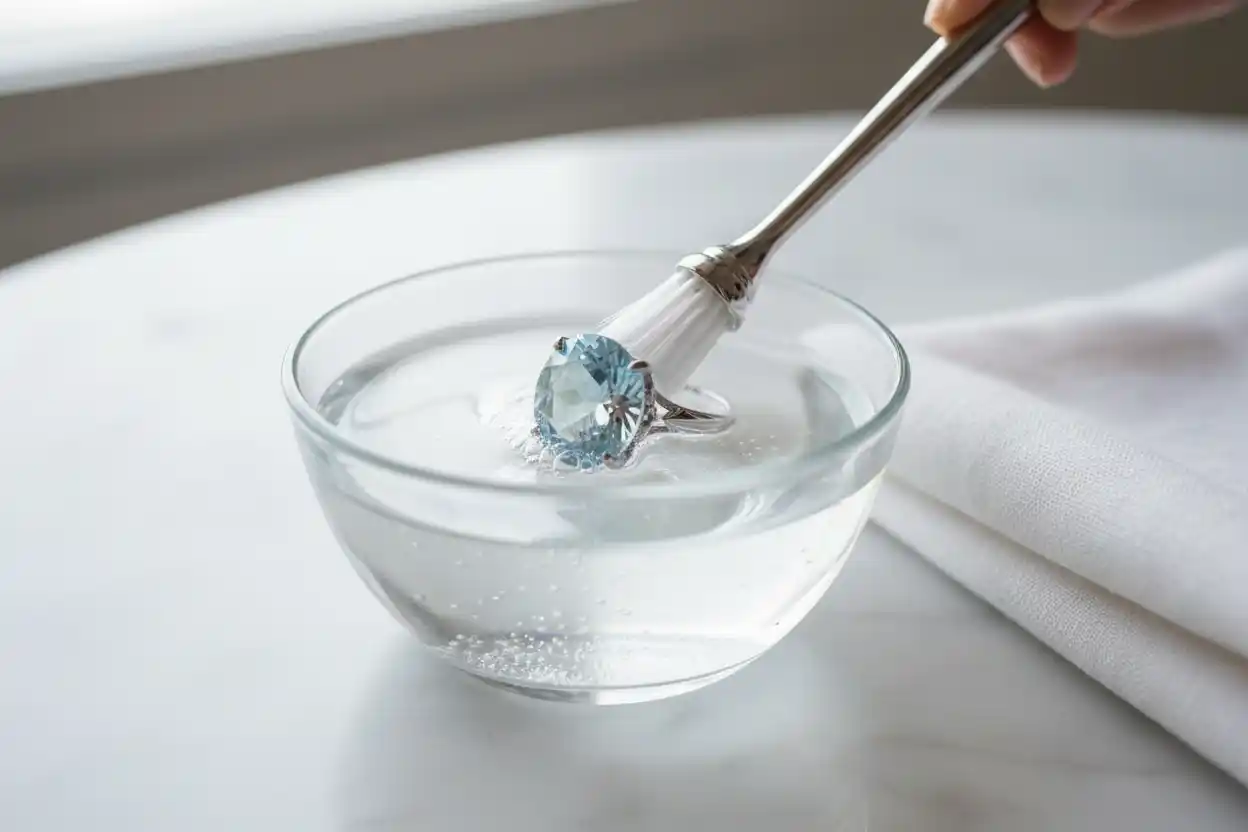
Aquamarine jewelry can be cleaned safely with lukewarm water, mild dish soap, and a soft brush. Its 7.5-to-8 Mohs hardness makes it suitable for regular wear, but liquid inclusions, fractures, rare fracture filling, worn prongs, and delicate accent stones can make ultrasonic or steam cleaning unsuitable.
The low-risk home method works for most rings, earrings, necklaces, pendants, and bracelets. It removes the skin oils and cosmetic residue that commonly collect beneath a transparent aquamarine without subjecting the gem to unnecessary heat or vibration.
Aquamarine’s Durability and Care Profile
Aquamarine is the blue-to-greenish-blue variety of beryl. The broader gemological and symbolic background appears in the Aquamarine meaning guide, while its relationship to emerald, morganite, heliodor, and goshenite is introduced in the Beryl guide.
With a Mohs hardness of 7.5 to 8, aquamarine resists ordinary scratches better than quartz. However, hardness does not measure resistance to every form of damage. The gemstone hardness chart and gemstone toughness versus hardness guide explain why knocks, inclusions, and mounting condition still matter.
| Property | Cleaning implication |
|---|---|
| Mineral species | Beryl |
| Mohs hardness | 7.5 to 8 |
| General durability | Good for regular jewelry wear |
| Safest routine method | Lukewarm water, mild soap, and a soft brush |
| Ultrasonic cleaning | Usually safe unless fractures or liquid inclusions are present |
| Steam cleaning | Usually safe only for suitable untreated stones, but professional assessment is preferable |
| Treatment concern | Rare fracture filling |
| Heat stability | Avoid unnecessary heat exposure |
Aquamarine has imperfect basal cleavage, although it does not behave as delicately as gems with highly pronounced cleavage. The gemstone cleavage guide provides context for why a hard blow can still damage a durable colored stone.
What You Need
Prepare two small bowls, mild liquid dish soap, a soft toothbrush or jewelry brush, and a lint-free cloth. The second bowl should contain clean lukewarm water for rinsing.
Avoid cleaning over an open sink. Wet jewelry is easy to drop, and a loose stone may separate from its setting during handling.
The soap should contain no bleach, abrasive particles, heavy moisturizer, or aggressive degreaser. A few drops are sufficient.
Do not use boiling water or a very hot cleaning solution. Aquamarine’s color is generally stable in ordinary light, but unnecessary heat can stress inclusions, filler, repairs, and setting components.
Inspect the Aquamarine and Setting
Check the stone from several angles under bright light. Look for surface-reaching fractures, feathers, liquid inclusions, chips along facet edges, a loose center stone, bent prongs, cracked solder, or missing accent stones.
Gently touch the gem without twisting it. Any movement indicates that the piece should go to a jeweler before cleaning.
Treatment history deserves attention because aquamarine is often heated to reduce greenish tones and produce a more consistently blue appearance. Heat treatment is generally stable, but rare fracture-filled material needs more conservative care.
The dedicated guide to treated or synthetic Aquamarine owns the full identification and disclosure discussion. The wider enhancement context appears in Gemstone Treatments Explained.
Wash with Lukewarm Soapy Water
Add a few drops of mild soap to the first bowl and mix gently. Place the jewelry in the solution or hold it securely over the bowl.
Use the soft brush to loosen oils, lotion, soap film, makeup, and compacted debris. Focus particularly on the pavilion and the openings behind the stone.
Aquamarine often has a light tone, so residue beneath it can reduce brightness and make the gem appear grayer than it actually is. Cleaning the underside usually produces a more noticeable improvement than polishing the top repeatedly.
Brush around prongs, bezels, galleries, and accent stones without forcing bristles beneath the metal. Support the piece by its shank, frame, or chain rather than pressing directly on the aquamarine.
A short cleaning is normally enough. Extended soaking is unnecessary and may be inappropriate for filled fractures, glue, enamel, stringing materials, antique construction, or other gems in the piece.
Rinse and Dry Carefully
Rinse the jewelry in the second bowl of clean lukewarm water. Keeping both bowls at a similar temperature reduces unnecessary thermal stress.
Blot the piece with a lint-free cloth and allow water beneath the setting to evaporate at room temperature.
Do not use a hair dryer, radiator, hot plate, or direct high-intensity sunlight to accelerate drying. Heat may affect inclusions, filler, repairs, and accompanying stones even when the aquamarine itself appears unchanged.
Inspect the piece again once dry. Stop wearing it if a prong catches on the cloth or the gem moves.
Can Aquamarine Go in an Ultrasonic Cleaner?
Ultrasonic cleaners are usually safe for untreated aquamarine that has no fractures, liquid inclusions, or mounting problems. Nevertheless, warm soapy water is the safer default when the stone’s internal features or treatment history are unknown.
| Aquamarine condition | Ultrasonic recommendation |
|---|---|
| Clean, untreated stone without fractures or liquid inclusions | Usually acceptable |
| Secure laboratory-grown beryl | Usually acceptable, subject to the mounting |
| Visible fracture or feather | Avoid |
| Liquid inclusions | Avoid |
| Fracture-filled stone | Avoid |
| Antique or repaired setting | Avoid unless professionally assessed |
| Loose pavé or accent stones | Avoid |
| Unknown treatment history | Use warm soapy water instead |
Vibration can extend an existing fracture or loosen a worn setting. It may also disturb filler inside a surface-reaching break.
The planned guide to gemstones in ultrasonic cleaners covers equipment safety across other gem species.
Is Steam Cleaning Safe?
Steam cleaning is usually described as acceptable for aquamarine without fractures or liquid inclusions. However, professional inspection should come before steam is used on a valuable or complicated piece.
Steam exposes the jewel to heat and pressure. Those conditions may affect filler, soldered repairs, antique construction, adhesive, enamel, or accompanying stones.
For routine home care, mild soap provides effective cleaning without requiring that level of risk. Steam should never be chosen simply because the gemstone has a high hardness number.
Heat-Treated and Fracture-Filled Aquamarine
Heating is commonly used to shift greenish-blue aquamarine toward a purer blue appearance. That treatment is generally stable under normal wear, but it does not justify exposing the jewelry to high cleaning temperatures.
Fracture filling is much less common. When present, filler may be affected by heat, chemicals, and ultrasonic vibration. Warm soapy water should be the only cleaning method unless a qualified professional advises otherwise.
A laboratory report may identify detectable treatment. The guides to gemstone certification and reading a gem laboratory report explain how to interpret the result without assuming that every aquamarine requires a report.
Cleaning an Aquamarine Ring
An aquamarine ring collects soap, lotion, sanitizer, and skin oils beneath the center stone. Clean the pavilion through the gallery openings and examine every prong after drying.
Because aquamarine is lighter in tone than many blue gemstones, a small amount of residue can visibly reduce its brilliance. However, persistent grayness may reflect inclusions, cut quality, or surface wear rather than dirt.
Remove the ring before household cleaning, exercise, gardening, swimming, and heavy manual work.
An aquamarine engagement ring needs especially regular setting inspections because daily wear exposes the prongs and girdle to repeated contact.
Cleaning Aquamarine Earrings
For aquamarine earrings, clean behind the gemstones as well as around posts, hooks, hinges, and backs.
Cosmetics and hair products often settle on the rear surface. A soft brush can reach those areas without pressing on the stones.
Dry the fittings completely before wearing the earrings. Residue around the posts can create irritation even when the aquamarines appear clean.
Cleaning an Aquamarine Necklace or Pendant
An aquamarine necklace or pendant may accumulate perfume, sunscreen, and skin oils along its back.
Clean the aquamarine and metal separately when their care requirements differ. Prevent the chain from rubbing against the gemstone during washing and storage.
Apply perfume before putting on the necklace and allow it to dry. Repeated spraying can leave a film that reduces transparency and luster.
Cleaning an Aquamarine Bracelet
An aquamarine bracelet experiences more movement than a pendant. Inspect every stone setting, hinge, link, and clasp before placing it in water.
Clean one section at a time and support the bracelet so its own weight does not pull against weakened settings.
Bracelets should be removed before desk work that repeatedly strikes the wrist against a hard surface, as well as before sports or household cleaning.
Chemicals and Abrasives to Avoid
Do not use toothpaste, baking soda, scouring powder, stiff brushes, or abrasive cloths. Although aquamarine resists many scratches, those products can dull metal, damage plating, and abrade softer accent stones.
Bleach, strong acids, concentrated alkaline products, and industrial cleaners are unnecessary. Hydrofluoric acid can attack beryl directly.
Vinegar and lemon juice provide no advantage over mild soap and may affect the setting or other components.
Commercial jewelry-cleaning dips should be used only when the label explicitly permits aquamarine and every material in the piece is compatible.
Natural, Laboratory-Grown, and Imitation Aquamarine
Laboratory-grown aquamarine or blue synthetic beryl generally follows the same base-material care routine. However, the setting, fractures, coatings, fillers, and accompanying gems still need assessment.
Blue glass, synthetic spinel, blue topaz, apatite, and other materials may be sold or mistaken for aquamarine. Cleaning response should not be used as an identification test.
The dedicated real versus fake Aquamarine guide addresses authenticity. Visual comparisons belong to Aquamarine vs Blue Topaz, Aquamarine vs Topaz, and Apatite vs Aquamarine.
Do not scratch, heat, freeze, chemically test, or deliberately strike a jewel to determine its identity.
Light, Heat, and Color Stability
Aquamarine’s color is generally stable under ordinary light exposure. Nevertheless, prolonged storage in a hot vehicle, against a radiator, or beneath a high-temperature display lamp is unnecessary.
Heat may stress liquid inclusions, fractures, filler, solder joints, and adjacent stones. Therefore, “light stable” should not be interpreted as “safe under any temperature.”
The types of Aquamarine guide covers blue, greenish-blue, deep-blue, and trade-name distinctions without changing the fundamental cleaning method.
How Often Should Aquamarine Be Cleaned?
A frequently worn ring may benefit from cleaning every few weeks, while pendants and earrings may require it less often.
Wipe the jewelry with a clean lint-free cloth after use. This removes fresh skin oils before they collect beneath the setting.
Clean according to visible residue rather than following an aggressive schedule. Excessive brushing provides no benefit once the stone and mounting are clean.
If the gem remains cloudy, a jeweler can check for compacted dirt, surface abrasion, inclusions, worn polish, filler, or damage beneath the setting.
Storage and Everyday Protection
Store aquamarine in its own soft pouch or padded compartment. It can scratch softer stones but can itself be scratched by diamond, sapphire, ruby, and other harder gems.
Remove it before swimming or using household cleaners. Chlorine and other chemicals may affect metal alloys, solder, or accompanying materials.
The Aquamarine buying guide covers color, tone, cut, clarity, treatment, and seller disclosure. The Aquamarine price guide addresses how those characteristics influence value.
Aquamarine is also the principal modern March birthstone. Its history and birthstone context are covered separately in the March birthstone guide.
Frequently Asked Questions
1. Can I clean aquamarine with warm soapy water?
Yes. Lukewarm water, a small amount of mild soap, and a soft brush provide the safest routine method.
2. Can aquamarine get wet?
Brief washing in clean water is normally safe for untreated aquamarine. Avoid prolonged soaking when filler, glue, string, enamel, or vulnerable components are present.
3. Can aquamarine go in an ultrasonic cleaner?
It is usually safe when the stone has no fractures, liquid inclusions, filling, or mounting problems. Warm soapy water is safer when those details are unknown.
4. Can aquamarine be steam cleaned?
Steam is usually acceptable only for suitable stones without fractures or liquid inclusions. Professional inspection is preferable before using it.
5. Is dish soap safe for aquamarine?
A few drops of mild liquid dish soap are suitable. Avoid bleach, abrasive particles, aggressive degreasers, and strong alkaline formulas.
6. Can vinegar clean aquamarine?
Vinegar is unnecessary and may affect metal, solder, filler, plating, or accompanying stones. Mild soap is safer.
7. Can toothpaste polish aquamarine?
No. Toothpaste can abrade the setting, plating, and softer materials even when the aquamarine itself resists scratching.
8. Will hand sanitizer damage aquamarine?
Occasional contact is unlikely to harm untreated beryl, but alcohol and additives may affect filler, adhesives, coatings, or metal finishes. Remove the ring before applying sanitizer when practical.
9. How do I clean behind an aquamarine ring?
Use a soft brush through the gallery openings, working lightly around the pavilion and prongs. Do not force bristles under the setting.
10. Why does my aquamarine still look cloudy?
Possible causes include inclusions, surface scratches, worn polish, fracture filling, or debris trapped where a brush cannot reach.
11. Is laboratory-grown aquamarine cleaned differently?
The beryl material generally follows the same routine. The setting, fractures, fillers, coatings, and accompanying stones still control the safest method.
12. When should aquamarine be professionally cleaned?
Professional care is appropriate for loose prongs, visible fractures, liquid inclusions, unknown treatment, antique settings, complex pavé, or persistent cloudiness.
Conclusion
Aquamarine combines useful hardness with straightforward routine care, yet its internal features and mounting still determine how far cleaning can safely go. Lukewarm soapy water removes ordinary residue without requiring heat or vibration. Before choosing an ultrasonic or steam cleaner, the important next question is whether the individual stone contains fractures, liquid inclusions, or filler—not whether aquamarine is generally considered durable.