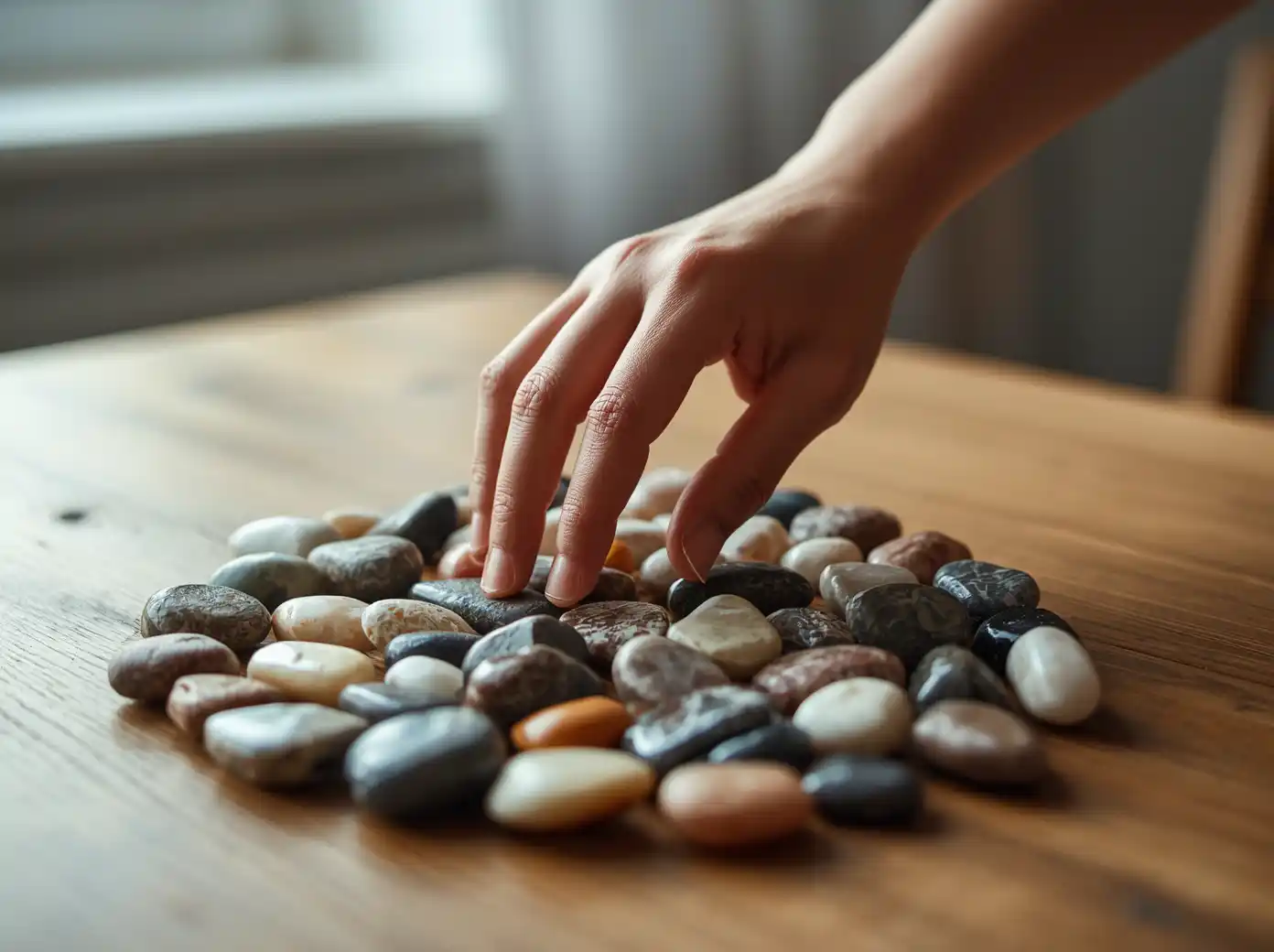
How to Choose the Right Crystal for You
Choosing a crystal does not require finding a mysterious “perfect” stone that was destined for you. A more useful approach is to balance four things: what the material actually is, how you plan to use it, whether you like it, and what personal symbolism you want it to carry.
You can choose purely for geology or appearance, use a stone as a symbolic meditation tool, wear it as jewelry, or combine those interests. There is no scientifically established test showing that one crystal’s energy is uniquely matched to a particular person.
Choosing a Crystal at a Glance
| Question | Why It Matters |
|---|---|
| What material is it? | Determines identity, durability and care |
| Why do you want it? | Keeps the choice focused |
| Do you actually like it? | You are more likely to use or wear it |
| Will it be jewelry or a specimen? | Changes durability requirements |
| Is it natural, synthetic or imitation? | Affects identity, disclosure and often value |
| Does symbolism matter to you? | Helps define a personal intention |
| Is it safe around water, light or heat? | Prevents avoidable damage |
| Does it contain fragile points or edges? | Affects handling and placement |
| Is the size practical? | Large specimens can be heavy or awkward |
| Is the seller clear about treatment? | Reduces misrepresentation |
| Are you buying because of pressure? | Prevents unnecessary purchases |
| Can one stone meet your goal? | Often, yes |
Start With Why You Want a Crystal
The easiest way to narrow hundreds of options is to define the intended use.
You might want:
a mineral specimen for collecting, a durable gemstone for jewelry, a meditation object, a gift, a stone connected with a birth month or a symbolic reminder of a personal goal.
These are different buying problems.
Someone looking for an everyday ring should care heavily about hardness, toughness and settings.
A person choosing a desk specimen can consider softer materials such as fluorite that would be less practical in an exposed ring.
Meanwhile, someone interested mainly in symbolism may simply want an accurately identified stone whose traditional meaning feels relevant.
Defining the role first prevents the choice from becoming an endless search through hundreds of overlapping crystal meanings.
Learn What the Stone Actually Is
Before focusing on metaphysical meanings, identify the material.
“Crystal” is a broad commercial word.
A shop may include:
minerals, rocks, natural glass, organic gems and manufactured products under the same label.
Clear quartz is a mineral crystal.
Obsidian is natural volcanic glass.
Lapis lazuli is a rock containing several minerals.
Pearl is organic.
Goldstone is manufactured glass.
Each can be attractive, but they are not scientifically the same type of material.
The completed How to Identify Crystals guide explains the basic evidence used to establish identity.
Choose by Appearance if You Want To
There is nothing superficial about choosing a stone because you like how it looks.
Color, pattern, crystal form and optical effects are legitimate reasons to collect gemstones.
Someone drawn to purple may prefer amethyst.
A person who enjoys metallic minerals might choose hematite or pyrite.
Labradorite appeals to people who enjoy moving flashes of color, while agate offers banding and natural pattern.
You do not need a spiritual justification for the choice.
In fact, choosing an object you enjoy looking at often makes more sense than buying a stone whose supposed metaphysical meaning feels relevant but whose appearance you do not enjoy.
What Does It Mean to Feel “Drawn” to a Crystal?
Crystal shops sometimes say that the stone you feel drawn toward is the one you need.
There is no scientific evidence that a gemstone energetically selects a person.
However, attraction itself can still provide useful information.
You may be responding to:
color, texture, familiarity, cultural association, symbolism or simple aesthetic preference.
Rather than asking, “Why is this crystal calling me?” try asking:
What about this particular stone caught my attention?
The answer may reveal more about your preferences or current concerns without requiring a supernatural explanation.
Choosing by Crystal Meaning
If symbolism matters to you, use it as one part of the decision.
Modern traditions commonly associate:
| Crystal | Common Symbolic Theme |
|---|---|
| Clear Quartz | Clarity, intention |
| Amethyst | Reflection, calm |
| Rose Quartz | Compassion, affection |
| Green Aventurine | Growth, opportunity |
| Smoky Quartz | Grounding, perspective |
| Citrine | Optimism, confidence |
| Carnelian | Motivation, creativity |
| Black Tourmaline | Boundaries, protection |
| Moonstone | Change, reflection |
| Hematite | Stability, focus |
These are cultural or modern spiritual correspondences rather than scientifically measured properties.
The Crystal Meanings Chart provides a wider quick-reference list when you want to compare traditional themes.
Turn a Meaning Into an Action
A crystal meaning becomes more useful when it is specific.
Suppose green aventurine represents opportunity.
Instead of expecting it to create luck, use it to remind yourself to apply for something you have postponed.
If smoky quartz represents grounding, use it as the cue to separate facts from assumptions before reacting.
If rose quartz represents compassion, connect it with one concrete behavior such as reducing unnecessary self-critical language.
This approach makes the symbolism practical.
The stone does not have to produce the change itself; it reminds you of the behavior you decided to practice.
Choose by Color
Color is one of the simplest selection methods.
You might enjoy:
purple amethyst, green aventurine, blue sodalite, red garnet, orange carnelian or pale pink rose quartz.
Color symbolism can add another layer.
Green often represents growth.
Blue frequently represents communication or calm.
Red can symbolize vitality.
Purple may suggest reflection or spirituality.
However, color families can contain completely different minerals.
Two green stones might be emerald and fluorite, with dramatically different hardness and value.
Use color to narrow the field, then learn the actual identity.
Choose by Birthstone
Birthstones provide a structured alternative to open-ended crystal selection.
Instead of asking which of hundreds of stones is “right,” start with the gem associated with your birth month.
January has garnet.
February has amethyst.
May has emerald.
June has pearl, moonstone and alexandrite.
Other months likewise have established choices.
The completed Birthstones by Month page keeps those calendar associations separate from more variable zodiac-crystal traditions.
A birthstone can be meaningful culturally even if you do not believe it affects personality or luck.
Choose by Zodiac Symbolism
Some people prefer astrology-based gemstone associations.
These lists are much less standardized than conventional monthly birthstones.
Different modern sources may recommend different crystals for the same zodiac sign.
Therefore, treat zodiac stones as symbolic suggestions rather than fixed rules.
You can select one because its traditional theme fits how you interpret the sign, but there is no need to reject a favorite gemstone because a chart assigns it to another zodiac category.
The broader Zodiac Birthstones guide explains that system separately.
Consider How the Crystal Will Be Used
A stone kept on a shelf has different requirements from one worn on the hand.
Display Specimens
Soft and fragile materials can be excellent choices because they experience little physical contact.
Pocket Stones
Choose pieces with smooth surfaces and enough durability to tolerate contact with keys or other objects—although separate storage is still preferable.
Pendants and Earrings
These are relatively protected formats and allow a wider range of gemstones.
Bracelets
Bracelets experience frequent impact and rubbing.
Rings
Rings receive the most demanding wear and usually benefit from harder, tougher materials.
The completed Gemstone Toughness vs Hardness explains why choosing jewelry cannot be reduced to one Mohs number.
Hardness Matters
Mohs hardness describes scratch resistance.
Quartz is 7.
Topaz is 8.
Sapphire and ruby are 9.
Diamond is 10.
Calcite, by contrast, is around 3, while fluorite is 4.
A soft mineral can still be beautiful, but it will develop surface wear more quickly.
This matters especially for rings and bracelets.
Do not assume that a stone commonly sold in jewelry is automatically suitable for constant rough wear.
The Gemstone Hardness Chart provides comparative values for choosing appropriate uses.
Toughness and Cleavage Matter Too
Hardness is not the same as resistance to breaking.
Topaz illustrates this distinction particularly well.
It is hard enough to resist many scratches but has perfect cleavage, meaning an unfavorable blow can split it along structural planes.
Feldspars such as moonstone also require care because cleavage affects durability.
Jade is interesting in the opposite direction: it is not among the hardest gems, yet its interlocking structure can give it exceptional toughness.
A good choice therefore depends on the complete durability profile rather than the highest hardness number.
Consider Light and Water Sensitivity
Crystal rituals sometimes involve sunlight and water.
Not every stone belongs in either environment.
Prolonged intense light can fade some gemstones, including certain amethyst and kunzite.
Water can damage or alter soluble, porous, soft or treated materials.
Jewelry also introduces metal, adhesives and stringing materials.
Never choose a physical ritual before identifying the stone.
The completed Crystals That Fade in Sunlight and Crystals You Can Put in Water guides cover those material-specific boundaries.
Natural vs Lab-Grown vs Imitation
These categories are different.
A natural gemstone formed through geological or biological processes.
A lab-grown gemstone formed artificially but can have essentially the same basic composition and crystal structure as the natural material.
An imitation merely looks similar.
For example, laboratory-grown quartz is still crystalline quartz.
Purple glass sold as amethyst is an imitation.
None of these materials has to be “bad” when it is represented accurately.
The key is truthful disclosure.
The completed Lab-Grown vs Natural Gemstones explains how origin differs from mineral identity.
Treatments Matter
Natural gemstones can be altered after mining.
Heating, dyeing, irradiation, fracture filling, oiling, stabilization and coating all occur within different parts of the gem market.
Some treatments are routine and stable.
Others significantly affect care or value.
If a seller bases a high price on natural color or rarity, treatment information matters.
The site’s Gemstone Treatments Explained provides a broader framework for interpreting disclosure.
Choose a Size You Will Actually Use
Larger is not always better.
A huge crystal cluster may look impressive online but require a strong stable shelf.
Large palm stones become inconvenient to carry.
Heavy hematite bead strands can be uncomfortable.
Meanwhile, tiny stones can become choking hazards around small children or pets.
Consider the physical object rather than only the photograph.
For meditation, one comfortable palm stone may be more practical than a fragile museum-size specimen.
Buying Online vs In Person
In-person shopping lets you evaluate:
scale, color, weight, polish and visible damage directly.
Online shopping offers more selection but requires stronger seller disclosure.
Look for clear descriptions of:
material identity, dimensions, weight, treatments and whether photographs show the actual specimen.
Be cautious with listings that rely almost entirely on claims about “high vibration” while providing little information about what the stone actually is.
A mineral should have an identity before it has a marketing story.
Do You Need an Expensive Crystal?
No.
Price does not establish spiritual effectiveness.
A common quartz pebble can carry the same personal intention as an expensive collector crystal if symbolism is the purpose.
Higher prices may reflect genuine geological rarity, color, crystal quality, provenance, cutting or craftsmanship.
Those are legitimate market factors.
They do not demonstrate stronger healing energy.
Choose an expensive specimen because its rarity or quality matters to you, not because a seller claims higher price equals greater metaphysical power.
You Probably Need Fewer Crystals Than You Think
Beginners are often presented with large lists:
one stone for sleep, another for money, one for communication, several for protection and another combination for confidence.
That can quickly become unnecessary consumption.
One accurately identified crystal can represent several intentions.
Alternatively, begin with two or three stones that are easy to understand and care for.
The completed Best Crystals for Beginners provides a focused starting selection rather than requiring a large collection.
Choosing Crystals for Meditation
For meditation, tactile qualities matter.
A smooth stone can be easier to hold than a cluster with sharp points.
Weight also changes the experience.
Quartz feels different from dense hematite.
The visual complexity of labradorite may help some people sustain attention, while others prefer simple clear quartz.
Choose the object that makes the practice easier to repeat.
The crystal does not need to produce a particular sensation for the meditation to be valid.
Choosing Crystals for Healing Symbolism
The freshly reconciled Healing Crystals guide explains the evidence boundary in detail.
Controlled research has not demonstrated a specific therapeutic effect from healing crystals beyond expectancy and placebo-related factors.
Therefore, do not choose a crystal based on a claim that it can replace:
medication, therapy, medical testing or other appropriate care.
Instead, choose one because the symbolism complements a safe reflective practice.
A gemstone can remind you to begin the practice without becoming the treatment.
Cleansing and Charging After Choosing
Many spiritual traditions cleanse or charge a crystal after purchase.
These rituals are optional.
The completed How to Cleanse Crystals explains symbolic cleansing, while the freshly reconciled How to Charge Crystals addresses assigning or renewing an intention.
Neither process should damage the mineral.
Intention, meditation and sound are safer universal approaches than exposing an unidentified specimen to sunlight, salt or water.
Frequently Asked Questions
1. How do I know which crystal is right for me?
Start with your intended use, then choose a material whose appearance, durability and symbolism suit that purpose. There is no scientifically established energetic matching test.
2. Should I choose the first crystal I feel drawn to?
You can. Feeling drawn to a stone may reflect color, texture, symbolism or aesthetic preference, all of which are valid reasons to choose it.
3. Do crystals choose their owners?
There is no scientific evidence that crystals consciously or energetically choose people. The idea belongs to spiritual tradition.
4. What crystal should a beginner choose?
Clear quartz, amethyst, rose quartz, smoky quartz and green aventurine are common beginner choices, but there is no universal requirement.
5. Should I choose a crystal by meaning or color?
Either approach works. Ideally, also confirm the actual material identity and whether it is suitable for how you plan to use it.
6. Can I choose a crystal by my birth month?
Yes. Monthly birthstones provide one of the most established cultural systems for selecting gemstones.
7. Does an expensive crystal have stronger energy?
There is no scientific evidence that price corresponds with metaphysical power. Expensive crystals may simply be rarer, larger or higher quality.
8. Is it better to buy raw or polished crystals?
Neither is universally better. Rough crystals preserve natural growth forms, while polished stones are often more comfortable for pockets, meditation and jewelry.
9. Should I buy natural or lab-grown crystals?
That depends on your priorities. Both can be legitimate materials when accurately disclosed; geological origin matters more to some collectors than others.
10. How many crystals should I start with?
One is enough. A small collection is often easier to understand and use deliberately than dozens of stones with overlapping meanings.
11. Can a crystal replace medical treatment if I choose the right one?
No. Crystals have not been demonstrated as substitutes for appropriate medical or psychological treatment.
12. What should I do after choosing a crystal?
Learn its physical care requirements, decide what role it will have and, if you use spiritual rituals, choose a material-safe cleansing or charging practice.
Conclusion
Choosing the right crystal is easier when you stop searching for one objectively perfect stone.
Begin with identity and purpose.
Know whether the object is quartz, fluorite, glass, jade or another material. Decide whether it will be jewelry, a specimen, a meditation object or a personal symbol. Then consider durability, care, treatment and appearance.
If spiritual meaning matters, connect it with a behavior you can control rather than a guaranteed outcome.
The best crystal for you is ultimately one you understand, genuinely like and can use safely—not necessarily the rarest, most expensive or most heavily advertised stone in the shop.
Disclaimer: Crystal-healing, energetic and metaphysical matching claims are spiritual or personal traditions rather than scientifically established medical or psychological effects. Crystal selection should not replace healthcare, mental-health treatment, financial advice or practical safety decisions.