Which Crystals Can and Can’t Go in Water?
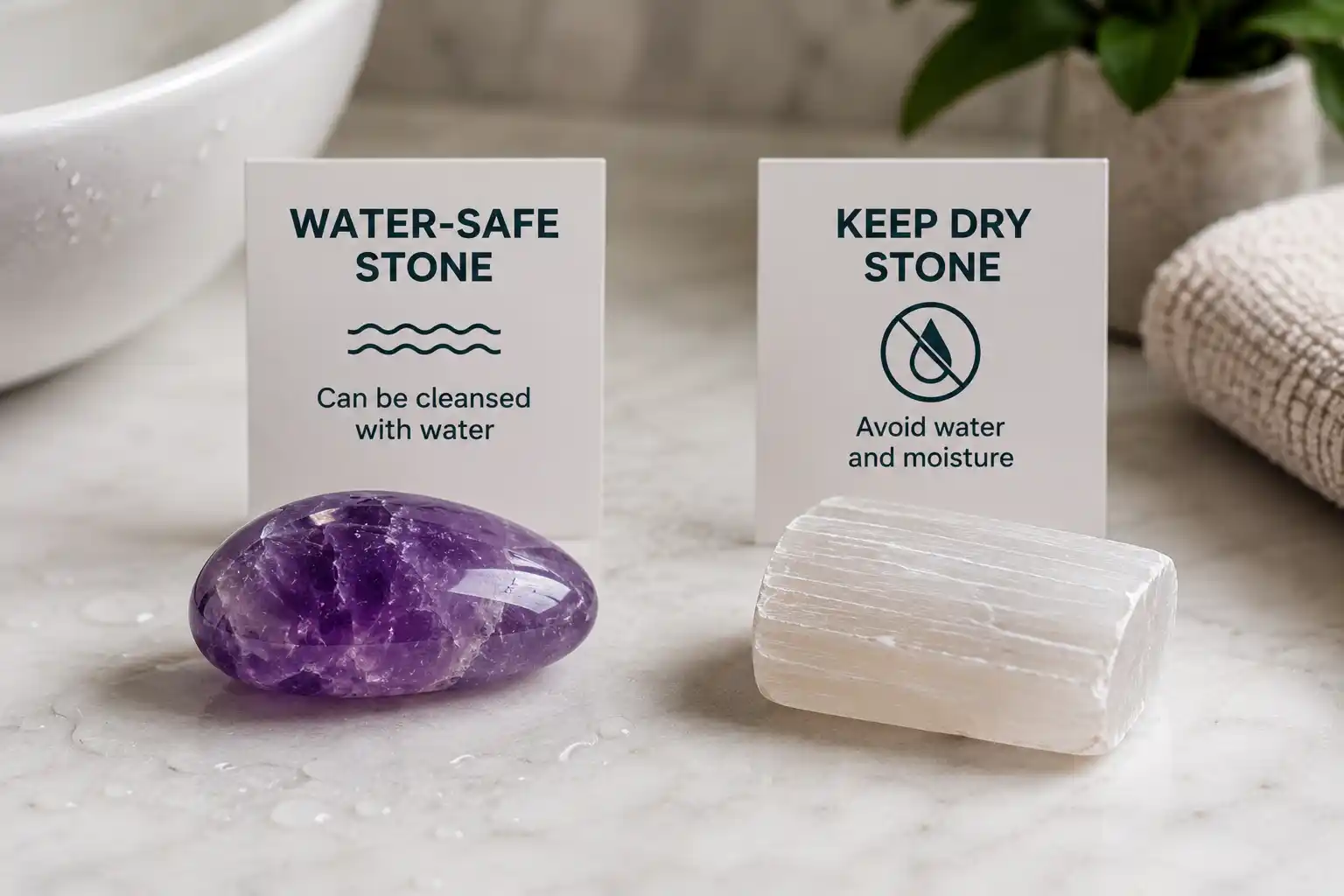
Some crystals tolerate a brief rinse with room-temperature water, while others dissolve, oxidize, flake, discolor or become structurally weaker. Clear quartz, many solid chalcedonies, carnelian, jasper and tiger’s eye are generally among the more water-resistant materials when they are untreated, unfractured and removed promptly.
Selenite, halite, calcite, aragonite, pyrite, malachite, azurite, lepidolite, fluorite, lapis lazuli and turquoise should not be soaked. Organic gems such as pearl and amber also require gentler care.
Even a water-resistant stone should not be used in drinking water or gemstone elixirs. “Safe to rinse” and “safe to ingest” are completely different standards.
Water Safety at a Glance
| Category | Examples | Recommended approach |
|---|---|---|
| Usually tolerates a brief rinse | Clear quartz, carnelian, jasper and tiger’s eye | Use room-temperature water, then dry promptly |
| Brief contact only when untreated and intact | Rose quartz, smoky quartz, aventurine, jade and many garnets | Avoid soaking, saltwater and temperature changes |
| Avoid water | Selenite, halite, calcite, aragonite and fluorite | Use dry or low-contact care |
| Avoid because of oxidation or metallic components | Pyrite, marcasite and some hematite specimens | Keep dry |
| Avoid because of copper-bearing composition | Malachite, azurite and chrysocolla-rich material | Never soak or ingest |
| Avoid because of porosity, mixed composition or organic origin | Turquoise, lapis lazuli, opal, pearl and amber | Use specialist or material-specific care |
| Never use for drinking water | Every crystal and gemstone | Keep outside beverages and food preparation |
The Mohs 6 Water-Safety Rule Is Unreliable
A common online rule says that crystals above 6 on the Mohs scale can go in water. That rule is incomplete and potentially unsafe.
Mohs hardness measures resistance to scratching. It does not measure:
- Solubility
- Chemical reactivity
- Porosity
- Cleavage
- Fracture stability
- Oxidation
- Toxic composition
- Treatments or adhesives
Quartz has a Mohs hardness of 7 and generally handles brief water exposure well. Pyrite measures around 6 to 6.5 but may oxidize. Turquoise may reach similar hardness values yet remains porous and commonly treated.
Water safety must be determined by the complete material, not one hardness number.
How Water Damages Crystals
Different minerals react with water through different mechanisms.
Some dissolve directly. Halite is sodium chloride and readily dissolves, while gypsum varieties such as selenite are water-sensitive and soft.
Metallic minerals may oxidize or tarnish. Pyrite can deteriorate in damp conditions, and hematite may develop surface changes depending on composition and exposure.
Porous materials absorb water and contaminants. Fractured stones may trap moisture, while glued, dyed or resin-filled specimens can react unpredictably.
Water can also affect the setting or stringing material even when the gemstone itself remains stable.
Crystals That Usually Tolerate a Brief Rinse
The following materials are generally among the more water-resistant when they are natural, solid, untreated and free from unstable matrix:
- Clear quartz
- Rose quartz
- Smoky quartz
- Amethyst
- Citrine
- Carnelian
- Many natural agates and chalcedonies
- Jasper
- Tiger’s eye
- Black obsidian
- Some solid garnets
This does not mean they should be soaked for hours. A brief rinse followed by immediate drying is usually safer than prolonged immersion.
Jewelry, clusters, dyed stones and specimens containing multiple minerals require additional caution.
Clear Quartz and Water
Clear quartz generally tolerates a brief rinse with plain room-temperature water.
However, cracks and inclusions may trap residue. Clusters can also contain matrix material that reacts differently from quartz.
Avoid sudden temperature changes. Moving a hot crystal into cold water can worsen existing fractures.
Do not place clear quartz in drinking water. A water-resistant mineral is not automatically hygienic or ingestion-safe.
Rose Quartz, Smoky Quartz and Citrine
Quartz varieties such as rose quartz, smoky quartz and citrine usually tolerate brief water contact.
Treatment history still matters. Dyed, coated, irradiated, fracture-filled or assembled material may have additional restrictions.
Prolonged soaking can also collect water in fractures or affect attached findings.
Use a short rinse only when necessary, then dry the stone completely with a soft cloth.
Carnelian, Agate and Jasper
Carnelian and many natural agates are compact forms of chalcedony that generally handle brief rinsing well.
Jasper is also usually durable enough for careful short contact with water.
However, many brightly colored agates in the market are dyed. Dyes may fade, bleed or react with cleaning products.
Avoid soaking unknown trade-name material. A barely damp cloth may be enough for routine cleaning.
Tiger’s Eye and Obsidian
Tiger’s eye is a quartz material and generally tolerates brief water contact.
Black obsidian is volcanic glass rather than a crystal in the strict mineralogical sense. It does not dissolve readily in water but can chip into extremely sharp edges.
Check obsidian for damage before and after cleaning.
Neither material should be placed in drinking water, aquariums or pet bowls.
Garnet and Water
Many solid garnets tolerate brief contact with water, but the garnet group contains several compositions and specimens may include fractures or matrix.
Jewelry settings, adhesives and treatments also affect appropriate care.
The dedicated guide to whether garnet is safe in water and sunlight explains these distinctions in greater detail.
When the exact garnet variety or construction is unknown, avoid soaking.
Crystals That Should Not Go in Water
Selenite and Gypsum
Selenite is a gypsum variety. It is soft and water-sensitive, and prolonged exposure can dull or damage its surface.
The material-specific guide to selenite water safety covers safer alternatives.
Use a dry cloth, soft brush or noncontact symbolic method.
Halite
Halite is sodium chloride and dissolves readily in water.
Salt crystals, salt lamps and halite specimens should remain dry.
Humidity alone can cause surface moisture and deterioration.
Calcite and Aragonite
Calcite and aragonite are calcium carbonate minerals.
They are relatively soft and react with acids. Water itself may not dissolve them instantly, but soaking, household cleaners and acidic liquids can etch or damage their surfaces.
Use dry or minimally damp care when appropriate, then dry immediately.
Fluorite
Fluorite is relatively soft and has perfect cleavage.
Water may enter fractures, while impacts during washing can break the stone. Some polished pieces also contain treatments.
Keep fluorite dry or use a carefully controlled barely damp wipe.
Lepidolite and Other Micas
Lepidolite belongs to the mica group and can split into thin sheets.
Soaking and scrubbing may cause flaking or damage.
Its natural lithium content does not make lepidolite water a form of medication. Never drink gemstone-infused water.
Metallic Minerals That Need Dry Care
Pyrite
Pyrite contains iron sulfide. Prolonged moisture may contribute to oxidation and deterioration.
Keep pyrite away from baths, fountains, humidifiers and soaking methods.
The completed guide to cleansing pyrite safely explains dry symbolic and physical-care options.
Marcasite
Marcasite has the same chemical formula as pyrite but a different crystal structure. It is especially prone to deterioration under damp conditions.
Antique “marcasite” jewelry often contains pyrite components set into metal. Both the stone and setting require dry, gentle care.
Hematite
Hematite is an iron oxide. Solid polished pieces may tolerate a very quick wipe, but prolonged water exposure can encourage surface alteration, especially in porous, composite or lower-quality material.
Because trade-name “magnetic hematite” may be synthetic, exact care also depends on what the object actually is.
Dry cleaning is the safer default.
Copper-Bearing Crystals to Keep Dry
Malachite
Malachite is a copper carbonate mineral.
It should not be soaked or placed in drinking water. Damaged, powdered or poorly polished material requires especially cautious handling.
Use a dry soft cloth and avoid acids, household cleaners and gemstone elixirs.
Azurite
Azurite is another copper carbonate mineral. It is softer and more fragile than many common crystals.
Keep it dry and away from acidic products.
Azurite may occur with malachite or matrix, making water response even less predictable.
Porous and Mixed Materials
Turquoise
Turquoise is porous and frequently stabilized, dyed or otherwise treated.
Water, oils, soap and cosmetics may change its appearance or affect treatments.
Do not soak turquoise jewelry or specimens. Use a soft dry cloth unless specialist guidance says otherwise.
Lapis Lazuli
Lapis lazuli is a rock composed of several minerals, commonly including lazurite, calcite and pyrite.
Water and cleaners may affect its mixed composition, dyes or surface treatment.
Keep lapis lazuli away from soaking, acids and ultrasonic cleaning.
Opal
Opal contains structural water, but that does not mean soaking is beneficial.
Different opal types, treatments and assemblies respond differently. Doublets and triplets may contain adhesives and layered materials.
Avoid prolonged soaking, heat and rapid drying.
Organic Gems and Water
Pearl
Pearl is an organic gem with delicate nacre.
Brief accidental moisture is different from soaking. Water, cosmetics, detergents and acids can affect the surface, while silk stringing may weaken when wet.
Wipe pearls after wear and follow appropriate jewelry-care guidance.
Amber
Amber is fossilized resin rather than a mineral.
It is soft and sensitive to heat, chemicals and abrasion. Prolonged soaking is unnecessary and may affect surface condition or assembled jewelry.
Use gentle dry care.
Water-Safe Does Not Mean Drink-Safe
No crystal should be placed directly into drinking water.
Even a chemically stable mineral may carry:
- Dust
- Microorganisms
- Polishing compounds
- Oils
- Dyes
- Coatings
- Metal from drill holes or settings
- Contaminants trapped in fractures
Some crystals also contain toxic elements or reactive components.
The completed toxic crystal safety list explains material-specific handling concerns. The simplest drinking-water rule is to keep every stone outside the liquid.
Crystal Elixirs and Gemstone Water
Direct-infusion gemstone elixirs are not recommended.
A crystal’s traditional meaning does not establish that it is safe to ingest. Water can extract or carry unknown residue, while the identity and treatment of a commercial stone may be uncertain.
An indirect symbolic setup can keep the closed drinking-water container physically separate from the crystal.
However, the stone does not medically change the water.
Saltwater Is More Damaging
Saltwater can be more aggressive than plain water.
Salt may enter fractures, leave residue, corrode metal settings and contribute to surface deterioration. Ocean water also contains organic material and contaminants.
Do not cleanse jewelry or crystals in seawater. Likewise, avoid burying stones in damp salt.
Use a dry symbolic method when salt is part of the spiritual tradition.
Hot Water, Steam and Thermal Shock
Hot water and steam can damage stones, treatments, adhesives and settings.
Sudden temperature changes may expand fractures or separate assembled components.
Never move a heated stone directly into cold water.
Steam cleaners are unsuitable for many crystals, especially opal, turquoise, fluorite, calcite, selenite and fracture-filled material.
Room-temperature care is safer when water is appropriate at all.
Jewelry Is More Complicated Than Loose Stones
A gemstone may tolerate water while its jewelry setting does not.
Potential problems include:
- Glue weakening
- Metal corrosion or tarnish
- Water trapped beneath settings
- Silk or elastic deterioration
- Foil-backed components
- Porous beads absorbing soap
- Treatments reacting with heat or chemicals
Follow care guidance for the complete item, not only the named gemstone.
A Water-Safety Decision Guide
Before using water, ask:
- Is the mineral identity certain?
- Is it a single mineral or a mixed rock?
- Is the piece dyed, coated, glued or fracture-filled?
- Does it contain metal, cord or an adhesive setting?
- Is it soft, porous, soluble or cleavable?
- Is water actually necessary?
When any answer is uncertain, choose a dry cloth, soft brush or noncontact symbolic method.
Alternatives to Water Cleansing
The completed guide to cleansing crystals safely explains methods that avoid immersion.
Options may include:
- Sound
- Visualization
- Prayer or intention
- Dry placement
- A soft brush
- A clean dry cloth
- Carefully controlled indirect light
Symbolic cleansing does not disinfect a stone. Physical contamination still requires suitable material-specific care or retirement from frequent handling.
Conclusion
Crystals that usually tolerate a brief rinse include clear quartz, many quartz varieties, carnelian, natural agate, jasper, tiger’s eye, obsidian and some solid garnets. Even these stones should not be soaked unnecessarily.
Selenite, halite, calcite, aragonite, fluorite, lepidolite, pyrite, malachite, azurite, turquoise, lapis lazuli, opal, pearl and amber require dry or highly controlled care.
Most importantly, water-resistant does not mean drink-safe. Keep every crystal outside beverages, food preparation, aquariums, pet bowls and direct-infusion elixirs.
Frequently Asked Questions
1. Which crystals can safely be rinsed with water?
Clear quartz, many natural quartz varieties, carnelian, jasper and tiger’s eye generally tolerate a brief room-temperature rinse when untreated and intact.
2. Can clear quartz go in water?
Yes, clear quartz usually tolerates brief water contact, but it should not be soaked unnecessarily or placed in drinking water.
3. Can rose quartz go in water?
Rose quartz usually tolerates a brief rinse, although treated, fractured or assembled pieces may require dry care.
4. Can amethyst go in water?
Solid untreated amethyst generally tolerates brief contact, but prolonged soaking and temperature changes remain unnecessary.
5. Can selenite go in water?
No. Selenite is soft and water-sensitive and should remain dry.
6. Can pyrite go in water?
No. Prolonged moisture may cause pyrite to oxidize or deteriorate.
7. Can malachite go in water?
No. Malachite is a copper-bearing mineral and should not be soaked or placed in drinking water.
8. Can fluorite go in water?
Fluorite should not be soaked because it is soft, cleavable and vulnerable to fracture damage.
9. Are all crystals above Mohs 6 water-safe?
No. Hardness measures scratch resistance and does not account for solubility, oxidation, porosity, cleavage or toxicity.
10. Can water-safe crystals be used in gemstone elixirs?
No. A stone that tolerates rinsing may still carry contaminants or contain components unsuitable for ingestion.
11. Is saltwater safe for crystals?
Saltwater is generally riskier than plain water because it may enter fractures, leave residue and damage settings.
12. What is the safest alternative to water cleansing?
A clean dry cloth, soft brush, sound, visualization or careful dry placement is safer for many sensitive crystals.
Disclaimer: Never ingest crystals or place them directly in drinking water, food, aquariums, pet bowls or skincare products. Water tolerance depends on exact mineral identity, treatment, fractures and setting. When uncertain, avoid water and use material-specific dry care.