Gemstone Cleavage Explained: Why Hard Stones Still Chip
Gemstone cleavage is a mineral’s tendency to split along specific internal planes where atomic bonding is relatively weak. It explains why a hard stone such as topaz can break from one concentrated blow while a softer, interlocking material such as jade may survive substantial impact.
Cleavage does not mean that a gemstone will fall apart during normal wear. Instead, it identifies structurally vulnerable directions that cutters, setters, jewelers, and owners must respect.
The practical risk depends on the number and quality of cleavage directions, the stone’s orientation, existing inclusions, cut shape, girdle thickness, setting pressure, treatment history, and how the jewelry is worn.
Gemstone Cleavage at a Glance
| Cleavage characteristic | What it means | Practical implication |
|---|---|---|
| Perfect cleavage | The mineral splits readily along smooth structural planes | A well-placed blow or setting pressure can cause a clean break |
| Good or distinct cleavage | Splitting is likely but may be less effortless or regular | Protective setting and careful repair remain important |
| Fair or imperfect cleavage | Cleavage exists but competes with irregular fracture | Chipping remains possible, especially around inclusions |
| Poor or indistinct cleavage | Weak tendency to separate along defined planes | Other fracture and toughness risks may matter more |
| No cleavage | No preferred smooth splitting plane | The gemstone can still chip, crack, or fracture |
| One cleavage direction | One principal family of vulnerable planes | Orientation can reduce, but not eliminate, risk |
| Multiple directions | Several possible planes of weakness | Cutting and setting become more complex |
| Cleavage-reaching surface | An existing internal separation reaches an edge or facet | Higher risk during mounting, impact, heat, or ultrasonic cleaning |
| Cleavage plane below a prong | Pressure concentrates near a weak direction | Tightening the setting can extend the break |
Why Cleavage Exists
A crystal consists of atoms, ions, or molecules arranged in a repeating three-dimensional structure. Bond strengths are not always equal in every direction.
Where bonds are weaker or fewer, the mineral may split along a relatively smooth plane. That structural tendency is cleavage.
The external shape of the finished gemstone does not remove the internal crystal structure. A faceted topaz no longer resembles its original crystal, but its basal cleavage remains present inside the cut stone.
Cleavage can therefore influence:
- How rough is sawn
- Which direction receives the table
- How much weight can be retained
- Which inclusions must be avoided
- Where prongs can be placed
- Whether a stone can tolerate repair pressure
- Which jewelry styles are appropriate
- How the gemstone should be cleaned
Cleavage Is Not the Same as Hardness
Hardness measures resistance to scratching and abrasion. Cleavage describes directional splitting.
Topaz ranks 8 on the Mohs scale, yet its perfect basal cleavage can cause it to split. Quartz ranks 7 and has no easy cleavage, although it remains brittle and can chip.
The gemstone hardness chart should therefore be used to judge surface wear rather than breakage alone.
A high hardness number does not answer whether the stone can survive:
- A sharp blow
- Strong prong pressure
- Thermal shock
- A fall onto tile
- Ultrasonic vibration
- An inclusion expanding during repair
- A strike aligned with a cleavage direction
Cleavage Is Not the Same as Toughness
Toughness describes resistance to breaking, chipping, and cracking.
Cleavage often lowers practical toughness because it creates preferred breakage directions. However, toughness also depends on overall bonding, grain structure, inclusions, porosity, treatments, and pre-existing damage.
The gemstone toughness-versus-hardness guide owns the complete comparison between surface abrasion and structural failure.
A stone without easy cleavage can still have poor toughness. Opal, for example, does not need a perfect cleavage direction to fracture or craze.
Cleavage Is Not Ordinary Fracture
Fracture describes how a material breaks when it does not separate along cleavage planes.
Quartz commonly develops curved, shell-like conchoidal fracture. Glass and obsidian can show a similar breakage pattern.
Cleavage surfaces tend to follow repeated crystallographic directions. Fracture surfaces are generally less structurally regular.
A polished gemstone may contain both. One inclusion can generate an irregular feather, while another flat reflective feature may follow a cleavage direction.
Visual identification is not always reliable, especially in mounted or heavily included stones.
Cleavage Is Not Parting
Parting resembles cleavage but develops because of structural defects, twinning, exsolution, or stress rather than the ideal atomic structure of the mineral.
A gemologist may distinguish cleavage from parting during technical examination. For a buyer, both can create practical planes of weakness.
The important questions remain:
- Does the plane reach the surface?
- Does it cross the girdle?
- Is it positioned beneath a prong?
- Has it expanded?
- Is foreign material present?
- Can the stone tolerate setting or repair?
Perfect, Good, and Poor Cleavage
Cleavage descriptions such as perfect, good, distinct, fair, and poor indicate how readily and cleanly a mineral separates along its structural planes.
These terms do not predict the exact force required to break an individual gemstone. A perfect-cleavage stone can survive decades when protected, while another may split during its first careless repair.
Condition matters as much as the textbook classification.
A clean, well-oriented topaz in a secure pendant may face less practical risk than a fractured quartz mounted high in an everyday ring.
Cleavage Directions Matter
Some minerals have one important cleavage direction, while others have two, three, four, or more.
Additional directions create more possible orientations for splitting, though the quality of each direction also matters.
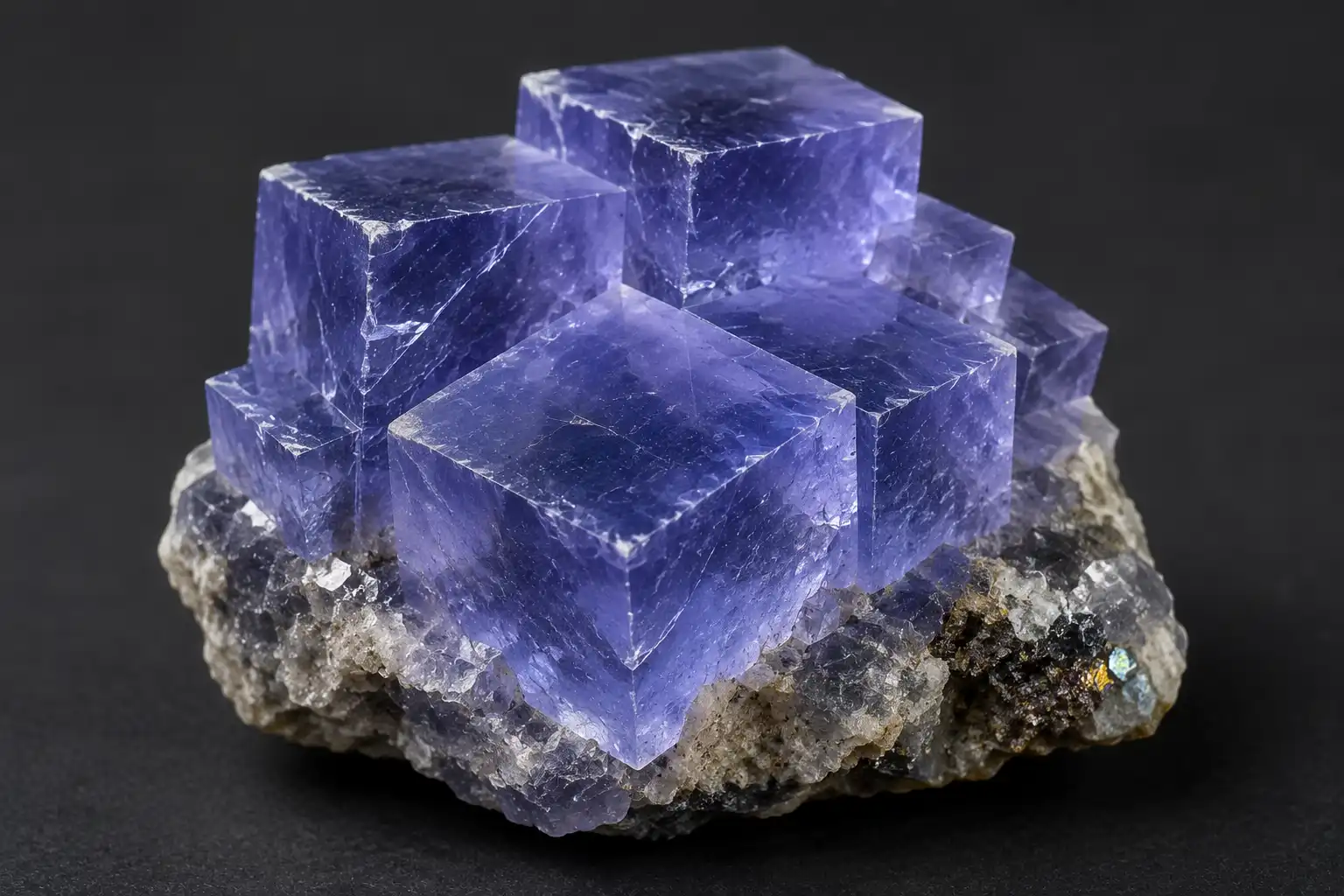
Fluorite, for example, has prominent cleavage in several directions and can separate into octahedral forms. Calcite has three perfect cleavage directions that do not meet at right angles.
These collector minerals can be polished or faceted, but their structural behavior makes them poor choices for rough daily wear.
Cutting Orientation Can Reduce Risk
Lapidaries study cleavage before sawing and faceting rough.
The cutter may orient the table at an angle to a cleavage plane rather than parallel with it. This reduces the chance that grinding pressure will split the rough and makes the finished stone less vulnerable during setting.
However, orientation involves compromises. The safest direction may produce:
- Weaker face-up color
- Less attractive pleochroism
- Lower yield
- A smaller finished stone
- An unusual outline
- Greater inclusion visibility
A well-cut gemstone balances appearance, yield, and structural safety rather than maximizing carat weight blindly.
Topaz: Hard Surface, Perfect Cleavage
Topaz provides the clearest example of why hardness does not equal resistance to breakage.
It has strong scratch resistance but perfect basal cleavage. A blow, strong pressure, or abrupt temperature change can cause a split.
The topaz buying guide explains how cleavage condition, treatment, color category, and cutting should be evaluated before purchase.
Inspect topaz for:
- Flat reflective planes
- Chips near the girdle
- Breaks running beneath the table
- Fractures near prong positions
- Very thin corners
- Damage around drill holes
- Stress from a tight setting
Topaz rings should use protective designs. A setter must also avoid forcing a bezel or tightening a prong directly over a vulnerable area.
Diamond: Hardest Does Not Mean Unbreakable
Diamond ranks 10 on the Mohs scale, but it has cleavage directions.
Its surface resists scratching exceptionally well. Nevertheless, a sharp impact at a vulnerable position can chip or cleave the stone.
Points, corners, thin girdles, and areas near inclusions deserve particular protection. Princess, marquise, pear, and heart shapes can be more exposed than a round outline when their points are left unguarded.
A diamond’s high hardness also creates an unusual setting risk: a loose stone can damage metal prongs through repeated movement.
The practical lesson is that even the hardest gemstone requires secure mounting and regular inspections.
Tanzanite: Cleavage and Fair-to-Poor Toughness
Tanzanite is blue-to-violet zoisite with strong pleochroism and important cleavage.
It can be used in rings, but exposed daily wear carries more risk than earrings or pendants. The tanzanite buying guide explains why fractures, cleavage condition, heat, setting style, and cut orientation matter.
A hard knock can split the gem. Sudden temperature changes, steam cleaning, repair heat, or pressure around an inclusion can also cause damage.
A protective halo, bezel-style guard, or low mounting can reduce impact exposure, although no setting makes a fractured stone invulnerable.
Moonstone and Other Feldspars
Moonstone belongs to the feldspar family and has two cleavage directions.
A hard blow can split it, while high heat or sudden temperature change can extend breaks. The moonstone buying guide should be used to assess adularescence, dome, fractures, treatment, and structural condition.
Labradorite, sunstone, and other feldspars also require cleavage-aware care. They can perform well in pendants, earrings, brooches, beads, and protected rings, but exposed edges may chip.
Cabochon cutting helps remove sharp facet corners, yet it does not eliminate internal cleavage.
Kunzite and Other Spodumene
Kunzite is the pink-to-violet variety of spodumene. It has good hardness but pronounced cleavage and poor practical toughness.
The kunzite buying guide explains its separate color, pleochroism, light-stability, and treatment concerns.
Large kunzite crystals can yield impressive faceted stones, but their cleavage complicates cutting and setting. A thin corner or strongly included area may split under concentrated pressure.
Heat is also a concern. Repair procedures should be planned around both cleavage and possible color sensitivity.
Iolite
Iolite has good surface hardness but perfect cleavage in one direction.
Its blue-violet color and pleochroism make it attractive, yet the stone should be protected from sharp blows and pressure.
An iolite ring is safer when the setting shields the girdle and corners. Earrings and pendants generally present less risk.
This is another case where a hardness number near 7 does not tell the complete durability story.
Kyanite’s Directional Behavior
Kyanite is unusual because its hardness differs strongly with direction. It also has cleavage.
A cutter must account for both orientation-dependent abrasion and splitting. The finished gemstone may polish differently on adjacent facets and can be difficult to repair.
Kyanite is best treated as a specialist or collector gem rather than a low-maintenance daily ring stone.
Fluorite and Calcite
Fluorite combines low hardness with prominent cleavage. Calcite is even softer and also cleaves readily.
These materials can produce beautiful collector cuts, carvings, and display specimens. However, they scratch easily and can split from limited pressure.
Their faceted forms are better suited to collections than routine jewelry.
A seller should not describe a gemstone as suitable for everyday wear merely because it has been successfully faceted.
Sapphire and Ruby Have No Cleavage
Ruby and sapphire are corundum. They combine hardness 9, excellent toughness, and no cleavage, making them among the strongest transparent options for frequent-wear jewelry.
The sapphire buying guide explains why inclusions, treatments, and fillings can still change durability despite corundum’s favorable natural properties.
A heavily fractured or glass-filled ruby should not be treated like a clean untreated sapphire merely because both consist partly or entirely of corundum.
Material identity establishes the baseline. Condition and treatment determine the individual risk.
Spinel, Garnet, and Quartz
Spinel, garnet, and quartz generally lack easy cleavage and can perform well in many jewelry settings.
The spinel buying guide covers one of the more durable colored-gem choices. Garnet varieties also provide useful wearability, although inclusions and thin edges remain relevant.
Quartz varieties such as amethyst, citrine, smoky quartz, and rose quartz resist routine abrasion reasonably well. Nevertheless, they are brittle and can chip through conchoidal fracture.
No cleavage means no preferred splitting plane—not immunity from damage.
Jade Shows Why Structure Matters
Jadeite and nephrite have only moderate hardness, but their interlocking aggregate structures create exceptional toughness.
The jade buying guide explains why texture, treatment, internal fractures, and carving quality matter more than one hardness number.
Jade may resist impact better than a harder single crystal with cleavage. However, treated jade, thin bangles, drilled pieces, and pre-existing fractures can still break.
This contrast demonstrates why durability must be evaluated as a system.
Inclusions Can Intersect Cleavage
An inclusion can concentrate stress or connect with a cleavage direction.
Liquid inclusions may expand under heat. Mineral crystals can create tension. Surface-reaching fissures can allow dirt, filler, or cleaning liquid into the stone.
A cleavage plane beneath an inclusion may propagate during:
- Prong tightening
- Resizing
- Polishing
- Ultrasonic cleaning
- Steam cleaning
- Sudden temperature change
- Accidental impact
Inspect the complete stone rather than relying only on its mineral’s normal cleavage description.
Treatments Can Change Breakage Risk
Fissure filling, oil, resin, glass, and other treatments can conceal structural weakness.
The underlying fracture remains even when the filler improves apparent clarity. Heat, solvents, or vibration may damage the filler or extend the break.
The gemstone treatments guide explains how clarity enhancement affects disclosure and care.
A filled gemstone should be evaluated according to its most vulnerable component: the host mineral, fracture network, filler, and setting.
Setting Cleavage-Sensitive Gems
A protective setting reduces risk by shielding exposed areas and distributing contact.
Useful approaches may include:
- Low-profile mounting
- Protected corners
- V-shaped prongs around points
- Partial bezel protection
- Halos
- Smooth channels where appropriate
- Reduced metal pressure over fractures
A full bezel is not automatically safest. Forming metal tightly around a cleavage-sensitive gemstone can create damaging pressure during setting.
The jeweler should inspect the stone, map fractures, and choose a setting method appropriate to its condition.
The best gemstones for engagement rings guide compares cleavage with hardness, toughness, treatment, and long-term wear.
Repair Risks
Cleavage-sensitive gems require special planning during resizing, soldering, prong work, polishing, and stone removal.
A jeweler may need to:
- Remove the gemstone before applying heat
- Shield it from the torch
- Avoid sudden cooling
- Reduce clamping pressure
- Support the stone evenly
- Avoid striking the setting
- Inspect fissures before tightening
- Photograph the stone before work
The repair professional should receive the laboratory report and treatment disclosure before beginning.
Ultrasonic and Steam Cleaning
Cleavage alone does not determine whether a gemstone can enter an ultrasonic cleaner. Nevertheless, vibration can worsen an existing separation, particularly when fractures, filler, or inclusions are present.
Steam creates heat and rapid temperature change, which can also be dangerous.
The dedicated guide to gemstones in ultrasonic cleaners should be consulted before mechanical cleaning.
Warm water, mild soap, and a soft brush or cloth are safer for most cleavage-sensitive stones.
Can a Laboratory Report Grade Cleavage?
A standard gem report identifies the material and may note significant surface-reaching features, treatments, or durability-relevant observations.
It usually does not provide a universal cleavage-risk grade for the finished stone.
Use the gemstone certification guide to select an appropriate laboratory and how to read a gem lab report to interpret the findings.
A report should be combined with a jeweler’s condition inspection, particularly when the stone is already mounted.
Buying Cleavage-Sensitive Gems Online
Online photographs may hide flat fractures through lighting and orientation.
Request:
- Face-up video
- Side and pavilion views
- Girdle close-ups
- Images with reflections reduced
- Magnified fracture photographs
- Exact dimensions
- Treatment disclosure
- Setting-condition photographs
- Laboratory report
- Return and inspection terms
The safeguards in how to buy gemstones online are especially important when the stone cannot be examined before payment.
Final Cleavage Buying Checklist
Before buying, confirm that:
- The gemstone species is identified correctly.
- Its cleavage directions and quality are understood.
- Cleavage is not confused with hardness.
- The stone has been inspected for surface-reaching planes.
- No fracture is concealed beneath a prong.
- Corners and points have adequate protection.
- The cut does not rely on an unsafe thin girdle.
- Filler or oil is disclosed.
- Heat and pressure restrictions are known.
- Cleaning instructions reflect the stone’s structure.
- The report matches the current stone.
- The setter has experience with the material.
- The return period permits professional inspection.
Frequently Asked Questions
1. What is gemstone cleavage?
Cleavage is a mineral’s tendency to split along specific crystallographic planes where its internal bonding is relatively weak.
2. Does cleavage mean a gemstone is already cracked?
No. Cleavage describes structural potential. A cleavage crack or separation is actual damage along that direction.
3. Can a hard gemstone have cleavage?
Yes. Topaz and diamond are hard gemstones with important cleavage directions.
4. Does sapphire have cleavage?
Ruby and sapphire do not have cleavage and generally have excellent toughness, though they can still chip or contain fractures.
5. Why does topaz break so easily despite hardness 8?
Topaz has perfect basal cleavage, so pressure or impact aligned with that plane can split it.
6. Can diamond chip?
Yes. Diamond has exceptional hardness but can chip or cleave from a well-placed impact.
7. Does quartz have cleavage?
Quartz has no easy cleavage, but it is brittle and can develop conchoidal fractures or chips.
8. Is jade harder than topaz?
No. Jade is softer, but its interlocking structure makes it exceptionally tough and resistant to breaking.
9. Can cleavage be removed by recutting?
Recutting can remove an existing chip or surface-reaching break, but it cannot remove the mineral’s underlying cleavage tendency.
10. Are bezel settings always safest?
Not automatically. Bezels protect edges, but forming metal around a cleavage-sensitive or fractured stone can create damaging pressure.
11. Can cleavage-sensitive stones go in an ultrasonic cleaner?
Mechanical cleaning is risky when cleavage separations, fractures, inclusions, filler, or delicate settings are present.
12. Can a laboratory determine whether a line is cleavage?
A gemologist can often distinguish cleavage-related features from ordinary fractures using microscopy and other observations, though mounted settings may limit examination.
Conclusion
Cleavage is not a reason to avoid every topaz, tanzanite, moonstone, or kunzite. It is a reason to examine the stone’s orientation, fractures, cut, setting, and repair plan before purchase. When pressure is kept away from vulnerable planes and the jewelry suits the material, a cleavage-sensitive gemstone can remain wearable without being mistaken for an indestructible one.