Spinel Bracelets: How to Choose and Wear
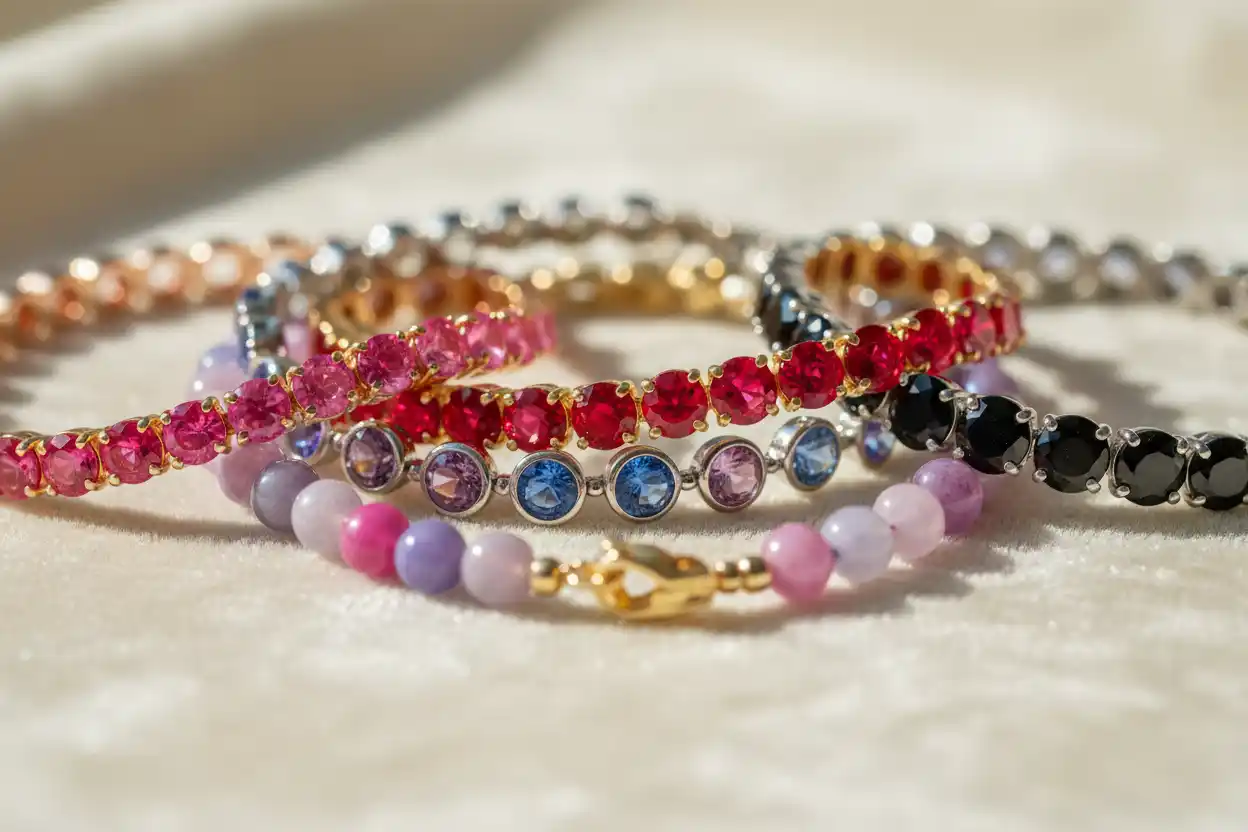
Spinel bracelets can show almost every major jewelry color, from vivid red and hot pink to cobalt blue, lavender, gray and opaque black. The gem’s hardness of 8 and good toughness make it one of the stronger natural colored-stone options for wrist jewelry.
A bracelet still receives more contact than earrings or necklaces. Secure settings, smooth articulation, accurate fit and treatment-aware buying therefore matter just as much as the Spinel’s color and brilliance.
Spinel Bracelets at a Glance
| Feature | What to Consider |
|---|---|
| Mineral species | Spinel |
| Ideal composition | Magnesium aluminum oxide, MgAl₂O₄ |
| Common colors | Red, pink, orange, violet, purple, blue, gray and black |
| Mohs hardness | 8 |
| Toughness | Good |
| Cleavage | No easy cleavage |
| Popular formats | Tennis, line, station, bead, charm, bangle and cuff |
| Most important quality factor | Attractive, evenly matched color |
| Common cuts | Round, oval, cushion, pear and mixed cuts |
| Treatment concerns | Heat, rare filling and diffusion in some colors |
| Safe cleaning | Warm water, mild soap and a soft brush |
| Birthstone connection | Spinel is an August birthstone |
What Makes Spinel Suitable for Bracelets?
Spinel combines substantial scratch resistance with good toughness. It can withstand ordinary wear better than softer bracelet stones such as Opal, Moonstone, Sphene or Calcite.
The gem also lacks the pronounced cleavage found in Topaz and some other crystalline materials. That reduces one common breakage pathway, although severe impact can still chip any faceted stone.
Color diversity is another advantage. One bracelet may use matched red Spinels, while another combines pink, lilac, gray and blue gems in a graduated palette.
The broader Spinel meaning guide covers mineral identity, sources, history and modern spiritual interpretations. This page focuses on bracelet selection and wear.
Spinel Tennis Bracelets
A tennis bracelet places individually set stones in a continuous flexible line. It provides the most formal and gem-intensive Spinel format.
Round stones are easiest to match and articulate. Ovals and cushions can also create a striking line, although the settings must allow enough movement for the bracelet to follow the wrist.
Matched suites of fine red, cobalt-blue or vivid pink Spinel can be difficult to assemble. Color, tone, dimensions and face-up brightness need to remain consistent from one end to the other.
A box clasp with at least one secondary safety latch is preferable for an expensive piece. The bracelet should bend smoothly without exposing sharp gaps or twisting the stones inward.
Line Bracelets
Line bracelets resemble tennis bracelets but may use graduated sizes, mixed shapes or more decorative links.
A graduated design places larger gems at the center and smaller stones near the clasp. The progression should look deliberate rather than uneven.
Shared-prong settings reduce visible metal, but one damaged prong may affect more than one stone. Individual four-prong or bezel units provide greater separation.
Inspect the reverse side for open spaces large enough to clean yet smooth enough not to scratch the wrist.
Station Bracelets
Station bracelets space individual Spinels along a chain. They use fewer stones and create a lighter everyday design.
Bezel-set stations protect the girdles and remain relatively smooth. Prong-set stations may allow more light around the gems but can catch on sleeves.
The stations should stay face-up as the wrist moves. Poor balance can cause each setting to flip repeatedly.
An adjustable chain is useful for gifts, although the extension and clasp must remain proportionate to the total gemstone weight.
Beaded Spinel Bracelets
Faceted Spinel beads can create vivid strands or subtle multicolor gradients. Black Spinel beads are especially common, while transparent red, pink and blue beads tend to cost more.
Inspect drill holes carefully. Cracks extending outward can grow as beads move and strike one another.
Bead descriptions require scrutiny because “black Spinel” is sometimes applied loosely to glass, coated materials or other black stones. Natural Spinel should be represented clearly.
A professionally strung bracelet may use durable cord, wire or individually linked beads. The best choice depends on bead weight and whether the design needs flexibility or structure.
Charm Bracelets
A Spinel charm can add birthstone meaning or color to an existing bracelet. It is also a lower-cost way to use one fine gem rather than a complete matched suite.
The charm should hang from a soldered or securely closed link. Open jump rings can gradually pull apart.
A protective bezel works well because charms swing and strike neighboring components. Pointed pears, marquises and carvings need additional edge protection.
When several charms share one bracelet, leave enough spacing to stop hard gemstones and metal surfaces from repeatedly hitting the Spinel.
Bangles and Cuffs
Rigid bangles can carry a row of Spinels, a central cluster or scattered flush-set stones.
Hinged bangles are easier to fit than closed designs, but the hinge and clasp must remain aligned. Side-to-side play can signal wear.
Cuffs should not require aggressive bending each time they are worn. Repeatedly reshaping metal can weaken both the bracelet and gemstone settings.
Flush, bezel and channel settings provide a smooth profile suitable for everyday wear. High projecting clusters make a stronger statement but encounter more impact.
Color Choices
Red Spinel is the best-known premium color and has historically been confused with Ruby. Fine stones show pure red to slightly purplish red without excessive darkness.
Pink Spinel ranges from delicate pastel to intense hot pink. Bright pink bracelets can look contemporary in white metal or warmer in rose gold.
Blue Spinel spans grayish blue, violet-blue and rare strongly saturated cobalt-bearing colors. Many natural blue stones contain a gray modifier, so an intense blue bracelet deserves careful documentation.
Purple, lilac and lavender Spinel offers a softer palette. Gray Spinel can look understated and modern, while black material creates a polished neutral bracelet.
The dedicated Spinel color meaning guide covers symbolic interpretations without repeating practical bracelet selection. The guide to types of Spinel explains varieties and color terminology.
Red Spinel Bracelets
A matched red Spinel line bracelet can resemble Ruby jewelry from a distance. The materials are distinct, and identification should never rely on color alone.
Spinel is singly refractive, while Ruby belongs to Corundum and has different optical and chemical properties. Both can contain chromium and display red fluorescence.
The dedicated Ruby versus Spinel guide explains their historical confusion. A broader Ruby, Garnet and Spinel comparison covers three common red-gem candidates.
Red options can also be compared in the red gemstones guide.
Pink and Purple Spinel Bracelets
Pink and purple Spinel suits graduated, multicolor and station bracelets particularly well.
Hot pink stones create a vivid contemporary look. Pale pink and lavender gems provide a more restrained palette, although weak saturation may reduce value.
Rose gold complements pink but can make some pale stones blend into the mounting. White gold or platinum creates a clearer outline.
The pink gemstones guide places Spinel beside Sapphire, Tourmaline, Morganite and other pink materials.
Blue Spinel Bracelets
Fine blue Spinel is uncommon, especially when color is strongly saturated and lacks a heavy gray component.
A bracelet requires numerous matched stones, so a suite of natural vivid-blue Spinels can command significant value.
Treatment and origin documentation become particularly important. Diffusion treatments have been used to produce blue-to-green colors, and synthetic blue Spinel has existed for many years.
An independent laboratory report is appropriate when the bracelet’s price depends substantially on natural vivid-blue Spinel.
The blue gemstones guide compares blue Spinel with Sapphire, Aquamarine, Zircon and other alternatives.
Black Spinel Bracelets
Black Spinel is generally opaque and receives its appeal from polish, luster and contrast rather than transparency.
Faceted black beads can resemble black Diamond, Onyx, Obsidian, Hematite or coated glass. Their physical and market identities differ.
A good black Spinel bracelet should show an even polish, secure drill holes and accurate disclosure. Extremely lightweight or molded-looking beads deserve closer inspection.
Black gems pair readily with silver, white gold, yellow gold and mixed-metal designs. Additional comparisons appear in the black gemstones guide.
Matching Multiple Stones
Matching is one of the most important quality factors in a transparent Spinel bracelet.
The gems should coordinate in hue, tone, saturation, clarity, visible dimensions and brilliance. Equal carat weights do not guarantee equal face-up size.
Fine rough is often cut to nonstandard shapes to preserve weight. Consequently, assembling a large suite of perfectly matched natural stones can require considerable sorting and recutting.
One poorly cut or unusually dark gem can interrupt the entire bracelet. Examine the row both laid flat and wrapped around the wrist.
For high-value bracelets, ask whether one or two spare matched stones are available for future repair.
Cut and Brilliance
Spinel is singly refractive and can show excellent brilliance when properly proportioned.
Rounds and cushions are common. Ovals conserve rough efficiently, while pears and marquises create movement in decorative layouts.
A windowed center allows the wrist or setting to show through and weakens color. Excessive depth makes a gem appear smaller and may create dark extinction.
Facet junctions should look crisp. Abraded edges can indicate long wear, poor storage or low-quality finishing.
The Spinel buying guide explains color, clarity, cut and carat weight in greater detail.
Clarity
Eye-clean Spinel is preferred for many transparent bracelet designs. However, some natural stones contain crystals, fingerprint-like inclusions, needles or healed fractures.
Small inclusions may disappear at normal viewing distance, particularly in a multi-stone bracelet. Structural fractures remain more important.
Surface-reaching breaks near prongs or drill holes can reduce durability. A heavily included stone should not be forced into a tight setting.
Star Spinel contains oriented inclusions that create asterism and is normally cut as a cabochon. Such stones belong to a different design category from transparent faceted line bracelets.
Natural and Synthetic Spinel
Natural Spinel forms geologically, often in metamorphic marble or alluvial deposits derived from host rocks.
Laboratory-grown Spinel has been produced for many decades. Synthetic material may imitate natural Spinel itself or other stones such as Sapphire and Aquamarine.
Synthetic Spinel is legitimate when disclosed. Misrepresentation occurs when it is sold as natural or when an imitation is described with a misleading gem name.
Visual inspection may reveal curved growth, bubbles or other clues in some material, but advanced synthetics can require professional testing.
A laboratory report is sensible for an important red, blue or pink bracelet where natural origin contributes materially to price.
Treatments
Many natural Spinels are untreated, which contributes to the gem’s appeal. Nevertheless, heat treatment occurs and should be disclosed.
Fracture filling is uncommon but possible. Filled stones should be cleaned only with conservative methods.
Cobalt and nickel diffusion have been documented in blue-to-green Spinel. Color concentration near facet junctions or other unusual features may require laboratory investigation.
Treatment does not necessarily make a stone unsuitable for jewelry. It changes rarity, value, documentation and sometimes care requirements.
Settings
Prong settings expose more of each gem. They suit high-quality transparent stones but require regular inspection.
Shared prongs reduce metal and create a continuous line. Damage to one shared prong can threaten neighboring stones.
Bezels provide excellent edge protection and a smooth profile. They may slightly reduce apparent size but work well for active wearers.
Channel settings place stones between continuous metal walls. They protect girdles effectively, though replacing one damaged stone can require substantial work.
Flush settings suit bangles and cuffs with smaller stones. The metal must remain thick enough to hold the gems safely.
Choosing the Metal
White gold and platinum create strong contrast with red, pink, purple and blue Spinel.
Yellow gold warms red, orange, black and some purple stones. It can also give a historical character to red Spinel jewelry.
Rose gold pairs naturally with pink and lavender gems. Pale stones should be compared directly because they may blend into the metal.
Sterling silver offers an accessible option for black or commercial multicolor Spinel. The setting still needs sufficient strength for the bracelet’s total weight.
Metal allergies, clasp construction and repair availability matter alongside appearance.
Bracelet Fit
Measure the wrist at the point where the bracelet will rest. Add enough ease for movement without allowing the piece to slide over the hand.
A tennis bracelet should lie flat and permit approximately one finger of comfortable space, although personal preference varies.
Excessive looseness increases impact and snagging. A bracelet that is too tight places continuous stress on links and clasp components.
Rigid bangles must either pass comfortably over the hand or use a reliable hinge. Never force a gemstone bangle into shape.
Clasp Security
A box clasp with one or two safety latches is appropriate for a valuable line bracelet.
Lobster clasps suit lighter station designs. The connecting rings should be soldered or sufficiently substantial.
Magnetic clasps are convenient but rarely provide enough security for an expensive Spinel suite.
Open and close the clasp several times. It should engage positively without feeling loose, sharp or excessively difficult.
For a high-value bracelet, inspect the clasp and safety system during every professional maintenance visit.
August Birthstone Meaning
Spinel is one of the modern birthstones associated with August, alongside Peridot and Sardonyx.
Its broad color range gives August jewelry more flexibility than a single-color birthstone system. A recipient can choose red, pink, blue, violet, gray or black according to personal style.
The August birthstone guide explains the calendar tradition. The August birthstone jewelry guide compares Spinel, Peridot and Sardonyx gift options.
A bracelet also works as an anniversary, graduation or personal-style gift without any birthstone connection.
Comparing Other Spinel Jewelry
Spinel earrings avoid wrist sizing and receive less impact.
A Spinel necklace can accommodate larger stones with lower daily risk. A Spinel ring gives one stone maximum prominence but exposes it to more abrasion.
Bracelets provide repeated color and remain visible to the wearer. Their construction, however, contains more links, settings and potential failure points than a simple pendant.
Price and Documentation
Spinel value depends strongly on color. Fine red, cobalt-blue, hot-pink and vivid-orange stones can command substantial premiums.
Matched suites are often more valuable than the sum of randomly assembled individual gems because close matching requires additional sorting and limited supply.
Larger transparent stones rise sharply in price when color and clarity remain strong. A bracelet containing many large matched natural Spinels can therefore represent a significant purchase.
The Spinel price guide covers individual value factors. For an expensive bracelet, request gemstone count, total weight, dimensions, treatment disclosure, metal fineness and laboratory documentation where appropriate.
Cleaning
Warm water, mild soap and a soft brush provide the safest routine cleaning.
Support the bracelet over a bowl or closed drain. Brush beneath settings and between links where lotion and skin oils collect.
Ultrasonic and steam cleaners are often safe for untreated, unfractured Spinel in robust settings. They should be avoided when fractures, filling, delicate construction or vulnerable companion stones are present.
The dedicated guide to cleaning Spinel jewelry provides treatment-specific instructions.
Daily Wear and Storage
Spinel can handle regular wear, but remove the bracelet before exercise, household cleaning, gardening and work involving tools or hard surfaces.
Desk edges can abrade metal and loosen settings over time. A low-profile bracelet performs better than tall projecting baskets for frequent wear.
Fasten the bracelet before placing it in a lined compartment. Keep it separate from Diamonds, Sapphires and other harder stones that can scratch Spinel.
Avoid prolonged high heat, which may affect some colors. Normal light and ordinary household chemicals are generally less concerning than impact and setting wear.
Spinel appears in the crystals beginning with S and gemstones beginning with S directories.
Final Perspective
Spinel is unusually well suited to bracelet design because it combines durable physical properties with one of the broadest color ranges in the gem market. A simple black-bead strand, vivid pink station bracelet and matched red tennis bracelet can all use the same mineral species while creating entirely different results.
The strongest purchase balances honest gem identification, consistent color, secure construction and comfortable fit. Once those factors are right, Spinel can provide repeated color across the wrist without demanding the extreme protection required by many collector gems.
Frequently Asked Questions
1. Is Spinel durable enough for bracelets?
Yes. Spinel ranks 8 on the Mohs scale and has good toughness, making it suitable for regular bracelet wear with reasonable care.
2. What is the best Spinel bracelet style for everyday use?
A low-profile bezel or station bracelet provides strong protection and limited snagging. Secure tennis bracelets can also work well.
3. Which Spinel color is most valuable?
Fine red is generally the most highly valued, followed by exceptional cobalt-blue, hot-pink and vivid-orange material.
4. Is black Spinel natural?
Natural black Spinel exists, although glass, Onyx and other materials may be sold as substitutes. Accurate disclosure remains important.
5. Is blue Spinel always natural?
No. Natural, synthetic and diffusion-treated blue Spinel can all occur. Significant vivid-blue purchases deserve laboratory verification.
6. How closely should stones in a tennis bracelet match?
They should coordinate in hue, tone, saturation, visible dimensions and brilliance. One noticeably dark or poorly cut stone can disrupt the row.
7. Is Spinel an August birthstone?
Yes. Spinel is recognized alongside Peridot and Sardonyx as an August birthstone.
8. Does Spinel receive treatment?
Many stones are untreated, but heat, fracture filling and diffusion treatments occur. Known treatment should be disclosed.
9. Is synthetic Spinel fake?
Synthetic Spinel is laboratory-grown Spinel or a manufactured gem material. It is legitimate when disclosed but should not be represented as natural.
10. Which metal looks best with Spinel?
White metals emphasize red, blue and pink stones, while yellow gold warms red, orange and black Spinel. Rose gold complements pink and lavender colors.
11. How should a Spinel bracelet fit?
It should move comfortably without sliding over the hand or striking surfaces excessively. A tennis bracelet commonly allows about one finger of ease.
12. How should a Spinel bracelet be cleaned?
Use warm water, mild soap and a soft brush. Avoid ultrasonic or steam cleaning when stones are fractured, filled or set beside sensitive materials.