Spinel Rings: Styles and Buying Tips
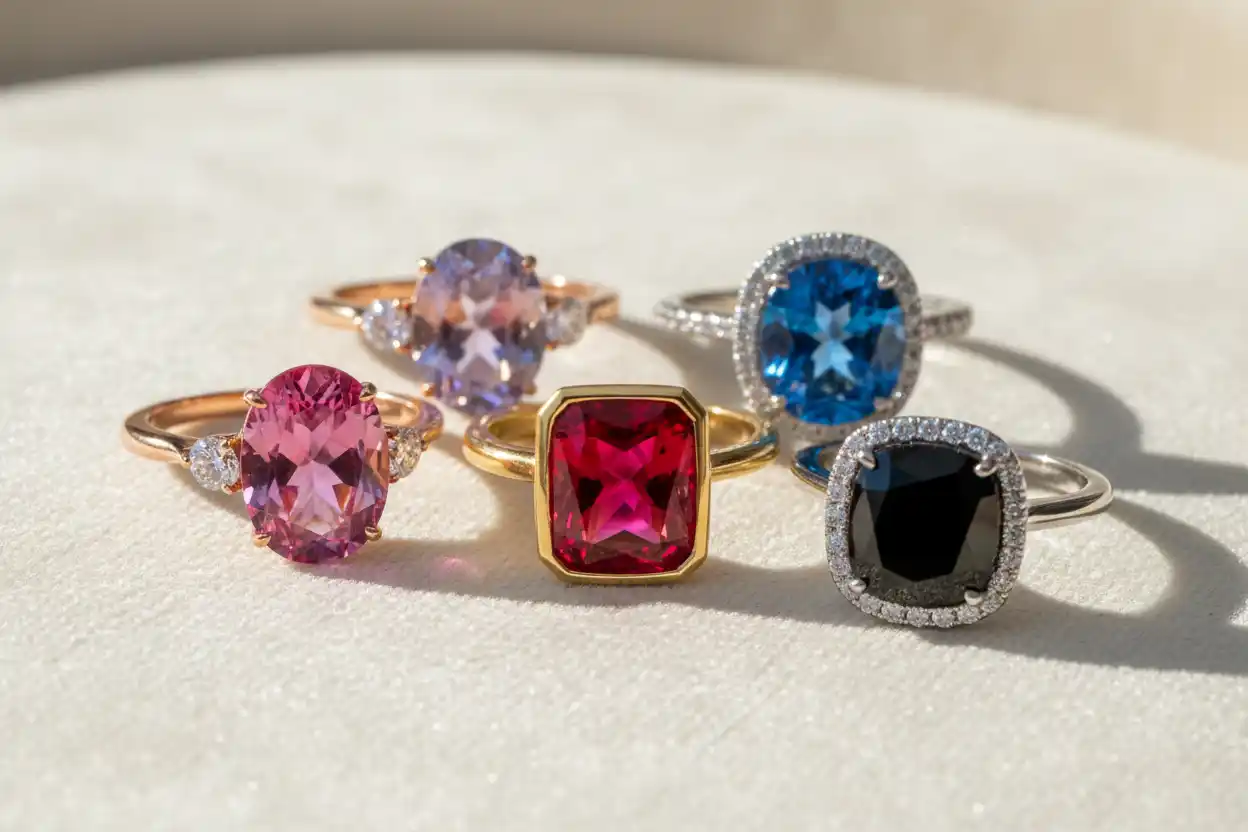
Spinel rings combine the color of fine Ruby, Sapphire and unusual pastel gems with a durable Mohs hardness of 8. Red, pink, blue, orange, violet, gray and black Spinel can all appear in rings, giving the buyer far more choice than a single traditional gemstone color.
Although Spinel is suitable for frequent wear, a ring receives hard contact that earrings and necklaces rarely encounter. Setting design, gemstone condition, treatment disclosure, band construction and lifestyle should therefore guide the purchase alongside color and carat weight.
Spinel Rings at a Glance
| Feature | What to Consider |
|---|---|
| Gemstone | Natural or laboratory-grown Spinel |
| Common colors | Red, pink, orange, violet, blue, gray and black |
| Mohs hardness | 8 |
| Toughness | Good |
| Cleavage | No easy cleavage |
| Best protective settings | Bezel, low halo and substantial prongs |
| Popular cuts | Round, oval, cushion, emerald, pear and trillion |
| Strongest quality factor | Attractive color under normal lighting |
| Treatment concerns | Heat, filling and diffusion in some material |
| Everyday suitability | Good with appropriate setting and care |
| Safest cleaning | Warm soapy water and a soft brush |
| Birthstone association | August |
Is Spinel Good for Rings?
Spinel is one of the more practical natural colored gemstones for rings. It is harder than Quartz, Garnet and Tourmaline, and it lacks a strong cleavage direction.
A severe impact can still chip a facet edge or damage an included stone. No gem is protected from a direct blow against steel, ceramic or stone.
A well-built setting allows Spinel to serve in everyday rings, engagement jewelry and heirloom pieces. Very high baskets, exposed corners and weak prongs increase risk unnecessarily.
The broad Spinel meaning guide explains the mineral’s identity and history. This page owns ring style, durability and purchasing decisions.
Spinel Solitaire Rings
A solitaire displays one Spinel without competing colored gems. It allows color and cut to remain the visual focus.
Four-prong settings create an open appearance. They work best when each prong is substantial and correctly positioned.
Six-prong settings provide added redundancy for round and oval stones. The extra metal may be worthwhile for a valuable natural red or blue Spinel.
A tall cathedral setting creates visual height but increases snagging. Lower baskets generally suit frequent wear better because the gemstone remains closer to the finger.
The gallery beneath the stone should permit cleaning while protecting the culet from contact with the finger.
Bezel-Set Spinel Rings
A bezel surrounds most or all of the gem’s girdle with metal. It provides strong protection against side impacts and snagging.
Full bezels create a smooth contemporary design. Partial bezels expose more of the gem and can preserve an elongated outline.
A bezel can make the center appear slightly smaller, but the metal border often intensifies color. White metal creates sharp contrast, while yellow gold warms red, orange and black Spinel.
The jeweler must know whether the stone contains significant fractures or treatment. Excessive setting pressure may damage structurally weak material.
For active wearers, a low bezel is among the safest Spinel ring designs.
Halo Spinel Rings
A halo surrounds the center Spinel with small accent gems. It enlarges the face-up appearance and can brighten a dark center.
Diamonds and white Sapphires are common accents. Their colorless appearance creates strong contrast with red, pink, blue and purple Spinel.
A halo also introduces more maintenance. Every accent requires small prongs or beads, and residue can collect beneath the design.
A low halo offers more protection than a raised surround. Double halos create dramatic scale but contain more components that may loosen.
The center gem should remain visually dominant. An oversized halo can obscure the outline and color character that made the Spinel desirable.
Three-Stone Spinel Rings
Three-stone rings may use a Spinel center with Diamond or white-Sapphire side stones. Tapered baguettes produce a geometric frame, while pears and rounds create a softer outline.
A ring can also combine three Spinels. Matching is essential when all stones share one color, because a dark or poorly cut side gem will remain obvious.
Multicolor designs may combine pink, violet and blue Spinel or use a red center with pale-pink sides. The progression should appear intentional.
The side settings must not rub against the center stone. Hard Diamond girdles can abrade Spinel when the gems touch directly.
Cluster and Cocktail Rings
Cluster rings use several smaller Spinels to create a flower, starburst or abstract pattern. They can provide significant color without requiring one large fine gem.
Cocktail rings use larger stones or broad settings for maximum impact. Orange, pink, violet and black Spinel work particularly well in bold designs.
These rings should normally be reserved for lower-risk wear. Wide heads and projecting settings encounter more impact than compact solitaires.
Inspect the reverse side for smooth finishing and strong connecting points. A decorative gallery should not contain thin unsupported metal.
Spinel Engagement Rings
Spinel is durable enough to serve as an engagement-ring center stone when the setting and wearer’s lifestyle are appropriate.
Red Spinel offers an alternative to Ruby, while pink and blue material provides options beyond conventional Sapphire. Gray, lavender and black Spinel can create modern designs.
A bezel, protective halo or substantial six-prong setting suits frequent wear better than a very high four-prong basket.
Couples should obtain written disclosure of natural or laboratory-grown origin and treatment. An important natural stone deserves an independent gemological report.
Spinel’s reputation has strengthened because it offers durability and untreated color in a market where many other gems receive routine enhancement. However, buyers should not assume automatically that every stone is untreated.
Red Spinel Rings
Fine red Spinel is among the most valuable forms of the gem. Its color may be pure red, orangy red or slightly purplish red.
Historically, red Spinel was confused with Ruby. Modern testing separates the singly refractive Spinel from doubly refractive Corundum.
The detailed Ruby versus Spinel guide explains this distinction. The Ruby, Garnet and Spinel comparison covers an additional common red lookalike.
Red Spinel rings work in white, yellow and rose metals. The choice changes the visual temperature without altering gemstone identity.
Related materials appear in the red gemstones guide.
Pink Spinel Rings
Pink Spinel ranges from pale blush to vivid hot pink. Saturated material can provide intense color without requiring a large center.
Rose gold produces a tonal combination, whereas platinum or white gold creates stronger contrast.
Pale pink stones reveal windowing and weak cutting readily. A good cut is therefore especially important when saturation is low.
Pink Spinel can serve in engagement, anniversary and right-hand rings. The pink gemstones guide compares it with Sapphire, Tourmaline, Morganite and other options.
Blue Spinel Rings
Natural vivid-blue Spinel is rare. Many stones appear gray-blue, violet-blue or dark blue rather than pure saturated cobalt color.
Cobalt-bearing gems can command a significant premium. Strong color claims should be supported by laboratory evidence rather than retail language alone.
Cobalt and nickel diffusion treatments have entered the market, and synthetic blue Spinel is widely available. An expensive vivid-blue ring needs a report confirming natural or laboratory-grown origin and detectable treatment.
The blue gemstones guide compares Spinel with Sapphire, Aquamarine, Zircon and Tourmaline.
Purple, Lavender and Gray Spinel Rings
Violet and lavender Spinel provides an alternative to Amethyst, Tanzanite and purple Sapphire. Its hardness makes it especially practical for rings.
Pale lilac gems can appear delicate, while darker violet stones create a more dramatic effect.
Gray Spinel suits minimalist settings and mixed metals. Blue, violet or green undertones may become more visible under different lighting.
Compare the stone in daylight-equivalent and warm indoor light before purchase. Neutral colors can change character substantially with their surroundings.
The purple gemstones guide and gray gemstones guide provide broader comparisons.
Black Spinel Rings
Black Spinel is opaque and valued for its polished reflections. It creates a strong graphic ring in bezel, signet, pavé and geometric designs.
It can resemble black Diamond, Onyx, Obsidian and coated glass. Accurate disclosure remains important because these materials have different value and physical behavior.
A black Spinel center can be surrounded by colorless accents or set alone in yellow, white or blackened metal.
The black gemstones guide examines the main dark jewelry options. Buyers considering commitment jewelry can also compare black gemstones for engagement rings.
Choosing Spinel Color
The most valuable color is not automatically the best personal choice.
Fine red provides historic prestige. Hot pink appears contemporary, cobalt blue feels rare and formal, and lavender or gray offers a more understated identity.
A stone should retain life under normal indoor conditions. Some saturated Spinels appear bright under display lights but darken substantially at home.
The dedicated Spinel color meaning guide explains each shade’s cultural symbolism. The guide to types of Spinel covers mineral and gemological varieties.
Evaluating Cut
A good cut returns light across most of the face and displays the color evenly.
A window appears as a transparent central area through which the finger or setting becomes visible. It is especially obvious in pale pink, lavender and gray Spinel.
Excessive depth preserves weight but can create a small face-up appearance and dark center.
Ovals and cushions are common because they conserve rough efficiently. Rounds provide balanced brilliance, while emerald-style cuts emphasize broad flashes and clarity.
Pear, marquise and trillion shapes require protection around pointed corners. A V-shaped prong or bezel edge can reduce chipping risk.
Facet junctions should remain crisp. Significant abrasion may indicate prior daily wear or poor storage.
Evaluating Clarity
Many fine Spinels appear clean to the unaided eye. Natural inclusions may include small crystals, needles, healed fractures and fingerprint-like patterns.
A harmless internal inclusion may add character without reducing durability. A large surface-reaching fracture is more concerning, particularly near a prong.
Fracture filling can improve apparent clarity. The treatment should be disclosed because it affects value and cleaning.
Examine the stone under magnification before purchase, but also view it at arm’s length. A microscopic feature that has no effect on appearance should not outweigh exceptional color and cutting.
Carat Weight and Dimensions
Carat weight describes mass rather than visible size. A deeply cut Spinel may weigh more while appearing smaller than a well-proportioned gem.
Compare length, width and depth in millimeters. These measurements also help assess whether the setting can be resized or replaced.
Fine color becomes increasingly scarce in larger stones. Price may rise sharply when size increases without sacrificing clarity and saturation.
A halo or elongated cut can create greater finger coverage without requiring the largest possible center.
Natural and Synthetic Spinel
Natural Spinel forms within the Earth. Laboratory-grown Spinel is manufactured through processes such as flame fusion or other controlled crystal-growth techniques.
Synthetic Spinel can provide large, clean color at a lower price. It is not deceptive when represented accurately.
Problems arise when synthetic material is sold as natural or when a blue synthetic Spinel is marketed under another gemstone name.
A laboratory report is appropriate when natural origin materially affects the purchase price.
Treatments
Spinel has historically been known for relatively limited treatment, but enhancements are documented.
Heat treatment may alter some material. Fracture filling can reduce the visibility of cracks.
Cobalt and nickel diffusion can modify color near the surface. Blue and green stones deserve particular scrutiny.
Ask for treatment disclosure in writing. A report from an independent laboratory offers stronger evidence than a seller’s unsupported statement.
Choosing the Setting
The setting should match the wearer’s activity level.
A bezel suits active use. Six prongs provide strong retention for round and oval solitaires, while four prongs create a more open look.
Low-profile halos provide visual scale and edge protection. Channel and flush settings work well for smaller Spinel accents.
Avoid settings where a pointed corner remains unsupported. Also check that accent Diamonds do not touch the Spinel directly.
The mounting should allow professional cleaning and inspection without creating inaccessible cavities.
Metal Choices
Platinum offers strength, weight and a naturally white color. It develops a patina rather than losing metal through repeated replating.
White gold creates a similar cool appearance but commonly requires periodic rhodium renewal. Alloy composition matters for wearers with metal sensitivities.
Yellow gold warms red, orange, purple and black Spinel. Rose gold complements pink and lavender material.
Sterling silver suits affordable black or commercial-quality Spinel rings, but thin silver prongs may not be adequate for a valuable center stone.
Ring Size and Resizing
Obtain an accurate finger measurement under ordinary conditions. Wide bands tend to fit more tightly than narrow shanks.
Finger size can change with temperature, activity and time of day. Measuring more than once reduces error.
Simple solitaire bands usually permit resizing. Full eternity bands, complex pavé, tension settings and engraved shoulders may have strict limitations.
Ask how many sizes the ring can be adjusted before purchase. A beautiful setting has limited value if it cannot fit correctly.
Comfort and Profile
A ring should remain centered without rotating constantly. Large heads may need sizing beads or a wider shank.
The underside should feel smooth against adjacent fingers. Sharp galleries or projecting side stones can make regular wear uncomfortable.
High settings create greater visual height but catch on clothing and gloves. Low settings suit active lifestyles and daily use more effectively.
Try the ring through ordinary hand movements before the return period expires.
Spinel as an August Birthstone Ring
Spinel is one of August’s modern birthstones, alongside Peridot and Sardonyx.
A red, pink, blue, lavender or black Spinel ring can all represent the month. The wearer does not need to choose a green gemstone merely because Peridot is the best-known August option.
The August birthstone guide explains the calendar history. The August birthstone jewelry guide compares rings with necklaces, bracelets and earrings.
Comparing Other Spinel Jewelry
A Spinel necklace allows a larger gem with less impact exposure.
Spinel earrings avoid ring sizing and keep color near the face. A Spinel bracelet creates repeated color but contains more settings and receives more surface contact.
Rings remain the most visible format, but they demand the greatest attention to protection and maintenance.
Price and Buying Documentation
Fine natural Spinel can command substantial prices, particularly in vivid red, cobalt blue, hot pink and orange.
Color generally influences value most strongly. Clarity, cut, size, treatment, geographic origin and market demand modify the price.
The Spinel price guide covers value factors, while the Spinel buying guide provides a complete selection process.
For a significant ring, request the gem’s measurements, weight, natural or laboratory-grown status, treatment disclosure, metal fineness and return terms in writing.
A laboratory report identifies the gemstone and detectable treatment. An appraisal serves a different purpose by documenting the complete ring and estimating replacement value.
Cleaning and Maintenance
Clean Spinel rings with warm water, mild soap and a soft brush. Work carefully beneath the setting where hand cream and soap collect.
Rinse briefly and dry with a lint-free cloth. Do not clean over an open drain.
Steam and ultrasonic cleaning may be suitable for untreated, unfractured Spinel in secure settings. Warm soapy water remains the safest general option when treatment or structural condition is uncertain.
The dedicated guide to cleaning Spinel jewelry provides complete instructions.
Remove the ring before exercise, gardening, household cleaning and manual work. Have the prongs and girdle inspected after a hard impact.
Storage
Store the ring in a separate lined compartment. Diamond and Sapphire can scratch Spinel, while Spinel can damage softer gemstones.
Avoid dropping several rings into one hard container. Metal and gemstone contact can abrade polished surfaces.
Spinel appears among the crystals beginning with S and gemstones beginning with S.
Frequently Asked Questions
1. Is Spinel durable enough for an everyday ring?
Yes. Its Mohs hardness of 8, good toughness and lack of easy cleavage support frequent wear, although hard impacts should still be avoided.
2. Which setting protects Spinel best?
A low full or partial bezel provides excellent girdle protection. Substantial prongs and low halos are also effective.
3. Can Spinel be used in an engagement ring?
Yes. Spinel is durable enough for engagement jewelry when the setting and wearer’s lifestyle are appropriate.
4. Which Spinel color is most valuable?
Fine red is generally most valued, followed by exceptional cobalt blue, hot pink and vivid orange.
5. Is red Spinel the same as Ruby?
No. Spinel is a cubic oxide with a hardness of 8, while Ruby is red Corundum with a hardness of 9.
6. Are blue Spinel rings always natural?
No. Natural, synthetic and diffusion-treated blue Spinel all occur. Expensive vivid-blue stones should have independent documentation.
7. Is laboratory-grown Spinel suitable for rings?
Yes, when its manufactured origin is disclosed. Synthetic Spinel can offer clean color and substantial size at a lower cost.
8. Is Spinel usually treated?
Many stones are untreated, but heat, filling and diffusion treatments have been documented.
9. Which metal works best with pink Spinel?
Rose gold creates a warm tonal effect, while white gold and platinum provide stronger contrast.
10. Does carat weight show how large a Spinel will look?
Not by itself. Millimeter dimensions and cut depth determine face-up size more reliably.
11. Is Spinel an August birthstone?
Yes. Spinel is recognized alongside Peridot and Sardonyx as an August birthstone.
12. How should a Spinel ring be cleaned?
Use warm water, mild soap and a soft brush. Avoid aggressive cleaning when fractures, filling or treatment history are uncertain.