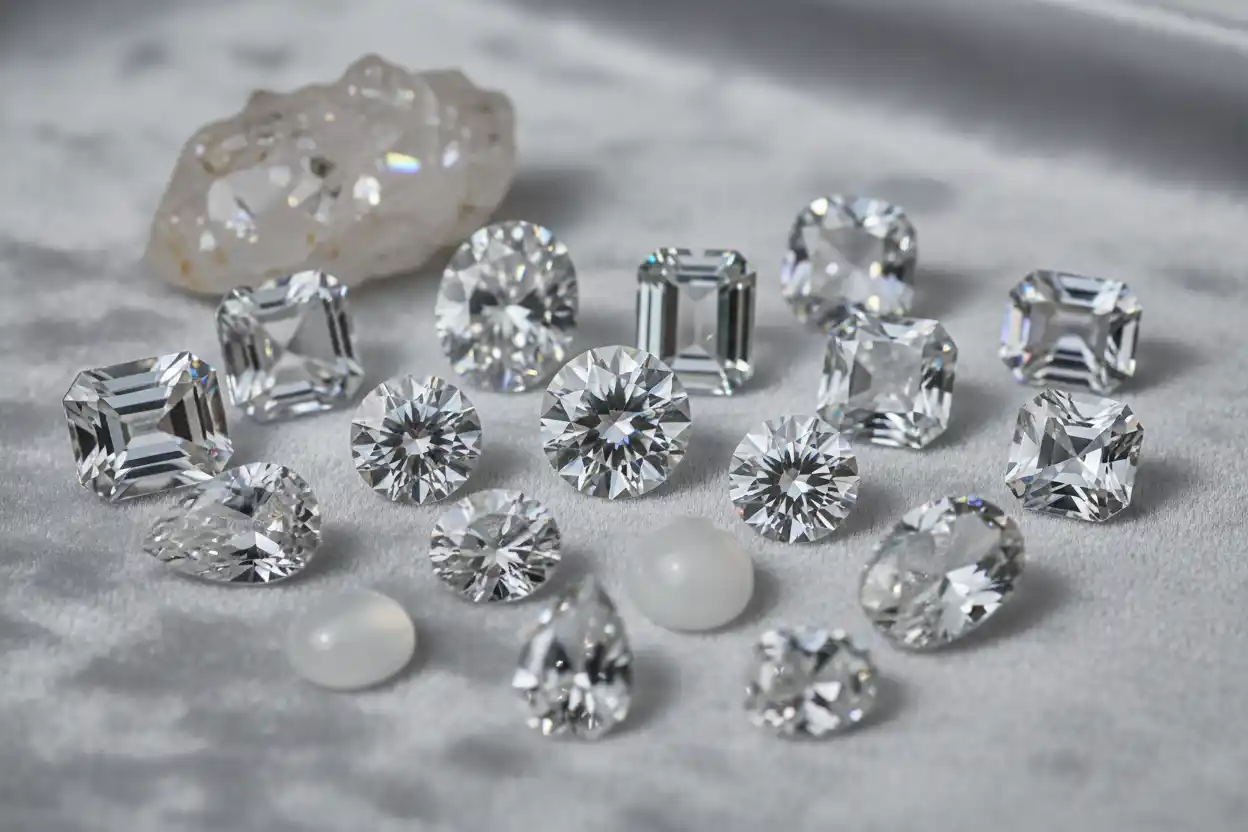
Clear Gemstones: Benefits, Uses & Practical Guidance
Clear gemstones range from diamond and white sapphire to white topaz, colorless zircon, goshenite, rock crystal quartz, colorless spinel, and other transparent gems with little visible body color. Although these stones can look similar in photographs, they differ considerably in hardness, toughness, cleavage, optical performance, treatment history, rarity, price, and suitability for everyday jewelry. Choosing clear gemstones well therefore requires more than deciding which stone sparkles the most.
The practical benefits of clear gemstones are their visual versatility, compatibility with almost any metal or clothing color, ability to emphasize cut and brilliance without strong body color, and availability across very different price levels. Some clear gemstones are excellent choices for engagement rings and frequent wear, while others are better suited to earrings, pendants, occasional rings, or mineral collections. Understanding those distinctions helps you buy for actual use rather than treating every transparent stone as an interchangeable diamond substitute.
What Are Clear Gemstones?
Clear gemstones are transparent or nearly transparent gem materials with little enough visible body color to appear colorless or near-colorless when viewed face-up. “Clear” is a visual description rather than a mineral species, so clear gemstones can belong to completely different chemical and structural families.
Diamond is crystallized carbon, white sapphire is corundum, white topaz is topaz, goshenite is beryl, rock crystal is quartz, and zircon is zirconium silicate. These differences control how clear gemstones react to scratching, impact, heat, cleaning, setting pressure, and normal wear.
This jewelry-centered definition is also different from a specimen-focused discussion of clear crystals. A natural crystal cluster may be valuable because of crystal habit, locality, matrix, or intact terminations, while faceted clear gemstones are usually judged more heavily by transparency, cutting, durability, treatments, size, and suitability for jewelry.
Clear Gemstones at a Glance
| Gemstone | Mineral/material | Mohs hardness | Major durability point | Typical jewelry role |
|---|---|---|---|---|
| Diamond | Carbon | 10 | Extremely scratch resistant but can cleave or chip | Everyday rings, engagement rings, all jewelry |
| White sapphire | Corundum | 9 | Excellent toughness and no cleavage | Everyday rings, earrings, pendants |
| Moissanite | Silicon carbide | About 9.25 | Very strong wear resistance | Everyday rings and diamond-alternative jewelry |
| White topaz | Topaz | 8 | Perfect basal cleavage requires impact care | Pendants, earrings, protected rings |
| Goshenite | Beryl | 7.5–8 | Good hardness; protect from hard impact | Rings with care, earrings, pendants |
| Colorless spinel | Spinel | 8 | Good durability and no cleavage | Rings, earrings, pendants |
| Clear quartz | Quartz | 7 | No true cleavage but lower scratch resistance | Pendants, earrings, occasional rings |
| Colorless zircon | Zircon | About 6–7.5 | Can be brittle and abrade with wear | Earrings, pendants, protected rings |
| Cubic zirconia | Synthetic zirconia | About 8–8.5 | Good hardness but surface wear can accumulate | Affordable fashion and bridal jewelry |
Hardness is only one part of comparing clear gemstones. Toughness, cleavage, stability, treatment, cut, and setting design are equally important when deciding whether a stone is appropriate for the intended piece.
Clear Gemstones vs White Gemstones
Clear gemstones and white gemstones overlap, but the terms are not identical. A transparent white sapphire or colorless diamond can reasonably fit both descriptions, while an opaque white jade, milky opal, white agate, or translucent moonstone may be described as white without being visually clear.
That difference matters when shopping because clear gemstones are generally chosen for transparency, light return, brilliance, or diamond-like neutrality, whereas white gemstones may be valued for body color, glow, pattern, translucency, adularescence, or other optical effects. If you want the wider color-based group, see the dedicated white gemstones guide.
Diamond: The Durability Benchmark
Diamond is the hardest natural gemstone commonly used in jewelry, ranking 10 on the Mohs scale. That exceptional hardness gives diamond outstanding resistance to scratching and abrasion, which is one reason it performs so well in frequently worn rings.
However, hardness does not make a diamond impossible to damage. Diamond has cleavage directions and can chip from a sufficiently hard impact, particularly around vulnerable corners, thin girdles, or exposed points. Clear gemstones should always be evaluated using more than hardness alone, and diamond is an excellent example of why toughness and setting protection still matter.
Natural diamond quality is commonly evaluated through cut, color, clarity, and carat weight, while treatments, laboratory growth, fluorescence, certification, and seller disclosure can also affect purchasing decisions. If diamond is your leading option among clear gemstones, the buy diamond guide provides a more focused purchasing checklist.
Natural Diamond vs Lab-Grown Diamond
Natural and laboratory-grown diamonds share essentially the same fundamental crystal structure and diamond properties, but they have different origins and market behavior. A laboratory-grown diamond is not cubic zirconia or moissanite; it is diamond produced through controlled technological processes rather than mined from the earth.
The distinction matters when comparing clear gemstones because identical-looking jewelry can carry very different pricing, resale, and disclosure expectations depending on whether the diamond is natural or laboratory-grown. Buyers should insist that origin be stated clearly rather than implied.
For a broader decision framework, see lab grown vs natural gemstones and the dedicated buy lab diamond guide.
White Sapphire: Durable and Understated
White sapphire is colorless or near-colorless corundum, the same mineral species that includes blue sapphire and ruby. With a Mohs hardness of 9, excellent toughness, and no cleavage, white sapphire is one of the most durable clear gemstones for regular jewelry wear.
Its appearance differs from diamond, however. White sapphire generally has less dispersion and often produces a softer, more subdued look rather than the intense combination of brilliance and colored fire many buyers expect from diamond or moissanite. A poorly cut sapphire can also appear glassy or dull, so cut quality should not be ignored simply because the stone is durable.
Treatment disclosure remains important. Sapphire may be heat treated, and other treatment methods exist within the sapphire market, so valuable clear gemstones represented as natural untreated material should have documentation appropriate to the claim and price.
For stone-specific information, see white sapphire meaning. Buyers deciding between major bridal options can also compare white sapphire vs diamond and white sapphire vs moissanite.
Moissanite: High Brilliance and Strong Durability
Nearly all moissanite used in jewelry is laboratory-created silicon carbide. It is extremely hard, highly resistant to scratching, and known for strong brilliance and dispersion, which can produce more visible spectral fire than diamond in some lighting.
Among clear gemstones used as diamond alternatives, moissanite is particularly suitable for frequent ring wear because of its strong durability profile. Its optical appearance is not identical to diamond, though, and larger stones may show characteristic double refraction or a different pattern of fire that some buyers notice readily.
Moissanite is therefore best chosen because you like moissanite itself rather than because you expect it to be visually indistinguishable from every diamond. The best diamond alternatives guide compares the broader options, while lab diamond vs moissanite focuses on the two popular modern bridal choices.
White Topaz: Hard but Cleavage-Prone
White topaz is transparent colorless topaz and can provide a bright, clean appearance at a relatively accessible price. Topaz ranks 8 on the Mohs scale, so it offers greater scratch resistance than quartz, but it has perfect basal cleavage.
That cleavage is the most important practical issue when evaluating white topaz among clear gemstones. A strong blow, excessive setting pressure, or abrupt thermal stress can split the stone along a structurally preferred direction. Topaz can still make attractive jewelry, but protective settings and sensible wear matter.
White topaz also tends to show less fire and brilliance than diamond or moissanite, and surface wear can eventually reduce its crisp appearance in frequently worn rings. It often makes particularly good sense for earrings, pendants, and occasional jewelry where impact exposure is lower.
For more detail, see white topaz meaning, white topaz vs diamond, and white topaz vs cubic zirconia.
Goshenite: The Colorless Variety of Beryl
Goshenite is colorless beryl, making it a member of the same mineral family as emerald and aquamarine. Its hardness of about 7.5 to 8 gives it respectable scratch resistance, and transparent material can be cut into attractive clear gemstones.
Goshenite generally has a quieter optical appearance than diamond or moissanite because its refractive and dispersive properties are different. That can be an advantage for buyers who want a transparent natural gem without intense rainbow fire.
As with other clear gemstones, cut quality matters because weak proportions can create windowing or reduce brightness. If goshenite interests you specifically, the buy goshenite guide covers seller disclosure, quality, and purchasing red flags.
Colorless Zircon: Natural Fire With More Care Required
Zircon is a natural gemstone and should not be confused with cubic zirconia. High-type zircon can show strong brilliance and dispersion, making well-cut colorless zircon one of the more visually lively natural clear gemstones.
Its durability requires more caution than diamond or sapphire. Zircon varies in hardness, can be relatively brittle, and facet edges may abrade if the stone experiences rough wear. Some colorless zircon is produced through heat treatment, so treatment disclosure is relevant when buying.
Zircon can be beautiful in earrings, pendants, and carefully worn rings, but it is not the strongest option for someone who wants a stone they rarely remove. For identification issues, see real vs fake zircon and treated zircon.
Zircon Is Not Cubic Zirconia
The similarity in names causes persistent confusion. Zircon is a naturally occurring mineral, while cubic zirconia is a laboratory-produced crystalline zirconium dioxide used extensively as a diamond simulant.
Their chemistry, crystal structures, optical properties, durability, value, and market positions are different. A seller describing cubic zirconia simply as “zircon” is not providing an accurate mineral identity.
The zircon vs cubic zirconia guide explains the difference in detail. This distinction is particularly important when comparing inexpensive clear gemstones online because the names are sometimes used loosely.
Cubic Zirconia: An Accessible Jewelry Simulant
Cubic zirconia is a manufactured gemstone material prized for high clarity, strong brilliance, broad availability, and low cost. It can be cut into almost any shape and is widely used in fashion jewelry, travel rings, and inexpensive bridal designs.
As clear gemstones go, cubic zirconia offers impressive appearance for its cost, but long-term wear differs from diamond, sapphire, or moissanite. Surface scratches, abrasion, residue buildup, and setting wear can make frequently worn cubic zirconia jewelry look less crisp over time.
This does not make cubic zirconia a poor purchase; it simply occupies a different market position. Buyers should know what material they are purchasing and pay accordingly. The buy cubic zirconia guide covers quality and seller considerations.
Clear Quartz: Affordable Natural Transparency
Rock crystal is the traditional name for colorless transparent quartz. With a Mohs hardness of 7 and no true cleavage, clear quartz is reasonably durable but less scratch resistant than diamond, sapphire, topaz, spinel, or moissanite.
Faceted quartz can produce attractive large clear gemstones at accessible prices because quartz crystals can grow to substantial sizes. Its lower refractive index means it does not normally show the same brilliance or fire as high-refractive-index diamond alternatives, but precision cutting can still produce attractive optical performance.
Clear quartz is especially useful for large pendants, earrings, cocktail jewelry, carvings, and buyers who appreciate natural quartz rather than seeking a diamond look. The clear quartz meaning guide covers the mineral itself, while real vs fake clear quartz addresses glass and other imitation concerns.
Colorless Spinel: An Overlooked Jewelry Option
Spinel has a hardness of about 8, good toughness, and no cleavage, giving transparent material a useful durability profile for jewelry. Although vivid red, pink, blue, and other spinel colors receive more attention, colorless or near-colorless stones can occur.
Colorless spinel is less common in mainstream jewelry than white sapphire or topaz, so availability may be limited. Its relative obscurity can appeal to collectors and buyers who want clear gemstones outside the usual diamond-alternative shortlist.
As with any less familiar stone, seller identification becomes important. A colorless transparent stone should not be accepted as spinel merely because a listing uses that name; valuable or unusual examples deserve appropriate gemological confirmation.
Which Clear Gemstones Sparkle the Most?
Sparkle is not controlled by one factor. Refractive index, dispersion, cut quality, facet pattern, polish, lighting, cleanliness, and even stone size influence how clear gemstones return light.
Diamond combines strong brilliance, dispersion, high hardness, and highly developed cutting standards. Moissanite has very high brilliance and strong dispersion, often creating pronounced rainbow flashes. Zircon can show impressive fire, while white sapphire, white topaz, quartz, and goshenite usually have a more restrained appearance.
A beautifully cut stone can still outperform a badly proportioned example of a theoretically more brilliant material. When judging clear gemstones, examine the actual stone rather than choosing solely from a ranking of mineral properties.
Cut Quality Matters More Without Strong Color
In colored gems, an attractive hue can sometimes dominate the visual impression, but clear gemstones expose cutting decisions more readily because there is little body color to distract from windowing, extinction, poor symmetry, or weak polish.
A large window through the center can make a transparent stone look empty or glass-like. Excessive extinction creates dark areas, while an overly deep cut can hide weight below the setting without adding useful face-up size.
For clear gemstones used as center stones, compare millimeter dimensions alongside carat weight. Carat is a measure of mass, not visible diameter, and different gem materials have different densities.
Clear Gemstones and Carat Weight
One carat does not represent the same physical size across all clear gemstones. Dense materials can look smaller at a given weight, while less dense materials may have a larger face-up appearance if cut to similar proportions.
This makes direct carat-only comparisons misleading. A one-carat diamond, topaz, zircon, quartz, and cubic zirconia do not necessarily occupy identical dimensions.
When comparing clear gemstones online, always look for length, width, depth, and carat weight together. Those numbers provide a more useful picture of visible size and cut efficiency.
Treatments to Ask About
Treatment disclosure is an important part of buying clear gemstones because different materials can undergo different processes. Sapphire may be heated or receive other treatment, zircon may be heat treated, diamonds can receive clarity or color-related treatments, quartz may be coated or otherwise modified, and some stones can be fracture filled.
Treatment does not automatically make a gemstone unsuitable. The key questions are whether the treatment is stable, whether it changes care requirements, whether it affects value, and whether the seller disclosed it accurately.
For diamond specifically, treated diamond explains common disclosure issues. Expensive clear gemstones should never command an untreated or rare-material premium when treatment status is unknown or deliberately obscured.
Natural, Lab-Grown, Synthetic, and Imitation Clear Gemstones
These terms are not interchangeable. A natural gemstone formed geologically, while a synthetic or laboratory-grown gemstone has essentially the same defining composition and crystal structure as its natural counterpart but was produced by people.
An imitation only resembles another gem in appearance. Cubic zirconia and moissanite may imitate diamond visually, for example, but neither is diamond. Glass can imitate many clear gemstones while having completely different physical and optical properties.
A good seller should state material identity first, then natural or laboratory origin, then known treatments. Vague phrases such as “diamond-like,” “created stone,” “premium crystal,” or “simulated gem” should not replace a precise material description.
For diamond-focused identification, see real vs fake diamond.
Best Clear Gemstones for Engagement Rings
For a ring intended for frequent wear, diamond, sapphire, and moissanite have particularly strong durability profiles. Their high hardness makes them resistant to everyday abrasion, although all still benefit from secure settings and reasonable impact protection.
White topaz, goshenite, quartz, zircon, and other clear gemstones can also be used in rings, but the wearer’s habits matter more. A stone worn occasionally can tolerate a different risk profile from one worn through desk work, cleaning, exercise, travel, and manual tasks.
If the goal is specifically a bridal center stone, white engagement ring stones compares the major choices from a value and buying perspective.
Best Clear Gemstones for Earrings and Pendants
Earrings and pendants create fewer direct impacts than rings, so they open the door to a wider range of clear gemstones. White topaz, zircon, goshenite, quartz, and other materials that need more caution in rings can perform very well when worn away from the hands.
This can be a smart way to prioritize size or optical appeal over maximum hardness. Large faceted quartz or topaz may create substantial visual presence in a pendant, while zircon can provide noticeable fire without facing constant desk-level abrasion.
Setting security still matters. Earring backs, pendant bails, prongs, bezels, chain gauge, and overall weight should be matched to the stone.
Metal Choice for Clear Gemstones
Clear gemstones are unusually flexible with metal color. White gold, platinum, and silver can create a cool continuous appearance, while yellow and rose gold provide stronger contrast around a transparent stone.
Metal can also affect perceived color. A near-colorless stone may pick up warm reflections from yellow or rose gold, while a white metal setting can make slight yellow or gray modifiers more noticeable.
For rings, prioritize structural quality as well as color. Thin prongs, weak galleries, and underbuilt shanks can compromise even very durable clear gemstones.
Clear Gemstones and Value
There is no single value scale for clear gemstones. Natural diamond, lab-grown diamond, moissanite, sapphire, topaz, zircon, quartz, goshenite, spinel, and cubic zirconia operate in different supply chains and markets.
Value depends on mineral identity, natural or synthetic origin, treatment status, cut, clarity, size, rarity, documentation, provenance where relevant, brand, metalwork, and seller channel. A large stone is not necessarily valuable simply because it is transparent and well polished.
Buyers should also distinguish retail asking price from resale value. Jewelry carries manufacturing, setting, metal, branding, service, and retailer costs that may not transfer fully to a secondary-market sale.
How to Compare Clear Gemstones Fairly
Start by defining the purpose. If you want a center stone for daily wear, durability deserves heavy weighting. If you want statement earrings, size and visual performance can matter more. If you want a natural collector gem, mineral rarity and documentation may become more important.
Then compare clear gemstones using the same criteria: identity, origin, treatment, dimensions, cut quality, clarity, durability, setting, documentation, and total price. Do not compare a natural diamond directly with inexpensive cubic zirconia as though price alone measures quality; they are fundamentally different products serving different priorities.
The most useful question is not “Which clear gemstone is best?” but “Which one best matches the intended wear, appearance, budget, and maintenance expectations?”
Clear Gemstones Buying Checklist
Before buying clear gemstones, check:
- The exact gemstone or material identity.
- Whether it is natural, laboratory-grown, or an imitation.
- Any known treatment or enhancement.
- Mohs hardness and practical resistance to wear.
- Cleavage or brittleness that may affect setting choice.
- Whether the stone suits rings, earrings, pendants, or occasional wear.
- Actual millimeter dimensions as well as carat weight.
- Cut symmetry, polish, windowing, and extinction.
- Visible chips, abrasions, fractures, or worn facet junctions.
- Whether photographs represent neutral lighting.
- Metal type and purity in finished jewelry.
- Setting protection around corners, girdles, and pointed shapes.
- Seller return policy.
- Appropriate laboratory documentation for higher-value claims.
- Whether the asking price reflects the actual material rather than a diamond-comparison marketing label.
Common Buying Mistakes
One common mistake is assuming all clear gemstones are diamond substitutes. Some buyers prefer quartz, goshenite, topaz, or zircon because of their own mineral identity and appearance, not because they perfectly imitate diamond.
Another mistake is comparing only hardness. White topaz is harder than quartz but has important cleavage, while diamond is exceptionally hard yet can still chip. Durability requires considering hardness, toughness, stability, and setting design together.
A third mistake is ignoring disclosure. Natural, laboratory-grown, treated, and imitation clear gemstones can all be legitimate products, but they should not be sold as though those categories are equivalent.
Caring for Clear Gemstones
Warm water, mild soap, and a soft brush are a sensible conservative starting point for many durable untreated clear gemstones, but no cleaning method should be applied universally. Treatments, fracture filling, cleavage, inclusions, adhesives, and mixed-gem jewelry can change what is appropriate.
Topaz deserves protection from sharp impacts and thermal shock because of its cleavage. Zircon benefits from gentle cleaning and protection from abrasion. Diamond and sapphire are highly durable under ordinary wear, but treated stones may have different care requirements.
When uncertain, identify the stone and treatment before using ultrasonic or steam equipment. “Clear” describes appearance, not cleaning tolerance.
Storing Clear Gemstones Safely
Harder clear gemstones can scratch softer ones during storage. Diamond should not be allowed to rub against sapphire, topaz, quartz, zircon, or metal surfaces, and sapphire can abrade many materials below it on the hardness scale.
Store jewelry in separate compartments, fabric-lined boxes, or soft individual pouches. Avoid throwing multiple rings or loose stones into one container where repeated movement can create abrasion.
Protect pointed shapes such as pears, marquises, and princess cuts from impact regardless of gemstone type because corners and points can concentrate stress.
Do Clear Gemstones Have Spiritual Benefits?
Clear gemstones are sometimes associated in crystal traditions with clarity, focus, purification, commitment, or new beginnings. These interpretations are cultural or symbolic rather than established gemological properties, and they should not be presented as evidence that a gemstone can treat illness, guarantee emotional healing, attract wealth, or change external outcomes.
If symbolism matters to you, it can be used as a personal reminder. A clear stone might represent simplifying a decision, communicating directly, beginning a new habit, or focusing attention. The reflective practice comes from the person rather than from a scientifically demonstrated gemstone effect.
Readers primarily interested in that perspective can browse the Healing Crystal collection while keeping symbolic interpretations separate from mineral facts.
Which Clear Gemstone Should You Choose?
Choose diamond when maximum scratch resistance, traditional fine-jewelry use, and established grading systems are priorities. Choose white sapphire when you want strong everyday durability with a quieter optical appearance, or moissanite when you want strong wear resistance and pronounced brilliance at a different price structure.
Choose white topaz, goshenite, quartz, or zircon when you value their individual mineral identity, want larger visual size within a more accessible budget, or plan to use the stone in lower-impact jewelry. Cubic zirconia makes sense when affordability and appearance matter more than rarity or long-term market value.
The best clear gemstones are therefore not one fixed species. The right choice depends on how the jewelry will be worn and which tradeoffs you are comfortable making.
Final Thoughts
Clear gemstones may share a colorless appearance, but their similarities largely stop there. Diamond, white sapphire, moissanite, white topaz, goshenite, spinel, quartz, zircon, and cubic zirconia differ in chemistry, hardness, toughness, cleavage, optical performance, treatments, rarity, cost, and ideal jewelry use. Those distinctions should guide buying decisions more strongly than labels such as “diamond-like” or “brilliant clear stone.”
When comparing clear gemstones, identify the material first, then consider origin, treatment, cut, durability, setting, dimensions, documentation, and price. A durable everyday ring requires different priorities from a statement pendant or inexpensive fashion piece, and a natural collector gem should not be evaluated using the same criteria as a manufactured simulant.
Clear gemstones are most useful when chosen for what they actually are. Understanding their physical properties and market differences makes it easier to find a stone that looks good, wears appropriately, and represents fair value without relying on exaggerated rarity or imitation claims.
FAQs
What are clear gemstones?
Clear gemstones are transparent or near-colorless gem materials with little visible body color. Examples include diamond, white sapphire, moissanite, white topaz, goshenite, colorless zircon, clear quartz, colorless spinel, and cubic zirconia.
What is the best clear gemstone for everyday rings?
Diamond, white sapphire, and moissanite are among the strongest choices for frequent ring wear because of their high scratch resistance and overall jewelry durability. Setting design and protection still matter.
What is the most affordable clear gemstone?
Clear quartz and cubic zirconia are generally accessible options, while white topaz can also provide a large transparent look without the pricing associated with fine diamond or sapphire. Actual price depends on quality, size, jewelry construction, and seller.
Are clear gemstones the same as white gemstones?
No. Clear gemstones are primarily transparent and colorless or near-colorless, while white gemstones can be opaque, translucent, milky, or visibly white. White jade and many white opals, for example, are not clear in the same sense as a faceted diamond.
Is white sapphire a good diamond alternative?
White sapphire is durable, natural or laboratory-grown material can be available, and its hardness of 9 makes it suitable for frequent jewelry wear. Its optical appearance is softer and less fiery than diamond or moissanite, so buyers should choose it for its own look rather than expecting an exact diamond match.
Is white topaz suitable for an engagement ring?
It can be used, but white topaz requires more impact awareness because it has perfect cleavage. It may also show surface wear more readily than diamond or sapphire, making protective settings and sensible wear important.
Is zircon the same as cubic zirconia?
No. Zircon is a natural mineral, while cubic zirconia is a laboratory-manufactured material with different chemistry and properties. The similar names do not indicate that they are varieties of the same gem.
Which clear gemstones sparkle the most?
Diamond, moissanite, and well-cut zircon can show strong brilliance or dispersion, but sparkle also depends heavily on cut quality, cleanliness, lighting, and facet design. A poorly cut stone may look dull regardless of its theoretical optical properties.
Are lab-grown clear gemstones fake?
No. A properly identified lab-grown gemstone has the defining composition and crystal structure of its gemstone species but was produced in a laboratory. An imitation is a different material made to resemble another gem.
Do clear gemstones need certification?
Not every inexpensive stone needs a laboratory report. Documentation becomes more valuable when the gemstone is expensive, represented as natural or untreated, sold with an important origin claim, or difficult to distinguish from alternatives without professional testing.
Can all clear gemstones be cleaned the same way?
No. Cleaning depends on mineral identity, cleavage, toughness, treatments, inclusions, and the jewelry setting. A method suitable for untreated sapphire may be inappropriate for fracture-filled material, zircon, or cleavage-prone topaz.
What should I check before buying clear gemstones online?
Confirm exact material identity, natural or laboratory origin, treatments, dimensions, carat weight, cut quality, condition, metal specifications, setting construction, documentation where appropriate, and return terms. Avoid listings that substitute vague words such as “crystal,” “diamond-like,” or “premium stone” for the actual gem name.