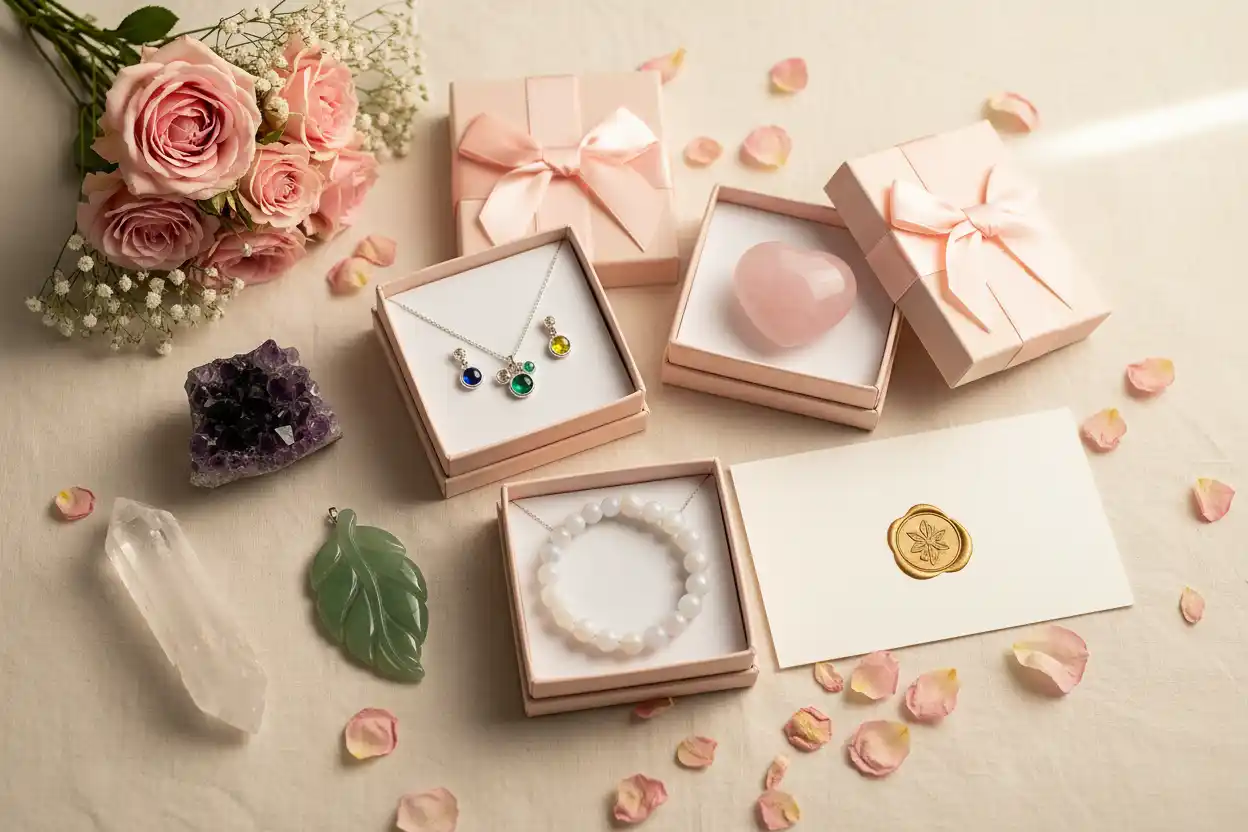
Crystal Gifts: How to Choose the Right Stone for Any Occasion
Crystal gifts can be personal without being complicated. The strongest choices reflect the recipient’s taste, lifestyle, interests, budget, and relationship to the occasion rather than relying on a generic list of “best” stones. A person who wears jewelry every day may value a durable pendant or ring, while a mineral collector may prefer a labelled natural specimen. Someone who enjoys crystal symbolism may appreciate the traditional meaning of a stone, while another person may care only about color, geology, craftsmanship, or birthstone history.
That is why good crystal gifts begin with the person, not with a promised outcome. Products sold as crystals can include minerals, rocks, organic gem materials, laboratory-grown gemstones, composites, reconstructed materials, glass, and other imitations. The types of gemstones overview helps separate those categories before you buy.
At Gems Lore, crystal gifts are treated as meaningful objects that may carry cultural, historical, personal, or spiritual associations. Those associations can enrich a gift, but they should not be presented as proof that a stone can guarantee love, health, luck, fertility, protection, wealth, employment, or another real-world result.
Crystal Gifts at a Glance
| Occasion | Practical starting point | Main consideration |
|---|---|---|
| Birthday | Birthstone jewelry, polished stone, favorite-color gem | Personal taste matters more than tradition |
| Best friend | Pendant, bracelet, polished stone, small specimen | Connect symbolism to the existing friendship |
| First date | Small polished stone or inexpensive token | Keep it low-pressure and easy to accept |
| Partner | Jewelry, paired stones, engraved keepsake | Match the stage and expectations of the relationship |
| Valentine’s Day | Pendant, heart carving, paired birthstones | Avoid destiny or “binding” claims |
| Anniversary | Durable jewelry, anniversary gem, personalized piece | Longevity, craftsmanship, wearability |
| Wedding | Fine jewelry, paired birthstones, quality specimen | Durability and accurate disclosure |
| Graduation | Desk stone, pendant, engraved keepsake | Mark achievement without promising success |
| Job interview | Small pocket stone or discreet object | Preparation matters more than symbolism |
| New job | Desk piece, subtle jewelry, personalized token | Fit the workplace and daily routine |
| Housewarming | Stable carving, polished stone, specimen | Placement, pets, children, sunlight, moisture |
| Baby shower | Parent-focused keepsake or jewelry | Do not give loose stones to infants |
| New baby | Secure commemorative object for an adult | Avoid infant jewelry and choking hazards |
| Mother’s Day | Birthstone jewelry, favorite-color stone, keepsake | Respect individual family circumstances |
| Retirement | Jewelry, specimen, class, or keepsake | Choose for the person’s next chapter, not age stereotypes |
| Christmas | Jewelry, specimen, book, class, gift certificate | Respect the recipient’s interests and beliefs |
Start With the Recipient, Not the Meaning
The easiest way to choose these gifts poorly is to start with a chart of metaphysical properties and ignore the person receiving the item. First notice what they already wear, collect, display, or talk about.
If they regularly wear necklaces, a pendant may fit naturally. If they work with their hands, a delicate ring may be impractical. If they collect minerals, a specimen with locality information can be more exciting than another bracelet. If they prefer understated colors, a vivid purple carving may be less suitable than a neutral smoky quartz or clear crystal.
Jewelry construction matters as much as the gem. Rings receive more impact, abrasion, soap, and contact with hard surfaces than earrings or pendants. For recipients with metal sensitivity, the sensitive-skin gemstone and metal overview explains why posts, clasps, plating, solders, and alloys deserve attention along with the stone.
Color is often a better clue than symbolism. Someone who consistently wears green may appreciate jade, peridot, emerald, aventurine, green sapphire, or another green material. Someone who loves purple may prefer amethyst even if a different stone carries a more fashionable spiritual association. Thoughtful gifts should feel like they were chosen for a specific person.
Birthday Crystal Gifts and Birthstone Choices
Birthdays give crystal gifts a natural personalization route because every month has established birthstone traditions. The birthstones by month chart shows how the modern calendar works and why some months have multiple accepted stones.
February points strongly toward amethyst, while April is associated with diamond. The February birthstone profile explains amethyst’s material identity, history, color, and care, while the April birthstone page covers diamond and its traditions. June is more flexible because pearl, moonstone, and alexandrite differ dramatically in price, durability, appearance, and care; June birthstone jewelry compares those choices in wearable form.
Birthstone tradition should still be a starting point rather than a rule. Birthday gifts can also use a favorite color, a stone linked to a place the person loves, a mineral they collect, or an engraved object connected with a shared memory. The gift does not need to be expensive to be specific.
Friendship Crystal Gifts
Crystal gifts for a best friend work best when their symbolism describes a quality that already exists in the relationship. Rose quartz is traditionally linked with affection and compassion, lapis lazuli with honesty and communication, moss agate with patient growth, and aventurine with optimism and opportunity. The crystals for friendship page explores those associations in a grounded way.
If you choose rose quartz, the rose quartz meaning profile gives both the material context and the traditional symbolism. A message such as “this reminded me of how consistently you have supported me” is more respectful than claiming the stone will make a friendship stronger.
For friendship gifts, the relationship gives the stone meaning. The stone does not create the relationship.
Crystal Gifts for Partners, First Dates, Valentine’s Day, and Anniversaries
Relationship gifts require more judgment because jewelry, price, engraving, and symbolism can communicate commitment. A modest polished stone or pendant may be comfortable early in a relationship, while an expensive ring can imply expectations that have never been discussed.
For a first date, keep the gift small, inexpensive, and easy to accept. A polished stone connected with a shared conversation, favorite color, travel memory, or hobby can be thoughtful. Avoid language about soulmates, destiny, binding, fertility, or guaranteed attraction. A gift should never create emotional pressure.
For a partner or Valentine’s Day, pieces such as pendants, bracelets, paired birthstones, or a carved heart can work when they match the relationship. Rose quartz, garnet, ruby, moonstone, jade, and rhodonite all appear in modern relationship symbolism, but none can create attraction, restore trust, force reconciliation, guarantee fidelity, or override another person’s boundaries.
Carved hearts are popular because the shape is immediately recognizable. The crystal shapes meaning page explains hearts, spheres, towers, points, eggs, pyramids, and other forms while keeping the material itself central. A rose quartz heart remains quartz; a fluorite heart remains relatively soft and cleavage-prone. Shape changes design and symbolism, not mineral chemistry.
Anniversary gifts can use one partner’s birthstone, both birthstones, a traditional anniversary gem, the month the couple met, or a material connected with a shared place or experience. For jewelry intended to last for decades, durability and setting quality matter more than elaborate symbolism.
Wedding Crystal Gifts
Wedding gifts benefit from longevity, accurate material disclosure, and craftsmanship. Paired birthstones, an engraved gemstone keepsake, a carefully selected mineral specimen, or durable fine jewelry can all work.
If the gift is a ring intended for frequent wear, not every attractive gemstone is equally practical. The best gemstones for engagement rings comparison explains why hardness, toughness, cleavage, treatment, and setting design all matter.
Such gifts may symbolize commitment, loyalty, or shared history, but no stone guarantees compatibility, fertility, fidelity, or a lasting marriage. The symbolic message should support the relationship, not make claims about its future.
Graduation, Job Interview, and New-Job Crystal Gifts
Milestones are a natural setting for gemstone gifts because the object can mark work that has already happened or a transition that is beginning. Graduation crystal gifts can include an engraved stone, pendant, desk piece, or small specimen. Clear quartz is traditionally associated with clarity, lapis lazuli with knowledge, aventurine with opportunity, and tiger’s eye with confidence and deliberate action. Those are symbolic associations, not causes of academic success.
For a job interview, discreet stones make more sense than bulky jewelry or large desk objects. A small polished stone can serve as a personal reminder to prepare, pause, and communicate clearly. The crystals for job interviews article keeps the symbolism tied to practical preparation rather than promises about hiring decisions.
A new-job gift should fit the workplace. Large bracelets, dangling pieces, and sharp points may be inappropriate around machinery, healthcare environments, food preparation, laboratories, or strict dress codes. A small desk stone, secure pendant, or engraved keepsake is usually easier to use. A gemstone cannot secure employment, produce a promotion, or guarantee professional success.
Housewarming Crystal Gifts
Housewarming pieces are often decorative, which makes physical stability more important than wearable durability. A polished stone, substantial carving, bookend, or securely supported specimen may be easier to live with than a fragile cluster placed near the edge of a shelf.
The crystals at home page covers room placement, while crystal clusters explains why exposed points, heavy bases, brittle minerals, and repairs matter when choosing specimens. Before buying a display piece for a home, consider pets, children, direct sunlight, humidity, heat, unstable shelves, sharp terminations, and the weight of the piece.
A beautiful display object should not become a preventable household hazard.
Baby Shower and New-Baby Crystal Gifts
Gifts connected with babies require stricter safety boundaries. Loose stones should not be given to infants because small objects can become choking hazards. Sharp, fragile, fibrous, soluble, treated, or poorly identified mineral materials can create additional concerns.
Do not put crystal necklaces, bracelets, anklets, or teething items on a baby. Better choices for a baby shower or new baby are adult-focused: a parent’s birthstone pendant, a securely enclosed commemorative specimen, an engraved keepsake, or an object stored safely until the child is older.
Crystals cannot improve fertility, pregnancy outcomes, infant sleep, immunity, growth, or development. Safety and evidence-based infant care should always take priority over symbolic traditions.
Mother’s Day, Retirement, and Christmas Crystal Gifts
Mother’s Day crystal gifts should allow for different family structures and experiences. Birthstone jewelry can represent children or family members, while a favorite-color stone may be more appropriate when family symbolism feels too personal. Biological mothers, adoptive mothers, stepmothers, grandparents, guardians, chosen family, grief, infertility, estrangement, and complicated relationships do not fit one template.
Retirement crystal gifts should also avoid stereotypes. One person may travel, another may consult, study, volunteer, garden, care for family, or start a business. A mineral specimen, piece of jewelry, class, museum membership, or personalized object can mark transition without telling someone what retirement is supposed to mean.
Christmas crystal gifts work best when they reflect the recipient’s interests and beliefs. A geology enthusiast may prefer a labelled specimen. A jewelry lover may care more about setting quality, metal, and durability. Someone already interested in crystal traditions may appreciate symbolic meaning. When size, treatment preference, authenticity, or style is uncertain, a gift certificate can be more useful than guessing.
Choose the Right Format for Crystal Gifts
Crystal gifts generally fall into four physical formats—jewelry, polished stones, carvings, and mineral specimens—plus experience-based options. Each format creates different buying and care questions.
Jewelry
Jewelry makes crystal gifts easy to wear regularly, but the setting exposes the material to different stresses. Rings receive the most impact. Pendants are usually more protected. Earrings can suit delicate stones, although metal posts, weight, and skin contact matter.
Polished Stones
Tumbled stones, palm stones, and polished freeforms are tactile, portable, and often affordable. Check for fractures, coatings, dye, sharp edges, polish quality, and clear material identification. A vivid polished stone is not automatically natural or untreated.
Carvings
Hearts, spheres, towers, animals, eggs, and other carvings can make crystal gifts visually distinctive. The underlying material still determines hardness, cleavage, porosity, water sensitivity, heat sensitivity, toxicity concerns, and care. Craftsmanship matters: inspect thin projections, undercut areas, unstable bases, glued repairs, and rough drill holes.
Mineral Specimens
Natural specimens make excellent crystal gifts for collectors. Ask for the mineral identity, locality when known, dimensions, weight, repairs, glue, stabilization, coatings, dye, reconstructed areas, and mounting details. A good label can add real value to a specimen because it preserves information about where the material came from.
Experiences
Not all crystal gifts need to be physical stones. Museum memberships, mineral shows, mine visits, jewelry-making workshops, lapidary classes, books, and gift certificates can be better choices for someone who already owns many objects.
Natural, Lab-Grown, Treated, and Simulated Materials
Crystal gifts can be natural, laboratory-grown, treated, composite, reconstructed, or simulated. These terms should not be treated as synonyms.
A laboratory-grown gemstone can share the same essential composition and crystal structure as its natural counterpart, while a simulant only imitates appearance. The lab-grown vs natural gemstones comparison explains the distinction.
Treatments such as heating, dyeing, filling, stabilization, coating, irradiation, impregnation, or oiling can change color, clarity, durability, care, or value. The gemstone treatments overview explains why treatment is not automatically bad and why disclosure matters.
Before buying higher-value crystal gifts, ask what the material is, whether it is natural or laboratory-grown, whether it has been treated, whether it is composite or reconstructed, and whether repairs, coatings, fillers, or adhesives are present. If identity or treatment meaningfully affects the price, independent documentation may be appropriate; the gemstone certification page explains what laboratory reports can and cannot establish.
Ethical and Sourcing Claims
Words such as “ethical,” “responsible,” “conflict-free,” “fair,” and “sustainable” can sound reassuring, but they need evidence. A seller may know the country where a stone was purchased without knowing the mine, labor conditions, environmental practices, or every intermediary in the supply chain.
For important crystal gifts, ask what supports the claim and how far the documentation actually goes. The ethically sourced gemstones article explains how to evaluate provenance claims without assuming that one certificate proves the entire supply chain.
How to Buy Crystal Gifts Online
Online photographs can make stones look larger, brighter, cleaner, or more saturated than they appear in ordinary light. For crystal gifts sold online, request dimensions rather than judging size from a close-up photograph, and prefer actual-item images for one-of-a-kind specimens.
The online gemstone buying checklist covers seller identity, treatment disclosure, realistic photographs, laboratory reports, return rights, payment protection, and shipping. Those checks become more important as the price rises.
For jewelry, confirm the stone identity, dimensions, weight where relevant, natural or lab-grown status, treatment, metal composition, ring size or bracelet circumference, chain length, setting type, repair disclosure, return policy, and any documentation. For specimens, ask for the exact piece shown, scale, base condition, repairs, locality, and stability.
Budget for Crystal Gifts
There is no correct spending level for crystal gifts. The right budget depends on the relationship, occasion, material, craftsmanship, and your own finances.
A modest polished stone can be meaningful when selected carefully. A major anniversary or wedding gift may justify precious metal, custom work, a rarer gem, or independent laboratory documentation. The affordable gemstones page shows how attractive natural and lab-grown materials can offer strong color without premium pricing.
Do not pay more because a seller claims that crystal gifts have stronger healing, manifestation, protection, luck, fertility, prosperity, or love effects. Those statements do not establish market value.
Caring for Crystal Gifts
Different crystal gifts need different cleaning and storage. Quartz, sapphire, opal, pearl, turquoise, fluorite, calcite, malachite, and selenite should not all be treated the same way. Porous, soft, cleavage-prone, fracture-filled, dyed, coated, assembled, or organic materials may need gentler care.
If the recipient owns several stones, how to store crystals safely explains separation, scratching, sunlight, humidity, fragile points, and storage containers. Including a short care note with crystal gifts can be more useful than a long list of symbolic claims.
What if the Recipient Does Not Believe in Crystal Meanings?
Crystal gifts do not require a metaphysical belief. Gemstones and minerals can be appreciated for color, crystal structure, optical effects, geology, rarity, locality, history, jewelry design, carving, or simply appearance.
If the recipient enjoys spiritual traditions, describe the symbolism as tradition. If they do not, do not force it. A simple message such as “I chose this because the color reminded me of you” can make crystal gifts feel personal without attaching supernatural claims.
Frequently Asked Questions
What are the best crystal gifts?
The best crystal gifts fit the recipient’s interests, lifestyle, preferred colors, jewelry habits, and the occasion. Birthstone jewelry, polished stones, carvings, natural specimens, and gemstone-related experiences can all work.
What makes crystal gifts feel personal?
Specificity. Crystal gifts feel more personal when the stone, color, format, engraving, locality, or message connects with something real about the recipient rather than a generic list of supposed benefits.
Are crystal gifts appropriate for birthdays?
Yes. Birthday crystal gifts can use a recognized birthstone, favorite color, meaningful mineral, or jewelry style the person already wears. Birthstone tradition is useful, but it does not need to control the choice.
Can I give crystal gifts on a first date?
Yes, but keep them small, inexpensive, and low-pressure. Avoid expensive jewelry and claims about destiny, soulmates, binding, or guaranteed attraction.
Are crystal gifts safe for babies?
Loose stones and crystal jewelry should not be given to infants. Choose an adult keepsake, parent-focused jewelry, or a securely stored commemorative object instead.
Are lab-grown gemstones suitable for crystal gifts?
Yes. Properly disclosed laboratory-grown gemstones can be attractive, durable gifts. The decision depends on budget, natural-rarity preference, design, and the recipient’s values.
Are treated gemstones bad crystal gifts?
Not necessarily. Many gemstone treatments are common. Accurate disclosure, appropriate pricing, stability, and correct care matter more than the simple fact that treatment occurred.
How can I tell whether expensive crystal gifts are genuine?
Ask for precise material and treatment disclosure, compare the item with its description, and consider an independent laboratory report when identity or treatment materially affects value. Avoid destructive home testing.
Should I choose jewelry or a loose stone?
Choose for the recipient. Jewelry suits someone who likes wearable crystal gifts, while polished stones, carvings, and mineral specimens may suit collectors or people who prefer display objects.
What crystal gifts work well for a housewarming?
Stable polished stones, carvings, bookends, and securely displayed specimens are practical starting points. Consider pets, children, sunlight, moisture, specimen weight, and sharp points before choosing.
Can crystal gifts guarantee luck, love, protection, or success?
No. Those associations belong to cultural, spiritual, and contemporary crystal traditions. Crystal gifts can symbolize an intention or value, but they cannot guarantee outcomes or control another person.
Do expensive crystal gifts have stronger energy?
There is no scientific evidence that price creates stronger spiritual or healing effects. Price is shaped by material identity, rarity, quality, size, treatment, craftsmanship, provenance, demand, and seller margin.
Choose Meaning Without Losing Practical Judgment
The most successful crystal gifts combine personal relevance with accurate material information. Start with the recipient, choose a format that fits their life, check durability and treatment, consider safety, and use symbolism only in a way that respects personal beliefs and boundaries.
Crystal gifts can be beautiful, useful, collectible, wearable, historical, geological, or symbolic. They do not need exaggerated promises to matter. The best gift is the one that makes sense for the person receiving it and remains honest about what the stone is—and what it is not.