Best Crystals for Positive Energy: Top 10 Picks and Meanings
Crystals for positive energy are traditionally selected for bright colors and associations with optimism, warmth, clarity and constructive action. They cannot create a scientifically measurable positive field or prevent difficult emotions, but they may provide effective visual cues for habits that make a space or routine feel more supportive.
Sunstone represents authentic warmth, citrine supports constructive optimism and carnelian encourages participation. Rose quartz adds compassion, while smoky quartz provides the grounding needed to keep positivity connected with reality.
Top 10 Crystals for Positive Energy at a Glance
| Rank | Crystal | Traditional positive-energy theme | Best practical use |
|---|---|---|---|
| 1 | Sunstone | Warmth, vitality and self-expression | Creating an uplifting personal environment |
| 2 | Citrine | Optimism, confidence and possibility | Approaching opportunities constructively |
| 3 | Carnelian | Initiative, creativity and participation | Beginning an enjoyable or meaningful activity |
| 4 | Clear quartz | Intention and clarity | Defining what positive change means |
| 5 | Rose quartz | Compassion, affection and emotional gentleness | Supporting kinder communication |
| 6 | Orange calcite | Playfulness and renewed interest | Reintroducing curiosity and novelty |
| 7 | Moss agate | Patient growth and everyday appreciation | Noticing steady progress |
| 8 | Tiger’s eye | Confidence, discernment and balanced action | Turning optimism into responsible decisions |
| 9 | Smoky quartz | Grounding, release and perspective | Preventing forced positivity |
| 10 | Selenite | Clarity and peaceful-space symbolism | Marking a low-clutter reflection area |
What “Positive Energy” Means
Positive energy is not a scientific unit that can be measured around a crystal. In everyday language, it usually describes an atmosphere or internal state that feels encouraging, calm, hopeful or constructive.
That experience may be influenced by light, organization, relationships, physical comfort, expectations and the activities associated with the space.
A crystal can become part of that environment. Its color and meaning may remind someone to open curtains, clear a work surface, contact a supportive person or begin a valued activity.
The practical behavior creates the change. The stone makes that behavior more visible and memorable.
Positive Energy Does Not Mean Constant Happiness
A supportive environment allows difficult emotions to exist. Sadness, frustration and uncertainty are not forms of contamination that must be removed immediately.
Forced positivity can make people feel pressured to hide legitimate distress. A grounded crystal practice should therefore ask what would make the present situation more workable rather than demanding an unrealistically cheerful mood.
The completed guide to crystals for happiness focuses on enjoyment, connection and meaningful engagement. Positive-energy practices address the broader tone of a space, routine or interaction.
1. Sunstone for Warmth and Authentic Expression
Sunstone is the strongest overall crystal for positive energy because it is traditionally associated with warmth, vitality and independent confidence.
Its sparkling appearance makes it a natural focal point in a creative area, entryway or personal workspace.
Use sunstone as a reminder to add something personally meaningful to the environment. That might involve displaying finished work, playing music or creating a place for a valued activity.
Positive energy becomes more sustainable when it reflects genuine preferences rather than an image designed only to impress other people.
Sunstone has feldspar cleavage, so it needs protection from hard impacts.
2. Citrine for Constructive Optimism
Citrine is traditionally linked with optimism, confidence and abundance. Its yellow-to-orange color gives it a bright visual character.
Place citrine near planning materials or an area associated with new opportunities. When it becomes visible, identify one possibility worth exploring and the preparation needed.
Constructive optimism recognizes that a favorable outcome is possible without assuming it is guaranteed.
This distinction keeps the practice useful during job searches, creative work and business planning. Hope can encourage action while evidence continues guiding the decision.
3. Carnelian for Active Positive Energy
Carnelian is traditionally associated with initiative, creativity and expressive courage. It suits positive-energy practices that need movement rather than decoration alone.
Place carnelian near art materials, exercise equipment or a project that has remained unused.
Choose one low-pressure action. Play a song, sketch for ten minutes, prepare a simple meal or complete the first task in the plan.
The completed guide to crystals for motivation focuses on beginning and sustaining work. Here, carnelian emphasizes active engagement as a source of a more positive atmosphere.
4. Clear Quartz for Defining the Intention
Clear quartz is widely used for intention-setting. It can clarify what the phrase “more positive energy” is intended to mean.
A practical definition might include:
- Fewer unnecessary items on the desk
- More regular contact with supportive people
- One enjoyable activity each week
- Clearer boundaries around work
- A consistent morning routine
Choose one objective and place the crystal beside the related behavior. Vague intentions are difficult to apply or evaluate.
Clear quartz does not amplify energy scientifically. Its grounded value lies in supporting a precise reminder.
5. Rose Quartz for Compassionate Atmosphere
Rose quartz is traditionally associated with compassion, affection and emotional gentleness.
Positive spaces are not created only through bright colors and energetic activity. They also depend on whether people feel respected and able to communicate honestly.
Keep rose quartz near a shared journal or communication area as a reminder to express appreciation specifically.
Compassion should include boundaries. A peaceful atmosphere should not depend on one person suppressing reasonable needs or tolerating harmful behavior.
6. Orange Calcite for Playfulness
Orange calcite carries traditional associations with playfulness, creativity and renewed enthusiasm.
It suits spaces where every activity has become connected with productivity or obligation. Place it near games, crafts or another low-pressure interest.
Choose something enjoyable without requiring an impressive result. Novelty and experimentation may make an environment feel livelier even when the activity remains private.
Calcite is soft and reacts with acids. Keep it away from kitchens, drinks, vinegar, citrus and harsh cleaning products.
7. Moss Agate for Quiet Positivity
Moss agate is traditionally linked with gradual growth, patience and the natural world. It represents a quieter form of positive energy.
Use moss agate near a plant, habit tracker or long-term project. Record small improvements that might otherwise be overlooked.
A supportive environment does not need to feel intensely exciting. Stability, familiarity and visible gradual progress may provide a deeper sense of wellbeing.
Moss agate also balances highly stimulating stones by reminding the user that ordinary satisfaction matters.
8. Tiger’s Eye for Responsible Confidence
Tiger’s eye is traditionally associated with confidence, discernment and practical judgment.
Positivity becomes less useful when it encourages unnecessary risk or dismissal of warning signs. Tiger’s eye represents optimism that remains accountable to evidence.
Place it near decision-making materials. Review the potential benefit, downside and available alternatives before committing.
The stone can also support confident boundaries. Saying no to an unsuitable opportunity may protect more positive possibilities elsewhere.
9. Smoky Quartz for Grounded Positivity
Smoky quartz is traditionally associated with grounding, release and practical perspective.
Its darker appearance may seem unusual in a positive-energy list, yet it provides essential balance. A constructive environment must allow disappointment and concern to be acknowledged.
Use smoky quartz while separating what needs action from what cannot currently be controlled. Then direct attention toward the next practical step.
Grounded positivity does not claim that everything happens for a beneficial reason. It asks what support, information or action is useful now.
10. Selenite for a Clear, Peaceful Space
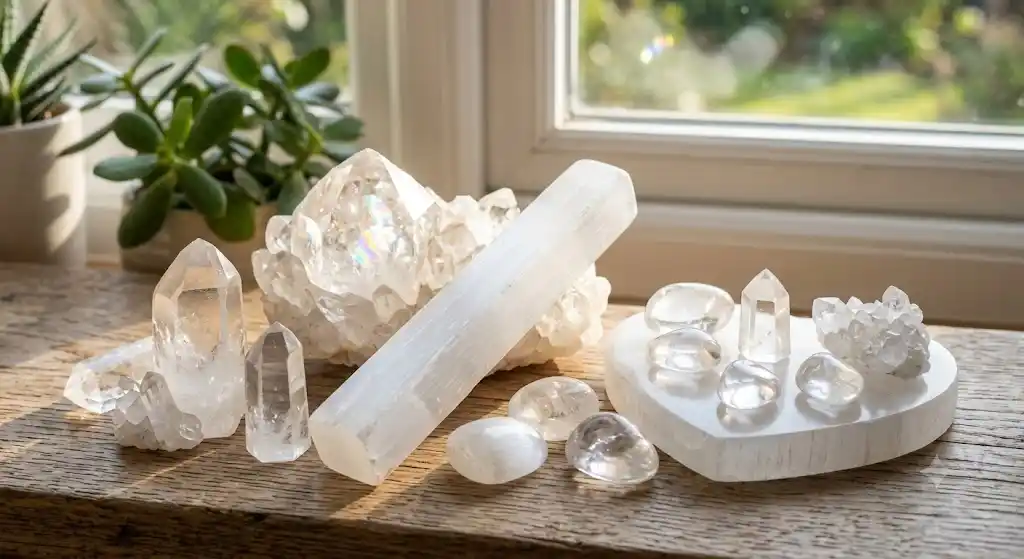
Selenite is traditionally associated with clarity, stillness and symbolic purification. Its pale translucent appearance suits simple, uncluttered displays.
Place selenite in a stable, dry area used for journaling or quiet reflection. Let it mark the beginning of a low-input period.
The stone does not scientifically cleanse a room or remove negative energy. Its practical purpose is to signal that clutter, noise and distractions are being reduced.
Selenite is soft and water-sensitive, so it must remain dry and protected.
Choosing a Positive-Energy Crystal by Intention
| Intention | Recommended crystals | Grounded action |
|---|---|---|
| Brighten a personal space | Sunstone and citrine | Add light and one meaningful object |
| Begin an enjoyable activity | Carnelian and orange calcite | Schedule a low-pressure action |
| Improve communication | Rose quartz and blue lace agate | Express one specific appreciation |
| Build a supportive routine | Clear quartz and moss agate | Define and repeat one behavior |
| Make a confident decision | Tiger’s eye and citrine | Compare benefits, risks and evidence |
| Reduce forced positivity | Smoky quartz and rose quartz | Acknowledge the difficulty compassionately |
| Create a quiet reflection area | Selenite and clear quartz | Reduce clutter and digital input |
| Recover after overstimulation | Smoky quartz and moss agate | Use sensory grounding and a slower activity |
Positive Energy Versus Good Luck
Positive energy describes an encouraging tone or constructive approach. Good luck concerns favorable circumstances, opportunity and chance.
The completed guide to crystals for good luck focuses on preparedness when opportunities appear.
Sunstone and citrine may belong to both practices, but they serve different functions. Here, they support atmosphere and attitude rather than claims about probability.
Positive Energy Versus Motivation
Motivation concerns beginning and continuing action. Positive energy is broader and may involve calm, connection, optimism or environmental comfort.
Carnelian appears in both categories because active participation can improve the feel of a routine.
However, someone may create a supportive space without becoming highly productive. Rest and enjoyment can be valid positive outcomes.
Positive Energy Versus Manifestation
Manifestation focuses on a desired outcome and the actions intended to support it. Positive-energy practice does not require a specific external result.
The completed guide to crystals for manifestation connects intentions with measurable actions and review.
A positive-energy arrangement might simply support a pleasant reading space, kinder communication or a less chaotic morning.
Positive Energy Versus Crystal Cleansing
Cleansing rituals symbolically reset a stone or space. A positive-energy practice builds the routine or atmosphere the person wants to maintain afterward.
Selenite and clear quartz commonly appear in both traditions. Nevertheless, neither stone removes a scientifically measurable negative field.
The completed guide to cleansing crystals safely explains physical compatibility and low-contact symbolic methods.
A Positive-Energy Morning Routine
Choose one bright stone, such as sunstone or citrine, and place it near a morning planning area.
Open curtains when practical, drink water and review the day’s main responsibility. Then identify one supportive action that is not purely work-related.
Keep the routine brief. A complicated ritual can create pressure before the day has begun.
The stone should prompt the behavior rather than become something that must be handled in a specific way for the day to go well.
Positive Energy at Work
A clear quartz stone can mark the day’s main priority, while tiger’s eye may remain near decision-making notes.
Keep the arrangement small enough that it does not clutter the workspace or violate workplace policy.
Positive energy at work also depends on realistic workload, communication and boundaries. A decorative crystal cannot correct unsafe or exploitative conditions.
When a problem requires escalation or organizational change, address it through the appropriate process rather than attempting to cleanse it energetically.
Positive Energy in Shared Spaces
Shared spaces should reflect the preferences and consent of everyone using them. Not every person wants crystals, spiritual objects or strong symbolic displays around them.
Rose quartz may remain near a shared gratitude journal, while moss agate can accompany a plant. Keep the meaning personal rather than assigning beliefs to other people.
A supportive shared environment also needs clear responsibilities, reasonable noise levels and respect for personal property.
Positive-Energy Crystal Combinations
A balanced three-stone set can include one uplifting stone, one action stone and one grounding stone.
Sunstone, carnelian and smoky quartz create a practical combination. Sunstone represents warmth, carnelian supports engagement and smoky quartz keeps the practice grounded.
For a quieter space, rose quartz, moss agate and selenite may be more suitable. Their roles involve compassion, gradual growth and visual clarity.
Use distinct purposes instead of describing every stone as raising vibration.
A Simple Positive-Energy Crystal Grid
Place clear quartz at the center as the defined intention. Arrange sunstone, rose quartz and smoky quartz around it for warmth, compassion and grounding.
The completed crystal grid guide explains how to organize a layout safely.
The pattern does not create a measurable energy field. Its value lies in presenting the intention visually.
Keep the grid away from walkways, pets, children and table edges.
Wearing Positive-Energy Crystals
Citrine, carnelian, rose quartz and tiger’s eye can all be worn in jewelry when securely set.
Choose a stone according to the behavior it represents. Carnelian may suit active participation, while rose quartz can remind the wearer to communicate compassionately.
Remove jewelry around machinery, sports equipment and tasks where it may catch. The metal, coating and construction of the piece also affect safety and comfort.
Placing Positive-Energy Crystals at Home
Sunstone or citrine may suit a bright work or creative area. Rose quartz can remain near a relationship journal, while moss agate may accompany plants.
Selenite needs a dry and protected location. Orange calcite should remain away from acids, kitchens and wet surfaces.
Avoid overcrowding every room with crystals. One intentional object near the relevant activity creates a clearer cue than a large collection without defined roles.
Cleaning and Resetting Positive-Energy Crystals
Physical care depends on the mineral. Calcite and selenite are softer and more water-sensitive than quartz varieties.
Sound, visualization and careful dry placement provide low-contact symbolic reset options.
A practical reset also involves evaluating the environment. Remove clutter, revise the routine or change the stone’s purpose when the original intention no longer fits.
No crystal requires risky exposure to salt, water, smoke or prolonged sunlight.
When Positive-Energy Practices Become Harmful
A positivity practice becomes unhelpful when it pressures someone to deny grief, anger, illness or unsafe circumstances.
Difficult emotions may signal a need for support, rest, boundaries or action. They should not automatically be described as low vibration.
Persistent depression, anxiety or loss of interest requires qualified care rather than stronger positive thinking.
A crystal may remain a personally meaningful object, but it cannot replace medical or psychological treatment.
Conclusion
The best crystals for positive energy support an uplifting but realistic environment. Sunstone represents warmth, citrine encourages constructive optimism and carnelian supports participation. Clear quartz defines the intention, while rose quartz and moss agate add compassion and steady appreciation.
Smoky quartz remains equally important because positivity should not require denial. The most useful crystal practice makes room for reality while supporting practical actions that improve the atmosphere.
Frequently Asked Questions
1. What is the best overall crystal for positive energy?
Sunstone is one of the strongest overall choices because it symbolizes warmth, vitality and authentic expression. Citrine is another popular option for optimism.
2. Which crystal is best for positive energy at home?
Sunstone, rose quartz and moss agate suit different home intentions involving warmth, compassion and steady growth.
3. Can crystals scientifically raise a room’s energy?
No. Crystals have not been shown to create a measurable positive spiritual field. They may influence the meaning and habits associated with a space.
4. Which crystal helps create a peaceful atmosphere?
Rose quartz and selenite provide gentle visual symbolism, while smoky quartz supports grounding.
5. Can I combine several positive-energy crystals?
Yes. Two or three stones with different purposes are usually enough, such as sunstone for warmth, carnelian for action and smoky quartz for grounding.
6. Where should positive-energy crystals be placed?
Place each stone near the behavior it represents, such as a creative area, journal or planning space. Keep specimens stable and physically safe.
7. Which crystal is suitable for positive energy at work?
Clear quartz can define a priority, while tiger’s eye supports decisions and citrine represents constructive optimism.
8. Is positive energy the same as happiness?
No. Positive energy may include calm, support and constructive engagement, while happiness describes a broader emotional experience.
9. Can positive-energy crystals remove negative emotions?
No. Difficult emotions cannot and should not always be removed. They may contain important information requiring attention or support.
10. Do positive-energy crystals need sunlight?
No. Sunlight is not required and may fade or damage certain materials after prolonged exposure.
11. How often should positive-energy crystals be cleansed?
There is no scientific schedule. Clean them physically when needed and reset the symbolic purpose when the associated routine changes.
12. Can positive-energy crystals treat depression or anxiety?
No. Crystals cannot treat mental-health conditions and should never replace professional assessment, therapy, medication or crisis support.
Disclaimer: Crystal energy meanings are spiritual traditions, not scientifically established fields or treatments. Positive-energy practices should not suppress grief, anger, anxiety or other legitimate emotions, and they cannot replace medical or mental-health care.