Paraiba Tourmaline Earrings: A Style Guide
Paraiba tourmaline earrings turn one of the gem market’s most distinctive colors into a form of jewelry that can be worn close to the face. Their electric blue, turquoise, greenish-blue and lagoon-green shades respond strongly to light, making even relatively small stones look lively in studs, hoops and drop designs.
The material’s rarity and high per-carat value also make earrings a practical way to wear Paraiba tourmaline. A pair does not need two large stones to create impact. Well-matched gems with vivid color, bright cutting and carefully chosen settings often look more impressive than heavier stones with muted saturation or obvious windowing.
This guide focuses specifically on earring design, matching, comfort, construction and styling. For the gem’s mineralogical background and broader symbolism, see the Paraiba tourmaline meaning guide.
Why Paraiba Tourmaline Works So Well in Earrings
Copper-bearing Paraiba tourmaline is prized for a saturated color that can appear illuminated from within. That impression comes from a combination of hue, tone, saturation, transparency and cutting rather than fluorescence or an artificial glow.
Earrings benefit from this visual character because the stones move as the wearer turns their head. Changing angles expose different facets to direct and reflected light, so the color may shift between blue, greenish blue, turquoise and bluish green. Faceted drops show this movement especially well, while studs concentrate the color into a smaller, brighter point.
The position beside the face also makes undertone important. Blue-dominant stones can create a crisp effect against cool complexions and white metals, whereas greenish-blue gems often look softer and more tropical. Neither is automatically better. The strongest choice is the color that remains vibrant in ordinary indoor light and complements the wearer’s coloring.
Buyers comparing loose stones or finished pairs should use the dedicated Paraiba tourmaline buying guide for a fuller assessment of color, clarity, treatment disclosure and documentation.
Paraiba Tourmaline Earring Styles
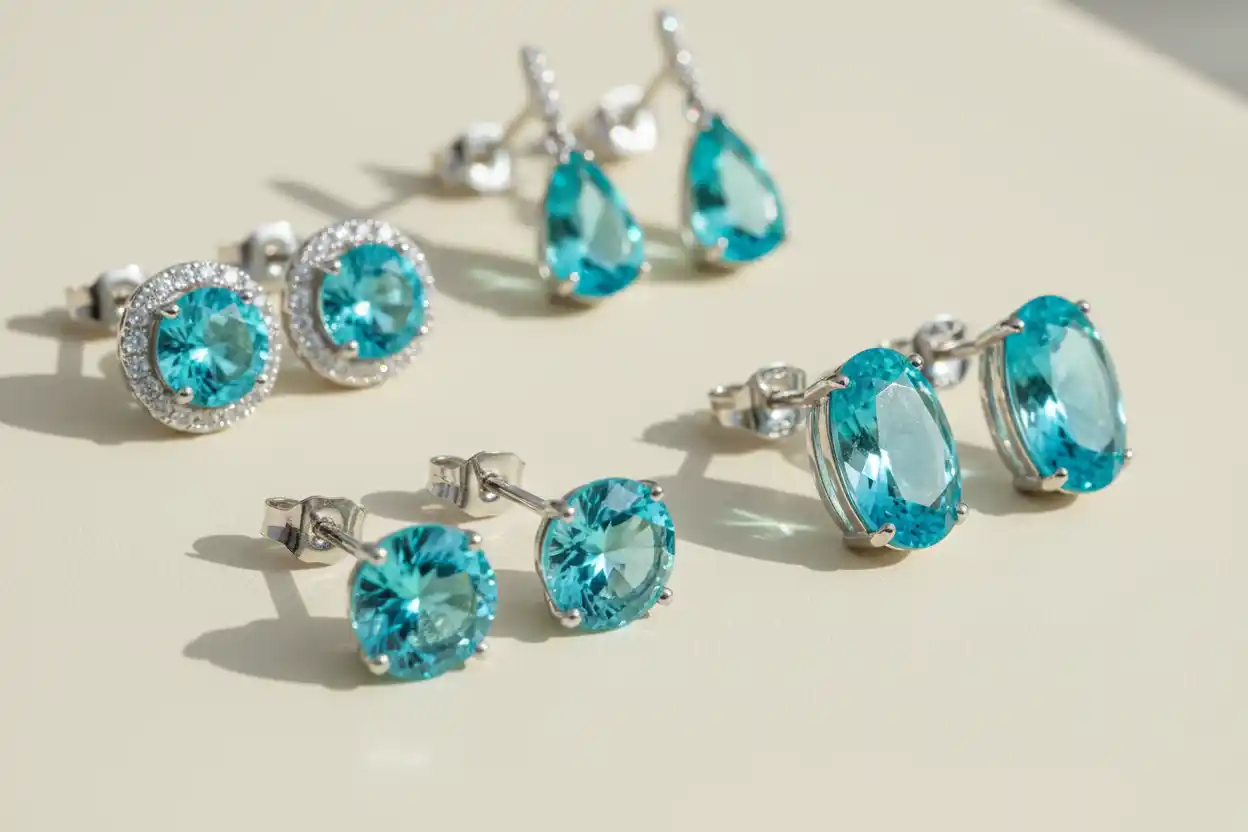
Different earring formats place different demands on the gemstones. Studs emphasize matching and face-up brightness. Drops reward movement and length. Hoops require secure construction, while halo designs can make small centers look more substantial.
| Earring style | Best visual effect | Practical advantage | Main buying concern |
|---|---|---|---|
| Solitaire studs | Concentrated neon color | Comfortable and versatile | Precise color and size matching |
| Halo studs | Greater face-up presence | Uses smaller Paraiba centers effectively | Halo quality must not overwhelm the center |
| Drop earrings | Light movement and color flashes | Elegant for formal or evening wear | Weight, balance and hinge security |
| Huggie hoops | Contemporary color accent | Secure and close to the ear | Stones must be protected from impact |
| Cluster earrings | Mosaic of vivid blue-green color | Makes use of calibrated melee | Consistency of color across the cluster |
| Two-stone drops | Graduated movement | Adds length without one large gem | Symmetry across both earrings |
| Detachable drops | Day-to-evening flexibility | Stud top can be worn separately | Connector durability and alignment |
Paraiba Tourmaline Stud Earrings
Studs are the most adaptable Paraiba tourmaline earrings. They work with casual clothing, business attire and formal dress without relying on a large setting. The strongest studs have enough metal to protect the stones but not so much that the setting blocks light or makes the gems appear smaller.
Four-prong settings expose more of the outline and can produce a delicate appearance. Six-prong designs offer greater redundancy but may visually crowd very small gems. A fine bezel protects the girdle and creates a modern frame, although a thick bezel can reduce the apparent size of the stone.
Because the pair is viewed simultaneously, matching matters more than exact carat weight. Slight differences in weight are acceptable when the face-up dimensions, hue, tone and cutting pattern look consistent.
Halo Studs
A diamond halo can increase the perceived diameter of a Paraiba center and strengthen contrast around its color. White diamonds create a crisp border, whereas pale blue or green accent stones produce a more blended palette.
The center should still dominate. Large, bright halo stones around a weak or dark Paraiba tourmaline may make the center look dull by comparison. A restrained halo with fine prongs usually works better than a heavy cluster that hides the distinctive outline.
Paraiba Tourmaline Drop Earrings
Drops show the gem’s color in motion. Pear, oval and elongated cushion cuts are particularly effective because their length follows the line of the earring. The lower stone should hang freely enough to move, but not so loosely that it repeatedly strikes the metal framework.
Articulated drops often combine a smaller upper gem or diamond with a larger Paraiba tourmaline below. The connecting joint should move smoothly and return to a forward-facing position instead of allowing the stone to flip backward.
Buyers who prefer a similar sense of movement around the wrist can compare these designs with Paraiba tourmaline bracelets.
Huggies and Small Hoops
Huggie earrings place Paraiba tourmaline close to the earlobe in a row of small gems. This format suits calibrated melee and can offer a more attainable route into Paraiba jewelry than a matched pair of large center stones.
Inspect the clasp carefully. It should close with a positive click and remain aligned after repeated opening. The stones should also sit on the forward-facing portion of the hoop rather than rotating underneath the ear.
Cluster and Mosaic Earrings
Clusters use multiple small stones to create a larger field of color. They can be round, floral, geometric or asymmetrical. Because each gem reflects light differently, minor variations may add depth, but obvious changes from vivid turquoise to grayish green can make the pair look poorly assembled.
A well-made cluster uses compatible color while maintaining separate flashes from each stone. Excessive metal between the gems can interrupt the visual field.
Choosing the Best Paraiba Color for Earrings
Color remains the principal attraction. The most sought-after appearance is usually vivid blue to greenish blue with strong saturation and a bright, open tone. However, the earring should be judged in several lighting environments rather than under one powerful display lamp.
A stone that appears electric beneath concentrated retail lighting may look darker or greener in an office, restaurant or home. Ask to view the earrings in diffused daylight, neutral indoor light and lower evening light. The best gems retain energy rather than becoming flat or inky.
Pair matching should be evaluated from normal viewing distance. Tiny laboratory differences matter less than whether the earrings appear harmonious on the ears. One stone should not look obviously darker, greener, more included or more windowed than the other.
Readers comparing Paraiba with darker blue tourmaline can review the indicolite meaning guide and the separate indicolite buying guide. Although both belong to the tourmaline family, their commercial color expectations differ.
Matching Two Rare Gemstones
Finding two Paraiba tourmalines of equal weight is easier than finding two that genuinely look alike. Cutters may preserve weight from irregular rough, producing small differences in outline, depth or facet arrangement.
For earrings, face-up dimensions should receive more attention than the numbers on a scale. A 0.40-carat stone with a broad, efficient cut may look larger than a deeper 0.50-carat stone. The carat-versus-millimeter size guide explains why equal weights do not guarantee equal visual size.
The pair should be checked for:
- Similar dominant hue and secondary modifier
- Comparable lightness or darkness
- Equivalent saturation
- Closely matched outline and dimensions
- Similar brilliance and extinction
- Comparable inclusion visibility
- Consistent orientation within the settings
Exact mirror-image matching is uncommon in natural colored gemstones. A carefully balanced pair is more important than mathematical identity.
Clarity and Inclusions in Paraiba Earrings
Paraiba tourmaline can contain growth tubes, partially healed fractures, liquid inclusions and other internal features. Fine color may justify inclusions that would be less acceptable in a common gem, but durability and transparency still matter.
In studs, inclusions near the center can be conspicuous because the stone remains relatively stationary and is viewed face-on. Drops tolerate some inclusions more easily because movement and changing reflections reduce prolonged scrutiny.
Surface-reaching fractures deserve additional attention. They may collect residue, become more visible after wear or increase vulnerability during setting and repair. Before buying expensive earrings, inspect the gems under magnification and ask whether any clarity enhancement or fracture filling has been disclosed.
The general gemstone treatments guide explains how treatment categories differ, but Paraiba-specific questions should be answered by the seller and documented where possible.
Cut Shapes That Suit Paraiba Earrings
Oval and cushion cuts are common because they can preserve weight while presenting strong face-up color. Pear shapes suit drops and create a graceful taper. Rounds offer symmetry, although cutting valuable rough into a round may require greater weight loss. Emerald cuts can look elegant when the material is clean enough, but their open facets reveal inclusions and windowing readily.
The cut should distribute color across the face instead of leaving a pale transparent area in the center. Dark extinction around the edges can also reduce liveliness. Because tourmaline is pleochroic, cutters orient the rough to manage differences seen along different crystal directions.
Very shallow stones may look large but washed out. Overly deep stones can retain weight while appearing smaller and darker. The best choice balances spread, brightness and saturation rather than maximizing any single measurement.
Metal Choices
White Gold and Platinum
White metals emphasize blue and turquoise. Platinum offers density and secure prong construction, while white gold can provide a similar cool-toned appearance at a lower metal cost. Rhodium-plated white gold may require periodic replating as the surface wears.
Yellow Gold
Yellow gold creates strong warm–cool contrast. It works especially well with greenish-blue Paraiba tourmaline or designs that include yellow diamonds. However, yellow metal visible through a pale stone can subtly warm its face-up appearance.
Rose Gold
Rose gold can be striking with vivid turquoise gems, producing a contemporary complementary contrast. It is less forgiving when the Paraiba has a muted or grayish color because the metal may dominate.
Mixed Metals
Two-tone designs allow white prongs to surround the gemstone while yellow or rose gold forms the body of the earring. This construction can preserve a cool color environment immediately around the gem while coordinating with other jewelry.
Selecting Earring Backs
A valuable gemstone deserves a backing system suited to the earring’s weight and the wearer’s routine.
Light studs can use friction backs when the post and clutch fit tightly. Larger studs benefit from oversized comfort backs that keep the earring facing forward. Threaded screw backs provide additional resistance to accidental removal, though they take longer to put on.
Drop earrings often use lever backs, hinged hoops or secure posts with substantial clutches. Check that the mechanism closes fully and does not depend on a thin, easily bent wire.
For expensive pairs, replacement backs should match the post dimensions precisely. A loose generic clutch can defeat the purpose of a high-quality setting.
Comfort and Proportion
Paraiba tourmaline earrings should remain comfortable through several hours of wear. Weight depends not only on the stones but also on halos, metal thickness and supporting diamonds.
Large studs can tilt downward when the earlobe is soft or the backing is too small. A broader support back often corrects the position. Long drops should have enough articulation to move naturally without pulling sharply at the piercing.
Proportion also affects style. Small vivid studs deliver concentrated color without appearing formal. Medium drops can frame the jawline, while shoulder-length designs become a central part of the outfit.
Buying Authentic Paraiba Tourmaline Earrings
The word “Paraiba” carries substantial commercial value, so a high-priced pair should come with clear representation of what the stones are. Ask whether the gems are natural copper-bearing tourmaline, whether treatment is known or assumed, and whether geographic origin has been determined by a recognized laboratory.
A seller’s claim that a pair came from Brazil, Mozambique or Nigeria should not be treated as laboratory proof. Conventional examination may not be enough to separate sources reliably. Significant earrings may justify an independent report, particularly when Brazilian origin is a major part of the price.
The gemstone certification comparison explains differences among report providers, while the guide to reading a gem lab report helps interpret identity, treatment and origin language.
For remote purchases, follow the safeguards in the online gemstone buying guide. Request accurate measurements, unedited videos, treatment disclosure, return terms and confirmation that both stones are represented on the paperwork.
Understanding Price Without Turning This Into a Price Guide
The cost of Paraiba earrings depends on color, origin, total weight, matching, transparency, treatment, cut quality, documentation, metal and accent stones. A matched pair may command a premium because assembling two compatible gems can take more time than sourcing one stone.
Small melee can still be valuable when it displays strong neon color. Conversely, larger stones with dark tone, obvious windowing or weak saturation may be less desirable despite their weight.
Current price ranges and market distinctions belong in the dedicated Paraiba tourmaline price guide. Use that information alongside visual evaluation rather than choosing earrings only by a per-carat figure.
Durability and Setting Protection
Tourmaline measures approximately 7 to 7.5 on the Mohs scale, which provides reasonable resistance to everyday scratching. Hardness does not make the gem immune to chipping, fracture or thermal shock, however.
The gemstone hardness chart provides comparative scratch resistance, while gemstone toughness versus hardness explains why a hard-looking stone can still be damaged by impact.
Earrings generally face fewer blows than rings and bracelets, making them an appropriate format for valuable Paraiba tourmaline. Nevertheless, exposed points on pear and marquise cuts should be protected with V-shaped prongs or a partial bezel.
Prongs should lie smoothly against the stone without catching hair or fabric. Periodic inspection is especially important for drops, where hinges and connecting rings experience repeated movement.
Cleaning and Storage
Warm water, mild soap and a soft brush provide the safest routine for most Paraiba tourmaline earrings. Clean behind the stones, where cosmetics, skin oils and styling products can reduce brilliance.
Avoid steam and ultrasonic cleaning, particularly when the stones contain fractures or liquid inclusions. High heat and abrupt temperature changes can damage tourmaline or alter color. The complete procedure is covered in how to clean Paraiba tourmaline jewelry safely.
Store each earring in a separate padded compartment. This protects the gems from harder jewelry and prevents the posts from scratching neighboring pieces. Fasten drop earrings before storage so chains and articulated sections do not tangle.
Styling Paraiba Tourmaline Earrings
Vivid Paraiba earrings work best when the surrounding colors allow their blue-green saturation to remain distinct. White, cream, navy, charcoal and black create a controlled background. Coral, orange and warm pink create complementary contrast.
Matching every accessory to the exact gemstone color can make an outfit feel overly coordinated. A more natural approach is to repeat one supporting element, such as the earring metal, a small turquoise accent or a cool-toned fabric.
For formal wear, diamond halos and articulated drops provide brightness. For daily use, small studs or huggies keep the color visible without requiring a full gemstone set. Those assembling coordinated jewelry can compare Paraiba tourmaline necklaces and pendants with Paraiba tourmaline rings.
Paraiba Tourmaline as October Jewelry
Tourmaline is one of October’s recognized birthstones, although Paraiba is a rare and specialized variety rather than the standard entry-level choice. The October birthstone guide explains the broader tradition, while the October birthstone jewelry guide covers gift-oriented formats.
Paraiba earrings can make a highly personal October gift, but their cost and treatment history should be considered carefully. Documentation and return rights matter more than a decorative “birthstone certificate” created by the retailer.
The stone also appears in the site’s Gemstones That Start With P directory and Crystals That Start With P directory, where readers can place it within the wider alphabetical collection.
Frequently Asked Questions
1. Are Paraiba tourmaline earrings suitable for everyday wear?
They can be worn regularly with sensible care. Earrings are less exposed to impact than rings, but the stones should still be protected from hard knocks, high heat and sudden temperature changes.
2. What is the best Paraiba tourmaline earring style?
Studs are the most versatile, while drop earrings show the gem’s color and brilliance through movement. The best format depends on comfort, budget and how formal the earrings should appear.
3. Should Paraiba tourmaline earrings be perfectly matched?
They should look balanced in color, size and brightness when worn. Exact carat-weight matching is less important than similar face-up dimensions and visual character.
4. Is blue or green Paraiba tourmaline more valuable in earrings?
Vividness, saturation and brightness matter more than choosing blue over green. Strong electric blue, greenish blue and bluish green can all be desirable when the tone remains open and lively.
5. Can Paraiba tourmaline earrings be heat-treated?
Yes. Heat treatment is commonly associated with copper-bearing tourmaline and may improve blue or green color. Buyers should request treatment disclosure and appropriate laboratory documentation for important pairs.
6. Are Paraiba tourmaline stud earrings expensive?
Even small studs can be costly because vivid copper-bearing tourmaline is scarce. Price also reflects matching, cut quality, origin claims, documentation, metal and accent diamonds.
7. Which metal makes Paraiba tourmaline look brightest?
Platinum and white gold usually reinforce cool blue and turquoise hues. Yellow or rose gold can create stronger contrast, particularly with greenish-blue stones.
8. Can I clean Paraiba tourmaline earrings in an ultrasonic machine?
Ultrasonic cleaning is not recommended. Inclusions and fractures may increase vulnerability, so warm soapy water and a soft brush are safer.
9. Do Paraiba tourmaline earrings need laboratory reports?
Reports are worthwhile for high-value pairs, especially when the price depends on copper-bearing identity, treatment representation or geographic origin. Very small melee earrings may be sold without individual reports.
10. Why do some Paraiba earrings look greener indoors?
Lighting temperature, surrounding colors, pleochroism and facet orientation can alter the visible balance of blue and green. Always inspect the pair under more than one light source.
11. Are Paraiba tourmaline earrings a good October birthday gift?
Yes, particularly for someone who appreciates rare colored gemstones. Tourmaline is an October birthstone, although Paraiba is a premium variety and should be purchased with careful documentation.
12. How should Paraiba tourmaline earrings be stored?
Keep them in separate padded compartments with the backs attached or secured nearby. Avoid contact with harder gemstones and prevent articulated drops from tangling.
Paraiba tourmaline earrings succeed when color, matching and construction work together. A smaller pair with vivid saturation, efficient cutting and secure settings will usually provide more visual pleasure than heavier stones chosen primarily for carat weight. Inspect the pair in realistic lighting, confirm its documentation and select a style comfortable enough to be worn rather than kept permanently in a box.