Tanzanite Rings: Styles and Buying Tips
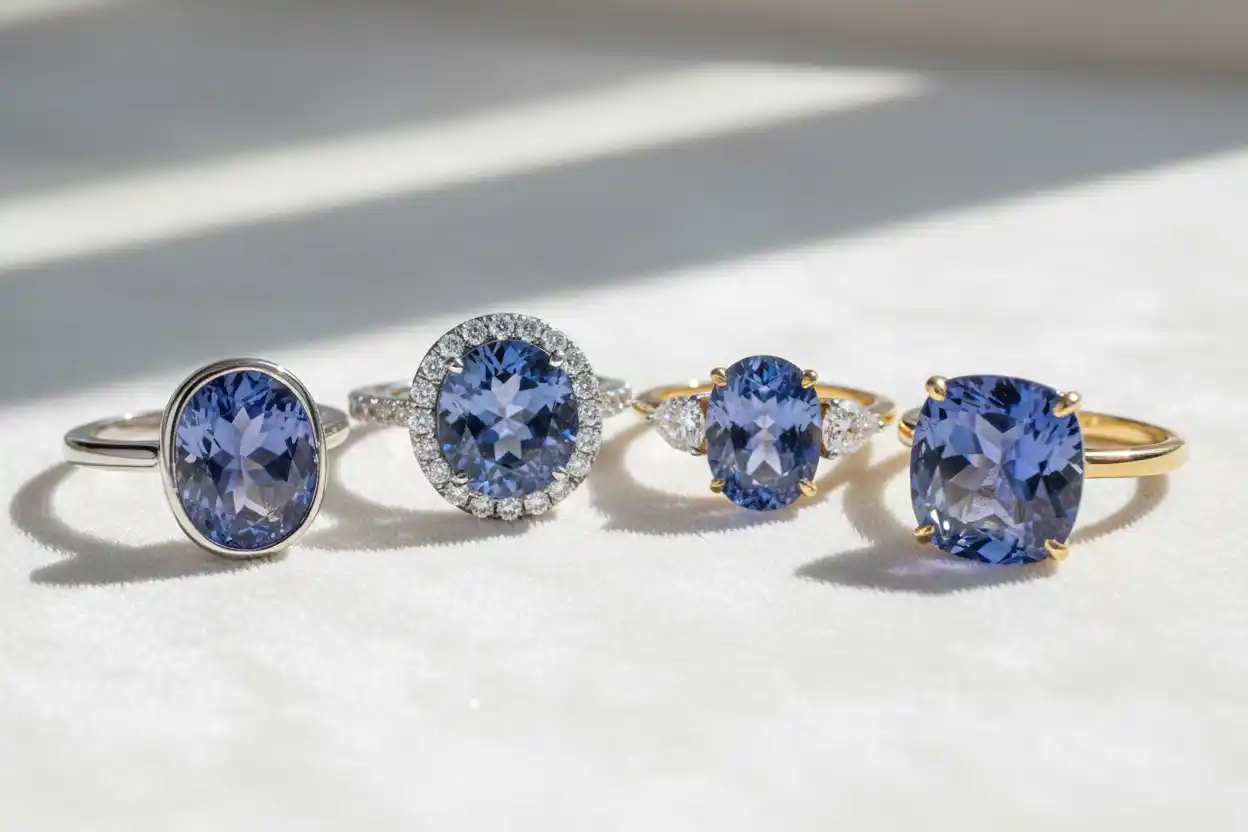
Tanzanite rings place one of the gem market’s most distinctive blue-violet colors in the most visible jewelry format. Strong pleochroism can make the center appear blue, violet or purple as the hand moves, giving even a simple solitaire changing visual character.
A ring also exposes Tanzanite to its greatest physical risks. The gem has moderate hardness, fair-to-poor toughness and prominent cleavage. Protective settings, careful wear and realistic maintenance expectations are therefore fundamental to a successful purchase.
Tanzanite Rings at a Glance
| Feature | What to Consider |
|---|---|
| Mineral identity | Blue-to-violet Zoisite |
| Common colors | Violet-blue, blue-violet and purple |
| Mohs hardness | 6–7 |
| Toughness | Fair to poor |
| Cleavage | Prominent |
| Best settings | Full bezel, protective halo and low substantial prongs |
| Best wearing pattern | Occasional or careful regular wear |
| Common cuts | Oval, cushion, round, pear and trillion |
| Standard treatment | Heat treatment |
| Main buying concern | Fractures near the girdle or prongs |
| Main care concern | Hard impacts and sudden temperature changes |
| Safest cleaning | Warm water, mild soap and a soft brush |
Is Tanzanite Suitable for Rings?
Tanzanite can be worn in rings, but it is not as durable as Sapphire, Ruby or Spinel.
Its hardness of 6–7 means ordinary dust and harder gemstones can gradually scratch the surface. More importantly, cleavage allows the crystal to break along structurally weaker planes after a sharp impact.
An occasional ring, cocktail ring or protected right-hand ring is usually practical. Careful regular wear can also work when the setting surrounds the gemstone and the wearer removes it during risky activities.
Someone who works with machinery, stone, ceramics, tools or frequent hand washing may prefer to reserve Tanzanite for earrings or necklaces.
The completed Tanzanite meaning guide covers mineral identity and history. This page focuses on ring construction and selection.
Tanzanite Solitaire Rings
A solitaire places one gemstone at the center of attention.
Oval and cushion cuts are common because they preserve valuable rough while displaying color effectively. Rounds provide symmetry, while pears and trillions create distinctive outlines.
A high four-prong setting may look open and elegant, but it leaves the gem exposed and increases snagging.
A lower basket with substantial prongs provides greater protection. Six prongs can improve retention for round or oval stones.
The gallery should allow cleaning while preventing the culet from contacting the finger.
Bezel-Set Tanzanite Rings
A bezel surrounds most or all of the girdle with metal.
It is one of the safest settings for Tanzanite because it protects the edge from direct impact and reduces snagging.
A full bezel creates a smooth, contemporary design. Partial bezels expose more of the stone but leave some areas vulnerable.
The jeweler must close the bezel gradually and avoid pressure over a visible fracture. Tanzanite can chip during setting when handled incorrectly.
The metal border may make the gemstone appear slightly smaller, but it can also intensify the blue-violet color.
Halo Rings
A halo surrounds Tanzanite with smaller colorless gems.
The design increases apparent size and can protect the outer edge. It also creates strong contrast with a medium-tone center.
Diamond and Sapphire accents are substantially harder than Tanzanite. Their girdles must not rub against the center gemstone.
A low, close-fitting halo offers better protection than a raised surround. Double halos create greater scale but add more prongs and maintenance.
The center should remain visually dominant rather than disappearing inside an oversized frame.
Three-Stone Rings
A three-stone ring may place Tanzanite between Diamond or white-Sapphire side stones.
Tapered baguettes create a clean geometric frame. Pear or round sides produce a softer outline.
The side stones need enough separation to prevent their hard girdles from contacting Tanzanite.
Another design uses three Tanzanites. Matching becomes important because pleochroic orientation can make one stone appear bluer and another more violet.
The complete setting should remain comfortable between adjacent fingers.
Cluster and Cocktail Rings
Cluster rings arrange several small Tanzanites into floral or geometric patterns.
They can create substantial color without requiring one large center stone. However, small Tanzanites commonly show lighter saturation.
Cocktail rings use larger gems or broad decorative settings. Tanzanite’s color and pleochroism suit this format, but projecting designs should be reserved for careful occasional wear.
Inspect the framework beneath the cluster. Thin connections and exposed culets create practical weaknesses.
Tanzanite Engagement Rings
Tanzanite can be used in an engagement ring when the wearer understands its care requirements.
Its blue-violet color and single-source story make it emotionally appealing. However, it is less resistant to everyday abrasion and impact than Sapphire.
A low bezel, protective halo or substantial six-prong setting is preferable to a tall exposed basket.
The wearer should remove the ring for exercise, gardening, cooking, cleaning and manual work. A separate travel or activity ring may be useful.
The planned blue engagement-ring stones guide places Tanzanite among other blue options. Violet-dominant gems can also be compared through the completed purple engagement-ring stones guide.
Tanzanite Versus Sapphire Engagement Rings
Sapphire has a Mohs hardness of 9 and much stronger everyday durability.
Tanzanite commonly shows more violet and stronger directional color. It can also provide a different visual character at a given budget.
The completed Tanzanite versus Sapphire guide explains the materials in detail.
Buyers prioritizing continuous wear, minimal maintenance and impact resistance will generally find Sapphire more practical. The completed Sapphire engagement-ring guide provides that alternative.
Those who prioritize Tanzanite’s specific color may accept more protective settings and careful wear.
Choosing Tanzanite Color
Fine Tanzanite usually displays saturated violet-blue or blue-violet.
Predominantly blue stones may command a premium because that cutting orientation can require greater weight sacrifice.
Violet-dominant gems can remain highly attractive, especially in yellow gold where the warm metal strengthens contrast.
Small stones tend to look paler than large ones. Consequently, a delicate ring may show lavender-blue rather than deep royal color.
Very dark stones may lose brilliance indoors. Evaluate the ring in several lighting conditions rather than relying on display spotlights.
The blue gemstones guide and purple gemstones guide provide broader color context.
Pleochroism
Tanzanite shows different colors along different crystal directions.
A cut stone may display blue through one direction and violet through another. Residual brown or burgundy hues can sometimes appear as the ring turns.
Cutters choose orientation according to color and weight retention. Blue-dominant cutting may produce a smaller finished gem than violet-oriented cutting from the same rough.
Examine the ring while moving the hand naturally. The face-up color should remain attractive rather than depending on one extreme viewing angle.
Cut Quality
Cut affects brightness, color concentration and visible size.
Ovals and cushions are common. Trillions create a contemporary appearance, while pears and marquises need extra corner protection.
A shallow cut may create a transparent central window. Excessive depth produces a smaller face-up outline and dark extinction.
Facet junctions should remain crisp. Chipped or abraded edges can indicate prior wear or inadequate setting protection.
The completed Tanzanite buying guide explains the relationship between cut, color, clarity and carat weight.
Clarity and Durability
Fine Tanzanite is commonly expected to be eye-clean.
Small internal inclusions may be acceptable. Surface-reaching fractures near the girdle, prongs or corners create greater concern.
A fracture can enlarge during setting, resizing or impact. Inspect the gemstone from the side and beneath the mounting.
Fracture filling is not routine but does occur. Known filling should be disclosed because it affects value and cleaning.
A vivid but heavily fractured stone may be less suitable for a ring than a slightly lighter gem with sound structure.
Carat Weight and Visible Size
Carat weight measures mass rather than face-up dimensions.
A deeply cut Tanzanite may weigh more while looking smaller than a well-proportioned stone.
Larger gems generally show stronger color, but size should not compensate for weak cutting or dangerous fractures.
Compare the length, width and depth in millimeters. These measurements also matter if the gemstone ever needs replacement.
A halo can increase finger coverage without requiring the largest possible center stone.
Natural Tanzanite and Heat Treatment
Most Tanzanite is heated to reduce brown, yellow or green components and strengthen blue and violet.
The treatment is routine, stable and accepted. Heated Tanzanite remains a natural gemstone.
Claims of untreated material should be supported by credible evidence, particularly when they increase price.
Coatings can alter color at the surface, while fracture filling can improve apparent clarity. The planned treated Tanzanite guide owns the detailed enhancement discussion.
Identifying Imitations
Synthetic Spinel, synthetic Sapphire, cubic zirconia and glass can imitate Tanzanite.
Pleochroism may provide a clue, but visual observation alone cannot confirm identity.
The completed real-versus-fake Tanzanite guide covers common substitutes and testing.
A significant ring should have a laboratory report stating gemstone identity, natural or laboratory-grown origin and detectable treatment.
Choosing the Setting
Setting style should follow the wearer’s activity level.
A full bezel offers the strongest girdle protection. Partial bezels and low halos balance visibility with security.
Substantial six-prong settings work well for round or oval stones. Four prongs create a more open appearance but provide less redundancy.
Pointed cuts need V-shaped prongs or bezel protection.
Avoid tension settings unless a highly experienced jeweler has designed specifically around Tanzanite’s cleavage and structural condition.
Choosing the Metal
Platinum provides strength, weight and a naturally white appearance.
White gold offers similar cool contrast but may require periodic rhodium plating.
Yellow gold creates a warm frame that can emphasize violet components. Rose gold produces a softer, less conventional combination.
Sterling silver can suit small commercial Tanzanite, but valuable stones should not be secured by weak, thin prongs.
Metal allergy, maintenance, setting strength and resizing potential should guide the choice.
Ring Size and Resizing
Obtain an accurate finger measurement before purchase.
Wide bands tend to fit more tightly than narrow shanks. Finger size also changes with temperature and time of day.
Simple solitaire shanks are usually easier to resize than full eternity bands, complex halos and engraved shoulders.
Tanzanite should be protected from heat during jewelry repair. The jeweler may need to remove the gemstone before applying a torch.
Ask about resizing limitations before purchasing.
Comfort and Profile
A ring should remain centered without rotating continuously.
Large heads may require a wider shank or sizing beads. The setting should not press sharply against adjacent fingers.
High profiles catch on clothing and strike surfaces more often. Low settings generally suit regular wear better.
Try ordinary movements such as gripping a cup, typing and putting on a jacket before the return period ends.
December Birthstone Rings
Tanzanite is one of December’s modern birthstones, together with Turquoise and Zircon.
The planned December birthstone guide explains the calendar tradition. The planned December birthstone jewelry guide compares ring, necklace, bracelet and earring options.
A birthstone connection does not override durability. The setting should still match the recipient’s lifestyle.
Tanzanite can also be selected for an anniversary, engagement or personal milestone unrelated to December.
Comparing Other Tanzanite Jewelry
Tanzanite earrings provide high visibility with much lower impact risk.
A Tanzanite necklace can accommodate a larger stone while protecting it from hand wear.
A Tanzanite bracelet produces repeated color but is also vulnerable to desk and surface contact.
Rings offer maximum personal visibility, but they demand the strongest setting and most disciplined care.
Price and Documentation
Color generally drives Tanzanite value, followed by clarity, cut, size and treatment.
A deep, lively blue-violet gem is typically worth more than a pale or poorly cut stone of similar weight.
The completed Tanzanite price guide explains current value factors.
For a substantial ring, request the gemstone’s weight, dimensions, identity, treatment, metal fineness and return terms in writing.
A laboratory report identifies the gemstone and detectable treatments. An appraisal documents the complete ring and estimates replacement value but serves a different purpose.
Daily Wear
Remove the ring before exercise, gardening, household cleaning and manual work.
Avoid wearing it while lifting weights, moving furniture or handling hard tools.
Do not stack Tanzanite directly against Diamond or Sapphire bands. The harder stones can scratch its facets.
A protected ring may be worn carefully, but no setting can eliminate every cleavage risk.
The completed gemstone hardness chart provides context for Tanzanite’s position among common jewelry gems.
Cleaning and Maintenance
Clean the ring with warm water, mild soap and a soft brush.
Work gently beneath the setting, where lotion and soap collect. Rinse briefly and dry completely.
Never use steam or ultrasonic cleaning. Sudden temperature changes and vibration can damage the gemstone.
The completed guide to cleaning Tanzanite jewelry provides complete instructions.
Have the prongs and girdle inspected periodically, particularly after a noticeable impact.
Storage
Store the ring in a separate padded compartment.
Keep it away from Quartz, Garnet, Spinel, Topaz, Sapphire and Diamond. Those harder gemstones can scratch it.
Do not drop several rings into one hard container. Metal and gemstone contact can abrade the surface and damage prongs.
Tanzanite appears among the crystals beginning with T and gemstones beginning with T directories.
Final Perspective
A Tanzanite ring should be chosen for its distinctive color with full awareness of the mineral’s limits. The best design does not pretend the gem is as rugged as Sapphire; it uses a low profile, protected edges and sound construction to reduce avoidable risk.
A smaller, well-cut Tanzanite in a secure bezel will often provide more lasting satisfaction than a larger fractured stone in a tall exposed setting. When the ring fits the wearer’s routine, the gem’s changing blue-violet character can remain the feature rather than its vulnerability.
Frequently Asked Questions
1. Is Tanzanite durable enough for a ring?
It can be used in rings, but its hardness of 6–7, cleavage and fair-to-poor toughness require a protective setting and careful wear.
2. Can Tanzanite rings be worn every day?
Careful regular wear is possible, though occasional wear is safer. Remove the ring for physical work, exercise and cleaning.
3. Which setting protects Tanzanite best?
A low full or partial bezel provides the strongest edge protection. Low halos and substantial six-prong settings can also work.
4. Is Tanzanite suitable for an engagement ring?
Yes, when the wearer understands its maintenance and impact risks. Sapphire is a more durable blue alternative.
5. What Tanzanite color is most valuable?
Saturated violet-blue and blue-violet are generally the most valued, especially when the cut remains bright and lively.
6. Why does Tanzanite change color as the hand moves?
The gemstone is strongly pleochroic and displays different hues along different crystal directions.
7. Are most Tanzanite rings heat treated?
Yes. Heat treatment is routine and strengthens blue and violet colors.
8. Does heat-treated Tanzanite require different care?
The standard treatment is generally stable, but Tanzanite’s natural cleavage and limited toughness still require gentle handling.
9. Does a Tanzanite ring need a laboratory report?
Modest commercial rings may not. Reports become more useful for large, expensive or exceptionally represented stones.
10. Can Tanzanite rings be resized?
Many simple bands can be resized, but the gemstone may need removal to protect it from repair heat. Complex settings have stricter limits.
11. Can Tanzanite be cleaned ultrasonically?
No. Ultrasonic and steam cleaners are not recommended.
12. How should a Tanzanite ring be stored?
Keep it in a separate padded compartment away from harder gemstones and heavy jewelry.