December Birthstone: Turquoise, Tanzanite and Zircon Guide
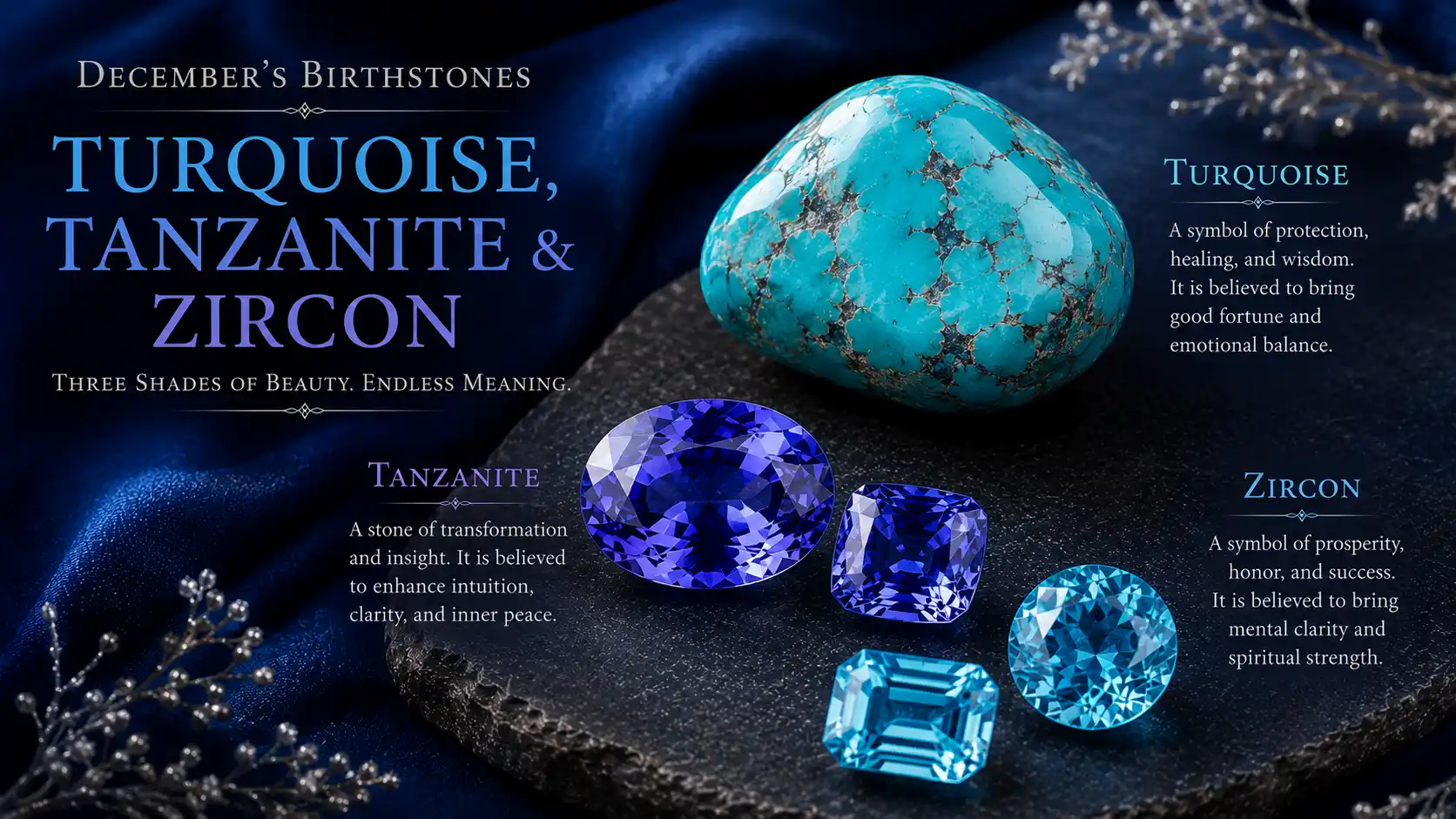
December has three widely recognized birthstones: turquoise, tanzanite and zircon. Although blue connects the trio visually, each gem offers a very different combination of history, appearance, durability and price.
Turquoise is an opaque gem with ancient cultural importance, tanzanite is a modern blue-violet gemstone found commercially in one region of Tanzania, and zircon is a natural mineral prized for exceptional brilliance and fire. The best December birthstone depends on whether the wearer values tradition, saturated color, sparkle or everyday practicality.
December Birthstones at a Glance
| Birthstone | Typical appearance | Mineral or material | Mohs hardness | Strongest appeal | Main care concern |
|---|---|---|---|---|---|
| Turquoise | Opaque blue to green, sometimes with matrix | Hydrated copper aluminum phosphate | 5–6 | Historic symbolism and distinctive color | Porosity, treatments, cosmetics and heat |
| Tanzanite | Transparent blue to violet | Blue-violet zoisite | 6–7 | Rare origin and pleochroic color | Cleavage, abrasion and thermal shock |
| Zircon | Transparent blue, colorless and many other colors | Zirconium silicate | 6–7.5 | High brilliance and dispersion | Abrasion, brittle facet edges and heat-treated color |
| Blue topaz | Transparent pale to deep blue | Topaz | 8 | Durable-looking clarity and accessible supply | Perfect cleavage and treatment disclosure |
Blue topaz sometimes appears in extended December birthstone lists, although turquoise, tanzanite and zircon form the principal modern trio used in this guide.
Why Does December Have Three Birthstones?
Birthstone traditions developed through several historical, religious and commercial systems rather than one unchanging ancient list. As jewelry associations evolved, different organizations and markets adopted alternative stones to provide greater variety in color, availability and price.
Turquoise has the deepest historical connection among December’s modern stones. Zircon also has a long jewelry history, while tanzanite joined birthstone traditions much more recently after its discovery and commercial promotion during the twentieth century.
Having three choices allows December-born wearers to select a gem that fits their style and lifestyle rather than treating one material as compulsory.
Turquoise: December’s Historic Birthstone
Turquoise is an opaque blue-to-green gemstone that has been valued for thousands of years. Its color ranges from pale sky blue to blue-green and green, sometimes crossed by brown or dark matrix patterns from the host rock.
The gem has appeared in jewelry and ceremonial objects across parts of North America, the Middle East, Central Asia and other regions. Cultural meanings differ, so turquoise should not be assigned one universal spiritual interpretation.
Modern symbolism commonly connects turquoise with communication, travel, friendship and protection. These themes remain traditional beliefs rather than scientifically measurable properties.
What Makes Turquoise Valuable?
Color is one of the most important value factors. Even, saturated blue material often commands strong demand, although collectors may also value attractive natural matrix patterns and origin-specific appearances.
Texture and polish matter because porous or chalky material generally requires stabilization or other treatment before it can withstand jewelry use. Fine untreated turquoise is comparatively scarce.
The completed turquoise buying guide explains color, matrix, porosity, stabilization, dyeing and imitation issues in greater depth.
Treatment is not automatically unacceptable. However, the seller should disclose whether the material is natural and untreated, stabilized, dyed, reconstructed or imitated.
Where Does Turquoise Come From?
Important turquoise sources include Iran, the United States, China, Egypt and several other regions.
Historic Iranian turquoise is strongly associated with clear blue color, while mines in Arizona and Nevada have produced a wide range of blue, green and matrix-bearing material. China is also an important modern source.
Origin may affect market interest, but a mine name should not replace direct assessment of color, texture, treatment and workmanship.
Claims of a prestigious origin deserve documentation when they materially increase the price.
Turquoise Durability and Care
Turquoise ranks approximately 5 to 6 on the Mohs scale and is relatively porous. Oils, perspiration, cosmetics, perfume and household chemicals can alter its appearance.
Apply lotions and fragrance before putting on turquoise jewelry. Remove the piece before bathing, swimming, exercising or cleaning.
Warm, mild soapy water may be suitable for careful cleaning when the treatment and construction are understood, but steam and ultrasonic systems should be avoided.
The completed guide to cleaning turquoise jewelry safely covers stabilized stones, metal settings and surface-care risks.
Tanzanite: December’s Modern Blue-Violet Birthstone
Tanzanite is the blue-to-violet transparent variety of zoisite. Commercially significant material comes from the Merelani area of northern Tanzania, making geographic scarcity a defining part of its identity.
The gemstone is pleochroic, which means different colors may appear when it is viewed from different crystallographic directions. Cutters orient the rough to emphasize blue, violet or a balance between them.
Most tanzanite receives controlled heat treatment to reduce brownish, yellowish or greenish components and reveal the blue-violet colors expected in the market. This treatment is routine and should still be disclosed.
What Makes Tanzanite Valuable?
Color typically leads the value discussion. Strongly saturated blue and blue-violet stones usually attract more interest than pale or grayish material.
Cut also matters because orientation affects both color and weight retention. A well-cut tanzanite should appear lively without large dark or washed-out areas.
Eye-visible inclusions may reduce value, especially in transparent faceted stones. Size can increase the impact of color, although large dimensions do not compensate for weak saturation or poor cutting.
The completed tanzanite buying guide examines these quality factors and disclosure questions in more detail.
Tanzanite Durability and Care
Tanzanite ranks approximately 6 to 7 on the Mohs scale, but hardness does not tell the complete durability story. The mineral has cleavage and fair-to-poor toughness, making it vulnerable to hard blows and sudden temperature changes.
Earrings and pendants are generally lower-risk choices because they receive fewer impacts than rings and bracelets. A tanzanite ring works better as occasional jewelry with a protective setting than as a rough daily-wear piece.
Clean tanzanite with warm, mild soapy water and a soft cloth or brush. Avoid steam, ultrasonic systems and abrupt temperature changes.
The completed guide to cleaning tanzanite jewelry explains safe handling for mounted and potentially fracture-filled stones.
Zircon: December’s Brilliant Natural Gem
Zircon is a natural zirconium silicate mineral. It should not be confused with cubic zirconia, which is a manufactured diamond simulant with a different composition and crystal structure.
Zircon occurs in blue, colorless, yellow, orange, red, brown and green. Blue is the color most strongly associated with December jewelry, while colorless zircon has historically been admired for brilliance and rainbow fire.
The stone has high refractive index and dispersion, producing strong sparkle. Pronounced double refraction may make rear facets appear doubled when viewed through some stones.
What Makes Zircon Valuable?
Color, clarity, cut and size all affect zircon’s appeal. Bright blue is especially popular, although fine red, green and other unusual colors can attract collectors.
A successful cut manages zircon’s strong optical properties without creating excessive windowing, extinction or fragile edges. Rounds and ovals are common because they can emphasize brilliance.
Eye-clean material usually has stronger commercial appeal, although the accepted clarity level may vary with color, rarity and origin.
The completed zircon buying guide covers heat treatment, color stability, cut and laboratory documentation.
Zircon Durability and Care
Zircon ranges from approximately 6 to 7.5 on the Mohs scale depending on its structural condition. Despite its sparkle, it can abrade along facet edges and should be protected from rough wear.
Many blue zircons receive heat treatment. Some treated colors may change after prolonged exposure to strong light or heat, so shaded storage is prudent.
Clean zircon with warm water, mild soap and a soft brush. Avoid steam and ultrasonic cleaners.
The completed guide to cleaning zircon jewelry safely provides additional advice for settings, fractures and treated stones.
Turquoise vs Tanzanite vs Zircon
| Factor | Turquoise | Tanzanite | Zircon |
|---|---|---|---|
| Transparency | Opaque | Transparent | Transparent |
| Signature color | Blue to blue-green | Blue to violet | Bright blue, plus many other colors |
| Visual effect | Smooth color and matrix | Pleochroic blue-violet shifts | Strong brilliance and fire |
| Historical depth | Ancient and culturally widespread | Modern gemstone discovery | Long mineral and jewelry history |
| Everyday durability | Moderate with careful wear | Better in protected, lower-impact designs | Moderate; protect facet edges |
| Common treatment | Stabilization, dyeing and reconstruction | Heat treatment | Heat treatment |
| Best jewelry formats | Pendants, earrings, beads and protected rings | Earrings and pendants | Earrings, pendants and occasional rings |
| Best for | Distinctive opaque character | Rare saturated color | Maximum sparkle |
Which December Birthstone Is Best for Everyday Wear?
No December birthstone is completely carefree.
Turquoise works well in pendants, earrings and protected rings when the owner keeps it away from cosmetics and chemicals. Stabilized material may offer greater practicality than very porous untreated turquoise.
Tanzanite is more vulnerable to cleavage and impact, making earrings and pendants preferable for frequent use.
Zircon offers excellent brilliance but may show abrasion after repeated rough wear. Protective settings and careful storage help preserve facet edges.
For someone who expects to wear the jewelry during manual work, sports or household cleaning, a December birthstone pendant may be more suitable than a ring or bracelet.
Which December Birthstone Is Rarest?
Tanzanite has the most geographically restricted commercial source because it is mined in one small area of Tanzania.
Fine untreated turquoise may also be scarce, especially when it combines desirable color, dense texture and documented origin.
Large fine-quality zircon can be uncommon in highly desirable colors, although the mineral itself occurs in many locations.
“Rarest” depends on the exact quality, treatment, color, size and provenance rather than the name alone.
Which December Birthstone Is Most Affordable?
Commercial turquoise, pale tanzanite and smaller blue zircon can all appear at accessible price levels, but quality changes the comparison substantially.
Reconstructed or dyed turquoise may cost much less than fine natural material. Pale or heavily included tanzanite usually costs less than strongly saturated stones. Zircon pricing varies by color, clarity and size.
Compare like with like and request treatment disclosure. A low price may reflect lower quality, small size, synthetic or imitation material, or a heavily treated product.
The completed price guides for turquoise, tanzanite and zircon provide material-specific value analysis.
Meanings and Symbolism
Turquoise is commonly associated with friendship, travel, communication and protection. Tanzanite is often connected with transformation, insight and new perspectives, while zircon carries traditional themes involving wisdom, rest and prosperity.
These meanings developed through different cultural, historical and modern metaphysical traditions. They should not be presented as universal beliefs or scientifically demonstrated effects.
A December-born person may choose a stone because of color, family tradition or mineral interest without adopting any spiritual interpretation.
December Birthstone Colors
Blue connects the three principal December birthstones, but their blues differ.
Turquoise tends toward opaque sky blue, blue-green or green. Tanzanite ranges from blue to violet-blue, while blue zircon often appears bright, crisp and highly brilliant.
December jewelry does not need to be blue. Zircon offers warm and neutral colors, and turquoise may include green and matrix-rich patterns.
Personal style is a stronger selection guide than a rule that December jewelry must match one standard blue.
How to Choose a December Birthstone
Begin with the intended jewelry type and frequency of wear.
Choose turquoise for opaque character, historical richness and bold cabochon designs. Select tanzanite for saturated blue-violet color and a rarer geographic story. Pick zircon when brilliance and fire are the main priorities.
Next, verify treatment, return policy and care requirements. For significant purchases, an independent gemological report may provide useful confirmation.
Finally, inspect the workmanship. Secure settings, smooth finishing and appropriate protection matter as much as the gem itself.
December Birthstone Jewelry Ideas
Turquoise works beautifully in bead strands, cabochon pendants, earrings and statement rings. Tanzanite suits elegant studs, drop earrings, pendants and special-occasion rings.
Blue zircon offers strong sparkle in stud earrings, halo pendants and carefully protected rings. Mixed December designs can combine different shades of blue, although each stone’s care needs should remain compatible.
The dedicated December birthstone jewelry gift guide focuses on selecting formats, metals, settings and gifts for different lifestyles.
How to Store December Birthstones
Store each gemstone separately in a padded compartment or soft pouch.
Harder stones may scratch turquoise, while tanzanite and zircon can chip when they strike other jewelry. Chains should remain closed and laid flat to reduce tangling.
Keep turquoise away from cosmetics and humid storage. Protect tanzanite from temperature extremes and keep zircon away from prolonged bright light when treatment history is uncertain.
Periodic professional inspection helps identify loose prongs, worn settings and damaged stringing before a stone is lost.
Conclusion
December offers three distinct birthstone experiences. Turquoise provides ancient history, opaque color and strong cultural character. Tanzanite offers blue-violet rarity and a modern origin story, while zircon delivers exceptional brilliance, fire and a broad natural color range.
The best December birthstone is the one that fits the wearer’s style, jewelry habits and willingness to follow the required care. Treatment disclosure and secure construction matter more than choosing the supposedly most prestigious option.
Frequently Asked Questions
1. What are the three main December birthstones?
The three principal modern December birthstones are turquoise, tanzanite and zircon.
2. Is blue topaz a December birthstone?
Blue topaz appears in some extended commercial lists, although turquoise, tanzanite and zircon are the primary modern December trio.
3. What is the traditional December birthstone?
Turquoise has one of the oldest and most established connections with December.
4. Which December birthstone is the rarest?
Tanzanite has the most geographically restricted commercial source. Fine untreated turquoise and large high-quality zircon can also be scarce.
5. Which December birthstone sparkles the most?
Zircon generally provides the strongest brilliance and rainbow fire.
6. Which December birthstone is best for everyday wear?
Turquoise, tanzanite and zircon all require care. Pendants and earrings are generally safer than exposed rings or bracelets.
7. Is tanzanite always heat-treated?
Most commercial tanzanite receives heat treatment to develop the familiar blue-to-violet color. Sellers should disclose treatment.
8. Is blue zircon the same as cubic zirconia?
No. Zircon is a natural mineral, while cubic zirconia is a manufactured material with different properties.
9. Is turquoise always natural and untreated?
No. Turquoise may be stabilized, dyed, reconstructed or imitated. Ask for clear disclosure.
10. Can December birthstones be cleaned ultrasonically?
Turquoise and tanzanite should not be cleaned ultrasonically, and ultrasonic cleaning is also generally avoided for zircon.
11. Can all three December birthstones be worn together?
Yes, but the design and cleaning method should follow the needs of the most delicate material.
12. What does the December birthstone symbolize?
Common themes include protection, communication, transformation, wisdom and prosperity, although meanings vary by tradition.
Disclaimer: Birthstone meanings are historical, cultural and spiritual traditions rather than scientifically demonstrated effects. Gemstone treatments, durability and care vary by specimen and setting, so obtain professional advice for valuable or damaged jewelry.