Where to Buy Real Apache Tears (and Avoid Fakes)
Real Apache Tears are small rounded or irregular nodules of natural Obsidian, usually sold as rough pebbles, polished stones, tumbled pieces, cabochons or simple jewelry. Reliable sources include specialist mineral dealers, established rock shops, lapidary suppliers, gem shows and transparent sellers familiar with volcanic glass from the southwestern United States.
The main buying challenge is not extreme rarity. It is distinguishing genuine geological nodules from manufactured black glass, molded resin, coated pebbles and ordinary Obsidian inaccurately marketed with an unsupported Apache Tears locality or story.
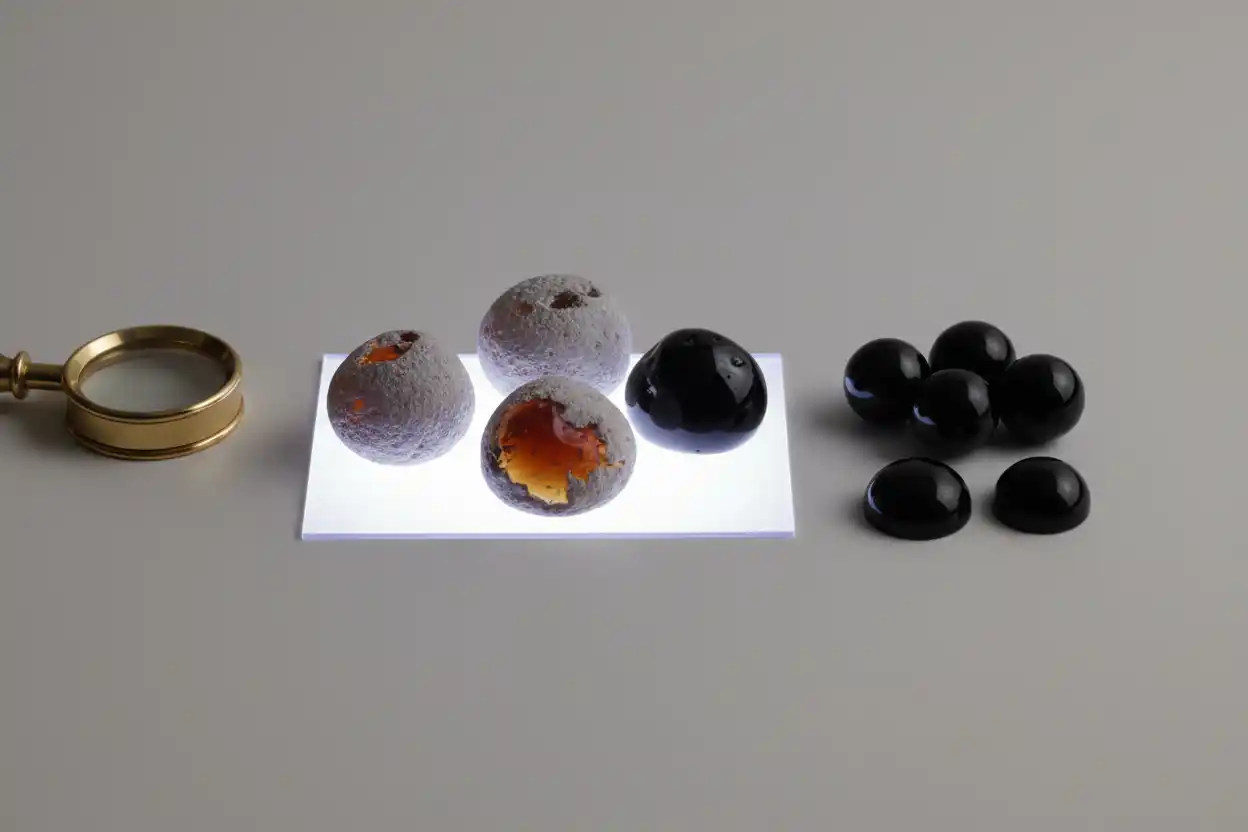
Authentic material often looks black in normal light but becomes smoky brown, gray-brown or translucent near thin edges when illuminated from behind. Some rough pieces retain a gray or tan perlite rind. However, polishing can remove that exterior, so the absence of a rind does not automatically indicate an imitation.
Apache Tears Buying Options at a Glance
| Buying source | Best for | Main caution |
|---|---|---|
| Specialist mineral dealer | Documented rough nodules and specimens in perlite | Locality documentation may increase price |
| Established rock shop | In-person examination and beginner purchases | Some stores use the name for ordinary black Obsidian |
| Gem and mineral show | Comparing rough, polished and specimen material | Temporary vendors may be difficult to contact later |
| Lapidary supplier | Rough suitable for tumbling, cabochons and carving | Fractures and usable yield vary |
| Tumbled-stone supplier | Smooth pocket stones and matched quantities | Polishing removes many geological surface clues |
| Independent jewelry artist | Pendants, earrings and framed cabochons | Confirm stone identity and metal construction |
| General marketplace | Broad selection and low prices | Molded glass, resin and unsupported origin claims |
| Direct collector or miner | Source-specific rough and perlite specimens | Legal collecting rights and provenance need verification |
| Estate seller | Older jewelry and rock collections | Labels may have been lost or mixed |
| Social-media seller | Individual pieces shown in live sales | Impulse buying and limited policies increase risk |
What Are Real Apache Tears?
Apache Tears are natural Obsidian nodules.
Obsidian is volcanic glass that forms when silica-rich lava cools too rapidly for an extensive crystal structure to develop. Apache Tears represent relatively fresh glassy cores preserved within hydrated volcanic glass or perlite.
As the surrounding glass hydrates, curved concentric fractures can develop around the less-altered core. Weathering may eventually release the dark nodule from its lighter matrix.
The completed Apache Tears meaning guide owns the material’s formation, symbolism and historical naming context. The broader Obsidian meaning guide explains volcanic glass as a family.
Apache Tears are not a separate mineral species, a type of Quartz or a natural crystal with an internal lattice.
The Best Place to Buy Rough Apache Tears
A mineral dealer familiar with volcanic rocks is generally the strongest source for rough nodules.
Ideally, the seller should identify the country, state or collecting district and explain whether the pieces came from a documented parcel, old collection or current commercial supplier.
Rough pieces with attached perlite provide useful geological context. The pale rind may show curved onion-skin fractures around the darker glassy center.
However, not every authentic nodule retains matrix. Natural weathering, collecting and tumbling may remove it completely.
Request dry photographs taken from several angles. Water and oil deepen the color and can hide chips, dull areas or weathered surfaces.
Buying Apache Tears at Rock Shops
An established rock shop lets you compare several pieces under the same light.
Hold each nodule over a bright, diffused light source. Many genuine pieces reveal brown or smoky translucency along thinner sections, although thick nodules may remain nearly opaque.
Inspect the surface for natural irregularity, small pits and curved fracture marks.
Perfectly identical shapes are suspicious when the seller claims that every piece is unaltered rough. Nevertheless, tumbled Apache Tears can become uniformly rounded through machine polishing.
Ask whether the product is rough, lightly polished or fully tumbled rather than expecting appearance alone to reveal the finishing process.
Buying at Gem and Mineral Shows
Gem shows are useful because mineral specialists, lapidaries and general crystal sellers may offer Apache Tears side by side.
Compare the claimed nodules with ordinary black Obsidian and manufactured glass.
Ask the dealer to write the locality and material description on the receipt. A label such as “Apache Tears Obsidian, Arizona, old collection” provides more information than “protection stone.”
Examine expensive specimen pieces for repairs and glued matrix.
Temporary booths may disappear after the show, so preserve the seller’s business details and photograph the original label.
Buying Apache Tears Online
Choose listings that show the exact item or an accurate representative group.
Individual specimens should have front, back and side photographs with a ruler, coin or millimeter scale.
For bulk tumbled stones, representative images are more reasonable, but the seller should disclose the expected size range and variation.
Heavy black backgrounds can hide edges and make synthetic glass look more convincing. Neutral gray or white backgrounds provide better contrast.
Request a backlit photograph when translucency matters. The seller should not need to shine an intense pinpoint light through every piece, but some thinner edges should normally reveal a brownish or smoky glass appearance.
What a Reliable Listing Should Include
A useful description identifies the material as Apache Tears Obsidian rather than merely “Apache stone.”
It should state whether the pieces are rough, polished, tumbled, drilled, coated or set in jewelry.
Dimensions and weight should be included, especially when the image lacks a clear scale.
Known locality should be separated from geological identity. “Natural Obsidian nodule” can be certain even when the precise collecting site is unknown.
The seller should also disclose repairs, glue, coatings and whether the photographs show the exact pieces or a representative batch.
Natural Shape and Surface
Authentic rough Apache Tears are commonly rounded, subrounded or irregular.
Their shapes developed through perlitic fracturing and weathering rather than through crystal faces. They therefore should not show the regular geometric form of Quartz, Fluorite or Calcite crystals.
Some surfaces are glossy and glassy. Others retain a pale gray, white or tan weathered coating.
Small dents and uneven areas can occur naturally.
A perfectly smooth surface does not prove an imitation because tumbling deliberately rounds and polishes genuine Obsidian.
The seller’s finishing disclosure is more reliable than expecting every authentic piece to look untouched.
Perlite Rind and Matrix
The surrounding perlite is one of the strongest geological clues in an unpolished specimen.
It may appear gray, pale brown or off-white and can show closely spaced concentric fractures.
The dark Obsidian core may be partly visible where the outer material has broken away.
A glued dark pebble placed inside unrelated pale rock is not the same geological structure. Examine the boundary for adhesive, unnatural gaps and mismatched fracture surfaces.
Matrix specimens should be packed carefully because perlite may be softer and more crumbly than the Obsidian center.
Backlighting Real Apache Tears
Many genuine Apache Tears appear smoky brown or translucent gray when viewed through a thin edge.
This observation helps distinguish natural Obsidian from opaque black resin and some ceramics.
It is not a conclusive test. Manufactured glass can also be translucent, and thick natural Obsidian may appear opaque.
Look for natural flow features, uneven thickness and internal variations rather than requiring one specific shade.
The planned guide to buying real Obsidian will cover broader volcanic-glass identification without replacing this nodule-specific intent.
Apache Tears Versus Ordinary Black Obsidian
Apache Tears are a geological form of Obsidian, so every authentic Apache Tear is Obsidian.
Not every piece of Black Obsidian is an Apache Tear.
A broken chunk from a large lava flow may have the same glass composition but lack the rounded nodule form and relationship with perlite.
Sellers sometimes apply the Apache Tears name to small tumbled black Obsidian because both products look similar after polishing.
That substitution may not affect ordinary decorative use, but it makes the geological description inaccurate.
The completed types-of-Obsidian guide explains how nodule form differs from sheen, color and inclusion-based varieties.
Manufactured Black Glass
Manufactured glass is the most obvious imitation because Obsidian itself is natural glass.
A man-made pebble may have mold seams, flattened bases, identical dimensions or repeated surface shapes.
Round gas bubbles can occur in manufactured material, but natural volcanic glass can also contain vesicles and inclusions. One bubble is therefore not definitive.
Color can be unusually uniform, while broken surfaces may reveal an artificial coating or a different-colored interior.
Professional compositional analysis can distinguish uncertain high-value objects, although routine inexpensive pebbles rarely justify laboratory testing.
The completed glass-versus-crystal guide explains why “glass” describes structure rather than automatically meaning artificial.
Resin and Plastic Imitations
Resin can be molded into smooth black pebbles and polished to a glossy surface.
Possible clues include mold seams, a waxy feel, round bubbles, unusually low density and small dents rather than glass-like chips.
Plastic pieces may scratch more easily and can develop a static charge, but destructive testing is unnecessary.
Do not use a hot needle. It damages the item and may release unpleasant or hazardous fumes.
The completed how-to-spot-fake-crystals guide provides safer screening methods.
Coated Pebbles
Ordinary rock, ceramic or pale glass can receive a black coating.
Wear may reveal a lighter interior around drilled holes, scratches and sharp edges.
A surface film can also create metallic, rainbow or iridescent effects not expected from ordinary Apache Tears.
Coated Obsidian may still contain genuine volcanic glass underneath, but the visible finish is treated.
Ask whether “rainbow” refers to natural internal sheen or an applied surface coating. Apache Tears should not be confused with the completed Rainbow Obsidian guide, whose optical bands form differently.
Tumbled Apache Tears
Genuine Apache Tears are commonly sold as tumbled stones.
A good polished piece should have a consistent luster without broad frosted bruises, deep pits or fresh chips.
Obsidian can be difficult to tumble because pieces strike one another and develop white impact marks. Properly filled barrels and cushioning media reduce this problem.
The drafted tumbled-stones beginner guide explains how polish quality develops.
Examine the stones dry. Water or oil can temporarily hide a dull finish.
A commercial tumble does not reduce the stone’s authenticity, but it removes matrix and some clues about the original nodule surface.
Buying Apache Tears for Tumbling
Choose rough with enough size to survive material loss.
Deep fractures may divide the stone during coarse grinding.
Avoid mixing Apache Tears casually with hard angular Agate or Jasper. Obsidian is softer and more prone to bruising.
Ask whether the rough contains attached perlite, which can break down rapidly and alter the slurry.
Wear eye protection when sorting broken pieces because fresh Obsidian edges can be extremely sharp.
The finished polish depends as much on starting condition as on the tumbling process.
Cabochons and Faceted Apache Tears
Some nodules contain enough transparent brown glass for cabochons or occasional faceting.
Cabochons should have smooth edges and an even polish.
Faceted material may look smoky brown or nearly black depending on thickness and lighting.
The name Apache Tear should describe the original nodule material, not every brown faceted glass stone.
Windowing and dark extinction can reduce visual appeal.
A seller should disclose whether the gem was cut from documented Apache Tears rough or from another Obsidian source.
Apache Tears Jewelry
Pendants and earrings are the safest conventional formats.
A full bezel protects the edge and keeps freshly chipped glass away from skin.
Bracelets receive greater desk contact, while rings encounter the highest impact risk. A ring should use a compact stone in a low protective setting.
Drilled pieces need sufficient material around the hole. Cracks radiating from the opening can cause sudden loss.
Ask whether the metal is solid, plated or base alloy and whether adhesive contributes to the setting.
The planned where-to-buy Black Obsidian guide will address larger conventional jewelry material.
Comparing Apache Tears With Onyx
Onyx is banded Chalcedony, a crystalline form of silica, whereas Apache Tears are non-crystalline volcanic glass.
Polished black examples can look similar.
Onyx is harder and commonly appears in calibrated cabochons, beads and flat inlay. Obsidian may show glassy conchoidal fractures and smoky translucency.
The completed Onyx versus Obsidian guide provides the complete comparison.
Names such as black Onyx are also applied incorrectly to dyed Chalcedony and other dark materials, so neither label should be accepted from color alone.
Comparing Apache Tears With Black Tourmaline
Black Tourmaline is usually Schorl, a crystalline borosilicate mineral with lengthwise striations.
Apache Tears lack Tourmaline’s prismatic crystal habit.
Polished pebbles can still be confused when the original surfaces have been removed.
The planned Black Tourmaline versus Obsidian versus Onyx guide owns the broader three-way comparison.
A seller should not describe one stone with all three names to capture search traffic.
Cultural Naming and Respectful Selling
The Apache Tears name is linked with a story involving Apache people, grief and conflict.
Sellers often repeat heavily simplified or altered versions as marketing copy. Such stories should not be treated automatically as verified historical accounts shared identically by every Apache community.
The geological identity of the stone does not prove that it was collected, blessed or sold by an Apache person.
Avoid phrases such as “authentic Native American stone” unless the product has specific maker, community or provenance documentation.
The completed Apache Tears meaning guide provides a more careful separation between geological facts and symbolic tradition.
Locality Claims
Apache Tears are associated with volcanic regions of the southwestern United States.
Arizona is especially prominent in the trade, but similar Obsidian nodules occur in other suitable perlitic volcanic deposits.
A state name should come from a supplier record, collection label or documented source rather than from appearance.
Geochemical analysis can sometimes match Obsidian to known source fields, but routine sellers rarely provide that level of testing.
“Southwestern United States, exact locality unknown” is more accurate than inventing a famous collecting site.
Legal and Ethical Collecting
A seller claiming self-collected material should have permission to remove it.
Collecting regulations differ among private land, state land, federal land, tribal land, parks and protected archaeological areas.
A stone being loose on the ground does not automatically make collection legal.
Archaeological artifacts and culturally sensitive sites require additional protection.
Ask for the general source and whether the seller had permission without requesting coordinates that could expose a vulnerable site.
Pricing Apache Tears
Common small rough or tumbled Apache Tears are usually affordable.
Prices rise with large size, strong translucency, clean polish, attached perlite, documented locality and attractive jewelry workmanship.
A repeated legend or spiritual claim does not create geological rarity.
Matched polished sets may cost more because sorting by size and quality requires labor.
Collector specimens in intact perlite occupy a different market from bulk pocket stones.
Avoid sellers promising investment returns for ordinary commercial nodules.
Seller Questions to Ask
Ask whether the material is natural Obsidian, whether it came from rounded nodules and whether the pictured pieces are exact or representative.
Request the known country, state or district without demanding unsupported certainty.
Ask whether the pieces were tumbled, coated, repaired or glued to matrix.
For jewelry, ask about drill holes, adhesive, metal and setting type.
A trustworthy seller can distinguish confirmed facts from supply-chain assumptions.
Return and Shipping Policies
Obsidian can chip during transit.
Each specimen or polished stone should be separated so pieces do not strike one another.
Matrix specimens need cushioning around the softer perlite.
Review the seller’s shipping-damage process before ordering a large display piece.
A reasonable return policy allows examination under ordinary and backlit conditions.
Photograph the parcel before removing a visibly damaged specimen from its wrapping.
Cleaning Apache Tears
Use warm water, mild soap and a soft cloth.
Avoid sudden temperature changes, steam and hard impacts.
Polished Obsidian can scratch, particularly when stored beside harder stones.
Do not clean a matrix specimen aggressively because the surrounding perlite may crumble.
The completed gemstone-hardness chart and toughness-versus-hardness guide explain why glassy material can be sharp yet still chip easily.
Spiritual Marketing Claims
Modern traditions associate Apache Tears with grief, protection, grounding and emotional release.
These meanings do not authenticate a stone or establish its origin.
The completed Obsidian healing-properties guide owns broader spiritual intent.
The black crystals guide and black gemstones guide provide color-based context.
A seller should not charge a premium merely because a stone is described as activated, high vibration or trauma healing.
Final Buying Perspective
Choose a geological or mineral dealer for rough nodules and matrix specimens, a competent lapidary for polished stones and a transparent artist for jewelry.
Backlighting, natural irregularity and perlite context can support identification, but no single home observation distinguishes every natural nodule from manufactured glass.
The most credible seller explains what is known, discloses finishing and avoids using Apache identity as unsupported marketing.
Apache Tears also appear in the crystals beginning with A and gemstones beginning with A directories.
Frequently Asked Questions
1. Where is the best place to buy real Apache Tears?
Specialist mineral dealers, established rock shops, lapidary suppliers and reputable gem shows provide the strongest opportunities for accurate identification.
2. Are Apache Tears a type of Obsidian?
Yes. They are rounded natural Obsidian cores associated with hydrated perlitic volcanic glass.
3. Should real Apache Tears be translucent?
Many show smoky brown or gray translucency at thin edges, but thick genuine nodules may appear opaque.
4. Do real Apache Tears always have a gray rind?
No. Rough nodules may retain perlite, while weathering and polishing can remove it completely.
5. Are tumbled Apache Tears genuine?
They can be. Tumbling changes the surface and shape but does not alter genuine Obsidian into an imitation.
6. How can manufactured black glass be recognized?
Mold seams, identical shapes, artificial coatings and repeated production features can provide clues, although laboratory testing may be needed.
7. Are Apache Tears the same as Black Obsidian?
They are Black or brownish Obsidian in a specific rounded nodule form. Ordinary Black Obsidian does not automatically qualify.
8. Can Apache Tears be faceted?
Transparent sections can be faceted, although most material is sold rough, tumbled or as cabochons.
9. Are large Apache Tears valuable?
Size can add interest, but translucency, condition, polish, matrix and documented locality matter more than diameter alone.
10. Can Apache Tears be worn in rings?
They can, but Obsidian chips easily. A low full bezel and careful occasional wear are preferable.
11. Do Apache Tears need laboratory certification?
Usually not. Testing is more useful when a high-value object, unusual source claim or manufactured-glass concern materially affects price.
12. What should the seller disclose?
The listing should identify natural Obsidian, finishing, treatment, repairs, matrix assembly, known locality and whether the photographs show the exact item.