
Black Tourmaline vs. Obsidian vs. Onyx: Which Protection Stone Is Right for You?

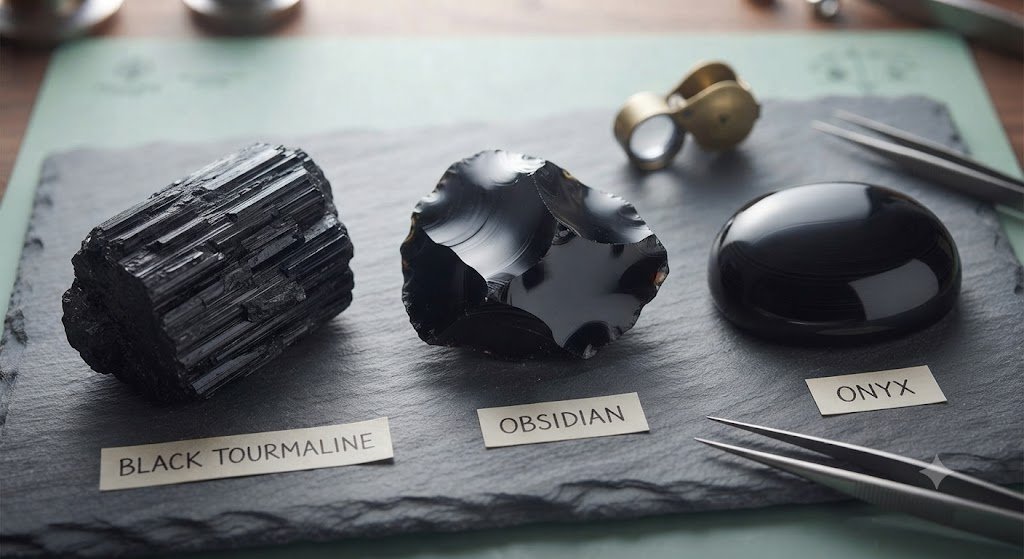
Three black stones dominate the world of protective crystals — black tourmaline, obsidian, and onyx — and they’re easy to confuse. They look similar and share themes of protection and grounding, but each works in a distinctly different way. This guide compares black tourmaline, obsidian, and onyx side by side, so you can choose the right protective stone for what you actually need.
A quick note first: these are traditional, metaphysical associations, shared for reflection rather than as proven facts. With that in mind, here’s how the three compare.
Black Protection Stones at a Glance
- Black tourmaline: the classic all-purpose shield — deflects and repels negative energy.
- Obsidian: the truth-revealer — protective but intense, great for shadow work and deep insight.
- Onyx: the inner-strength stone — grounding, steadying protection through willpower and stability.
- Choosing: pick by how you want to be protected — shielded, shown the truth, or strengthened.
Meet the Three Stones
Black Tourmaline
Black tourmaline is widely considered the premier protection crystal. A silicate mineral (hardness around 7–7.5), it’s traditionally used to deflect and repel negative energy, and is a favourite for psychic protection and easing the effects of everyday stress. Many people also keep it near electronics as an energetic buffer. Its energy is protective without being confronting — a steady, all-purpose shield.
Obsidian
Obsidian is natural volcanic glass (hardness around 5–5.5), formed when lava cools rapidly. It’s protective too, but in a more active, revealing way: it’s the classic stone for shadow work, truth-seeking, and cutting through illusion. Obsidian is associated with bringing buried emotions and hard truths to the surface so they can be faced — powerful, but a more intense energy than the other two.
Onyx
Onyx is a banded variety of chalcedony (hardness around 6.5–7), prized in its solid black form. Its protection works through inner strength: it’s traditionally used for grounding, willpower, self-discipline, and steadiness under pressure. Rather than deflecting or revealing, onyx is about becoming strong and stable enough to stand firm — protection from the inside out.
Black Tourmaline vs. Obsidian vs. Onyx: Comparison
| Black Tourmaline | Obsidian | Onyx | |
|---|---|---|---|
| Type | Silicate mineral | Volcanic glass | Banded chalcedony |
| Hardness | ~7–7.5 | ~5–5.5 | ~6.5–7 |
| Protection style | Deflects & repels | Reveals & cuts through | Strengthens & grounds |
| Energy | Steady, all-purpose | Intense, confronting | Stabilizing, disciplined |
| Best for | Everyday shielding, EMF, stress | Shadow work, truth, deep insight | Willpower, focus, standing firm |
How They Differ in Practice
The real difference is in how each stone protects:
- Black tourmaline shields. Think of it as a deflector that repels negativity before it reaches you — the go-to for general, everyday protection with a gentle, steady feel.
- Obsidian reveals. Rather than blocking, it exposes what’s hidden — buried emotions, hard truths, self-deceptions — so you can work through them. It’s protective through awareness, and its intensity means it’s best used intentionally, not worn absent-mindedly around the clock.
- Onyx strengthens. It doesn’t deflect or reveal so much as fortify you, building the willpower, discipline, and grounded stability that let you weather difficulty. Its protection is quiet and internal.
All three connect strongly to grounding and the root chakra, which is why they feel so stabilizing.
Which Should You Choose?
Match the stone to your need:
- Choose black tourmaline if you want reliable, all-purpose protection — a daily shield against stress, negativity, or draining environments. It’s the best “default” protector and the easiest to live with.
- Choose obsidian if you’re doing inner work — facing difficult truths, healing old wounds, or seeking clarity about yourself. Reach for it intentionally, during meditation or reflection.
- Choose onyx if you need strength and steadiness — willpower to stick to goals, focus under pressure, or the grounded confidence to stand firm in a tough situation.
If you’re unsure, black tourmaline is the most beginner-friendly and versatile starting point. Explore more options in our crystals for protection and crystals for grounding guides.
Can You Use Them Together?
Yes — and many people do. Because they work differently, the three can complement each other beautifully: black tourmaline shielding your space, obsidian supporting a period of deep inner work, and onyx strengthening your resolve. A common approach is to keep black tourmaline around generally, and bring in obsidian or onyx when a specific situation calls for it. Trust your intuition about which combination feels right, and remember that a couple of well-chosen stones usually serve better than a whole pile at once.
How to Care for Your Black Stones
All three appreciate regular cleansing, especially protective stones believed to absorb or deflect heavy energy. Note that obsidian and onyx are softer and more prone to scratching than tourmaline, so store them separately from harder stones. Water is generally fine for brief cleansing of all three, but avoid prolonged soaking. See our how to cleanse crystals guide for gentle methods.
Frequently Asked Questions
What’s the difference between black tourmaline and obsidian?
Black tourmaline is a silicate mineral that deflects and repels negative energy as a steady, all-purpose shield. Obsidian is volcanic glass with a more intense, revealing energy, used for shadow work and uncovering hidden truths. Tourmaline blocks; obsidian exposes.
Which is better for protection, black tourmaline, obsidian, or onyx?
It depends on the kind of protection you want. Black tourmaline is the best all-purpose everyday shield, obsidian suits deep inner work and truth-seeking, and onyx builds inner strength and grounded stability. For most people, black tourmaline is the easiest and most versatile.
What is the difference between obsidian and onyx?
Both are black, but obsidian is volcanic glass with an intense, revealing energy for shadow work, while onyx is a banded chalcedony associated with willpower, discipline, and steady grounding. Onyx is the calmer, more stabilizing of the two.
Can I wear black tourmaline, obsidian, and onyx together?
Yes — they work differently and can complement each other. Many people keep black tourmaline for general protection and add obsidian or onyx for specific needs. Just avoid overwhelming yourself with too many stones at once, and trust what feels right.
Which black protection stone is best for beginners?
Black tourmaline is the most beginner-friendly, offering steady, all-purpose protection without the intensity of obsidian. It’s easy to carry or keep at home and is the most versatile starting point of the three.
Where to Go From Here
Black tourmaline, obsidian, and onyx are all wonderful protectors — the trick is matching the stone to how you want to be supported: shielded, shown the truth, or strengthened. Choose the one that fits your moment, and don’t hesitate to work with more than one over time.
Dive deeper into each stone through their individual guides linked above, and to browse every stone’s meaning, see our crystal meanings chart.
Which black protection stone do you reach for — and why? Tell us in the comments.
[box type=”info” align=”” class=”” width=””]This guide reflects traditional and metaphysical beliefs about crystals and is for informational purposes only. It is not medical advice and is not a substitute for professional care.[/box]