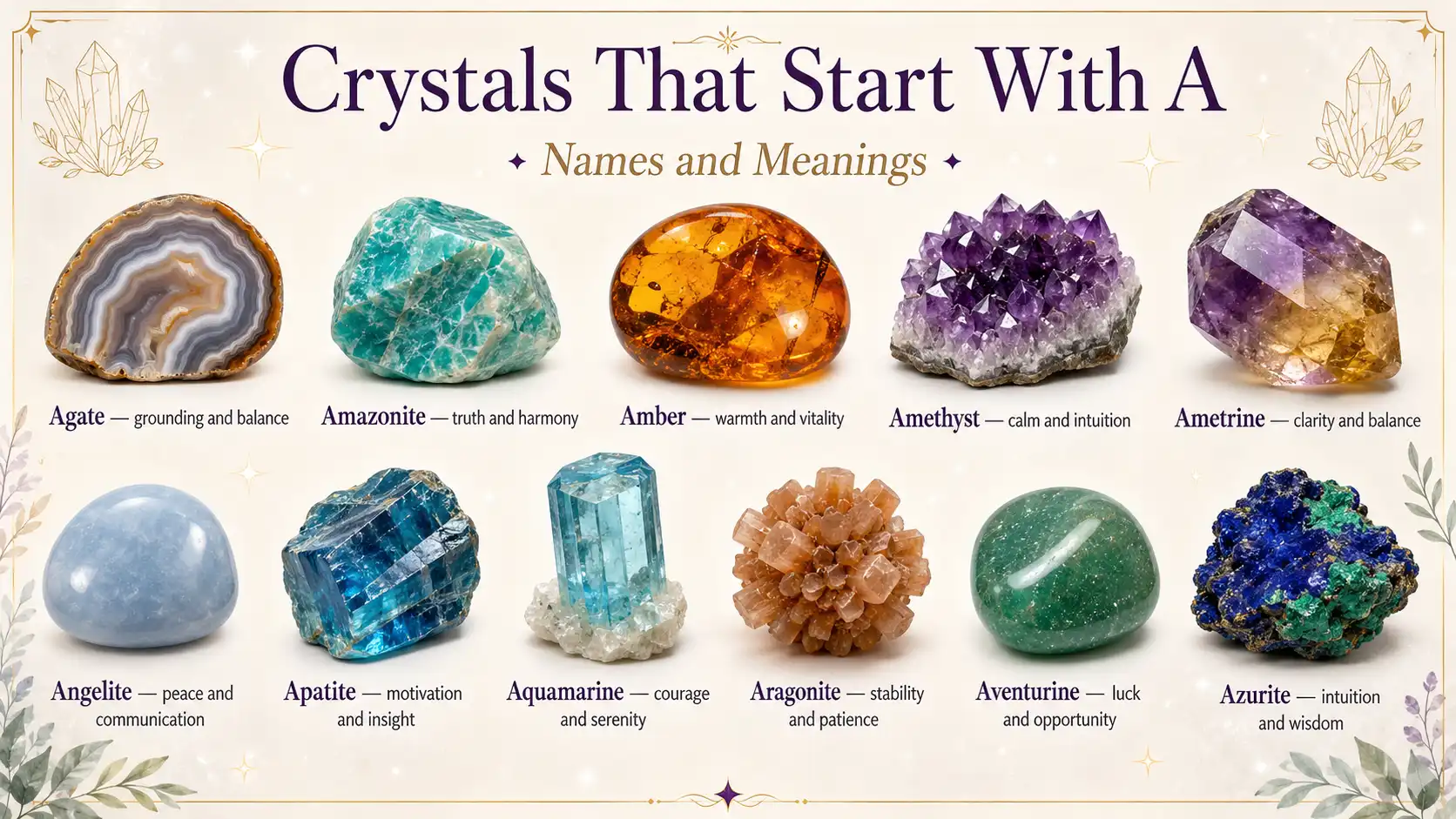
Crystals That Start With A: Names and Meanings
Crystals that start with A include agate, alexandrite, amazonite, amethyst, ametrine, angelite, apatite, apophyllite, aquamarine, aragonite, aventurine and azurite.
This alphabetical guide provides a concise introduction to each name, its appearance and its commonly associated symbolic meaning.
Some materials used in crystal communities—such as amber, ammolite and Apache tears—are not mineral crystals in the strict geological sense. They are included because they are widely collected, worn and discussed alongside crystals.
Crystal meanings are spiritual and cultural associations, not scientifically proven healing effects.
A Crystals at a Glance
| Crystal or material | Typical appearance | Common symbolic meaning |
|---|---|---|
| Agate | Banded, multicolored chalcedony | Stability and balance |
| Alexandrite | Green to red color-changing stone | Adaptability and transformation |
| Amazonite | Blue-green feldspar | Communication and personal boundaries |
| Amber | Golden fossilized tree resin | Warmth and preservation |
| Amethyst | Purple quartz | Calm and discernment |
| Ametrine | Purple and yellow quartz | Balance between reflection and action |
| Ammolite | Iridescent fossil shell material | Change and vitality |
| Andalusite | Brown, green or reddish crystal | Perspective and resilience |
| Angelite | Pale blue anhydrite | Peace and compassionate communication |
| Apache Tears | Rounded black obsidian | Grief, grounding and release |
| Apatite | Blue, green, yellow or violet | Motivation and clarity |
| Apophyllite | Clear, white, green or pink crystals | Reflection and openness |
| Aquamarine | Pale blue to blue-green beryl | Calm communication |
| Aragonite | White, brown or radiating clusters | Patience and structure |
| Astrophyllite | Bronze or golden bladed crystals | Self-acceptance and direction |
| Aventurine | Sparkling green or other-colored quartz | Opportunity and practical optimism |
| Azurite | Deep blue copper mineral | Insight and concentrated thought |
Agate
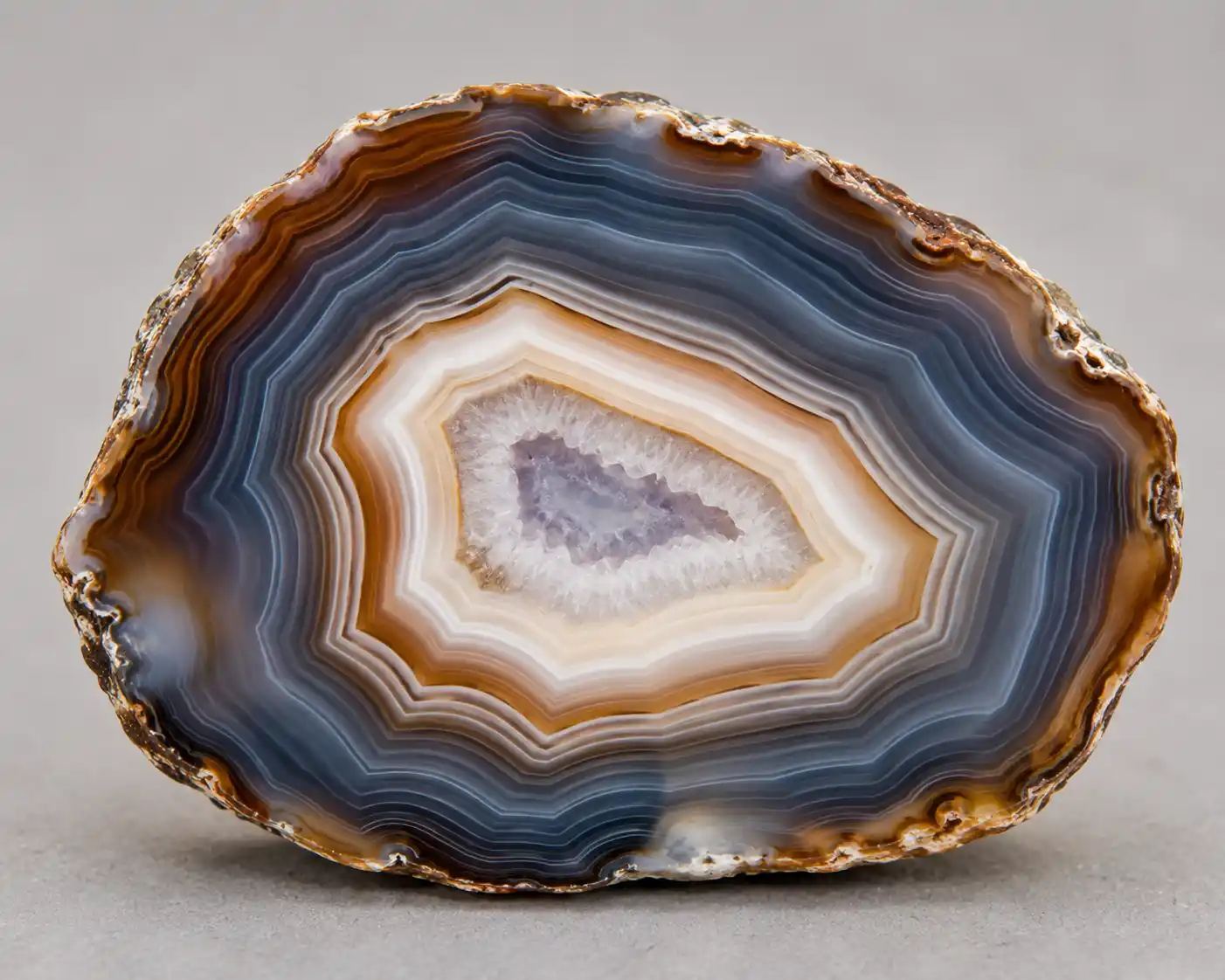
Agate is a variety of chalcedony known for bands, patterns and a wide range of colors.
Popular forms include:
- Blue lace agate.
- Moss agate.
- Dendritic agate.
- Fire agate.
- Botswana agate.
- Crazy lace agate.
Agate is commonly associated with stability, patience and emotional balance. Because there are many varieties, its appearance and specific symbolism can differ considerably.
Alexandrite
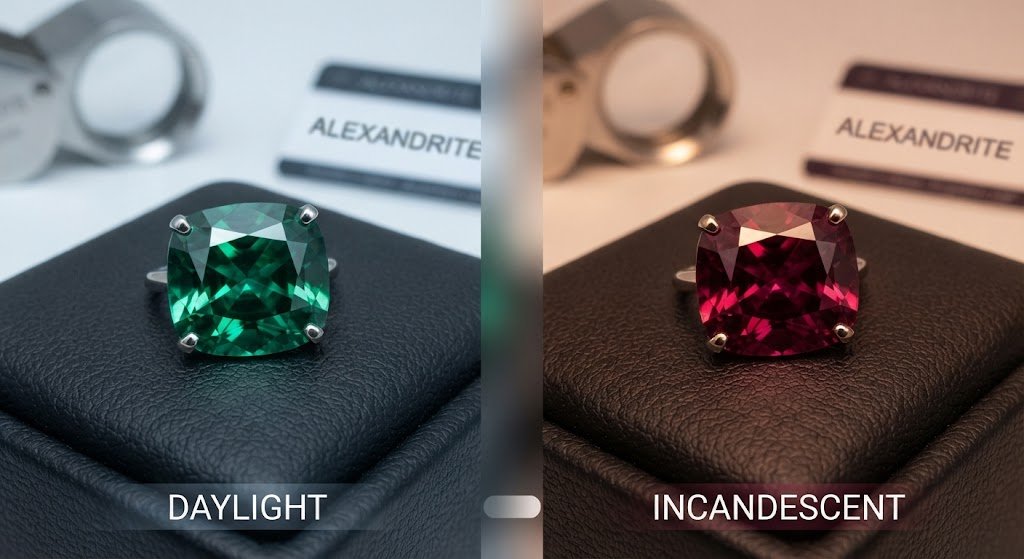
Alexandrite is a rare color-changing variety of chrysoberyl. Fine specimens may appear green in daylight and reddish under warmer artificial light.
Its symbolism centers on:
- Adaptability.
- Changing perspective.
- Resilience.
- Personal transformation.
Alexandrite is also used as a gemstone, so detailed value, rarity and buying considerations belong in its dedicated guides rather than this alphabetical directory.
Amazonite
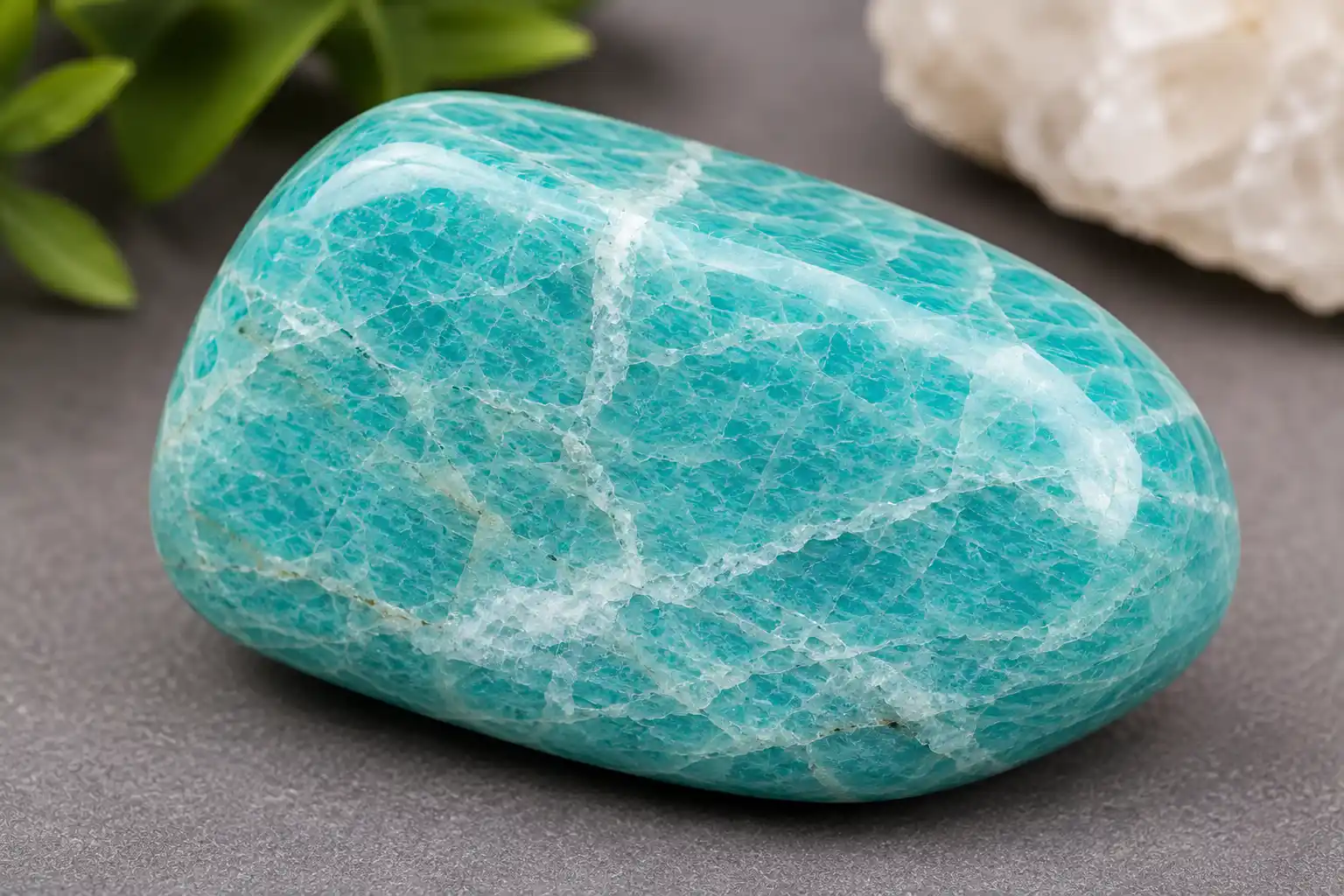
Amazonite is a blue-green variety of microcline feldspar.
It may appear:
- Pale green.
- Turquoise-blue.
- Blue-green with white streaks.
- Mottled or patterned.
Amazonite is traditionally associated with honest communication, personal boundaries and expressing needs calmly.
Amber
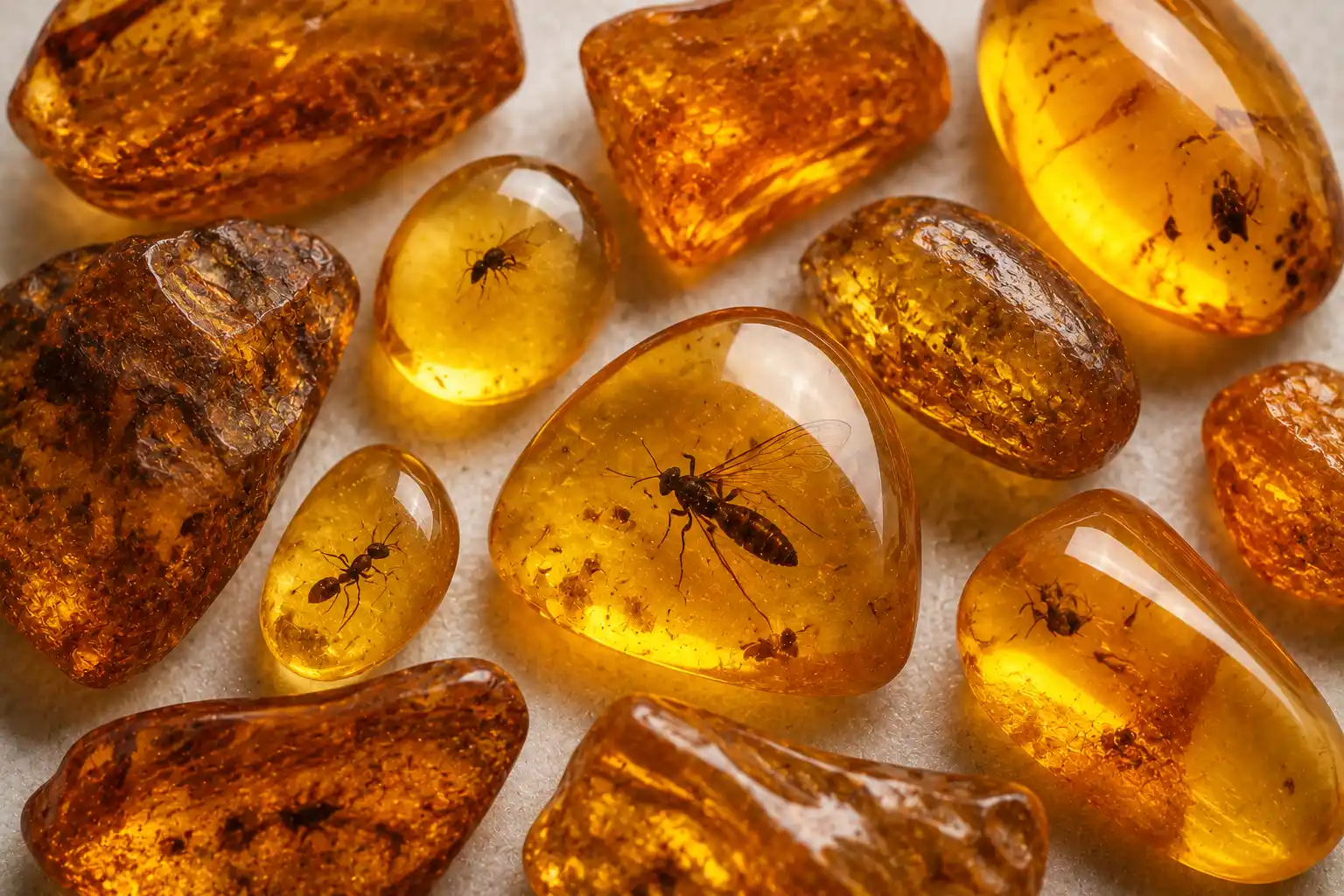
Amber is fossilized tree resin rather than a mineral crystal.
Its color commonly ranges from pale yellow to orange, brown and reddish tones. Some pieces contain visible plant material or insects.
Amber is symbolically associated with:
- Warmth.
- Memory.
- Preservation.
- Comfort.
- Connection with the natural world.
Because amber is relatively soft and sensitive to heat and chemicals, it requires gentler care than many mineral crystals.
Amethyst
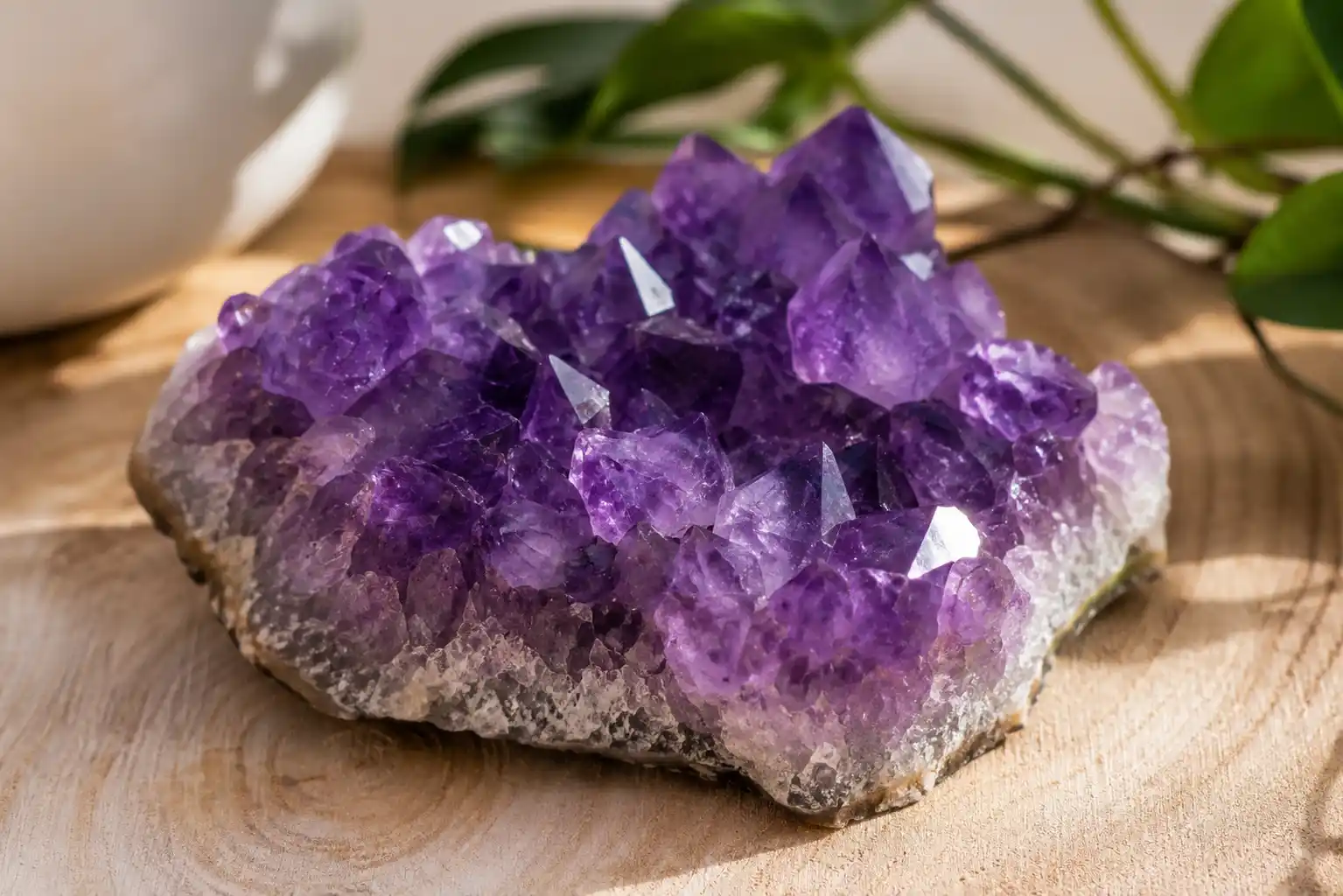
Amethyst is the purple variety of quartz and one of the most familiar crystals beginning with A.
Its color ranges from pale lavender to deep violet. It may occur as points, clusters, geodes, tumbled stones and faceted gems.
Amethyst is commonly associated with:
- Calm.
- Discernment.
- Reflection.
- Meditation.
- Moderating excessive habits.
Prolonged strong sunlight may fade some amethyst, so review the guide to crystals that fade in sunlight before choosing a display location.
Ametrine
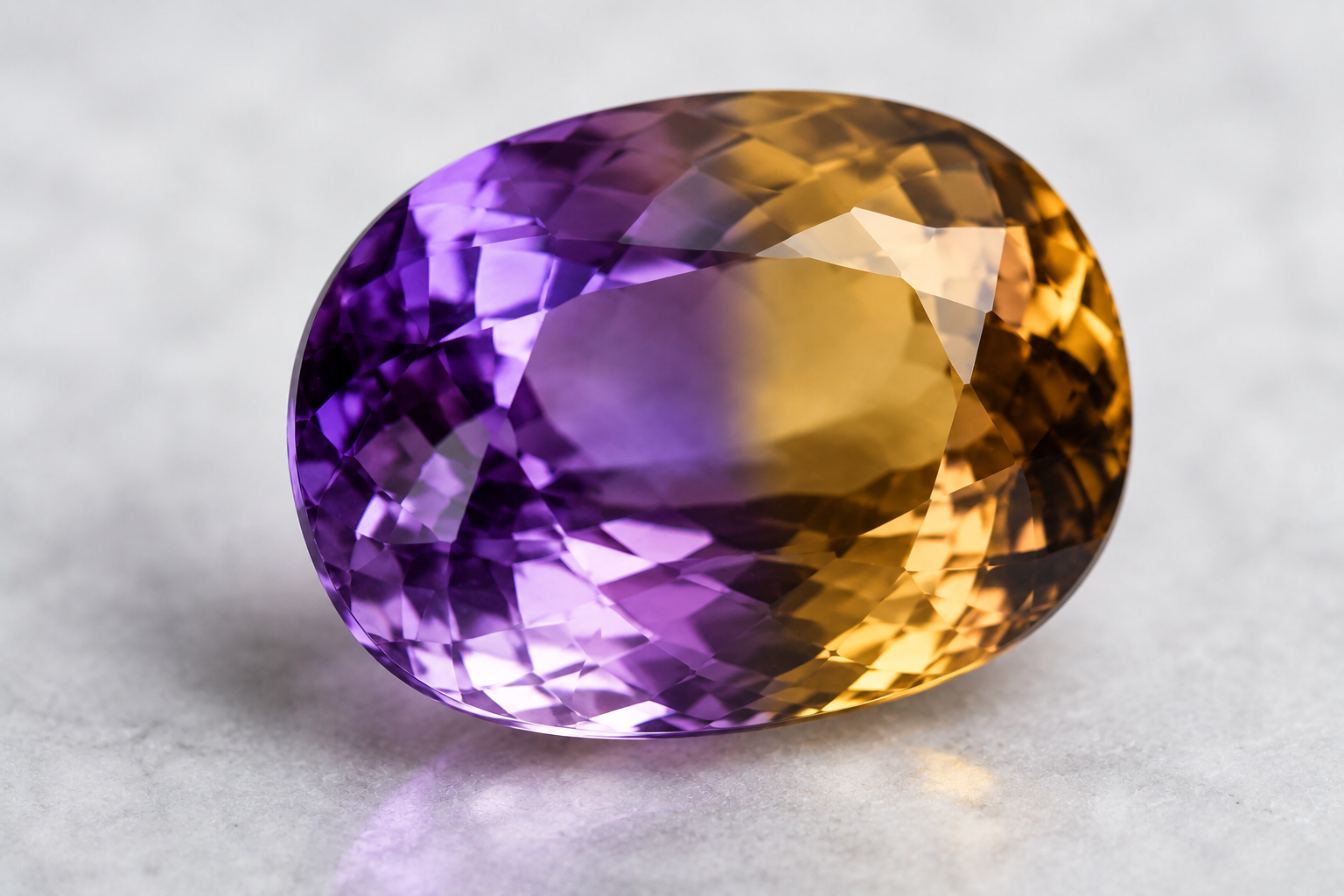
Ametrine is quartz that displays both purple amethyst and yellow-to-orange citrine coloring in the same stone.
Its contrasting colors support its popular symbolic meaning of balancing:
- Reflection and action.
- Calm and motivation.
- Analysis and creativity.
- Rest and productivity.
Natural ametrine is less common than ordinary amethyst, and some material on the market may be treated or synthetic.
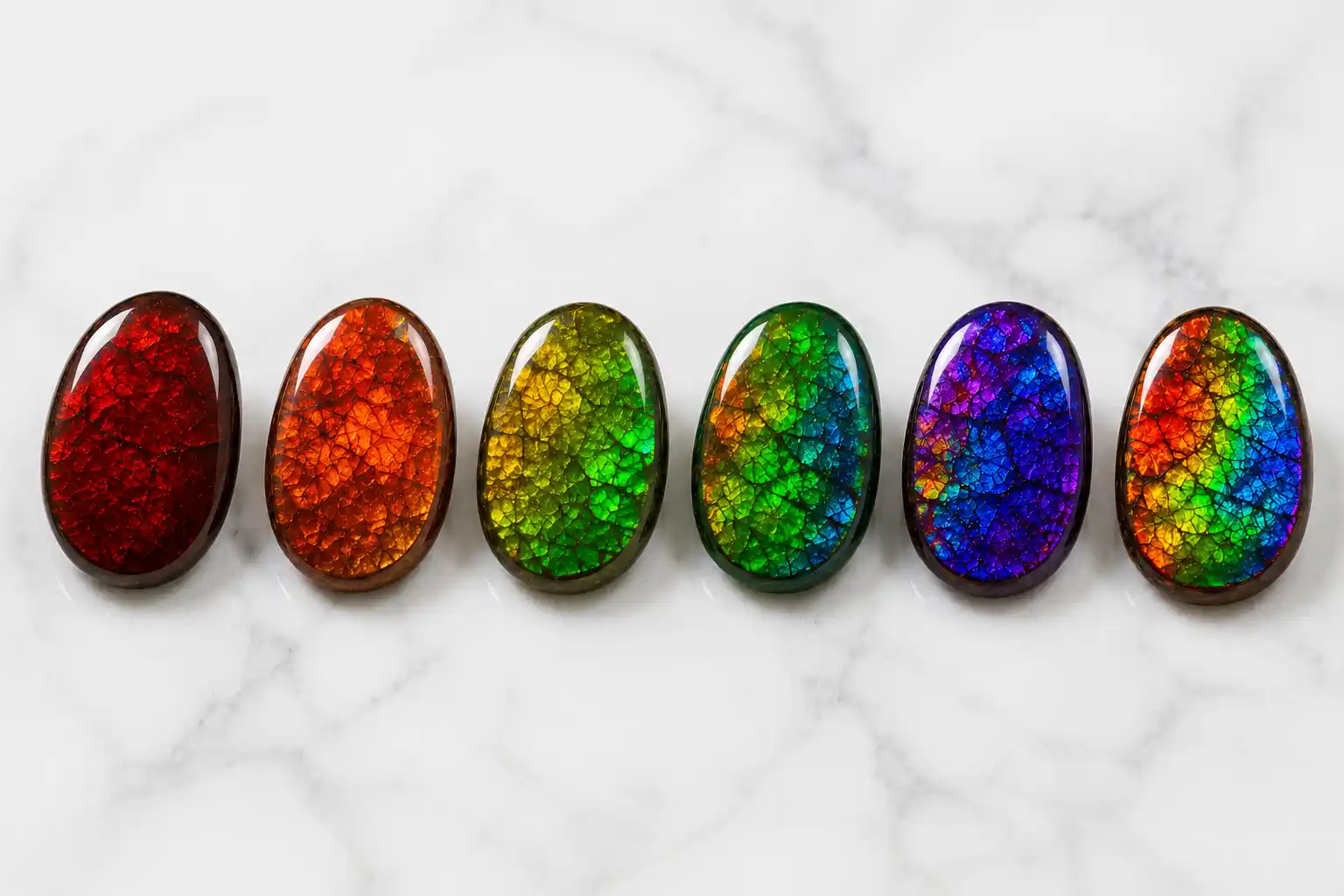
Ammolite
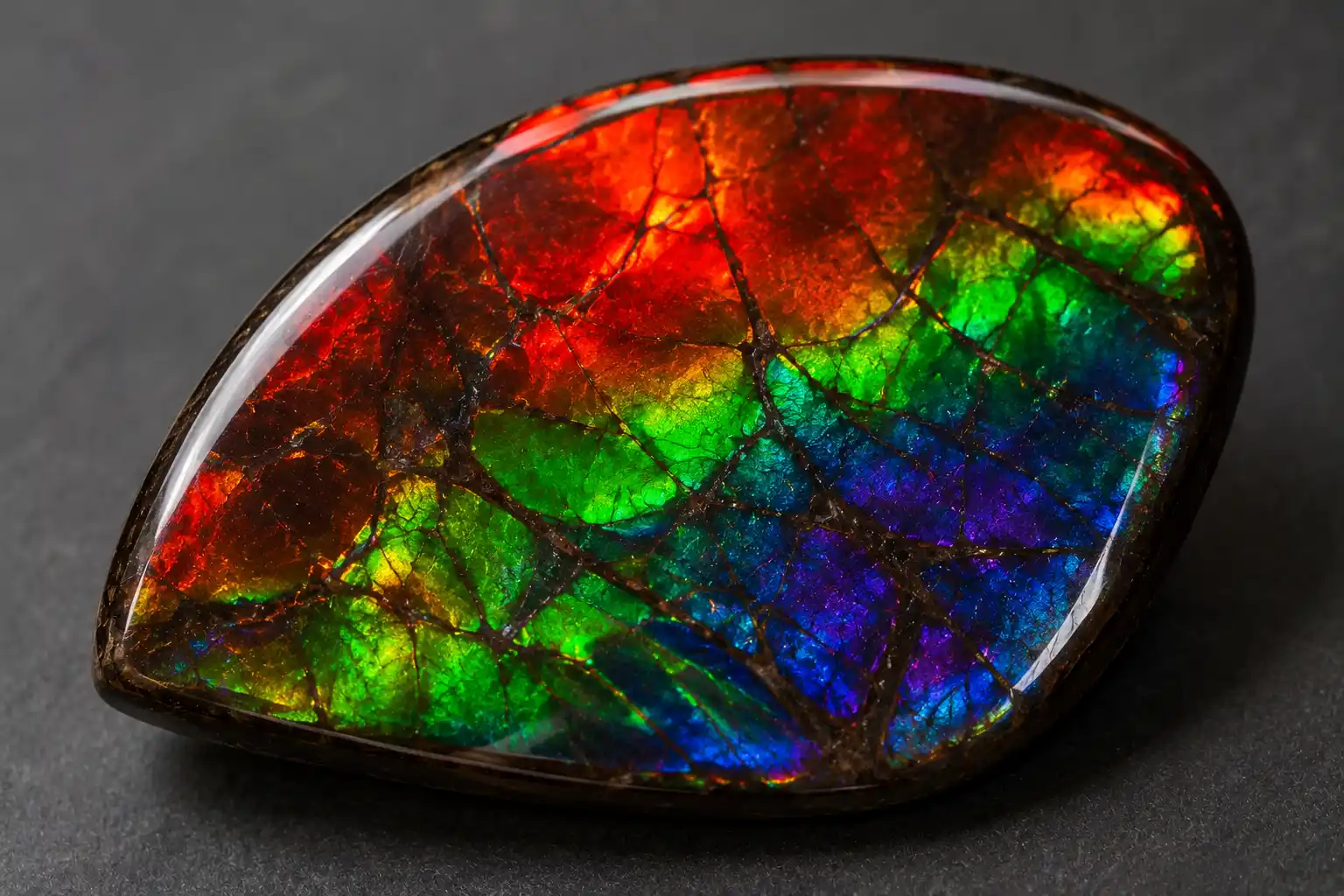
Ammolite is an iridescent gem material formed from fossil ammonite shells. It is organic in origin rather than a mineral crystal.
It may display flashes of:
- Red.
- Orange.
- Green.
- Blue.
- Purple.
Ammolite is commonly associated with transformation, vitality and appreciation of change. It can be delicate and is often stabilized or protected with a surface layer.
Andalusite
Andalusite is a mineral that may show several colors when viewed from different directions.
Common shades include:
- Brown.
- Olive green.
- Reddish brown.
- Golden tones.
Its symbolism often centers on perspective, resilience and the ability to understand more than one side of a situation.
Angelite
Angelite is the trade name commonly used for pale blue anhydrite.
It is usually opaque and may show white patches or soft gray-blue variations.
Angelite is traditionally associated with:
- Peace.
- Compassionate communication.
- Emotional gentleness.
- Spiritual reflection.
It is relatively soft and should not be routinely soaked in water. Use a dry care method when uncertain.
Apache Tears
Apache Tears are rounded nodules of black or dark brown obsidian.
Obsidian is natural volcanic glass rather than a mineral crystal.
Apache Tears are commonly associated with:
- Grief.
- Emotional release.
- Grounding.
- Resilience after loss.
The traditional name is connected with a cultural story, so it should be used respectfully rather than reduced to a marketing label.
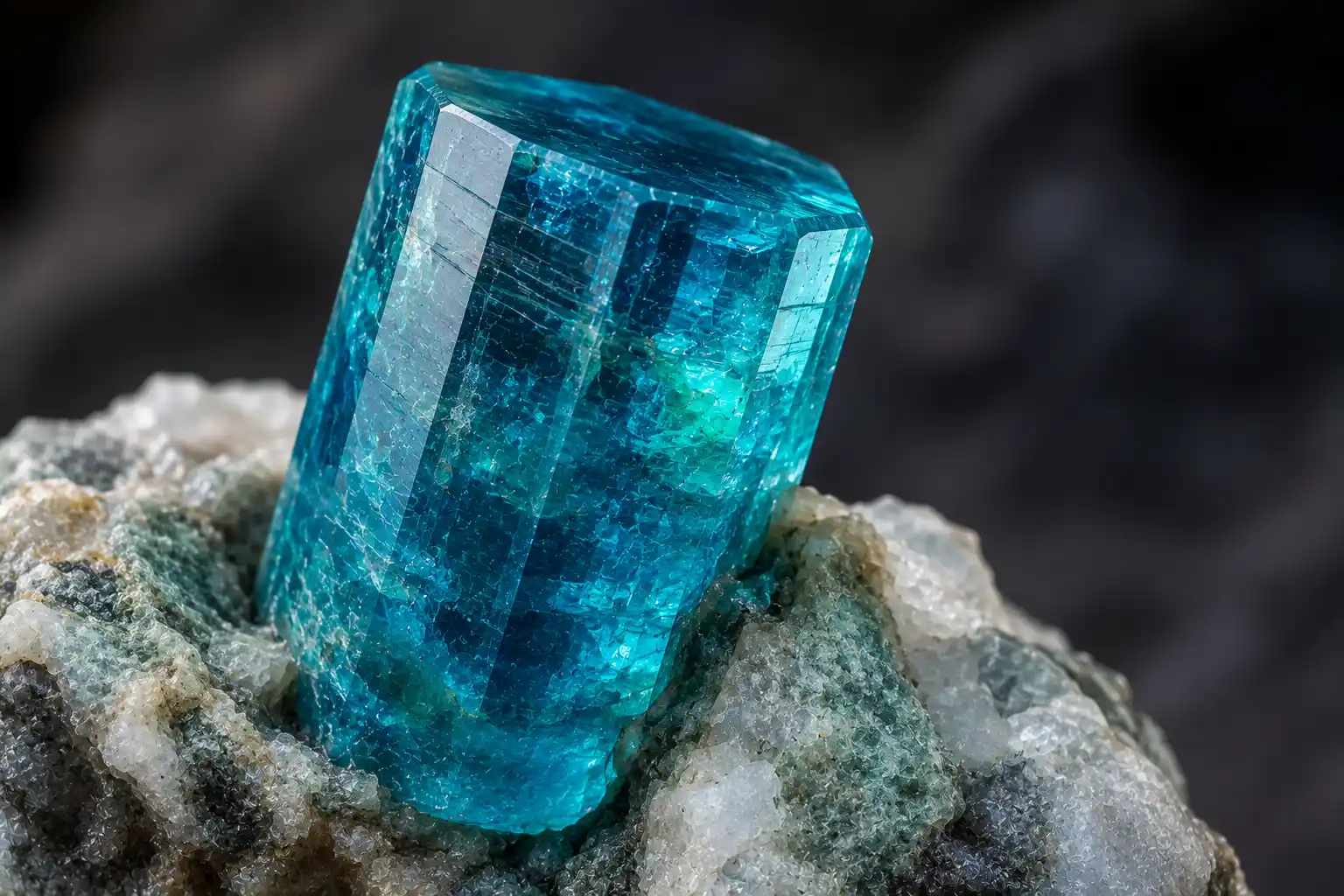
Apatite
Apatite occurs in several colors, including blue, green, yellow and violet.
Blue apatite is especially common in crystal collections, although apatite is softer than many popular jewelry stones and can scratch or chip.
Its popular symbolic meanings include:
- Motivation.
- Clear goals.
- Learning.
- Communication.
- Turning ideas into action.
Apatite should be stored separately from harder quartz-family stones.
Apophyllite
Apophyllite commonly forms clear or white glassy crystals, although green and pink varieties also occur.
It is popular as a mineral specimen because of its reflective surfaces and distinctive crystal formations.
Apophyllite is commonly associated with:
- Openness.
- Self-reflection.
- Mental clarity.
- Creating space for observation.
Natural clusters can be fragile and are better suited to stable display than loose carrying.
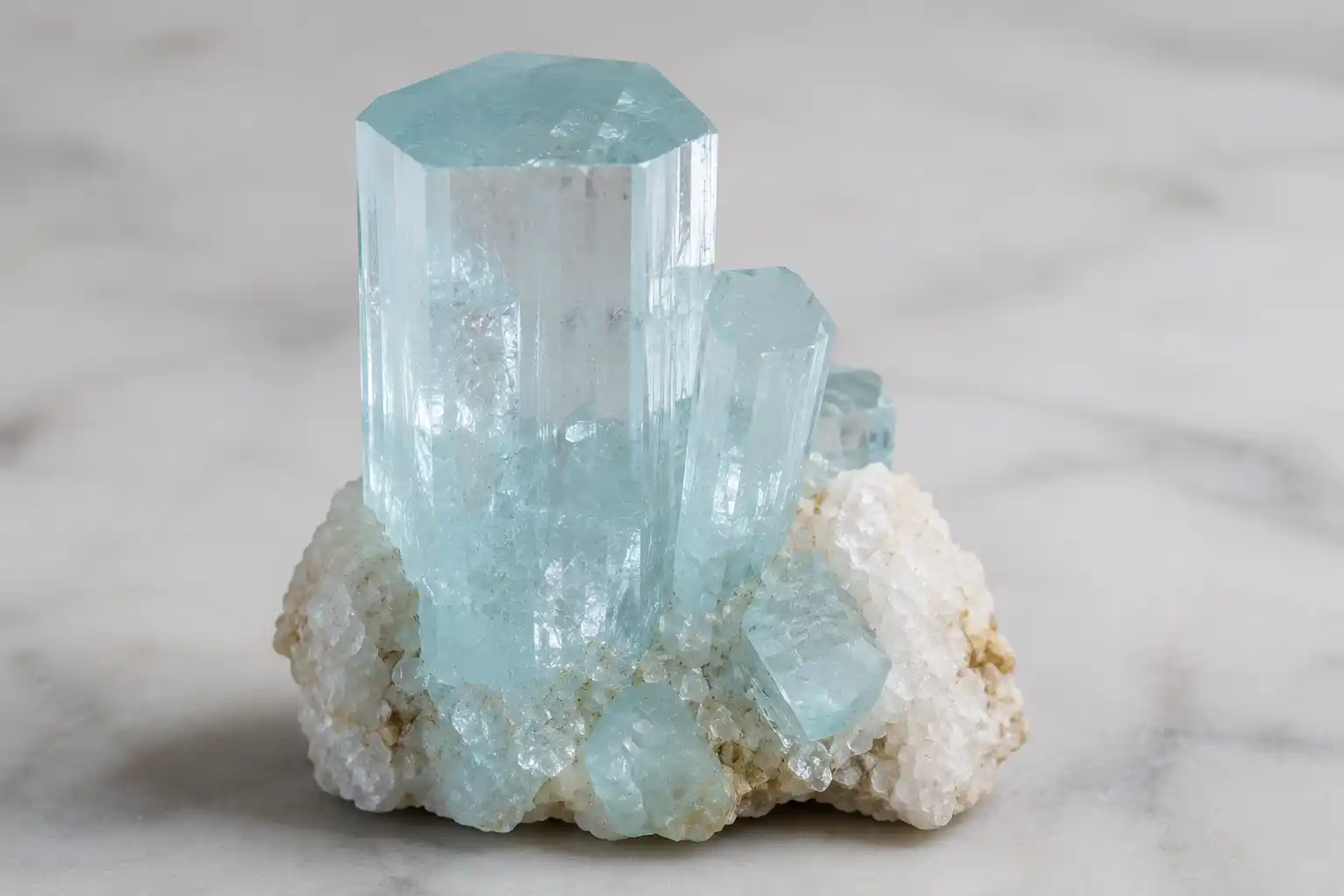
Aquamarine
Aquamarine is the blue to blue-green variety of beryl.
Its name refers to seawater, and its symbolism commonly includes:
- Calm communication.
- Courage.
- Emotional clarity.
- Travel.
- Composure under pressure.
Aquamarine is also a traditional March birthstone and an important jewelry gemstone. This page covers only its place in the A-crystal directory, leaving pricing and buying intent to its dedicated guides.
Aragonite
Aragonite may form radiating clusters, branching shapes or compact specimens.
Its colors include:
- White.
- Brown.
- Orange.
- Yellow.
- Blue.
Aragonite is commonly associated with patience, organization and creating stability during demanding periods.
It is softer and more sensitive than quartz, so avoid storing it loose with harder stones.
Astrophyllite
Astrophyllite is known for bronze, coppery or golden blade-like crystals, often set within a lighter or darker matrix.
Its symbolic meanings often include:
- Self-acceptance.
- Recognizing personal strengths.
- Direction.
- Integrating difficult experiences.
Because it commonly occurs as a mixed mineral specimen, its durability and care needs can vary.
Aventurine
Aventurine is a form of quartz known for a glittering effect caused by mineral inclusions.
Green is the most familiar variety, but aventurine may also occur in:
- Blue.
- Orange.
- Red.
- Brown.
- Gray.
It is traditionally associated with opportunity, practical optimism and willingness to try a new approach.
Its “luck” symbolism should not be treated as a guarantee of gambling, financial or relationship outcomes.
Azurite
Azurite is a deep blue copper mineral that may occur alone or together with green malachite.
It is commonly associated with:
- Insight.
- Focus.
- Examining assumptions.
- Concentrated thought.
- Intuition.
Azurite is softer than quartz and can be sensitive to moisture, heat and chemicals. Avoid using it in drinking-water preparations.
Other Crystal Names Beginning With A
Additional mineral and crystal names beginning with A include:
- Actinolite.
- Adamite.
- Aegirine.
- Afghanite.
- Albite.
- Almandine.
- Alunite.
- Analcime.
- Anatase.
- Anhydrite.
- Anorthite.
- Arfvedsonite.
- Augelite.
- Axinite.
- Abalone Shell.
Some are primarily collected as mineral specimens rather than used as common tumbled crystals or jewelry stones.
Crystals vs. Gemstones Beginning With A
The terms crystal and gemstone overlap, but they do not have identical search intent.
This page focuses on materials discussed in crystal collections, spiritual practices and mineral displays.
The separate Gemstones That Start With A directory should focus more heavily on:
- Jewelry use.
- Durability.
- Cutting.
- Rarity.
- Gem quality.
- Buying and value.
Keeping those purposes separate prevents the two alphabetical directories from repeating the same article.
For the broader beginner collection, visit the Crystals 101 category.
How to Choose an A Crystal
Choose according to practical use rather than the first meaning that sounds appealing.
For a Durable Everyday Stone
Consider agate, amethyst, amazonite or aventurine, while still protecting the stone from impact and inappropriate cleaning.
For a Mineral Display
Apophyllite, aragonite, azurite and astrophyllite offer distinctive formations or colors but may require more careful handling.
For Jewelry
Aquamarine, alexandrite, amethyst and andalusite are commonly used as gems, although suitability depends on quality, setting and wear conditions.
For Symbolic Reflection
Choose the meaning that connects with a real action.
For example:
- Amazonite: prepare for an honest conversation.
- Amethyst: create a calmer evening routine.
- Apatite: define the next step toward a goal.
- Aventurine: test a manageable opportunity.
- Azurite: review whether your conclusion is supported.
The guide to choosing the right crystal provides a broader decision framework.
Frequently Asked Questions
What is the most popular crystal that starts with A?
Amethyst is among the most widely recognized A crystals because of its purple color, availability and long history as a gemstone.
Which green crystals start with A?
Amazonite, aventurine, alexandrite and some apatite or andalusite specimens may appear green.
Which blue crystals start with A?
Aquamarine, amazonite, angelite, blue apatite and azurite are notable blue materials beginning with A.
Which purple crystals start with A?
Amethyst and ametrine are the best-known purple examples. Some apatite may also occur in violet tones.
Is amber a crystal?
No. Amber is fossilized tree resin, but it is commonly included in crystal and gemstone collections.
Are Apache Tears crystals?
Apache Tears are naturally rounded forms of obsidian, which is volcanic glass rather than a mineral crystal.
Which A crystal is best?
There is no universally best option. Choose according to appearance, authenticity, durability, care requirements and intended use.
Final Summary
Crystals that start with A range from familiar quartz varieties such as amethyst and ametrine to feldspars, copper minerals, fossil materials and volcanic glass.
Some of the best-known names are:
- Agate.
- Alexandrite.
- Amazonite.
- Amber.
- Amethyst.
- Ametrine.
- Angelite.
- Apatite.
- Apophyllite.
- Aquamarine.
- Aragonite.
- Aventurine.
- Azurite.
Use this page as an alphabetical directory. Follow the individual crystal links for complete meanings, properties and care guidance rather than relying on a one-line symbolic definition.