How to Clean Malachite Jewelry Safely
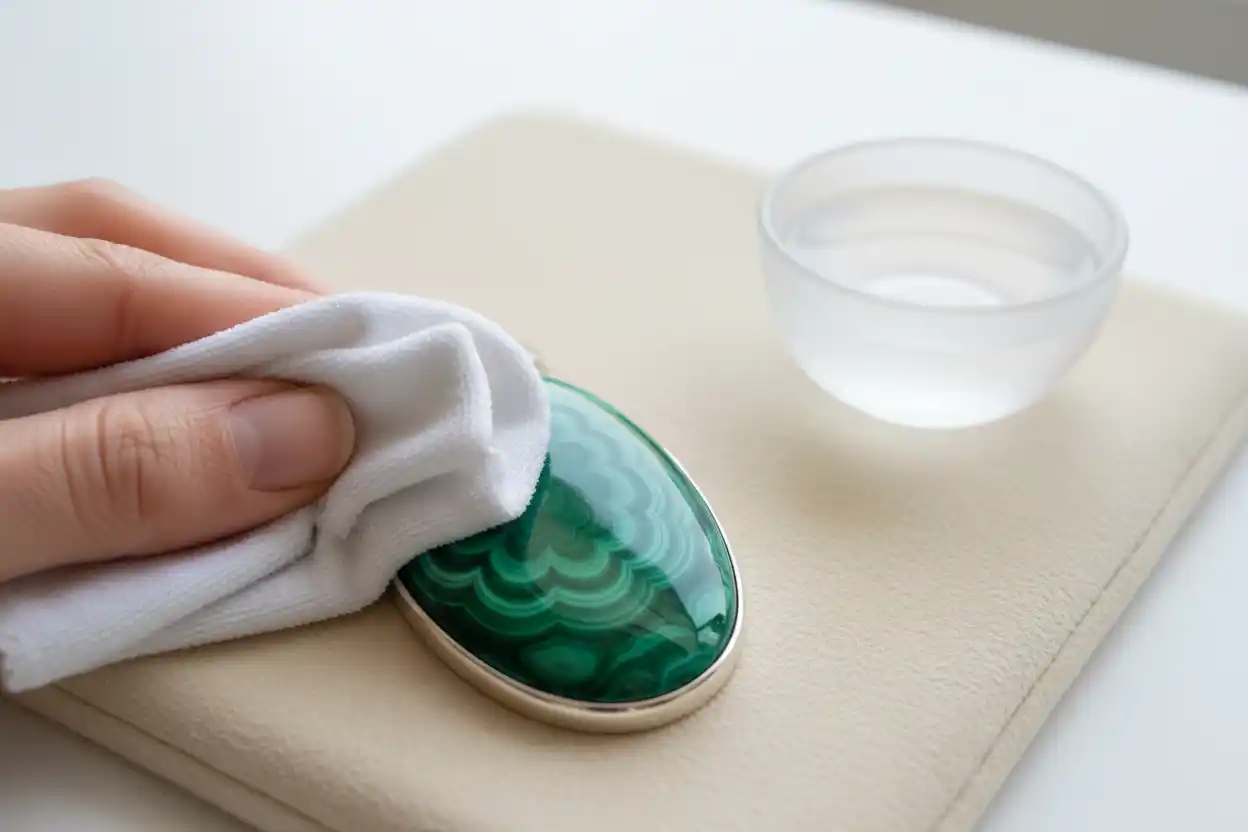
Malachite jewelry should be cleaned with a soft dry or barely damp cloth. When additional cleaning is necessary, use a small amount of mild soap and warm water briefly, then remove the soap and dry the piece immediately.
Never soak malachite or use ultrasound, steam, ammonia, vinegar, lemon juice, metal dips, abrasives, or solvent-based cleaners. Malachite is soft, cleavage-sensitive, chemically reactive, and frequently waxed, impregnated, coated, glued, or assembled.
Why Malachite Needs Minimal Cleaning
Malachite is a green copper carbonate hydroxide mineral known for concentric bands, curved patterns, eyes, stripes, and chatoyant fibrous structures.
Its geology, patterning, history, and symbolism belong to the broader Malachite meaning guide. This page is limited to physical care and jewelry safety.
Malachite ranks approximately 3.5 to 4 on the Mohs scale. It has perfect cleavage in one direction, fair cleavage in another, and may occur as fibrous or layered aggregates.
| Property | Cleaning implication |
|---|---|
| Composition | Copper carbonate hydroxide |
| Mohs hardness | Approximately 3.5 to 4 |
| Cleavage | Perfect in one direction and fair in another |
| Transparency | Commonly opaque |
| Safest routine method | Soft dry or barely damp cloth |
| Deeper cleaning | Brief mild-soap wiping after a hidden-area test |
| Ultrasonic cleaning | Never recommended |
| Steam cleaning | Never recommended |
| Main risks | Scratching, acids, ammonia, soaking, coatings, glue, and dust |
The gemstone hardness chart explains why common dust and many household surfaces can scratch malachite.
Its softness does not mean every piece breaks easily, but the rock-like aggregates, fractures, cleavage, and mounting must be considered. These distinctions are developed in Gemstone Toughness vs Hardness and Gemstone Cleavage Explained.
Inspect the Malachite Before Cleaning
Examine the jewel under bright, indirect light.
Look for cracks, chips, dull patches, peeling coatings, exposed filler, loose bezels, cloudy glue, damaged drill holes, worn stringing, and missing inlay sections.
Natural color bands should flow through or around the shape in coherent patterns. Surface-painted lines, abrupt peeling, or color transfer may indicate imitation or unstable treatment.
Do not wet a cracked, antique, inlaid, or visibly unstable piece. Use dry cleaning and seek specialist advice.
Check for Wax, Resin, Dye, and Assembly
Malachite may be waxed to improve its polish, impregnated with resin, stabilized, dyed, coated, backed, glued, reconstructed, or assembled from small pieces.
These modifications can affect both value and cleaning. Solvents may remove wax or attack resin, while heat may soften adhesive or expose seams.
The complete treatment workflow belongs to How to Spot Treated or Synthetic Malachite and Gemstone Treatments Explained.
When treatment is unknown, begin with a dry cloth. Test moisture on a small concealed area before cleaning the visible surface.
Start with Dry Cleaning
Use a clean microfiber or soft cotton cloth to remove fingerprints, dust, and fresh skin oils.
Wipe lightly rather than polishing aggressively. Repeated pressure can dull the finish or wear raised details.
A soft makeup brush can lift dust from carvings, bead holes, bezel edges, and recessed patterns.
Do not blow compressed air directly into a delicate inlay. The force may loosen small sections or drive debris deeper beneath an edge.
Use Minimal Warm Soapy Water
When dry wiping is not enough, mix a few drops of mild liquid soap with warm—not hot—water.
Dampen a soft cloth and wring it out thoroughly. The cloth should be moist rather than dripping.
Wipe a small area first. Stop if green color transfers, the polish changes, or the surface becomes tacky.
Clean the rest of the stone briefly, then remove soap with a second cloth dampened in plain water.
Blot the jewel dry immediately and allow hidden moisture to evaporate at room temperature.
Do Not Soak Malachite
Long exposure to water can damage malachite and its surface treatment.
Moisture may enter fractures, drill holes, backing seams, stringing, glue, wax, or resin. Repeated soaking can also contribute to a dull or uneven appearance.
Brief controlled wiping is different from placing the jewel in a bowl for several minutes or leaving it immersed overnight.
The broader tracker guide to crystals in water should not be read as permission to soak malachite jewelry.
Never Use an Ultrasonic Cleaner
Malachite should never go into an ultrasonic cleaner.
Vibration may damage fractures, cleavage planes, fibrous areas, glue, inlay, coatings, and repairs. The cleaning solution may also contain ammonia or other ingredients that dull soft ornamental stones.
The wider machine-safety boundaries appear in Which Gemstones Can Go in an Ultrasonic Cleaner?.
Never Steam Clean Malachite
Steam introduces high heat, pressure, and rapid temperature change.
These conditions can damage wax, resin, glue, coatings, filler, and the malachite surface itself.
Warm damp wiping is sufficient for routine care and creates far less risk.
Never Use Ammonia
Ammonia can damage the polish of malachite.
Avoid household glass cleaners, ammonia-based jewelry solutions, and ultrasonic fluids containing ammonia.
A cleaner marketed for diamond, sapphire, or gold may be unsuitable for malachite even when the metal setting is compatible.
Always choose the method required by the most vulnerable component in the jewel.
Avoid Vinegar, Lemon Juice, and Acids
Malachite is a carbonate mineral and reacts with acids.
Vinegar, lemon juice, descaling products, acidic bathroom cleaners, and metal dips may etch the surface, remove polish, or alter the color.
Do not use acid bubbling as an authenticity test. The reaction damages real malachite and provides no benefit to the owner.
Clean tarnished metal around the stone locally or ask a jeweler to separate the cleaning processes.
Cleaning Malachite Earrings
Malachite earrings usually face limited impact but collect cosmetics, hairspray, and skin oils.
Wipe the malachite separately from posts, hooks, backs, hinges, and clips.
Alcohol-based disinfectant may be applied to compatible metal fittings, but it should not touch the malachite, wax, resin, coating, or glue.
Avoid immersing earrings with glued cabochons or inlay.
Cleaning a Malachite Necklace
A Malachite necklace or pendant may contain beads, slabs, cabochons, carvings, wire, knots, silk, elastic, or glue.
Lay bead strands flat and wipe one bead at a time. Do not soak the necklace or allow wet thread to stretch.
Prevent beads from rubbing against one another because trapped grit can scratch the polish.
When the cord becomes frayed or permanently soiled, professional restringing is safer than repeated washing.
Cleaning Malachite Rings and Bracelets
The tracker does not assign separate malachite ring and bracelet pages, but these jewelry formats require especially careful handling.
Rings and bracelets experience desk contact, impacts, soap, sanitizer, and household chemicals. Remove them before washing dishes, exercise, gardening, cleaning, swimming, and bathing.
A protective bezel can reduce edge damage, although water and residue may collect around the mounting.
Wipe elastic or corded bracelets instead of immersing them.
Malachite Dust and Handling Safety
Polished, intact malachite jewelry can be handled normally. The principal avoidable concern arises when the material is ground, drilled, sanded, cut, or polished and creates copper-bearing dust.
Do not resize beads, sand scratches, drill holes, or polish malachite at home without appropriate lapidary controls.
Wash your hands after handling rough, dusty, broken, or powdered material. Keep fragments away from children, pets, food, and drinking water.
The broader risk distinctions belong to the tracker’s Toxic Crystals safety list.
This does not mean that wearing a sound polished cabochon is inherently dangerous. It means that decorative jewelry and airborne mineral dust are different exposure situations.
Malachite and Azurite
Malachite commonly occurs with the blue copper carbonate mineral azurite. Mixed material may be sold as azurmalachite.
The complete comparison belongs to Malachite vs Azurite, while the blue mineral’s properties appear in the Azurite guide.
Both materials require conservative cleaning. Mixed pieces should be treated according to the most delicate area, treatment, and setting component.
The broader mineral context appears in the Copper guide.
Imitations and Patterned Composites
Resin, polymer clay, glass, reconstituted powder, dyed stone, printed surfaces, and assembled strips can imitate malachite’s banding.
The full authenticity workflow belongs to Real vs Fake Malachite.
Do not use scratches, hot needles, solvents, acid, or fire to test a mounted jewel. Those methods can permanently damage both natural and manufactured materials.
Buying and Value Considerations
The Malachite buying guide covers pattern, color, polish, cut, treatment, assembly, and seller disclosure.
Market factors belong to the Malachite price guide.
For carved, historic, or unusually valuable pieces, a laboratory or specialist may help identify the material and detect certain treatments. The gemstone certification guide explains what gem reports can establish.
Physical Cleaning Versus Cleansing
Physical cleaning removes dust, oils, cosmetics, and setting residue.
Traditional practices belong to How to Cleanse and Charge Malachite. Any symbolic method should still avoid saltwater, soaking, acids, direct heat, and abrasive contact.
Frequently Asked Questions
1. What is the safest way to clean malachite?
Begin with a soft dry cloth. When necessary, use a barely damp cloth with a small amount of mild soap and dry the stone immediately.
2. Can malachite get wet?
Brief damp wiping may be acceptable, but malachite should not be soaked.
3. Can malachite go in an ultrasonic cleaner?
No. Ultrasound may damage the stone, polish, fractures, coatings, glue, or inlay.
4. Can malachite be steam cleaned?
No. Heat and pressure can damage the surface and its treatments.
5. Can vinegar clean malachite?
No. Malachite is a carbonate mineral that reacts with acids.
6. Is ammonia safe for malachite?
No. Ammonia can damage its polish.
7. Can toothpaste polish malachite?
No. Toothpaste is abrasive and can scratch or dull the surface.
8. Is polished malachite safe to wear?
Sound polished jewelry can be handled normally. Avoid grinding, drilling, sanding, or creating mineral dust at home.
9. Why does green color come off on the cloth?
The piece may be dyed, coated, reconstructed, or otherwise unstable. Stop cleaning immediately.
10. Can silver dip be used on a malachite pendant?
No. Many metal dips contain chemicals that may etch malachite or damage its treatments.
11. How often should malachite jewelry be cleaned?
Wipe it after wear and use damp cleaning only when visible residue remains.
12. When should malachite receive professional care?
Professional care is appropriate for cracks, damaged coatings, unstable dye, loose inlay, antique pieces, deep scratches, or severe metal tarnish.
Conclusion
Malachite’s dramatic green bands come from a soft copper carbonate mineral that responds poorly to aggressive cleaning. Dry or minimally damp care preserves the polish without exposing the stone to water, ammonia, acids, heat, or vibration. When the surface looks patchy or color transfers, stop—the problem is likely treatment or finish stability rather than ordinary dirt.