How to Clean Amethyst Jewelry Safely
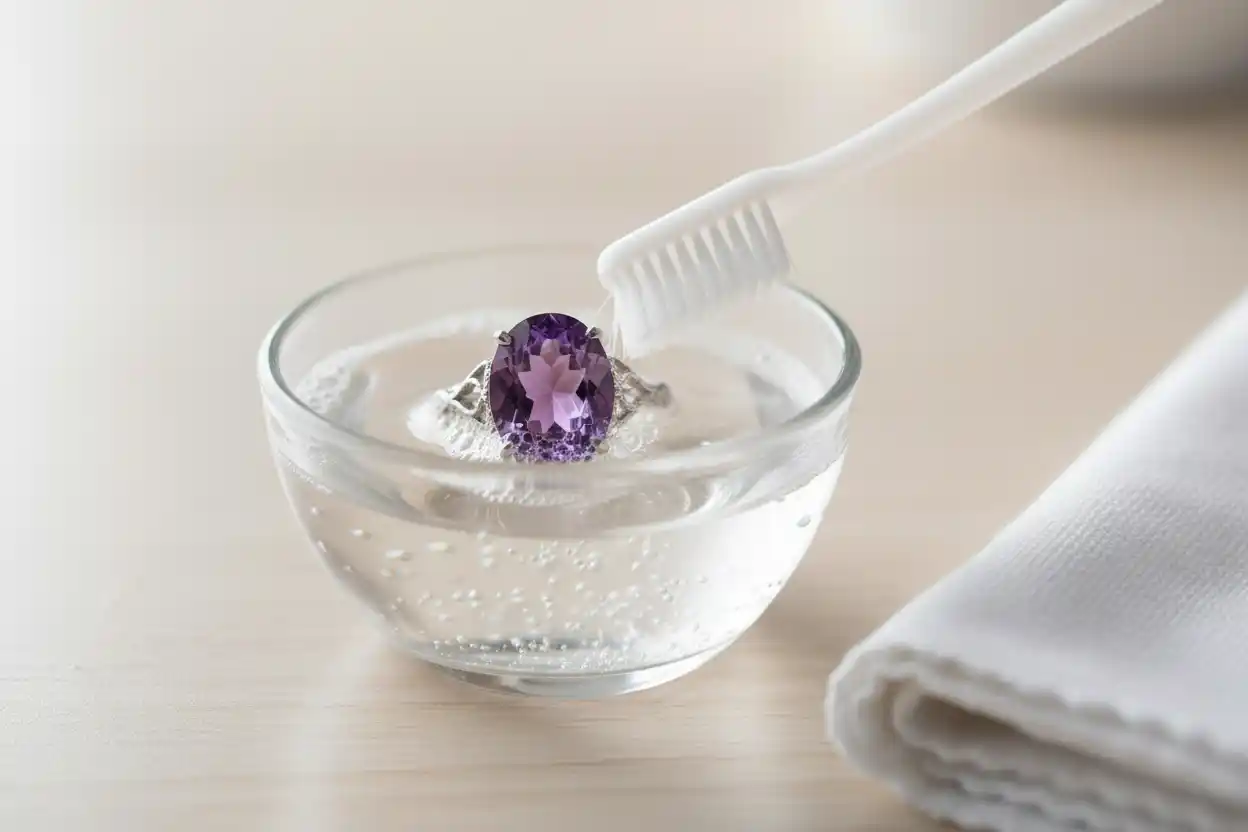
Warm soapy water and a soft brush provide the safest routine for amethyst jewelry. The gem is durable enough for rings, earrings, pendants, and bracelets, but it should still be protected from steam, abrupt temperature changes, abrasive products, and prolonged intense light.
Amethyst often looks dull because skin oils and soap collect beneath its facets. Gentle cleaning restores light return without changing the stone itself. If cloudiness remains after the residue has gone, the cause may be surface wear, internal inclusions, a treatment, or damage to the polish.
Why Amethyst Is Durable but Not Heatproof
Amethyst is the purple variety of quartz. Its broader mineral and symbolic context appears in the Amethyst meaning guide, while banded material has its own page on Chevron Amethyst.
With a Mohs hardness of 7 and good toughness, amethyst handles normal jewelry wear reasonably well. However, quartz can still become scratched by harder gems and can fracture when subjected to abrupt temperature changes. The practical differences are explained in the gemstone hardness chart and the guide to gemstone toughness versus hardness.
| Property | Cleaning implication |
|---|---|
| Mineral species | Quartz |
| Mohs hardness | 7 |
| Toughness | Good |
| Thermal stability | Avoid high heat and abrupt temperature changes |
| Light stability | Some material may fade after prolonged intense exposure |
| Safest cleaning method | Warm soapy water and a soft brush |
| Ultrasonic cleaning | Usually safe unless dyed, filled, fractured, or insecurely mounted |
| Steam cleaning | Not recommended |
Quartz dust occurs widely in the environment, so contact with gritty dust or sand can abrade an amethyst surface over time. Rinsing away particles before rubbing the stone helps prevent fine scratches.
Supplies for Safe Amethyst Cleaning
Prepare a small bowl of lukewarm water, mild liquid dish soap, a second bowl of clean water, a soft toothbrush or jewelry brush, and a lint-free cloth.
Do not use boiling water or water that feels distinctly hot. A rapid shift from hot cleaning solution to a cold rinse can create thermal stress.
Choose soap without bleach, abrasive particles, strong alkaline ingredients, or heavy moisturizers. More foam does not produce a cleaner gemstone; a few drops are sufficient.
Inspect the Stone and Setting
Before washing, check the amethyst for chips, prominent fractures, surface-reaching inclusions, loose prongs, damaged bezels, or missing accent stones. Gently test the setting without twisting or pulling the gem.
Treatment history also matters. Amethyst is not routinely subjected to the same widespread clarity enhancement seen in some gems, but dyed or fracture-filled examples do occur. The dedicated guide to treated or synthetic amethyst owns the identification and disclosure detail.
A damaged or loose piece should go to a jeweler before cleaning. Brushing and vibration can dislodge a stone that is already unstable.
Wash the Amethyst with Mild Soap
Place the jewelry in the lukewarm solution or hold it securely over the bowl. Allow the water to loosen oils, then brush gently around the stone and setting.
For a faceted amethyst, clean beneath the pavilion whenever the mounting provides access. Residue on the back of the stone reduces brightness far more than a small amount of dust on the crown.
Use short, light brush strokes around prongs and openwork. Do not force bristles beneath metal or scrub an inclusion that reaches the surface.
A brief cleaning is normally sufficient. Extended soaking is unnecessary and may be unsuitable for jewelry containing glue, string, pearls, enamel, filled fractures, or other vulnerable components.
Rinse and Dry Carefully
Rinse in the second bowl of clean lukewarm water rather than beneath an open drain. Keep the rinse temperature close to the wash temperature.
Blot the piece with a lint-free cloth. Allow moisture behind the setting to evaporate naturally at room temperature. Do not use a hair dryer, heater, direct sun, or another source of concentrated warmth.
Once dry, inspect the prongs and surface again. Stop wearing the piece if a stone has shifted or a prong catches on the cloth.
Can Amethyst Go in an Ultrasonic Cleaner?
An ultrasonic cleaner is usually acceptable for an untreated amethyst with no significant fractures and a secure modern mounting. However, ultrasound is not necessary for ordinary home care and should not be treated as the default.
| Amethyst condition | Ultrasonic recommendation |
|---|---|
| Untreated, sound stone in a secure setting | Usually acceptable |
| Laboratory-grown quartz in a secure setting | Usually acceptable |
| Dyed amethyst | Avoid |
| Fracture-filled amethyst | Avoid |
| Heavily included or visibly fractured stone | Avoid |
| Antique, glued, repaired, or delicate jewelry | Avoid |
| Treatment history unknown | Use warm soapy water instead |
Vibration can enlarge an existing fracture, disturb filler, loosen pavé stones, or expose a worn mounting. A jeweler should inspect valuable or complicated pieces before machine cleaning.
Why Steam Cleaning Is Not Recommended
Steam subjects the gem and mounting to concentrated heat and rapid temperature change. Although amethyst has good general durability, quartz can fracture from thermal shock, and some color may be affected by excessive heat.
Warm soapy water removes ordinary oils without imposing that risk. Professional steam cleaning should not be requested merely because the gem has a hardness of 7.
The broader ways in which heat, filling, dyeing, and other alterations affect care are discussed in Gemstone Treatments Explained.
Cleaning Amethyst Rings, Earrings, Necklaces, and Bracelets
An amethyst ring receives frequent contact with lotion, sanitizer, soap, and household residue. Clean beneath the stone and inspect the prongs regularly, particularly when the amethyst has a high setting.
For amethyst earrings, clean the posts, backs, hinges, and areas behind the gems. Product buildup around the fittings can dull the stones and create a hygiene concern unrelated to the quartz itself.
An amethyst necklace or pendant often accumulates perfume, sunscreen, and skin oils along its back surface. Wipe the pendant after wear and clean the chain according to its metal and finish.
An amethyst bracelet needs inspection at every link, hinge, clasp, and setting. Flexible jewelry experiences repeated movement that can loosen components even when the stones remain undamaged.
Protecting Amethyst from Heat and Intense Light
Normal indoor light and ordinary wear are not reasons for alarm. The concern is prolonged exposure to intense sunlight, strong display lighting, or heat-generating locations.
Do not leave amethyst on a sunny windowsill, vehicle dashboard, radiator, or under a hot lamp. Some amethyst can gradually lose color under prolonged intense light, while excessive heat may alter color more dramatically.
Heating amethyst can produce yellow, orange, brown, greenish, or colorless effects depending on the material and conditions. Because much commercial citrine originates through heat treatment of amethyst, the relationship is discussed in the Citrine meaning guide and treated Citrine guide.
The wider light-stability subject belongs to Which Crystals Can and Can’t Go in the Sun.
Chemicals and Products to Avoid
Do not clean amethyst with hydrofluoric-acid products, ammonium fluoride, concentrated alkaline solutions, bleach, drain cleaner, or strong industrial chemicals. Such products have no place in home jewelry care.
Vinegar and other household acids are also unnecessary. Even where brief exposure might not visibly alter the quartz, acids can affect metal, solder, plating, filler, or accompanying stones.
Avoid toothpaste, baking soda, scouring powder, and stiff brushes. Their abrasiveness can dull metal, plating, and softer accent materials.
Alcohol and hand sanitizer are less likely to attack untreated quartz directly, but repeated contact can leave residue or affect filler, adhesive, coatings, and metal finishes. Remove the jewelry before applying these products when practical.
Treated, Dyed, and Imitation Amethyst
Some purple stones sold as amethyst may be dyed quartz, glass, synthetic quartz, or another purple gem. Cleaning response is not a dependable identification method.
The real versus fake Amethyst guide covers direct authenticity questions, while Amethyst versus Charoite addresses one specific comparison. General dye indicators belong to How to Spot Dyed Crystals.
When origin or treatment remains uncertain, use only warm soapy water and avoid ultrasound, steam, prolonged soaking, and chemical dips.
Physical Cleaning Versus Cleansing and Charging
This article addresses physical dirt, skin oils, soap residue, settings, equipment, and material safety. It does not treat spiritual cleansing as a substitute for washing.
Traditional practices, personal beliefs, and non-physical methods belong to the separate guide on how to cleanse and charge Amethyst safely. Smoke, sound, moonlight, intention, or symbolic rituals do not remove grease or inspect loose prongs.
Keeping those two intents separate prevents a care recommendation from being mistaken for a scientific claim.
Storage and Preventive Care
Store amethyst in a soft pouch or individual compartment. Quartz can scratch softer stones, while diamond, sapphire, ruby, and other harder materials can scratch amethyst.
Remove the jewelry before heavy work, exercise, gardening, swimming, or using cleaning chemicals. Put it on after perfume, lotion, sunscreen, and hair products have dried.
Selection quality and care expectations should be considered together. The Amethyst buying guide covers purchase factors, and the Amethyst price guide addresses value without turning ordinary jewelry into an investment claim.
For online purchases, confirm treatment descriptions, return terms, measurements, and setting details using the principles in How to Buy Gemstones Online Without Getting Scammed.
Frequently Asked Questions
1. Can I clean amethyst with warm soapy water?
Yes. Lukewarm water, mild soap, and a soft brush are the safest routine choices for amethyst jewelry.
2. Can amethyst get wet?
Brief contact with clean water does not normally harm untreated amethyst. Avoid prolonged soaking when the piece contains filler, glue, string, enamel, or other vulnerable materials.
3. Can amethyst go in an ultrasonic cleaner?
Ultrasonic cleaning is usually acceptable for sound untreated amethyst in a secure setting. Avoid it for dyed, fracture-filled, visibly fractured, antique, glued, or damaged jewelry.
4. Can amethyst be steam cleaned?
Steam cleaning is not recommended. Concentrated heat and abrupt temperature change can fracture quartz or affect its color.
5. Will sunlight fade amethyst?
Some amethyst may fade after prolonged exposure to intense light. Normal wear is less concerning than continuous display in direct sun or a heat-producing location.
6. Can vinegar clean amethyst?
Vinegar is unnecessary and may affect metal, solder, plating, filler, or accompanying stones. Mild soap provides a safer result.
7. Is rubbing alcohol safe for amethyst?
Untreated quartz is generally resistant to brief alcohol contact, but alcohol may affect treatments, adhesives, coatings, or metal finishes. It should not be the routine cleaner.
8. Can I use toothpaste or baking soda?
No. Both can act as abrasives and may dull the metal, damage plating, or scratch softer materials in the piece.
9. How do I clean beneath an amethyst ring?
Use a soft brush through the openings behind the stone, working gently around the pavilion and prongs. Do not force the brush beneath metal components.
10. How often should amethyst jewelry be cleaned?
Clean it when visible oils or residue reduce its brightness. Rings worn regularly may need cleaning every few weeks, while pendants and earrings often need it less frequently.
11. Is laboratory-grown amethyst cleaned differently?
Laboratory-grown amethyst is quartz and generally follows the same physical-care routine. The mounting, fractures, coatings, fillers, and accompanying materials still matter.
12. Why does my amethyst remain cloudy after washing?
Cloudiness may come from inclusions, surface scratches, damaged polish, filler, residue trapped beneath the setting, or a material that is not actually amethyst. A jeweler or gemologist can assess it.
Conclusion
Amethyst can tolerate ordinary jewelry wear, yet its safest cleaning method does not depend on pushing that durability to its limit. Lukewarm soapy water removes the residue responsible for most dullness without exposing quartz to steam, thermal shock, or harsh chemistry. When gentle cleaning fails, the next question is whether the surface is worn, the setting traps debris, or the stone has been dyed, filled, or misidentified.