How to Clean Pearl Jewelry Safely
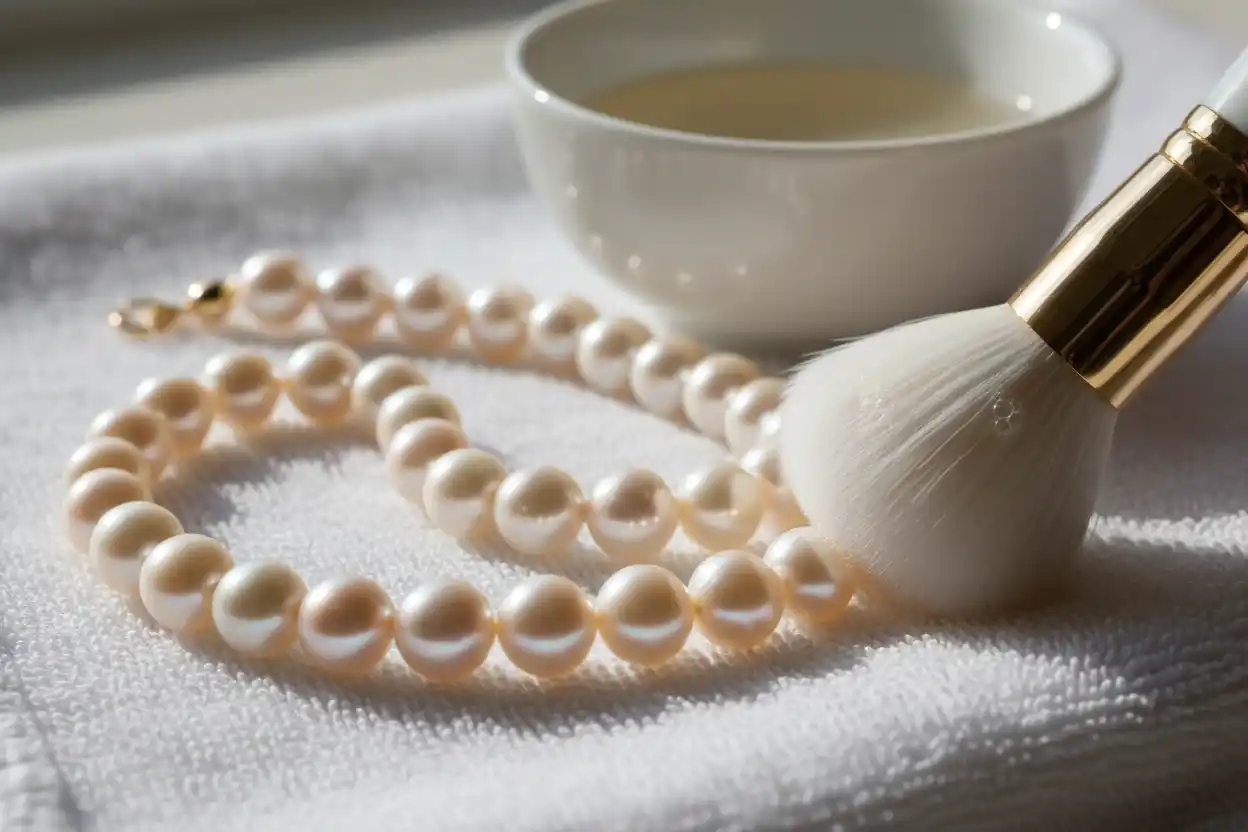
Pearl jewelry should be wiped with a very soft, clean cloth after every wear. For occasional deeper cleaning, use lukewarm water, a small amount of mild soap, and an unused soft makeup brush or cloth.
Pearls should never be cleaned in an ultrasonic or steam machine. Their nacre is soft, vulnerable to acids and cosmetics, and capable of becoming dehydrated, scratched, discolored, cracked, or damaged by treatment deterioration.
Strung Pearls require extra care because wet silk or thread can stretch and attract dirt. A strand must dry completely while lying flat before it is worn or stored.
Why Pearls Need Organic-Gem Care
A Pearl forms inside a mollusk when layers of calcium-carbonate material and organic substances develop around an irritant, implanted nucleus, or tissue graft.
The material’s formation, symbolism, cultured categories, and surface characteristics belong to the broader Pearl guide.
Natural and cultured Pearls share the same basic care requirements. The distinction concerns how formation begins rather than whether the resulting nacre can tolerate harsh cleaning.
The wider categories appear in Types of Pearl, including Akoya, South Sea, Tahitian, freshwater, natural, cultured, blister, and other forms.
| Property | Cleaning implication |
|---|---|
| Main material | Layered calcium carbonate and organic substances |
| Mohs hardness | Approximately 2.5 |
| Toughness | Usually good, but variable with age and treatment |
| Safest routine care | Wipe with a very soft cloth after wear |
| Occasional deeper cleaning | Lukewarm soapy water and a very soft brush |
| Ultrasonic cleaning | Never recommended |
| Steam cleaning | Never recommended |
| Main risks | Scratching, acids, dehydration, cosmetics, dye, coatings, glue, and wet stringing |
The gemstone hardness chart places Pearl among the softest commonly worn gem materials.
Its nacre may resist ordinary handling when cared for properly, but surface softness and structural durability are separate considerations. That distinction appears in Gemstone Toughness vs Hardness.
Wipe Pearls After Every Wear
Routine wiping is more important for Pearls than frequent washing.
Use a soft, clean, lint-free cloth to remove perspiration, skin oils, cosmetics, perfume residue, and environmental dust.
Wipe each Pearl individually. Pay attention to areas near drill holes, knots, caps, and metal fittings.
Do not polish aggressively. Friction can abrade nacre, particularly on worn, thinly nacred, coated, or older Pearls.
Allow the jewelry to air briefly before storing it so fresh perspiration is not trapped inside a closed pouch.
Put Pearls On Last and Remove Them First
Hair spray, perfume, lotion, sunscreen, makeup, sanitizer, and household chemicals may damage or dull Pearl nacre.
Apply all cosmetics before putting on Pearl jewelry. Allow sprays, creams, and fragrances to dry fully.
Remove the Pearls before washing your face, applying skincare products, changing clothing, exercising, swimming, showering, or cleaning.
This “last on, first off” routine reduces chemical exposure and the need for deeper cleaning.
Inspect the Pearls Before Washing
Check each Pearl under bright, indirect light.
Look for peeling nacre, chalky areas, cracks, discoloration, damaged drill holes, loosened caps, cloudy glue, frayed thread, stretched knots, broken clasps, and gaps between Pearls.
A necklace whose Pearls slide together because knots have stretched should be restrung before continued wear.
Do not wet a strand with weakened silk, unstable dye, peeling coating, loose adhesive, or damaged nacre.
Antique Pearl jewelry may require specialist assessment because its thread, glue, foil, backing, and metal components can be more vulnerable than the Pearls.
Check for Treatment
Pearls may be bleached, dyed, irradiated, impregnated, coated, filled, peeled, polished, or otherwise modified.
Bleaching and irradiation can remain stable during normal wear. Dyed, coated, or impregnated Pearls may change over time or respond poorly to solvents, heat, abrasion, and strong cleaners.
Treatment identification belongs to How to Spot Treated or Synthetic Pearl and the broader Gemstone Treatments Explained.
Test unusually vivid or dark Pearls with a damp white cloth on an inconspicuous area. Stop if color transfers.
The complete authenticity workflow belongs to Real vs Fake Pearl.
Prepare a Pearl-Safe Cleaning Solution
Fill a shallow bowl with lukewarm water and add a very small amount of mild liquid soap.
Use an unused, extremely soft makeup brush, soft cotton cloth, or dedicated Pearl-care cloth.
Avoid ordinary toothbrushes unless the bristles are exceptionally soft. Even a brush suitable for Diamond jewelry may be too firm for nacre.
Do not add ammonia, vinegar, lemon juice, bleach, alcohol, baking soda, salt, or commercial jewelry dip.
Place a clean white towel on the work surface before beginning.
Clean Pearl Earrings and Pendants
Dampen the cloth or soft brush with the mild cleaning solution.
Wipe the Pearl gently, then clean around the cap, cup, post, bail, or setting without pulling against the adhesive.
Use a second cloth dampened in clean lukewarm water to remove soap.
Blot the Pearl and fittings with a soft towel. Allow hidden moisture around caps and drill holes to evaporate naturally.
Do not immerse glued half-Pearls, mounted Mabé Pearls, blister Pearls, or backed constructions.
Clean a Pearl Strand Carefully
Lay the strand flat on a clean towel.
Use the soft brush or cloth to clean one Pearl at a time. Avoid saturating the knots and thread.
Remove soap with a second damp cloth. Blot the strand gently without pulling it straight or twisting it.
Leave it flat until the Pearls, knots, and thread are completely dry. Never hang a wet strand because its weight can stretch the thread.
Do not wear the necklace while the string remains damp. Wet silk can stretch and attract dirt.
Never Use an Ultrasonic Cleaner
Pearls should never enter an ultrasonic cleaner.
Vibration, heat, and cleaning solution can abrade the nacre, loosen Pearls from caps, damage coatings, alter unstable dye, and weaken thread.
The broader equipment restrictions appear in Which Gemstones Can Go in an Ultrasonic Cleaner?.
A machine formulated for Diamond or gold is not appropriate for an organic gem material.
Never Steam Clean Pearls
Steam can burn, discolor, dehydrate, split, or crack Pearl nacre.
It may also soften glue, affect treatments, damage stringing, and disturb antique components.
Lukewarm manual cleaning is sufficient for occasional deeper care.
Acids Are Particularly Harmful
Pearls contain calcium carbonate, which reacts with acids.
Vinegar, lemon juice, acidic perspiration, metal dips, some bathroom cleaners, and other acid-containing products can etch or dissolve nacre.
Do not attempt to restore luster with an acidic household mixture.
Perspiration is less concentrated than a household acid, but repeated exposure without wiping can still degrade the surface over time.
Cleaning Pearl Earrings
Pearl earrings commonly use posts, hooks, cups, glue, hinges, backs, or small accent stones.
Wipe the Pearl separately from the metal fitting.
Alcohol may be used cautiously on compatible posts or hooks, but it should not touch the Pearl, dye, coating, or adhesive.
Dry the fittings completely before reassembling or storing the earrings.
Cleaning a Pearl Necklace
A Pearl necklace may contain individually knotted silk, synthetic thread, wire, clasps, spacers, or accent gemstones.
Avoid soaking the strand. Work along it Pearl by Pearl while it rests on a towel.
Frequently worn strands should receive regular knot and clasp inspections. Restring when the thread becomes stretched, discolored, fuzzy, stiff, or visibly weak.
Cleaning Pearl Bracelets and Rings
Pearl bracelets and rings receive more impact and chemical exposure than earrings or necklaces.
Wipe them after every wear and remove them before desk work, cooking, cleaning, exercise, bathing, or applying hand products.
A ring Pearl may be drilled and glued onto a post. Water, solvents, and impact can weaken that construction.
Bracelets should be inspected for stretched elastic, worn knots, loose caps, and damaged clasps.
Natural, Akoya, South Sea, Tahitian, and Freshwater Pearls
All genuine Pearls require protection from acids, abrasion, dehydration, cosmetics, ultrasound, and steam.
Akoya Pearls often have fine, highly reflective surfaces that show scratches readily.
South Sea Pearls can have thick nacre but still require soft wiping. Their larger size also creates more leverage at drill holes and settings.
Tahitian Pearls may be naturally dark but can also be confused with dyed products. Treatment disclosure remains relevant.
Freshwater cultured Pearls occur in many shapes and colors and are frequently dyed. Test color stability when the hue appears unusually vivid.
These material differences belong to Types of Pearl rather than changing the core cleaning method.
Pearl Versus Mother of Pearl
Pearl and Mother of Pearl both contain nacre, but their jewelry construction differs.
Mother of Pearl is often cut into thin slabs, inlay, buttons, beads, or backed cabochons. Its specific care appears in How to Clean Mother of Pearl Jewelry Safely.
The wider material background belongs to the Mother of Pearl guide.
Both materials should be protected from acids, abrasion, heat, solvents, ultrasound, and steam.
Storage and Humidity
Store Pearls separately in a soft pouch or lined compartment.
Metal, Diamond, Sapphire, Ruby, quartz, and other harder materials can scratch their nacre.
Do not wrap Pearls against abrasive fabric or loose jewelry.
Avoid extremely dry storage with strong desiccants. Prolonged dehydration can contribute to cracking or nacre deterioration.
At the same time, do not seal damp Pearls or wet thread inside an airtight container.
Buying and Value Considerations
The Pearl buying guide covers type, size, shape, color, luster, surface, nacre, matching, treatment, and construction.
Market factors belong to the Pearl price guide.
Pearl is one of June’s recognized birthstones, a subject covered in the June birthstone guide.
Preserve invoices, laboratory reports, treatment disclosures, and restringing records for valuable strands.
Physical Cleaning Versus Cleansing
Physical care removes perspiration, cosmetics, dust, and environmental residue.
Traditional symbolic practices belong to How to Cleanse and Charge Pearl.
Any such practice should avoid saltwater soaking, direct sunlight, smoke deposits, acids, burial, and abrasive contact.
General water and light boundaries appear in Which Crystals Can and Can’t Go in Water and Which Crystals Can and Can’t Go in the Sun.
Frequently Asked Questions
1. What is the safest way to clean Pearl jewelry?
Wipe it with a very soft cloth after wear. Use lukewarm soapy water and an unused soft makeup brush only for occasional deeper cleaning.
2. Can Pearls get wet?
Brief occasional cleaning is acceptable, but strands should not be soaked and the thread must dry completely before wear.
3. Can Pearls go in an ultrasonic cleaner?
No. Ultrasound can damage nacre, treatments, glue, knots, and settings.
4. Can Pearls be steam cleaned?
No. Steam can burn, discolor, dehydrate, split, or crack the nacre.
5. Can vinegar clean Pearls?
No. Vinegar is acidic and can dissolve or etch calcium-carbonate nacre.
6. Is dish soap safe for Pearls?
A very small amount of mild liquid soap is suitable for occasional cleaning.
7. Can rubbing alcohol clean Pearl earrings?
Keep alcohol on compatible metal posts only. It should not contact the Pearl or adhesive.
8. Should a Pearl necklace be soaked?
No. Soaking may stretch or weaken the thread and affect treatments.
9. How should a wet Pearl strand be dried?
Lay it flat on a clean towel and leave it untouched until the thread and knots are completely dry.
10. How often should Pearls be restrung?
Inspect them regularly and restring when the thread stretches, discolors, frays, or weakens. Frequently worn strands may need annual restringing.
11. Why are my Pearls losing their luster?
Cosmetics, perspiration, abrasion, dehydration, treatment deterioration, or surface wear may be responsible.
12. When should Pearls receive professional care?
Seek professional help for peeling nacre, loose caps, damaged drill holes, unstable dye, stretched knots, antique jewelry, or severe discoloration.
Conclusion
Pearls last longest when residue is removed after every wear rather than allowed to build into the nacre. Soft wiping, occasional lukewarm cleaning, and complete flat drying protect both the Pearls and their stringing. When the surface begins to peel or the thread stretches, stronger cleaning will not solve the problem; conservation or restringing is the appropriate next step.