How to Clean Mother of Pearl Jewelry Safely
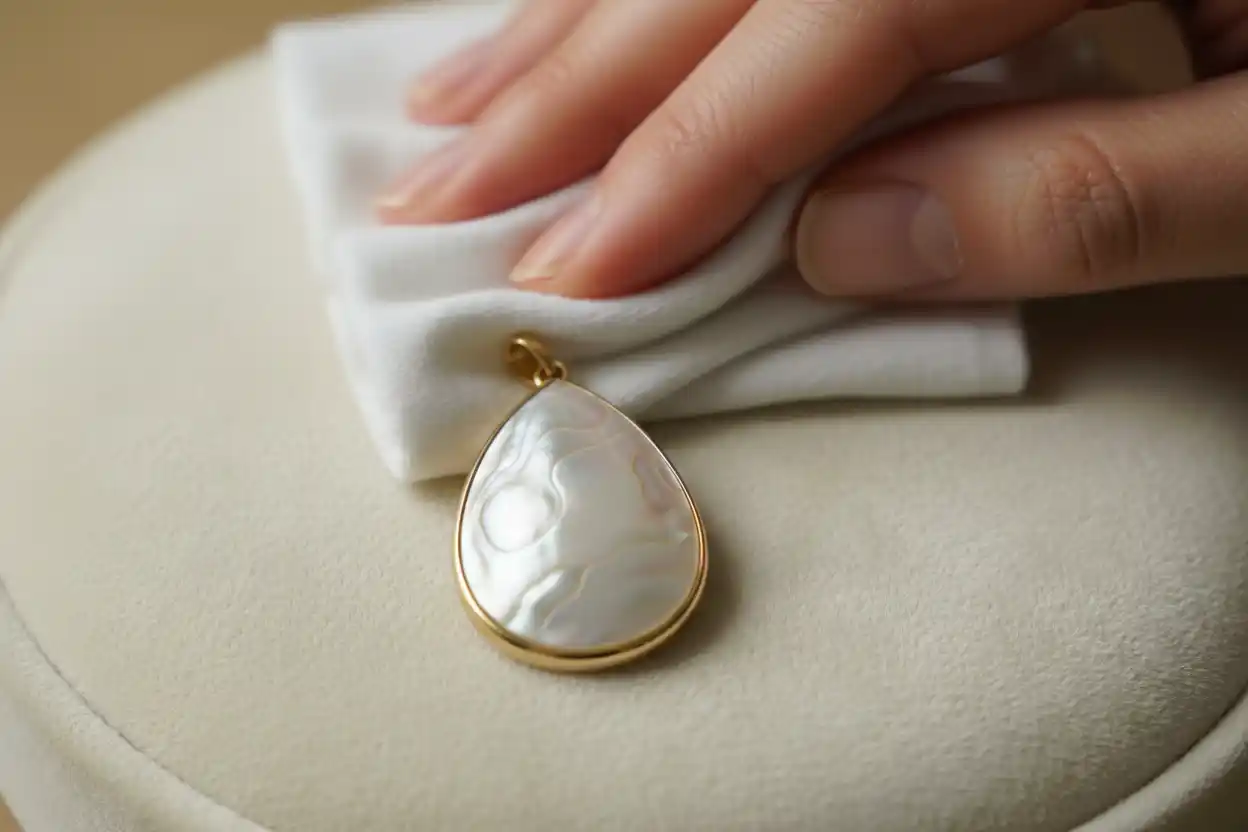
Mother of Pearl jewelry should be wiped with a soft, slightly damp cloth after wear. When deeper cleaning is necessary, use a small amount of mild soap in lukewarm water, clean the surface briefly, remove the soap with another damp cloth, and dry the piece immediately.
Never use an ultrasonic cleaner, steam, vinegar, ammonia, alcohol, acetone, bleach, abrasive powder, toothpaste, or metal dip. Mother of Pearl is a soft organic gem material composed largely of layered calcium carbonate and organic substances. Its nacre can scratch, dry, discolor, delaminate, or separate from glue and backing materials.
What Mother of Pearl Is
Mother of Pearl is the iridescent nacreous lining formed inside the shells of certain mollusks. It is used for cabochons, beads, pendants, watch dials, buttons, mosaics, carvings, cameos, and decorative inlay.
Its formation, colors, sources, symbolism, and uses belong to the broader Mother of Pearl guide.
Mother of Pearl and pearl are related but not identical products. A pearl forms as a three-dimensional gem inside a mollusk, while Mother of Pearl is cut from the nacreous portion of the shell.
| Characteristic | Cleaning implication |
|---|---|
| Material | Layered nacre from mollusk shell |
| Main mineral component | Aragonite or other calcium-carbonate structures |
| Organic component | Conchiolin and related substances |
| Surface durability | Soft and readily scratched |
| Safest routine care | Soft damp-cloth wiping |
| Occasional deeper cleaning | Brief lukewarm soapy-water cleaning |
| Ultrasonic cleaning | Never recommended |
| Steam cleaning | Never recommended |
| Main risks | Scratching, acids, dehydration, chemicals, glue, lacquer, and delamination |
The broader difference between surface hardness and structural durability appears in the gemstone hardness chart and Gemstone Toughness vs Hardness.
Why Mother of Pearl Shows Iridescence
Nacre consists of microscopic mineral platelets arranged in thin layers with organic material between them.
Light interacting with those layers creates the soft, shifting iridescence associated with Mother of Pearl. The effect may appear white, silver, cream, pink, blue, green, gray, gold, or multicolored.
This glow is structural rather than an oily surface film. Cleaning can remove cosmetics that obscure the luster, but it cannot replace worn nacre or repair delaminated layers.
Do not polish one area aggressively because it appears less iridescent. Abrasion can thin the nacre and permanently reduce its luster.
Inspect the Jewelry Before Cleaning
Examine the piece beneath bright, indirect light.
Look for peeling layers, cracks, chips, cloudy glue, lifting inlay, gaps around a bezel, damaged drill holes, frayed string, flaking lacquer, missing mosaic sections, or color transfer.
A visible seam may be part of a backed or assembled item. Water can enter that seam and weaken adhesive.
Do not wet a piece that is lifting, delaminating, cracked, antique, or visibly unstable. Dry wiping and specialist conservation are safer.
Check for Dye, Lacquer, Resin, and Backing
Mother of Pearl may be dyed, bleached, coated, lacquered, stabilized, backed, laminated, glued, or assembled with resin and other shell sections.
These treatments can create vivid colors or improve surface uniformity. However, they may react poorly to solvents, prolonged water exposure, heat, and abrasion.
The broader treatment categories appear in Gemstone Treatments Explained.
Test a hidden area with a damp white cloth before deeper cleaning. Stop if color transfers or the surface becomes sticky, cloudy, or uneven.
Begin with a Soft Dry Cloth
Routine cleaning should be minimal.
Use a clean microfiber, soft cotton, or pearl-care cloth to remove fingerprints, skin oils, and fresh cosmetic residue.
Wipe gently in one direction rather than rubbing rapidly. Excessive friction can wear the nacre or snag a lifting layer.
A soft makeup brush can remove dust from carved details, bezels, watch-dial edges, and inlay seams.
Use Lukewarm Soapy Water Sparingly
When dry wiping is not sufficient, mix a few drops of mild liquid soap with lukewarm water.
Dampen a soft cloth and wring it out thoroughly. The cloth should be moist rather than dripping.
Wipe the nacre briefly without soaking the piece. Use a second cloth dampened with plain water to remove soap.
Blot dry immediately. Allow moisture around settings, holes, and seams to evaporate naturally before storage.
Do Not Soak Mother of Pearl
Prolonged immersion may weaken adhesive, enter laminate seams, stretch stringing, or affect dye and lacquer.
Water can also remain trapped behind an inlay or beneath a backed cabochon, creating cloudiness or separation.
Brief occasional cleaning is different from leaving the jewel in a bowl for several minutes or overnight.
The wider discussion of water exposure belongs to Which Crystals Can and Can’t Go in Water.
Never Use an Ultrasonic Cleaner
Mother of Pearl should never enter an ultrasonic cleaner.
Vibration can crack nacre, loosen inlay, separate glued layers, damage lacquer, and disturb stringing or settings.
Ultrasonic solutions may also contain ammonia or stronger ingredients intended for durable metals and gemstones.
The broader equipment guide appears in Which Gemstones Can Go in an Ultrasonic Cleaner?.
Never Steam Clean Mother of Pearl
Steam introduces concentrated heat, pressure, and rapid moisture change.
These conditions can dry or discolor nacre, soften adhesive, lift lacquer, distort backing, and weaken organic components.
Lukewarm damp-cloth cleaning provides adequate care without thermal stress.
Avoid Acids and Household Chemicals
Mother of Pearl contains calcium carbonate, which reacts with acids.
Keep it away from vinegar, lemon juice, descaling products, acidic bathroom cleaners, and metal dips.
Alcohol, acetone, perfume, hairspray, sanitizer, bleach, ammonia, and strong detergents may damage the nacre, dye, lacquer, resin, glue, or metal finish.
Apply cosmetics and fragrance before putting on the jewelry and allow them to dry.
Cleaning Mother of Pearl Earrings
Mother of Pearl earrings may use cabochons, shell drops, carved components, inlay, beads, metal caps, glue, posts, hooks, and clips.
Wipe the nacre separately from the metal fittings. Use alcohol-based disinfectant only on compatible posts or hooks, keeping it away from the shell and adhesive.
Avoid immersing earrings with glued or laminated components.
Store each earring separately so posts and backs do not scratch the nacre.
Cleaning a Mother of Pearl Necklace
A necklace may combine shell beads, pendants, knots, thread, wire, metal spacers, clasps, and glued elements.
Lay bead strands flat and wipe each bead individually. Do not soak the necklace because wet silk, cotton, or elastic can stretch and weaken.
Prevent beads from rubbing against one another. Grit trapped between them can scratch the nacre.
The tracker’s Pearl necklace guide covers related stringing and wearing considerations without replacing this Mother of Pearl care workflow.
Cleaning a Mother of Pearl Bracelet
Mother of Pearl bracelets experience repeated desk contact, impact, and friction against clothing.
Inspect every bead, tile, inlay section, hinge, elastic strand, knot, and clasp before cleaning.
Wipe the bracelet rather than immersing it. Dry it flat so damp stringing or elastic does not stretch.
Remove it before exercise, swimming, showering, washing dishes, and household cleaning.
Cleaning Inlay, Watch Dials, and Mosaic Jewelry
Mother of Pearl is frequently cut into thin pieces and glued into recesses.
Water can enter gaps around an inlay and soften the adhesive. Use a barely damp cloth and avoid pressing at the edges.
Do not use a powered brush, pin, knife, or metal pick to clean seams. These tools may lift or chip the thin nacre.
Mother of Pearl watch dials should not be immersed. Watches require service methods appropriate to their case, seals, hands, crystal, and internal mechanism.
Abalone and Other Shell Types
Mother of Pearl comes from several mollusk species and can vary greatly in color and pattern.
Abalone Shell commonly displays intense blue, green, purple, and pink iridescence. Its thin layered structure and frequent lacquer or backing require especially careful handling.
The tracker’s Types of Mother of Pearl and Types of Abalone Shell pages own the material and species distinctions.
Different shell origin does not make any nacreous inlay suitable for ultrasound, steam, acid, or abrasion.
Mother of Pearl Versus Pearl Care
Pearls and Mother of Pearl both contain nacre, so their safest cleaning principles overlap.
However, Mother of Pearl is often cut into thin slabs, backed, lacquered, or glued into jewelry. These constructions make immersion especially risky.
The separate guide to cleaning Pearl jewelry owns strand-specific care, knotting, cultured-pearl surfaces, and pearl settings.
The broader material background appears in the Pearl guide and Types of Pearl.
Authentication and Treatment
Plastic, glass, coated resin, shell composites, and printed laminates can imitate Mother of Pearl.
The tracker does not assign a separate real-versus-fake Mother of Pearl page, so the adjacent Real vs Fake Pearl guide provides the closest nacre-related identification framework.
Treatment and imitation issues affecting nacre are also covered in How to Spot Treated or Synthetic Pearl.
Do not use teeth, scraping, hot needles, solvents, acids, or fire to test a mounted jewel.
Buying, Value, and Storage
The adjacent Pearl buying guide explains nacre quality, luster, surface condition, construction, treatment, and seller disclosure.
Broader pearl-market factors appear in the Pearl price guide.
Store Mother of Pearl separately from metal jewelry and harder gems. Even ordinary clasps and earring posts can scratch it.
Avoid airtight plastic bags for long-term storage when they may trap chemicals or moisture. Use a soft fabric pouch or lined compartment.
Mother of Pearl shares June-birthstone context through its nacre relationship with pearls, which is addressed in the June birthstone guide.
Physical Cleaning Versus Cleansing
Physical cleaning removes oil, dust, cosmetics, and residue.
Traditional symbolic practices associated with nacre and pearls belong to How to Cleanse and Charge Pearl.
Any traditional method should still avoid saltwater soaking, acids, direct heat, prolonged sunlight, smoke residue, and abrasive contact.
Frequently Asked Questions
1. What is the safest way to clean Mother of Pearl?
Wipe it with a soft, slightly damp cloth. Use mild soap only when necessary, then remove the soap and dry the piece immediately.
2. Can Mother of Pearl get wet?
Brief damp cleaning is acceptable for stable material, but soaking should be avoided because many pieces are glued, backed, lacquered, dyed, or strung.
3. Can Mother of Pearl go in an ultrasonic cleaner?
No. Vibration can crack nacre, loosen inlay, and damage glue or coatings.
4. Can Mother of Pearl be steam cleaned?
No. Steam can damage its layered nacre, organic components, adhesive, and lacquer.
5. Can vinegar clean Mother of Pearl?
No. Acids react with calcium carbonate and can etch or dissolve the nacreous surface.
6. Is dish soap safe for Mother of Pearl?
A small amount of mild liquid soap can be used occasionally with a damp cloth. Avoid prolonged immersion.
7. Can rubbing alcohol clean Mother of Pearl earrings?
Keep alcohol away from the shell because it may damage nacre, dye, lacquer, resin, or glue.
8. Can toothpaste polish Mother of Pearl?
No. Toothpaste is abrasive and can permanently dull or scratch the nacre.
9. Why is the surface peeling?
The nacre, lacquer, laminate, backing, or adhesive may be separating. Stop cleaning and seek professional repair.
10. How should Mother of Pearl beads be cleaned?
Lay the strand flat and wipe each bead individually without soaking the thread or elastic.
11. How often should Mother of Pearl jewelry be cleaned?
Wipe it gently after each wear and use damp cleaning only when visible residue remains.
12. When should it receive professional care?
Professional care is appropriate for lifting inlay, cracks, delamination, unstable color, antique jewelry, damaged lacquer, or weakened stringing.
Conclusion
Mother of Pearl retains its iridescence through gentle handling rather than frequent washing. A soft damp cloth removes fresh residue while protecting the layered nacre, glue, lacquer, and backing commonly found in shell jewelry. When the surface begins to peel or lose luster, continued polishing is likely to worsen the damage; specialist repair is the appropriate next step.